Three Things I Pray…

In the Broadway musical, Godspell, there is a simple ballad, “Day By Day,” in which the singer(s) express a desire to be closer to Jesus. Day By Day/YouTube  There are three “prayers”– 1) to see thee more clearly; 2) Love thee more dearly, and 3) follow thee more nearly.  I have heard various opinions and critiques of the musical, from the use of clown makeup and vaudeville tunes, to the marginal grammar of this song.  But I’d like to spend some time digging in to the three simple prayers.

clear close up dark dew

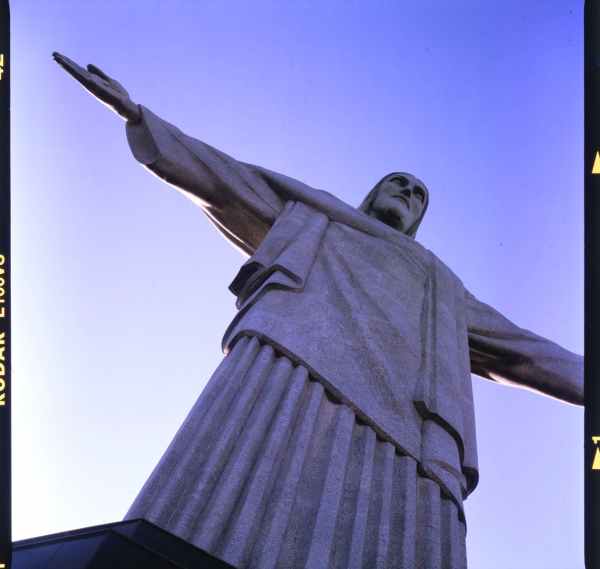
Today, I want to look at (literally) the first prayer– “to see thee more clearly”.  There is one prayer, but I think it can be broken down into two parts.

First, I want to SEE God.  God is Spirit–an invisible essence– and yet he manifests himself in a million different ways all around us.  God is in the inky, endless blackness of a moonless night, and in the vibrant colors of spring blossoms; in the glaring reflection of the sun off the lake, or the gray and palpable mist over the meadow.  He is in the wrinkled face of my neighbor, and the exuberant smile of a toddler, and the beauty of a horse running or an eagle soaring.  But I can see all of this and more and still not see God.  I can focus on the creation and miss the creator.  I can focus on the beauty and learn nothing of the artist.  I can see the amazing variety of people in the world– skin tones and eye shapes, facial expressions, and body language, dimples and hairstyles and nose-wrinkling, and hand-wringing, and miss the Love of God for each one.

brand trademark cobblestones community denim pants

Sadly, I can sing this prayer, pray for insight, and still miss seeing God.  I can trample His creation, dismiss His presence, and hate the people He loves enough to die for; people who bear the stamp of His image.

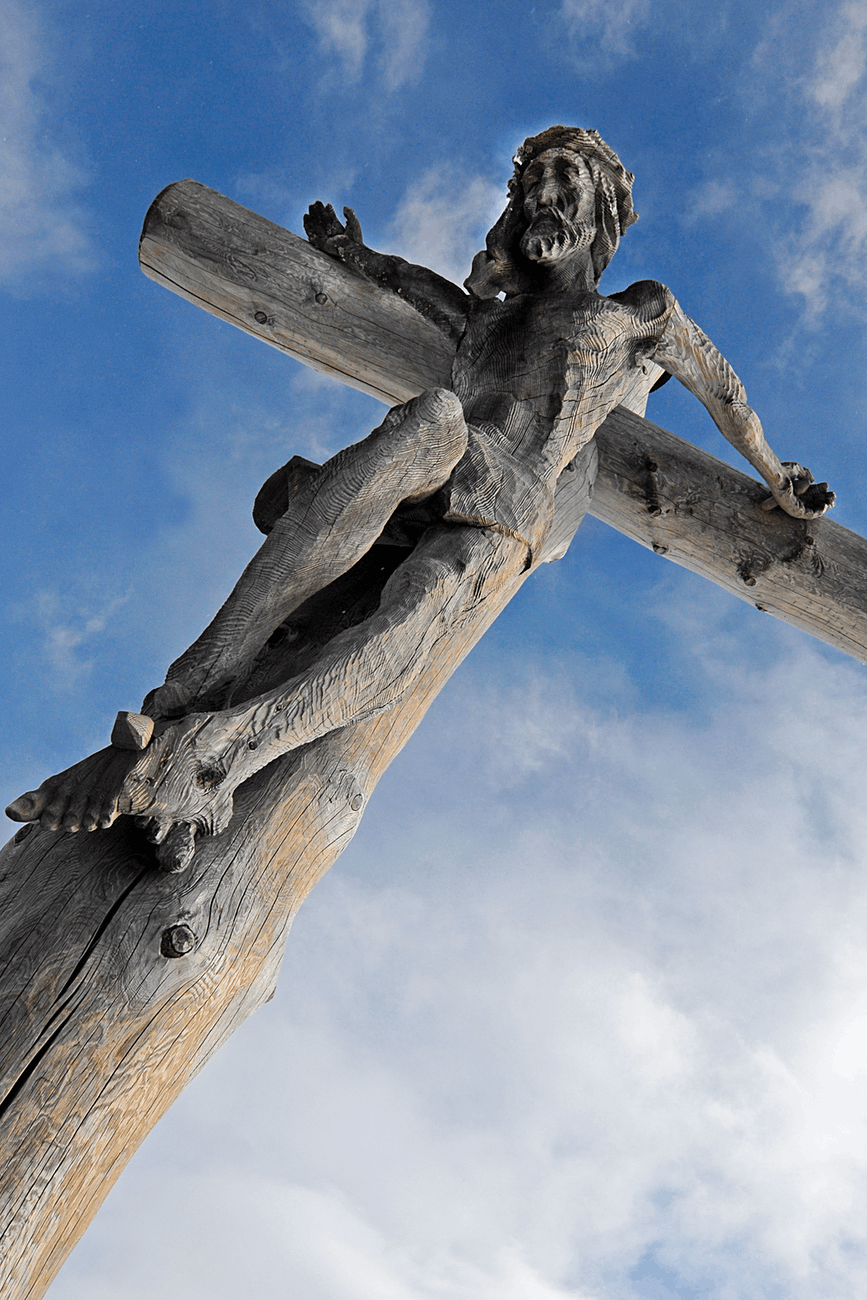
And I want to see Him “more clearly”–I want to see him as he really is, and not as I imagine him to be.  We live in an age of glossy retouched photos of models and celebrities; we “see” their image, without knowing what they truly look like, and without knowing anything about who they really are inside.  In many ways, God is only slightly less invisible than the real people around us.  How many people do we ignore in a day’s time?  How many do we glance at, only to get stuck on a single detail (a hair on their sweater, or something caught in their teeth, or a receding hairline or blotchy face).   How many people surprise us by not being like the image they project?   I don’t want to see a Photoshop Jesus; a glossy, smiling image of someone who says only what I want to hear, and looks like nothing ever touches him.  I want to see the Jesus who wept over the death of his friend; the Jesus who laughed with delight as he talked with children; the Jesus whose eyes were full of compassion even as he was dying on the cross.  I want to see the Living Word of God.
cross jesus summit cross

Jesus is close– closer than we think.  I want to spend today seeing him more clearly.

“Hallowed Be Thy Name…”

Christians have a lot of confusing “jargon”.  If you grew up in the church, there are certain words and phrases that are supposed to be intuitively understood.  If you didn’t grew up in the Bible Belt, or in an old-time church, you may feel like you’ve been dropped into a parallel universe where people speak the King’s English– but it’s King James’ English!  Words that would fit neatly into a Shakespearean monologue are flung at you:  “Thou shalt not,” “graven images”, “begat”, “beseecheth”, “whosoever believeth,” “Hallowed be Thy Name.”

As a child, I used to think the phrase was “hollow-ed be thy name”– it was confusing.  Why would God want his name emptied and hollow?  Why would I do that?  Of course, it was explained to me that “hallowed” meant holy, or honored, or revered.  That made more sense, but I think in some ways we have done more “hollow-ing” and less “hallow-ing” of God’s name in our churches lately.

church-bank-wood-benches-161060.jpeg

And it’s not just the argument I hear a lot about actual language usage.  I hear some people complain about those who pray to “Daddy God” or “Papa God” or those who use “OMG” when they text, or “Jeesh!”  To me, these are “splinter” arguments (another Christian jargon term, referring to Jesus’ example of someone trying to pick a splinter out of someone else’s eye when they have a plank in their own!).  That’s not to say that we shouldn’t be careful about the words and names we choose, especially around those who do not know Jesus personally. But the core issue isn’t the vocabulary, but the attitude. The real trend I see is that we are losing our attitude of AWE in God’s presence.  We use words, and carry attitudes that devalue the one who is most worthy of our absolute best.  Or, we try to put ourselves, our own efforts, and our own attitudes in His place. God IS our Father. He is not “the man upstairs,” or “the Big Guy,” or “Daddy-O.” He is not our “pal” in the sense of any other human acquaintance. He is the Lord of the Universe! But we can call Him “Lord, Lord” and still not have a relationship with Him (see Matthew 7:21-23). Using “religious” sounding language doesn’t make us any closer to God in our heart, and it certainly doesn’t fool Him!

arrogant

God wants a relationship with us; he loves us with an extravagant, boundless, and everlasting love.  He doesn’t want us to run from him in fear or hide from him behind big, empty, but important-sounding words.  In fact, in his time on Earth, Jesus walked side by side with his disciples, he ate with people, embraced his friends and family, danced, burped, wiped his nose,  held children on his lap, laughed, and lived among us.  But he is eternally GOD.  Yahweh– the LORD–I AM.  Almighty, all-powerful, omniscient and completely HOLY.  And his Name is to be revered.

When we say that we follow Christ;  when we call ourselves Christians, we bear that name– we take on that Hallowed name–we strive to be ambassadors and representatives of the name which is above all names.  This isn’t just about saying his name, “Jesus”, “Father”, “Savior”, “Heavenly Father” in a less-than-honorable fashion.  It’s about how we represent His Name as his ambassadors.

girl-praying-hands-eyelashes-41942.jpeg

We’re not perfect; we will not always live up to the Name we carry– that’s part of the Gospel message–Jesus came to show us how we ought to live, and to give us victory over the reality that we can’t do it in our own flawed state.  But in praying “Hallowed be thy Name,” we are not asking for God’s name to become more honorable.  We are asking God to give us the wisdom, the power, and the desire to bring him the honor and worship he so rightly deserves.  And that only happens when we live transparently, humbly, and in a manner worthy of His Name.

“Our Father, who art in Heaven, Hallowed be Thy Name…”

In the Beginning Was the Word…

In the beginning was the Word, and the Word was with God, and the Word was God. The same was in the beginning with God. All things were made by him; and without him was not any thing made that was made. In him was life; and the life was the light of men. And the light shineth in darkness; and the darkness comprehended it not. There was a man sent from God, whose name was John. The same came for a witness, to bear witness of the Light, that all men through him might believe. He was not that Light, but was sent to bear witness of that Light. That was the true Light, which lighteth every man that cometh into the world. 10 He was in the world, and the world was made by him, and the world knew him not. 11 He came unto his own, and his own received him not. 12 But as many as received him, to them gave he power to become the sons of God, even to them that believe on his name: 13 which were born, not of blood, nor of the will of the flesh, nor of the will of man, but of God. 14 And the Word was made flesh, and dwelt among us, (and we beheld his glory, the glory as of the only begotten of the Father,) full of grace and truth.

John 1:1-14 (Authorized KJV)
Photo by Jeswin Thomas on Pexels.com

We celebrate Christmas as the “birth” of Christ. Yet, the Bible tells us that Jesus (Christ) was in the beginning with God: Jesus had no beginning and no end. He is eternal with the Father and Spirit. We call this season before Christmas “Advent”– we await and celebrate, not the birth of a new being, but the advent of His coming from Heaven to earth.

Photo by Pixabay on Pexels.com

Jesus came to Earth for many reasons– some of which are given in the Bible, and some of which are likely beyond our comprehension. He came to live among us as a man of flesh and bone (John 1:14); He came to bring life and light (vv.4-9); He came to live a sinless life, which He sacrificed as a ransom for the sins of the those who repent: and He came to serve others–to model the kind of service that God desires from us (Matthew 20:28). Jesus came in obedience to the Father (John 6:38). Finally, Jesus (as a member of the Triune Godhead) came because “God so Loved the World” (John 3:16) –He Wanted to come! The Advent was part of God’s perfect plan. It was not Plan B, developed after the fall of man. It was so “from the beginning.” It was foretold and prophesied. It was planned down to the tiniest detail.

Photo by Ketut Subiyanto on Pexels.com

Jesus has always been. He has always been The Word of God. Jesus speaks. Jesus listens. When we pray, it is natural to speak words to The Word. Jesus created us to communicate. Unlike any other creature on earth, mankind chooses to communicate through complex and subtle language, as well as through art, music, dance, architecture…even food! We chatter about trivia; we choose to wear certain colors to express our moods; we make silly faces at infants and delight in their own facial contortions.

Photo by Antoni Shkraba on Pexels.com

Prayer is so important, because it is the essence of expressing our hearts and minds to the very one who created us to BE communicators. God listens through all the words of all the languages we use (or the non-verbalized thoughts, groanings, etc.) to hear our true heart-cry.

Photo by Pavel Danilyuk on Pexels.com

This season, we take time to reflect on just what it means that Jesus was “In the Beginning…” as well as in the manger. We reflect that “before Abraham was”–He IS (John 8:58). We glory in the knowledge that He is the same yesterday, today, and forever! (Hebrews 13:8). These “words” give us life and hope and joy– not just now, but throughout all the years of our lives.

What a reason to say just a few words today in prayer!

Praying for Bahrain

I have never been to Bahrain. I know very little about Bahrain. All I know is that it is a small country in the Middle East, located on a series of islands in the Persian Gulf. But I prayed for Bahrain the other day. It’s on my prayer calendar/journal. Every day of the year, I have a nation, city, or geographic region (desert, ocean, continent) to pray for. It’s somewhat random, and personal–many of the “cities” are really local small towns or places close to my heart–and it doesn’t make my prayers virtuous or important. My prayers can’t “save” the world, or any corner of it, from natural disaster or political corruption, disease, or any other malady common to our fallen world. So why do it?

Photo by Anna Shvets on Pexels.com

First, because God loves and cares about the whole world. It’s easy for me to focus on my surrounding community; my state; my country. I know the people and language and culture here. But there is nothing exclusive about God’s love. Throughout the Bible, it is clear that our God is a global God. Sure, God “chose” Abraham and the nation of Israel to display His Holiness. But He also raised up other nations and leaders– Pharaoh, Nebuchadnezzar, the Queen of Sheba, Caesar Augustus–and sent prophetic warnings to Babylon, Edom, Assyria, Egypt, and many other nations who neither knew Him nor worshipped Him. I don’t know enough to know how many of the people of Bahrain are Christians, Muslims, Atheists, or any other religion. I don’t know how many of them are suffering from depression, domestic abuse, or disease. But I know that God knows– and cares. Even though I am praying “blind,” I am making an effort to “see” God’s heart for others.

Photo by Monstera on Pexels.com

Second, as I pray for various nations, I become more interested in them. I learn more about them. I recognize them when they are mentioned in the news, or when I hear about people who live or visit there. Again, this doesn’t make me a better person, or my prayers better than anyone else’s–but it helps me be a more informed (and hopefully more compassionate) person than I was yesterday or last year.

Photo by Cameron Casey on Pexels.com

Praying for others reminds me of two important truths: I am very small in the scheme of things– one of more than 8 billion people on the planet! I cannot know them all; I cannot care for them all or influence them, or change their situations. But God can! I serve a God who not only knows all 8 billion individuals; He knows their thoughts, their pasts and their futures–He even knows the number of hairs on each head! The second truth that arises from that is that, small as I am, I am known by God. He cares about ME, just as He cares about each person that breathes. HE can change the small circumstances of my life, and the lives of those I know and love; AND He can raise up kingdoms and break down empires!

Photo by Karolina Grabowska on Pexels.com

Pursuing prayer is about following God. Part of that is learning discipline. God isn’t “grading” me on whether or not I pray for Bahrain, or Belarus, or Boston, or the tiny local town of Baroda. He isn’t going to turn His back on me if I don’t pray for any of these places. And He won’t love me more if I do. But I will get better insight into His character as I learn to pray faithfully, consistently, and compassionately for others– wherever they are.

This Little Light of Mine…

John 1:4-5 American Standard Version (ASV)
 4 In him was life; and the life was the light of men. And the light shineth in the darkness; and the darkness [a]apprehended it not.

Footnotes:John 1:5 Or, overcame.

via http://www.biblegateway.com
Photo by Pixabay on Pexels.com

I love words. But sometimes, it can be frustrating to find just the right word to express a complex idea. I’m sure the Apostle John felt the struggle as he began writing his Gospel account of the life of Christ. How can mere words describe the arrival of GOD– creator and ruler of the universe– into a darkened and sin-filled world, come to live among and serve the very lost souls He would die to save? John, of all the Gospel writers, uses the most visual metaphors to describe the Advent of Jesus (many of which he heard from the lips of Christ Himself)– He was the “Light of the World”, the “Bread of Life”, the “Living Water,” the “Way, the Truth, and the Life,” and the “Good Shepherd.”

But right away, the phrase John uses to talk about the “Light of the Life” causes modern English scholars confusion. John says that the light “shineth”, or “shines” in the darkness and the darkness “comprehended” (or apprehended, or understood, or overcame) it not. The phrase is simply too big for one word, or idea. The Greek word comes closer to expressing a dual idea, but even it can’t wrap up the totality of such an event.

Photo by Luck Galindo on Pexels.com

Consider–This Jesus, one with God from the beginning, and the “Word” of creation, spoke light into existence. Where there was darkness, He exploded– light upon light– stars and galaxies of light! Even on the darkest night we will ever know, there are millions of lights spread out across the vastness of space, including our own sun, even unseen on the other side of the planet. Darkness can never “comprehend”, let alone “overcome” the existence of light in our world.

Moreover, when we see physical light piercing the darkness, we are aware of it, but we rarely comprehend, or understand it. Whether we are blinded by a flash of light, or compelled to seek out a single hint of light in a darkened tunnel, it is not obvious at first glance (and sometimes even after diligent study) the source or scope of the light. It may be a candle, or a set of glaring headlights, or the glint of reflected light in a mirror. It could be a distant star, a satellite, or a street light shrouded in fog.

Photo by Miguel Á. Padriñán on Pexels.com

But in a spiritual sense, it is even more true that “Light has come into the world” (John 3:19), and it “shines” in the darkness, and the darkness has not understood, or apprehended, or overcome it. Jesus came as an infant to His own chosen people, people who were longing for the advent of their Messiah. But few of them recognized Him. They didn’t understand– even Jesus’ closest friends didn’t “get it” at first. And some of them tried their best to “overcome” and “apprehend” the Gospel message– zealous religious leaders like Saul tried to stop the “light” of Jesus’ message and all those who trusted in it. Saul had to be “blinded” by a light on his way to Damascus, so that he could finally “see” Christ (Acts 9).

And the light is still shining in the darkness– as followers of Christ, we are to reflect God’s love and grace to those around us. Many of them will not comprehend; many will try to overcome or even destroy the message we bring. Our light may seem small and insignificant. It may seem like we are surrounded by the vast darkness of space, or shrouded in fog. But the light of Christ cannot be extinguished, or rationalized out of existence, or contained. All the words ever spoken, written, or thought throughout all the ages of mankind cannot compare to the power of God’s “Word”, who spoke worlds into being in an instant, and yet entered His own creation with a soft cry of an infant in the middle of a dark night so long ago.

Photo by 3Motional Studio on Pexels.com

This is the “little light of mine”, and of yours if you are a follower of Christ. It pierces through the darkness of despair, hatred, addiction, injustice, greed, oppression, malice, rebellion, war, grief, loss, disease, and sin.

This season, as we anticipate the Advent, let us remember the greatness of the tiniest of lights, and the triumph of that light over the vast darkness. It is easy to get distracted by the twinkling of a thousand artificial and commercial lights this season, or blinded by the soot and smog and clouds of gloom and pain that surrounds us. It’s so important that we keep shining; continue reflecting the true light that only comes from the “Light of the World”

Photo by Lennart Wittstock on Pexels.com

“This little Light of mine–I’m gonna let it shine!
This little Light of mine– I’m gonna let it shine,
Let it shine, Let it shine!”

Blog at WordPress.com.

Up ↑