Prayer and Freedom

Tomorrow, we will celebrate Independence Day, in America. Much will be made of the freedoms we enjoy here. Many are freedoms we take for granted; others are freedoms that have been twisted or abused by our citizens, residents, and visitors.

I am very grateful for the freedoms of America. As a citizen of the U.S., I enjoy Freedom of Speech and Assembly; Freedom of Religious practice; the Right to Bear Arms; the Right to a Jury Trial with representation; the Right to Vote and participate in the democratic process; the freedom to move freely and do business across state lines, and so much more that I take for granted. But I want to be very careful to keep a proper perspective on civil and national freedoms, and citizenship in the United States. My citizenship here comes with many opportunities and freedoms, but it is not perfect. It is also not eternal– my perfect and eternal citizenship is in Heaven.

The founders of the United States, in their Declaration of Independence, listed three “unalienable” rights– “Life, Liberty, and the Pursuit of Happiness.” But they were clear about where those rights come from; not from a government, or a king, but from The Creator. Only God can give “unalienable” rights and freedoms. Governments can topple; Kings can be deposed; Laws and Constitutions can be overturned. The rights and freedoms we will celebrate this week were written on parchment, not stone. Even now, many forces are at work to “redefine” our freedoms; to alter the Constitution and the Bill of Rights– people say they are outdated, or too restrictive (or not restrictive enough!). Many want the government to have more power to define, create, and alter the rights granted in the original Constitution.

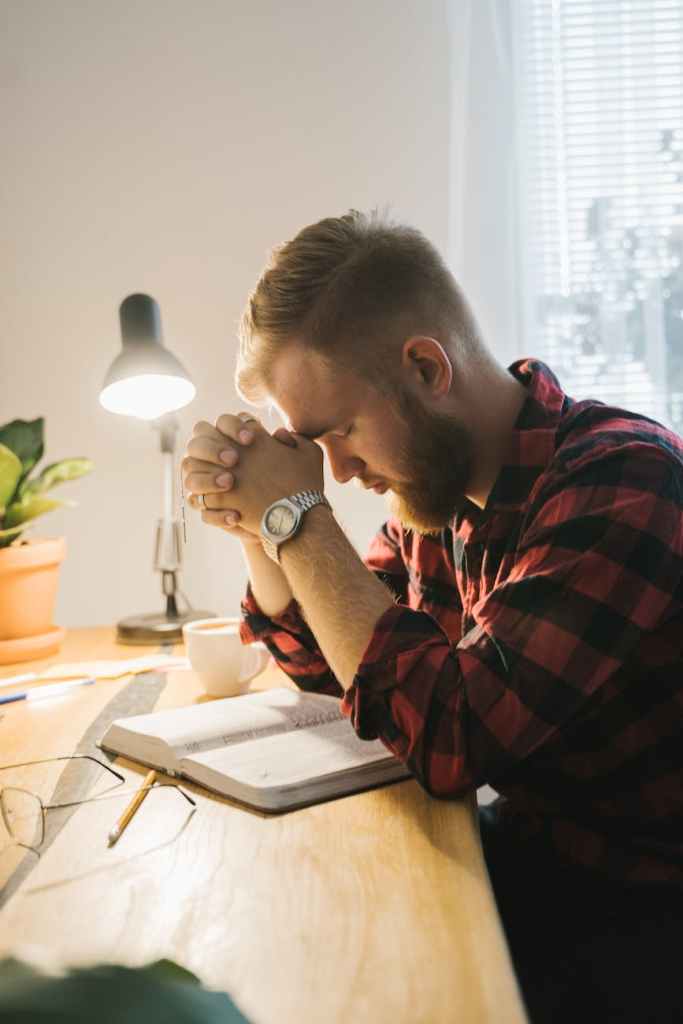
When I pray, I don’t pray to a government–even one founded on solid principles and good intentions. As much as I love my country, and support the principles of its founders, I recognize that any government can be corrupted. I may not always enjoy the freedoms I currently cherish. But even a corrupt government cannot take away my freedom in Christ to call on My Creator. I cherish the freedom I have to attend worship service, and to pray with my husband in public, or meet with other believers to share prayer requests openly. But even if those freedoms were curtailed by a corrupt government, I could still commune with God– there is no prison, or dark corner, or hospital bed, or place of exile where God cannot meet with me, hear my heart, and answer my requests.

And it is THIS freedom that I fear I take for granted most of all– that I can freely and confidently approach the very Throne of the Almighty, Sovereign God, and expect to be heard and even welcomed. I don’t have to apply for permission from a priest or the angels to pray. I don’t have to bribe someone to allow me to speak to God. I don’t have to fear that my very act of prayer will cause God to cut me off from His blessings or His presence. The Ruler of the Universe, who has the authority over not only my life and death, but my eternal existence, wants me to seek Him and talk to Him. The one who has the authority to force my obedience wants me to choose to listen to Him and follow Him.

This incredible Freedom is available to every person, regardless of their nationality. As an American, I have the freedom to speak and write, and otherwise tell about and show others about this much greater Freedom. Am I using my civil freedom to point others to eternal Freedom? Am I using this incredible Freedom to seek God’s wisdom and grace to follow Him?


Praying Like Daniel

The Bible tells a story of Daniel, and when I was a child, I always focused on the dramatic part of the story. Daniel was “set up” by some of his rivals, and he ended up being thrown into a den of lions. But God shut the mouths of the lions, and Daniel was rescued. Indeed, his accusers were later given the same sentence and the lions gobbled them up in short order! (See Daniel 6 https://www.biblegateway.com/passage/?search=Daniel%206&version=NIV) Daniel’s miraculous rescue astounded even the king who had sentenced him! And it has served as a testimony of God’s faithfulness and His power to save those who love Him.

But, as in most Bible stories, there is much more going on behind the scenes. Daniel’s enemies were able to set him up because of his very public habit of praying three times a day to the God of Israel. Morning, noon, and night, Daniel fell to his knees, right in front of his open window, and prayed. We don’t know if his prayers were said aloud, shouted out for all the world to hear, but his habit was visible– it was well-known among his neighbors, friends, and enemies and it was unvarying. Daniel did not brag about his habits, or “force his beliefs” on others. But it was clear that his success and his wisdom were directly related to his devotion to God. Daniel’s enemies could find no other way to bring about his downfall, so they resorted to a trick.

Daniel’s enemies devised a clever scheme. While his habits were well-known among most people, they were not known or respected by the new king. Darius had just taken over the land, after the disastrous regency of Belshazzar (see Daniel 5). He was a wise ruler, and he had appointed 120 satraps (officials) to administer the various regions in this kingdom. Over these 120 officials, he had three special administrators, one of whom was Daniel. But Daniel had so distinguished himself, that Darius planned to put him in charge over all the others– second only to the king. Darius knew that Daniel was a brilliant administrator. But he didn’t know about Daniel’s devotion to God. And so, Daniel’s enemies capitalized on this one aspect of Daniel’s character.

Darius was approached by a group of his officials and convinced into signing an edict making it illegal (and punishable by death!) for anyone, anywhere in the kingdom to pray to any god or human being — except King Darius–for an entire month. Like so many such schemes, the object here had nothing to do with honoring King Darius, stamping out religious extremism, or any of the other so-called “reasons” they gave. And nowhere in the text does it mention that anyone else in the kingdom was “charged” under this new edict. In other words, their sole purpose was to “eliminate the threat” of Daniel being given power over them (and, possibly, their corrupt practices).

How easy it might have been for Daniel to avoid getting “caught” praying during that time. In theory, he could have shut his window. He could have taken thirty days “off,” trusting that God would know the circumstances. He could have simply prayed in a different part of his house– standing up, or walking around– and silently, surreptitiously changed his habit every so slightly. He could even have lied, saying that he was following the new law and praying to the King. But he never offered an excuse or tried to justify his disobedience of the corrupt law.

Why did someone as brilliant as Daniel not take a few simple steps to avoid the lion’s den?

The answer to this question requires a look at the context of Daniel’s life. This incident takes place near the end of Daniel’s life. He was likely in his eighties or nineties! He had been in captivity since he was a teenager. He had been ripped from his homeland, and sent to a place with a completely different language, culture, and religion. And he had served at least four different kings over several decades. He had survived other attempts to force him to compromise, blend in, and be like others around him. He had seen other schemes to corrupt worship of the One True God. He had survived other threats to his life. And through all those years, we have every reason to believe that Daniel’s habit of prayer had grown stronger, not weaker. The same teen who prayed fervently that God would allow him to return to his homeland was still on his knees– every day– praying for deliverance. Even while he faithfully served his captors, he prayed. At no time did Daniel ever experience this deliverance. For all we know of the Bible story, Daniel died in Babylon– still a captive.

But Daniel’s prayers reached Heaven. Later in the book that bears his name, Daniel tells of extraordinary visions he received about Babylon, Israel, and other nations and empires that would arise in the future. Daniel’s faithfulness and devotion serve as examples, even for our own age. But Daniel prayed all those years without seeing his hopes fulfilled in his lifetime.

Do I have the courage and conviction of Daniel? Oh, what we might experience if more of us were “guilty” of praying like Daniel prayed! If someone tried to “set me up” like Daniel’s enemies did– would there be enough evidence to convict me of being a Christian? Would someone be able to “catch” me praying at home every day? Without fear or compromise? Would I give up after a year in captivity? Would I stop praying if I were being laughed at? Arrested? Persecuted?

Do I give up when I don’t get an immediate answer to my prayers? Do I decide it’s just too difficult to keep praying for “my impossible?” For unsaved relatives, or unresolved health problems? For peace in war-torn areas, or relief for famine-ravaged regions?

I love Matthew West’s song about this issue, and I have attached a video. I hope it inspires you as it has inspired me to keep praying– knowing that God has “heard every single word you’re sayin’.”

Let’s resolve to pray like Daniel– Don’t stop! Don’t compromise! Don’t give up!

God is Not On “Our Side”

Tomorrow is Election Day in the United States. It is a “mid-term” election. We will not be electing a national president, but we will be electing (or re-electing) all 435 federal Representatives to our national legislature, several Senators, some state Governors, and many state legislators. Some towns and cities will be electing mayors and council members; many school districts will be electing board members. There will also be many proposals on the ballots– in my own state, we will be voting on whether or not to change our constitution to legalize abortion, whether to change our voting laws, and whether to amend our statute on term limits for state officials.

Photo by Element5 Digital on Pexels.com

Pundits and worried voters will tell you that there is a lot at stake tomorrow. They will make it sound as though the world will end if “their” side doesn’t win–if their proposals don’t pass or their party’s candidates lose the vote count. While there IS a lot at stake in the vote, there is also a lot of hope, regardless of the outcome. No matter who “wins” or what proposals get passed, God is still on His Throne. It is God who forms nations, raises up rulers, or puts them down, and who sees the hearts and minds of all people.

Photo by Porapak Apichodilok on Pexels.com

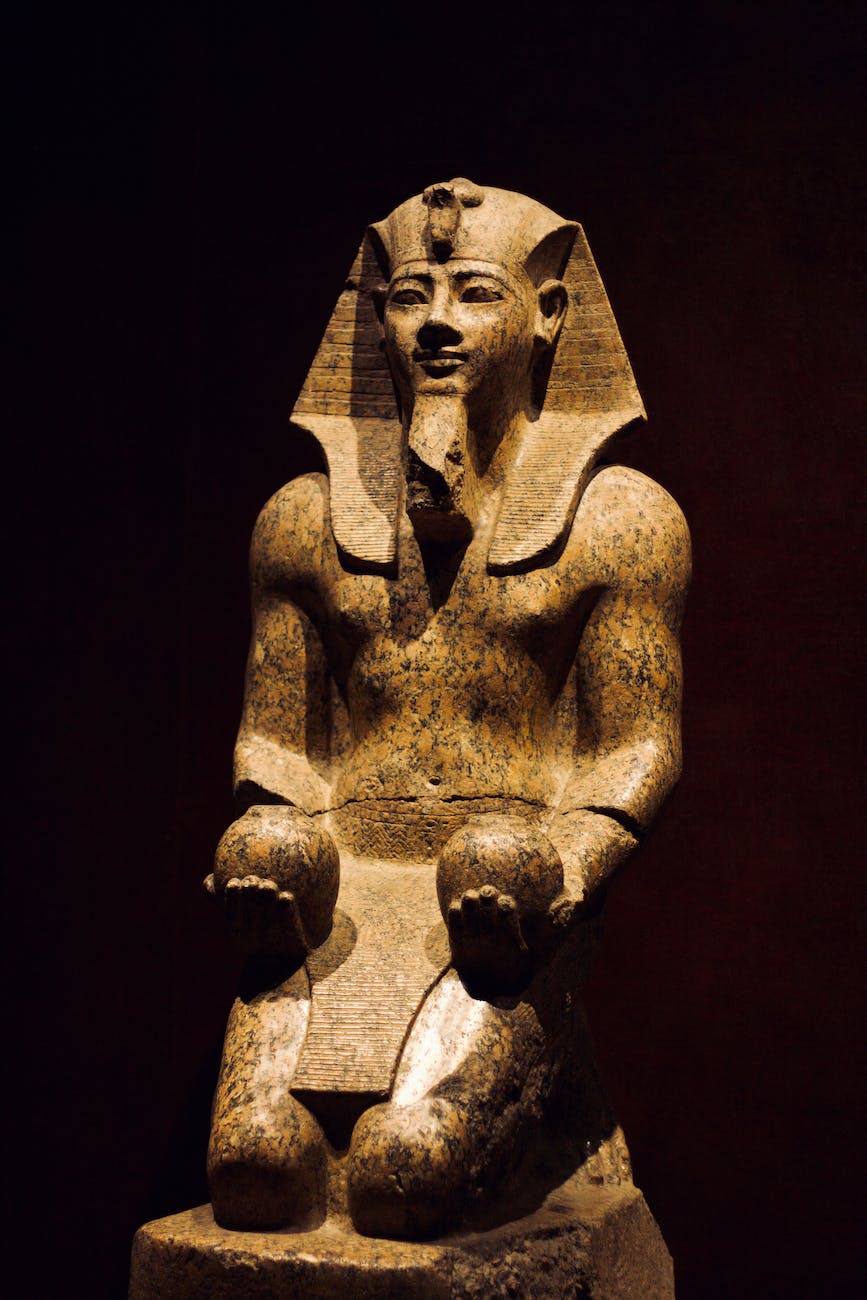
God is not an American. He is not a Democrat or Republican. God is Sovereign over all the Earth. He does not “take sides,” in any way that we would understand. God, who promised to be the God of Abraham, Isaac, and Jacob– who promised to lead them to a land He would show them, and to establish their nation–is the same God who raised up Nebuchadnezzar to rule the Israelites during their exile. He is the same God who raised up Pharaoh, who enslaved the people of Israel, and used Pharaoh’s own stubbornness to reveal His power during the plagues and the parting of the Red Sea. God uses unlikely people to accomplish His purposes, NOT our agenda.

Photo by antonio filigno on Pexels.com

I believe that Christians have a clear duty to vote and to participate in civic matters. And I believe that Christians should be informed and critical voters, not rubber-stamping a candidate or agenda just because s/he/it “looks good.” But I also believe that Christians are to be honest people of integrity and honor, regardless of the outcome of a particular election cycle. That doesn’t mean that we can’t speak out against injustice, corruption, or deceptive campaign ads; nor does it mean that we can’t be conflicted about imperfect laws and candidates. In the final analysis, our ultimate allegiance and our ultimate trust must be found in God and in His Word. We are citizens of God’s Kingdom first, and our nation after that.

Groups, whether political or social groups, must be very careful about claiming that “God is on our side.” We must be far more concerned with whether or not WE are on GOD’S side! As individuals, are WE humble, honest, obedient, and committed to the truth? Are we working to build up our neighborhoods? Are we caring for the poor, the widows, and the fatherless among us? Are we turning a blind eye to evil in our midst, or worse, winking at corruption or excusing those in power when they abuse it in “our” favor?

Photo by Andrea Piacquadio on Pexels.com

God promises never to leave us nor forsake us (Hebrews 13:5). He promises to be by our side, all the way, all the time. But He never promised to be ON our side. It may be His will to bring judgment to our nation, our state, or our city, in the form of corruption and even failure. It may be His will to lead us through a time of hardship, chaos, and persecution. It may be His will to bring swift correction and justice where we have felt comfort and let our own moral standards grow lax. God’s will is always for us to grow, to improve, to become more disciplined in our own lives and more compassionate toward others around us. And His will is more important than our own comfort or being proved “right” over our political rivals.

Whatever God’s will is; whatever the outcome of tomorrow’s election, I pray that I will be a good citizen of His Kingdom, and a good citizen of my country. Of course, I hope that good measures and Godly candidates will prevail, but I know I can trust my Savior more than I can trust a ballot box. And His reign has no term limits!

Photo by Juhasz Imre on Pexels.com

Do You Not Know? Have You Not Heard?

Within the last couple of weeks, several major news stories have broken in the United States, where I live. The Supreme Court has ruled on several major cases, with “game-changing” results. Important national issues, such as gun control, abortion, and freedom of religious expression were involved, and many Americans are either elated or upset by the decisions that were rendered.

Photo by Viktoria Slowikowska on Pexels.com

My husband and I don’t have television; no 24-hour news channels, or opinionated talk shows, or even late-night comedian commentators reminding us of the “big news” of the day. But we have internet, and radio, and we talk to people who have access to TV. We would have to live under a rock to be uninformed of what has been happening. Yet we find that many people who have access to “news” have little or no understanding of what these decisions actually mean for our nation or its citizens. The Supreme Court did not “abolish” abortion; it did not eliminate gun controls or restrictions. It did not “bring prayer back into the schools.” What we “know” and what we have heard are not always the same.

Photo by Startup Stock Photos on Pexels.com

The prophet Isaiah, writing to the people of Jerusalem (Judah), repeats the phrase, “Do you not know? Have you not heard?” The Jewish people were supposed to know God’s eternal character. They were supposed to have heard His laws, and heard the stories of His faithfulness throughout the years. But the message had become garbled, distorted, and even lost. The people were going to be disciplined– they would go into exile; yet God would bring them comfort and forgiveness and restoration. Isaiah reminds his readers and listeners of God’s timeless character– His power and authority; His compassion and healing; His care and His discipline for those He loves.

Photo by Pixabay on Pexels.com

21 Do you not know?
    Have you not heard?
Has it not been told you from the beginning?
    Have you not understood since the earth was founded?
22 He sits enthroned above the circle of the earth,
    and its people are like grasshoppers.
He stretches out the heavens like a canopy,
    and spreads them out like a tent to live in.
23 He brings princes to naught
    and reduces the rulers of this world to nothing.
24 No sooner are they planted,
    no sooner are they sown,
    no sooner do they take root in the ground,
than he blows on them and they wither,
    and a whirlwind sweeps them away like chaff.

25 “To whom will you compare me?
    Or who is my equal?” says the Holy One.
26 Lift up your eyes and look to the heavens:
    Who created all these?
He who brings out the starry host one by one
    and calls forth each of them by name.
Because of his great power and mighty strength,
    not one of them is missing.

27 Why do you complain, Jacob?
    Why do you say, Israel,
“My way is hidden from the Lord;
    my cause is disregarded by my God”?
28 Do you not know?
    Have you not heard?
The Lord is the everlasting God,
    the Creator of the ends of the earth.
He will not grow tired or weary,
    and his understanding no one can fathom.
29 He gives strength to the weary
    and increases the power of the weak.
30 Even youths grow tired and weary,
    and young men stumble and fall;
31 but those who hope in the Lord
    will renew their strength.
They will soar on wings like eagles;
    they will run and not grow weary,
    they will walk and not be faint.

Isaiah 40:21-31 NIV

It’s not that Isaiah’s fellow citizens had never heard about God; it’s not that they had no knowledge of God’s laws or of His character. But they had become complacent; they had knowledge, but no understanding; no insight. They knew about God; they no longer KNEW God.

Photo by Ron Lach on Pexels.com

How often do we hear a bit of news and react without understanding all of its implications? How often do we jump to conclusions about what God is like, or what His will might be? How many times do we assume that what we think or feel comes from the Bible, without consulting it? How often do we pray, not that God’s will should be done, but that God should do our will?

Photo by Alex Green on Pexels.com

Violence (including shootings), abortion, religious intolerance and persecution– all have been around for centuries. Human laws and justice have a long history of being twisted, ignored, amended, rewritten, forgotten, and supplanted. Supreme Court rulings can be overturned; laws can be rewritten or struck down; cultural expectations and trends will change. While I may feel cause to celebrate some of the Supreme Court’s recent rulings, or be discouraged by others, now or in the future, I cannot put my hope and trust in them. But I can put my hope and trust in the power and authority of God! God’s rulings are absolute and eternal.

And if I hear nothing else today; if I know nothing else for certain– I can rely on His truth and His faithfulness forever!

Photo by Ketut Subiyanto on Pexels.com

Time to Renew

It’s that time of year again…my birthday is coming up and I will need to visit the Secretary of State’s office to renew my license plate tag; this year, my driver’s license also expires, so I have to renew that as well.

This is not a pleasant process– I will wait in line, answer questions, and have a photo taken.  I will write out a check or have money debited from my bank account (ouch).  I may have to wait another week or two for the new driver’s license to be sent out, and then I will have to live with the horrible photo for a few years. What a drag!  I often hear people complaining about the process–it’s a time-consuming, costly, bureaucratic nightmare, or it’s just an annoyance.

Except I don’t really “have to” do any of those things.  Being a licensed driver is not a life or death matter.  The law says that I must possess a valid license in order to drive, but thousands of people drive every day with no license, or a suspended or expired license, and “get away with it.”  Others choose not to drive, and do not carry a license or state-issued photo ID.

car side mirror showing heavy traffic
Photo by STANLEY NGUMA on Pexels.com

But I choose to go through the annoying process because of the benefits.  Driving is a privilege– one denied to many who can’t afford, or can’t operate a vehicle.  Renewing my license brings much-needed revenue to the state, so they can (attempt to) maintain the roads, bridges, and traffic-related signs and lights that we use every day.  Renewing shows my commitment to obey the laws and authorities that govern (the roads in and around) my city, county, state, and nation. Renewing my license gives me an opportunity to register (or confirm my status) as a voter.  It even gives me the opportunity to learn patience and people skills!

All this to talk about another kind of renewal…

Therefore, I urge you, brothers and sisters, in view of God’s mercy, to offer your bodies as a living sacrifice, holy and pleasing to God—this is your true and proper worship. Do not conform to the pattern of this world, but be transformed by the renewing of your mind. Then you will be able to test and approve what God’s will is—his good, pleasing and perfect will.  (Romans 12:1-2  NIV)

The Apostle Paul speaks about the “renewing of your mind.”  In renewing my license, I am conforming to the laws of the land.  This passage is not telling me to break the law; it is calling me to transform the way I view the world, the way I process the world, and the way I allow my thoughts to shape my behavior.  Instead of thinking about the license process as an inconvenience– I need to weigh the inconvenience against the benefits I receive from having a valid license.  Instead of focusing on the negatives around me– fear, hatred, selfishness, complaining, greed, lying, etc., I need to focus on how I can respond in hope, love, compassion, encouragement, generosity, and truth.  And I need to depend on the work of the Holy Spirit to transform the way I think about the world, about myself, and about God.

action asphalt automobile automotive
Photo by Taras Makarenko on Pexels.com

There is a lot of ugliness in the world, lately; but there is also a lot of beauty.  There are urgent needs, but there are also abundant resources in Christ Jesus.  There are hardships, but there are also moments of peace, healing, and hope.

It’s time for renewal!

Finally, brothers, whatever things are true, whatever things are honest, whatever things are just, whatever things are pure, whatever things are lovely, whatever things are of good report, if there is any virtue, and if there is any praise, think on these things.  (Philippians 4:8 MEV)

Blog at WordPress.com.

Up ↑