Therefore, there is now no condemnation for those who are in Christ Jesus, because through Christ Jesus the law of the Spirit who gives life has set you free from the law of sin and death.
I looked in the mirror this morning. There it was again, right in the middle of my forehead… “Failure.”
The label peeled off. But some residue was left behind. I could feel it. Every time I knit my brow, Every time I tried to smile, Every time I tried to look up.
I cried out, “God forgive me. I’m a failure.” But I thought I had been forgiven before. Why was I still wearing the label? Why did it keep coming back?
I looked closer at the label I had thrown away. “Made in USA.” Not “Made in Heaven” Labels are made on Earth. By other people. In my own mind.
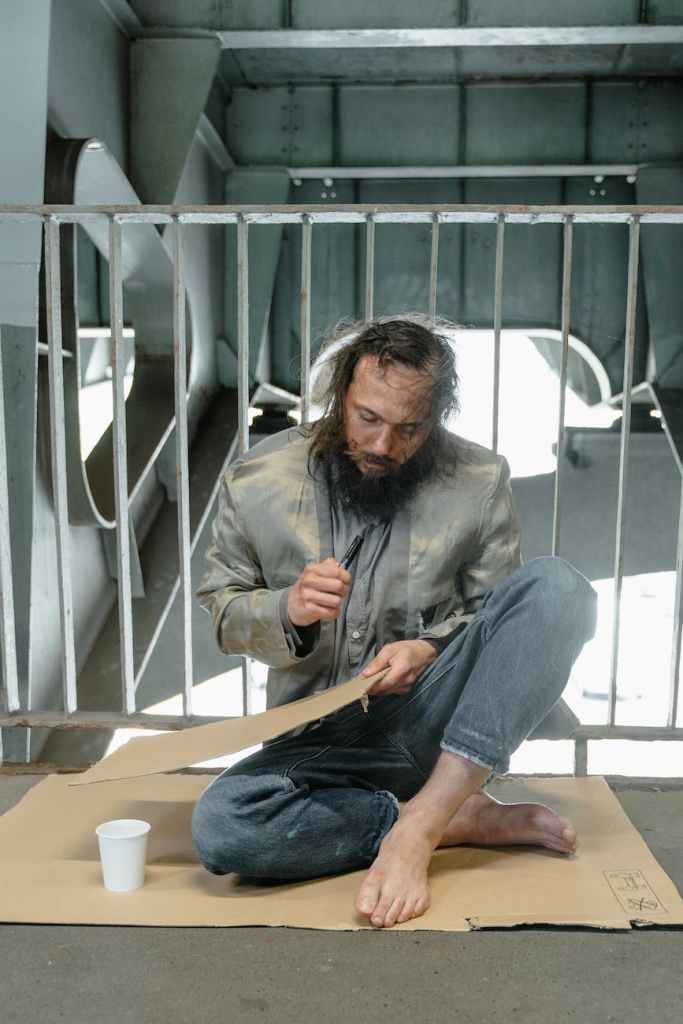
This time, when I looked up, I couldn’t feel it. But I saw the others– Wearing labels, just like me. “Failure” “Hateful” “Unwanted” “Used” “Unworthy”
And the labels were all made somewhere on Earth– “USA” “Pakistan” “China” “Zimbabwe” “Honduras”
The labels were hard to ignore. Someone had put them there for all to see. But what if I could look beyond the labels And just see the faces? Look into the eyes of my sister, And see the beauty God had intended to be there.
Father, Help me remember that there is NO Condemnation for those who belong to you. Condemnation comes from others. You are the righteous Judge, NOT the prosecutor. You have the authority to condemn– yet you offer Grace to anyone who will repent. Your only label is a banner of Love that says “Precious to the Lord.” Help me see Your label– whether in the mirror on on the street– whenever I look around.
In Romans 5:5, the Apostle Paul speaks of a “hope that does not disappoint” us– the hope that comes through the Love of God as poured out by the Holy Spirit. Yet, we still have times of disappointment, dashed dreams, and painful grieving. So what is Paul talking about?
Well, in context, he is speaking about the hope of our eternal salvation– we can have complete confidence in Christ’s finished work in obtaining our salvation and peace with God. While we may have doubts about many things in life, we need never doubt God’s promised salvation. But that does not mean that God has promised us an earthly life without disappointments, struggles, grief, or pain.
Sometimes, when we pray, we bring certain expectations– “hopes”– that God will act in the way we desire. We pray for miraculous healings, or an end to financial struggles, or finding the “perfect” spouse. God never promises any of these things. In fact, Jesus promised His disciples that “in this world, you will have trouble” (John 16:33)! But He goes on to say, “take heart, for I have overcome the world.” When our prayers seem to go unanswered, or God seems deaf to our desires, we can feel disappointed, even resentful. Our loved one dies. Our marriage falls apart. We lose our job, or our home.
It can be difficult in the moment, but we need to take stock of what it means to “hope.” If we put our hope in earthly things– even wonderful things–we WILL be disappointed at some point. People get sick and die. They make mistakes. Houses crumble, or face destruction by fire or storm. Relationships –no matter how much we may work at them–can fall apart. Our own bodies and our own wisdom can betray us. Circumstances cannot provide a secure base for our hopes. That doesn’t mean that we can’t cherish dreams and aspirations, but Hope must be based on something sure and eternal.
When we pray, we can bring all or our expectations, aspirations, dreams, and more– but our Hope must not be anchored in the circumstantial answers we want. We will face bitterness in our disappointment. But when our Hope is rooted in the God who keeps His promises, we will see beyond the temporary disappointments in our circumstances, and find that Hope will endure and sustain us THROUGH them.
People will disappoint; circumstances will let us down; expectations will deceive us. But Hope remains and sustains. We can pray, not with fear or doubt, but with confidence that God will hear us, and give us what we need most to face even our worst disappointments. After all, He promises that they are temporary in light of His eternal Love and Care.
If you are reading this blog, you have at least sixteen things for which to be thankful. Some of them may seem like minor things, but they can form the beginning of a much longer list.
First, (and this is NOT one of the smaller things) you are alive to read this. You woke up this morning (or afternoon, or whenever), and you have an opportunity to be thankful. Not everyone who was here yesterday can say that! Life is a precious commodity, and one that should cause us to be grateful.
I am (or was a few hours ago– hopefully I still am) alive to write this! You may or may not be very thankful for this fact, depending on whether or not you agree with me, or enjoy the blog, but I am very grateful…
You can see to read this. Close your eyes and imagine, or just look up from your screen to see all the other wonders within your sight!
You can access this blog to read it. We take for granted the availability of information and access to writings, graphics, and sound in the cyber age in which we live, but even 50 years ago it would have been impossible for a private person to share photos, writings, or videos to a global audience in real time. And the time may come when such sharing is tightly regulated, restricted, or forbidden. (Indeed, in certain areas, you may taking a risk to view this even now.)
You can read this. Worldwide, the literacy rate is estimated at 86.3% See wikipedia chart here You may think this is a small thing to point out, but in many countries–perhaps even the one you live in–this percentage is much smaller. And, if you look at historical accounts, literacy rates have exploded in just the last 100 years, especially for women.
You may be especially thankful if you are reading this in a second or third language, or if your computer is translating this into your native tongue.
You may not be reading this directly– if not, be grateful for whoever is able to read it to you, and is willing to do so.
If you have access to this blog, you probably have access to other modern conveniences — electricity, a cell phone or computer, indoor plumbing, etc. Even if your access is limited, sporadic, or expensive, it is still something many of our great-great-grandparents did not know.
Chances are that you have been the beneficiary of medical advances of which you are not even consciously aware…vaccinations, inoculations, surgery, better nutritional practices, and more– most of us living in the world today have never had to face the ravages of Polio; Smallpox, once a dreaded disease, was deemed to be eradicated within the last 50 years. It seems like such a small thing to be grateful for something you have never had, until you talk to someone or read about someone who DID have it.
You are completely unique and one-of-a-kind! Even if you are an “identical” sibling, you are not the same as anyone else living or anyone else who has ever lived! In all the world, throughout all time, there has never been or ever will be anyone exactly like you!
Conversely, you are part of a 7+ billion-member global family of humans who share the same commonalities– laughter, tears, hopes, disappointments, bad hair days (or no hair days), love, loss, hunger, and, sometimes, rest. We all have thoughts and feelings, and a purpose.
God LOVES YOU– in fact, He adores you. He loves you to death– and He died (and rose again) to prove it! The Father, Son and Holy Spirit look on you and love you–want the best for you throughout all eternity, and want to have a deep and powerfully transformative relationship with you– forever!
I am praying for you– perhaps not simultaneous to your reading this, but I pray for readers. I may not know your name, or where you are, or when you are reading this, but God does, and I’m praying to Him on your behalf. I’m also praying as I write each entry that God will be glorified and that what I write will glorify Him and help others.
God is even more readily accessible than anything I will ever send out– more than anything that can pop up in your news feed, nearer than your next door neighbor. God is available–whoever you are, however you feel, wherever you may be, whatever your circumstances, and whenever you call. Every moment of every day is an opportunity to pursue Him and interact with Him through prayer!
God is not just accessible, He has revealed Himself– through His creation, through His words, through prophecies, visions, and miracles, through the life and ministry of Jesus, and through the examples and lives of those who follow Him.
If you have reached this point, you may be scratching your head…I thought there were sixteen things…what’s left? Well, if you count the smaller bullet points above, this is number sixteen, and the fact that you are still counting means that you are counting your blessings– that’s a small thing, maybe, but I think it means that you want to be grateful– and THAT is another thing to celebrate!
Yesterday, my wonderful maternal grandmother would have celebrated her 110th earthly birthday. I have so many happy memories of times spent with her– of shared laughter and tears, walking barefoot through many yards and gardens, “overnights,” looking through her button tin, or her old jewelry box, helping her make homemade egg noodles, or cherry pie… But more than all these, I remember the feelings of peace, joy, and unconditional love whenever she was near.
My Grandmother, Beulah B.
Gram was one of the wisest persons I ever knew. She was patient and kind with everyone. I cannot remember ever hearing her say a spiteful or sarcastic word. She had a quiet sense of humor, and made everyone feel welcome and valuable. She was generous– not just with gifts, but with time and attention, especially for children. She was a hard worker, but she never seemed to look frenzied or “overworked.”
She and my grandfather were married for almost 63 years. She lived with him through many difficult times– during the Great Depression, there were many times when they could not be sure where they would live or what they would eat. Many nights were spent sleeping in spare rooms with family members. Grandad went to war in 1942, and Gram “held down the home front”– taking care of two little girls, and working the night shift as a riveter, while living with her parents. Things were better financially after the war, but Gram kept working– this time as a secretary. She and Grandad still moved around a lot–rented homes, apartments, mobile homes–each time making it look and feel better than it had ever been, or ever would be again. Gram planted flowers everywhere; Grandad collected animals. At the time of her death, Gram and Grandad were living in a rented house– the very house where Gram had been born 82 years earlier!
Gram’s given name was Beulah, named for her paternal grandmother. Her name means “married.” And Gram lived up to her name, and all it suggests. She was faithful, fruitful, and a wonderful companion and champion in her marriage. When she died, my grandfather was lost without her. We nearly lost him that very day. He only lived another four months after she passed.
If I had to choose a word to describe Gram, above all others, it would be faithful. She was faithful in everything she did– faithful to her marriage, faithful to her children and extended family, faithful at work, and faithful to God. Gram’s Bible was worn, and old, but she lived out its pages every day. Her trust in God was absolute– and it had been tested through all the hard times she had experienced. She KNEW she could trust in God’s provision and timing, because she had experienced it first hand. She did not make a fuss about her deep faith, nor did she ever deny the source of her peace and strength. Her life was not easy, but it was bountiful!
Today, as I reflect on her legacy, I am so grateful for her quiet example in my own life, and in the lives of others. I pray that I may leave such an impression before I pass on– that someone will be inspired to a lasting faith and find joy in their life’s journey because I have been faithful. Below is one of her favorite hymns: (I especially enjoy the piano in this clip, because it is close to how my Gram would have played it!)
Earlier this week, my husband and I went fishing. As we were enjoying our time on the lake, and catching a few fish, I was reminded of the old song I learned in Sunday School: “I will make you “fishers of men”…if you follow me.” Jesus said these words to His early followers, who were fishermen by trade (see Matthew 4:19). But what does it mean to be a “fisher of men?”
The primary meaning is that we have a commission– found in Matthew 28:19: “Therefore, go and make disciples of all nations..” We are to go and “catch” men and women, taking them out of the sinful lifestyles we see around us, and bringing them into the Kingdom of God, much as fishermen take fish out of a lake or sea and bring them into the boat. But what practical implications can we take from the practice of fishing, that might help us as we carry out our spiritual commission?
First we much go where the “fish” are, and actively work to catch them. I can go to the lake, dip my toes in the water, even get into a boat and go sailing, and never catch a fish. The fish will not jump into my boat, or jump out of the water into a net. I must make an effort. I can follow Christ, and go to church every Sunday, participate in many spiritual activities, even pray every day, but if I never interact with lost and hurting people I am unlikely to become a “fisher of men.”
Next, we must recognize that we won’t “catch” all the fish! I know some Christians who become discouraged and depressed if they go out for one day of “evangelizing” and don’t make converts. They give up after one negative or unsuccessful encounter. “I’m not an evangelist.” “I can’t share the gospel– I just don’t have what it takes…” Imagine if fishermen responded that way– “I cast out three times, and never got a fish– I give up!” This is especially discouraging because our Great Commission is not to “convert” everyone; not just to go out and “catch” men and women with a hook or a net, but to make disciples. It is a process, but it comes with risks and no guaranteed “return” on our investment. Some “fish” are not ready to be caught. Some are meant for other fishermen. This should not lead us to be apathetic about lost neighbors or relatives, but it should remind us that we are God’s witnesses, not His SWAT team. Even Jesus didn’t “convert” everyone He met! But He did love them!
Third, and closely related, we must expect resistance. It is not natural for most people to respond immediately to the Good News of the Gospel. After all, it involves admitting our need for salvation, and submitting to the will of God. Fish that are taken from the water will die! And we must “die” to our selves and our selfish nature if we are to become Disciples of Christ.
Finally (and this is a bit of a stretch of the analogy, but bear with me…), we must have the right bait. This is not to say that the Gospel is inadequate or insufficient for the task. Rather, that we are not meant to hit people over the head with only our words– even when they come from Scripture! We do not create disciples by offering a bare hook. People are hungry– hungry for answers; hungry for hope; hungry for peace; and hungry for love. The Gospel lives in US– WE need to offer more than just the words of the Gospel–we need to LIVE the Gospel! To offer only condemnation or smug arrogance makes a mockery of the very Gospel we are supposed to share. Likewise, we do not create disciples by offering a shiny but “fake” gospel of easy answers and “cheap” grace without truth or repentance. It may hook a few desperate or gullible people for a moment, but once again, it is not our mission to merely “hook” people.
David and I enjoy fishing– we enjoy spending time in God’s beautiful nature; we enjoy the quiet and peace; and we enjoy the challenge of finding where the fish are “biting” on a particular morning. And I’m so glad that Jesus gave us such wonderful analogies and word-pictures to help us understand His love for us and His plan for spreading the Good News. Finally, I’m glad that I’ve been taken from the “lake” of sin and given new life by the great “Fisher of Men!” I pray that I can help others find and follow Christ, as well.
Tomorrow is Flag Day in the United States– a day in which we honor our nation’s flag and all for which it stands. It is an odd holiday in a sense; most countries have a national day of celebration, but not a whole day just to celebrate their flag. We already have an day to celebrate our Independence, and days to honor the sacrifices of soldiers or the dates of famous military victories in our history. Why should we spend a day honoring our flag. Isn’t that arrogant? Isn’t it taking nationalism a bit too far?
Flags and banners are important to us. They are a visual representation of an idea or a series of ideas–“America,” perhaps, but also, “Freedom,” “Loyalty,” “Sacrifice,” “Honor,” “Bravery,” etc. We have national flags, state flags, organizational flags, family crests, even sports team flags and mascots. Flags can be used to rally troupes and inspire citizens, signify commitment to a cause or nationality, show pride or loyalty, and represent ideals held by those in a group. Colors, shapes, stripes, animals or plants, stars, shields, letters or single words– all represent something important or noble to those who see them on a flag or banner. And there is no real point to having a flag if you are never going to display it or let it fly high for all to see.
In the Song of Solomon (Song of Songs) the bride tells that her lover has brought her to a house of feasting, and that “his banner over me is love.” (Song of Solomon 2:4) The Song is an allegory that can be seen as Christ and His Church. Christ also has a banner–and it is Love–not the romantic love of the Song, but everlasting and limitless love! His Love rallies us, unites us, inspires us, and leads us. When we look for a symbol of who Christ is (and what the Church should be) we use a flag of white with a cross symbol in red on a blue (or sometimes purple) background for the corner. The white represents Christ’s purity, and the pure white robes that will be given to His saints. The blue/purple represents Christ’s majesty and authority. The red of the cross is a reminder of the blood He shed on Calvary’s cross.
Banners and flags are important. But we don’t need a flag or banner to represent Christ’s love– WE are to be His banner for the world. The world should be able to look at us and see a reflection of the limitless and unconditional Love of Christ in the way we speak and interact with others, and the way we live our lives.
Today (and tomorrow) when we happen to see a flag, let us remember that we are Christ’s ambassadors– we do more than just absorb God’s love– we are to reflect it, and be living symbols of God’s great love for the World. We should be visible testimonies that God’s love is all-important, and available to all! May that be more than just a prayer– may it be our earnest pursuit every day.
Ninety years ago today, my grandparents were married in a small ceremony in Elkhart, Indiana. Thirty-one years later, my parents were married in another small ceremony in Cassopolis, Michigan. My grandparents were married almost 63 years before my grandmother passed away. My parents were married over 35 years before my dad passed. My mother, when I was preparing to marry, passed on some of the advice she had received from her grandparents (who were married over 50 years themselves!) . It involved what my great-grandmother called “selective hearing.”
My great-grandmother, my grandfather, and my mother were all “fussers.” They tended to fret and stew over little things. They liked to “vent” their feelings in the moment when they felt them. Their spouses learned to listen without comment, or even walk away and let their partners “get it out of their system.” Later, they could have a calmer discussion if the situation warranted it. Similarly, if the “fretting” partner was impatient about something, the other would sometimes selectively “ignore” a summons or critical remark. It wasn’t that they were bad listeners– in fact they were excellent listeners–but they learned the wisdom of not immediately responding or reacting to things said in moments of emotion or frustration. They were listening beyond just the words that were being spoken– especially when the words were many and emotional!
God is always listening to us. He hears our every cry for help, and also all of our complaints! In His wisdom, He also practices “selective hearing.” He may sometimes seem silent or even indifferent; but often He is letting us “talk it out of our system.” He remains with us, ready to give us the help we need, but not willing to indulge our emotional tirades or snits.
One of the greatest examples of this can be found in the Psalms. David (and other psalmists) often poured out all their fears and frustrations– “where are you, God?,” “why do the wicked prosper?,” “when will you rescue me?” Amazingly, many of their complaints and questions are not answered with a specific action. Yet these same psalms end with hope and assurance–as the psalmist “talks it out,” he is reminded of God’s essential character and faithfulness through the years. God’s steady and gentle presence, though silent, communicates His commitment and Love.
I tend to be a “fretter,” and my loving husband has learned to have “selective hearing” around me. His faithful presence and willingness to let me “talk it out” without judgment and recrimination is very freeing. David very seldom “frets,” but when he does, I am learning to respond with wisdom and selectively hear what is in his heart, and not just what comes out of his mouth in a moment of frustration.
I am so thankful for the wisdom of God (and the wisdom of my husband), that doesn’t immediately jump into my occasional emotional whirlpool, but waits to pull me out and set me on calmer, solid ground! I am grateful for God’s “selective hearing!”
This coming Monday we will be celebrating Memorial Day in the U.S. It is a day to remember those who gave their lives in battle, defending our nation, our people, and our way of life over the course of almost 250 years. We decorate the graves of fallen soldiers with flowers and flags and plaques honoring their sacrifices. It is a strange sort of “holiday.” We don’t like to think of wars and battles– we ache for those who are terrorized by wars in the current days. We don’t celebrate war and violence– our highest goal is to achieve and preserve peace and safety. And it can seem somewhat morbid to “celebrate” the fallen soldiers of bygone days.
But we are not celebrating their deaths. We are celebrating the causes for which they fought and died. We celebrate freedom, and justice; the rights of individuals to pursue liberty and fulfill their dreams. These are causes worth fighting for, and yes, even dying for. We mourn the loss of life, and we grieve the necessity of fighting and struggling to preserve basic rights. But we are grateful for and humbled by the examples of those who have shown the courage and strength to give their all. We honor these sacrifices when we decorate the graves of fallen soldiers, or hold services and memorials at cemeteries. It is not meant to be a time of joyful celebration, but a time of solemn reflection and humble gratitude.
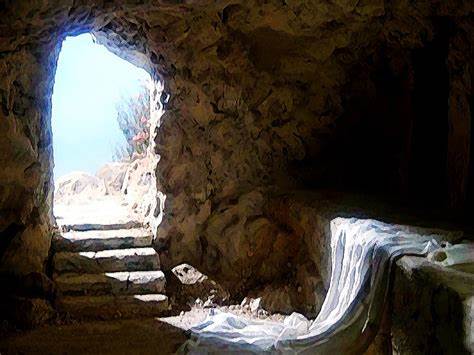
But Memorial Day can also be a time of reflecting on an empty grave– that of Jesus Christ, who gave His all for a cause even greater than liberty and justice in a particular nation or time or for a particular group of people. Jesus gave His life to reconcile an unholy human race with a Holy and Righteous God. He fought against Sin and Death, and conquered them both. And we cannot decorate a grave to honor His sacrifice, because, unlike all the soldiers we honor next week, Jesus did not just preserve a cause or a way of life– He became Life for us. His grave is empty as a symbol of Death’s defeat!
It was Jesus Himself who said, “Greater love has no one than this, that one lay down his life for his friends.” (John 15:13 NASB) Soldiers who lay down their lives often do so to save the lives of their comrades at arms– their friends and fellow warriors– as well as their countrymen and women, their neighbors, and their families. And it isn’t just soldiers who give their lives. Recent news stories tell of teachers, police officers, and other individuals who have sacrificed their lives for the sake of innocent shoppers, students, and neighbors. Such sacrifices are tragic, but they are also heroic, and deserving of our acknowledgement.
We take time to honor those who died for a cause. How much more should we honor the One who died to bring eternal freedom and life to each one of us! And how much more should we be willing to give our lives for the sake His Kingdom! There is no greater love that we can show.
Yesterday at church we were challenged to share our testimony. I have shared my testimony several times, but I haven’t shared it in this space in a long while (if ever), so here goes:
When I was about 4 1/2 years old, I became a big sister. I was excited about this, but after my younger sister arrived, I had a terrible time with jealousy and resentment. She was tiny and adorable, and she had my Dad’s blue eyes (they later changed to a greenish/hazel color like mine, but everyone commented on her eyes, and never on mine). One day, filled with this resentment, I made a rather impulsive decision to poke my sister in the eye with a sharp stick. At that age, I wasn’t completely aware of the danger and damage I would have done, but I still knew it was wrong. I didn’t succeed– my mother caught me in time and got a stern talking-to about what had almost happened. Not wanting to face punishment and Mom’s anger, I burst into tears and said I was sorry. Surely a show of remorse would make everything all right. That’s how it worked on television, and it had worked for me that way in the past.
But this time was different. Mom was frightened by what might have happened, and unimpressed with my tears. She explained quite clearly that what I had attempted could have ended in disaster, and that no amount of “sorry” would have undone my action. I had to face punishment (probably less severe than I deserved, but it felt awful at the time). She also explained that she was both frightened of and disappointed in my action. She would tell my father, who would also be ashamed of my behavior. Now I was truly frightened. What if Mom and Dad never got over their disappointment? What if they stopped loving me? Not only that, but Jesus had seen everything: He knew what I had been about to do and WHY! I had learned about Jesus in Sunday School. He was kind and gentle and loved all the little children. What if He stopped loving me after He saw what I did? What if I had succeeded in hurting my sister and it could never be made right? What if I said I was sorry, and no one believed me? Even Jesus?
I can still remember the feelings of terror and shame– that kind and gentle and Holy Jesus might be disgusted with me; that my resentment and anger had separated me from Him, and that I could not “undo” it or “sorry” my way out of it. Certainly, I was coming to realize that He had (through my mom) stopped me from completing my evil plan –WHEW!– but He KNEW that I would have done it. And I wouldn’t have been sorry for my jealousy, or for my sister’s pain in that moment. Not really sorry. I recognized in that moment that I wasn’t a nice person or a good or righteous person. If Jesus loved me, I didn’t deserve it.
Mom must have seen the change in me, because she stopped and took the time to walk me through the lessons I was still learning in Sunday School. We are all sinners, and unworthy of the love and blessing of a Holy God. Yet Jesus came and offered to love us– to love us SO much that He was willing to die to remove the sting and shame of Sin and its consequences. And Jesus’ love is SO powerful that it can take a rotten, sinful heart and cleanse it completely. Mom and Dad could love and forgive me. But it would involve more than just saying, “I’m sorry.” I had to mean it. I had to choose to let Jesus take control of my resentment, and my wrong thinking, and ask Him for forgiveness. In fact, only Jesus can offer complete and everlasting forgiveness! I am not a righteous person; others can see that I am not a righteous person– yet Jesus can see me, not as I have been, but as I can be– perfected through Him! I asked Jesus to do just that– to come into my heart; to live in and through me; to renew me and change my mind and heart to be more like His.
Jesus Loves ME– this I KNOW For the Bible tells me so. Little ones to Him belong. They are weak, but He is strong!
I had sung this song many times, but now it made sense to me in an entirely new way. That was over 50 years ago, and I must admit that I have had moments of failure and embarrassment; times when I have chosen my own will and emotions over what I know to be right. I have had moments of doubting whether Jesus could still love me after things I’ve said and done. But time after time, I come back to that simple truth that Jesus, for reasons I cannot explain or fully understand, Loves Me– He Really Loves Me! His offer of forgiveness isn’t phony or conditional or limited. Not because I deserve unconditional love or a thousand “second chances.” Simply because HE LOVES ME!
And He Loves You, too! Right now, right where you are, just as you are– He Loves You! Whether you’ve never known that, or been sure of that, or whether you’ve had moments of doubt because of something you’ve said or done (or left undone or said)–Jesus Loves You! And He wants to give you a New heart and a New Life– one that is free of lingering shame and fear; one that is eternal and filled with joy and peace!
“Blessed are the merciful, for they will be shown mercy” (Matthew 5:7).
Am I merciful when I pray? That’s not a question I normally ask, but I’m looking at the Beatitudes, and how they relate to my pursuit of prayer. I pray for justice; I pray for healing; I pray to be more Christlike, but do I specifically pray about mercy? Certainly, I thank God for HIS mercy toward me, and I hope I show mercy to others, but does it enter my prayer life?
It’s easy to pray for mercy for ourselves, when we know we deserve justice (and punishment). It’s easy to ask for mercy for our loved ones. But do I pray to become more merciful? Do I pray for a greater love of Mercy? In Micah 6:8, we are told that God requires three things– to do justice, to love mercy, and to walk humbly with Him. Often, it is easier to love justice, do mercy (when it suits us) and walk in our own way, asking God to follow US as we go through the day– bless me, bless my work, bless my travels, etc..
Mercy requires a knowledge of justice and a humble acceptance of God’s sovereignty. Justice is NOT whatever we think is “fair” or “equitable” in a certain set of circumstances. Justice is defined by God, and the only way to “do justice” is to obey His will. We will not “love mercy” until we experience it at God’s hands.
That’s really what this Holy Week is all about–God’s justice, God’s Mercy, and His Victory and Lordship. As we go through this week, in preparation for Easter, it is vital to meditate on what Jesus DID for justice to be satisfied, the depth of His Love that caused Him to suffer and die to provide, not just mercy, but Unspeakable Grace, and the humility He demonstrated in His time on earth– serving, sacrificing, even dying the painful and humiliating death on a cross–all for me; all for you.
And we must be careful about making Mercy all about us and all about the here and now. We live in a culture of “instant gratification.” We want God’s mercy to “fix” the immediate problems we see around us. Those who are merciful WILL be shown mercy– but we may not see instant ease and comfort in a situation where others hold a grudge, or where the natural consequences of our sin still exist. We have been justified before God– He will not count those sins against us–but we still live in the fallen world where sin leads to death and destruction. God will redeem all things in His time, and we can trust that His mercy will triumph over even the worst of circumstances, but we may still have to endure suffering for a season.
When we come to God in prayer, we have no right to withhold mercy– either from those who may have offended us, or from ourselves for things we did in the past. Mercy is a gift– one we cannot give without having received it, and one we cannot hold on to without sharing it freely. When we pray for our enemies, we must pray with a heart of mercy– not because they deserve it, but because God’s sovereignty demands it.