Tomorrow is Flag Day in the United States– a day in which we honor our nation’s flag and all for which it stands. It is an odd holiday in a sense; most countries have a national day of celebration, but not a whole day just to celebrate their flag. We already have an day to celebrate our Independence, and days to honor the sacrifices of soldiers or the dates of famous military victories in our history. Why should we spend a day honoring our flag. Isn’t that arrogant? Isn’t it taking nationalism a bit too far?
Flags and banners are important to us. They are a visual representation of an idea or a series of ideas–“America,” perhaps, but also, “Freedom,” “Loyalty,” “Sacrifice,” “Honor,” “Bravery,” etc. We have national flags, state flags, organizational flags, family crests, even sports team flags and mascots. Flags can be used to rally troupes and inspire citizens, signify commitment to a cause or nationality, show pride or loyalty, and represent ideals held by those in a group. Colors, shapes, stripes, animals or plants, stars, shields, letters or single words– all represent something important or noble to those who see them on a flag or banner. And there is no real point to having a flag if you are never going to display it or let it fly high for all to see.
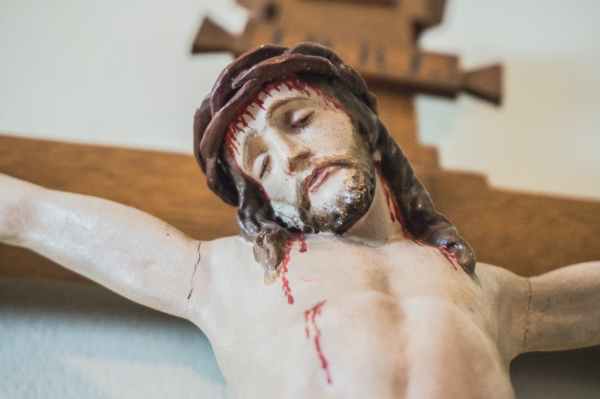
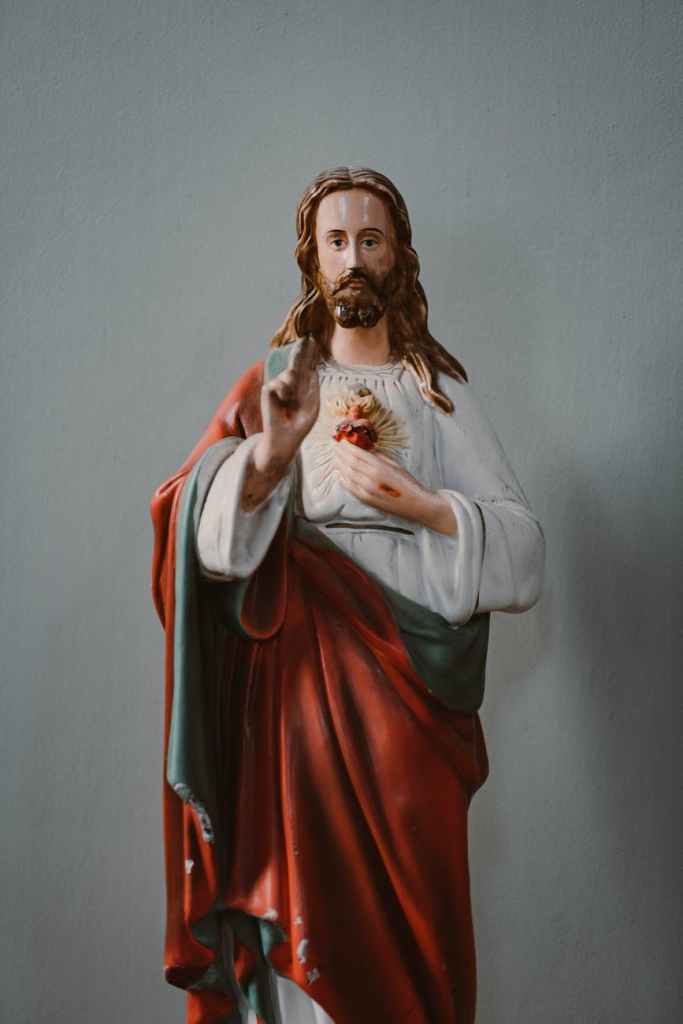
In the Song of Solomon (Song of Songs) the bride tells that her lover has brought her to a house of feasting, and that “his banner over me is love.” (Song of Solomon 2:4) The Song is an allegory that can be seen as Christ and His Church. Christ also has a banner–and it is Love–not the romantic love of the Song, but everlasting and limitless love! His Love rallies us, unites us, inspires us, and leads us. When we look for a symbol of who Christ is (and what the Church should be) we use a flag of white with a cross symbol in red on a blue (or sometimes purple) background for the corner. The white represents Christ’s purity, and the pure white robes that will be given to His saints. The blue/purple represents Christ’s majesty and authority. The red of the cross is a reminder of the blood He shed on Calvary’s cross.
Banners and flags are important. But we don’t need a flag or banner to represent Christ’s love– WE are to be His banner for the world. The world should be able to look at us and see a reflection of the limitless and unconditional Love of Christ in the way we speak and interact with others, and the way we live our lives.
Today (and tomorrow) when we happen to see a flag, let us remember that we are Christ’s ambassadors– we do more than just absorb God’s love– we are to reflect it, and be living symbols of God’s great love for the World. We should be visible testimonies that God’s love is all-important, and available to all! May that be more than just a prayer– may it be our earnest pursuit every day.
Ninety years ago today, my grandparents were married in a small ceremony in Elkhart, Indiana. Thirty-one years later, my parents were married in another small ceremony in Cassopolis, Michigan. My grandparents were married almost 63 years before my grandmother passed away. My parents were married over 35 years before my dad passed. My mother, when I was preparing to marry, passed on some of the advice she had received from her grandparents (who were married over 50 years themselves!) . It involved what my great-grandmother called “selective hearing.”
My great-grandmother, my grandfather, and my mother were all “fussers.” They tended to fret and stew over little things. They liked to “vent” their feelings in the moment when they felt them. Their spouses learned to listen without comment, or even walk away and let their partners “get it out of their system.” Later, they could have a calmer discussion if the situation warranted it. Similarly, if the “fretting” partner was impatient about something, the other would sometimes selectively “ignore” a summons or critical remark. It wasn’t that they were bad listeners– in fact they were excellent listeners–but they learned the wisdom of not immediately responding or reacting to things said in moments of emotion or frustration. They were listening beyond just the words that were being spoken– especially when the words were many and emotional!
God is always listening to us. He hears our every cry for help, and also all of our complaints! In His wisdom, He also practices “selective hearing.” He may sometimes seem silent or even indifferent; but often He is letting us “talk it out of our system.” He remains with us, ready to give us the help we need, but not willing to indulge our emotional tirades or snits.
One of the greatest examples of this can be found in the Psalms. David (and other psalmists) often poured out all their fears and frustrations– “where are you, God?,” “why do the wicked prosper?,” “when will you rescue me?” Amazingly, many of their complaints and questions are not answered with a specific action. Yet these same psalms end with hope and assurance–as the psalmist “talks it out,” he is reminded of God’s essential character and faithfulness through the years. God’s steady and gentle presence, though silent, communicates His commitment and Love.
I tend to be a “fretter,” and my loving husband has learned to have “selective hearing” around me. His faithful presence and willingness to let me “talk it out” without judgment and recrimination is very freeing. David very seldom “frets,” but when he does, I am learning to respond with wisdom and selectively hear what is in his heart, and not just what comes out of his mouth in a moment of frustration.
I am so thankful for the wisdom of God (and the wisdom of my husband), that doesn’t immediately jump into my occasional emotional whirlpool, but waits to pull me out and set me on calmer, solid ground! I am grateful for God’s “selective hearing!”
This coming Monday we will be celebrating Memorial Day in the U.S. It is a day to remember those who gave their lives in battle, defending our nation, our people, and our way of life over the course of almost 250 years. We decorate the graves of fallen soldiers with flowers and flags and plaques honoring their sacrifices. It is a strange sort of “holiday.” We don’t like to think of wars and battles– we ache for those who are terrorized by wars in the current days. We don’t celebrate war and violence– our highest goal is to achieve and preserve peace and safety. And it can seem somewhat morbid to “celebrate” the fallen soldiers of bygone days.
But we are not celebrating their deaths. We are celebrating the causes for which they fought and died. We celebrate freedom, and justice; the rights of individuals to pursue liberty and fulfill their dreams. These are causes worth fighting for, and yes, even dying for. We mourn the loss of life, and we grieve the necessity of fighting and struggling to preserve basic rights. But we are grateful for and humbled by the examples of those who have shown the courage and strength to give their all. We honor these sacrifices when we decorate the graves of fallen soldiers, or hold services and memorials at cemeteries. It is not meant to be a time of joyful celebration, but a time of solemn reflection and humble gratitude.
But Memorial Day can also be a time of reflecting on an empty grave– that of Jesus Christ, who gave His all for a cause even greater than liberty and justice in a particular nation or time or for a particular group of people. Jesus gave His life to reconcile an unholy human race with a Holy and Righteous God. He fought against Sin and Death, and conquered them both. And we cannot decorate a grave to honor His sacrifice, because, unlike all the soldiers we honor next week, Jesus did not just preserve a cause or a way of life– He became Life for us. His grave is empty as a symbol of Death’s defeat!
It was Jesus Himself who said, “Greater love has no one than this, that one lay down his life for his friends.” (John 15:13 NASB) Soldiers who lay down their lives often do so to save the lives of their comrades at arms– their friends and fellow warriors– as well as their countrymen and women, their neighbors, and their families. And it isn’t just soldiers who give their lives. Recent news stories tell of teachers, police officers, and other individuals who have sacrificed their lives for the sake of innocent shoppers, students, and neighbors. Such sacrifices are tragic, but they are also heroic, and deserving of our acknowledgement.
We take time to honor those who died for a cause. How much more should we honor the One who died to bring eternal freedom and life to each one of us! And how much more should we be willing to give our lives for the sake His Kingdom! There is no greater love that we can show.
Yesterday at church we were challenged to share our testimony. I have shared my testimony several times, but I haven’t shared it in this space in a long while (if ever), so here goes:
When I was about 4 1/2 years old, I became a big sister. I was excited about this, but after my younger sister arrived, I had a terrible time with jealousy and resentment. She was tiny and adorable, and she had my Dad’s blue eyes (they later changed to a greenish/hazel color like mine, but everyone commented on her eyes, and never on mine). One day, filled with this resentment, I made a rather impulsive decision to poke my sister in the eye with a sharp stick. At that age, I wasn’t completely aware of the danger and damage I would have done, but I still knew it was wrong. I didn’t succeed– my mother caught me in time and got a stern talking-to about what had almost happened. Not wanting to face punishment and Mom’s anger, I burst into tears and said I was sorry. Surely a show of remorse would make everything all right. That’s how it worked on television, and it had worked for me that way in the past.
But this time was different. Mom was frightened by what might have happened, and unimpressed with my tears. She explained quite clearly that what I had attempted could have ended in disaster, and that no amount of “sorry” would have undone my action. I had to face punishment (probably less severe than I deserved, but it felt awful at the time). She also explained that she was both frightened of and disappointed in my action. She would tell my father, who would also be ashamed of my behavior. Now I was truly frightened. What if Mom and Dad never got over their disappointment? What if they stopped loving me? Not only that, but Jesus had seen everything: He knew what I had been about to do and WHY! I had learned about Jesus in Sunday School. He was kind and gentle and loved all the little children. What if He stopped loving me after He saw what I did? What if I had succeeded in hurting my sister and it could never be made right? What if I said I was sorry, and no one believed me? Even Jesus?
I can still remember the feelings of terror and shame– that kind and gentle and Holy Jesus might be disgusted with me; that my resentment and anger had separated me from Him, and that I could not “undo” it or “sorry” my way out of it. Certainly, I was coming to realize that He had (through my mom) stopped me from completing my evil plan –WHEW!– but He KNEW that I would have done it. And I wouldn’t have been sorry for my jealousy, or for my sister’s pain in that moment. Not really sorry. I recognized in that moment that I wasn’t a nice person or a good or righteous person. If Jesus loved me, I didn’t deserve it.
Mom must have seen the change in me, because she stopped and took the time to walk me through the lessons I was still learning in Sunday School. We are all sinners, and unworthy of the love and blessing of a Holy God. Yet Jesus came and offered to love us– to love us SO much that He was willing to die to remove the sting and shame of Sin and its consequences. And Jesus’ love is SO powerful that it can take a rotten, sinful heart and cleanse it completely. Mom and Dad could love and forgive me. But it would involve more than just saying, “I’m sorry.” I had to mean it. I had to choose to let Jesus take control of my resentment, and my wrong thinking, and ask Him for forgiveness. In fact, only Jesus can offer complete and everlasting forgiveness! I am not a righteous person; others can see that I am not a righteous person– yet Jesus can see me, not as I have been, but as I can be– perfected through Him! I asked Jesus to do just that– to come into my heart; to live in and through me; to renew me and change my mind and heart to be more like His.
Jesus Loves ME– this I KNOW For the Bible tells me so. Little ones to Him belong. They are weak, but He is strong!
I had sung this song many times, but now it made sense to me in an entirely new way. That was over 50 years ago, and I must admit that I have had moments of failure and embarrassment; times when I have chosen my own will and emotions over what I know to be right. I have had moments of doubting whether Jesus could still love me after things I’ve said and done. But time after time, I come back to that simple truth that Jesus, for reasons I cannot explain or fully understand, Loves Me– He Really Loves Me! His offer of forgiveness isn’t phony or conditional or limited. Not because I deserve unconditional love or a thousand “second chances.” Simply because HE LOVES ME!
And He Loves You, too! Right now, right where you are, just as you are– He Loves You! Whether you’ve never known that, or been sure of that, or whether you’ve had moments of doubt because of something you’ve said or done (or left undone or said)–Jesus Loves You! And He wants to give you a New heart and a New Life– one that is free of lingering shame and fear; one that is eternal and filled with joy and peace!
“Blessed are the merciful, for they will be shown mercy” (Matthew 5:7).
Am I merciful when I pray? That’s not a question I normally ask, but I’m looking at the Beatitudes, and how they relate to my pursuit of prayer. I pray for justice; I pray for healing; I pray to be more Christlike, but do I specifically pray about mercy? Certainly, I thank God for HIS mercy toward me, and I hope I show mercy to others, but does it enter my prayer life?
It’s easy to pray for mercy for ourselves, when we know we deserve justice (and punishment). It’s easy to ask for mercy for our loved ones. But do I pray to become more merciful? Do I pray for a greater love of Mercy? In Micah 6:8, we are told that God requires three things– to do justice, to love mercy, and to walk humbly with Him. Often, it is easier to love justice, do mercy (when it suits us) and walk in our own way, asking God to follow US as we go through the day– bless me, bless my work, bless my travels, etc..
Mercy requires a knowledge of justice and a humble acceptance of God’s sovereignty. Justice is NOT whatever we think is “fair” or “equitable” in a certain set of circumstances. Justice is defined by God, and the only way to “do justice” is to obey His will. We will not “love mercy” until we experience it at God’s hands.
That’s really what this Holy Week is all about–God’s justice, God’s Mercy, and His Victory and Lordship. As we go through this week, in preparation for Easter, it is vital to meditate on what Jesus DID for justice to be satisfied, the depth of His Love that caused Him to suffer and die to provide, not just mercy, but Unspeakable Grace, and the humility He demonstrated in His time on earth– serving, sacrificing, even dying the painful and humiliating death on a cross–all for me; all for you.
And we must be careful about making Mercy all about us and all about the here and now. We live in a culture of “instant gratification.” We want God’s mercy to “fix” the immediate problems we see around us. Those who are merciful WILL be shown mercy– but we may not see instant ease and comfort in a situation where others hold a grudge, or where the natural consequences of our sin still exist. We have been justified before God– He will not count those sins against us–but we still live in the fallen world where sin leads to death and destruction. God will redeem all things in His time, and we can trust that His mercy will triumph over even the worst of circumstances, but we may still have to endure suffering for a season.
When we come to God in prayer, we have no right to withhold mercy– either from those who may have offended us, or from ourselves for things we did in the past. Mercy is a gift– one we cannot give without having received it, and one we cannot hold on to without sharing it freely. When we pray for our enemies, we must pray with a heart of mercy– not because they deserve it, but because God’s sovereignty demands it.
My husband and I own a shop. It is a dual shop: one part is a resale/collectibles/vintage and antiques shop, while the other part sells amateur radio equipment. We sell new and used radios, antennas, coaxial cable, power supplies, amplifiers, and other, smaller accessories, including connectors.
Connectors are small (usually only about an inch or two in length). But there are dozens of different types, connecting various sizes of cable and wire to various types of equipment. We have BNC connectors, SMA connectors, PL259 connectors, “male” to “female” connectors, and many more, with different sizes and styles in each type! I find it very confusing. It seems as though it would be much simpler if there was just one universal type of connector, that would work for all the radios and accessories.
I have a similar sense of confusion with other electronic connections– jacks and USB ports and charging ports–without the correct connection, many of our electronics just don’t work!
Human beings often have trouble with connections, as well. We speak different languages (even different dialects of the same language sometimes), have different interests and personalities, different life experiences– we just can’t seem to understand one another or connect to one another. We end up being confused, offended, hurt, angry, and isolated. Worse yet, our connections can break down– interests change, resentments build up, life experiences pull us in new directions, and sin corrupts relationships.
I’m so glad that God is the Universal Connector! No matter what I’m going through; no matter what I am thinking or feeling; no matter how I express myself, God understands me– even better than I understand myself! Others– even those closest to me– may misunderstand my words, my motives, or my emotions, but God knows exactly what I mean. And that connection is eternal. If I feel “disconnected” from God, there may be something wrong with my understanding, or I may choose not to listen to His wisdom. I may be “plugged into” something that distorts or distracts the message. But God never “tunes out” or loses the ability to hear my prayers or understand my thoughts.
Amazingly, God is connected in the same way to everyone! There is no need for Him to have hundreds of different connectors in order to get the message. He never needs a replacement part to enhance or clarify His understanding– no matter the language of the speaker, her/his life circumstances, or emotions. God understands the broken-hearted, the hurting, the overjoyed, the overwhelmed, and the confused among us. He lovingly listens to billionaires and bums alike. Drug addicts, rape victims, murderers, self-righteous snobs, “grammar police,” Pharisees, nose-pickers, thumb-suckers, braggarts, liars, thieves, model citizens, and PTSD patients– God “connects” with each one who seeks Him. God meets us where and how we are, because He knows and loves us without limits.
It can be frustrating to try to connect with some of our neighbors, co-workers, enemies, and even some of our family members. That’s one great reason to pray about our relationships– God can make connections even when and where we cannot. God can also build, strengthen, and redeem relationships that lack connection or have broken connections. Even those relationships that seem solid need help from the Universal Connector. Instead of trying to “make things fit” with someone else, or working harder to force an understanding, maybe today is a good day to stop saying more, and start praying more!
St. Francis was allowed to visit a 21st century university, which housed a chapel bearing his name. He was both honored and confused by the opportunity. Walking about the campus, he was amazed at the number and variety of students rushing to and fro; they were not looking at the grounds or the sidewalks or at each other– they were focused on their devices. It was a noisy campus, full of the sounds of buses and other traffic, music and podcasts playing, people arguing… Finally, St. Francis arrived at “his” chapel. It was a beautiful building, quiet and simple in its design. It was empty, except for a single student, saying her prayers. At the entrance, there was a plaque with a well-known prayer:
Lord, make me an instrument of Your peace; Where there is hatred, let me sow love; Where there is injury, pardon; Where there is doubt, faith; Where there is despair, hope; Where there is darkness, light; And where there is sadness, joy.
O Divine Master, Grant that I may not so much seek To be consoled as to console; To be understood, as to understand; To be loved, as to love; For it is in giving that we receive, It is in pardoning that we are pardoned, And it is in dying that we are born to Eternal Life. Amen.
Francis took a seat, absorbing the peaceful stillness, yet wondering at his assignment. Why had he been sent here? Why this moment in time? Taking his cue from the student, he also spent some time in prayer. Then he walked back outside.
He was struck again by the students– they were everywhere, but they were isolated. No one noticed him or stopped to speak. He tried to talk to someone–anyone–but they were all busy and not inclined to pause or interact. He noticed a coffee house across the street. Carefully avoiding speeding buses and weaving bikes, he crossed and entered the shop. It was a little quieter than the commons, but most of the customers were sipping their drinks and staring at screens–personal devices or the huge screen above the counter, streaming the latest news. War, scandal, protests, mud-slinging politicians, all made their appearance, only to be replaced by a commercial break and the next headline. No one stopped in horror at the litany of injustice, death, greed, or duplicity. They simply sipped their lattes and went back to scrolling through their Instagram accounts.
The door opened to admit the student he had seen earlier in the chapel. She glanced up at the big screen, shook her head, and ordered a coffee. She found a table, and sat down. The coffee house was busy; it was the last empty table. She smiled as another student came in. She invited the other student to sit with her. She started a conversation. At first, the other student was jumpy and disinclined to talk. But soon, the two students were chatting. The sound of it attracted attention. Some customers were bothered by the new noise; others were intrigued by the sound of real conversation– even laughter! Two other students brought their chairs and drinks over and joined the conversation. They spoke of missing their families, of struggling with certain classes, and enjoying others. They spoke of future plans, and the obstacles that stood in the way. They spoke of fears for the future, as well. Francis noticed that one student listened from a distance, but did not join the others. He seemed weary and despondent. Francis walked over and asked if he could just sit at his table for awhile. The young man was startled, but said, “Suit yourself.”
Francis sat in silence, his head bowed. Finally, the young man spoke quietly. “I saw you watching that girl. Just a word of warning– she’s a nut job. She comes in here about once a week, talking nonsense. She’s not even a student here.”
“And yet, I saw you were also watching her. She intrigues you.”
“I don’t know how she does it. She comes in here, talking about love and joy and faith, and people listen to her. They eat that stuff up. Don’t they know it’s all garbage? Look at the news! But she comes in, all smiling and happy– she’s crazy.”
“But she still intrigues you. Could it be that she is at peace, and you are not?”
“Peace?! Peace is nothing but an illusion. Power is what counts. Action. Look at her– she’s not doing anything to make the world better, and yet she acts like she’s got all the answers. It’s sickening!”
“Why do you keep watching her?”
“I don’t even know. She’s so stupid. She’s all wrong, and she acts like everything is fine.”
“Have you spoken to her? How do you know what she thinks and feels?”
“I’ve told you. She’s crazy. I don’t want to talk to someone like that.”
“Are you afraid?”
“Afraid of what?”
“That she’s not as crazy as you think. That she might laugh at your thoughts, the way you laugh at hers. That she won’t talk to you, like she talks to the others… Maybe you’re afraid of what you would say.”
“What do you mean?”
“What would you say to her if she spoke to you? Would you listen, or would you argue? Would you wipe the smile off her face and take away her joy and faith? Would you make the world a better place by winning your argument with her?”
The young man was at a loss for words. He suddenly noticed that other conversation had stopped. People were looking at him– even the young woman he had been talking about. His face turned red, and he jumped out of his seat and dashed out of the coffee house. The group dispersed, and Francis was left alone with the young woman.
“He may be right, you know,” she said with a wry smile. I don’t think I do enough to make the world a better place. I just sit and talk with people, and listen, and pray. It’s not much. Not enough to make a real difference.”
Francis put a hand on her shoulder and shook his head. “It is enough in God’s economy to be available. To be humble and willing and faithful. Keep up the good work. And may God bless you.”
Today, I am choosing to be thankful for snow. I don’t really like driving in it, or shoveling it, but there are some wonderful things about snow. God made it– in fact, the Bible says He has storehouses full of it (Job 38:22)! So what are some of the wonders of snow?
Snow acts as a natural insulator of soil, roots, and underground bulbs and plants. When temperatures plummet, the snow acts as a blanket, protecting all that lies below ground.
Snow– especially new-fallen, clean snow, reflects light and brightens the landscape. With less natural sunlight, this is very important, not just for plants, but for people. Physical and mental health is enhanced when we get adequate amounts of light. Visibility is also enhanced– even at night!– when there is a snowy ground-cover.
Snow is a better way to add moisture to the air and ground in winter–when winter rainfall freezes, it is much heavier and more dangerous than snowfall.
Snow can be fun! Skiing, sledding, making snowmen, and snow forts– it’s not just fun for children.
Snow can be good for business! Ski resorts, plowing services, parks with cross-country ski trails, and many others depend on snow.
Snow accumulates– especially in mountainous regions– and refreshes rivers and lakes as it melts in the spring. Running water from snowmelts feed brooks and streams, and replenishes underground springs and wells as it seeps in. In this way, God gently wakes up mountainside forests and glens, turning them from white (or gray) to vibrant green.
Snow is beautiful! (Especially if I don’t have to drive in it or shovel it.) It glistens on the bare tree branches and settles in mounds on the fields. It sparkles in the moonlight and glories in the sunrise. It delights us as it dances on the air, swirling and hovering and settling on our eyelashes or fingertips, only to melt away like a dream. We hear often about the marvel of snowflakes– each one is completely unique in its design and makeup. We may even take it for granted– especially after a particularly large snowstorm! But God chooses to lavishly pour out His creativity and love into each tiny flake that falls to the ground and melts with a mere breath. How much more does He pour out His love on each one of us!
God uses snow as a metaphor for His forgiveness. See Psalm 51:7, Isaiah 1:18. “Snow” white is considered pure, radiant, and refreshing. In just such a way, God can take our failures and mistakes, and replace them with His righteousness, making us pure, radiant, and able to be refreshed and to offer refreshment to others!
Transformed Humble Able to do “all things” through Christ No longer slaves to Sin Known by our Love for each other Fruitful Upheld in the power of His Love
We’re coming up to Thanksgiving in the U.S. next week. Many families will sit down to sumptuous meals–turkey with dressing/stuffing (depending on what region you live in), pumpkin pies, sweet potatoes, corn, beans, rolls or muffins, salads, mac and cheese, casseroles, cranberry sauce, and more. Some will settle in front of big screen televisions to watch American football, and parades crowded with giant balloons and marching bands. Some will have modest gatherings with family and friends.
And the following day– Black Friday– they will rush to malls and giant box stores to take advantage of the spectacular sales. People will buy hundreds of dollars worth of Christmas gifts, all with the satisfaction that they might have spent a lot more if they had not braved the crowds and the 4 a.m. opening times (some will begin shopping on Thanksgiving Day for the “head start.” Others will stay comfortably and safely indoors and spend their money shopping on-line).
All of this costs money, of course. But for many Americans, it is not a real pinch to celebrate Thanksgiving. And we will say “Thanks,” and count our many blessings. We will also give. Charities and organizations are already taking donations. We can give $10 at the store to help buy meals for the hungry. We can buy small gifts to be sent overseas or to be given to the children of those in prison, or those who are homeless. We can buy coats (or hats or mittens, etc.) for those who have none. These efforts cost some money, too.
But how much of these efforts comes from true “thankfulness” and how much from other sources– pride or guilt or a sense of duty? For what am I truly grateful at Thanksgiving? Thankful that I have so much? Thankful that I have the power to help others? Thankful that I have the day off to go shopping?
It is easy for some of us to be thankful and generous–in our own eyes. I can give with the click of a button, and money I barely know I have is taken from my bank account and deposited in the account of a charity I may know very little about. I never have to see the people who are helped, and I never have to see what they have suffered or how my gift makes a difference. In fact, I don’t really have to see whether my gift even arrives where I imagine or does what the charity has promised. Some organizations are more transparent than others, and more reputable or honest than others, but I can feel good just by giving. In some cases, I can “make a difference” without any cost at all– just “like” a certain site, or fill out a survey. I can “give” without even giving!
In recent years, however, I have been surprised by those who have tried to make me feel bad about giving. They are not angry because I have not given, or have given very little, or given to dishonest charities. No. One lady was outraged that I should give to an organization that sends toys, hygiene items, and school supplies to needy children in countries around the world. What caused her outrage? Three things–the toys were “too American”–the instructions were printed in English, or they were “frivolous” toys like jump ropes and “matchbox” sized cars and trucks. Also, some of the boxes and wrapping were printed with cartoon-like children, which she felt were “racist” in their depiction. Finally, the spokesperson for the organization had been portrayed by the media as narrow-minded and “hateful” toward the issue of gay marriage. Her solution: she was never going to give to such an organization. She was urging people to give to groups that were providing livestock, instead. Here, she felt, was a useful gift. Chickens, goats, cows–these were gifts that would truly make a difference. And such gifts can and do make a difference– in rural areas, where there is space and enough grass or other food to sustain such animals. Her gift will have little impact on a child living in Nairobi, or Tegucigalpa, or Kosovo. I am glad she has the means and the desire to give and to help. And the organizations who provide such gifts are worthy–I mean no disrespect to any of them. But giving should be a joyous outpouring of love and thankfulness, of compassion and humility. If that means helping a rural community get milk and meat, that’s wonderful. If it means sending a stuffed animal, some silly socks, and some soap and washcloths to Lebanon, that’s great, too. Even if I don’t like the wrapping paper…
My point is that a lot of our “giving” has become more about virtue signaling than joyously sharing with others to meet their needs. It costs a lot more in money to send a goat to Peru. But it may cost a lot more in time and energy to spend a day serving meals at a homeless shelter, or volunteer to rebuild in a community hit by a tornado or hurricane. And even though there may be a monetary cost to some of our gifts, in some ways, our “giving” costs us nothing. Not just little or nothing in dollars and cents, but little in emotion or thought or effort. There is nothing personal, or heartfelt, or sacrificial about some of our giving.
During the reign of King David, there are many instances of celebration and thanksgiving. But there are also stories of heartbreak, loss, and repentance. In one of these incidents, King David angered God by taking a census. His conscience caused him to ask God’s forgiveness and ask what could be done to take away the guilt. God sent the prophet Gad to give David three choices, but David left it in God’s hands. God sent a vicious plague that swept toward Jerusalem. When the angel of death reached the threshing floor of a man named Araunah the Jebusite, God told him to stop. David could actually see where God had stopped the plague, and immediately went to buy the threshing floor, so he could build an alter and sacrifice to the Lord in repentance and in thanksgiving for God’s mercy.
King David had plenty of money. He also had authority, and the respect of his people. Araunah offered to give David not only the field, but the oxen to make the sacrifice. As the king, David could have taken the land and oxen– he could even have demanded them of Araunah. But David paid for it all, saying that he would not give to God that which had cost him nothing.
In this season of giving, it can be tempting to measure the value of our gift by the monetary cost, or by the value WE receive from giving. But true giving should involve a willing and joyful sacrifice of our pride and our time. Sometimes, this may mean NOT giving a toy or a goat–it may mean giving an apology, or a second chance, or being willing to give up a turkey dinner or a shopping trip, in order to visit a shut-in, or spend some much needed time on our knees.
Having said that, there are plenty of things we can give that cost us “nothing”–smiles, a warm welcome, a listening ear, reaching out for reconciliation, and most of all, a heart-felt “Thank You.” Sometimes, these gestures cost us nothing– sometimes, they are a sacrifice. But they are gifts that really make a difference.