Mr. Teeter’s Song

When I was growing up, there was a man in our church named Mr. Teeter. He seemed impossibly old when I was a child– he’d been born in the 1800s! And he and his wife often looked like they were still living in the previous century. Mrs. Teeter wore dark-colored dresses that came past her calf, sturdy shoes, and a white cap over her carefully arranged, long white hair. Mr. Teeter always wore a suit to church, complete with a gray fedora. Mr. and Mrs. Teeter were both short–he was probably no taller than 5’4″, and she barely cleared five feet in height.

One of the weekly church meetings we attended was mid-week prayer meeting. Sometimes, we would start with worship and singing. Various people would call out old favorite hymns. Sometimes we had a pianist; sometimes we sang a Capella. And almost invariably, Mr. Teeter would request the same old hymn. He liked other hymns–“What a Friend We Have in Jesus,” or “He Lives! He Lives! I know He lives; He lives within my heart.” But his clear favorite was “I Love to Tell the Story.”

As a child, I found this frustrating. First of all, I liked to sing a variety of songs; this one was NOT one of my favorites, and I thought we were “wasting time” by always singing the same old songs. Secondly, because of his age, everyone deferred to Mr. Teeter, so even if other songs were called out, it was a given that his choice would probably win out.

But one evening, Mr. Teeter explained WHY he loved this old hymn so much. He said he had lived a rough life in his younger years– he drank more than he should, and he had a short temper. I was shocked. I could not imagine this tiny, wrinkled, gentle man as being anything other than how I knew him. He was dapper, soft-spoken, kind, and wise. When his wife suffered a stroke, he patiently and lovingly cared for her. He was generous and compassionate, even if I thought his musical taste was more limited than it might have been.

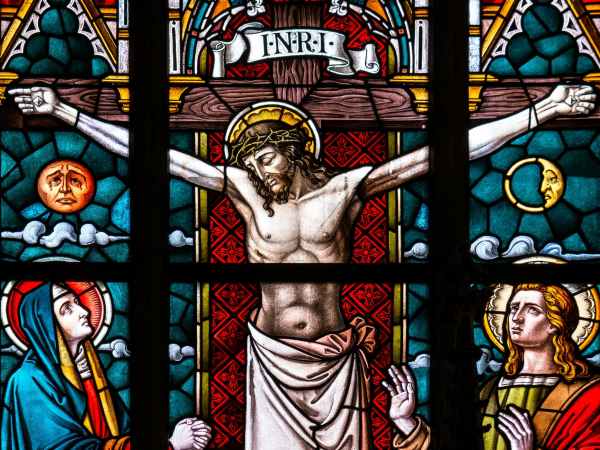
Instead of singing the song, he read it aloud. And after a couple of phrases, he would linger and talk about how, all these years later, he was still in love with the simple Gospel message– that Christ died for sinners, rose again and offered forgiveness and redemption to all who believed in Him. Mr. Teeter had never forgotten the joy and wonder of his Salvation. He never tired of “the old, old story” because it had changed his life in a dramatic and eternally satisfying way. Mr. Teeter died when I was still a teenager. He had cared for his wife until she died, and he was at peace when it came time to leave his life on earth. In fact, his face almost glowed as he lay in his casket. He was absent from the body, and ready to sing the “new, new song.”

There was nothing slick or intellectually challenging about Mr. Teeter’s testimony, but it was very real and powerfully moving. There was nothing musically exciting about the song he loved, but the message was eternally true, and worth singing over and over again. So many years later, whenever I hear this timeless hymn, I am reminded of how Jesus changed my life, and how grateful I am to sing His praises.

Today, as I remember Mr. Teeter and his faithful witness of God’s love and mercy, I pray that you know the simple and enduring truth of Christ’s love for you. And I pray that we would be as faithful in proclaiming the “Old, Old story of Jesus and His Love” as we go through life.

Praying for Time

When I was a late teen, and into my early twenties, I loved English pop music, including the duo, Wham! Their music was bubbly, upbeat (mostly), and easy to sing along to. I listened along, sang along, watched their videos, and danced along. When the duo broke up, I was eager to follow the rise of singer/songwriter George Michael, whose first two solo albums I bought and listened to, as well. But the tone of his solo music was different. There were danceable, singable tunes, but they were darker and more cynical. And many of the songs were less about enjoying life and more about social commentary, confusion, and even despair. The songs were well-crafted, but they were haunting, rather than enjoyable or uplifting. They spoke of sadness, depression, and world-weariness.

One of the songs that has haunted me for years was from his second album, “Listen Without Prejudice.” In it, he talks about greed, poverty, apathy, and a loss of innocence. It’s called “Praying for Time,” but the tone of the song suggests that time has all but run out.

And yet…

One of the ideas that still shines through the words of the song is that prayer–specifically praying for time–may be the only hope that we can still cling to. And in a time of darkness and hopelessness, prayer can reach beyond “wounded skies” to a God whose Grace extends even to His children who have “slipped out the back door.”

There is something about the idea of time as a gift from God that stays in the soul, long after most hope is gone. I think it is why we are so driven by the concept of time and time “running out” as we hustle through our busy lives. I think it is why we spend time avoiding “down time” and “alone time” and the quiet time we should take to reflect, meditate, and yes, even time to pray. And I think, too, that it is why we recognize that wasted time is a sin– that there is a purpose in our time on Earth that transcends having “fun” or living for our own selfish aims. George Michael often used “spiritual” words and phrases for his songs– often with a cynical twist, pointing out some of the hypocrisy he saw around him (and occasionally, within himself).

These are the days of the open hand
They will not be the last
Look around now
These are the days of the beggars and the choosers

This is the year of the hungry man
Whose place is in the past
Hand in hand with ignorance
And legitimate excuses

The rich declare themselves poor
And most of us are not sure
If we have too much
But we’ll take our chances
‘Cause God’s stopped keeping score

I guess somewhere along the way
He must have let us all out to play
Turned his back and all God’s children
Crept out the back door

And it’s hard to love, there’s so much to hate
Hanging on to hope
When there is no hope to speak of
And the wounded skies above say it’s much, much too late
Well, maybe we should all be praying for time

These are the days of the empty hand
Oh, you hold on to what you can
And charity is a coat you wear twice a year

This is the year of the guilty man
Your television takes a stand
And you find that what was over there is over here

So you scream from behind your door
Say, “What’s mine is mine and not yours”
I may have too much but I’ll take my chances
‘Cause God’s stopped keeping score

And you cling to the things they sold you
Did you cover your eyes when they told you
That he can’t come back
‘Cause he has no children to come back for

It’s hard to love, there’s so much to hate
Hanging on to hope when there is no hope to speak of
And the wounded skies above say it’s much too late
So maybe we should all be praying for time

“Praying for Time” George Michael, Listen Without Prejudice, 1990 (lyrics taken from Lyrics.com)

In an interview, George Michael analyzes his own lyrics:

While he mentions “He” and “God,” it is clearly humanity he blames for the apathy and selfishness, greed and scandal, the “empty hand” and “wounded skies” mentioned in the song. And his repetition of “all God’s Children” and its counterpart, “no children to come back for,” is aimed at US– people who “slipped out the back door,” moving away from God and embracing our own wickedness. WE have entered this time of hopelessness and despair. WE have crafted it in our own ignorance, and then in our own pride and stubbornness. But we can still pray for time– time to repent, time to return, time to reach out to others with compassion and hope. What the song just barely misses is that prayer can open so much more than just time. Prayer can bring renewal, justice, redemption, and eternal hope! God hasn’t stopped “keeping score,” by any means. But He is holding back the wrath and judgment we all deserve, giving us time to seek Him! Most of all, we can pray, not with desperation, but with confidence– even in times of confusion and distress, because we have an Advocate, Jesus Christ, who hears all our prayers– desperate, confused, ashamed, angry, hopeful, offered with no more than a mustard seed’s faith.

George Michael, like all of us, lived in a fallen world. He was looking at the world, and seeing injustice, greed, apathy, corruption, violence, and the ravages of Sin. His own life was plagued with sorrow, tragedy, pain, injustice, drug addiction, betrayal, and the effects of Sin– both his own and others’. I don’t know if he ever found peace and hope in this life. I hope so. His gifted life ended early and tragically. But his song lives on with a warning, and a hint of promise, too.

We SHOULD all be praying for time– time to change. Time to repent, and seek God’s wisdom. Time to reach out to a darkened world with more than despair and dark analysis. To reach out with the Hope of Christ, who brings Redemption, Justice, and MERCY! We should be praying for time to meditate on the Goodness of God, as well as time to see the needs of others. We should be praying for wisdom to share our resources, and to multiply the good we can do– things that only God’s power can really accomplish. We should be praying for connection– restored relationships, and renewed fellowship with the Father. We should be praying for time to pray! Not just a desperate kind of prayer that this song suggests, but a lifelong pursuit of prayer that connects us to the Source of Hope, Joy, Peace, Power, and Love.

This year, while I don’t often listen to George Michael’s music anymore, I will be “praying for time.” And I will be investing more time in prayer! I hope you will join me in the time God has gifted us with this year!

For more analysis of the song and its relation to prayer see the following:

Prays Hymn…

“Praise Him, Praise Him, Jesus our Blessed Redeemer…”
“Here I am to Worship. Here I am to bow down. Here I am to say that You’re my God…”

Have you prayed a hymn lately? Or maybe meditated on a single phrase from a recent worship chorus at Church? Music is often a language unto itself, and can be a great tool for prayer. Recently, I spoke of praying scripture. This is very similar, and in fact, many of the Psalms are both prayer AND scripture. There is something about music that can transcend words alone to communicate our thoughts, emotions, and even memory as we pray.

Just like praying scripture, there is also a temptation to use music to substitute for prayer, and we should seek to avoid that. But in general, music can be a great inspiration and addition to our pursuit of prayer. I find that hymns reach back through my memory to pull out great truths of faith that I can pray back to God, while newer worship choruses often capture emotions, including both praise and confession. At times, I have even used secular music, including love songs and the blues, to tap into emotions that I want to share with the One who loves me eternally and cheers me when no other can.

King David is the quintessential “singer/prayer” in the Bible, and his Psalms are wonderful to use. Many of them are still being put to new music and can be sung, as well as read or recited. But there are thousands of hymns, songs, choruses, cantatas, operatic masses, chants, raps, and more that can be presented as prayer. How?

  • Use whatever method fits you best– use the radio, an MP3, streaming service, CD, etc., to play a song, or sing it a capella; if you are a musician, you can play the song on your instrument and sing along or think of the lyrics as you play.
  • Go through one verse of the song over and over– or one line or phrase that has a particular meaning. Meditate on it before the one who inspired it. “A Mighty Fortress is our God…A Mighty Fortress are you, God… A bulwark never failing… NEVER failing…”
  • Do a “mash up” as you are singing one song another one may come to mind. Create a medley of personal worship. Some songs might even run into each other!
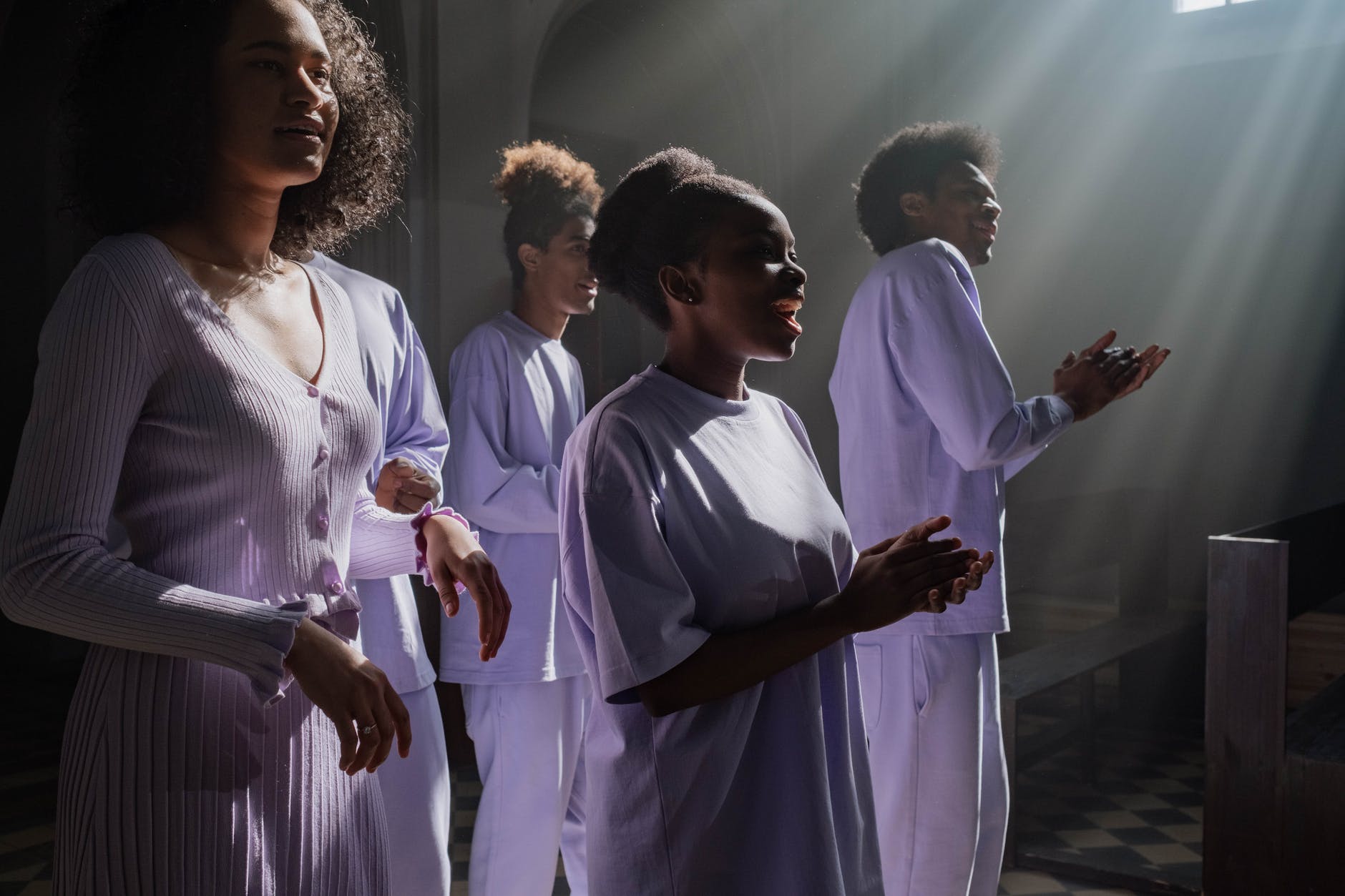
  • Don’t be afraid to add dance or movement. Clap along. Lift your hands. Sway.
  • If you are having trouble getting started, find a book of hymns or songs, or tune the radio to a station that plays good music.
  • Make up a song from your heart! Reach back into your memory for a children’s chorus (if you grew up in church). Change the lyrics to “redeem” a classic rock song (it sounds strange, but it is not impossible for most tunes!)
  • Make a joyful noise!– Don’t worry if you are not a great singer. God listens to your heart!


Nothing But the Blood

As I write this, it is still Sunday evening. This morning, we sang a classic hymn at church– “Nothing But the Blood of Jesus.” It’s an old hymn, and familiar; we often sing such hymns on auto-pilot and without really thinking of the wonderful words and truths coming out of our throats.

Photo by cottonbro on Pexels.com

“What can wash away my sin?– Nothing but the blood of Jesus.” “What can make me whole again?–Nothing but the blood of Jesus.” When I come to God in prayer, confessing my sins, it is not my prayer that makes me clean. Nothing I can say or do will give me right standing before God. I am a sinner, and I fall short of God’s glory. I also trespass against His holiness, and even His mercy. I am guilty, and there is no “magic” prayer that will heal me or exonerate me.

Photo by Michelle Leman on Pexels.com

Yet I come before a Holy God and make my confession. Not because He doesn’t know that I have sinned. Not because my words will save me. I come because I know that the Blood of Jesus Christ has, and will make me whole and justified. I have no need to hide the truth of my condition, or try to make my own justification or sanctification. Christ has done it all.

Photo by Ian Panelo on Pexels.com

Prayers of confession are not for God’s benefit, but for ours. To hide our guilt, or to excuse it, is to despise God’s amazing gift of Grace. When we confess to God, it is not because He wants to humiliate us or cause us additional guilt– though this is often the lie we tell ourselves. God is eager to remove our guilt and to guide us in His righteous ways. But He will not save us against our own will or without our permission. He will not conspire with us to hide our secret sins, or pass the blame on to someone else. To do so would be to submit to OUR will. WE are NOT God, though we sometimes act as though our ways are better than His.

Photo by Pixabay on Pexels.com

I’m so glad that God is God– that His ways are perfect, and that I can trust Him completely. Even when I fall short, I can trust that God has already paid the price to make things right– something I could never do, and something I find too wonderful to fully comprehend.

Nothing but the blood can save me. And anything other than the blood will fail to set me free. My prayers of confession– no matter how polished or pious or piteous– cannot unlock the mystery of salvation and restoration. But they acknowledge the marvelous reality that it IS FINISHED! God’s Grace is sufficient! Hallelujah!

Blog at WordPress.com.

Up ↑