Peace on Earth?

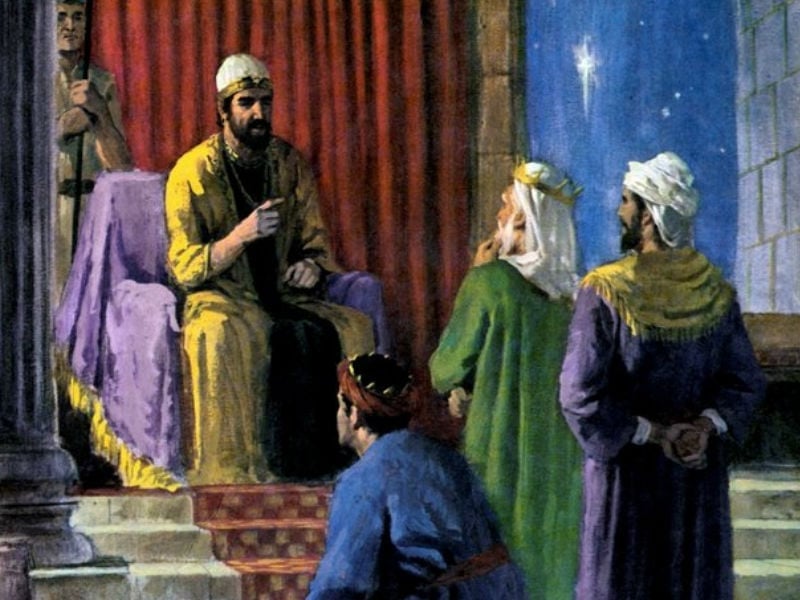
I’ve been exploring some of the themes related to the Advent. But what happened afterwards? There is a curious and violent story related to the visit of the Wise Men– before they found Mary and Joseph and the Baby Jesus, they visited the palace of the ruling King of the Jews, Herod. Herod was intensely curious about the baby– when and where the prophets said Messiah should be born. But unlike the worshipful wise men, Herod wanted to destroy this heaven-sent King; one who could pose a threat to his own power and rule.
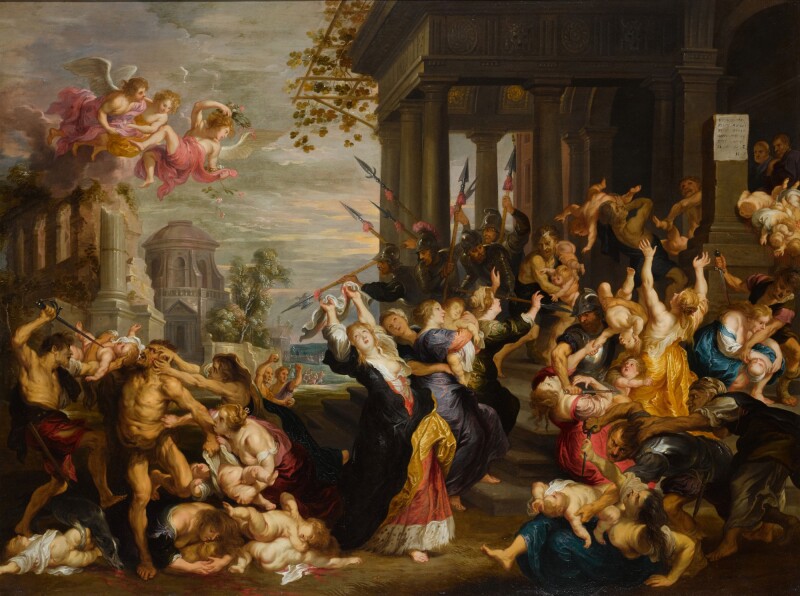
Jesus escaped Herod’s plot. Joseph had been warned in a dream, and had taken Mary and Jesus to Egypt for safety. The Wise Men, also warned in a dream, had failed to report back to Herod the information he wanted. In his anger and fear, Herod ordered the slaughter of all the baby boys in the region, up to two years old. This “Slaughter of the Innocents,” as the event is known, seems to come in direct repudiation of the message of the angels at Christ’s birth. There was no peace in Bethlehem as soldiers dragged innocent babies from their mothers’ arms and killed them. There was wailing and anguish, instead.

How could a loving and wise God allow this to happen? It was no unforeseen accident, either. This event had been predicted by the prophets hundreds of years before it happened, just the same as the prophecies about Jesus’ birth. God could have sent angels to protect Jesus from this slaughter; He could have confounded Herod’s plans and stopped the soldiers from reaching Bethlehem; He could have struck Herod dead before the plot could be carried out…so why did He let it all happen?
I don’t have any definitive answers. But I can share some opinions, based on what I’ve learned of God’s character. I don’t think God was in any way indifferent to the suffering and injustice of this tragedy. But I think there are a few lessons we can take from this strange and disturbing incident:

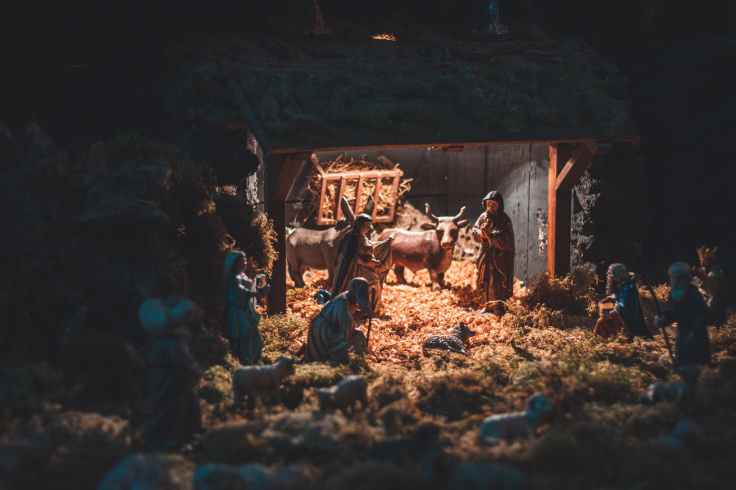
  • First, Jesus came to share a very human fate. Jesus was not spared the indignity of being born in a cattle shed and laid in a manger. His life was not supernaturally easy or safe or comfortable. It was God’s perfect will that Jesus was vulnerable to attack, and in need of protection– even when it meant fleeing His home.
  • At the same time, He WAS fully God, and as such, posed a danger to men like Herod. Jesus, even from birth, had an authority greater than any king or emperor who ever lived. But He did not come to earth to exercise that power over other people. Instead, He came to serve and to pour out His life for others. It was not His mission to overthrow the existing government, or to challenge rulers like Herod. It was His mission to fulfill the Law, set an example of obedience, preach the Gospel, and offer Himself as atonement for Sin.
  • Herod had the earthly power to do good or evil as a ruler. He had the unique opportunity to join the Wise Men in worshiping the arrival of God’s chosen one– an event that had been anticipated for hundreds of years. Yes, God could have forced Herod to bow before the Newborn King, but Herod could also have chosen wisdom over fear. We have the same opportunity to welcome Jesus as our Savior– or to wage war against Him. Jesus invites us to follow Him, but He doesn’t stop us from making the same destructive choices that Herod made.
  • Jesus did not come to bring a worldly peace, but an eternal “Peace that passes understanding.” Even now, after His death and resurrection, there is still war and slaughter, crime and injustice in our world. But, because of all Jesus did, and is doing in and through those who follow Him, we see that tragedies can be redeemed; hope can survive where there seems to be no hope; and death is not the final victor. I don’t understand why these particular families had to face the tragic consequences of Herod’s rage and fear and ambition. But I understand that God is bigger than Herod; and more powerful than all the chaos and pain that he caused.

The world is not at peace today. Innocent people– even babies–are hurt and killed in our world. God knows. He aches for our grief and pain. But He also knows His plans. He knows how the story ends– He knows all that has happened, and all that is happening, and all that will happen. Even in the glory of Christmas, He wants us to know that reality. Someday, Jesus will return in all of His authority and power. He won’t just end the reign of evil rulers like Herod– He will render their legacies useless. He will redeem injustices– even genocide and slaughter–and wipe out even the memory of their grief and terror.
Epiphany!

I’m late writing this post today. The new year is unfolding faster than I had planned, and I come to this day unprepared.

But that’s kind of the idea behind Epiphany. We focus so much on preparation during the Advent and Christmas season that the season which follows can be lost in the shuffle of “getting back to normal.” Even at the historical birth of Christ, there was a real focus on everyone “getting back to normal” after the hustle and bustle of the census and the travel-weariness it generated. Very few people were focused on “Christmas” because Jesus was still considered one small child in a land of thousands of others. There were no Christmas traditions, no trees to un-decorate, no gift wrapping to put away for next year, no leftover cookies to finish eating. And then, twelve days after the glorious events of Christmas Eve and Christmas Day we celebrate Epiphany.

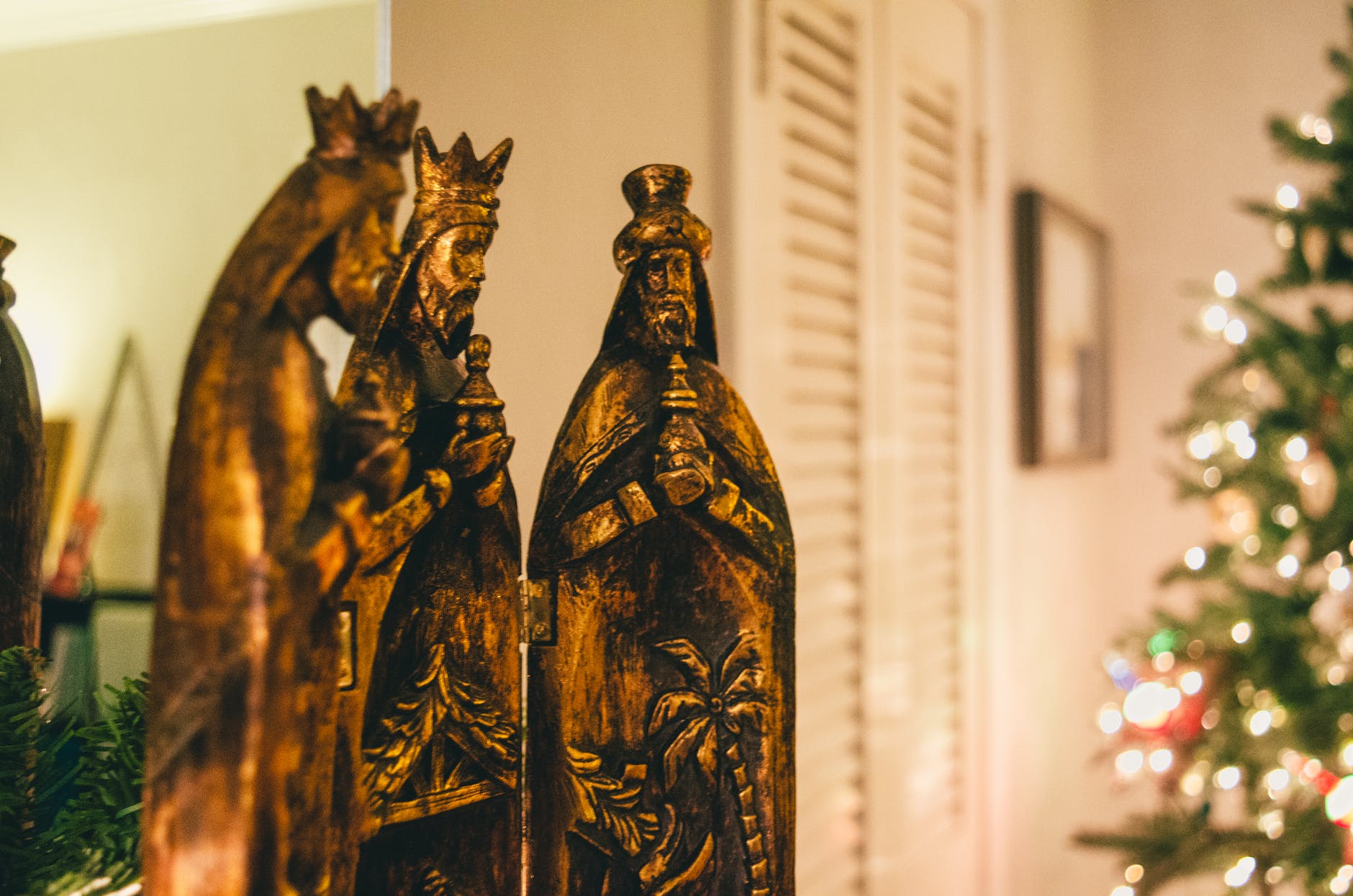
Also known as Kings’ Day, or Twelfth Night, this is the date we celebrate the arrival of the Magi (Kings or Wise Men) who traveled to Bethlehem to see the newborn King of the Jews. They did not arrive at the same time as the shepherds, and the account in Matthew has them visiting Mary, Joseph, and the Baby in a house. We must assume that Joseph found better accommodations for his family as the rush of census-taking waned, and yet he wanted somewhere safe to stay while the baby was still so small. The Magi came unannounced, unexpected, and “late” in the story.

The word “Epiphany” means a revelation or manifestation of something supernatural. The shepherds had gone through an epiphany when the angels appeared to them in the fields and told them to go to the manger on Christmas Eve. But the Magi, who had been following the star for months, finally had their Epiphany upon seeing the young child several days or even weeks after His birth. We don’t know that it was actually on the twelfth day after Jesus’ birth, but at some point, the Magi arrived at their destination and saw God in the Flesh! And their lives would never “get back to normal!” And their visit was a revelation to Mary and Joseph as well. The Kings brought expensive gifts of Gold, Frankincense, and Myrrh. They also brought the revelation they had received about the threat of Herod and the need to leave Bethlehem. If Mary and Joseph thought the worst was over, they were shocked into action by the warning of the Magi.

And yet, we celebrate this moment in time, this further revelation that a tiny baby was going to change everything. This knowledge that the Wise Men of Old held, and we can hold today– an encounter with Jesus is a revelation of the supernatural–this baby is GOD in the FLESH, GOD with US, GOD living AMONG us, GOD dying FOR us, GOD who will RETURN to REIGN over us. Nothing will ever be “normal” after such an encounter!

And I hope that can be said for all who read this– that we have encountered the Messiah; the Holy Son of God and Son of Man–and we have been forever changed! There is no end to the season of wonder and delight; there is no need for bright lights and tinsel-topped greenery, and no need to put away the joyful trappings of what His arrival really means.

Epiphany should “sneak up” on us– any day, anywhere–it should amaze us and surprise us with Holy wonder as we encounter the reality of “Emmanuel–God with Us!” And it should cause us to respond with prayers. Not only joyful prayers and prayers of thanksgiving, but prayers in our weariness, prayers in our anticipation of days to come and trials to face. Just like the Wise Men, we may have a long and even difficult journey in 2025. But at the end of it we will encounter God– not as a sweet baby in the manger but as our Lord, as well as our constant companion, our champion, and our heart’s desire!

What Did Mary Know?

The song above asks, “Mary, did you know?” as it lists many things that Jesus did during his ministry on Earth. But just how much DID Mary know on that night in Bethlehem? From what we read in Luke 1, Mary knew only that this coming Child was sent by God to be the Messiah. But the angel didn’t spell out how that Messiah would be born or how Mary should be a mother to the King of Kings. The angel never promised Mary that Joseph would agree to marry her, or that her family would not disown her. The angel said nothing about a census; no warning that Mary would have to travel to Bethlehem, where there would be no room in any inn, and no safe, clean place to deliver God’s chosen one. Mary had no knowledge of the shepherds who would come from the cold and dirty fields to get a glimpse of her shivering infant. She had no idea that wise men from distant lands would present her with such impractical gifts as frankincense and myrrh, or that she would be forced to take her small son into Egyptian exile.

In fact, while the shepherds were visited by a heavenly host, glorifying and praising God; while the wise men were following an amazing star in the heavens, Mary was seemingly forgotten– giving birth in a cattle shed, tucked away in an unfamiliar, backwater town, without the comforts of her home and family (save Joseph, who was a first-time father himself!), without clean water or extra blankets, without the comforting voice of an angel reminding her that it would all turn out in the end.

I can only imagine how she might have felt. Was she frightened? Confused? She could have been angry or bitter, panicked or forlorn. She was not privy to the wonder of the angels or the star. She could have no idea of the miracles that her Son would do. And, while Simeon hinted at the piercing grief she would know at the crucifixion (see Luke 2:33-34), Mary could have no idea of the grueling death her Son would suffer.

Mary was so young. She knew so little. And yet, Luke tells us that she ” treasured up all these things and pondered them in her heart.” (Luke 2:19 NIV).

This Advent season, I want to take time to ponder; to meditate on the promises of God, on His timing, and His provision. Mary’s journey to Bethlehem was unplanned– by her. But God had planned it from the very beginning. He KNEW there would be no room in the inn. God KNEW all that would happen– the flight to Egypt, the years of Jesus’ ministry, the betrayal and suffering to come. And God KNEW Mary! He knew her questions, He knew her heart, He knew her fears, and her limitations.

It is comforting to know that God KNEW, and that He KNOWS all that is to come in my life. When it feels like I have been forgotten or relegated to a place where there is no room, no resources, no welcome– I can remember that God is there exactly as He was for Mary and Joseph on that night long ago. Just like Mary, I can treasure those incomprehensible moments when God sends a shepherd or a wise man into my path; someone whose presence, though unexpected or even inconvenient, reminds me that God’s plans are far bigger than what I can know or imagine.

One thing Mary DID know was that she could trust God absolutely. May we ponder this truth throughout the season and treasure His promises today.

The Sound of Silence

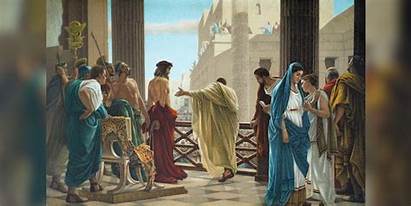
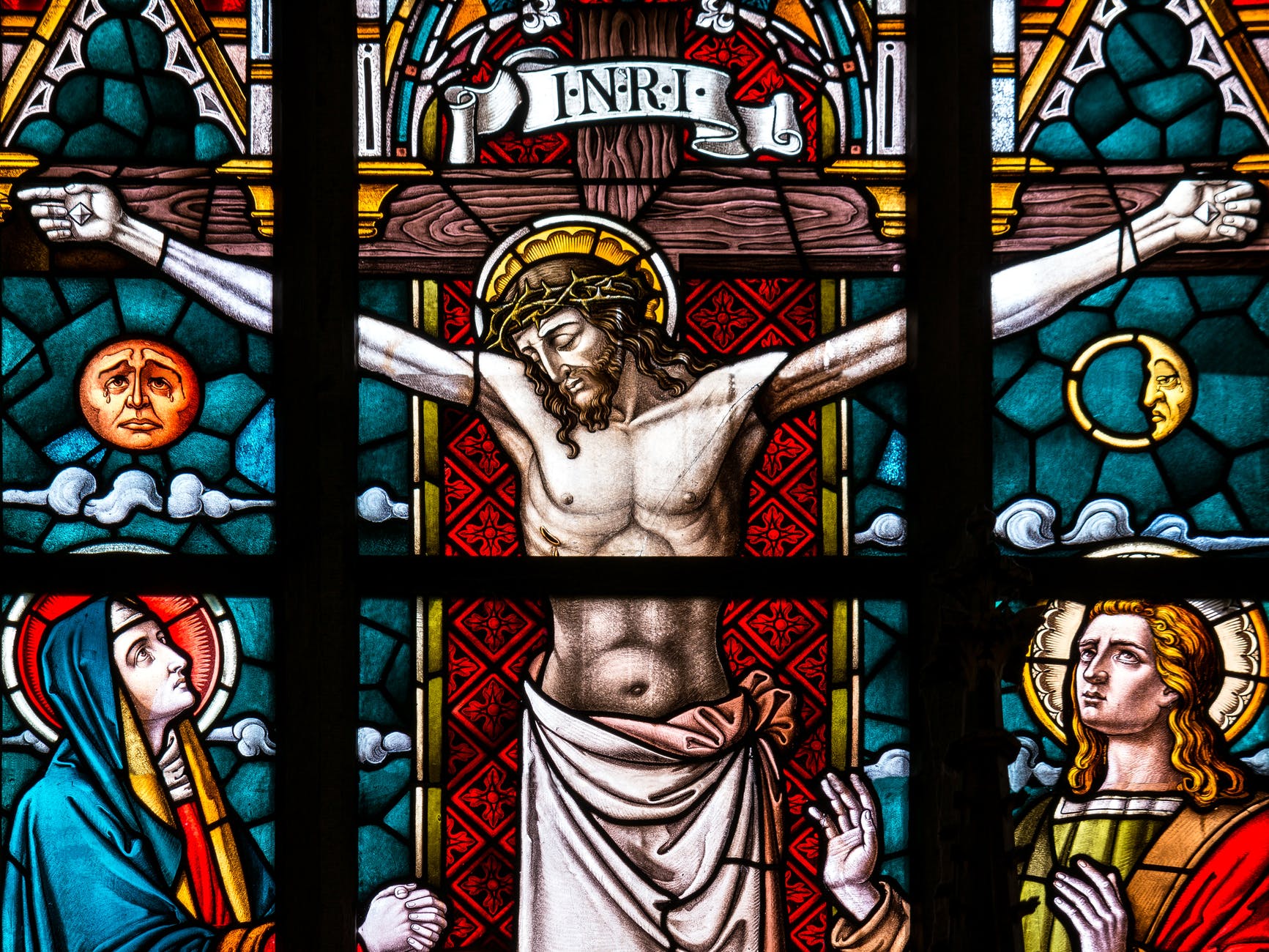
The events of Good Friday are well recorded in all four of the gospels, (see Matthew 27, Mark 15, Luke 23, and John 19 https://www.biblegateway.com/passage/?search=JOhn%2019&version=NIV ) but it is still difficult to imagine exactly what it must have been like that day. The first crow of the rooster came as Jesus was still on trial before the Sanhedrin, hours of questioning and betrayal that would continue as the sun rose and Jesus as passed on up the chain of power to Pontius Pilate for more questioning. The sun was still climbing as Jesus was beaten and paraded before the crowds. The swell of voices shouting for His execution would have echoed through the public square–“Crucify Him! Crucify Him!” “We have no king but Caesar!” The same taunting would continue as Jesus walked the long Via Dolorosa and came to Golgotha.

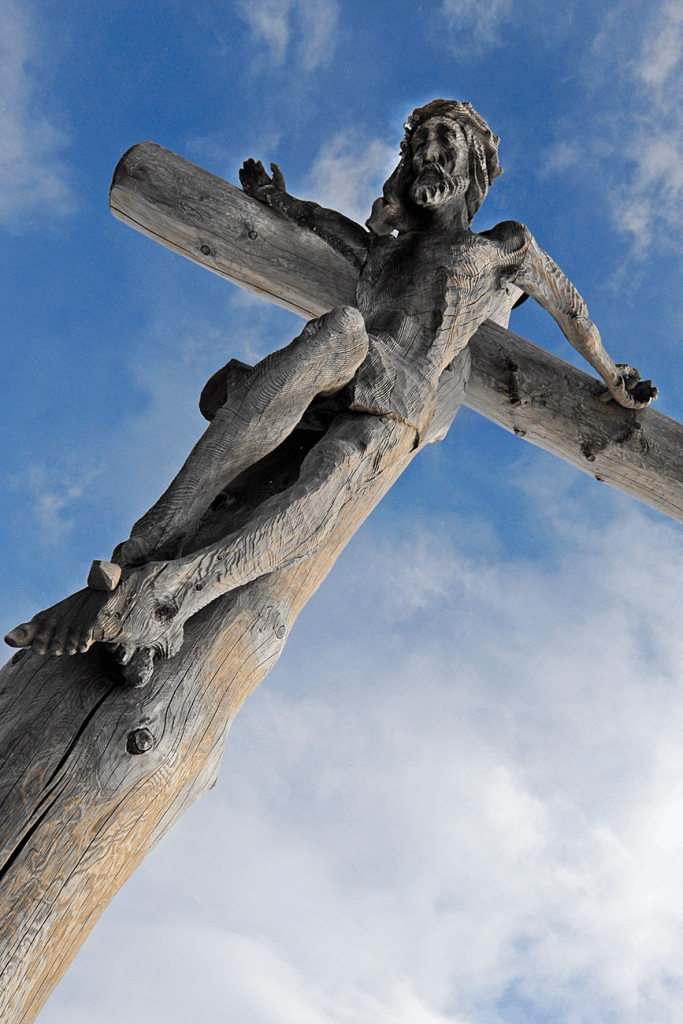
By nine that morning, Jesus, bloodied, whipped, exhausted, humiliated, betrayed, and struggling for every breath, was nailed to the cross. He was fully exposed to the bright morning sun, the heat, and all the stares of the angry mob who came to revel in His anguish. He was unable to wipe the blood or salty sweat that trickled from His brow and ran into His eyes; unable to swat away flies who buzzed around His face, elbows, or cheeks. He was unable to block out the noise–curses, curious questions, His Mother’s agonized cries, and, in the lull, the ordinary noises of a crowded city preparing for a celebration.

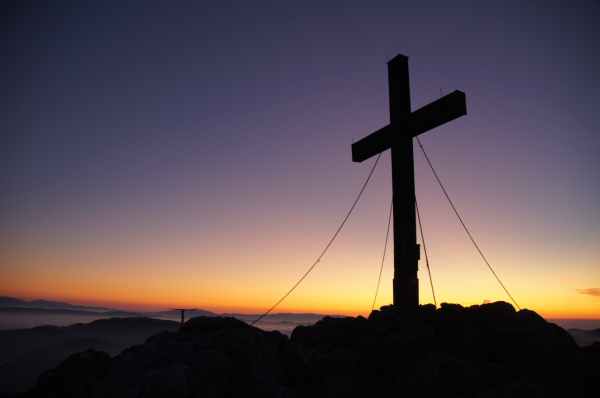
Photo by Pixabay on Pexels.com

As noon approached, there would be the aromas of roasted lamb, market fish, baking bread. The crowds were quieter now, some may have left to seek out lunch or relief from the heat. But the heat and the sun disappeared as darkness rolled in. The angry energy gave way to fear and dread. The earlier shouting was now a an ominous rumbling among the remaining spectators. It was quiet enough to hear Jesus address His Mother and His disciple, John, and answer the thief on the neighboring cross, promising to see him in Paradise. It was possible to hear Jesus cry out later, His voice raspy and broken, but clearly in anguish, “Eloi, Elioi, lama sabachthani!?”

Photo by Pixabay on Pexels.com

Perhaps it even got so quiet, as it sometimes does in darkness, that you could hear the three men on the crosses struggling to take each breath–their tortured muscled straining to lift their weight enough to get air past their parched lips and tongues–in and out, as distended muscles demanded more oxygen than their bodies could provide. Did the members of the crowd listen to their own heartbeats in those moments?

Photo by Francesco Paggiaro on Pexels.com

The unnatural darkness would have magnified the moment when Jesus, the Light of the World, breathed His last breath. And I imagine in the moment after that a silence so deafening, so complete, as the Word of God, the Creator of Life and Giver of Breath departed the Earth– as though all light and sound imploded at the loss. A split second only, but one so intensely silent that it must have taken the breath of every onlooker.

Photo by Engin Akyurt on Pexels.com

And then, the sound returned full-force– the Earth quaking, the skies crashing, Creation gasping, the Temple Veil ripping, and terrified people rediscovering their ability to cry out. Noise–piercing, and violent and sudden, bringing with it a return of the angry energy of before. But the energy is different now. Subdued. Nervous. Desperate. Empty…

Photo by Shawn on Pexels.com

Blog at WordPress.com.

Up ↑