Believest Thou This?

John 11 (KJV)

In the Gospel of John, there is the curious story of Lazarus. Lazarus and his two sisters, Martha and Mary, were good friends of Jesus. There are other stories throughout the gospels of Jesus interacting with this family. But this story appears only in John’s gospel, and it contains some details that raise several questions.

The story begins with an urgent message. Lazarus is gravely ill, and the sisters send word to Jesus to come quickly. Yet Jesus seems to dismiss the message, saying that it is not a sickness that will end in death, and he lingers two days before he decides to begin the journey toward Bethany. There is no sense of panic or urgency in Jesus’s response. And, though it says he loved Mary, Martha, and Lazarus, he seems unmoved by their obvious distress.

When Jesus finally arrives, Lazarus has been dead for four days. The two sisters both mention, with some bitterness, that if Jesus had come sooner, their brother need not have died. Jesus never gets defensive, but he challenges the sisters about their faith. In his exchange with Martha, he says that her brother will rise again. She agrees that he will rise again in the resurrection at the end of time. But Jesus redirects her faith–“I am the resurrection, and the life: he that believeth on me, though he were dead, yet shall he live: And whosoever liveth and believeth in me shall never die. Believest thou this?” (v. 25b-26). Her statement of faith, in spite or her grief and bitterness, prompts her to act. She goes to find her sister and bring her to the Savior, that she might be comforted.

Martha’s faith is small comfort in the circumstances. Her brother is still dead. His body lies rotting in a nearby cave. Her faith is fixed in the distant future, even as the author of Life and Eternity stands next to her. Her belief is wispy– more of a wish or a dream than the solid God-in Flesh standing before her.

Yet Jesus chose to use this seeming defeat as a showcase for His power to give life and resurrection. Many people who saw this were transformed and put their trust in Him. Others saw Jesus’ growing ministry as a threat to their own power and authority. They reacted with fear and even anger, that Jesus would bring the miraculous into their well-ordered normality. The Pharisees, including the chief priest, Caiaphas, determined that Jesus must die in order to “save” them from the Romans. Instead of seeing Him as the agent of their eternal salvation, they saw Him as an obstacle to their limited “freedom” to operate under the Roman oppression.

What is my faith like as I pray today? Do I believe that God “could’ve” or “should’ve” solved a problem in my past? Do I believe that God is not acting fast enough or decisively enough? Do I have a wispy faith that God will make all things right in Heaven, but is uninterested in the “here and now?” Do I believe that God’s answers might upset my life or cause me to “lose” control?

God, as you challenge my faith, help me to declare even my weak and imperfect belief; help me to act on it, and bring others to you for comfort. For in doing, so, I may be preparing the way for an incredible miracle– for revival and renewal; for the glory of Your great Name! And help me to see your answers through eyes of faith, and not fear of the unknown. Help me to trust you for the future I cannot see– a future that is in your capable and loving hands.

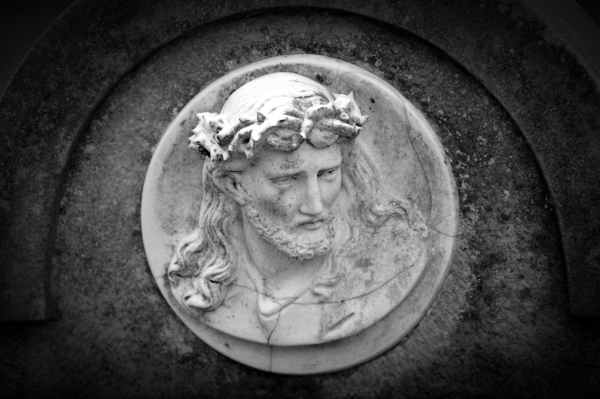
Jesus Wept

It is the shortest verse in the entire Bible– St. John 11:35:  “Jesus wept.”  Only two words.  They are easily memorized; they are also easily overlooked or misrepresented.  Jesus wept over the death of his good friend Lazarus.

Read the story of Lazarus here.

Jesus wept–Emmanuel felt deep emotion and showed it.  God shed tears over the pain and sadness of a death; Messiah cried for the loss of his good friend.  Jesus was no stranger to sadness and loss– God understands the sharp sting of death.  God is compassionate, not heartless or cruel.  If we are in emotional turmoil, it is not because God doesn’t know our pain or doesn’t care.  He hurts WITH us in our times of deepest need.

girl in pink jacket on wooden bridge in the forest

Jesus wept–People often ask the rhetorical question, “What would Jesus do?” when faced with a situation.  Here is an example of what Jesus did– he wept.  Sometimes, the “thing to do” is to acknowledge the reality of our situation–death hurts.  It brings out feelings of anger and even fear.  Death is scary.  It’s ugly, and it fills us with a sense of injustice, and a desire to wake up and find that death is just a very bad dream.  Aching loss, wracking sobs, feeling punched in the gut by circumstances– these are valid feelings and reactions.  To pretend otherwise or to deny ourselves or others the right to express those feelings does great harm, just as wallowing in sadness and remaining isolated in our grief can drag us into hopeless depression.

Jesus wept– period.  He didn’t punch a wall or point fingers at Mary and Martha for “letting” their brother die.  He didn’t try to justify his extra-long stay that kept him from arriving before his friend died.  Neither did he justify returning to a region where he was not “safe” from the authorities in order to comfort the sisters (and ultimately raise Lazarus back to life).  People often criticize Christians for “not doing enough” to erase hunger, cure diseases, or end poverty in the world.  Some even point out that Jesus, being God incarnate, had the power to do all of this during his earthly ministry.  But he didn’t.  As he was dying, he said, “It is finished.”  He wasn’t referring to some social revolution or economic program, or political movement that would abolish the oppression of the Roman Empire, or the corruption of the Pharisees, or end the slave trade.  That doesn’t mean that God approves of evil, corruption, and injustice.

But it means that Jesus’s mission was accomplished through what he did in life and through his sacrificial death.  He loved freely, healed those who were willing, and taught about the true character of his Heavenly Father.  He ate, and laughed, and slept; he burped and sweat, and cried.  He prayed and worshiped and worked and gave.  Jesus didn’t weep because he had no power to keep Lazarus from dying.  He proved that just minutes later.

person holding hand

Jesus wept because he was showing us the very heart of God.  God’s heart is not to flex his sovereign muscles and demand our instant and abject obedience– though he has the perfect authority and right to do so.  His heart is to walk intimately with us, even when that walk goes through the very valley of the shadow of death!  God’s love isn’t flinty and cold.  It isn’t pushy and arrogant and selfish.  It is extravagant and gracious beyond all imagination.  It is raw agony and pure joy. It doesn’t immediately “fix” our hurts or answer all our questions, but it wraps around us even IN our pain, and it give us hope to endure and carry on.

man hugging a woman wearing black tank top

What in your life causes you to weep?  What burdens and aches and frustrations and questions drive you to tears?  Jesus may not take away what hurts us, but he will never turn us away because we are scarred or scared or broken.  He will share our burdens, wipe our eyes, and hold us as we pour out our tears.

Receiving Back the Dead

25 Jesus said to her, “I am the resurrection and the life. The one who believes in me, even if he dies, will live. 26 Everyone who lives and believes in me will never die. Do you believe this?”

John 11:25-26 (CSB)
Photo by cottonbro on Pexels.com

Jesus knew Lazarus was already dead when He set out for Bethany. He knew of the illness in time to save His friend. Yet He delayed. By the time He arrived, Lazarus had been dead four days, and was already buried. What comfort could He offer the grieving sisters? What could He say to explain His delay and seeming unconcern?

This year, we lost a lot of friends, neighbors and family members. Many others were suffering. We prayed for them all– we prayed for healing; we prayed for miracles. And God performed some miracles– people who were on life support and people with “incurable” cancer were released from the hospital and pronounced “healed.” But others died, even with all our prayers. And even more died suddenly before we could even seek God’s favor and healing.

Photo by Tima Miroshnichenko on Pexels.com

We mourn the loss of these loved ones. We miss their presence at gatherings; we miss their laughter, their wisdom, their “life” in our midst. But we do not mourn like those without hope. (1 Thessalonians 4:13) Death cannot separate us from God, nor can it separate us from any of His family.

Photo by Andrea Piacquadio on Pexels.com

This is more than just “keeping” someone alive in our memory. There is a sure hope that we will be reunited– that we will “receive back” those who have passed on (and others will receive us after our own deaths). What does this mean? I don’t expect those who have died this past year to be resurrected in their old physical bodies or walk out of the grave as Lazarus did. But I have the assurance that they are “alive” in spirit, and that we are all part of God’s eternal plan to be together with Him forever.

Photo by Suzy Hazelwood on Pexels.com

That’s an amazing promise for the future, but it also impacts the present as I face my current grief. I don’t just remember loved ones “as they were.” I can look forward to knowing them “as they will be.” The many wonderful memories I have of our time here will be eclipsed by the wonderful moments to come! And it gets even better–those who died when I was young; those who died before I was even born–we will be “reunited” as well.

This brings up another question– what about those who are not “saved?” We grieve now for them, but won’t we be missing them for eternity? I can’t give a definitive answer to that question, but I can say that there is a comfort that transcends all that we know in this life. God can redeem our memories and our emotions, including grief. Jesus came to defeat Death and Sin. His work of redemption continues, but the Victory is already won. If you are struggling with grief in this season, I pray that God will help you “receive back” your dead– that your heart would be at peace as you remember and give thanks for the moments you shared. Let God’s promises and His comfort flood your heart. And remember that God’s compassion is to share your grief as well as your joy. Jesus wept when He came to Bethany– even though He knew that Lazarus would live again! He comforted Martha and Mary in their grief BEFORE He raised Lazarus. He can do the same for each of us.

Blog at WordPress.com.

Up ↑