Be Not Afraid

Have you ever anticipated something so wonderful, that, when the time came, you were almost afraid of it? Afraid that the anticipation would exceed the wonder of the actual event? Afraid that the wonder would be eclipsed by some unforeseen tragedy? Afraid that your dreams were too big? That you could never deserve such happiness or blessing?

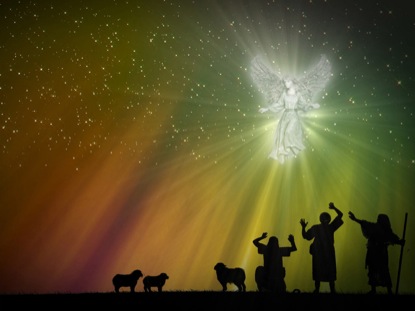
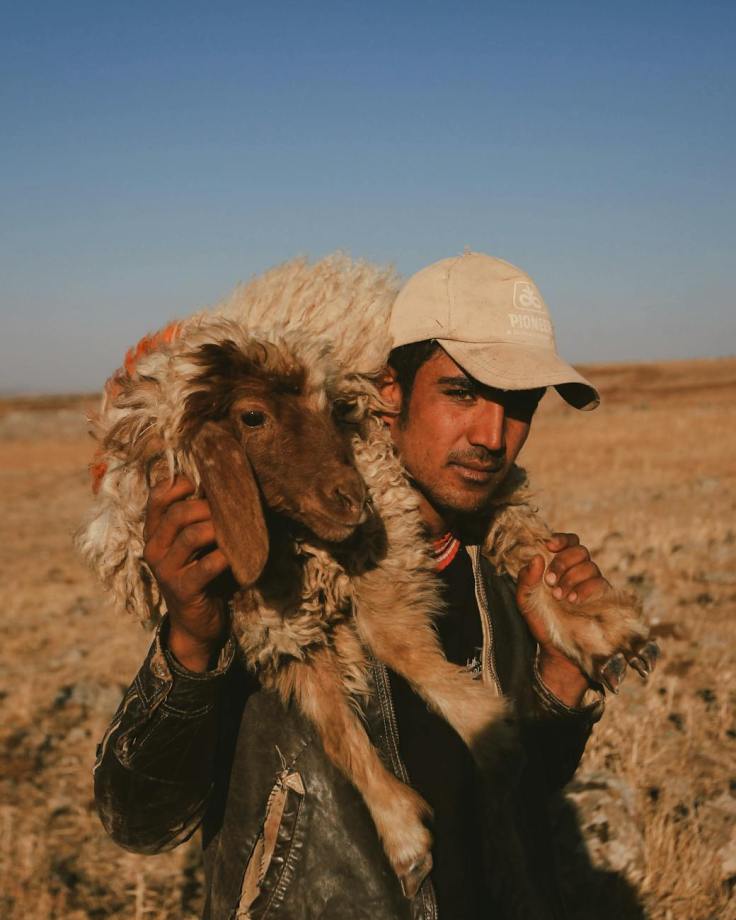
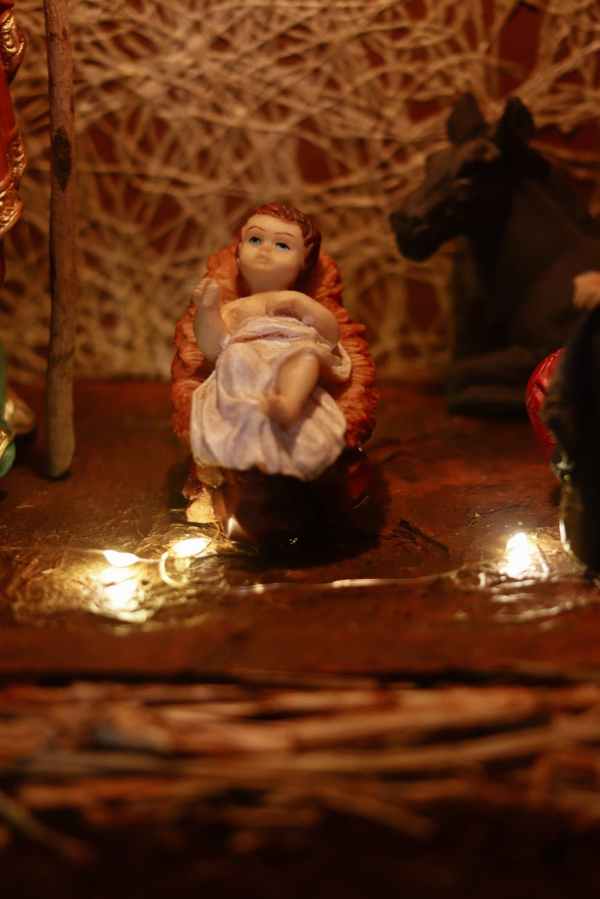
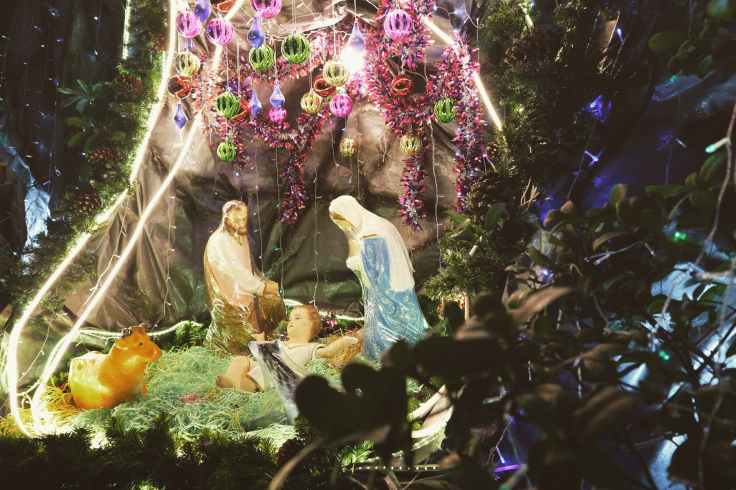
 That night there were shepherds staying in the fields nearby, guarding their flocks of sheep.  Suddenly, an angel of the Lord appeared among them, and the radiance of the Lord’s glory surrounded them. They were terrified– but the angel reassured them. “Don’t be afraid!” he said. “I bring you good news that will bring great joy to all people. The Savior—yes, the Messiah, the Lord—has been born today in Bethlehem, the city of David!  And you will recognize him by this sign: You will find a baby wrapped snugly in strips of cloth, lying in a manger.” Suddenly, the angel was joined by a vast host of others—the armies of heaven—praising God and saying
 “Glory to God in highest heaven,
    and peace on earth to those with whom God is pleased.”
When the angels had returned to heaven, the shepherds said to each other, “Let’s go to Bethlehem! Let’s see this thing that has happened, which the Lord has told us about.” 
They hurried to the village and found Mary and Joseph. And there was the baby, lying in the manger. After seeing him, the shepherds told everyone what had happened and what the angel had said to them about this child. All who heard the shepherds’ story were astonished, but Mary kept all these things in her heart and thought about them often. The shepherds went back to their flocks, glorifying and praising God for all they had heard and seen. It was just as the angel had told them.” Luke 2:8-20 NLT (Emphasis added)

The shepherds on that first Christmas were terrified– their ordinary night had been shattered by the appearance of an angel of the LORD. And that was only the beginning! The angel announced the birth of Messiah– Christ, the LORD– in the nearby village of Bethlehem. And then an angelic host– a vast army– of angelic beings chose to worship in the skies that, just moments before, had been dark, still, and lonely.
“Fear not!” “Be not afraid!” Through the terror and overwhelming glorious radiance came a calm voice. “I bring good tidings of great joy!” “..shall be to ALL people…” “PEACE on earth!” “Christ is Born!”

The fulfillment of centuries of longing was finally here. The central hope of the entire nation of Israel had arrived. And the angel left no doubt that the shepherds were welcome, even commanded, to GO and see this miracle with their own eyes. The Biblical account says that they did go– but it also says they stopped to discuss it first. They talked it over and decided to face the mixture of thrilling joy and weak-kneed trembling. Could it really be?! The Messiah! Here and now! But…a babe? Wrapped, not in robes of glory, but in swaddling cloths? And…lying in a manger? Surrounded by sheep and donkeys? What if this was a cosmic hoax? What if there was a mistake? Would they be disappointed? Ashamed? Turned away because of their lowly status?

“Be Not Afraid!” The shepherds talked it over. How could they NOT go and see? What if the news was true?! And in going, they became the first ordinary witnesses of the most extraordinary birth in history! They came. They saw. They believed! And they worshipped.

And then, they shared their experience with others. They went back. They probably shared the news first with the sheep, rehearsing how they would spread the fantastic tale to those who still lay sleeping. But they may also have shouted it in the streets, waking up all the neighbors with the joyous news. The Bible doesn’t give us details. But it does tell us that they went back with joy and gladness. And conviction–“It was just as the angel had told them.” Nowhere in the Bible story did they show any more fear. They had no doubt. The wonder of Christ’s birth was everything they had been told to expect, and more!

This Christmas, we look back at the shepherds, and we try to recapture the wonder of that Holy Night, and the visit of the angels, and the discovery of a tiny Savior in a manger. And we will have the opportunity to celebrate, just as the shepherds did.

What will be our response to His coming? Will we spend this season glorifying a praising God? Will we “astonish” our neighbors as we tell about the Savior’s birth, and His subsequent death and resurrection? Will we heed the angel’s calming tones to “Be Not Afraid” as we encounter the Messiah? As we go “back to (our) flocks” and fields and daily life?

I pray that we will “consider well” this Christmas how “our good God” gave us His “beloved Son”– born in a humble manger, willing to die a humiliating death He did not deserve so that we could be free from the curse of Sin and Death. And may we pray for the courage and conviction to live out and speak out the Joy and Glory of His coming!

On a Cold Winter’s Night…

One of the great classic Christmas carols, “The First Noel,” describes the night of Christ’s birth as a “cold winter’s night, that was so deep.”

It is dreamy and dramatic to think of Jesus coming into a cold, dark, dreary (and even snowy) world, bringing angels, glorious stars, kings bearing expensive gifts, and joyous songs.

We tend to look at Advent as a time of darkness and silence, in anticipation of the coming light and the Gospel. The idea that the world before the Birth of the Savior was cold continues the pattern of absence. Darkness does not exist independently. Neither does silence or cold. Each is the absence of something else– Light, sound, warmth–and it can only be known by the degree to which its opposite is reduced, distant, or absent.
In contrast, the light, sound, or warmth is made more evident in contrast with its opposite–we may not notice a slight difference in lighting on a sunny day, or a slight difference in temperature; but a candle in a dark room, or a whisper in a silent auditorium has a dramatic effect.

We don’t actually know the exact date of Jesus’ birth, and while December falls during winter, that doesn’t always mean a cold night in every part of the world. If shepherds were watching their flocks in fields just outside of Bethlehem, it is not likely that the temperatures were below freezing, or that there was snow and ice all around. The Middle East is not known for icy winters, after all. Nighttime generally brings colder temperatures, and it may be close to freezing by the middle of the night if you have no fire or protection from the wind, but a “cold winter’s night” is more likely to be found in Minnesota or Finland, not in Bethlehem, and usually in the middle of winter– January– rather than the beginning of the season.

However, just like the darkness and silence, the cold of that first Christmas was spiritual in nature. (https://www.biblegateway.com/passage/?search=John+1%3A9-12&version=ESV). Jesus entered a frigid world– a world of closed-off people, suspicious, oppressed, angry, sick, and world-weary. Hatred can be cold, but colder still is apathy and disdain and hopelessness. The world of Advent is a world desperate for the light and heat and sound of God’s love– not because God is absent, but because people have moved so far away from Him. The light becomes dimmer, the songs become a series of indistinct noises, and the cold and damp of night creep into our souls. Today, even with the hope and light of the Gospel story, we take our focus off of the true light of the world, and the true source of warmth and love, and too often focus on the lesser warmth of a new jacket, or the glittering lights of a shopping center, or the strident sounds of greed and envy.

Jesus may not have come in the cold of midwinter. But He came into a world of cold hearts as a helpless baby in a strange and unwelcoming land. And he was wrapped in rags and placed in a feeding trough– the warmest place that could be found. But even in this tiny, shivering baby, there was the warmth of Pure Love. And it was felt by all who came in contact with Him– shepherds rejoiced, Mary pondered, Wise Men knelt in adoration.

I love seeing candles and firesides at Christmas time– I love coming into a warm house, full of laughter and love, or singing carols on a cold night, and being invited inside to share the warmth. I love fellowship at church, and sharing a hug and a smile with those I meet. Imagine the warmth of God with us–All of the warmth and life of being wrapped in the arms of Grace, and held by the nail-scarred hands, never to be cold or alone ever again. Can you feel it? Can you anticipate it? Imagine passing that on to someone who has never known such warmth…on a cold winter’s night…

O Come, O Come, Emmanuel!

It is Advent season. We celebrate in four weeks an event that was anticipated for four hundred years! For four centuries, the people of Israel waited for the coming Messiah without ever hearing a word from God. Oh, there were prophecies– some stretching back centuries– that promised he would arrive. But when?!

Imagine praying earnestly for an event that would not happen for another three or four hundred years? Imagine praying into silence for an entire lifetime for an event that even your great-grandchildren would never witness?

We live in a fast world. Fast food, high-speed internet, overnight delivery of packages, instant communication, bullet trains– we have lost the skill of waiting. Yet Advent celebrates the waiting, the anticipation of a birth so amazing and so consequential, that we look back over 2,000 years in wonder!

The birth of Emmanuel was worth the wait. “God With Us” came into the world “at just the right time.” (Galatians 4:4). He was not a moment too early or too late to fulfill all the prophecies and bring Salvation to mankind. Those who prayed faithfully over the centuries may not have lived to see the fulfillment, but they put their hope and trust in the prophets and in the God they served.

We are in another Advent season– we await the return of Christ! We have no way of knowing the exact hour or day (or year or even century) of His return. But with the same wonder and hope of those faithful men and women of old, we should pray for His coming again! We should share the glorious story of His first coming. We should celebrate and worship the Faithfulness of God. He keeps all His promises “at just the right time.”

And as we wait, we must not give up hope or lose our passion for the Mission that Christ left with us. “Go, and make disciples of all nations” (Matthew 28:19-20). As wonderful as Christ’s birth was, it pales in comparison to His triumphant return to judge and rule the earth. May we look back in wonder and forward in joy as we celebrate this season.

Forgetting the Names of God

My given name is Lila June. I was named after my great-grandmother, Lila, and my aunt, Ila June. I have never used a nickname or my middle name, but my Aunt June rarely used her given name of Ila. In fact, she used it so seldom that she forgot it. Not literally forgot that it was her name but forgot that anyone might use it to refer to her. She and her husband lived on a series of Army bases, and when she went to the doctor’s office, they used the name on her official paperwork. A nurse would come out and call for Ila to come back to see the doctor. Startled at first, she looked around the waiting room to see who else could possibly have the same unusual name– only to hear the nurse call for Ila Mellinger! SHE was the Ila being called. But it took her a few moments to respond.

I was reminded of my aunt, and her name, this week. On my Facebook feed, there was a short video by a pastor. In the video he was lamenting that, in his view, the modern Christian church is so focused on practical Christian living– on good deeds and kind words; on outreach programs and building projects– that we have lost sight of WHO GOD IS! We serve the church; we serve the community; we serve our own notion of what makes us “good people,” but we do not serve God, because we don’t really know Him.

He was placing much of the blame for this on other pastors and institutional leaders– saying that they were at fault for not teaching the names of God. I’m not sure I totally agree with him. I think there is some merit in what he said, but ultimately, when I stand before the throne of judgment, I’m not going to be asked whether my pastor taught me the names of God. I will not be asked how much I knew ABOUT God. I won’t even be asked whether or not I know God–I will either hear that my name is in the Lamb’s Book of Life, or it isn’t! My pastors might face judgment for how true they were in teaching the Gospel, but my mission is to know God experientially. It is MY job to learn who God is, and to follow Him— to trust and obey Him.

But I DO agree that modern churches spend less time on this subject than I remember in my church growing up. Not because we spent so much time on the list of individual “names” of God, but we spent more time in worshipping God for WHO HE IS, and not for what he’s done for me, or what I can be doing for Him, saying about Him, or “identifying” as a Christian, a Christ-follower, or a Believer (and all the tiny differences in meaning that those terms might have).

Part of that comes from the habit of studying the Bible as a narrative. We used to study the “patriarchs” of the Old Testament, the “red letter” words of Jesus Christ, and the letters and “acts” of the Apostles. In fact, it is no longer politically correct to even use words like “patriarchs,” and out of fashion to teach the Bible as historical fact. But there is a value in studying this way– not because the characters are mostly men, or even because they are “heroes of the Faith.” It is important to study them precisely because they are so flawed and broken and in need of a Savior– just as we are! And as they encountered God or walked with Jesus, they saw Him– and NAMED Him– for all of His attributes.

In the Old Testament, He is Yahweh, Jehovah, the LORD. He is Almighty. He is the God who sees, the God who hears, the God who saves, the God who provides, the God who saves, the All-sufficient One, the Lord (who) is my Shepherd, the Most High God, the One whose name is a Strong Tower, the Everlasting God and the Lord of Hosts, among others. Jesus, the promised Messiah, also has a host of names, including Wonderful Counselor, Mighty God, Everlasting Father, Prince of Peace, Lion of Judah, Son of God, Son of Man, Emmanuel, Light of the World, the Living Word of God, Savior, Master, Redeemer, Rabboni, the Bread of Life, the Living Water, the Lamb of God, the Risen Lord, the Alpha and Omega, and many more. What a rich picture of God we get from His Names!

I also remember the old hymns and worship songs doing a better job of helping us to see the God of the Bible. I know we have modern worship songs that include God’s many names and attributes, but others seem to concentrate, not on who GOD is, but who I AM because of God–I’m forgiven, I’m a Child of God, etc. I miss the old hymns that remind me that God is a Mighty Fortress, He is my Vision, my Blessed Redeemer, the Rock of Ages, whose grace is Amazing, and whose Love is “greater far than tongue or pen could ever tell!”

I don’t want to “forget” any of the many titles and attributes of my Father, His Son, or the Holy Spirit. When I lose track of them, I am less likely to worship, less likely to obey, and less likely to turn to Him first in every situation. As we close in on Easter this year, I want to spend some time looking at some of His many Names. But for today, I want to take a deep breath, and worship the one who is “worthy, O LORD, to receive Glory and Honor and Power” (Revelation 4:11).

TGIF!

Many people look forward to Friday. For students and many workers, it marks the end of the working week and heralds the weekend. For many, it may also be payday! Fridays represent accomplishment; completion of work done, reward for recent efforts; a measure of our success. We chant “T.G.I.F.”– “Thank God it’s Friday.” But we might just as easily say, “Thank God it’s Finished!”

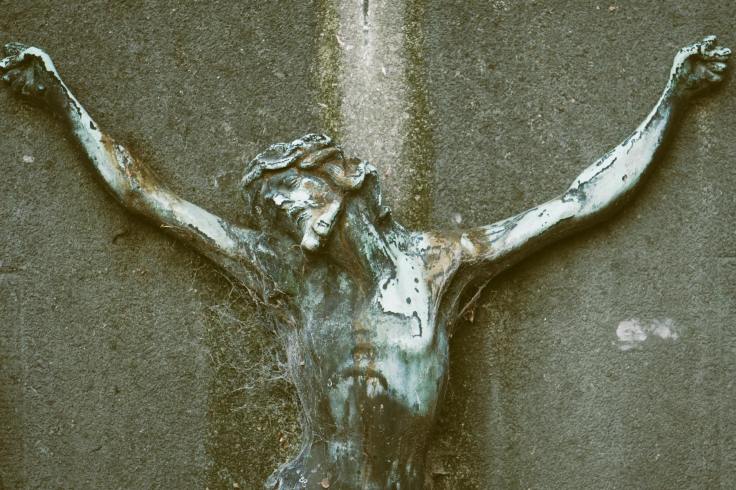
We’re in the Lenten season, leading up to Easter, and, of course, Good Friday. Much more significant than any ordinary Friday, Good Friday is the day we remember the Crucifixion of Jesus Christ. It was on that day that Jesus Himself cried, “It Is Finished!” just before He took his last breath.

On that first “Good Friday” there seemed to be little reason for celebration. Jesus had been found guilty in a hasty, overnight trial, by the Jewish Sanhedrin for saying that He was the Son of God– Blasphemy if one is NOT God, but simple truth if one is the promised Messiah! The Roman Governor, Pontius Pilate, after examining Jesus’ claims and trying to literally “wash his hands” of the case, turns Jesus over to be crucified by the angry mobs whipped up by the Jewish leaders. And Jesus is beaten, tortured, taunted, and nailed to a cross to die a gruesome, public death. “It is finished!” For Jesus’ followers, this meant defeat, fear, and gloom, rather than accomplishment or celebration.

But Jesus knew better. Even though His death was filled with suffering and humiliation, it was the culmination of His life on earth. And it was the necessary final scene before the next Act– the Acts of the Apostles–the coming of power and hope by the release of the Holy Spirit to indwell those who had put their faith in Jesus AS the Messiah! And so it is today. We have great cause to celebrate Good Friday. Without the Pain of the Cross, there would be no Glory of the Resurrection or Promise of Eternal Life!

Even though this Friday is not Good Friday, we can spend today reflecting on the life of Jesus– the incredible example He gave of how we are to trust in God, love others as God loves, and cherish life–both now and through eternity, as God’s gift. And we can be thankful that, because of Jesus, “IT IS FINISHED!”– the battle against Sin and Death is over. We can live abundant lives, without the fear of eternal death, and we can look beyond the curse of Sin to the Glory of Restoration and Renewal.

Thank God it’s Friday!

Who Do You Say That I Am?

During Jesus’ ministry on earth, there were many discussions about who he was, who he said he was, and who others said he was.  The Bible is full of the names of God, of Jesus, and of the Holy Spirit– there are descriptive names, prophetic names, genealogical references, allegorical names, sacred names…but one of the pivotal questions Jesus asked of his followers was this: “Who do YOU say that I am”? (Luke 9:18-27; Matt. 16: 13-18)

We can ask ourselves why Jesus might pose this question to the disciples– was it some Socratic technique, or a trick question?  The disciples had heard several theories, descriptions, and names tossed about.  Was Jesus trying to determine how effectively he had presented himself to the Jewish people– and to his closest followers?   I don’t think so.  If that were his motivation, he could have asked, “Who to you THINK I am?”, or “Who WOULD you say that I am?”  Instead, he asked “Who DO YOU SAY  that I am?”

This is still a very relevant question today, and not just as a matter of recognizing him as Messiah.  Even when Peter gave an answer, Jesus did not say, “Good job, Peter.  You nailed it in one!  That’s the right answer, and your prize is that you will become “The Rock” on which I build my church.”  That’s how some people might read it, but that’s not the true story– Peter gave a correct answer, an inspired answer, but it was not a definitive answer.  Peter recognized who Jesus was supposed to be, but he had not experienced, and did not know, the fullness of who Jesus was.  Peter would later go on to deny this same Jesus, and say that he did not even know him at all!  Only after Jesus’ resurrection and ascension did Peter fully recognize and live out the answer he gave earlier.  His last years were spent demonstrating  in words and deeds that he had truly encountered “the Christ, the Son of the Living God!”

How does this relate to a pursuit of prayer in our own time?  What we say about Jesus involves more than just a pat answer.  To say, “He is the Christ, the Son of the Living God” is a correct answer, but what does that really mean to us?  What does it mean as we live as a witness before others?  Is he Christ and Savior, and Messiah to me? When I say he is the “Son of God,” is that just another of his many names to me, or do I understand all the richness of that title?  When I review the many names of God, do they resonate with personal meaning?  Do I pray to the “God who Sees,” to the “God who Provides,” the “God of my Salvation,” the “Almighty”, and the “God who Hears?”  Or am I praying to a “God I studied and know a lot about,”  a “God I heard about at Church,” or a “God I hope will hear me?”  If I pray “in Jesus’ name,” is that just an affectation?  Is it just a formality, or does that name, that person, inhabit my prayers and my life?  Am I praying in the name of the “Lion of Judah,” “Emmanuel”, “the Risen Lamb,” or just “a great teacher who talked a lot about love?”

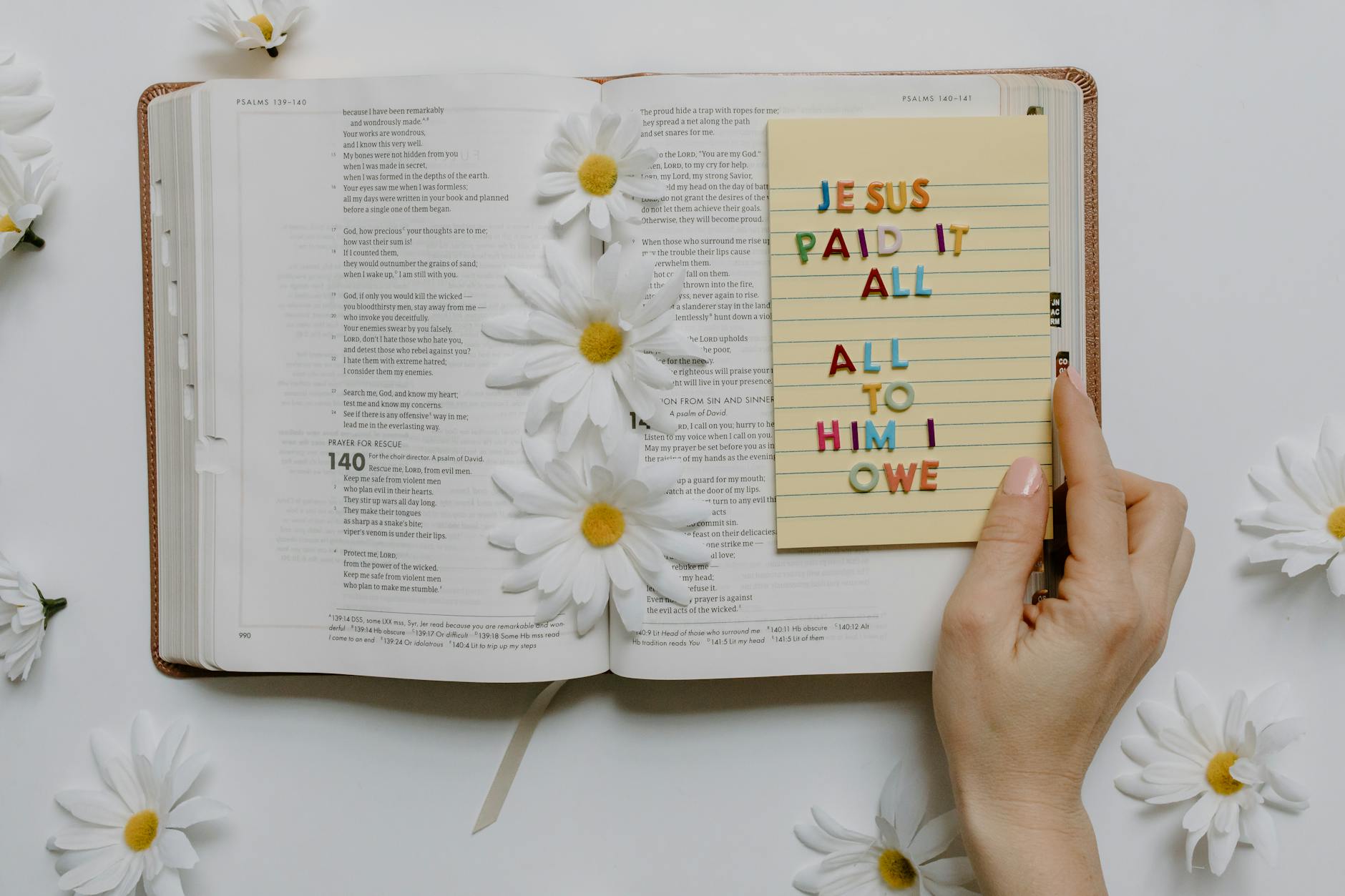
pexels-photo-217114.jpeg

These are not questions meant to trigger doubt about my salvation, but questions designed to challenge my commitment and my faithfulness.  I bear the name of Christ–what I think I say about him; what I think I believe about him; what I think others see of him in me– it matters.  It is of supreme importance.  I need to be sure that I’m not taking for granted that what I know about my savior is the same as Knowing Him, and that what I think I’m saying about him is clear, consistent, and true.

What do my prayers say about Jesus?  What do my actions say about him?  What does my life say about him?  Hopefully, like Peter, the end of my story will bring honor and bear truthful witness to the Great “I AM” of scripture, the God of MY salvation, and the God who has heard me, loved me, corrected me, redeemed me, sanctified me, and welcomed me home to be with Him eternally!

Epiphany!

I’m late writing this post today. The new year is unfolding faster than I had planned, and I come to this day unprepared.

But that’s kind of the idea behind Epiphany. We focus so much on preparation during the Advent and Christmas season that the season which follows can be lost in the shuffle of “getting back to normal.” Even at the historical birth of Christ, there was a real focus on everyone “getting back to normal” after the hustle and bustle of the census and the travel-weariness it generated. Very few people were focused on “Christmas” because Jesus was still considered one small child in a land of thousands of others. There were no Christmas traditions, no trees to un-decorate, no gift wrapping to put away for next year, no leftover cookies to finish eating. And then, twelve days after the glorious events of Christmas Eve and Christmas Day we celebrate Epiphany.

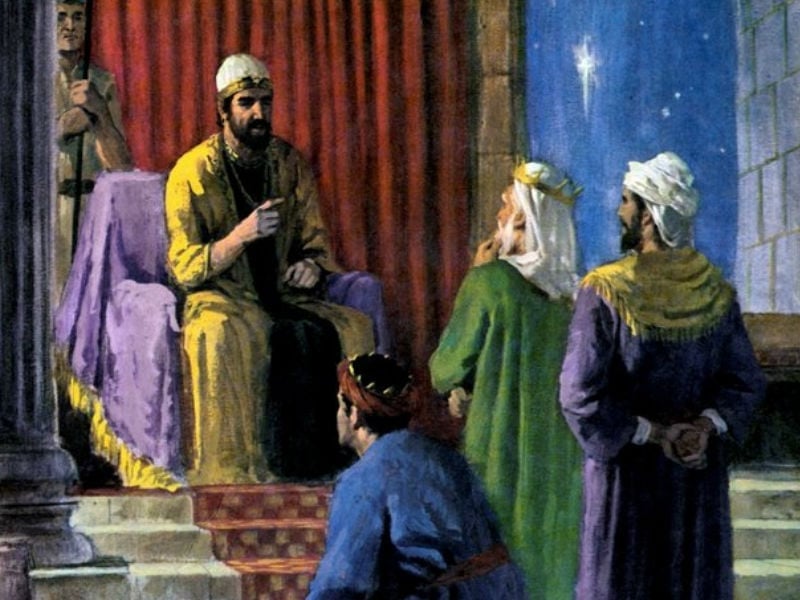
Also known as Kings’ Day, or Twelfth Night, this is the date we celebrate the arrival of the Magi (Kings or Wise Men) who traveled to Bethlehem to see the newborn King of the Jews. They did not arrive at the same time as the shepherds, and the account in Matthew has them visiting Mary, Joseph, and the Baby in a house. We must assume that Joseph found better accommodations for his family as the rush of census-taking waned, and yet he wanted somewhere safe to stay while the baby was still so small. The Magi came unannounced, unexpected, and “late” in the story.

The word “Epiphany” means a revelation or manifestation of something supernatural. The shepherds had gone through an epiphany when the angels appeared to them in the fields and told them to go to the manger on Christmas Eve. But the Magi, who had been following the star for months, finally had their Epiphany upon seeing the young child several days or even weeks after His birth. We don’t know that it was actually on the twelfth day after Jesus’ birth, but at some point, the Magi arrived at their destination and saw God in the Flesh! And their lives would never “get back to normal!” And their visit was a revelation to Mary and Joseph as well. The Kings brought expensive gifts of Gold, Frankincense, and Myrrh. They also brought the revelation they had received about the threat of Herod and the need to leave Bethlehem. If Mary and Joseph thought the worst was over, they were shocked into action by the warning of the Magi.

And yet, we celebrate this moment in time, this further revelation that a tiny baby was going to change everything. This knowledge that the Wise Men of Old held, and we can hold today– an encounter with Jesus is a revelation of the supernatural–this baby is GOD in the FLESH, GOD with US, GOD living AMONG us, GOD dying FOR us, GOD who will RETURN to REIGN over us. Nothing will ever be “normal” after such an encounter!

And I hope that can be said for all who read this– that we have encountered the Messiah; the Holy Son of God and Son of Man–and we have been forever changed! There is no end to the season of wonder and delight; there is no need for bright lights and tinsel-topped greenery, and no need to put away the joyful trappings of what His arrival really means.

Epiphany should “sneak up” on us– any day, anywhere–it should amaze us and surprise us with Holy wonder as we encounter the reality of “Emmanuel–God with Us!” And it should cause us to respond with prayers. Not only joyful prayers and prayers of thanksgiving, but prayers in our weariness, prayers in our anticipation of days to come and trials to face. Just like the Wise Men, we may have a long and even difficult journey in 2025. But at the end of it we will encounter God– not as a sweet baby in the manger but as our Lord, as well as our constant companion, our champion, and our heart’s desire!

Are You Ready?

Someone asked me yesterday if I was “ready for Christmas.” They wanted to know if I had prepared for the holiday– had I bought and wrapped presents for the family, sent out Christmas cards, decorated the house, baked cookies, etc.? I had to admit that I was not ready in that sense. I don’t generally do much in the way of decorating, and I’ve cut back on the cookie baking, too. I don’t have all the presents purchased or wrapped.

But I AM ready for Christmas– I’m ready to celebrate the coming of Jesus to Earth; His life, death, and resurrection; the new life and hope that resulted from God’s boundless love. I’m ready to sing carols and light candles and rejoice! I’m ready to be awestruck again by the ancient story of shepherds and angels and wise men from the East; of the little town of Bethlehem and the manger stall and a bright star; of a newborn child; the Lord of all Creation wrapped in rags; the Word of God willingly limited to unintelligible cooing and soft cries, to nakedness and infant human weakness.

Being “ready for Christmas” means different things to different people. To many, it means surviving the stress of shopping, going to rounds of holiday parties, and trying to remember that it is supposed to be a season of “peace on Earth.” For others, it means watching the celebration from the outside looking in; facing loneliness, grief, regret, and envying or resenting those who have found joy when all they see is darkness. For some of us, it means reflecting on the amazing transformation we experience because of the coming of this single baby. We remember that there was a time when there was no Christmas– only a dim hope that God would someday send a Savior. Once the prophets could only speak of what had been promised, but not yet seen– could only remind people to “get ready” for something they had never known.

The world was waiting for the Messiah’s coming, yet it was unprepared for His actual arrival.

But the story of Jesus Christ didn’t end with Christmas. It didn’t even end at Easter, with the glorious resurrection. We await the triumphant return of the risen Christ. He is Coming! He will return in an instant…no long period of Advent; no countdown calendars or lists of things to get ready; no angels or stars to announce His arrival; no Christmas pageant or Easter sunrise service–just a trumpet blast and an explosion of Glory. He will not arrive as a helpless babe, or a suffering servant, but as a conquering King. There will be no carols about little towns and sleeping cattle; no time to “let every heart prepare Him room.”

Today, we prepare to celebrate Messiah’s coming. We spend time and money and energy getting “ready” to recreate the Advent of Jesus Christ. How much time have we spent getting ready for His return? I pray that this Christmas season will mean more than just a happy celebration of one event– even one as joyful as the Birth of Christ. Let us prepare our hearts to live out the joy of His Salvation, and prepare to receive our King in triumph.

Let All Mortal Flesh Keep Silence

Christmas is a time of joy and light. But the time of Advent is often a time of somber reflection. We remember a time we have never known– a time before the coming of Christ the Messiah– a time before the mysteries of Heaven were revealed and before the victory of Salvation was accomplished. Advent reminds us of the spiritual darkness that existed before God, in human form, in humble obedience, and in sacrificial love, became the Light of the World, and the Hope of All Nations.

Before the bells rang, and the angels sang; before the kings brought gold and the shepherds ran to tell the news; before there were Christmas Carols, Christmas decorations, or Christmas pageants– there was solemn silence, fear, dread, and waiting. God had been silent. The prophets had been silent. The world had grown hard and cold.

Jesus stepped out of the unfathomable glory of the Highest Heaven– surrounded by armies of angels all worshiping Him and ready to do His bidding. In an instant, He became a helpless fetus inside a helpless young woman, a subject of the Roman Empire, and at the mercy of her culture. Her fiance could have repudiated her; her parents could have disowned her; her community could have had her stoned to death, along with her unborn child. No one, even those who were anticipating the arrival of a Christ, was expecting this tiny baby growing inside the womb to change the course of history.

He was born in obscurity, in ignominious squalor. He was the Lord of All Creation, wrapped in rags and laid in a feeding trough in an overcrowded city at tax time. There were no bells or carolers, no glittering trees or festivals of lights, no sounds of joy and celebration– not in that manger in Bethlehem. Instead, there were strangers pushing and shoving, shouting, and snoring in the inns and houses and streets, being watched by soldiers and pickpockets alike, as they made their way through narrow, unfamiliar streets and tried to lock out the worry and danger and dread. There may have been silence in the fields and valleys outside of town, but not near the stable where Jesus was born. No. The “silence” we sing about during Advent is the silence inside our own hearts– a call to “be still,” and know that this baby we celebrate is God Incarnate. He is the One to whom every knee will one day bow, and every tongue confess that He is LORD.

In the stillness and silence of Advent, in the darkness lit only by candles and faint hope, we being to understand the contrast. We re-imagine what came before the joy and hope and eternal clouds of witnesses shouting, “Holy, Holy, Holy!” We remember the days and years before the angels sang, and the star danced across the night sky– before the shocking crucifixion and the glorious resurrection of this still unborn Savior.

Let us spend these days of Advent preparing our hearts for the true wonder of Christmas. It doesn’t come in the wrapped packages under a festive tree, or in the feasting with friends or family. It doesn’t come with sirens and parades, or speakers at the mall blaring out favorite tunes. It doesn’t come in the majesty of a Cathedral ringing with the voices of a choir and organ. It comes when the silence and darkness of our sin and dread are pierced with the overwhelming glory of God With Us– Emmanuel is coming! But for now, for these moments, Let All Mortal Flesh Keep Silence.

When Half-Spent Was the Night

‘Tis the season for Christmas Music– hymns and carols, ancient songs and modern tunes celebrating the Advent and Birth of the Lord Jesus. Joyful, passionate, somber, or even a bit silly, such music can lighten our spirits, and remind us of the incredible gift of God– Emmanuel–His very presence among mankind.

Christmas lyrics often use wonderful imagery to retell this amazing story. The Bible accounts tell of shepherds, angels, wise men, and stars– the songs give us the immediacy of a dark night– “silent”, “still”, “earth as hard as iron; water like a stone”, “a midnight clear”, “half-spent was the night”…

Most of us live in a world that rarely gets so dark. If we live in a town or city, we are surrounded by street lights, security lights, even night-lights in the hallway. Even so, we have a feeling for how the midnight and early morning hours seem darker, colder, quieter, and more dreary than any other time. And there is a significance in remembering that Jesus came to earth in the midst of literal and metaphorical darkness, “when half-spent was the night.”

Photo by Alex Fu on Pexels.com

God is Omnipresent– it is not as though God leaves us when all is merry and bright– but His presence is often most keenly sought, and unexpectedly found, in darkness and distress. When all seems bleak, cold, and hopeless, Jesus comes silently, small and fragile as a baby, bringing light, hope, joy, and peace. He comes when the night is “half-spent”– when the darkness is deepest, the silence weighs heaviest, and the cold is most bitter; when hope and light seem lost.

Jesus’ Advent came after four hundred hears of silence. Prophets, such as Isaiah, Zechariah, and Micah, had spoken of Messiah rescuing Israel from captivity. But the years had passed, and Rome ruled the Jewish people with an iron fist. God had stayed silent, and hope seemed remote. Rome would continue to rule the world for another four hundred years. But when Messiah arrived, He didn’t come to break the power of Rome. He didn’t come at the end of that particular “night”; rather, He came when the night was “half-spent.” He came gently, quietly, and humbly. He came to deliver Israel from something much darker, colder, and deadlier than a foreign occupation. Jesus, through His life and death and resurrection, came to deliver Israel, and the rest of the world, from the power of sin and death.

All the promise of deliverance and salvation that came in the middle of that bleak night so long ago, remains for us to celebrate– even in the middle of our “half-spent” nights.

We may not see the dawn in the middle of our struggles. We may not hear the angels singing or feel the warmth of the new day coming. But because of this “Rose e’er Blooming”, we can rejoice. We can find hope and peace in the present night, knowing that Emmanuel is with us! Like a lamp in the night, He will stay with us as we travel through the present darkness. After all, “Thy WORD is a lamp unto my feet and a light unto my path.” (Psalm 119:105) Jesus is the Living Word of God, and thus, our living light!

Blog at WordPress.com.

Up ↑