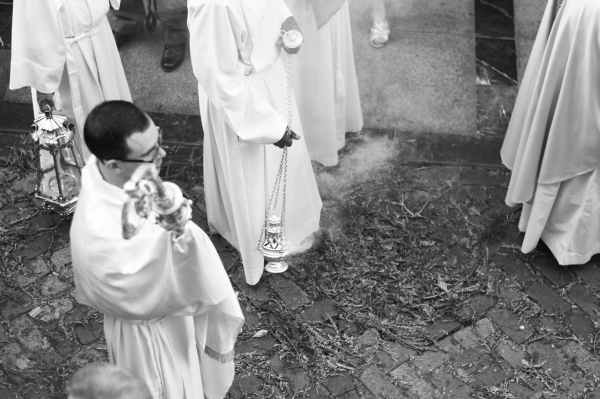
The story of Hannah in 1 Samuel is filled with priests. Her husband, Elkanah, is of the priestly class, and regularly goes to Shiloh to offer sacrifices. Chapter one quickly mentions Hophni and Phinehas who were the resident priests there. And of course, there is Eli, their father, the High Priest at that time. Hannah has access to counselors, spiritual guidance, and men whose ancestral calling is to bring people closer to God. Yet none of them can bring Hannah out of her anguish and offer comfort.
Hophni and Phinehas are noticeably absent in this story. The mention of their names calls attention to this absence. They were supposed to be the acting priests, but they don’t interact in any way with the grieving Hannah, or her husband, Elkanah. Further reading reveals that they were very wicked and due to be judged for abusing their priestly role. https://www.biblegateway.com/passage/?search=1+Samuel+2%3A12-36&version=NIV

Eli himself is a somewhat indifferent priest. The first mention of him is as the father of the wicked Hophni and Phinehas. Next, we find him sitting in a chair at the doorstep of the tabernacle. He is not serving; he is not overseeing; he is not doing anything. When he first observes Hannah, he jumps to a wrong and judgmental conclusion– that she is drunk and raving. He doesn’t go over to see if he’s right in his assumption. In fact, there is no mention in the passage that he ever rises from his chair.
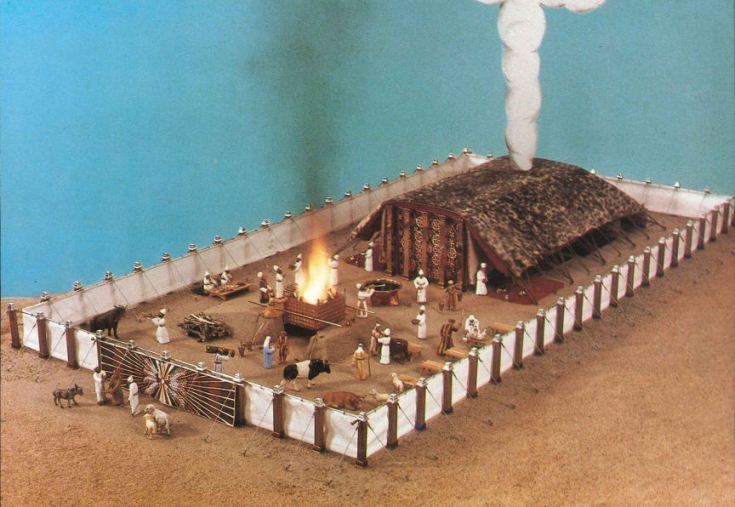
We might gloss over this passage, without grasping the importance of this detail. Nowhere in the long lists of a priest’s duties was there an option of sitting at the door and just watching people go in and out. The priests all had duties– some were in charge of the sacrifice (as Elkanah sometimes was). Others were in charge of the lamps, the incense, the care of the utensils and tools, offering prayers, singing, playing instruments, reading from the books of the law, and keeping the tabernacle clean and in good repair. None of them required sitting. Eli isn’t busy doing the work of the Lord; he is literally sitting down on the job.
In short, Eli is not a spiritual giant– he offers a standard blessing after Hannah pleads her case for not being a drunken disturber of the peace, but he doesn’t offer much in the way of true comfort or counseling. His first words to her are to “Go in peace.” The blessing seems to be almost an afterthought. Still, Hannah goes away encouraged, and comes back the next day to worship before returning home.
What can we learn from this encounter and these details in Hannah’s story?
One possible reaction is to become critical and dismissive of the clergy. I think this is the wrong reaction, but I want to address it in this context, because it can keep us from finding help and blessing if we let it. I know countless people who have walked away from the church because of one disappointing encounter with a minister, pastor’s wife, deacon, or fellow parishioner. Eli was not a stellar example of Israel’s priesthood; he was a flawed human. He had rebellious sons, and was likely depressed or anguished over his own troubles. Yet, he was still faithful to turn Hannah’s attention to the One who is always able to bring comfort and strength. Hannah could have chosen to focus on his rude and judgmental assumption about her, but she chose to focus on the hope he was able to offer.
I have gotten dismissive, even bad, advice from people in the church. I have been hurt, judged, and ignored by those who are supposed to be serving God. But just as God provides grace to cover our own failures and mis-steps, He asks us to extend forgiveness and grace to those–even those who serve Him.*

Having said that, I think there is a warning here for those who serve the Lord. Eli ends his days in tragic fashion, his family legacy in ruins, because of some of the details we glimpse even in this short passage about Hannah. Eventually, her son, Samuel, will be tasked with the job of delivering the fullness of God’s judgment against Eli and his sons. Eli’s priesthood was not a cushy position of sitting at the door of God’s tabernacle enjoying an afternoon breeze. He was in charge of setting the tone of reverence and worship for the nation. His sons were corrupt; everyone knew it, including Eli, but nothing was done about it. He sat there, and let evil happen around him.
Church workers, pastors, and priests who do evil and abuse their positions may get away with it for awhile, but God will not hold them guiltless. Nor will he hold those guiltless who cover up or deny the guilt of those around them. No matter how high the position, no matter how much “good” they have done, unless they repent of their actions, they will face God’s wrath over their evil acts.
Finally, we need to see Hannah’s response. Regardless of how evil the sons of Eli were, or how spineless Eli was as a parent and a High Priest, Hannah found faith– not in the priests– but in the God they served. She had seen the dedication of her husband, Elkanah. He served God with reverence, and he served his family with love and honor. She saw that Eli, even sitting down on the job, was still aware that hope and healing come from the Almighty.
I pray that today, we will be grateful to God for the faithful, imperfect servants he sends into our lives, and for his grace when we or others “sit down” on the job of serving others and showing Him the reverence He deserves.


 Pursuing Prayer