With the Poor, and Mean, and Lowly..

During this season, many of us spend time decorating–we add lights, candles, sparkling ornaments, and fragrant trees–we make our houses and yards festive and bright. And it is appropriate to do so, as we are preparing to celebrate the Light of the World, and the joy of Immanuel– God With Us.

But it is also good to remember that God did not enter a world cleaned up, decorated, adorned, and prepared for Him. Jesus was born in a stable. Angels celebrated; prophets dreamed; the faithful waited and watched; but the rest of the world was distracted by a census, crowded streets, rude and grumpy neighbors, taxes, cold nights and endless bad news. There was no Advent preparation for Jesus’ birth– no candles or Christmas carols, no glittering lights or shiny tinsel, no shopping sprees or holiday parties. In fact, Jesus arrived in a world that was much like what we see on the news– chaotic, messy, frustrated, angry, and sad.

This season, some of us will put up elaborate mangers with beautiful figurines–robed Wise Men, earnest Shepherds, and the Holy Family; a few animals, and an angel or two– all clean and shiny and serene. In reality, it was likely crowded, noisy, dirty, smelly, and cold. The Shepherds and Wise Men were not there at the same time, and the angels were not present at the stable.

It seems obvious to say, but it’s important to remind ourselves that Jesus himself never celebrated Christmas. He never sang carols about His own birth; He never counted down the days on an Advent Calendar; He never decorated a Christmas Tree, or enjoyed a plate of Christmas cookies. Instead, He spent His life among the poor, the mean, and the lowly. He entered the lives of beggars and lepers and outcasts–and He brought light into their world. The Lord of all creation, who created galaxies of glittering stars, who commanded armies of angelic hosts–walked on dusty roads and had no home to decorate. He fed the hungry, healed the sick, and showed compassion to those who were possessed by demons.

This Advent season, as we decorate and prepare our homes for a warm and merry Christmas, may we remember to live among the poor, the mean, and the lowly. This year, it may seem difficult, but it is not impossible to share hope and joy with those who need it so desperately. May we prepare our hearts as well as our hearths to accept the Light of the World. And may we reflect it into the world around us– more than ever!

Holy God, you came in humility and compassion. You lived to serve, and you died to save. Show me how to love and serve in this season of darkness and fear, just as You did so long ago, that those living in darkness may experience more than just holiday tinsel and glitter. Amen.

Happy Birthdays

Today marks 90 years since my mother was born. She didn’t live to see this birthday; she died back at the end of February. But birthdays were important to my mother– hugely important. She never forgot a birthday. Mom was pretty sharp into her later years. She might forget someone’s name–for awhile. She might forget a few details about what happened yesterday or last year, but she didn’t forget to take her medication. She would eventually remember that name she couldn’t come up with earlier in the day. And she had an elaborate system of calendars, date books, and directories to help her remember birthdays.

Photo by Bich Tran on Pexels.com

Mom had a large desk calendar. Each day’s “square” was covered in her handwriting– names, numbers, etc., reminding her of birthdays and anniversaries of her relatives, friends, neighbors, and church family. If she knew your name and birthday, it was on her calendar. If she knew your age, it was on there, as well. If she knew your anniversary, it was there, too. If she knew. your birthday and/or anniversary AND your address, you received a greeting card– and it generally arrived on the exact date! Mom did this for literally hundreds of people each year.

Today hits me hard. Not because Mom made a fuss about her own birthday–even special ones like a 90th. She enjoyed getting a card or gift, or having some cake or ice cream on her birthday, but that’s not what I miss. I miss the absolute joy she had in remembering others, and in being remembered. I can still see the look of childlike glee on her face when she and a friend were both surprised with a birthday party a few years ago. She was delighted for her friend as much as for herself. I can remember her insistence that certain cards be placed in the mailbox on certain days, so that they would not arrive too early or late, but just at the right time for someone’s special day. I remember shopping with her for box after box of greeting cards. Even though she bought “in bulk,” filling a basket or cart with multiple boxes of cards, she was very choosy about them– looking over the designs and the messages inside each box. Often, she had “buyer’s remorse” about a particular box of cards: she wasn’t satisfied with the tone or the greeting. In a box with four different designs, she might send out cards with two of the designs and just leave the others untouched.

Birthdays were important to Mom because individuals were important to her. She wanted every person she knew to feel loved, remembered, and special. Because they ARE! Not just by Mom, but by the God she loved and served.

Mom loved birthdays, including her own. But Mom had another birthday. Mom won’t celebrate another earthly birthday– she won’t get any cards or ice cream today– but she is celebrating her “other” birthday today. She did not knew the exact date, but she was born into eternal life when she accepted Jesus as her savior, and that birthday has no end. It is much more important than her earthly birthday, and fills her (and all who love her) with a greater joy. I can only imagine the gleeful expression on her face at this moment that “was” her birthday, and in every moment since she went “home.” And it’s in large part due to my Mother’s witness and influence that I also have a “second” birthday. I don’t knew its exact date, though I remember it was a beautiful summer day. Later this year, I will celebrate my earthly birthday–and it will be a bit sad without Mom’s card and her smile. But I know that we will someday share much more than a cake with candles, or a greeting card or a wrapped gift.

Photo by Pixabay on Pexels.com

Mom taught me to appreciate birthdays– and to share the joy of wishing others a “Happy Birthday.” And to anyone celebrating an earthly birthday today, “Happy Birthday!” But I am looking forward to the day that I can share eternity with all those who have a “second birthday” in Christ! I’ll see Mom again, but even that will pale in comparison to experiencing God’s presence and the love He lavishes on His Children!

Just think– God loves you so much that He never forgets your earthly birthday. He not only knows your birthday, He remembers the exact moment of your conception, and every moment since! He knows you and loves you so much that He wants you to have another Birthday into eternal life with Him! And that is better than any earthly birthday card, cake, gift, or party you could ever celebrate! If you have a “second” birthday, even if you don’t know the exact date, I want to wish you a “Happy Birthday” as well– today and every day!

In the Beginning Was the Word…

1 In the beginning was the Word, and the Word was with God, and the Word was God. 2 The same was in the beginning with God. 3 All things were made by him; and without him was not any thing made that was made. 4 In him was life; and the life was the light of men. 5 And the light shineth in darkness; and the darkness comprehended it not. 6 There was a man sent from God, whose name was John. 7 The same came for a witness, to bear witness of the Light, that all men through him might believe. 8 He was not that Light, but was sent to bear witness of that Light. 9 That was the true Light, which lighteth every man that cometh into the world. 10 He was in the world, and the world was made by him, and the world knew him not. 11 He came unto his own, and his own received him not. 12 But as many as received him, to them gave he power to become the sons of God, even to them that believe on his name: 13 which were born, not of blood, nor of the will of the flesh, nor of the will of man, but of God. 14 And the Word was made flesh, and dwelt among us, (and we beheld his glory, the glory as of the only begotten of the Father,) full of grace and truth.

John 1:1-14 (Authorized KJV)
Photo by Jeswin Thomas on Pexels.com

We celebrate Christmas as the “birth” of Christ. Yet, the Bible tells us that Jesus (Christ) was in the beginning with God: Jesus had no beginning and no end. He is eternal with the Father and Spirit. We call this season before Christmas “Advent”– we await and celebrate, not the birth of a new being, but the advent of His coming from Heaven to earth.

Photo by Pixabay on Pexels.com

Jesus came to Earth for many reasons– some of which are given in the Bible, and some of which are likely beyond our comprehension. He came to live among us as a man of flesh and bone (John 1:14); He came to bring life and light (vv.4-9); He came to live a sinless life, which He sacrificed as a ransom for the sins of the those who repent: and He came to serve others–to model the kind of service that God desires from us (Matthew 20:28). Jesus came in obedience to the Father (John 6:38). Finally, Jesus (as a member of the Triune Godhead) came because “God so Loved the World” (John 3:16) –He Wanted to come! The Advent was part of God’s perfect plan. It was not Plan B, developed after the fall of man. It was so “from the beginning.” It was foretold and prophesied. It was planned down to the tiniest detail.

Photo by Ketut Subiyanto on Pexels.com

Jesus has always been. He has always been The Word of God. Jesus speaks. Jesus listens. When we pray, it is natural to speak words to The Word. Jesus created us to communicate. Unlike any other creature on earth, mankind chooses to communicate through complex and subtle language, as well as through art, music, dance, architecture…even food! We chatter about trivia; we choose to wear certain colors to express our moods; we make silly faces at infants and delight in their own facial contortions.

Photo by Antoni Shkraba on Pexels.com

Prayer is so important, because it is the essence of expressing our hearts and minds to the very one who created us to BE communicators. God listens through all the words of all the languages we use (or the non-verbalized thoughts, groanings, etc.) to hear our true heart-cry.

Photo by Pavel Danilyuk on Pexels.com

This season, we take time to reflect on just what it means that Jesus was “In the Beginning…” as well as in the manger. We reflect that “before Abraham was”–He IS (John 8:58). We glory in the knowledge that He is the same yesterday, today, and forever! (Hebrews 13:8). These “words” give us life and hope and joy– not just now, but throughout all the years of our lives.

What a reason to say just a few words today in prayer!

“Ever Hearing”

Have you ever tried to have a conversation with someone who just pretended to listen? They nod or make a sympathetic face, but clearly they have no idea what you are saying. Maybe they nodded at the wrong time, or even interrupted you with some comment that was completely off-topic.

Photo by Ketut Subiyanto on Pexels.com

God not only hears what we say to Him, He understands better than WE do!

That is not the case with us. We can be “Ever Hearing” but “Never Understanding,” just like the people of Israel during the ministry of the prophet Isaiah. (see Isaiah 6: 9-13) Isaiah brought warnings and prophetic judgments from God–calls for repentance and warnings of impending punishments. He spent years delivering the same message to hundreds of people. They heard his message, but they did not listen, understand, or repent. Jesus, in Mark 4:12 alludes to this passage in Isaiah– clearly, the people of his day were equally “deaf” to the truth, even though thousands came to hear Jesus speak

Photo by Matheus Bertelli on Pexels.com

Jesus’ brother James, in his epistle, rephrases the same idea– “But be doers of the word, and not hearers only, deceiving yourselves.” (James 1:22 ESV) Just because we have believed the Good News does not make us immune to hearing without listening, understanding, and obeying.

Photo by Ksenia Chernaya on Pexels.com

We have thousands of Bible study books, websites, videos, broadcasts and webcasts, blogs, and live meetings–and, for many of us, they are free and easy to access. There are billboards, memes, t-shirts, Christian radio stations, and more, sharing scripture, testimonies, cartoons, songs, prayers, and more, 24 hours a day in almost every corner of the world and in most of the world’s languages.

Photo by Laura Stanley on Pexels.com

But sometimes, the very prevalence of such material causes us to take it for granted; and our hearts and minds become numb to the glory of God’s wisdom and the urgency of His warnings. We hear that God is sovereign– and we say that we believe–but we act as though we know better than God how the world “should” be. We hear that God is gracious and merciful– and we sing praises for His mercy toward us– but we have no mercy for others who fall short of our expectations. We hear that God is close to the broken-hearted (Psalm 34:18), but we act as though God favors the proud and self-sufficient.

Why would God command Isaiah to continue preaching to those who refuse to listen and obey? And why would Jesus follow in Isaiah’s footsteps– relying on parables and teaching the masses who misunderstood His Gospel?

Scholars have different theories, but I think there are two main reasons:

  • We know from examples and from experience that the same message that falls on “deaf”ears over many years can suddenly “click.” God know this better than anyone. He is patient and humble. God’s message doesn’t change, but sometimes, it takes a while to “seep in” to the heart and mind. Someone who is “ever hearing” may be processing more of the message than we know. God’s spirit whispers, and His truth can be drowned out, but it cannot be silenced. It is important for us to continue to speak, to write, and to LIVE the truth– not just for others, but to make sure we are still listening, understanding, and obeying the truth.
  • God IS truth. And God may whisper, but He will not be silent. God is mysterious, but not absent, or cold, or withdrawn. In Romans 1: 18-32, Paul says that God has revealed all of His invisible qualities in all of nature throughout all of time. We cannot say that we NEVER saw the glory of a sunset, or heard the power of thunder, or felt the warm kiss of the sun, or in some other way experienced the loving and majestic reality of God. We CHOOSE to ignore or rebel against God’s ever-present, all-gracious love.
Photo by ROMAN ODINTSOV on Pexels.com

What glories will we see, hear, and experience today? Will we be “ever hearing” but “never understanding” “how wide, and long and high and deep” (Ephesians 3:17-19) is the Love of Christ? I hope we will take every opportunity to listen, understand, and obey His call today!

Hannah and the Priests

The story of Hannah in 1 Samuel is filled with priests. Her husband, Elkanah, is of the priestly class, and regularly goes to Shiloh to offer sacrifices. Chapter one quickly mentions Hophni and Phinehas who were the resident priests there. And of course, there is Eli, their father, the High Priest at that time. Hannah has access to counselors, spiritual guidance, and men whose ancestral calling is to bring people closer to God. Yet none of them can bring Hannah out of her anguish and offer comfort.

Hophni and Phinehas are noticeably absent in this story. The mention of their names calls attention to this absence. They were supposed to be the acting priests, but they don’t interact in any way with the grieving Hannah, or her husband, Elkanah. Further reading reveals that they were very wicked and due to be judged for abusing their priestly role. https://www.biblegateway.com/passage/?search=1+Samuel+2%3A12-36&version=NIV

Photo by rawpixel.com on Pexels.com

Eli himself is an indifferent priest. The first mention of him is as the father of the wicked Hophni and Phinehas. Next, we find him sitting in a chair at the doorstep of the tabernacle. He is not serving; he is not overseeing; he is not doing anything. When he first observes Hannah, he jumps to a wrong and judgmental conclusion– that she is drunk and raving. He doesn’t go over to see if he’s right in his assumption. In fact, there is no mention in the passage that he ever rises from his chair.
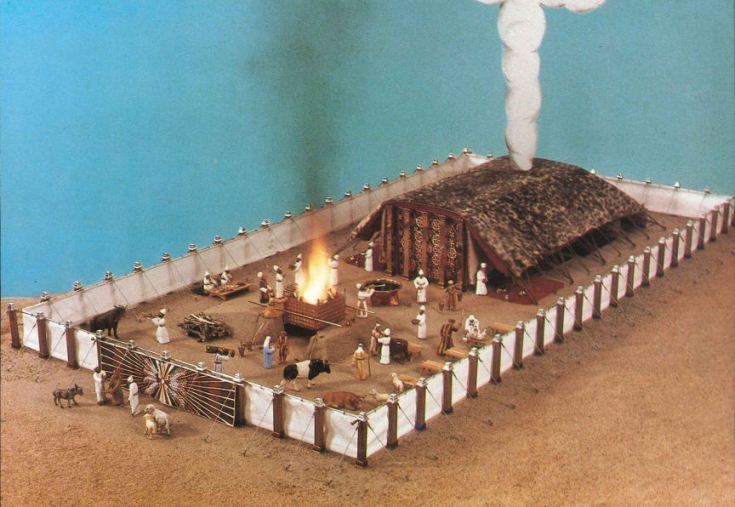
We might gloss over this passage, without grasping the importance of this detail. Nowhere in the long lists of a priest’s duties was there an option of sitting at the door and just watching people go in and out. The priests all had duties– some were in charge of the sacrifice (as Elkanah sometimes was). Others were in charge of the lamps, the incense, the care of the utensils and tools, offering prayers, singing, playing instruments, reading from the books of the law, and keeping the tabernacle clean and in good repair. None of them required sitting. Eli isn’t busy doing the work of the Lord; he is literally sitting down on the job.
In short, Eli is not a spiritual giant– he offers a standard blessing after Hannah pleads her case for not being a drunken disturber of the peace, but he doesn’t offer much in the way of true comfort or counseling. His first words to her are to “Go in peace.” The blessing seems to be almost an afterthought. Still, Hannah goes away encouraged, and comes back the next day to worship before returning home.
What can we learn from this encounter and these details in Hannah’s story?

One possible reaction is to become critical and dismissive of the clergy. I think this is the wrong reaction, but I want to address it in this context, because it can keep us from finding help and blessing if we let it. I know countless people who have walked away from the church because of one disappointing encounter with a minister, pastor’s wife, deacon, or fellow parishioner. Eli was not a stellar example of Israel’s priesthood; he was a flawed human. He had rebellious sons, and was likely depressed or anguished over his own troubles. Yet, he was still faithful to turn Hannah’s attention to the One who is always able to bring comfort and strength. Hannah could have chosen to focus on his rude and judgmental assumption about her, but she chose to focus on the hope he was able to offer.
I have gotten dismissive, even bad, advice from people in the church. I have been hurt, judged, and ignored by those who are supposed to be serving God. But just as God provides grace to cover our own failures and mis-steps, He asks us to extend forgiveness and grace to those–even those who serve Him.*

Having said that, I think there is a warning here for those who serve the Lord. Eli ends his days in tragic fashion, his family legacy in ruins, because of some of the details we glimpse even in this short passage about Hannah. Eventually, her son, Samuel, will be tasked with the job of delivering the fullness of God’s judgment against Eli and his sons. Eli’s priesthood was not a cushy position of sitting at the door of God’s tabernacle enjoying an afternoon breeze. He was in charge of setting the tone of reverence and worship for the nation. His sons were corrupt; everyone knew it, including Eli, but nothing was done about it. He sat there, and let evil happen around him.
Church workers, pastors, and priests who do evil and abuse their positions may get away with it for awhile, but God will not hold them guiltless. Nor will he hold those guiltless who cover up or deny the guilt of those around them. No matter how high the position, no matter how much “good” they have done, unless they repent of their actions, they will face God’s wrath over their evil acts.

Finally, we need to see Hannah’s response. Regardless of how evil the sons of Eli were, or how spineless Eli was as a parent and a High Priest, Hannah found faith– not in the priests– but in the God they served. She had seen the dedication of her husband, Elkanah. He served God with reverence, and he served his family with love and honor. She saw that Eli, even sitting down on the job, was still aware that hope and healing come from the Almighty.

Hannah’s response to Eli, and the God he served so imperfectly, deserves another look– one we will take in the next post.

I pray that today, we will be grateful to God for the faithful servants he sends into our lives, and for his grace when we or others “sit down” on the job of serving others and showing Him the reverence He deserves.

Blog at WordPress.com.

Up ↑