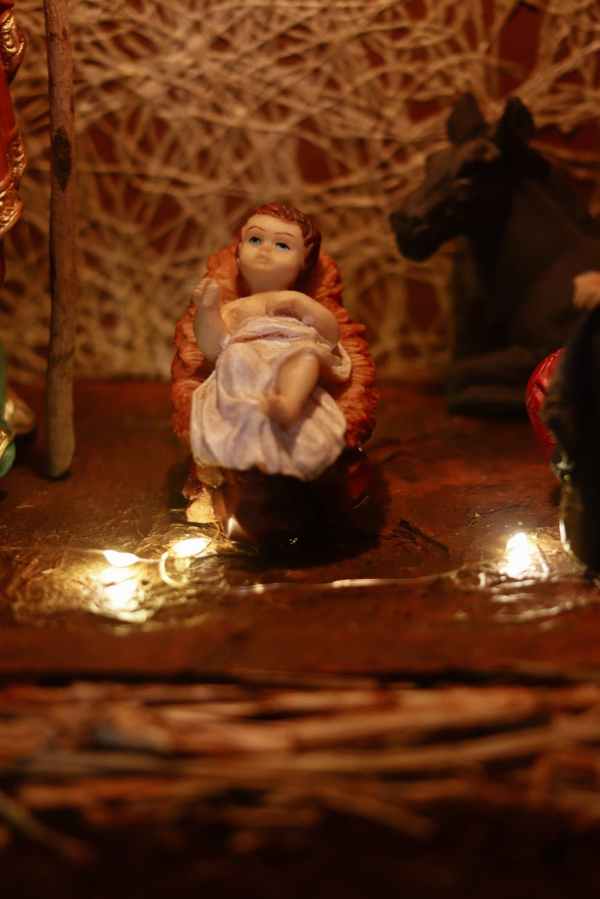
It is Advent season. We celebrate in four weeks an event that was anticipated for four hundred years! For four centuries, the people of Israel waited for the coming Messiah without ever hearing a word from God. Oh, there were prophecies– some stretching back centuries– that promised he would arrive. But when?!
Imagine praying earnestly for an event that would not happen for another three or four hundred years? Imagine praying into silence for an entire lifetime for an event that even your great-grandchildren would never witness?
We live in a fast world. Fast food, high-speed internet, overnight delivery of packages, instant communication, bullet trains– we have lost the skill of waiting. Yet Advent celebrates the waiting, the anticipation of a birth so amazing and so consequential, that we look back over 2,000 years in wonder!
The birth of Emmanuel was worth the wait. “God With Us” came into the world “at just the right time.” (Galatians 4:4). He was not a moment too early or too late to fulfill all the prophecies and bring Salvation to mankind. Those who prayed faithfully over the centuries may not have lived to see the fulfillment, but they put their hope and trust in the prophets and in the God they served.
We are in another Advent season– we await the return of Christ! We have no way of knowing the exact hour or day (or year or even century) of His return. But with the same wonder and hope of those faithful men and women of old, we should pray for His coming again! We should share the glorious story of His first coming. We should celebrate and worship the Faithfulness of God. He keeps all His promises “at just the right time.”
And as we wait, we must not give up hope or lose our passion for the Mission that Christ left with us. “Go, and make disciples of all nations” (Matthew 28:19-20). As wonderful as Christ’s birth was, it pales in comparison to His triumphant return to judge and rule the earth. May we look back in wonder and forward in joy as we celebrate this season.
But when you pray, go into your room and shut the door and pray to your Father who is in secret. And your Father who sees in secret will reward you. Matthew 6:6 (ESV)
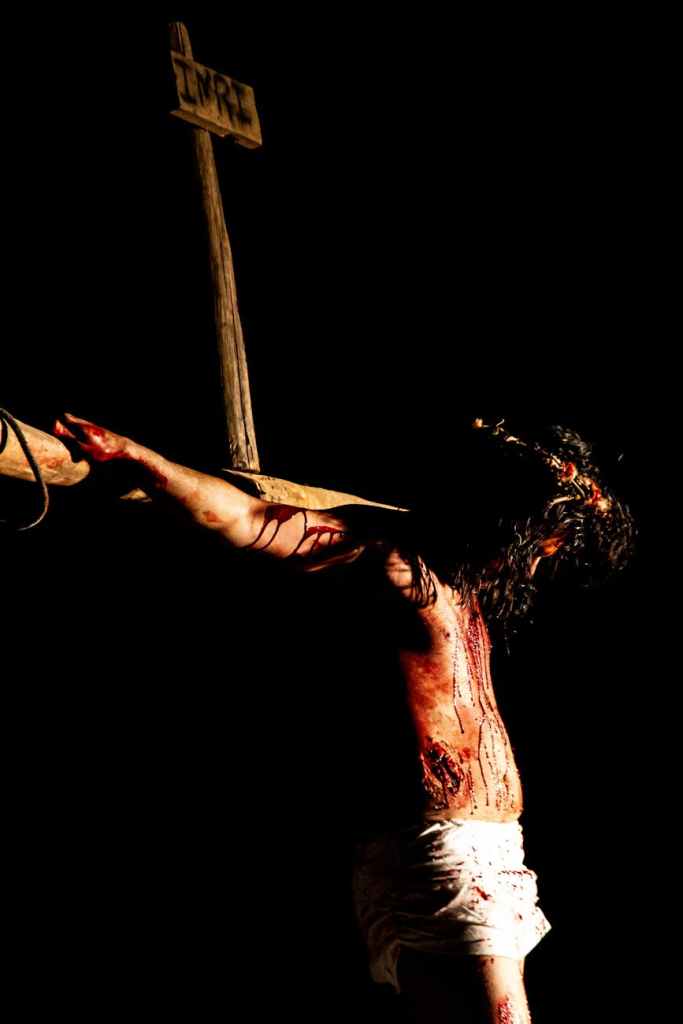
Prayer can sometimes seem like a cowardly action. It seems passive; it relies on faith and, often, patience. We connect courage to action– courageous people DO something; cowards sit on the sidelines or hide in their closets. Yet Jesus told His disciples to go into their rooms or closets, close the door, and pray in secret. Jesus himself often went out into the desert to pray alone. Jesus’s ministry was filled with passive moments. He spoke, or he walked along from town to town. He stopped to heal people by touching them or speaking to them. He rarely raised his voice or let his temper show. He allowed himself to be arrested, tried, sentenced, beaten, and crucified, without making a vigorous defense or protesting his horrific and unjust treatment. On the cross, his one impassioned outburst was a prayer to His Father–“My God, My God, why have you forsaken me?” (Mark 15:34)
We don’t think of Jesus as a coward. Yet, we often sneer at Christians who spend more time praying and less time “doing.” Being active is not a bad thing. Jesus commanded His disciples with many active words– “GO,” “teach,” “feed My sheep.” And there are busy people who are courageous in their own way. They go into dangerous places to preach the Gospel. They risk their health and safety to reach the lost with the Good News that Jesus Saves! They stand firm for the truth, and they defend it with vigor and passion. But Jesus also commanded His disciples to “Follow Me.” That means that we need to look at and model our lives after the ways that Jesus responded to various situations, and how He lived. The question we often ask is “what would Jesus do?” But the real question we should ask is “what did Jesus DO?”
Jesus prayed. He prayed for people; He prayed with people; and He prayed alone for hours and even days. And Jesus prayed courageous prayers. He didn’t pray “safe” prayers. Even His anguished prayer in the garden ended with courageous and humble resignation– “Father, if you are willing, remove this cup from me. Nevertheless, not my will, but yours, be done.” (Luke 22:42) Jesus also engaged lovingly and personally with the kinds of people that others ignored or wrote off or dismissed as broken, damaged, or irredeemable.
Just this week, a young Christian apologist and conservative speaker, Charlie Kirk, was assassinated. He was well-known and admired (or detested) for speaking up about family values, and Christian principles on American college campuses. He often faced hostile critics and smug detractors– atheists, anarchists, and those who called him a racist, a homophobe/transphobe, a bigot, and a “hater.” I never met Mr. Kirk. I watched some of the videos his group posted of him patiently and passionately arguing for marriage, faith, morality, hard work, ethical behavior, and national issues like immigration reform, tariffs, and foreign policy matters. I respected much of what he said, and some of how he said it. One of the things I most respected was his commitment to listening and asking questions, instead of merely attacking. But the most amazing thing about Mr. Kirk was his passionate and outspoken commitment to Jesus Christ. His faith was the center of everything he said, and in the way he interacted with supporters and detractors alike. He did not shy away from difficult questions, and he rarely resorted to easy answers, but he always pointed others to the example and the words of Jesus.
In the wake of his death, many people are asking, “What now?” Mr. Kirk was articulate, passionate, and willing to put himself in danger in order to defend the truth and his personal views. He trusted God to use him, and he was willing to pay a horrible price– being hated, threatened, and ultimately shot to death–to do what he saw as God’s work. He left behind a family (wife and two children), several close friends, and a host of people who followed him on social media and looked to him as a Godly example. Fellow Christians, while we may grieve his loss here, rejoice that he is Home with his Savior for eternity. But many people are wondering what will happen if no one steps forward to take his place and carry on his mission. While I believe that many young people will be inspired to speak out and engage in discussions, I don’t think most of us are meant to step into a spotlight. I think we NEED more people who will commit to going into their closets and pray. While Mr. Kirk put himself in the public arena, there have been hundreds and thousands of people praying for him. They continue to pray for his family, his outreach organization, “Turning Point”, and they even pray for those who instigated and committed this violence.
Prayer is NOT cowardly. Prayer warriors are needed to intercede, to call on Heaven’s Armies to continue in the age-old battle. We should be willing to have the difficult conversations when they arise. Some of us will be called to initiate such conversations openly and with fierce determination. And we should all be ready to “give a reason for the hope that is in you” (1 Peter 3:15) even when it is with “trembling and fear.” And we should always remember to be humble and show kindness, even to those who despise us. But some of us need to be lifting up those who are being attacked. Some of us need to pray more boldly, more often, and more confidently in light of the violence that has exploded in our world. We need to pray, not just for the Charlie Kirks of the world, but for the salvation of all the would-be assassins. We need to pray for the hearts and minds of those who want to argue and “cancel” all those who stand for God’s Word. And for all those who do not know the truth, who are confused, befuddled, or deceived.
We need those who can be courageous– whether in the public square or in a private room.
4-5 Celebrate God all day, every day. I mean, revel in him! Make it as clear as you can to all you meet that you’re on their side, working with them and not against them. Help them see that the Master is about to arrive. He could show up any minute! 6-7 Don’t fret or worry. Instead of worrying, pray. Let petitions and praises shape your worries into prayers, letting God know your concerns. Before you know it, a sense of God’s wholeness, everything coming together for good, will come and settle you down. It’s wonderful what happens when Christ displaces worry at the center of your life. 8-9 Summing it all up, friends, I’d say you’ll do best by filling your minds and meditating on things true, noble, reputable, authentic, compelling, gracious—the best, not the worst; the beautiful, not the ugly; things to praise, not things to curse. Put into practice what you learned from me, what you heard and saw and realized. Do that, and God, who makes everything work together, will work you into his most excellent harmonies. 10-14 I’m glad in God, far happier than you would ever guess—happy that you’re again showing such strong concern for me. Not that you ever quit praying and thinking about me. You just had no chance to show it. Actually, I don’t have a sense of needing anything personally. I’ve learned by now to be quite content whatever my circumstances. I’m just as happy with little as with much, with much as with little. I’ve found the recipe for being happy whether full or hungry, hands full or hands empty. Whatever I have, wherever I am, I can make it through anything in the One who makes me who I am. I don’t mean that your help didn’t mean a lot to me—it did. It was a beautiful thing that you came alongside me in my troubles.
Philippians 4:4-22 (The Message)
I have been blessed with the opportunity to do a couple of short-term mission trips. I am not a “Missionary” in the traditional sense. I have not left friends and family behind to move to a new culture or live among strangers for years to spread the gospel. I basically took some working vacations, met dozens of wonderful new friends, learned about the work they are doing in their community, and joined in helping them with a couple of small projects (painting, sorting donated clothes and shoes, working in the school, helping organize a library, putting together scrapbooks, etc.) I was able to go back and visit five times over a dozen years and watch as the children grew up, the school added on, the staff changed, and the mission work focus became broader and more community-focused.
Two things about visiting the mission field– you meet amazing people and you hear amazing stories. Some people will become life-long friends. Some people teach you and touch you in unexpected ways, even if they cross your path only on a single day. Some stories make you re-evaluate all the things you take for granted. Some stories leave you laughing or crying along with your new friends. Some just leave you speechless.
One such story happened on my first visit. We went on a “field trip” to see a developing community not too far from the border between the Dominican Republic and Haiti. Hundreds of Haitian refugees had flooded into the D.R., and at least two mission groups from the U.S. and Canada were working to provide housing, healthcare, and schooling for homeless families. Several teams of workers had already started building small cinder-block houses, a couple of bath houses/bathroom facilities, etc. in an area that used to be a sugar cane field. The houses were serviceable, and had basic electricity and running water. However, the water was only good for washing, not for drinking. The houses were close together, with very small plots for gardening, but the land was rocky and dusty. There was a centralized “administration” building, with a small clinic and other basic community services, a small elementary school, and a small chapel. Most of the homes had an electric light bulb hanging from the ceiling, but no other appliances. Meals were still cooked over a small open fire in the main room of the house. Cots or bed rolls took up most of the other room. The bathrooms were in the communal bath houses.
Not the actual location, but this is not too different from what the first houses were like– very basic.
I set the scene above so the circumstances are clear. These families were happy to be alive, and to have any shelter at all, but they were not living in luxury, nor were they moping and in despair about their condition. Part of our visit was to bring awareness to what efforts were already underway, and what needs were still outstanding. Medicine was scarce; many of the families had at least one person who was HIV positive, and many of the others had issues resulting from malnutrition and untreated childhood diseases. Jobs were hard to come by– the sugar cane plantations and rum factories had a history of exploiting their workers, and very few other jobs were open to Haitians who either didn’t speak the language or had no work permit/official identification. The mission organizations were not set up to provide jobs, income, or food and water. They were surviving on donations, which were sporadic and usually consisted of non-perishable items like clothes and hygiene items (toothpaste and soap).
Into this scene, the mission had received a princely donation of several hundred pairs of flip-flops. One of the bigger department store chains in the states and an overstock of black and white flip-flops– different sizes, but all the same style and colors. There were enough that everyone in the community could have a new pair of shoes! However, after the shoes were distributed, the administrators noticed that people were still going around barefoot. Very few of the people were wearing the new shoes. Finally someone asked if there was a problem with the shoes.
The answer they received is the heart of the story, and a lesson I have never forgotten. The people were very grateful for the shoes. But their greater need wasn’t for shoes. God had heard their prayers and supplied their need. Several enterprising members of the community had bundled dozens of pairs of flip-flops, carried them nearly eight miles into the nearest beach-front town, and found a spot along the beach where they sold the shoes to foreign tourists. Other groups did the same thing. Using the money from the sale of the flip-flops, they bought bottled water and produce at other roadside stands, carried them back to the community. This way, such items would be readily available while they waited for crops to grow in their gardens or a closer source of drinking water could be found.
On a later trip, we visited this community again. There were flowers, gardens, and two or three “colmados” (Dominican-style corner markets), which had grown out of two or three houses being torn down and reassembled. The community was flourishing. The “administration” center was still used mostly as a clinic and community meeting center, but some of the community members were administrators there. The school and church had grown, and there was now an arts and crafts center; community members were making candles, necklaces, wood carvings, and other items for sale at the beach, where they now had an established booth. God had used hundreds of unwanted, discarded shoes to supply an opportunity for people to work together and build a thriving community. There are still issues– health issues, domestic issues, economic issues– plaguing this settlement. But it is now “home” to hundreds of families who once had nowhere to go, and it is a beacon to surrounding communities, giving hope to hundreds more in the area. And, while some of the community members still go barefoot, most have shoes– shoes they chose and bought and paid for with their own money!
I’ve told this story before, because it is such a strong lesson in looking for and making use of every opportunity. God’s gifts are never wasted on us IF we choose to see them as gifts. Even our abundance– our “leftovers” and “overstocks” can benefit others in ways we might never imagine. And our efforts– even small ones taken in the midst of struggles– will pay dividends when we trust in God to supply our true needs.
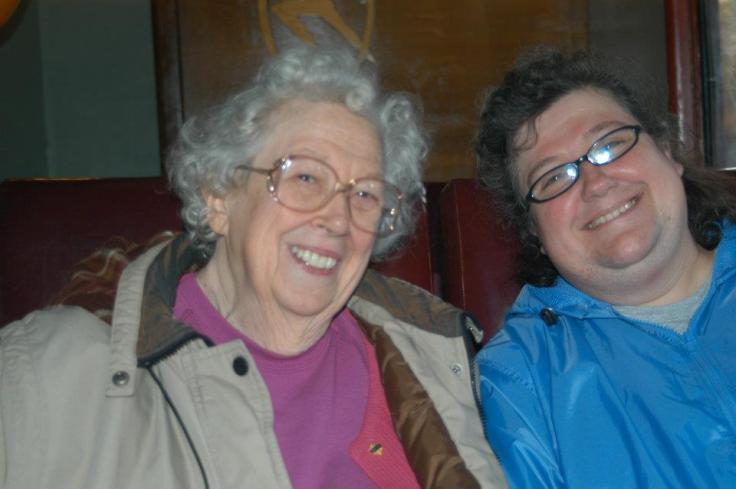
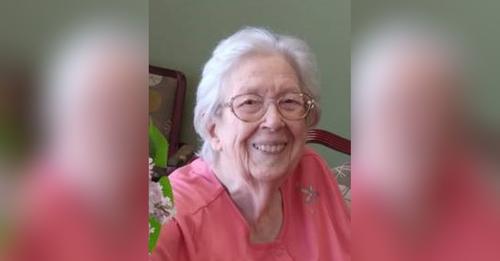
I missed posting here last Friday– we were busy planning my mom’s funeral. Mom died last week at the age of 89. We spent most of last week planning how to say our last goodbyes.
Goodbyes are never easy. And those that come with death are painful. We will miss our Mom, Grandma, Great-grandma, friend, cousin, neighbor, aunt, surrogate mom, and all the other roles she filled during her earthly life. We will miss her smile, her warm friendship, her faithfulness, her drive and passion, her energy, and her zest for life and adventure. I used to call or visit her every day. I will never again hear her voice in this life. I will never again hold her hand or share a laugh with her on this side of heaven.
But saying goodbye, for Christians, is NEVER permanent. I have said my very last goodbye to Mom, because someday, I will say “Hello!” to her again. And along with her, I will be welcomed into eternity by the One who created me and loves me even more than Mom did! No more painful partings; no more wondering when I will see her or speak to her again.
She is with so many loved ones to whom she had to say, “goodbye” over the years. And all of them are joyful and secure in the knowledge that there will be no more “goodbyes” in Heaven.
Mom was a prayer warrior, as I have said before. She prayed daily, multiple times a day, lifting up friends, relatives, and even strangers. And I will miss knowing that she is praying for me. But there is Someone Else who is praying for me daily– even constantly! Jesus sits at the right hand of the Father, making intercession for us every moment!
His disciples were in anguish at the thought of having to say “goodbye.” But Jesus told them to be glad, because He would send a comforter, the Holy Spirit, to them after He went away. They said their last “goodbye” to their beloved Teacher, but He didn’t leave them alone to grieve. He left them with a mission to achieve. He also left them with a promise that He was coming back! And this time, He would bring them to their eternal home in Glory!
And Mom has done something similar. She left a legacy of caring and praying and sharing the Gospel. She left hundreds with hope and peace for their future. And now it’s important to carry the baton; to finish our leg of the race, and continue the mission that Jesus passed on to His disciples long ago; the legacy that was passed to Mom, and that she has passed on to us. Someday, all the “last goodbyes” will have been said; all the last bitter tears shed, and we will all celebrate the arrival of God’s Glory. The only thing left to bid “goodbye” will be Sin and Death, grief and mourning.
I thank God for “Last Goodbyes.” Because I know that Goodbye is never the end for those of us who know Christ. We will be sad for awhile, but our grief will be swallowed up in joy and victory! Goodbye, Dear Mom– for now. You are safe and secure. Your prayers have been answered, and ours continue in hope and confidence. Amen!
I wrote last week that my mother was dying. She passed away on Monday afternoon. And since much of my pursuit of prayer is a reflection on the Godly example she set, I thought I should say a few words in honor of her passing from this life to Eternity.
Mom was a prayer warrior. I don’t often use that term, and don’t like to see it overused or misused. Just because someone claims to pray a lot, or just because they are active in church doesn’t make them a prayer warrior. But Mom was one. She battled to be informed of the needs of those around her (and those far away, too!). She wanted to know about every concern, every heartache, every health need, every financial need, every broken relationship– not just out of curiosity, and not for gossip or condemnation– she didn’t want to miss any opportunity to pray for someone else! She wanted to listen and offer comfort, encouragement, and, occasionally, advice.
My mom loved prayer. She loved Bible study and worship, fellowship, missions, and thanksgiving, too, but she was absolutely wild about prayer! She led various Bible studies, Sunday School classes, and Ladies groups during her long and active lifetime, and each one began and ended with prayer– prayer in the preparation, prayer in asking God to direct each meeting, prayer in follow-up–Quick prayers, fervent prayers, joyful prayers and humble prayers.
Mom prayed through her worship. Often a song sung (before she got so she couldn’t sing) was a song offered as a prayer. Even the act of attending church or a wedding or funeral was an act of prayer. She said mealtime grace, morning prayers, and bedtime prayers. Her prayers were simple and sincere. And people knew that Mom prayed. They would seek her out with their requests, knowing that she would offer real support, and not just good intentions.
But what my Mom was most known for was sending greeting cards. And each one was a small prayer– a voluntary act of asking God to bless the person who would be receiving the card. She wanted God to pour out blessing, strength, encouragement, and healing to as many people as possible. Every card was saturated in prayer and appreciation– appreciation for the person, and appreciation for what God could and would do in relation to that person’s life. She sent out around 100,000 cards in her lifetime! Each one was a small act of faith, blessing, encouragement, and love.
Mom wasn’t a “super” Christian. She was an ordinary sinner saved by Grace. She wasn’t particularly gifted with money, time, writing ability or creativity– though she had some resources in each area. But she used them well. She invested in the lives of hundreds of people– time and energy and emotion–through her prayers and actions. Not because she had something to prove or because she wanted to “earn her wings” or she just felt like sending cards. She spent countless hours organizing, gathering information and addresses, and writing out the cards and envelopes each day. But it was a labor of love because she believed that God SO LOVED the world, that He gave His only Begotten Son, that whosoever believeth in Him should not perish, but have everlasting Life (John 3:16). Her love for God was a response to His love for her, and His grace toward her…and her love for others was the overflow of the love she had received.
Mom’s passing leaves a great hole. But it also leaves an incredible opportunity. Her legacy is one of simple actions, persistent faith, and willingness to serve. God gave Mom an incredible life– nearly 90 years, and most of them full with abundant opportunities to make new friends, share God’s love, and serve her Savior.
No matter what time we have, may we have a heart to pray for others, and to grasp each opportunity to share God’s abundant and eternal love with those around us. My Mom has finished her race on Earth. It’s time for us to run the next leg!
5-9 So don’t lose a minute in building on what you’ve been given, complementing your basic faith with good character, spiritual understanding, alert discipline, passionate patience, reverent wonder, warm friendliness, and generous love, each dimension fitting into and developing the others. With these qualities active and growing in your lives, no grass will grow under your feet, no day will pass without its reward as you mature in your experience of our Master Jesus. Without these qualities you can’t see what’s right before you, oblivious that your old sinful life has been wiped off the books.
Do you plan for emergencies? Most people have some basic idea or plan for expected circumstances; a first-aid kit for home accidents; a small store of food or water; perhaps a generator in case of a power outage… But how many of us have a plan for the unexpected? Not just a vague idea of “what if…” but a plan. Some people have a stock of toilet paper and bottled water for their house or apartment, but no plan for what to do if they need to evacuate or relocate due to a flood or hurricane, or if they lose electricity for more than three days due to a storm, or if their building should catch fire.
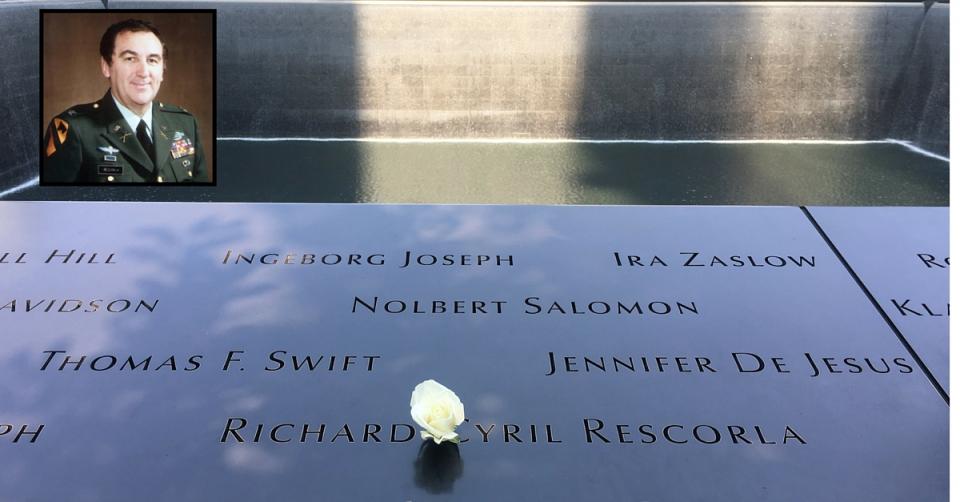
On September 11, 2001, when airplanes flew into the Twin Towers in New York City, several thousand people had to be quickly evacuated from the burning buildings. There were some plans in place; most had been misplaced or forgotten. And the chaos and confusion led to mixed messages– “stay put and wait for help…”,” don’t use the elevators…”,”get out as quickly as possible…”,” the stairways are unsafe…” But the vice president for corporate security at Dean Witter/Morgan Stanley, Richard Cyril Rescorla, was prepared for the worst. He had been planning and rehearsing for years after the failed attacks in 1993. He quickly implemented his detailed plans, ushering hundreds out of offices and into the stairwells, where they descended to safety in spite of the smoke and panic. He went back several times, checking to see who else needed help and guidance. Regardless of where they worked or who they were, Rescorla came with calm reassurance and authority, sending them into the path of rescue workers who could then offer greater assistance. Rescorla himself never made it safety– as he kept going up to get others out, he became trapped and perished when the towers fell. However, his years of planning, and his dedicated efforts on that fateful day saved the lives of hundreds, if not thousands of people. (See more here: https://www.911memorial.org/connect/blog/recognizing-war-hero-who-led-wtc-survivors-safety-911 )
We may not be called on to face another disastrous day like 9/11, but we are called to be alert and ready as we follow Christ. Those who followed Christ during His earthly ministry were called disciples. The name comes from the same root as discipline. They literally “walked” with Christ. They went where He went; they ate what He ate; they slept where He slept; they did whatever He asked them to do. If we seek to follow Christ, we must be ready to live lives of alert discipline. This comes after we take our first steps of Faith, and build on our character and understanding of God’s will. Our actions should not just be spontaneously “good” in the short-term, but patterned on the need to be prepared for the kind of challenges and trials we should expect to face. Just as Jesus was prepared for those who came to challenge Him with trick questions and false accusations, we need to be prepared to be challenged, rejected, and subjected to persecution. And we need to be prepared to respond, not with haughty complacency, outraged panic, or defensive tantrums, but with calm confidence and compassion.
The Apostle Peter, earlier in his letters, urges believers to be ready to give an answer (or a reason) for the hope that they have in Christ. (1 Peter 3:15) And this should not be a knee-jerk reaction to being challenged, or a snide commentary on doctrinal matters. We should be ready to be witnesses for the Majesty, Power, Grace, and Love of God as it has been experienced in our life and the lives of those around us. God never asked us to be His defense lawyers. He asks us to be faithful witnesses–not just of the facts about Him, but about our relationship WITH Him.
We also need to be prepared to be relocated or evacuated from lives of comfort, complacency, and expectation, in order to GO into the world and spread the Gospel. We will not all be called to be “missionaries” in the traditional understanding of the word, but we ARE all called to be on mission– to be ready to share our hope, our resources, our time, and our love– with others, near and far.
Today, I pray that God would continue to teach me as I live in obedience…that I would be alert and ready to speak, to walk, and to serve where and when and how HE sends. May I be ready to usher many others to safety as I share and live out the Gospel of Christ!
24 Don’t you know that the runners in a stadium all race, but only one receives the prize? Run in such a way to win the prize. 25 Now everyone who competes exercises self-control in everything. They do it to receive a perishable crown, but we an imperishable crown. 26 So I do not run like one who runs aimlessly or box like one beating the air. 27 Instead, I discipline my body and bring it under strict control, so that after preaching to others, I myself will not be disqualified.
1 Corinthians 9:24-27 CSB
I must confess, I haven’t been watching much of the Olympic games currently taking place in Tokyo. Over the years, I’ve spent hours glued to the television, watching the competitions, gobbling up the emotional stories of various athletes and their struggles to qualify and chase their dreams. In fact, I used to get so involved in watching the Olympics, that I would fall behind in my housework, social obligations, and sleep! It can be very inspiring to watch as various athletes from around the world challenge themselves (and their competitors) to go faster, reach farther, and climb higher. And many of the stories and names have stayed with me over the years.
There is nothing wrong with watching sports, and cheering on those who have worked so hard. And I love the pageantry and good will of the Olympic games, where I find myself cheering for athletes and sports I would never know otherwise–those who have overcome tragedy and incredible obstacles just to participate; those whose achievements have set new standards and inspired others to greater heights. But as Christians, we should consider our OWN level of achievement. Not in a competitive sense, and not in the sense of “earning” God’s salvation or approval, but in the sense of growth and development of self-discipline.
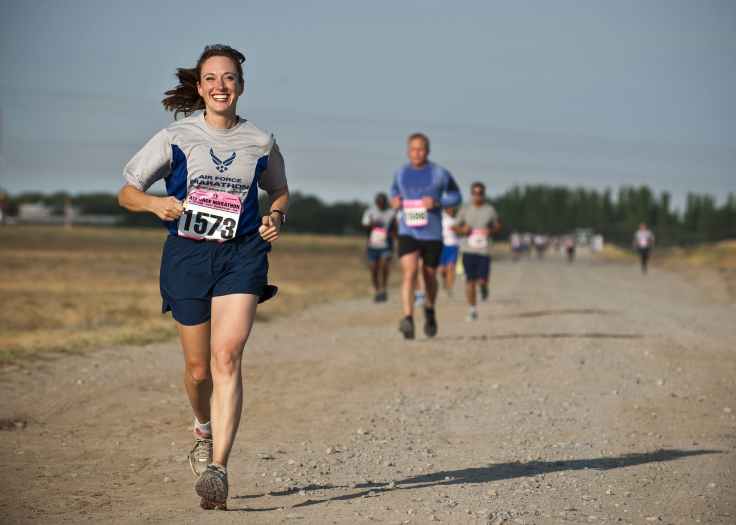
We admire athletes, not only for their natural abilities, but for their discipline and spirit. They train for years, undergoing rigorous drills, keeping tight schedules, pushing their bodies– often to the point of injury–to get a little more speed or distance or strength. They prepare for the stress of competition and the pressure of expectation. They learn to leave behind the failures and the victories of yesterday as they get ready for tomorrow. We watch them, and we talk about being inspired. But inspired to do what? I have never developed the level of self-discipline to rise every day at 6 a.m. to run or stretch, let alone train for a race or a swimming meet. I briefly flirted with becoming a gymnast after watching Nadia Comaneci score a perfect 10.0 in the Montreal Olympics of 1976, but I quit after only one weekend!
The Apostle Paul calls us to follow his example and “run the race” as we live for Christ–we are to develop our character and practice spiritual discipline in the same way that an athlete develops her body and practices physical and mental discipline. And our motivation is not a gold medal or a world record that will eventually be broken, but eternal victory over Sin and Death!
I’m ashamed to say that I have not always followed this example. I’ve been an “armchair Olympian”– content to watch others do the hard work, and enjoy the vicarious feeling of victory when they cross the finish line. I cheer for those Christians who are called to foreign missions–I’ve even traveled on “short term” mission trips– but I don’t always see my everyday life as a “mission.” But that’s exactly what it is. Jesus didn’t watch the disciples heal the sick or preach about the Kingdom of God as He sat on the sidelines. And He certainly didn’t spend time analyzing and dissecting the “performances” of the prophets and patriarchs of old. He didn’t even tell the disciples to analyze His miracles or study His sermons. He simply said, “Follow Me!” “Walk with Me.” Christianity is not passively cultivating a feeling of victory in Jesus. It is living victoriously THROUGH Jesus.
Our character won’t be changed by sitting on the couch or in an armchair, watching others do the hard training and running their race. Cheering from the sidelines isn’t going to increase our patience, or develop our faith, or make us more Christlike. Listening to Christian Radio or watching sermons on television won’t automatically translate into a life of integrity and peace. Even reading the Bible, or keeping a prayer journal, or writing a blog about spiritual things won’t teach us humility, gentleness, or love for others. We need to make the effort. And we need to seek the wisdom and discipline of the Holy Spirit– our “coach”– as we follow the example of Christ. It starts with small decisions– daily habits–and learning to be consistent. It also takes a willingness to repent and get back on track when we fail. And we will fail in our own efforts!
We can admire earthly athletes. But we shouldn’t worship them. And we shouldn’t let them become idols that substitute for the kind of work WE need to be doing to learn discipline and faithfulness. I want to reach the finish line, knowing that I’ve run my best race for the King!
God keeps calling my attention to the book of Jonah. It’s not a very lengthy or in-depth book. It has only four chapters, and it tells a single story of the prophet Jonah and his mission to preach to the people of the Assyrian capital of Nineveh. But it is filled with lessons about prayer, obedience, gratitude, repentance, and Grace. https://www.biblegateway.com/passage/?search=Jonah%201&version=NIV And we learn four important things about God: He sends, He saves, He sustains, and He suspends.
FIrst: God sends. The book of Jonah reminds me of reading Ernest Hemingway. It is compact, terse, and to the point. The very first verse reads, “The word of the Lord came to Jonah, son of Amittai.” There is no other intro, no back story, no conversation between Jonah and God… Yet there IS a back story: elsewhere in the Bible, Jonah is mentioned as a prophet of God. Jonah wasn’t an unlikely choice to take a prophecy to Nineveh. He wasn’t new to the whole “prophet” gig– he wasn’t a farmer or a fisherman or a young shepherd boy. He was an experienced seer and prophet. I mention this because God sends who HE wants to send. He didn’t have to give this message to Jonah. And when Jonah ran away, God didn’t have to chase him down and give him a second chance. There were other prophets who might have delivered the message without any fuss or drama. There were priests, soldiers, merchants, and shepherds who could have done the job (and likely done a better job!) The book of Jonah reminds us that God’s purposes are often multi-faceted. God’s purpose in sending Jonah wasn’t just about the Ninevites– He wanted to work in and around and through Jonah to reveal His character. He also sent the big fish (the Bible never says it was actually a whale), and later a gourd vine and a worm– all to minister to Jonah. They all appear in the story, but only to Jonah, not to any of the others! God will send us–or He will send people (or big fish) TO us. He will send people and things to bless us; and to test our patience! But God sends us what is meant for our good and His glory.
God saves: Each chapter contains an example of God’s salvation– In chapter one, God not only saves Jonah from drowning by sending the big fish; He also saves everyone else on the ship. An entire crew of hardened seamen are stunned by God’s power and grace. In chapter two, God rescues Jonah from the fish’s belly, and gives him another opportunity to fulfill his mission. In chapter three, God sees and hears the pleas of the Ninevites–He withholds His judgment and showers the city with amazing Grace. In the final chapter, Jonah wants to die (twice!), yet God provides comfort, compassion, and correction in response. At the end of this book, in spite of storms and raging seas, prophecies of doom and destruction, dangerous journeys, scorching sun, and disobedience, rebellion, and evil– NO ONE DIES!
God Sustains: God could have rescued Jonah without the “whale.” He could have calmed the storm. He could have caused Jonah to walk on water. He could have created a path of dry land for Jonah to walk on… But God caused Jonah to be in the belly of the fish for three days– a circumstance that Jesus used to foretell His own death and resurrection. God sustained Jonah even in the midst of his bitterness, anger, depression, and rebellion. He gave Jonah a miraculous rescue– one Jonah could have shared with the Ninevites to illustrate God’s Mercy. I find it curious that the King of Nineveh invites everyone to fast and pray, saying “Who knows..” Jonah KNEW! He was a living example of God’s Grace and Power. He could have shared this wonderful news with the people of Nineveh, yet he chose to share only the message of God’s wrath. Jonah had the biggest “fish story” in history, and he chose to keep it a secret! In spite of this, God sustained Jonah’s life– against Jonah’s own wishes! How has God sustained us in moments of crisis, doubt, and infidelity?
God Suspends: What does that mean? Well, in this book, it means several things. God suspends His judgment against the city of Nineveh–in later Bible books, we see that the people of Nineveh and Assyria return to their evil ways. They do not turn completely from their worship of idols and their detestable practices. Within a couple of generations, they experience the total destruction that Jonah predicted. God is Gracious and Merciful; He is also Righteous and Just. Jonah’s mistake was to despise God’s Mercy toward his enemies; the Ninevites’ mistake was to forget God’s Holiness. But God also suspends Jonah’s life– three times Jonah expresses a passive desire to die: he asks to be thrown into the sea (he does not know or expect that God will rescue him); he asks to die after the Ninevites are spared; and he asks to die when the worm destroys the gourd vine. But Jonah’s desire to die goes unfulfilled. God’s purpose is not that Jonah should die, but that Jonah should learn to LIVE and love: love his life; love his God (better); and love his former enemies. Sadly, we never find if Jonah ever learned his lesson. The author of Jonah leaves us “suspended” as well.
Our God sends “whales” to rescue us from our rebellious wandering, and “worms” to take away those comforts that keep us from seeing our real needs. He saves us, even though we don’t deserve a second (or third or thirtieth) chance. He sustains us, even in times of failure. And He suspends us, withholding His wrath and giving us loving compassion and correction. Jonah is not a very lovable character– and that is a great comfort to me in times when I am faced with my own failures and missed opportunities. The people of Nineveh were despicable! They deserved justice and judgment. But God loved Jonah; and He loved the people of Nineveh. And He loves us– more than we deserve; more than we can imagine. He loves the unlovable. He loves the despicable. He loves those who cannot love themselves, and those we are convinced we cannot love.
May we learn a lesson today from the “whale” and the “worm”– we can trust God for Mercy and for Justice. We can trust Him to save and sustain us; to send us and suspend us. And we can rest in His love and care–whether we find ourselves in a raging sea or caught in the scorching heat, or sent on a mission that tests our heart and soul to its limit.





























 Pursuing Prayer