The Hand of God

We’ve been going through the book of Daniel. King Nebuchadnezzar played a prominent role in chapters one through four, but he suddenly disappears from the narrative, and a distant successor, Belshazzar, comes to prominence for the space of a single chapter. https://www.biblegateway.com/passage/?search=Daniel+5&version=ESV

The Book of Daniel is a series of stories, disjointed, and filled with signs and wonders. Many scholars and critics over the years have suggested that these stories cannot be true; that they are legends created centuries later and added as Jewish propaganda. The story of Belshazzar in chapter five was a perfect example, they claimed. There was no written evidence for the kingship of Belshazzar. The last king of Babylon was a man named Nabonidus, so how is it that this story assumes that Belshazzar was the king giving a feast on the very night Darius would invade and conquer the empire? Recent discoveries, however, show that Daniel is more accurate in detail than the ancient historians, who were writing about the “big picture.” (For more explanation, visit this site: https://creation.com/archaeology-belshazzar). Belshazzar would have been the ruler/crown prince/regent of Babylon on that night. Not only that, he would have been young, spoiled, and eager to establish his own authority and prominence. This fits with the actions and reactions of these two men–the fact that Belshazzar would casually raid the storehouses for golden goblets that had been untouched in the days of his more powerful predecessor; that he could only offer Daniel the position of “third highest ruler”; the fact that, while Daniel is not contemptuous, he shows less deference to this “king” than he did to Nebuchadnezzar. In fact, he refers more to the glories of Nebuchadnezzar and the judgments of God than he does to the current state of Babylon or ANY of its other rulers.

There is a huge time gap between the earlier chapters and this one. Nebuchadnezzar’s reign was long; his son and grandson reigned after him (though both their reigns were much shorter). Belshazzar’s father, Nabonidus, reigned for over 15 years before losing the empire. The young Daniel of chapters one and two is now likely to be in his 70s or 80s! He has served faithfully under at least five rulers, but he is still considered an “exile” (see verse 13 of chap. 5), a foreigner, and a captive. In Daniel’s life of faith, service, and prayer, he has seen the “hand of God” working in his life and in the lives of those around him. Daniel has learned to trust in God’s provision, to submit to God’s direction, and to wait expectantly for God’s wisdom.

Belshazzar is terrified of the “Hand of God” as it writes on the wall of his father’s royal palace. He is the son of privilege and mysticism–the Babylonians were known for using signs and wonders to plan campaigns, seek power and wealth, and predict success. Their gods were capricious and full of wrath. But Belshazzar had never been visited by the God of the Universe. He had never taken the time to “number his days”, or consider his ultimate destiny.

Compare the judgment of God against Belshazzar (Mene, Mene, Tekel, Peres–God has numbered the days of your reign and brought it to an end; you have been weighed in the scales and found wanting; your kingdom is divided and given to the Medes and Persians) with this psalm of Moses (Psalm 90) https://www.biblegateway.com/passage/?search=Psalm+90&version=NIV. Two take-away points:

  • Belshazzar’s days were numbered and he was found wanting. Daniel’s days were numbered, too. Daniel waited years, living as an exile and second-class citizen, serving kings and powers who ignored, or even scorned his God. Daniel’s life was prolonged, yet he continued to serve with no freedom or personal reward in sight. And his trials and oppression are not over yet! (There is a den of lions in Daniel’s future!) But God doesn’t look at our lives in terms of power, success, wealth, health, position, or another outward factor. God sees the small acts of service, the daily discipline of worship, the humble trust and dependence we place in Him. Daniel’s story has not been about accomplishment. Daniel never built anything; he never accumulated anything; he never preached mighty sermons or wrote beautiful songs of worship. And even though God used him to solve riddles, interpret dreams, and prophesy, Daniel had nothing to put on a scale. Yet he was not found wanting, as Belshazzar was.
  • Daniel was not afraid of the Hand of God because he had learned to number his own days (See Psalm 90: 12-17), and he was able to gain wisdom, satisfaction, peace, and hope in knowing that the Lord God would establish even the smallest works of Daniel’s hands and make him glad for as many days as he had been afflicted. May we pray for, praise, and pursue the Hand of God in our lives today.

“Sheepish” Prayers

“The Lord is my Shepherd…” (Psalm 23: 1)

How often do I recite this favorite Psalm without really thinking about it? In the words of this Psalm, I am loved, cherished, sustained, and led by Him. But am I in reality? Do I submit to His leadership and guidance? When I pray, am I really coming to meet with my Shepherd, or am I trying to meet with God on some other level or in some other relationship?

I’ve been reading through the first few books of the Bible. I’m in Numbers right now, and Moses is leading the Israelites through the wilderness. The spies have just returned from Canaan, and the people have rebelled against God, weeping and accusing God of leading them to the Promised Land only to have them die in battle with the giants of the land.

I read through this and shake my head, but haven’t I done similar things in my walk with God? I want to avoid the wilderness. I want to walk in the green pastures, but I don’t want to travel through the valley of the shadow of death to get there! I look at obstacles and setbacks as though God were sitting far away, arms akimbo, laughing at my struggles; in reality, He is right beside me all the way, waiting to help me overcome each obstacle and gain victory together with Him. I’m looking at the giants, when He wants me to trust Him for the milk and honey He has promised. I still have to face the giants, and the battles ahead– but I don’t have to face them alone. I don’t have to face them in my own strength, my own limited wisdom, or my limited vision.

But here’s what I am learning as I read through this section of the Bible right now:

God IS with me. He doesn’t leave me or give me anything HE can’t handle. But I have to walk through the wilderness. I have to fight battles. I have to face giants. I have to learn to trust for my daily bread– whether it is manna or money to buy bread–daily. I have to listen to His voice; not impose my plans and ask for Him to bless them.

God doesn’t want me wrapped up or caged: He will not take away my freedom to follow (or NOT follow) Him. And when I wander, He may allow me to wander in circles for a while (hopefully not forty years!), but He will still be right there, ready to lead me when He sees that I am ready to move forward.

He will supply all that I really need– water from the rock, bread from Heaven– not because I have the money or resources, I think I’ve earned, but because He IS my provider. He can part the Red Sea; He can destroy Pharaoh’s armies. He can make the earth swallow up those who threaten me and defy Him. I am safe, even in the wilderness, when I stay close to the Shepherd!

He will counsel and correct me. He will offer forgiveness again and again. He will not leave me lost or unable to return to His side. He will be a “Presence” in my life, wherever I go– day or night.

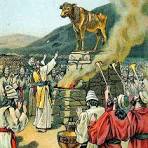
He sees me and He hears me– which is both comforting and fear-inducing. But it is a healthy fear; an awesome and reverent fear; one that keeps me humble. After all, I am a sheep, NOT the Shepherd! I can call out to Him, and He knows where I am (because He is right there, too), and He knows what I need. God saw the Israelites worshipping the Golden Calf even as He was speaking to Moses up on the mountain. God heard Moses as he pleaded for mercy, even in His anger and wrath.

He calls me by name. The Bible, especially the Old Testament, is full of individual names. Not just the ones we study in Sunday School; not just the ones in the children’s stories; but names of the leaders of the various tribes of Israel, and names of the spies, names of craftsmen God had selected to build the Ark and all the items needed for the Tabernacle, and names of those who rebelled. I am not lost in the crowd; I am not forgotten among the many. God knows me intimately– just as He knows you!

Even when my prayers seem like whining, bleating, plaintive “baa-ing”, I know my Shepherd hears. And He delights to hear from me. He delights in leading me through the wilderness and providing for my every need. And His promises sustain me when I don’t know what’s coming next, or I fear what I see on the horizon.

So I will pray today, and tomorrow, and every day, knowing that even my– especially my– “sheepish” prayers are not in vain.

“We Hold These Truths…”

Earlier this week, we celebrated Constitution Day in the United States. It went largely unheralded. The United States Constitution– the document on which all other laws are supposed to be based in this country– is relatively small. It takes about a half-hour to read it through, including all 27 amendments. It takes much longer to understand and make sense of it. One document that helps define and explain the Constitution is the Declaration of Independence.

One of the key phrases in the Declaration is this: “We hold these truths to be self-evident, that all men are created equal, that they are endowed by their Creator with certain unalienable Rights, that among these are Life, Liberty and the pursuit of Happiness.–That to secure these rights, Governments are instituted among Men, deriving their just powers from the consent of the governed, –That whenever any Form of Government becomes destructive of these ends, it is the Right of the People to alter or to abolish it, and to institute new Government, laying its foundation on such principles and organizing its powers in such form, as to them shall seem most likely to effect their Safety and Happiness.”

But looking around today, it seems that not all American hold ANY truths to be self-evident– indeed, many people don’t hold any truths to be true! We like to pay lip-service to one phrase– “All men are created equal…” but even here, we cringe and rephrase it. “It’s not just ‘men’ who are equal– all genders are equal” “Everybody is equal.” But what do we mean by this new phrase? It is self-evident (I would argue) that everyone is NOT equal in all ways. Some of us are taller than others, or healthier or wealthier than others; some of us live longer than others. Some of us work in offices; others work in the wind and rain and snow. Some of us live in large mansions, while others live in motor homes, apartments, hospital rooms, or even homeless shelters. The “Truth” is that we are CREATED equal– we are equally valued by our Creator, and equally entitled to dignity, life, liberty, and the “pursuit of happiness” under the laws of the land. Our laws are not supposed to create an artificial “equality” of outcome or circumstance, but provide for equal protection and opportunities for everyone to live, experience freedom, and pursue their individual purpose and dignity.

And we are losing the self-evident truth that Government should derive its just powers from the consent of the governed– not the arbitrary will of unelected bureaucrats appointed without public consent and answerable to no one.

We have lost the self-evident Truth, and replaced it with clever and complicated ideals.

None of this is new, however. All the way back in the days of ancient Israel, the people lost the self-evident Truth about their nation and its unique covenant with God. The Covenant was simple. It did not take a long time to read through. There were Ten Commandments and several “amendments” of ceremonial and social rules. God gave Moses a list of promises– blessings and curses–if the nation of Israel would (or would not) uphold their portion of the covenant. God would be their ruler, and they would be His People.

But after the death of Moses and his successor, Joshua, the people abandoned the law and the covenant, until chaos reigned, and God invoked many of the curses against His own people. By the end of the book of Judges, we learn that, “..in those days there was no king in Israel; every man did that which was right in his own sight.” (Judges 21:25)

Such conduct led to Israel being invaded, defeated, and oppressed. Worse, they approached their religious leader, Samuel the Priest/Prophet, and asked for a human king in order to be just like the other nations– nations God had called out for being wicked, violent, and unjust. The reign of kings failed, too, and the nation was again invaded, dragged off to exile, and oppressed.

“We hold these truths..” is more than just a phrase in a national document. It is a guideline for justice, peace, and prosperity.

WE– It doesn’t work for the people of any nation to be divided about what constitutes Truth. “My truth,” “Your truth,” and “their truth” can’t live together in harmony.

HOLD– We must be firm in our commitment to the Truth, or we will be swept away by the latest philosophy, moral standard, or faddish practices of the world around us. That doesn’t mean that we can never admit a need for change– that’s what the amendment process is for– but when we keep letting go of standards which have preserved safety and guaranteed opportunity, replacing them with temporary power grabs and loosely defined concessions to the loudest complainers, we are headed for nationwide injustice, violence, and oppression

THESE– There are other “truths” we could have adopted back at the founding of our nation. We could have set up another monarchy. We could have developed an oligarchy, made up of a ruling class. We could have argued that only land-owners were “equal.” That life was not an “unalienable” right. That representative government was inefficient, and therefore not necessary.

TRUTHS– Not suggestions. Not prevailing opinions of the day. TRUTHS. Immutable, unchanging, solid, objective.

And what goes for the United States should be a warning for Christians everywhere. We are citizens of Heaven. There are truths that we should hold to– truths that should be self-evident in the life of every Christian.
Jesus is LORD– not just a pal; not just a guru or a good teacher. He is the LORD.
God doesn’t change– What He said a thousand years ago about loving God and loving your neighbor still applies today. He hasn’t changed His mind about life, or liberty, or the pursuit of righteousness… He hasn’t become less powerful or less Holy, that we should just do “whatever is right in our own eyes..”
God’s Word hasn’t changed–His promises still hold; His warnings are still meant to be heeded; His will is still evident.
God’s grace is sufficient! God is HOLY and JUST. And He is full of Mercy and Love. He will forgive; He will empower us to do His will; He will continue to transform us as we follow Him.
God is Greater than Government. Whatever system of Government we live under in this life, God’s Kingdom is greater, more just, and everlasting.

These are truths worth holding! No matter what happens to the United States or its Constitution, I will continue to hold to the Truth of the Bible above all. May God in His Grace give us the strength, wisdom, and will to hold fast to what is true, and not just what is “American.”

So Close…

I’ve been reading in the book of Numbers this week. Numbers is not the most exciting book of the Bible. Many of the chapters are about the census, or about further rules and regulations concerning sacrificial offerings, etc.. But the chapters from 11-15 detail a series of rebellions– grumblings against Moses and efforts to return to Egypt. These rebellions happen after over two years after God had led the people out of Egypt. For two years, they have been protected, fed, sustained, and instructed by God himself. His spirit has appeared as a pillar of cloud by day and a pillar of fire by night throughout their journey. They have had manna and quail to eat, water from the rock to drink, and they have seen the vast army of Egypt drowned in a matter of minutes, while they were led through the sea on dry land! 

And now, they are so close to the “finish line.” They are on the very doorstep of the land of Canaan; the land God had promised to GIVE them. All that is left is for Moses to send out some scouts to bring back a report about the land– its cities and farmland, its people and its produce. Those two years must have seemed like a lifetime, but now it would be coming to an end. God would provide a homeland; a place to build houses, raise crops, rear their children, and settle into lives of peace and prosperity.

So what happened? The scouts brought back a factual report. The land had fortified cities, and lush farmland. It was already planted with plenty of fruit trees and vineyards. And there were ancient people groups with mighty warriors. Israel had just taken a census. They also had mighty warriors, and a lot of them! Moreover, they had God’s promise that the land would be GIVEN to them as their inheritance.

They were so close! Victory, rest, and prosperity were so close they should have been able to taste them. Instead, their warriors moaned and wailed like infants. The same people who had vowed to follow the Lord at Mount Sinai, now planned to walk away from His promised prize. They decided to turn around and go back to slavery in Egypt–the same Egypt that God had decimated two years earlier by sending plagues and destroying its army.

Two years of camping and living “on the road,” lost in two hours of grumbling and fear-mongering. And the punishment? Forty years of needless wandering–time to realize what had been thrown away in petty worrying and imagining the worst. Time to regret their reaction and their failure to trust God. Time for God to show them, once again, His ability to keep them safe and sound in the desert places.

And the learning curve would be a steep one. Almost immediately, a group decided that they would “prove” to God that they were ready to conquer Canaan– on their own. But it didn’t work. Then a group decided that Moses was to blame for their misfortune. But they were “swallowed up.” In the forty extra years of wandering, group after group would challenge Moses (and God) and be destroyed from within.  Moses, who had already lived forty years in the wilderness tending sheep, would have to repeat the task, shepherding the entire nation of Israel for forty long and difficult years. And even he would fall victim to his own frustrations, calling water from another rock, but doing it “his” way. Even Moses would fall in the wilderness, never getting to enter the promised land.

How many times have you noticed that the closer we get to a goal, the more likely we are to fall short. We sabotage our own efforts, or we rebel against good instruction. Sometimes we just give up a few yards short of the finish. We are just over half-way through the month of February. What goals or resolutions did you make for this year? How many of them have you stuck with?

Here are three things I take away from the lessons of Numbers 11-15:

  • Look Beyond. Don’t take your eyes off the prize! The scouts’ report was not all bad. Yes, the cities were walled and the warriors were big and fierce. But the walls of Jericho were eventually brought down without a single battering ram, siege ramp, or arrow! Don’t ignore the trials ahead, but don’t let them blind you to the blessings beyond them!
  • Look ahead, not behind. Don’t waste time living in past comforts or running from past mistakes. God has something better than whatever we’re going through now. But God isn’t waiting on the other side. He is beside us, around us, WITH us right now. He is patient with us. It may take us two years (or forty-two!) to reach a goal, but if we learn to follow God, we will never be forsaken.
  • Look UP! God’s spirit didn’t appear on the ground around the Israelite camp. He appeared as a pillar. God called Moses UP on Mount Sinai. We need to stop looking back at our past, or around, comparing ourselves to others, and look at God’s promises. In relation to our goals and dreams, we need to LIFT them up in prayer! Daily!

We are so close! Let’s keep going in the right direction towards God’s promises.

Prayer and Fasting

I had to fast overnight for some bloodwork I had done this morning. No food for 12 hours; no water for 8 hours before the blood draw. It shouldn’t seem like such a difficult thing, but at 9 or 10 p.m., I imagined I smelled food. My mouth watered– and then it felt dry. I felt woozy and weak. Surely I could have just a cracker or some orange juice, right? But no, I finished the fast and rejoiced to eat breakfast after the blood draw was complete. And simple scrambled eggs tasted sooo good! Oddly, I have often gone several hours without food and without all the imagined side effects I felt last night. The actions were the same, but the focus was on what I was doing, not what I was missing.

Fasting has become popular in recent years. I know several people who practice intermittent fasting for weight loss and other health benefits. Others fast for religious reasons (other than prayer); some people give up certain foods ritually, for Lent or other festivals. Some even fast in dangerous ways (anorexia, etc.) Fasting is usually about our relationship (sometimes an unhealthy relationship) with food.

Prayer, on the other hand, is all about our relationship with God. And when the Bible speaks of Prayer and Fasting, it is also about our relationship with God. The Bible gives many examples of fasting– even “extreme” fasting. Moses, King David, Jesus, and the Apostles all practiced it. Sometimes entire groups (churches), cities (Nineveh–see Jonah, chapter 3), and nations (Israel/Judah) fasted. The Bible also gives us many reasons to do fasting, including repentance of personal or national sin, deep personal struggles, and focusing on a single issue, such as the unsaved, the persecution of fellow Christians, seasons of famine, or ongoing injustices. But the Bible isn’t specific with guidelines and rules about fasting, because, like prayer, it is primarily a pursuit. It’s not about the extremes or the number of days, or the amount of food we “give up.” It is about the pure pursuit of God’s sufficiency. God is not impressed by whether we fast for one day or forty; He does not count the number of calories we might have consumed or the amount of weight we lost. He doesn’t measure the strength of our will power or our “success.” He isn’t impressed by posturing and virtue signaling. What He does ask is that we pray with complete focus and integrity, without the distractions that food, entertainment, and even sleep can sometimes become.

We can fast for hours or days– miss one meal or fifteen–and still “miss” the blessing of prayer, because we are focused on what we are doing (or not doing) instead of focusing on what God is doing. We can also “fast” in ways that have nothing to do with food– turn off the TV or phone, retreat from crowds and busyness, even “fast” from sleep! The point is not that WE are “better” for fasting, but that fasting is “better” for US!

Today, consider a small “fast”– replace a coffee break, snack, meal, hour of social media, or that extra 15 minutes of sleep with some time alone and wholly abandoned to God. Not only will we come away refreshed and not “missing” whatever we traded, but we will more fully enjoy those same activities or foods when they take their rightful priorities. Remember, prayer and fasting is not a contest or a ritual, it is a pursuit and an adventure! Enjoy it!

Some thoughts:

  • 1) Fasting is as individualized as praying. There is no perfect “formula.” But there are several helpful suggestions. You can set a time limit (one day; 12 hours, etc. without food or a certain activity) or a food/activity limit (only one meal a day for seven days, only one television program per night for a week). You can plan days or weeks ahead to fast for a definite period, or you can decide spontaneously to start fasting until you feel led to stop. One caveat– Fasting is not a game. It IS a commitment, and shouldn’t be done without a real desire to get closer to God.
  • 2) Having said that, fasting isn’t about your will power, or success/failure. Sometimes, circumstances will prevent you from completing a planned fast. Certain health issues or family situations may prevent you from fasting for a day or more. Sometimes you will fall short of the goal you set. Don’t let that stop you from trying again, or trying differently. God isn’t about perfection on your part– He IS about helping you grow stronger and more complete as you continue to walk with Him.
  • 3) Fasting is personal. It isn’t about looking virtuous, posting about your struggles, or comparing yourself to others. (See Matthew 6:16-18) That doesn’t mean it can’t be done as a group. But group fasting should be about a single focus or topic, not about making everyone in the group conform to a preconceived expectation. There is great encouragement to be found in praying as a group, and some encouragement in fasting as a group, but remember, fasting is between you and God, not you and the group, or you and all your Facebook friends.

  • NOTE: At least once a month this year, I want to offer some practical suggestions on how we can better pursue a life of Prayer and living the Christian Life. I hope this post gives each reader something to consider.

What We Keep…

I’ve been posting a lot lately about going through my Mom’s “stuff.” Mom was a saver– a pack rat– a hoarder, really. She kept boxes and piles of useless things. But she also kept things that have value to those she left behind. My siblings and I have found old photographs, momentos, letters, documents, etc., that bring the past alive again..not just our past, but our family roots going back generations.

My mother with her mom and younger sister c. 1944

What prompts us to keep such memories; to hold tightly to faded papers, worn objects, shadows of days gone by? Sometimes, it is an unhealthy focus on past memories– good and bad– that keep us in the grip of “glory days” or old and festering wounds. But there IS a value to keeping a record of the past.

When I was young, we had dozens of books around the house, including Bible Story books. The stories of Abraham and Sarah, Isaac, Moses, Samson and Samuel, King David, Queen Esther, Elijah, and then Jesus, his disciples, the Apostle Paul…they were mesmerizing– and very instructive! God didn’t just give us Ten Commandments and a list of rules to follow. He left us with a rich tapestry of stories of real people, and their very real adventures. He has given us Parables, and Psalms, Prophets and Promises– the Bible is a living book that speaks to each new generation with timeless truths. I learned about the Faithfulness of God, His Holiness, and His Mercy in those pages.

The stories and photos that get passed down in families can also be instructive. I now have a baby picture of the grandfather I never got to meet, as well as a photo of him as a young man, and another candid shot of him wearing a milk bucket on his head (He was a dairy farmer)! I can see and sense his humor and love of family in new ways, and appreciate the way his life and early death helped shaped my own dad’s life. I have letters my great-grandparents wrote to each other when they were first married and starting their family. I have some of Mom’s letters when she was struggling as a single mother on a limited income. Many of these items I will keep–not only as a reminder of the past that shaped me, but to pass on to future generations. Other photos, letters, and objects have been given to certain other family members– it is part of the legacy THEY will pass on. Still other items I will let go– they have served their purpose and other items will take their place.

The little country church I attended as a child.

It has been tempting, with the amount of “stuff” that my Mom kept, to just throw everything out. Much of it has to be cleaned off, sorted, identified– and room must be found to keep it! So I also have to look around at what I have been hanging on to, and ask, “Why?” What lessons to I want to pass on? What objects tell an instructive story about my life? What impact will I have on others in the years to come?

One of the most difficult things to go through are the photos and letters my Mother kept. She kept nearly every letter and greeting card she ever received. They meant that much to her. Not the actual cards and paper– the thoughts, the love and connection–the people they represent were her greatest treasures on this earth. And I can’t keep them all. I don’t have space, and many of the people are strangers to me– her elementary classmates, co-workers from years gone by, great-aunts–people long since dead and, with my mom’s passing, forgotten by most. But I will keep some, because they are a testament to Mom’s love of others– her deep and abiding love for everyone who touched her life, and allowed her to touch theirs. I have thrown out, recycled, or given away many of Mom’s clothes and books, and I’m working to give away the thousands of unused greeting cards she had stockpiled but never sent. But most of all, I will keep the stories– stories of God’s faithfulness in her life; stories of how He worked in and through her life to touch hundreds of others; stories of how God’s Love blooms in the simple acts of kindness and baby steps of Faith; in the ordinary joys and tears and minor miracles of daily life.

And I will hold tightly to the stories of my childhood– of Moses and the Burning Bush; of Jesus the Good Shepherd; of David trusting God to face Goliath; of the women finding an empty tomb on the first Easter Morning. One of the pictures I inherited is a print of Jesus on the Road to Emmaus. Two men are walking along, talking to a third man. Such a simple act. Such an ordinary occurrence. But this is no ordinary walk– the man in the middle is the Risen Christ–the One who conquered death to bring eternal life to the two unsuspecting travelers. The print hangs on my wall now. The print itself is not of much material value– but the story! That is worth my life– to keep, to share, to cherish, to proclaim to those yet to come!

Wealth in the Wilderness

In Exodus, chapter 16, the people of God are wandering in the wilderness of Sin (literally and figuratively!). They begin to grumble and complain about food, contrasting their current situation with their life in Egypt. Whenever I have read this passage in the past, I have assumed that the Israelites lacked food– that they were starving in the desert–and that their grumbling had some merit. After all, they are in a desert. Their complaints about water make sense. Surely, their complaints about food have the same ring of desperation.

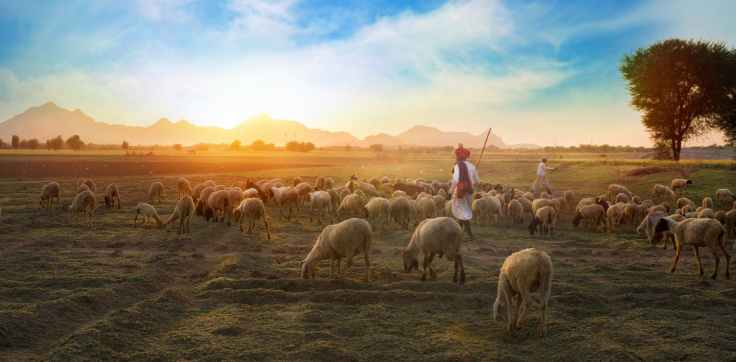
Photo by Yogendra Singh on Pexels.com

But a few chapters earlier, and a few chapters later, we get a better picture of the true situation of these wandering bands of Israelites. As they left Egypt, they demanded from Pharaoh that they be allowed to take their flocks and herds! This would suggest that they had sheep, cows, and goats with them–meat and milk in some quantity. They may have had other animals as well– chickens, pet dogs or cats, oxen or horses. The need for water was greater– not only water for the people, but for their animals– but the complaint about meat seems to have had nothing to do with actual need. If anything, their complaint might have been about grazing land for their animals– but they never bring this complaint before the Lord. Either there was enough grass, even in the wilderness, or they had brought grain to feed their flocks. And there was grain for bread–just a few short chapters later, God gives directions for the sacrifices– sacrifices that are to involve rams, bulls, and three different types of bread, cakes, and wafers made with wheat flour!

Photo by Mariana Kurnyk on Pexels.com

The Israelites have provisions. They have taken enough food for the journey up to that point, and more. They complain, not that they ARE starving, but that they believe they will starve. God answers their complaint by sending quail– enough that they got sick of it– and bread from heaven (manna). The manna continues to fall without fail every day (except the sabbaths) for 40 years, throughout all their moving; in every location and season, on rocky mountainsides and dusty plains.

Photo by Sravan Chandran on Pexels.com

God’s amazing and miraculous provision should have produced thanksgiving and worship. Instead, the people got sick of the quail, and continued with their complaining and grumbling for an entire generation as they wandered around the wilderness.

Photo by Ken Ozuna on Pexels.com

How many times do we complain about “needs” that are not needs at all? I find myself worrying about bills getting paid, or the car making “odd” noises, or an aching shoulder. I find myself thinking back to days when I had more money or free time, and far fewer aches and pains. It is tempting to ask God for a return of “the good old days.” But God’s plan for the Israelites didn’t involve pots of meat that came with chains attached. God’s plan for my life doesn’t involve my immediate comfort, but my eternal character. And even in times when I feel like I’m wandering in the wilderness, God never leaves me. I have been poor, but I have not starved. I have been sick, but not left to die alone. I have been lost, but never abandoned.

Photo by Pixabay on Pexels.com

There is wealth in the wilderness–the riches of God are available to those who will trust Him. Like manna, God will provide what only He can, and enough to see us through each day. He doesn’t promise that we will have “pots of meat” or easy circumstances. Instead, if we open our eyes, we will see miracles of grace, showing us how much God loves us and cares for us.

Photo by Irina Kostenich on Pexels.com

God’s people complained a lot, but rarely did they celebrate God’s provision or offer thanks. May we learn from their story, and praise the God who sends quail and manna to the very ones who doubt His mercy and love!

Trusting in Chariots

Some trust in chariots and some in horses,
but we trust in the name of the Lord our God.

Psalm 20:7 (NIV)

King David wrote this verse..one that I learned at Vacation Bible School as a child.  Taken out of context, it reminds us that the Name of the Lord is powerful and trust-worthy.  It is better to trust in the Lord than to place our trust in even the might of an army.  Military might, political power, wealth, popularity, social influence– all are fickle.  God is Sovereign and will do what He says He will do.

In context, David is not just recounting a principle; he is speaking from the experience of being God’s anointed King.  In the verse just before this, David says:

Now this I know:
The Lord gives victory to his anointed.
He answers him from his heavenly sanctuary
with the victorious power of his right hand.

See full text of Psalm 20 here

David knew God’s saving power– he had experienced protection, blessing, and victory from the hand of his Creator.  He had also known exile, hardship, and danger.

silhouette of man holding rifle riding on horse
Photo by Pixabay on Pexels.com

It is interesting to note that King David did not come up with the image of horses and chariots– God had already spoken to the people of Israel, warning them NOT to put their trust in such things.  David was proclaiming his adherence to God’s command several hundred years before:

sand desert blue sky egypt
Photo by David McEachan on Pexels.com

Appointing a King

14 When you have come into the land which the Lord your God gives you and possess it and dwell there and then say, “I will set a king over me just like all the nations that are around me,” 15 you must set a king over you whom the Lord your God will choose. You must select a king over you who is from among your brothers. You may not select a foreigner over you who is not your countryman. 16 What is more, he shall not accumulate horses for himself or cause the people to return to Egypt in order that he accumulate horses, for as the Lord has said to you, “You must not go back that way ever again.” 17 He shall not acquire many wives for himself, lest his heart turn away; nor shall he acquire for himself excess silver and gold.

18 It must be, when he sits on the throne of his kingdom, that he shall write a copy of this law for himself on a scroll before the priests, the Levites. 19 It must be with him, and he must read it all the days of his life so that he may learn to fear the Lord his God, and carefully observe all the words of this law and these statutes, and do them, 20 that his heart will not be lifted up above his brothers and so that he may not turn aside from the commandment, to the right or to the left, to the end, so that he may prolong his days in his kingdom, he and his children, in the midst of Israel.

Deuteronomy 17:14-20 (ESV)

Photo by cottonbro studio on Pexels.com

David did NOT adhere to all of God’s commands for a king.  He had many wives, and family troubles plagued his house for generations to come.  Tragically, his son Solomon, for all his wisdom in other areas, failed in his kingship because he failed to put his full trust in God.  He accumulated wives, horses, chariots, and wealth, but he lost the opportunity to establish his father’s house and his family’s dynasty by trusting in the very blessings of wealth and wisdom that God had given to him.

God blessed both King David and King Solomon with peace and prosperity.  Neither one followed God absolutely, but David understood something his son never fully grasped.  God’s blessings are abundant; they are rich and glorious.  God showers blessings upon both the just and the unjust.  They are not always a mark of God’s favor– frequently, they become a stumbling block and a substitute for the worship that belongs to God alone.  Solomon began his reign by trusting the God of his father, King David.  But in the end, he put his trust in his wealth and honor, and turned his back on God.

bullion gold gold bars golden
Photo by Pixabay on Pexels.com

25 Solomon had four thousand stalls for horses and chariots and twelve thousand horses, and he put them in designated cities and with him in Jerusalem. 26 He ruled over all the kings from the River to the land of the Philistines and to the border of Egypt. 27 So the king made silver in Jerusalem as abundant as stones and cedar as plentiful as sycamore trees in the lowlands of the Shephelah. 28 The horses of Solomon were imported from Egypt and from all other lands.

2 Chronicles 9:25-28 (ESV)

In fact, he did exactly what God had warned against during the days of Moses– importing horses from Egypt.  Without context, it seems like such an ordinary thing–kings accumulate might and power, and they import the best this world has to offer.  What’s wrong with that?  Solomon’s own father had the answer; the answer was written into the laws of Moses(the very ones Solomon was commanded to keep with him at all times!),  but Solomon turned away and crossed the line between gratitude for God’s blessings to placing his trust and identity in those very blessings.

animal animals backlit beach
Photo by Pixabay on Pexels.com

Some (people) trust in chariots and some in horses;
Some trust in their jobs or their homes;
Some trust in governments or politics;
Some trust in their bank accounts or their popularity–

Where is my trust today?

Holy, Majestic, Awesome God!

5-9 So don’t lose a minute in building on what you’ve been given, complementing your basic faith with good character, spiritual understanding, alert discipline, passionate patience, reverent wonder, warm friendliness, and generous love, each dimension fitting into and developing the others. With these qualities active and growing in your lives, no grass will grow under your feet, no day will pass without its reward as you mature in your experience of our Master Jesus. Without these qualities you can’t see what’s right before you, oblivious that your old sinful life has been wiped off the books.

2 Peter 1:5-9 (The Message) (emphasis added)
Photo by cottonbro on Pexels.com

I think one of the hallmarks of a Christian is not knowledge about God, but personal experience of God. And one of the signs of such experience is a reverent wonder– an overwhelming AWE– of God. Of who He is and how He works, what He has done, and what He has promised to do. As we grow in faith, good character, understanding, discipline, and patience, we are ready to absorb the absolute WONDER of this majestic, mighty, amazing God we serve. We revel in our own personal experience of Salvation, but we also begin to see the magnitude of God’s Grace, His Power, His Wisdom and His Holiness.

Photo by Min An on Pexels.com

Many of the ancient prophets tried to describe their encounters with God’s presence. Daniel and the Apostle John were paralyzed and prostrate when visited by angels. Paul was blinded by the light. Moses’ face had to be covered after being in God’s presence. because his face was so radiant. Isaiah was struck dumb. The list goes on… We may not experience the presence of angels or receive prophecies like they did, but we can experience a sense of ecstasy in contemplating our marvelous Lord and Savior.

One prophet who had such an experience was Habakkuk. Habakkuk lived in perilous and evil times. His nation was in rebellion toward God’s law, and its citizens, from the leaders and priests to the farmers and townspeople, were paying lip-service to God while prostrating themselves to foreign gods and foreign countries. The leaders lived in splendor, while many of their own people starved, or were sold into slavery. Habakkuk, in frustration, prayed to God, pleading for relief from evil, and judgment for the righteous. He had faith, was of good character, understood the law, had developed discipline, and had a passionate patience– but his patience was mixed with frustration. “How long must I wait to see justice and reform?” “How long will my people keep seeking help from wicked foreigners?” “When will we be free of oppression?”

Photo by Wallace Chuck on Pexels.com

Habakkuk was not just whining. He had a heart for his own people, and wanted to see what God would do. God’s answer was not what Habakkuk was expecting. God promised justice and redemption– but only after invasion, more oppression, and exile! God was sending a vast and merciless army to crush not only His own people, but all the wicked nations in whom they had placed their trust. God was going to “pull the rug out” from under the entire region. But then, He would punish the invaders, wiping out their power and restoring His people to their own land.

What was Habakkuk’s reaction to such news? At first, he was stunned; then confused. But in a very short time, his horror turned to worship. He resolved to stand at his watch; to station himself on the ramparts to see God at work. And as he waited, his perspective changed. God DID see the injustice and wickedness; the violence, lies, and betrayal. God had a plan– a plan so much grander and glorious in scope– a plan that had been in place from long before Habakkuk was born; long before his complaint. It was a plan that would not leave wickedness unpunished, but would bring justice in its proper time, and allow for redemption, restoration and renewal.

Photo by Frank Cone on Pexels.com

Habakkuk’s prayer (chapter 3) is a marvel of praise and worship:
“His glory covered the heavens, and his praise filled the earth. His splendor was like the sunrise; rays flashed from his hand where his power was hidden…” (v. 3b-4)
“You split the earth with rivers; the mountains saw you and writhed. Torrents of water swept by; the deep roared and lifted its waves on high. Sun and moon stood still in the heavens at the glint of your flying arrows, at the lightning of your flashing spear… (v.9b-11)
“I heard and my heart pounded; my lips quivered at the sound; decay crept into my bones, and my legs trembled. Yet I will wait patiently for the day of calamity to come on the nation invading us. Though the fig tree does not bud, and there are no grapes on the vines; though the olive crop fails, and the fields produce no food; though there are no sheep in the pen and no cattle in the stalls, yet I will rejoice in the Lord. I will be joyful in God my Savior. The Sovereign Lord is my strength; he makes my feet like the feet of a deer; he enables me to go on the heights.” (v. 16-19a NIV)

Photo by Orlando Vera on Pexels.com

How often does my heart pound and my lips quiver as I contemplate our Awesome God? How often am I joyful in God my Savior– especially in the midst of expected hardship and continuing evil around me? How often do I limit my sight to what is immediately before my eyes, instead of looking up at the one who holds every moment of the past and future; who controls the vastness of millions of galaxies, yet also sees each individual hair on 7 billions human heads, knows every grain of sand in the desert, and every drop of water in all the oceans; who tracks every molecule in the universe, but knows me by name?!

Photo by Snapwire on Pexels.com

May today be a day filled with reverent wonder, as we consider the Holy, Majestic, and Awesome God who has the power to redeem, inspire, and strengthen us for whatever lies ahead.

Always On the Go

“On the Go..”, “Going, Going, Gone!”, “Get Up and Go”–it seems that we spend a lot of our time either going somewhere or planning to go somewhere. Traveling, commuting, hiking, even walking in place; it seems we can’t stay still and in one place for any length of time.

Photo by Dom J on Pexels.com

Sometimes we’re on the move trying to get to a destination; other times we’re trying to escape from a situation. We go to the store; we go to a party; we go to an amusement park or a movie to escape from home and “normal” life for awhile. We go to the beach or the woods to experience nature; we go to the city to experience more people “on the go!” We go to work; we go back home.

Photo by Lisa Fotios on Pexels.com

Many times in the Bible, God explicitly commanded people to “Go;” Abraham was told to go to a land where God would lead him; Moses was told to go to Pharaoh, and tell him to “Let my people GO!” Jonah was told to go to Ninevah; Ananias was told to go to the house where Saul was staying after his encounter on the road to Damascus. The Disciples were told to “Go into all the world!”

Photo by Valentin Antonucci on Pexels.com

But there is one important exception–Jesus calls us to go into all the world, but He also commands us to “Come!” And unlike a command to Go–first here, then there, then somewhere else–the command to “Come” is full of closure and finality. We will not be forever “on the go” in Heaven. We will be Home. The God who is outside of time and space bids us join Him in the Eternal Everywhere–we cannot “Go” anywhere where He doesn’t exist, but someday, we will live in our ultimate destination– the eternal awareness of His constant, encompassing presence!

Photo by Johannes Plenio on Pexels.com

That’s the great good news of the GOspel. But it comes with a warning. Just as Heaven is an eternal destination, with no more need to “Go” anywhere, so Hell is an eternal destination, with no way of escape. Those in Heaven will have eternal rest– the peace of being where we were meant to be. Those in Hell will be eternally restless–wanting to escape from shame, guilt, and loneliness; wanting to escape to peace, rest, joy, and communion– always wanting to go, but unable to leave.

Photo by Ekrulila on Pexels.com

This compulsion to “go” throughout life is a nagging reminder that we have an ultimate destination. Either we are “going” toward a purpose and a destination, or we are wandering, lost and restless, never reaching the end of the race.

Photo by Emma Bauso on Pexels.com

Today, let’s pause for a moment and evaluate where we are going today. Even a long journey, over rough terrain, can be filled with joyous anticipation. Even a short journey on smooth roads can be filled with stress and regret. Let’s remember our destination, even as we “press on” today.

Blog at WordPress.com.

Up ↑