

What Happens in Gibeah…

Near the end of the book of Judges, there is a curious story; one often overlooked because of its sad and gruesome nature. Read the whole story here: https://www.biblegateway.com/passage/?search=Judges%2019-21&version=TLB

When one first encounters this story, it seems horrific but also disconnected somehow. Throughout the rest of the book of Judges, the narrative focuses on individuals who led the nation of Israel as they moved into and settled in the Promised Land. Moses and Joshua had led them TO the land, and now others were leading them IN the land. Some of them became household names as their stories echoed through the ages– Gideon, Samson, and to a lesser extent, Barak and Deborah and Jael–heroes in battle, but often weak in leadership. But as the book continues, the stories are much less heroic and much more appalling. The story of Gibeah is a tragic and disgusting downfall for the entire nation, rife with rape, murder, and civil war.

Hundreds of years later, the prophets Isaiah and Hosea make reference to Gibeah, and the horrors that were committed there. As bad as the story of Gibeah is, I believe it holds lessons and warnings for us even today.

  • At the beginning of the story, we learn that a Levite (a priest or priestly worker) who lived in a remote town took as his concubine a woman from Bethlehem in Judah. He brought her to the remote hill country where he lived. But she ran away and returned to her father’s house. Four months later, the man decides to track her down and bring her back home. Why are these details important? They seem innocuous, until you see how far from God’s plan and purpose the people have strayed.
    • The Levite was not supposed to take a concubine at all. He was to marry only a virgin from his own tribe. The passage is a little confusing on this point, calling her a concubine AND a wife. Either way, it seems she was not the sort of woman with whom he was supposed to create a family.
    • And she left him, so it seems that this was not a solid and committed relationship. He doesn’t follow her immediately.
    • He waits four months before going to check on her and attempting to bring her back. Once again, the context is unclear– maybe he was exercising patience, hoping that “absence makes the heart grow fonder” or hoping that time would mend whatever was wrong between them, but it could also be that he was just not in a great hurry to resume a relationship with her, but merely retrieving a bit of property.
  • Once the Levite tracks down the concubine, he is lulled into staying several days in the house of his father-in-law.
    • This would not have been unusual for that time period or region; hospitality was a hallmark of the people, and the father-in-law may have wanted to help smooth things over by giving his daughter more time at home to reconcile herself to the long journey and the return to her husband’s household. But this interaction does not feel like hospitality. There seems to be an undercurrent between the Levite and the woman’s father. The story never explores this, and maybe I am reading more into the story than what is there, but it seems that this relationship is not one based on love and deep affection, but more of a business transaction or power struggle.
    • If the woman was a concubine, she may have been returning to a household where she was a lesser wife and faced scorn or abuse from the Levite’s other wife or wives. Again, we do not know this from the context, but she does not seem eager to leave her father’s house, and the father does not seem comfortable sending her away.
    • The Levite seems reluctant to spend time with his father-in-law, yet it takes little convincing for him to stay four extra nights. Finally, on the fifth day, he insists that he will leave, even though it is now growing late.
  • As the Levite approaches the area around Jebus (Jerusalem), he refuses to stay there, as the Israelites have not conquered the city, and he does not want to stay with “foreigners.” He pushes on to Gibeah precisely because he assumes it will be safer to stay among his “own people.”
  • What happens that night in Gibeah begins almost the same as the scene that was described in Genesis 19, when the angels of the LORD visited the wicked city of Sodom, and the men of the city demanded to have sex with them. Just as Lot offered his two virgin daughters, the host offers his own virgin daughter to the mob. But this time, the concubine is trapped outside all night, left to be gang-raped and abused all night.
    • How horrified are the host and the Levite at the demands of the men of Gibeah? The host, much like Lot in Genesis, seems to be aware of the wickedness going on all around him, but powerless or without a will to stand up to it. The Levite does nothing to defend the woman he just “rescued” from her father’s house. He seems reconciled to the idea that she will be raped but is furious when she is left for dead?! Again, some of this is lost in the context of the story and the culture of that time, but surely none of this behavior lines up with the laws and regulations of the Israelites as given by Moses– not just the behavior of the men of Gibeah, but also that of the Levite.
    • The incident at Gibeah is actually WORSE than the one in Sodom! Israel has fallen so low that Sodom looks less wicked in comparison! The prophet Hosea, speaking of Israel’s prostitution with false gods and their coming judgment, refers to Gibeah as the place where judgment will (and should) begin because they have rejected their God. Jesus echoes this sentiment when He says in Matthew that judgment will be worse for those who reject Him than it was for the people of Sodom and Gomorrah. Sodom was a wicked city, but the people of Israel had heard the story of Sodom’s judgment and destruction. They had been warned– they had been sent to the Promised Land and told NOT to follow the wicked practices of the inhabitants they were to conquer. Yet they became worse than the people they were to destroy!
  • The reaction of the Levite, and the entire nation of Israel is not one of turning to God, but turning to vengeance and warfare
    • There is something about cutting up the dead body of his concubine and sending her bloody bits around the country that horrifies the reader of this story. Yes, her death was horrific and violent. But the aftermath is equally violent and impersonal. There is no mention in this story of grief or remorse or human compassion. There are only actions and reactions.
    • The men of Gibeah (and all of Benjamin) show no shame or repentance for this horrible incident. Instead, they are willing to slaughter their own countrymen (and die at their hand) in defiance and continued wickedness.
    • The “plan” after the war against the Benjaminites– allowing the men of the tribe of Benjamin to kidnap women in Shiloh– is evidence that no one has learned a lesson. The Israelites meet and ask God “Why has this happened?” But instead of asking God for an answer, they come up with their own plan.

The last verse in chapter 20 gives a sad and sobering summary–“In those days, Israel had no king, so the people did whatever seemed right in their own eyes.” (Judges 21:25)

What can we learn from this horrible incident? Most of us (I hope!) don’t go around gang-raping, torturing, and killing women; we don’t slaughter entire towns or tribal groups because of a single horrific incident; we don’t offer reparations to enemies that sanction kidnapping innocent victims. But do we turn our backs on God’s guidelines because we have a plan that seems “right in (our) own eyes”? Do we foster relationships that conflict with God’s word? Do we ignore the wickedness taking place in our own neighborhoods and right under our noses? Do we try to justify bad policies and practices because they are “no worse” than what others are doing?

What happened in Gibeah can happen anywhere. What happens in Gibeah doesn’t “stay” in Gibeah. It brings chaos, suffering, and judgment to an entire nation and impacts generations.

I pray that God’s people will open our eyes. Instead of pretending that we can do whatever “seems right” that we will focus on what is really “right,” and that we will confess and grieve for our sins, instead of defiantly redefining our values and morals.

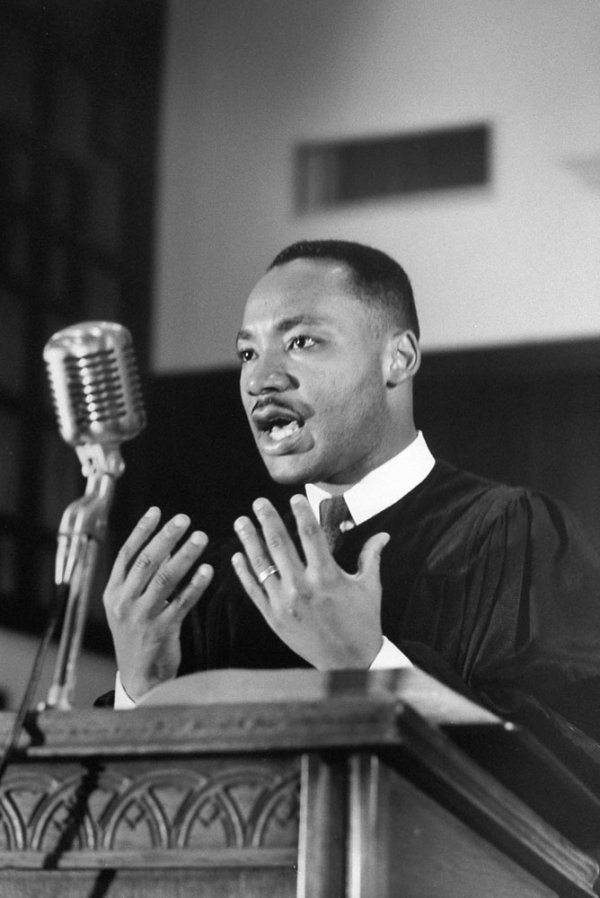
The Value of a Life

Today in America, we celebrate the life of Dr. Martin Luther King, Jr. Dr. King was a minister, a brilliant writer and student of theology, a leader in the Civil Rights movement of the late 1950s and early 1960s, a noted speaker, and man who arguably made a difference in the world. Dr. King was murdered in 1968, at the age of only 39, leaving a family and a nation devastated by his loss.

Next Monday, we will observe the 51st anniversary of the Supreme Court decision Roe v Wade, in which nine judges effectively legalized abortion in the U.S. for over half a century. Even though this decision has been overturned, many states, using the precedent of Roe v Wade, have changed their state laws to allow for abortion. In many states, it is now legal to abort a child right up to the moment of birth!

What is the value of a single life? Who gets to decide that they have the right to take another person’s life– whether by assassination, capital punishment, abortion, murder, or euthanasia?

It is a question that our society has struggled with for centuries. Who can give life? Who can take life? Who can determine the conditions of another person’s existence? And, for those who live, what is the “value” of their life–to their family, to their neighborhood, to their nation, or to history? Who gets to set the standard of what constitutes a “worthwhile” life or the “quality” of life for someone else? For themselves?

I’ve been reading through the book of Genesis this month, and, according to the Bible, this subject is as old as human life on earth. Cain decided that Abel’s life was expendable, so he killed him– the first murder. The people of Sodom and Gomorrah felt they had the right to enslave and rape anyone they wanted to. Joseph’s brothers plotted to kill him, before selling him into slavery, instead.

The Bible doesn’t hide this history, nor does it sugar-coat the actions of those featured in its pages. But, the Bible offers us a clear picture of WHO gives life, and WHO has the authority to decide what life is worth. God alone has this authority. It is God alone who can create and sustain life. Mankind has the choice– to protect life or destroy it; to treat life with respect or with disdain; to honor the Giver of Life, or to rebel against Him.

All the atrocities of the Old Testament lead to the ultimate decision on the value of a single life. Jesus lived a simple, ordinary human life. He lived with compassion, with purpose, and with humility. And He was willing to GIVE His life to atone for all the murders, all the abortions, all the slavery, all the injustices in history, so that WE could enjoy abundant, eternal life with Him. By looking to this singular life, and trusting in the power of His death and resurrection, we can choose to honor all life. We can make a difference. We can live with purpose and joy.

Dr. King’s legacy is one of honoring life, and pointing out the evils of those who seek to devalue the lives of others based on the color of their skin. Abortion’s legacy is one of destroying life, and promoting those who devalue the rights of the helpless.

The choice is still before us. How will we determine the value of a single life in the coming week? How will be add value to life on earth? How will we live for more than just the moment?

Blessed Are the Pure in Heart..

“Blessed are the pure in heart, for they shall see God.” (Matthew 5:8)

“Create in me a pure heart, O God, and renew a steadfast spirit within me.” (Psalm 51:10)

Photo by Min An on Pexels.com

I’ve been looking through the Beatitudes and how they relate to prayer. Jesus said that the pure in heart are blessed, for they shall “see God.” Have you ever spoken to someone who wasn’t looking at you? They looked past you, or around you, or down at their device, but they didn’t attempt to make or maintain eye contact. It can be disconcerting, and even rude. And yet, there are times when, with our divided hearts, we come into prayer without really looking for, or at, God.

Photo by RODNAE Productions on Pexels.com

At other times, our hearts cloud our vision, giving us a distorted view of God. We harbor sin or guilt, and we see God as unforgiving or unfair. We are holding on to our own will, and we see God as restrictive or demanding.

Photo by Andrea Piacquadio on Pexels.com

The pure in heart see God as He really is– Glorious, Merciful, Wise, and Just. They see evidence of His lovingkindness and faithfulness all around them. They see themselves through His eyes– beloved and forgiven–and they see others through the eyes of Grace.

This is not our natural state. We are NOT pure in heart. We are self-centered, self-absorbed, and self-conscious. King David recognized this profoundly when he was caught in his great sin of adultery and murder. In his own lust and selfishness, he had seduced the wife of another man, and when she became pregnant, David arranged to cover up the first sin–by having the man murdered. David was not a notorious scoundrel. He was even called, “a man after God’s own heart.” But when he was confronted with his guilt, David “saw” himself as he really was– not a victim of circumstance, or a martyr to passion, or a king who was above the law, but a man who had committed evil against others, and against a Holy and Sovereign God.

Photo by Nicola Barts on Pexels.com

David’s prayer was in line with his vision. Not only did he see himself as he really was; he saw God as HE really is: Holy and Just, but willing and able to restore David’s purity of heart. David’s God is the same today as He ever was. He longs to make us clean; to restore to us the joy of our salvation (see Psalm 51:12), and give us the power to pursue our purpose and leave our past sins behind.

Photo by Edu Carvalho on Pexels.com

When we desire to “see God,” we must desire this cleansing and restoration of purity. We can pray without it, but we cannot look at a Holy God with an unclean spirit. All we can do is look elsewhere– talking to the wall or the floor. God still hears us, but he wants to have a real conversation; one full of intimacy and understanding.

So, today, will I make “eye contact” during my prayer time?

Beyond Our Anger, Lord, Give Us Resolve!

There are a lot of angry people out there. They have ample reason to be angry. The world is filled with darkness, injustice, pain, sickness, violence, oppression..the list goes on. Such things should make us angry. Such things are wrong. They are destructive. They are evil.

Photo by Pixabay on Pexels.com

But anger, even justified, cannot heal. It begets more anger, and yet more evil in the name of vengeance. Anger alerts us to evil, but it cannot be allowed to fester and corrode all that is good.

God created us with emotions, like anger, but He desires us to bring them under His discipline to become instruments of good. All the way back in Genesis, God cautioned Cain in his anger https://www.biblegateway.com/passage/?search=Genesis+4%3A1-16&version=NIV God did not condemn Cain for his anger, but he warned him not to be mastered by it. Cain did not listen, and in his anger, he committed the first murder. God’s wrath against Cain was swift and terrible– God cursed the ground, so it would not produce for Cain; He drove Cain to wander in the barren wilderness. Even so, God put a mark of protection on Cain, and promised His own vengeance on anyone who would try to kill him. God’s mercy overwhelmed simple retribution. God had the power (and the right) to strike Cain dead. He chose to let Cain live with the dark consequences of his anger.

Photo by Pixabay on Pexels.com

God understands that we will get angry– He gets angry, too! But God sees beyond anger, beyond the immediate pain and rage that we feel when confronted with evil. God’s ways are eternal and Holy and right.

If we turn to God in our anger– if we cry out to Him and wait for His wisdom, He can turn even our anger and bitterness into something far better– resolve. We can resolve to bring good out of tragedy; we can resolve to work, and sweat, and pray, and stand firm in the midst of the storm. If anger is like fire– swift and destructive, then resolve is like a mountain–enduring and offering shelter, protection, and a fixed reference. Fire can scorch the mountain. But it cannot move it or destroy it.

Photo by Pixabay on Pexels.com

We are living in uncertain and evil times. Let us acknowledge it; even be angered by it. But then, let us bring our anger, our pain, our confusion– and our hope–to God. As God warned Cain, if we do not do what is right, sin will be crouching at our door, desiring to have us; to destroy us and drive us away from God’s presence. If we deny our anger, if we push it down and pretend that it has no power to touch us, we are playing with fire. But if we bring it to God, acknowledging the struggle, crying out in our pain, God can turn our anger into resolve– steadfast through fire and storm and wind and time. Solidly committed to what is good and right and truly just.

Photo by August de Richelieu on Pexels.com

Anger, violence, vengeance–all promise easy justice and powerful change. But once the fire of emotion and action has passed, we are left with ashes and death. But on the mountain of resolve, even the ashes become mixed with the good soil underneath to produce new life and growth. The good endures. The good resolves to endure. Goodness is eternal. Let us seek the good, and seek that God would, beyond our anger, grant us resolve.

Blog at WordPress.com.

Up ↑