Got Jesus?

1 In the beginning was the Word, and the Word was with God, and the Word was God. 2 He was in the beginning with God. 3 All things were made through him, and without him was not any thing made that was made. 4 In him was life, and the life was the light of men. 5 The light shines in the darkness, and the darkness has not overcome it, 10 He was in the world, and the world was made through him, yet the world did not know him. 11 He came to his own, and his own people did not receive him. 12 But to all who did receive him, who believed in his name, he gave the right to become children of God, 13 who were born, not of blood nor of the will of the flesh nor of the will of man, but of God.14 And the Word became flesh and dwelt among us, and we have seen his glory, glory as of the only Son from the Father, full of grace and truth.

John 1:1-5; 10-14 (ESV)
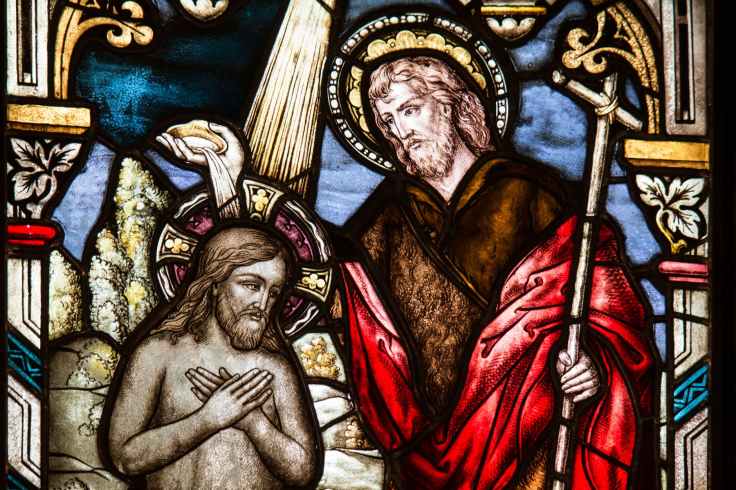
Photo by James Wheeler on Pexels.com

I memorized this passage as a child. And one part of this passage stands out to me today, because the wording of the verse has not changed, but our cultural reading of it has changed a bit. I remember churches, and evangelists, using the phrases like, “Have you accepted Jesus Christ as your personal Savior (or Lord, or Lord and Savior)?” “Are you ‘born again?'” “Have you asked Jesus into your heart?”

I know in certain circles these phrases are considered “old fashioned”, “evangelical”, and even offensive. Some of us don’t identify as Christians anymore– many of us prefer the term, “Christ-followers.” “Born-again” Christians are seen as hypocritical, overbearing, judgmental, and intolerant– even violent! And there are individuals and groups who give evangelical Christianity a “bad name” by their behavior.

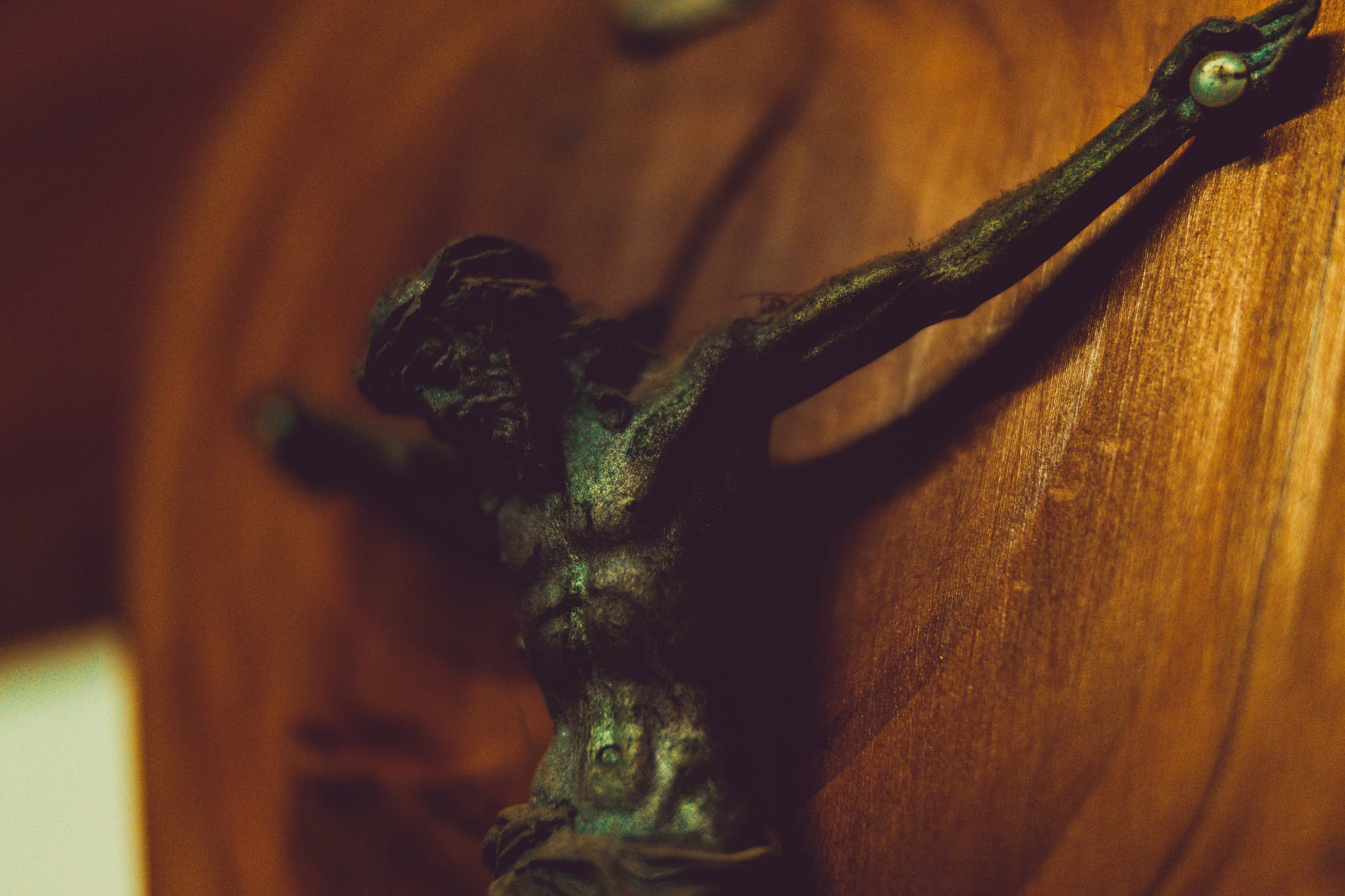
Photo by Alex Green on Pexels.com

Evangelicals have a reputation for putting people’s backs up, and putting people “on the spot.” They want to know, “have you GOT Jesus?” As though Jesus is a product and you either own Him or you’re missing Him. Can you get Jesus at the corner store? Do you “get” Him the same way someone “gets” a virus? Is He infectious? Can you sell Him? Lose Him? Trade Him away?

The Apostle and Gospel writer, John, was an evangelical. He was keenly concerned that His readers, friends, listeners– basically everyone he met, GOT Jesus. He wasn’t trying to sell a product, force a certain doctrine down others’ throats at the end of a sword, or offend those he met. But he DID want to make sure that people didn’t miss out on the GLORY, the incredible WONDER, the eternal GIFT of LIFE that had lived and walked and dwelt among us.

Photo by Kyle Karbowski on Pexels.com

Today, there are many who claim to “follow” Christ– they have great respect for His teachings; they want to live a “good” and even “righteous” life just as Jesus did; they believe He was a great role model. But they haven’t “received” Him. They believe what they have heard about Him; they believe “in” Him, but they don’t believe “in His Name.” Truly becoming a “follower” of Christ is to become a “Christian”– willing to be called by His name and identified with Him. Not just as a wise teacher or a gentle soul, but as a sacrifice–despised and rejected, misunderstood– and obedient even unto death. Not just the physical death of a martyr, but the social death of an outcast, the death of selfish dreams and worldly success through compromise, the loss of relationships, property, status, freedom… John knew all of this first-hand. He was standing by during the trial and crucifixion of Jesus Christ. He watched as his brother and friends were beheaded, tortured, crucified upside-down, and driven into hiding. He spent the end of his life in exile for the privilege of being a “Christian.”

Photo by Gabriela Palai on Pexels.com

Calling oneself a Christian, or a Christ-follower, or “born again,” doesn’t mean anything in and of itself. I can call myself a doctor, or an artist, or a prophet. I may have studied medicine, or created a painting, or made a prediction and be completely hypocritical. I may end up giving a bad name to myself, and causing people to be cautious about other doctors, artists, or prophets. That doesn’t make THEM hypocritical, and it shouldn’t cause them to stop doing what they do well. What matters is not what I say I am, or even what others say about me, but what and who I demonstrate that I am. I want to let my words and actions declare my relationship to Christ. At times, I would like to avoid the ridicule and misunderstandings. I’d like to be able to distance myself from the “bad examples,” but, like John, I long to testify to the GLORY of the one I follow and trust, more than I want to justify my own self at the expense of others. Yes, there are some “fake” Christians, and some who are sincerely wrong in how they attempt to live– and if someone were to catch me in a bad moment on a bad day, and show only that moment to the world, I would be counted among them– but my goal is not to ask if others have a perfect track record, or if they know all the right Bible verses or even if they have the “right” answers. My goal is to ask, ” Have you GOT Jesus?” “Do you KNOW Him– not just about Him?” When you pray, are you praying to an aloof idea or to a personal Savior? If He called you, would you answer, or let it go to voice mail? Would you scroll through and “like” His social media posts, or would you actually DO what He said?

Jesus came. He walked among ordinary people. Crowds “followed” Him, hanging on His parables, excited about His healings, and impressed by His miracles. But very few of them actually became His disciples and “received” Him. But to those who did, like John, He gave them the privilege to be called Children of God– not because they were smarter or wiser or more righteous in their own knowledge or efforts, but because they were made new, “born” again, and transformed by their relationship with Him. May that be so for all of us!

“God Bless…What’s His Name”

In the movie, The Sound of Music, a young woman named Maria is asked to leave her life in a convent to become a governess of seven children belonging to a widowed Navy Captain. After a hectic first day, she settles in for her evening prayers. She lists by name all the people she wants God to bless; but as she goes through the unfamiliar names of the seven children, she realizes she has forgotten the name of the younger, “incorrigible” boy. After a short struggle, she simply asks God to “bless what’s his name.” That evening, a storm comes up and soon three frightened girls come running to Maria’s room, and happen to mention the boy’s name– Kurt. “That’s it. Kurt. God Bless Kurt!” A short time later, Kurt, his brother, Freidrich, and the other girls show up, and they all end up bonding and singing through the storm. It’s a nice movie scene, but it also teaches us a lesson about prayer.

Maria’s lapse reminds us that even when we try to include everyone, we often forget a person’s name, or forget one member of a larger group. Sometimes, we forget that we already mentioned someone else, and count them twice. It happens. When I was a teacher, even with my roll call list, sometimes I would make mistakes as I hurried through the task to get to a lesson. As I get older, I find it’s common for me to see a person’s face, and not be able to remember their name. And, disconcertingly, I often see a name and cannot remember the face! (“God bless Kurt…whoever he is.”)

Photo by Katerina Holmes on Pexels.com

God knows the weaknesses and limitations of our minds. While it would be irresponsible to pray “God bless what’s his name” every night, and never try to call Kurt by name, it is important to lift up the “what’s his/her names” in our lives, trusting that God knows their names, their needs, their hearts, and their unique place in His plans. The very fact that we remember some essence of their personality or presence is enough to make them worth lifting up to the one who knows them far better. And perhaps someone else, who has forgotten your name, but not your value to the Father, is lifting you up in this very moment!

Maria’s prayer also reminds us that it is important to pray for individuals BY name (when we remember). We can pray for nations, groups, civil and corporate bodies, and churches, but when we pray for individuals, calling them to mind and heart, we are continuing a prayer that stretches through time and around the globe. This prayer– this list of names and remembrance of faces and spirits– began with Jesus and His disciples, and continues unbroken over centuries. It is a single prayer, tying together brothers and sisters in Christ who are otherwise divided by language and distance, time, and tide. Children saying their bedtime prayers; aged saints at their morning devotions; mothers lifting up their precious children; fathers lifting up their neighbors; missionaries lifting up their persecutors–throughout generations–this prayer is a continuous offering, like incense, rising to the throne of grace.

Photo by Luis Quintero on Pexels.com

God Bless Kurt. God Bless Gretl, and Fabiani, Yayoi and Bruno. God Bless You. And God Bless “What’s-her-name.”

Prayers for the Nameless…

I keep a prayer journal. In it, I like to write the names of people I know and pray for– family, friends, neighbors, etc. For every day of the year, I have a list of people who are celebrating birthdays or anniversaries (if I know about them). And I also have a space where I list specific requests related to health or suffering, needs, grieving, and more.

But many times, I also get generic or “unspoken” requests–no names or specific details. And for every day of the year, I also have a place or region– a city, state, province, nation, continent, ocean, desert–for which I pray. Sometimes, this can be awkward. I don’t always know for whom I am praying, or for what outcome…should I pray for peace?..prosperity?..courage?..the weather?..the government?..

Photo by Olya Kobruseva on Pexels.com

So what is the point? Why not stick to more “focused” prayer? Why not pray for those things with which I am most familiar? Most comfortable? Most able to make or see a difference?

Because God calls us to pray. And He calls us to pray both for those people and things we know well, and those we can only hope to trust to Him. I don’t have to know WHY I am praying for Albania (beyond the fact that it is on tomorrow’s page of my prayer journal). I don’t have to know who lives there, or what the needs are. I don’t have to know, because God knows, and I am trusting HIM to know the who and the why, the how and the when.

The other day, I was reading in Genesis– the story of Noah, and the Ark. The Bible introduces Noah by giving us a genealogy: a list of the descendants of Adam through to Noah. And there is a curious side story about Nephilim, and giants, and wickedness. But there is something noticeably missing. The women’s names. Even in the story of Noah that follows, Noah and his sons are named. But not the wives…we know they are there in the Ark. We know they were saved from the flood. We know they were crucial to the survival and future of mankind, but there are no names. At other times throughout the Bible narrative, there are seemingly endless lists of names of people we are likely to forget–names like Peninnah (1 Samuel 1:2), Unni (1 Chronicles 15:18), Shelumiel (Numbers 10:18), Palal (Nehemiah 3:25), Tryphena (Romans 16:12), or Onesiphorus (2 Timothy 1:16).

Photo by Felipe Cardoso on Pexels.com

Names are important to the Lord. He knows each and every person’s name before they are even born. He knows the number of hairs on each person’s head (even the ones that used to be there!). But it is not necessary for US to know every name, every need, or every situation in order to lift it before our omniscient and loving Father.

So I will continue to pray for the nameless and the unknown. I will lift up unspoken and unformed requests to the God I DO know.

Photo by Oladimeji Ajegbile on Pexels.com

Another reason I continue to pray for the nameless is that it keeps my focus outward. One of the drawbacks of the modern and post-modern world is that the “smaller” our world becomes, the smaller our focus. I can connect, via internet, to people around the globe. I can look up statistics for any country or region; I can see news reports and video uploads in real time from nearly every corner of the world. But it can be frightfully easy to turn my focus on myself and those immediately around me, to the exclusion of those whose names don’t show up on my “friends” list, or those whose faces get lost among the thousands of videos, and Facebook Posts, and Instagram shots. It can be deceptively easy to depend on what I can “know” from a computer screen, and not to depend on what God knows to be true.

Let’s open our hearts and minds to pray for the nameless among us– near and far. They are not nameless to God, and they are precious in His sight. And somewhere, someone may be praying for “nameless” people in our nation, or city, or region– US!

Photo by Luis Quintero on Pexels.com

Christians, Christ-followers, and Jesus Freaks

I see a lot of articles, posts, and religious sites as I wander around the internet. And there has been a lot written and shared lately about the word Christian getting a “bad rap.” Many writers and church goers are no longer comfortable calling themselves Christians. They don’t want to be identified with “bad” Christians– hypocrites, political extremists, etc., who loudly and proudly use the label while treating others with contempt, and generally acting like bullies and/or clowns. The growing trend is to use the term “Christ-follower” to describe a lifestyle that seeks to mirror that of Jesus Christ during His life on earth.

Photo by Pixabay on Pexels.com

Proponents of this practice point out that Jesus never called His followers “Christians.” Instead, He consistently invited people to “Follow me.” The term “Christian” is associated with the earliest Gentile churches and with the scattering of the persecuted church across Judea, Samaria, and Asia Minor. The term originated in Antioch a few years after Jesus’ resurrection:

19 Now those who were scattered after the persecution that arose over Stephen traveled as far as Phoenicia, Cyprus, and Antioch, preaching the word to no one but the Jews only. 20 But some of them were men from Cyprus and Cyrene, who, when they had come to Antioch, spoke to the Hellenists, preaching the Lord Jesus. 21 And the hand of the Lord was with them, and a great number believed and turned to the Lord. 22 Then news of these things came to the ears of the church in Jerusalem, and they sent out Barnabas to go as far as Antioch. 23 When he came and had seen the grace of God, he was glad, and encouraged them all that with purpose of heart they should continue with the Lord. 24 For he was a good man, full of the Holy Spirit and of faith. And a great many people were added to the Lord. 25 Then Barnabas departed for Tarsus to seek Saul. 26 And when he had found him, he brought him to Antioch. So it was that for a whole year they assembled with the church and taught a great many people. And the disciples were first called Christians in Antioch. (emphasis added)

Acts 11:19-26 (NKJV via biblegateway.com)

For a more detailed look, check out this link: http://www.bible.ca/ef/expository-acts-11-19-26.htm

Photo by Paul Theodor Oja on Pexels.com

Christian was not a positive or honorable label for the early followers of Jesus Christ. There are still many places in the world where the label “Christian” invites arrests, beatings, and death threats. There are places where the name “Christian” invites scorn and derision. What has changed (or seems to have changed) in the intervening years is that we see and hear of more and more places in the world where the label “Christian” brings up images of sneering protesters condemning gays or smug white faces spouting self-righteous phrases to justify greed, racism, and/or injustice. “Christians” are not just unwanted or misunderstood by others–Christians are unwanted by their own; misunderstood and misrepresented, at odds and at war with one another.

So what can be gained by followers of Jesus Christ in re-branding themselves as “Christ-followers?” After all, it’s just a name. In the 1960s, many Christians were condescendingly labeled “Jesus Freaks.” Jesus Freaks were viewed much like Hippies. They spoke of Peace and Love and Acceptance. They taught about kindness and unity. They were often young, and generally disillusioned with the older generation and its way of life. They acted a lot like Hippies; they just didn’t do as much experimenting with drugs and free sex. Much like the early Christians, they were labeled by those who dismissed their message and their way of life. They rejected traditional or mainstream Christianity, and were dismissed by many who called themselves Christians. Some were openly critical of previous generations of Christians. Many of those who wish to be called “Christ-followers” now are the descendants (or remnants) of the Jesus Freaks of the 60s. The mind set is very similar– disillusionment with others who have misused or abused the name of Christ, and a desire to “rescue” the reputation of the church.

Photo by Matthew T Rader on Pexels.com

There have been other groups across the centuries who have tried to re-brand and re-label their devotion to Jesus– God-fearers, Disciples, Reformers, Witnesses, Saints, Fellowships, etc.. And there is no command in Scripture that we must all call ourselves by a particular label.

But is seems odd to me that the very label, “Christian,” that came about because of persecution, that came about as a derisive, sneering, condescending term, was embraced by those it sought to shame and intimidate. Why didn’t the original “Christians” re-brand themselves to make their cause less offensive? Why has this term, “Christian,” endured over the centuries?

Photo by Francesco Paggiaro on Pexels.com

I think there are a few very good reasons:

  1. “Christians” bear the name of Christ, whatever other name they give themselves. When I say I am a Christian, I know that there are people who will compare me to others who make this claim. But I am not just a member of a group that likes the idea of Christ; I’m not just a Facebook follower of Christ, or a fan of Christ, or a student of Christ. Christ is my Lord; my life; my identity. Christ– Jesus the Christ, the Messiah. Not Joe Smith down the road who also attends my church, or a famous evangelist or Bible teacher, or even one of the Apostles, or Saints. Jesus– son of Mary and Joseph; Son of God and Son of Man. This same Christ was arrested, given a sham trial, condemned to be crucified like a common criminal, and hung, naked and tortured before a mocking crowd. He was humiliated, misunderstood, and abandoned by those who claimed to care the most. THAT is the name I willingly bear.
  2. “Christian” is a label. I can label myself in any number of different ways– “Woman,” “American,” “Caucasian,” “College graduate.” But there are many others who can use those same labels. They may define what I am, but they don’t define who I am. I may be appalled (and I am, sometimes) at things other women do, at things other Americans say, at the history of Caucasians and their interactions with indigenous peoples in other parts of the world, at the snobbery of other college graduates…But I don’t say, “I’m no longer going be an American; I want to be known as a resident of the United States, but I have my own system of government and culture and language independent of those living in Missouri or Idaho or Chicago– they don’t represent who I am.” Of course they don’t represent who I am–they never did. We all, collectively, are Americans AND residents of the United States. I can’t decline to be a woman because I don’t like the way other women behave or speak. And I can’t choose to be “other than” a Christian…all I can do is give it another label.
  3. Finally, who I am is not found in a name or title or label. It is the sum total of my character and the way I live my life. Jesus didn’t tell His disciples that they would be known by any particular name, but He did say they would be known and identified by their love: 34 A new commandment I give to you, that you love one another; as I have loved you, that you also love one another. 35 By this all will know that you are My disciples, if you have love for one another.” (John 13:34-35 NKJV). That doesn’t mean I have to approve of everything other “Christians” do– in fact, if they use the name Christian and do not have love for others, they prove they are liars– but it means that I must do everything in the name of Christ.
    I am a Christian first, before I am a woman or an American or any other label. That means that I am the co-heir and sister to a young man in India who has been rejected by his family and expelled from his school for being a Christian. I am an ambassador of Christ to the woman I meet in the grocery store whose children are taxing her patience and whose cart is blocking the aisle I want to enter. I am an example of Christ’s love to the young couple who have been victimized by other “Christians” because they are “different.” And I am a Christian in a world of “fake” Christians, and confused Christians, and faulty and very human Christians just like me, who need correction, mercy, justice, and wisdom to follow Christ, to die to self, and to bear the honor of His name. Ultimately, I can call myself a Christian, a Christ-follower, a Jesus Freak–any other label I want. Whether I AM a Christian or not will be determined by how I live, not what I call myself.
Photo by Pixabay on Pexels.com

If you are a Christian reading this– how are you bearing His name today?

Blog at WordPress.com.

Up ↑