Prayer is a wonderful thing; sometimes it’s also a curious thing. Why do we pray to a God who is omniscient? If He already knows our needs, why do we bother to ask? If He already knows everything we’ve done, why do we need to confess? If He already knows about my neighbor’s cancer, why do I start a prayer chain?
Prayer is much more than sharing information with God. It is sharing my heart with God. What I pray, who I pray for, how and when and even where I pray– all come from my heart. God knows the information. He knows my heart, too. But He longs for me to take the time and effort to share it with Him (and to listen to His response!). God doesn’t want to be the one I turn to when I’ve tried all the other options. He is my Father, and He wants me to come to Him at every opportunity.
Moreover, when I pray, God is not surprised by anything I say, but sometimes I am! I find that one confession often leads to another– God already knew all that I had done and all about my attitude, but I lied to myself about my motive or about a small act or comment. Only in prayer does God have my full attention, and His Spirit uses that opportunity to help me see myself better, and clean the slate. Sometimes, I ask God for something I want, and God’s Spirit causes me to see what I really need, instead. Often, when I pray for someone I know, the Spirit will remind me of other ways I can pray for them, or bring another person to my thoughts. I may not know the other person’s need– but God already knows!
Finally, I find it a great comfort to pray to the one who holds everything together– the one who knows the end from the beginning, and everything in between. I don’t pray to a God who is kind, but ineffective. I don’t pray to a God who knows, but doesn’t care. God is the maker and sustainer of the universe; He is the lover of my soul, and the Almighty and Eternal One.
Today may be full of surprises– some good, some disappointing, some even overwhelming. God already knows. He knows our anguish, our hopes, our faults, and our triumphs (even the tiny ones). Many things about my life are difficult to understand or anticipate. I don’t have to know all the answers. I don’t even have to know all the “right” questions. God already knows!
4-5 Celebrate God all day, every day. I mean, revel in him! Make it as clear as you can to all you meet that you’re on their side, working with them and not against them. Help them see that the Master is about to arrive. He could show up any minute! 6-7 Don’t fret or worry. Instead of worrying, pray. Let petitions and praises shape your worries into prayers, letting God know your concerns. Before you know it, a sense of God’s wholeness, everything coming together for good, will come and settle you down. It’s wonderful what happens when Christ displaces worry at the center of your life. 8-9 Summing it all up, friends, I’d say you’ll do best by filling your minds and meditating on things true, noble, reputable, authentic, compelling, gracious—the best, not the worst; the beautiful, not the ugly; things to praise, not things to curse. Put into practice what you learned from me, what you heard and saw and realized. Do that, and God, who makes everything work together, will work you into his most excellent harmonies. 10-14 I’m glad in God, far happier than you would ever guess—happy that you’re again showing such strong concern for me. Not that you ever quit praying and thinking about me. You just had no chance to show it. Actually, I don’t have a sense of needing anything personally. I’ve learned by now to be quite content whatever my circumstances. I’m just as happy with little as with much, with much as with little. I’ve found the recipe for being happy whether full or hungry, hands full or hands empty. Whatever I have, wherever I am, I can make it through anything in the One who makes me who I am. I don’t mean that your help didn’t mean a lot to me—it did. It was a beautiful thing that you came alongside me in my troubles.
Philippians 4:4-22 (The Message)
I have been blessed with the opportunity to do a couple of short-term mission trips. I am not a “Missionary” in the traditional sense. I have not left friends and family behind to move to a new culture or live among strangers for years to spread the gospel. I basically took some working vacations, met dozens of wonderful new friends, learned about the work they are doing in their community, and joined in helping them with a couple of small projects (painting, sorting donated clothes and shoes, working in the school, helping organize a library, putting together scrapbooks, etc.) I was able to go back and visit five times over a dozen years and watch as the children grew up, the school added on, the staff changed, and the mission work focus became broader and more community-focused.
Two things about visiting the mission field– you meet amazing people and you hear amazing stories. Some people will become life-long friends. Some people teach you and touch you in unexpected ways, even if they cross your path only on a single day. Some stories make you re-evaluate all the things you take for granted. Some stories leave you laughing or crying along with your new friends. Some just leave you speechless.
One such story happened on my first visit. We went on a “field trip” to see a developing community not too far from the border between the Dominican Republic and Haiti. Hundreds of Haitian refugees had flooded into the D.R., and at least two mission groups from the U.S. and Canada were working to provide housing, healthcare, and schooling for homeless families. Several teams of workers had already started building small cinder-block houses, a couple of bath houses/bathroom facilities, etc. in an area that used to be a sugar cane field. The houses were serviceable, and had basic electricity and running water. However, the water was only good for washing, not for drinking. The houses were close together, with very small plots for gardening, but the land was rocky and dusty. There was a centralized “administration” building, with a small clinic and other basic community services, a small elementary school, and a small chapel. Most of the homes had an electric light bulb hanging from the ceiling, but no other appliances. Meals were still cooked over a small open fire in the main room of the house. Cots or bed rolls took up most of the other room. The bathrooms were in the communal bath houses.
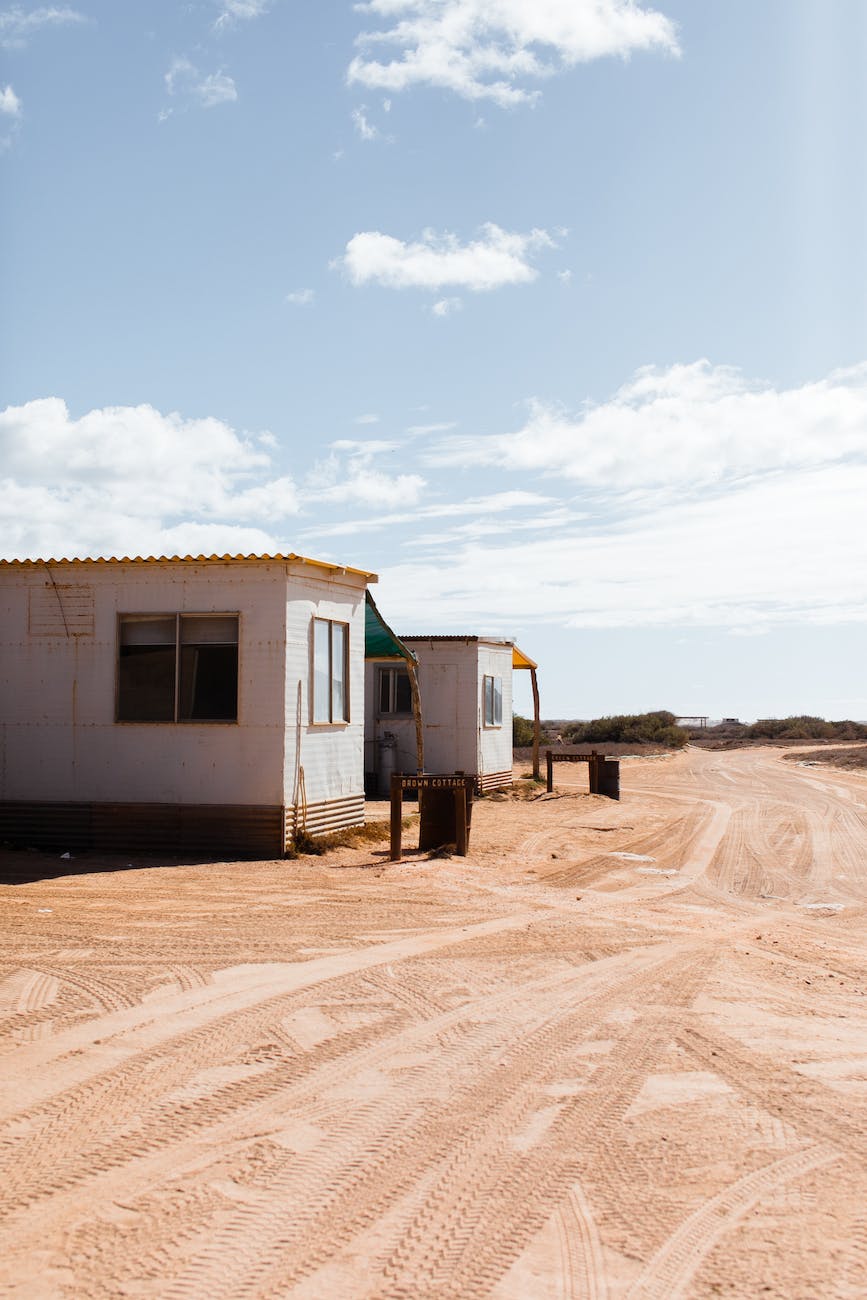
Not the actual location, but this is not too different from what the first houses were like– very basic.
I set the scene above so the circumstances are clear. These families were happy to be alive, and to have any shelter at all, but they were not living in luxury, nor were they moping and in despair about their condition. Part of our visit was to bring awareness to what efforts were already underway, and what needs were still outstanding. Medicine was scarce; many of the families had at least one person who was HIV positive, and many of the others had issues resulting from malnutrition and untreated childhood diseases. Jobs were hard to come by– the sugar cane plantations and rum factories had a history of exploiting their workers, and very few other jobs were open to Haitians who either didn’t speak the language or had no work permit/official identification. The mission organizations were not set up to provide jobs, income, or food and water. They were surviving on donations, which were sporadic and usually consisted of non-perishable items like clothes and hygiene items (toothpaste and soap).
Into this scene, the mission had received a princely donation of several hundred pairs of flip-flops. One of the bigger department store chains in the states and an overstock of black and white flip-flops– different sizes, but all the same style and colors. There were enough that everyone in the community could have a new pair of shoes! However, after the shoes were distributed, the administrators noticed that people were still going around barefoot. Very few of the people were wearing the new shoes. Finally someone asked if there was a problem with the shoes.
The answer they received is the heart of the story, and a lesson I have never forgotten. The people were very grateful for the shoes. But their greater need wasn’t for shoes. God had heard their prayers and supplied their need. Several enterprising members of the community had bundled dozens of pairs of flip-flops, carried them nearly eight miles into the nearest beach-front town, and found a spot along the beach where they sold the shoes to foreign tourists. Other groups did the same thing. Using the money from the sale of the flip-flops, they bought bottled water and produce at other roadside stands, carried them back to the community. This way, such items would be readily available while they waited for crops to grow in their gardens or a closer source of drinking water could be found.
On a later trip, we visited this community again. There were flowers, gardens, and two or three “colmados” (Dominican-style corner markets), which had grown out of two or three houses being torn down and reassembled. The community was flourishing. The “administration” center was still used mostly as a clinic and community meeting center, but some of the community members were administrators there. The school and church had grown, and there was now an arts and crafts center; community members were making candles, necklaces, wood carvings, and other items for sale at the beach, where they now had an established booth. God had used hundreds of unwanted, discarded shoes to supply an opportunity for people to work together and build a thriving community. There are still issues– health issues, domestic issues, economic issues– plaguing this settlement. But it is now “home” to hundreds of families who once had nowhere to go, and it is a beacon to surrounding communities, giving hope to hundreds more in the area. And, while some of the community members still go barefoot, most have shoes– shoes they chose and bought and paid for with their own money!
I’ve told this story before, because it is such a strong lesson in looking for and making use of every opportunity. God’s gifts are never wasted on us IF we choose to see them as gifts. Even our abundance– our “leftovers” and “overstocks” can benefit others in ways we might never imagine. And our efforts– even small ones taken in the midst of struggles– will pay dividends when we trust in God to supply our true needs.
Most of the time, when I lift up prayer requests, they are about people. I love people, and so does God, so it makes sense to remember those who are rejoicing, those who are mourning, and those who are struggling.
But I also pray about places. God created places, just as He created people. Through the prophets, God spoke of places– nations, certainly, but also specific mountains, rivers, cities, forests, and deserts. God pronounces judgment on people, but He mourns the destruction of places, as well.
At least once each month, I hope to post some thoughts or practices that I have found helpful in my pursuit of prayer over the years. Today, I want to talk about the importance of place.
Every day, on my prayer journal pages, I have a focus on a specific place. Yesterday, it was the island of Madagascar. Many times, I pray for the people of a specific place. Sometimes, I know of conflicts or natural disasters that impact the people living there. But often, I know very little about the places I pray for. I can look them up to find out more– what language do the people speak? what is the climate like? what are the natural resources of the area? Madagascar is home to many animal and plant species that are found nowhere else on the planet. God cares about His creation, and so should I. I may not have the resources to protect wildlife in Madagascar, but I know the creator and sustainer of all creation. And in praying for the land, people, and wildlife in Madagascar, I am taking the time to remember the vastness and variety of God’s creation, and His power to sustain life and cause it to flourish.
Jesus prayed over Jerusalem. He prayed over the Temple there. If Jesus can pray over places, then maybe we should, too. Over the past several weeks, I’ve been praying over the house where I grew up. After my mom’s death, we children decided to put the house up for sale. It hasn’t been an easy decision, but we feel it is the right one. I’ve been praying, not just that the house would sell, but that it would become a nurturing, safe place for a new family– a place where God would be honored and wonderful memories made. We aren’t finished with the process yet, but I believe that God can honor such prayers. God transcends “place.” He is omnipresent. But I believe that there are special places that resonate with the power of God’s work in the past (and other places that are haunted by the evil done there in years gone by). We should take time to acknowledge both the work that God has done in special places, and the need for His cleansing (and/or judgment) in others. Places are not more important that people, but they have lasting impact and are part of God’s purpose.
Cities, habitats, people groups, wildlife; wars, famines, floods and droughts, pollution and climate issues– from urban blight to toxic waste in the oceans. God’s heart is that we would do our best to care for the places in which we live– and that we would trust Him with the changes that are out of our control. Not just in Madagascar, or Ukraine or Rio de Janiero, but in our own backyard or in the next city block. Buildings, lakes, roads and parks– we can also lift them up in prayer, knowing that God is Lord of ALL around us–all that makes up life around us.
What might happen in our world if, instead of wringing our hands about climate change, we prayed and asked God what small steps we could take to make a difference right around us? What would happen if we prayed about the oceans and deserts and the wildlife that inhabit them– after all, I have no idea how many seals and gazelles, coral reefs and cacti there are in the world, but God knows them all!
Prayer doesn’t negate our need to care for the places around us– it’s still important to pick up litter, recycle, and be responsible about using, caring for, and disposing of resources. But praying about places will keep us “in tune” with God’s love of creation, and His desire that we honor Him in everything– everywhere!
There is an old joke about a young boy who could hardly wait to go to a local evangelistic service. He begged to go– he counted the days– he thought of little else. Surprised and a little curious, his mother finally asked him why he was so excited. He said, “Mom, they said on the radio that the evangelist is going to be talking about “just a vacation” by faith. I want to go along– especially if he’s taking us to Hawaii!”
Of course, the joke is that the boy misunderstood what he had heard over the radio waves– “Justification” for “Just a vacation.” The evangelist wasn’t promoting travel or taking time off from work, or relaxing on an exotic beach somewhere.
But I think we often make a similar mistake when we talk about Faith. We make it sound like a vacation– a vacation from worry; a vacation from consequences; even a vacation from reason and “justification” for our beliefs. We carry our Faith as a kind of talisman against bad circumstances, or like a “free pass” from worry or responsibility. “If I just believe it, I will receive it!” is a great meme, but we need to believe in Jesus Christ– not just our belief about belief.
Faith goes hand in hand with work. Faith, according to the writer of Hebrews, “is the substance of things hoped for– the evidence of things not seen.” (Hebrews 11:1 emphasis added) Faith is more than just positive or wishful thinking; more than just the power of hoping for the best; more than just acceptance of traditions and platitudes, or falling under the spell of a powerful speaker. It results in changed thinking and a changed lifestyle. Faith is transformative– our new life is evidence of our Faith IN Christ and His Holy Spirit working IN us! We don’t take a “vacation” from our old life or old habits– we change course. Faith isn’t momentary or circumstantial.
Nor is Faith about taking a vacation from responsibilities or hardships. Faith doesn’t magically make pain go away or trials vanish. It doesn’t mean that we don’t have cause to worry, or even to question, “Why?” Instead, Faith wrestles with such questions, and moves ahead, even when we cannot see over the next rise. Faith doesn’t make hard circumstances go away, or painful problems vanish. Hard times are still hard; pain is still pain, even with Faith. But Faith makes the seemingly unbearable, bearable. Faith gives us the endurance and the peace that helps us– with Christ– overcome whatever comes our way (See Philippians 4:12-13)
Faith doesn’t change our circumstances– it changes our perspective. Today is difficult– but today is not the same as forever. Tomorrow’s unknowns might be frightening, but so were yesterday’s trials. God was there with us then; He is with us today, and He has promised to be with us always. Our lack of faith doesn’t negate God’s promises, nor does our Faith cause them. But our Faith has a solid foundation– one that has been put to the test by millions of others over thousands of years and has not been found lacking! God is Faith-ful!
So when I pray today, I am not coming to God with wishful thinking or wondering if God will hear my prayer or be willing to act on my behalf. I trust that God knows my needs, hears my prayers and will answer according to His wisdom. He knows exactly what I need and when I need it– not just what I desire in a particular moment or when I think I would like my circumstances to change–but my true need. Whether or not that includes a vacation!
This month, I want to encourage you to let people know you are praying for them. This seems like such a simple thing, and not necessarily a way to improve one’s prayer life. After all, didn’t Jesus teach us not to brag about our praying? Aren’t we supposed to pray in private, not calling attention to ourselves? (See Matthew 6:1-15)
There are four “do’s” and a couple of “don’t’s” when it comes to telling others about praying that I want to emphasize today. Not because I have a perfect formula, but these are things I have found true in my own experience, and I think they line up with Biblical principles:
DO:
When you hear a need, pray about it. Don’t put it off; don’t promise to pray at a more convenient time. Do it now. If that means stopping in the middle of a conversation and praying with someone who is pouring out their heart– do it (assuming that it is possible). Not only is this practicing obedience to the prompting of the Holy Spirit, but it is honoring the importance and value of the other person. (see Philippians 4:6; Romans 12:12; Ephesians 6:18; others…) Showing others that their needs are important and that God cares about their needs is NOT boasting or being hypocritical. Just remember to approach with humility. Don’t be offended if they refuse in the moment; don’t use the opportunity to pray “over them”– pray beside them; pray with them; pray for their needs, not your own virtue-signaling. If you are worried about your actions being misconstrued or offensive in some way, ask first. “May I pray for you right now?” “Would you mind if we just stopped and said a quick prayer about this situation?” They can always refuse to let you pray immediately, but at least they will know you sincerely want to bring their burden before God. Also, if there is practical help you can give in the moments following, don’t hold back. Maybe their need is beyond your ability, but if you can direct them to counseling, aid from a local church group or non-profit, or offer to follow-up, you should do what you honestly can. Don’t promise beyond your ability, but don’t just pray and walk away, either.
The same goes for on-line requests for prayer. Don’t just scroll past someone’s need. It takes three seconds or less to type, “Praying”, or “I’m praying for you.” Again, if there is practical help you can offer, this is an opportunity to do so. There is no need to go overboard– but letting others know that someone “out there” is praying can be an enormous encouragement.
Be specific. Generic prayers aren’t “bad,” but they are often hasty and leave something lacking. The same goes for practical help. One of the mistakes I often make is to say, “If there’s anything I can do, give me a call.” I mean it– I want to help, and don’t know just how. But this puts the burden of asking on the person you meant to help! If you don’t know what to do– say so– but give them something solid to go on. It may be a phone number or e-mail, or an idea of a service you are able to offer–“I have Wednesday afternoons off if you need someone to drive you/go with you to an appointment.” or “If you ever want to meet for coffee…” or “I know the church has a Benevolence fund for unexpected bills and expenses. I could contact someone or give you their contact information,” etc..
Follow through! If someone asks for prayer for an ongoing concern, make a point of checking in every so often. Call, send a note or text, stop them at church and let them know you are still thinking of them and praying for them. This can also be another opportunity to offer practical help, a hug, or other form of encouragement. Often a week or two can be time enough to reveal practical steps to meet some of the smaller needs related to a big crisis or situation.
DON’T:
Say you will pray and then forget to do it. I used to be bad about this on-line. It only takes three seconds to promise to pray or to type a message about prayer, but don’t say it/send it if you aren’t going to act on it. Either stop then and there to pray about it, or stop and write it down where you will see it later and act on it! Good intentions are NOT enough to bring real encouragement and change. And good intentions do not form a disciplined and growing pursuit of prayerful living. In fact, such lost opportunities can become a barrier to our prayer life AND our relationships with others.
Break confidences. If someone asks publicly for prayer, it is fine to respond publicly that you will pray or are praying. It is NOT fine to then share someone else’s burden with ten of your other neighbors or closest friends. It is not fine to repost someone else’s request without their permission. It is not fine to publicize others’ private burdens, confessions, or pain. You may want to ask others to join in prayer, but don’t share details and names. Even if you have permission to share a prayer request, it is not for you to pour out someone else’s feelings, relationships, or struggles. This is another area in which I’ve had to learn a lot. I tend to over-share my own struggles when asking for prayer, and I want others to be concerned, so they will pray also. But it is very easy to fall into gossip, oversharing, and speculation, which has no place in prayer– and no place in my relationships! Share only those specifics that are helpful– “S______ is battling cancer. She has an appointment with her oncologist this week and would like prayer.” It is tempting to give the time and date of the appointment– and S______ may be ok with you doing this so people can be praying “in the moment.” However, she may be concerned about too many people knowing when she will or won’t be home, which might tempt a burglar. She may not want to receive a host of phone calls later that afternoon from people wanting “updates” or wanting to “cheer her up” when she is exhausted. Respect others’ privacy.
We are commanded to pray for one another (see Galatians 6:2; Colossians 4:2, etc.) And prayer is the most powerful tool we have to help those around us. Even though I recommend “practical” help along with prayer, I do not mean to say that prayer is impractical. Prayer IS practical and powerful. It should never be dismissed as “lesser than” other forms of help. But neither should it be used as an excuse not to meet needs in others ways as God gives us resources.
Making a habit of praying for others– really responding to needs immediately and faithfully in prayer– is a great way to experience its power. We will see God working through the prayers we offer– not just in the way He answers in the lives of others, but in the way He will change our hearts and minds about situations, relationships, and in growing Faith and confidence. It will train you to listen for needs, and to prepare to help. It will also train you to see needs in your own life, and make it easier to trust God with the needs in your life. You will find it easier to share your needs with others, and to accept help when you experience how much your efforts (even small ones) can encourage others. It may even encourage you to begin networking with others to meet needs and be proactive, instead of just reacting to needs after they are felt! If you are already strong in this area, be grateful for the way God is using you in the lives of others. If you are struggling in this area, I hope you will persevere. God is gracious in giving us opportunities to grow and serve!
In Exodus, chapter 16, the people of God are wandering in the wilderness of Sin (literally and figuratively!). They begin to grumble and complain about food, contrasting their current situation with their life in Egypt. Whenever I have read this passage in the past, I have assumed that the Israelites lacked food– that they were starving in the desert–and that their grumbling had some merit. After all, they are in a desert. Their complaints about water make sense. Surely, their complaints about food have the same ring of desperation.
But a few chapters earlier, and a few chapters later, we get a better picture of the true situation of these wandering bands of Israelites. As they left Egypt, they demanded from Pharaoh that they be allowed to take their flocks and herds! This would suggest that they had sheep, cows, and goats with them–meat and milk in some quantity. They may have had other animals as well– chickens, pet dogs or cats, oxen or horses. The need for water was greater– not only water for the people, but for their animals– but the complaint about meat seems to have had nothing to do with actual need. If anything, their complaint might have been about grazing land for their animals– but they never bring this complaint before the Lord. Either there was enough grass, even in the wilderness, or they had brought grain to feed their flocks. And there was grain for bread–just a few short chapters later, God gives directions for the sacrifices– sacrifices that are to involve rams, bulls, and three different types of bread, cakes, and wafers made with wheat flour!
The Israelites have provisions. They have taken enough food for the journey up to that point, and more. They complain, not that they ARE starving, but that they believe they will starve. God answers their complaint by sending quail– enough that they got sick of it– and bread from heaven (manna). The manna continues to fall without fail every day (except the sabbaths) for 40 years, throughout all their moving; in every location and season, on rocky mountainsides and dusty plains.
God’s amazing and miraculous provision should have produced thanksgiving and worship. Instead, the people got sick of the quail, and continued with their complaining and grumbling for an entire generation as they wandered around the wilderness.
How many times do we complain about “needs” that are not needs at all? I find myself worrying about bills getting paid, or the car making “odd” noises, or an aching shoulder. I find myself thinking back to days when I had more money or free time, and far fewer aches and pains. It is tempting to ask God for a return of “the good old days.” But God’s plan for the Israelites didn’t involve pots of meat that came with chains attached. God’s plan for my life doesn’t involve my immediate comfort, but my eternal character. And even in times when I feel like I’m wandering in the wilderness, God never leaves me. I have been poor, but I have not starved. I have been sick, but not left to die alone. I have been lost, but never abandoned.
There is wealth in the wilderness–the riches of God are available to those who will trust Him. Like manna, God will provide what only He can, and enough to see us through each day. He doesn’t promise that we will have “pots of meat” or easy circumstances. Instead, if we open our eyes, we will see miracles of grace, showing us how much God loves us and cares for us.
God’s people complained a lot, but rarely did they celebrate God’s provision or offer thanks. May we learn from their story, and praise the God who sends quail and manna to the very ones who doubt His mercy and love!
3 If anyone advocates a different doctrine and does not agree with sound words, those of our Lord Jesus Christ, and with the doctrine conforming to godliness, 4 he is conceited and understands nothing; but he has a morbid interest in controversial questions and disputes about words, out of which arise envy, strife, abusive language, evil suspicions, 5 and constant friction between men of depraved mind and deprived of the truth, who suppose that godliness is a means of gain. 6 But godliness actually is a means of great gain when accompanied by contentment. 7 For we have brought nothing into the world, so we cannot take anything out of it either. 8 If we have food and covering, with these we shall be content. 9 But those who want to get rich fall into temptation and a snare and many foolish and harmful desires which plunge men into ruin and destruction. 10 For the love of money is a root of all sorts of evil, and some by longing for it have wandered away from the faith and pierced themselves with many griefs.11 But flee from these things, you man of God, and pursue righteousness, godliness, faith, love, perseverance and gentleness. 12 Fight the good fight of faith; take hold of the eternal life to which you were called, and you made the good confession in the presence of many witnesses.
“Godliness with contentment is great gain.” (1 Timothy 6:6) We are entering a season of Thanksgiving and Christmas, and it can be a wonderful time to count one’s blessings and give praise with a humble and thankful heart. But it can also be a season of discontent, envy, overspending, and even depression. Many people are restless. They want “more”– more stuff, more respect, more power, more popularity, better health, a bigger house, trendier clothes…the list can be endless. Advertisers work hard to stir up this kind of discontent in the hope that people will buy their products. Politicians stir up discontent and fear to get more votes. Even religious leaders can stir up discontent in the hope of gaining influence, respect, and money.
God will not stir up discontent in our hearts. Instead, He wants us to learn to be content and grateful for the blessings we already have, and to trust Him for the things we both need and desire. He will see to it that we get what we need to live a Godly life, even if it seems meager compared to others who boast of their circumstances. Those who trust in their wealth or power will find it is never “enough.” Discontent breeds more discontent– envy gives rise to anger and bitterness. Greed gives way to dishonesty and violence. It is the enemy of Godliness and Humility. It is the enemy of the Christian Walk.
But there is another danger to the Christian. We should desire to develop a spirit of contentment, but we must be careful not to let contentment become complacency. The Apostle Paul does not stop in his message to Timothy, but reminds him to both “flee” the temptation of greed and discontent, and “pursue righteousness, godliness, faith, love, perseverance and gentleness.” Contentment is not an excuse for complacency. We are to “fight the good fight of Faith.” We are to be content with what we have, but not complacent about where we stand or how we live.
Discontent says– “I don’t have enough. I need more! (Even if I must take it by force or manipulation)”. Complacency says–” I have everything I need. I am an island of self-sufficiency. I don’t need anything (including God!) Both attitudes are conceited and fail to acknowledge God’s provision and His Sovereignty. The discontented, greedy person will be at war with God’s laws. The complacent person may not be fighting against God’s laws, but s/he will ignore God’s will, and refuse to stand up for justice or mercy. The complacent person is complicit in evil, even when they are not the ones doing it. The complacent Christian is ungrateful, and has only half-hearted praise for the Author of the blessings they enjoy.
There are many “Christians” in both categories. Many who claim to follow Christ, but are really following what they think will bring them power, wealth, health, or popularity. Many are being lulled into complacency by their blessings and comfortable circumstances. Both groups have lost their focus. God is to be the center of our lives– not our own comfort or our own pursuit of it.
This season, may we be content, humble, and willing to give God the Thanks, Praise, and Worship He deserves. And may we not become complacent about doing good, standing firm in the Faith, and helping others.


























 Pursuing Prayer