Prayer in the Cyber Age

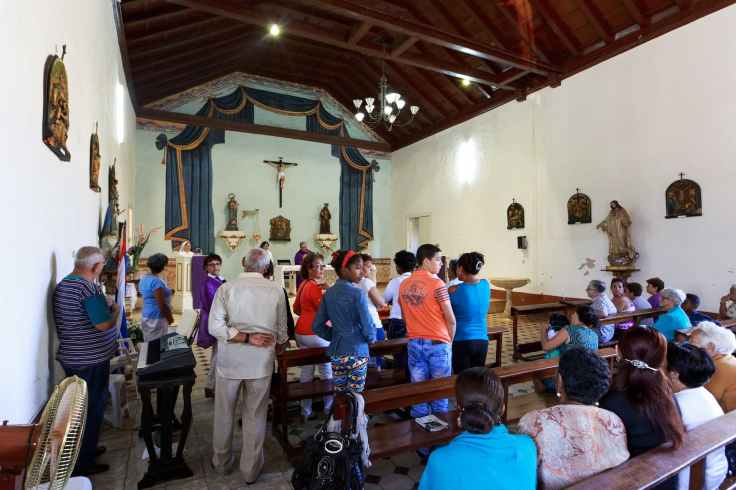
I attend a weekly prayer meeting at our church. A small group of us meets one morning a week to share prayer concerns, pray for our pastors and church workers, missionaries, community members in need, etc. It usually lasts just about an hour. On a “good day,” we have about seven people.

I grew up in a small rural area, and our little country church had a weekly Wednesday evening prayer service. On a “slow night,” we might have seven people. Sometimes, we had thirty or more (nearly half the church congregation)! They lasted about an hour and a half. When I was in college, we had groups that met once a week for prayer. It wasn’t always the same group, but it met at the same time, and, again, we sometimes had as many as thirty in attendance– for prayer. Often, we met in a dorm room, so it was cramped, and many of us were sitting or kneeling on the floor. Once, we had a fire drill, and my feet had “fallen asleep” and I had to be helped as we walked to the exit!

I don’t say this to disparage our current small group, but to point out some of the differences between life in the 1970s, 1980s and today. My current church has activities every Wednesday evening, and much larger attendance than the little country church ever attained. And prayer is still a small part of the Wednesday evening programming. Prayer is encouraged in small groups, individually, and we pray during service. But sustained time set aside for prayer– what the old hymn refers to as “Sweet Hour of Prayer”–in a group setting is becoming more of a rarity.

There are many reasons for it– some good, some not so good.

On the “good” side, it must be noted that corporate prayer today has expanded far beyond the traditional in-person prayer meeting. Prayer can be skyped, group-chatted, zoomed, and conference-called. Prayer can be “hosted” in one location, with satellite groups around the world praying in real time together. In such ways, thousands, and even millions of people can be joined in prayer. This is an amazing development!

And, along with such developments, prayer has become far more global, and far more immediate. I can receive a text or e-mail notifying me of a prayer request from nearly anywhere in the world, and know that I am joining with a host of other Christians when I stop and take a few moments to pray right then.
So what’s the “downside” of cyber prayer?

Speaking as one who has lived the experience of meeting with the same people at a dedicated time over many years specifically to pray, I have observed the following benefits:

In-person prayer meetings offer a more intimate time of fellowship, compassion, and service. I’m not just seeing other people on a screen, reading a text message, or even filling an auditorium seat as part of a huge “movement”– I’m sitting in a circle, breathing the same air, hearing the same hum of the furnace or fluorescent lights, the sound of others breathing, sighing, or even crying quietly around me. Sometimes, I’m holding another person’s hand, or giving them a hug. I am not just among fellow believers, I’m with family. We get to know one another in a deeper way. I know their families, their personal struggles and victories. I learn the rhythm of their prayers, and the issues closest to their hearts– and they know mine! And that can be a scary thing at first– building the kind of trust that intimate fellowship demands. But it pays off a thousand-fold!

In-person prayer meetings are also focused in a different way. Cyber prayer usually focuses on a specific need– sometimes an immediate, or even temporary issue. In-person prayer focuses on the long term discipline of praying. I have prayed with groups over years for lost relatives or unresolved health issues. And while that may seem depressing to read about, in practice it teaches patience, and deepens faith. As a group, we see God’s answers develop according to HIS timing and HIS plan. Sometimes, we see issues resolved quickly; other times, we see how God strengthens us in our trials; and still other times we see God do surprising and miraculous things just as we’ve almost given up hope. And there are some answers we may never “see.” But, primarily, we are not praying for an outcome– we are praying as a pursuit of Christian living; developing a life of prayer, faith, and obedience. We spend much of our time in prayer lifting up requests, but we also spend much of our time in praise, worship, adoration, confession, and thanksgiving– because prayer is a holistic pursuit.

Which brings me to another benefit, one that may not seem obvious at first. Meeting consistently and weekly for prayer is a habit. It builds a character of faithfulness and true compassion like very little else I’ve encountered. God can “show up” wherever two or three are gathered (see Matthew 18:20), and because God is beyond time and space, He can be present in a church meeting room, in cyberspace, or in outer space! But we are temporal. We have to learn patience, hope, and faithfulness. We learn to be trustworthy of the feelings and confidences of others by sharing our hearts. We learn to serve by the practice of serving those around us over an extended period of time. We learn patience by waiting on the Lord, stopping our busy, deadline-driven, goal-oriented lifestyle to make time for the development of our faith.

Finally, in a post-COVID society, sustained, regular, corporate prayer is also sustained, regular, corporate fellowship. We live in an increasingly isolated society. With more people on the earth than ever before, we are more lonely, depressed, anxious, and self-absorbed than ever before. Even in Church! Many people attend service regularly, but still feel unconnected and uninvolved. And others get “involved” in every activity, often burning themselves out trying to “outdo” themselves (or others). Activities that promise fellowship can sometimes fall “flat” in the face of social expectations. We attend, hoping to “get something” out of an experience. We want to be entertained, challenged, encouraged, uplifted, etc. But often, our expectations are not met. We don’t feel included, or we feel overwhelmed. We imagine we are being compared to others (or we do the comparing!), and feel that we fall short. We don’t know enough, do enough, are not “enough.” And we give up. We give up on the church, on other Christians, on God.

Committing to attend a weekly prayer meeting pulls us “out of ourselves.” We learn to pray for the needs of others. We learn to share our own needs and allow others to pray for us. We learn to be transparent and authentic. We learn to forgive.

Prayer is amazing– in any form. Communicating with the God of the Universe is an unspeakably miraculous opportunity, made possible BY God, THROUGH God, for OUR benefit. Prayer in the cyber age is diverse, global, immediate, and effective. But let’s consider the blessing of old-fashioned Prayer Meetings, and not forsake the practice of meeting together (see Hebrews 10:25) , in person, with no other goal than to spend a sweet hour in prayer!


But Even If He Does Not…

16 Shadrach, Meshach and Abednego replied to him, “King Nebuchadnezzar, we do not need to defend ourselves before you in this matter. 17 If we are thrown into the blazing furnace, the God we serve is able to deliver us from it, and he will deliver us[c] from Your Majesty’s hand. 18 But even if he does not, we want you to know, Your Majesty, that we will not serve your gods or worship the image of gold you have set up.”

Daniel 3:16-18 (NIV)

I hear a lot of American Christians complaining about the “dark days” in which we live. And indeed, they are dark. There is great evil in the world– wars, famines, injustices, hatred, division, greed, and immorality. But, along with complaints, I hear a note of whining. Isn’t God supposed to deliver us from just such evil? Isn’t He supposed to clear the way for us to love one another in peace and harmony? Surely, it can’t be His will for us to be laughed at, spit upon, misunderstood, and treated with contempt?!

The ancient nation of Israel was conquered and sent into exile. Israelites who had abandoned their faith, as well as those who had steadfastly served the Lord, were ripped from their homeland and marched to Babylon. Worship in the Temple of Jerusalem ceased. The Temple itself had been destroyed. There were no tabernacles, no festivals– none of the systems and structures of worship left available to God’s people. Yet some still worshipped– in homes, isolated from their fellow Jews, or in secret groups. They were not surrounded by reminders of when “their” religious beliefs were considered the cultural norm. Nor did they live in a culture that practiced religious “toleration” as we understand it today.

In the book of Daniel, the commitment of s handful of exiles is detailed as it comes in conflict with the oppressive control of the Babylonian (and later the Persian) Empire. Daniel and his three friends are challenged by the pressure to compromise and adapt to their surroundings. They are tempted and bribed by the promise of power in the court– if they can compete with other Babylonians. But they secretly hold fast to their “old” diet, and religious practices. They refuse to eat the rich food of Babylon– or bow to its gods.

In Chapter 3 of Daniel, the three friends, Shadrach, Meshach, and Abednego, refuse to bow to a golden statue of Nebudchadnezzar, the megalomaniac for whom they worked. Even though he had appointed them to high offices, he refused to “coddle” them in their worship of a foreign god. He demanded that they bow to his statue– something God had commanded them NOT to do.

It might have been easy enough to secretly meet in homes and celebrate Passover without alerting those around them. It would have been possible for them to hide scrolls containing the ancient words of their historians and prophets, to be read or studied. But they were being asked to publicly bow to a statue of their King– to acknowledge him as a “god.” And they refused. As court officials, their refusal was not just a minor snub, but a scandalous insult. Yet they stood firm.

Shocked and angered, Nebuchadnezzar, a notoriously cruel and impulsive king, gave them a generous “second chance” to save their careers and lives by obeying his orders. Amazingly, the three did not even spend a moment considering their options. They answered, boldly, courageously, and graciously, that they would not bow down to the statue. And God rescued them from the fiery furnace, so that not even their hair was singed by the flames– even though their captors were killed in the very act of pushing them into the furnace! God not only rescued them– He appeared WITH them in the midst of the flames. This so astonished Nebuchadnezzar, that he ordered them released and proclaimed that no one should say anything against the God of Shadrach, Meshach, and Abednego–an incredible act of religious toleration for that culture and time.

The story of The Fiery Furnace is well-known. I’ve used it before in my posts. But today, I’d like to focus on just one little phrase that stood out to me this week. When brought before Nebuchadnezzar the first time, the three men said, “we do not need to defend ourselves before you in this matter…” (v. 16).

How tempting it might have been to have defended their refusal– to give Nebuchadnezzar a lecture on God’s Law and His past miracles. But they refused to explain or defend their actions. They merely gave testimony of their faith that God COULD save them, and that, “even if He does not..” they were willing to die rather than dishonor Him. And Nebuchadnezzar SAW the proof of their faith in a way that their words and arguments could not have accomplished!

Most of the time, when I hear Christians talking about this story, they focus on the miraculous deliverance of the three men from the flames. The lesson is that God will be with us, no matter what. He can deliver us FROM the flames, but often, He chooses to deliver us THROUGH the flames. And that is a wonderful lesson and a true promise.

But that deliverance should not overshadow the quiet dedication of the three men. Before God joined them in the fire, they were already committed to dying in silence to obey God rather than their earthly king. They stood to lose everything– their lives, their legacy of faith, their service, their families (who might have been left destitute or even subject to punishment)– all of it was riding on their willingness to suffer injustice and torture. We know that God “showed up”– literally– in their defense. And they certainly knew that God COULD save them. But they also acknowledged that “if He does not..” they were still willing to die. And they were willing to do so, not acknowledged as martyred heroes, but as convicted criminals.

Centuries later, Jesus Christ would appear before Pontius Pilate, who asked Him to give a defense. Astonished at Jesus’ refusal to argue and plead for His life, Pilate came to the conclusion that “I find no fault in Him.” (John 19:4) Jesus willingly accepted an unjust sentence of Death, offering no argument or defense, except the Truth. No one came to His rescue. And God did NOT spare His life! The Son of God died as a criminal on a Roman cross, betrayed by Jewish leaders. Yet, Jesus’ obedience; His willingness to die brought US life, and forgiveness and peace!

There are millions of believers in Christ today who must be prepared to face a “fiery furnace” moment–maybe it involves death or torture. Perhaps it only involves being teased or despised by a neighbor or a classmate at school. And we may pray for deliverance–that is natural. But how often do we give up the chance to argue, and justify our diligence, our “right” to worship “our” way? How ready are we to be seen as foolish, or even rebellious to the culture of the day? We long for God to come to our physical rescue– to join us IN the fire– but are we willing to let Him be our defense? Are we willing to be humble in the face of obvious injustice, and let God speak up on our behalf? And what if He does not?

The Apostle Paul also faced this dilemma. Not only were there Greek and Roman officials who thought him a fool, there were Jews– his own people– who were going around defaming him, denouncing him, and spreading lies and rumors. Paul (never one to let a good argument go unargued!) spent much of his time in letters writing out his defense of the Gospel. But, in his own defense, he downplayed his position and his great knowledge of the scripture. He was not defending himself “in these matters”– he was defending the Truth of the Gospel! He also acknowledged that God could use even detractors and tormentors to spread the Gospel. And he often urged fellow believers to live in peace with their unbelieving neighbors, even those who taunted them!

It is tempting in Western Culture, where Christianity has been normalized, to think that when we defend ourselves, we are defending Christianity. But what if, like Shadrach, Meshach, and Abednego, we let God be our defense– in the flames, in the courtroom of public opinion, in our own families? What if we followed Jesus’ example and remained calm and confident, even under duress? What if we lived humble and quiet lives of integrity, ready to submit even to the flames or the cross, serving even those who would stoke the fires or pound the nails? God might just “show up” in ways we never could have imagined! Courage is often seen as boldness and speaking up in our own defense. But, sometimes, it takes greater courage to stand silent and let our actions– even when they are disparaged and misinterpreted– speak as a testimony of God’s power.

But Not Yet…

I really need to go on that diet.
I really should call my Aunt Kay.
I need an hour of peace and quiet.
And time to sit and pray.

But I’m scrolling through Facebook.
I’m following the news.
I just need another look;
This meme has so many views..

I should greet that new couple at church.
I should make them feel at home.
But I need a cup of coffee first.
And my hair should be re-combed.

My Bible waits by my chair–
Unread these past four days.
Later, I know it will still be there–
Ready to catch my gaze

Tomorrow, or the next day.
God will understand.
I want to follow His Way,
But this wasn’t what I planned.

I got caught up in a magazine
I stopped to shoot the breeze–
My house is needing to be cleaned
Before I get on my knees.

I “had to,” “should have,” “had a mind”
To spend time with God, and yet
My day’s flown past, and now I find
I’ve only time to fret.

“Not yet” was my sad refrain
“Not yet” kept me on the go.
“Not yet” robbed me once again
Of time spent with One who loves me so.

And so my day was filled and rife
With wasted time and small regrets.
I missed the more abundant life
Of trust grown from obedience.

The internet will still be there
Tomorrow and the next day;
But the trust built up in an hour of prayer
Can never be taken away.

Today may be busy with “urgent” needs and countless distractions. But there will only be one “today” to meet with God– in prayer, Bible study, meditation, and worship. What is my priority today? Even if I can’t “find” an entire hour in my busy schedule, have I made a plan and a priority to meet with God? Am I searching for opportunities to serve Him and encourage others, or am I too busy searching for my own entertainment and fulfillment? What are the empty things in my life that I should be telling, “Not yet?”

The Righteous Will Live By Faith

“Look at the proud! They trust in themselves, and their lives are crooked, but the righteous will live by their faith.”

Habakkuk 2:4

Is it rational to believe in God? About three and a half centuries ago, the French philosopher, Blaise Pascal, drew up what is now known as “Pascal’s Wager.” In it, he gives a “rational” justification for belief in God (theism). In it, he posits that if God doesn’t exist, it doesn’t matter whether or not we believe that He does. But if God is real, the consequences of our belief or denial are crucial. If the God of the Bible exists (along with heaven and hell, sin and salvation), the failure to believe will lead us to lose everything; the decision to believe will lead us to gain everything…there is no in between.

I’m not a big fan of Pascal’s Wager. Not because it’s bad logic, per se, but because it depends on belief, but not faith.

What’s the difference? Belief says that God exists–that He is supreme, that He controls our destiny, and that He must be obeyed. It will produce a life of theistic obedience to God’s Law, including a life of “good” works, moral conduct, and “right” thinking. But it will not produce a Godly character. It will not be a life of righteousness.

Faith, on the other hand, believes that God not only exists, but that He rewards those who earnestly seek Him (Hebrews 11:6) and that He so loved the world, that He gave His only Son (John 3:16) to save us from Sin and Death (1 Corinthians 15:56-7). It is not our belief in God’s existence that saves us and gives us life; rather it is Faith by His Grace! (Ephesians 2:8-9) in the nature and character of God– in the atoning work of Jesus as revelation and proof of His character– that saves us from Sin and Death.

Pascal’s Wager is a way of thinking about God. It can lead someone to believe, which can produce a life of Faith. But it can also produce a kind of life that is ruled by grudging obedience, resentment, and pride in one’s own powers of self-control and understanding. Faith lives in dependence and humility, and joyous gratitude for God’s gifts.

The prophet Habakkuk, who first wrote the phrase, “the righteous will live by faith,” learned this lesson in dramatic fashion. He “believed” in God– in His righteousness and justice. He spoke to God about the wickedness he saw all around him, among his own people. God gave him a difficult answer: Justice was coming in the form of an invasion by the Babylonians– a group known for their wickedness and cruelty and lack of justice! God’s answer was shocking and counter-intuitive. But Habakkuk chose to believe and put his faith in God’s Eternal Character, as God revealed the “rest of the story.” Israel would suffer; justice would be cruel–but God’s glory and His salvation would triumph. Habakkuk’s response was a song of praise. Regardless of his circumstances, Habakkuk would wait and rejoice, knowing that God’s ways are perfect.

It’s not difficult to say we believe in God. But are we living in Faith? I find it easy to let circumstances–especially injustice and wickedness–overwhelm me and rob me of peace and joy. But I find it comforting to know that my momentary doubts cannot stop God’s promises, His Mercy, or His power to help me live by Faith. That’s due to His righteousness, not mine, but through Christ, I can trust in it, walk in it, and live in it!

At the Impulse of Thy Love

Sometimes, I am impulsive. I blurt out my thoughts and emotions; I end up buying a candy bar as I finish checking out my groceries; I decide to turn left at the intersection instead of going straight. Generally, impulsive actions are frowned upon. They can be foolish, wasteful, even dangerous. God does not call on us to be foolish or thoughtless, but there are times when He wants us to act on HIS impulse– to obey without stopping to weigh the pros and cons, without stopping to consider how we will appear to others or how obedience might “mess up” our carefully planned day.

Have you ever felt the “impulse” of God’s love moving you to an unexpected action? Maybe you had a sudden urge to speak to a stranger on a train, or get in touch with an old friend. Maybe you felt compelled to give a gift to someone or stop and offer to help carry a load for them. Maybe you saw a news story and it caused you to pray– and to remember someone’s need and pray some more!

Our own selfish impulses can get us into a lot of trouble. But God’s impulses can lead to blessing beyond our understanding. Just remember:

  • God’s impulses will never cause you to act contrary to His word. Buying things you know you can’t afford (especially for yourself!), or blurting out judgmental and hurtful comments– such impulses are NOT Godly. “Speaking the truth in Love” is not the same as spewing finger-pointing condemnation and self-righteous justification. Trusting that “God will provide” is not the same as assuming He wants you to have everything you desire.
  • Delayed obedience is the same as disobedience. God’s impulses are meant to be spontaneous moments of joyful service– not grudging acceptance of an imposition. That doesn’t mean that we can’t take a split second to discern God’s voice (see above) and respond appropriately. But God wants our “moments” as well as our “days”–He knows our plans. But He also knows His plans are better. If we are not willing for our plans to be redirected, then God is not really our Lord.
  • God’s impulses almost always involve others. God is LOVE. His impulses, therefore, are all about showing love–HIS LOVE–giving, serving, listening, helping, sharing, encouraging! God’s impulses will be directed outward, either toward others or toward God on the behalf of others. Amazingly, in God’s economy, we often reap a residual reward when we put aside our own plans. Sometimes the reward is not immediate or obvious–we may seem to meet with rejection, or even failure at first. Our actions may be misunderstood; our offers to help may fall flat; our prayers may seem to go unheard. But the love we show is not empty or worthless. We may never see the fruit of our actions or prayers, but we can still plant the seeds and water them!
  • God is a God of Grace and Mercy. Did you fail to act on a Godly impulse today? Stop. Take a moment to repent. Learn from today. Ask for wisdom to do better at the next opportunity!

I’m always amazed at the miraculous opportunities God has given me to bless others, and to learn more about His amazing Love. From unexpected encounters in faraway places, to reminders and prayer requests on Facebook or local news stories, to a sudden urge to do a random act of kindness– God’s impulses give us the opportunity to participate in His miracles!

Passing Gas

There once was a distinguished scholar and lecturer who was invited to be part of a symposium at a prestigious university. But during his time on stage, the professor realized that he was having a gas attack. Not wanting to embarrass himself by passing gas in front of the rest of the panel (and indeed the entire auditorium full of students) he politely asked to be excused to take a short break as the rest of the panel discussed a minor issue. He proudly excused himself, making it seem as though he was merely bored and wanted to stretch his legs a bit. Exiting the auditorium, he raced to the nearest bathroom and “let it rip,” not realizing that his portable microphone was still “hot.” The entire audience could hear, not only the gas he passed, but the other noises he made– of pain as the gas was passing, and of relief at the end of the attack. As he returned to his seat on stage, he was stunned to see people grinning and pointing, and hear stifled giggles as he rejoined the panel. Even his colleagues were finding it difficult to meet him with a straight face. Finally, the moderator asked, somewhat sarcastically, if the professor felt better after his break, and could be please be sure that his microphone was “turned back on…” As he finally realized what had happened, the professor was mortified, and barely spoke during the rest of the symposium. He left in a hurry, and it was many years before he agreed to visit that university again.

We may laugh at the downfall of the proud professor, but how often do we try to “pass gas” discreetly, pretending that we are “above” petty embarrassments and minor setbacks. As Christians, it is especially tempting to pretend that we “have it all together;” that because we follow Christ, we never struggle with pain, or niggling doubts, or unanswered questions. We sit in judgment on our neighbors because we do not stumble over the same sins that we see in them.

The world is watching. They pay close attention, not only to the sins we avoid, but to the sins we push aside or try to explain away. Sins like pride and gossip; sins like “bending the rules” and “fibbing.” It’s not that they don’t know about their own sins. In many cases, they are trapped in a cycle of guilt about their own sins, and their inability to escape the cycle on their own. Or they live in a web of lies about their lifestyles and habits– “I’m no worse than Him!” “God understands my weakness. He can’t condemn me for being the way He made me!” “God and I have a bargain. I don’t do X, and he’s ok that I do Y instead…”

But are we any “better?” “I don’t gossip. I ‘share’ prayer concerns.” “I’m a work in progress. God isn’t finished with me yet!” “King David told lies, and he was a ‘man after God’s own heart’!” “I’m not cheating on my taxes. You should hear my neighbor talk about what he’s done!” “I know I need to lose weight, but, well, there’s just more of me to love!” We are just as ready to find excuses for doing things we know to be wrong, unhealthy, unloving, and sinful, as our neighbor or our “enemy.”

Even more, we are tempted to pretend that we “have all the answers.” After all, if we trust God, how can we still have questions about pain or suffering or grief? We feel that admitting our weaknesses will expose us to ridicule, and that it may hurt our testimony.

That doesn’t mean that we should condone the sins of others, or that we should carry a load of shame over our own lapses. The point is that Jesus calls us to walk humbly and bring ALL our burdens to Him in prayer. Do I still struggle with my tongue–am I still spouting sarcastic retorts make me look smart, while putting others down? I need to submit that habit to the Lord. Does it bother me that my brother smokes or looks at porn? I should not condone such behavior, but it’s not my place to “make him” change his behavior. I should pray about it, and let him know I care about what these habits may be doing to his health and relationships. God doesn’t “hate” my neighbor who can’t seem to hold down a job, nags her husband and kids, and uses foul language– and neither should I! I shouldn’t encourage her bad behavior, but I should be willing to listen to her, show her compassion as someone Christ died to save, and offer her the same friendly helping hand I would be willing to give my other neighbors.

And I should be honest about my own limitations. God has saved me. I am His. But he didn’t save me because I had “cleaned up my act.” And he doesn’t reject me because I still don’t know all the answers or do all the “right” things. Instead, He guides me to be more like Him as I faithfully follow His ways, including confessing when I mess up. God is big enough to save me and re-shape my future in ways I can’t even imagine. I didn’t “win” my salvation. It is a gift– one that keeps on giving!

Being a Christian isn’t about acting “better” than those around us– though we should be walking in Jesus’ footsteps and living more like Him each day. It can be difficult, as the rest of the world may hold us to a higher standard. We will be judged more harshly than our neighbors who do not attempt to follow Christ. We will be accused of holding judgmental attitudes, even when we don’t display them. And we will find our standards and morals being maligned as “old-fashioned” or “snobbish” or even “hateful.” Not because they are any of those things, but because God’s standards (and anyone who agrees with them) offend those who rebel against them. And we still live in a fallen world, just like everyone else. We still wrestle with temptations, we still experience the consequences of sin– our own and others’–that make us sick, or weak, or poor, or otherwise look like “failure” to those around us. And it does no good to pretend that life isn’t sometimes difficult and painful–we’re not fooling anybody!

Instead, being a Christian is about “becoming” better than we can be without God’s Spirit living, moving, and acting THROUGH us. And a big part of that process involves “passing gas.” We need to let go of the sin and the “bad gas” that still builds up inside of us– pride, shame, stubbornness, laziness, envy, criticism, apathy, anger, bitterness, hatred, and so much more. And we need to acknowledge that our Salvation– now and through eternity– only comes through the finished work of Jesus Christ, not our own efforts. This process is called “Sanctification.” We are “saved” by Grace through Faith (see Ephesians 2:8-9). We cannot boast about having been saved. But we testify about our salvation by a changed nature, led by God’s spirit– a “new” compassion for those around us; a new delight in following God’s standards; a new humility about our own limitations, and a new joy for the way God can work through even our weaknesses to give us victory!

Ironically, passing gas is a necessary part of our bodily processes. If we don’t get rid of the “bad” gas, it will lead to bloating and actually poison us! Similarly, if we don’t acknowledge areas where we need to confess, continue in obedience, and submit our will to the Holy Spirit’s promptings, we will become bloated with our own self-importance, and poisoned by our self-deceptions.

So today, as I pass gas– as I surely will at some point– I hope that I will be convicted, and even amused, at how God uses the lowly things of this world for our benefit, and His Glory!

A “Lot” to Learn

I learned a “lot” studying the character of Abraham’s nephew, Lot. (Read Genesis 13, 14, and 19) Today, I want to summarize…

  • Our lives depend on choices, rather than chances…Lot experienced many opportunities and some tragedies beyond his control. But even when God gave Lot some amazing opportunities– even when He offered miraculous rescue–Lot continued to make bad decisions or no decision at all. When have I done the same? Do I wait for chance and circumstance to find me? Do I drift along without making wise choices, allowing life to carry me to my next destination? Or do I seek God–His wisdom, His Word, His provision–and choose to obey Him?
  • Not making a choice IS making a choice…Lot chose to live outside of Sodom– but he ended up in the city. Lot spent much of his time NOT making decisions or plans. He chose inactivity, chose to be vulnerable to attack, chose to live in a city so wicked it was doomed to destruction, chose to compromise and bargain with his wicked neighbors, chose to drag his feet (literally) about leaving, chose to let his daughters control his destiny and legacy. How often do I pray for God to direct my steps and guide my life, and then sit on the couch doing nothing? Lot’s story doesn’t include a single instance of Lot taking initiative. He simple reacts to, takes advantage of, or accepts whatever opportunities or misfortunes befall him. And he doesn’t see his inactivity as a sin or rebellion against God. But he never CHOOSES to follow God; to seek Him or obey him. He assumes that not choosing active rebellion and evil is enough. Have I done the same? Do I think that because I am not actively involved in wickedness that I am honoring God with my inaction and apathy?
  • You cannot live surrounded by evil and not be hurt by it. Ignoring the warning signs, tolerating evil because it becomes familiar, turning a blind eye to the ways others are being hurt–if we are not part of a solution, we are part of the problem. Lot had options– he could have moved away from Sodom; he could have stayed outside the city; he could have spoken up about the evil all around him–he did none of those things. He lived a compromised life; a life in denial. What have I done to flee evil? To speak out against injustice and oppression? To stand up for what is right? When have I winked at evil, or turned a blind eye to wickedness? How often have I sat in uncomfortable silence while someone else suffered? Because “it’s not my problem.” “One voice won’t make a difference.” “It’s just the way they are.” “I don’t want to offend anyone by getting involved. It’s none of my business, anyway.” Lot and his family suffered greatly, even as they tried to “coexist” with their wicked neighbors.

That’s a lot to consider in the life of one man. But more importantly, there are a “lot” of things to learn about the character of God in this story:

  • God sees us. God included Lot in the larger story of Abraham– He gave an orphaned boy a family, a fortune, and a future. Lot had done nothing to “earn” God’s protection or favor. He certainly did nothing to deserve being rescued– twice– and he did nothing to show gratitude for either rescue. But God didn’t make a mistake in showing Lot mercy. God wasn’t surprised by Lot’s life choices– He didn’t “fail” Lot, and He didn’t forget about Him– even after generations.
  • God is a judge. We like to concentrate on God’s mercy and blessings, but God’s goodness requires that sin, wickedness, and evil be punished. God doesn’t delight in punishment, but He will not forget the cries of the oppressed. Those who practice evil and seem to “get away with it” will face judgment. If they do not seek God’s forgiveness, they will be destroyed. The cities of Sodom and Gomorrah were destroyed by supernatural fire; Lot was destroyed by his own fears and compromises.
  • God is merciful. God destroyed Sodom and Gomorrah, but He was willing to save the cities for the sake of as few as ten “righteous” people. We know that “There is no one righteous, not even one..” (Romans 3:10), but God thoughtfully listened to Abraham, and promised to seek for anyone who could be considered worthy of saving. That He saved only Lot and his small family was for Abraham’s sake, not Lot’s– yet save them He did. God doesn’t save the “deserving”– He saves the lost!
  • God’s plans are perfect, detailed, and eternal. God saved the unworthy Lot, and even when his family repaid God’s mercy with incest, violence, and wickedness against Israel, God orchestrated the story of Ruth– a story of love, faithfulness, and redemption pulled from the ashes of this tragic story in Genesis. God has a plan for each of us– He already knows if we will participate eagerly in a story of beauty and blessing, or be dragged through a story of compromise and tragedy. But ultimately, our story will be woven into a tapestry of God’s faithfulness, righteousness, and restoration. How we respond will change our life, and potentially, the lives of generations to come. And God will give us opportunities to choose lives of obedience, wisdom, and faith. No matter if we live in Sodom, or wasted earlier chances, we can choose rescue and redemption because of God’s great love and mercy!

The Bible never records a prayer by Lot– whether he DID pray is a matter of speculation. But it seems clear that Lot did not seek God in any meaningful way– he didn’t obey God, he didn’t honor God, he didn’t walk with God as his uncle did. Abraham’s life wasn’t perfect– he lied about his wife, became impatient for God’s promised son and took matters into his own hands– but Abraham learned from his mistakes. He humbled himself, looked to God for wisdom, and trusted Him for the next step. He honored God, built altars, and called on the Name of the Lord. May we call out to the same God of Abraham for guidance and wisdom today.

Salt of the Earth

The other day, as I was doing a Bible study on the Women of the Bible (Spangler and Syswerda, Zondervan Press, 2007), I was reading about Lot’s wife. The story is found in Genesis 19. Lot and his family were living in the wicked city of Sodom, which the Lord was getting ready to destroy. Abraham, knowing his nephew and family could face destruction, had pleaded with the Lord. God had promised that if He found even 10 righteous people in the city, He would not destroy it. But the men of the city came in a mob and tried to rape the angels of God. Only Lot tried to prevent this crime, and even offered his daughters as a substitute for the angels! No other righteous people were found. The doom of Sodom was at hand.

The Angels led Lot, his wife, and his two daughters out of the city toward the small town of Zoar. In fact, they had to take them by the hands and physically drag them away from the coming disaster. They warned the entire family to flee– take nothing with them, and don’t look back! But Lot’s wife did look back, and she was turned into a pillar of salt. In one split-second of weakness, she lost her life and her future, and left her family to unravel (see later chapters in Genesis).

I remember hearing this story as a child, and one question has always nagged at me. Why a pillar of salt?

Have you ever wondered about it? What is it about the destruction of Sodom and Gomorrah that would cause anyone to become a pillar of salt? God never does anything without a reason or a lesson to learn. So what can we learn from this?

Interestingly, the authors of the Bible study spent an entire lesson on “Salt.” They told of its importance in the Ancient World, its abundance in the Middle East, and how Jesus spoke of His disciples being the “Salt of the Earth.” (see Matthew 5:13). We are commanded to have qualities similar to salt– to cleanse, purify, and season the world around us. 

And then, yesterday, we experienced some freakish winter weather. It rained. And it sleeted. And it rained some more. And the temperature hovered just at the freezing point, causing a layer of ice to form over the roads, sidewalks, trees, power lines, cars, etc. Ice was everywhere, and I was out spreading –you guessed it– salt. Salt melts the ice that covers walkways and roads, making it safer to walk or drive.

But here’s the thing about salt. It only works when it is spread around and used. It does no good to put a pillar of salt in the middle of a highway, or on the kitchen table. A pillar of salt can make an interesting decoration, but it’s real worth is in its usefulness, and in its interaction with other elements. We don’t eat salt by itself. We use it to flavor other foods– we sprinkle it, we rub it in, we dissolve it– we don’t appreciate salt unless it works WITH something else. We use it WITH ice, to melt it off of the sidewalk. We use it ON raw meat to cure it and preserve it. We use it IN water to clean or soften items.

Lot’s wife was a pillar of salt. She had worth and value; she had a family that was being preserved to be a witness of God’s Grace and Redemption. But she turned away from God’s protection and His provision. Her value was trapped by her moment of rebellion, or curiosity– whatever caused her to look back.

How are we being salt in the world today? Are we being used to season the world around us? To help spread health, and purity, and life? Are we helping to melt icy hearts and soften hard hearts we meet? Are we willing to be spilled and spread and rubbed in to situations not of our choosing? Or are we standing as pillars of useless potential?

I pray that I will learn from the story of Lot’s wife. A new lesson. A new sense of purpose today. I hope you will be encouraged, as well. Let’s go out and “shake” things up in our world today!

Who Are We Feeding?

“An old Cherokee man told his grandson, ‘..My boy, there is a great battle between two wolves that live inside us all. One is evil–it is anger, jealousy, greed, lies, resentment, regret, and arrogance. The other is good– it is joy, love, peace, hope, kindness, humility, empathy, and truth.’ The boy thought for awhile, and then he asked, ‘ Grandfather, which wolf wins the great battle?’ The wise old man replied quietly, ‘The one you feed.'”

The Story of the Two Wolves– a Cherokee legend

 “Don’t store up treasures here on earth, where moths eat them and rust destroys them, and where thieves break in and steal. 20 Store your treasures in heaven, where moths and rust cannot destroy, and thieves do not break in and steal. 21 Wherever your treasure is, there the desires of your heart will also be. 22 “Your eye is like a lamp that provides light for your body. When your eye is healthy, your whole body is filled with light. 23 But when your eye is unhealthy, your whole body is filled with darkness. And if the light you think you have is actually darkness, how deep that darkness is! 24 “No one can serve two masters. For you will hate one and love the other; you will be devoted to one and despise the other. You cannot serve God and be enslaved to money. 25 “That is why I tell you not to worry about everyday life—whether you have enough food and drink, or enough clothes to wear. Isn’t life more than food, and your body more than clothing? 26 Look at the birds. They don’t plant or harvest or store food in barns, for your heavenly Father feeds them. And aren’t you far more valuable to him than they are? 27 Can all your worries add a single moment to your life?28 “And why worry about your clothing? Look at the lilies of the field and how they grow. They don’t work or make their clothing, 29 yet Solomon in all his glory was not dressed as beautifully as they are. 30 And if God cares so wonderfully for wildflowers that are here today and thrown into the fire tomorrow, he will certainly care for you. Why do you have so little faith? 31 “So don’t worry about these things, saying, ‘What will we eat? What will we drink? What will we wear?’ 32 These things dominate the thoughts of unbelievers, but your heavenly Father already knows all your needs. 33 Seek the Kingdom of God above all else, and live righteously, and he will give you everything you need.

Matthew 6:19-33 NLT

Just a short while ago, I published a blog entry called, “You Are Not What You Eat.” But sometimes, you DO become what you consume. I’m not talking literally about food, but figuratively you become what you read, and listen to, and spend time and money on– what you consume can end up consuming You!

“Watch your thoughts, they become your words; watch your words, they become your actions; watch your actions, they become your habits; watch your habits, they become your character; watch your character, it becomes your destiny.”

― Lao Tzu

Just like the two wolves in the Cherokee legend, there are two forces at work inside us. The Bible calls them “flesh” and “spirit.” The Apostle Paul also writes about this great battle:

15 For I do not understand my own actions. For I do not do what I want, but I do the very thing I hate. 16 Now if I do what I do not want, I agree with the law, that it is good. 17 So now it is no longer I who do it, but sin that dwells within me. 18 For I know that nothing good dwells in me, that is, in my flesh. For I have the desire to do what is right, but not the ability to carry it out. 19 For I do not do the good I want, but the evil I do not want is what I keep on doing. 20 Now if I do what I do not want, it is no longer I who do it, but sin that dwells within me.

Romans 7:15-20 ESV

We all start with “good intentions.” We want to be known as a “good person.” We want to have healthy relationships. We want the trust and respect of others. But Sin works in us against our own good intentions. We get hurt, so we lash out in anger. We see others achieving success or enjoying benefits we think we should have, and we become envious or resentful. We allow fear, greed, or bitterness to overpower us. We lie, or we isolate ourselves from others. We give up in despair, or reject the help and advice of those who want what’s best for us. We rely on our own resources and “will power” to achieve success, even to lose weight– but we always seem to fall short! We compare ourselves to others– sometimes ending in arrogance and apathy, sometimes ending in shame and humiliation.

But the battleground is not always so obvious as arrogance or despair, hurting others or being victimized. Who are we feeding in those moments of relaxation and ease? Are we scrolling through websites that waste our valuable time or encourage us to devalue others around us? Are we listening to music that encourages us to anger and pleasing ourselves at any expense? Are we reading books or watching movies that honor God? Are we spending money in ways that please Him? Are we spending our “down” time on our knees? Who are we feeding when times are tough? Are we spending time worrying or scurrying around trying to “make things happen” a certain way? Are we grateful, or fearful? Are we terrified or trusting? Our small choices in things that don’t seem to matter can start to change the way we think, and speak, act, and live.

There IS a great battle. But there are also tiny battles in the little moments of our day: opportunities to inch closer to God or to lose ground to the distractions and temptations of the world. And on our own, we will lose the battle, for the “flesh” will conspire to steal even the “good” food we think we are feeding ourselves. Thankfully, Christ came to feed the “good wolf.” In following Christ; in developing a relationship with Him, we allow His Spirit to nourish us. He is the “bread of life.” He is the “living water.” He alone provides the power to win the battle. Paul follows up in Romans by saying:

Likewise the Spirit helps us in our weakness. For we do not know what to pray for as we ought, but the Spirit himself intercedes for us with groanings too deep for words. 27 And he who searches hearts knows what is the mind of the Spirit, because the Spirit intercedes for the saints according to the will of God. 28 And we know that for those who love God all things work together for good, for those who are called according to his purpose. 29 For those whom he foreknew he also predestined to be conformed to the image of his Son, in order that he might be the firstborn among many brothers. 30 And those whom he predestined he also called, and those whom he called he also justified, and those whom he justified he also glorified.

Romans 8 26-30 ESV

So who are we feeding today? Or rather, who is feeding us? What are we consuming, and is it consuming us in turn? I hope we are feeding on God’s Word today, and walking with Him in each moment– whether in quiet reflection or in desperate need. May we be nourished and satisfied as we walk forward with Him!

How’s My Serve?

“Life is so unnerving for a servant who’s not serving–
He’s not whole without a soul to wait upon…”
(Be Our Guest from Disney’s Beauty and the Beast)

woman preparing christmas table

Philippians 2:3-8 King James Version (KJV)

Let nothing be done through strife or vainglory; but in lowliness of mind let each esteem other better than themselves. Look not every man on his own things, but every man also on the things of others. Let this mind be in you, which was also in Christ Jesus: Who, being in the form of God, thought it not robbery to be equal with God: But made himself of no reputation, and took upon him the form of a servant, and was made in the likeness of men: And being found in fashion as a man, he humbled himself, and became obedient unto death, even the death of the cross.

jesus-cross-summit-cross-37737.png

1 Peter 2:13-19 Revised Standard Version (RSV)

13 Be subject for the Lord’s sake to every human institution,[a] whether it be to the emperor as supreme, 14 or to governors as sent by him to punish those who do wrong and to praise those who do right. 15 For it is God’s will that by doing right you should put to silence the ignorance of foolish men. 16 Live as free men, yet without using your freedom as a pretext for evil; but live as servants of God. 17 Honor all men. Love the brotherhood. Fear God. Honor the emperor.

[a](or,  every institution ordained for men)


man in black coat carrying a rifle walking in straight line during daytime

The English word serve has at least seven different definitions, according to Merriam-Webster dictionary see here, and that’s just the intransitive verb form!  The concept of service and serving is often misunderstood and denigrated.  Our culture (especially American culture) in general has a low opinion of servants.  Value is placed on independence– neither needing service nor being required to give it to others.  But service is much broader then “servitude”, and good service requires that we place our value on interdependence, rather than independence.

person wearing pair of yellow rubber gloves

Thanksgiving will be here in a matter of weeks, and we may think of “service” in terms of richly laid tables, fancy linens, home-cooked specialties, traditional recipes, even time spent clearing up the dishes. We want to think of service as something noble, or even honorable. We want our service to be noticed and appreciated!

person woman sport ball

I would like to “serve” like Serena Williams–slamming my passion at the speed of a bullet train and earning trophies.  (And this is not meant to be disrespectful– I am a great admirer of Serena’s talent and drive, and I think there is much to learn from her perseverance and excellence.)  But tennis, while fun to watch and good for exercise, does not teach good “service”. No one “serves” in tennis in order to benefit their opponent.

view of tourist resort

At other times, I want to “serve” like a CEO or a leader– guiding a company, a city, or a nation to greater success, world power, and huge profits.  I might even help hundreds of people by creating more jobs and increasing their wealth, or making neighborhoods safer.  It might be difficult, and stressful; it might even be cut-throat and dangerous. And I might work long hours to enjoy the benefits– a large salary, my name on plaques, a great retirement package, prestige, power, fame… And I might enjoy the excitement and competition. I might be a leader and a change-maker who benefits millions of people while helping myself and my company or my neighborhood. But in the end, this is not the kind of service that has everlasting consequences, or “soul” benefits. When I die, my power and influence may stretch for another generation, but my soul may be untouched by the actual plights of those around me, and I might gain the “whole world” only to lose what is most important– a soul in touch with God!

various containers in store

I enjoy serving customers at work– helping them find something they want or need, or answering questions.  But that’s my job.  I get a certain gratification, and a paycheck, that help motivate such service. And, my customers come to me. I don’t have to go out of my store, or even my “comfort zone” to help those who cannot pay for my products or services, or sacrifice my “days off” to help someone at their convenience, and not at mine.

pexels-photo-190576.jpeg

I honor those who have served in the military; those who work in service industries, or provide emergency services.  Many have served selflessly and given their lives, willingly, in combat or rescue missions.  For every story of someone who has abused their office, or fled in the face of personal danger, there are many more stories of courage, compassion, and sacrifice.  Such service should also “serve” as an example to all of us. But even military service, as noble as it is, can be done out of duty or pride, not out of love and compassion.

I don’t normally recommend Disney as a source of moral instruction, but just in the short two lines of lyrics above there is a great example of a servant’s heart.  A good servant isn’t reluctantly or resentfully dragged into service.  (Oh, there are days or circumstances that are trying and tiring, but that’s the exception, not the norm.)  S/he is eager to serve, and even restless when unable to be of service.  A good servant is also personal.  Their service is not given by rote, but with attention to the individual “soul” they are serving.  It’s hyperbole, of course, but the verve and giddiness found in the singing and dancing dishes of a Disney movie should be reflective of the kind of service we provide at work, at home, and at church– “Be our Guest!”

silver spoon and forks beside vegetables

Good service requires a lot, but I think there are three indispensable ingredients–obedience, humility, and love.

As followers of Jesus, we should look to His example.  Paul reminds us that Jesus did not seek fame or attention or demand respect or recognition during His time on Earth.  Instead, He gave up all the glory of Heaven to become a man– and not just a man, but a helpless baby born in obscurity and growing up without entitlements and comforts; the child of a working-class family  in a small town under foreign occupation.  He lived as a homeless itinerant teacher, and died as a common criminal under shameful circumstances– naked and bloody, displayed in public, to be mocked and used as a warning for others.  But Jesus wasn’t a doormat–he was humble, he was meek–he CHOSE to submit to the pain and humiliation and even the injustice of a rigged trial and a death sentence by mob rule.  He had opportunities to grab the glory, to turn the tide, to escape his unfair fate, and/or to become a great political or military leader.  He didn’t take those opportunities– instead, he was obedient to the Father.  He showed love and compassion even to those who mocked him, betrayed him, and murdered him.

ancient art black and white close up

It’s frightening to serve with that kind of abandon.  It’s not humanly possible to let go of one’s life with joy for the sake of those who have taken it from you.  My human desire is to grab hold of life and get as much out of it as I can.  Even when my intention is not to hurt anyone else, it is not in my nature to put someone else’s needs and comforts ahead of my own.  But it needs to become part of my nature.

God wants me to learn to serve from the pure joy of service– pouring myself out with abandon to help others succeed– rejoicing with them when they reach their goals; grieving with them in their loss.  And, like Jesus, God wants me to do it, not in my own limited strength and wisdom, but in obedience to His will– not becoming a dupe or a doormat to anyone who wants to step on me, but discerning what is best for others and cheerfully doing what I can to bring it about. Giving faithful, humble, obedient and loving service shows my love for others, and my love for God. It’s a joyful reflection Christ– who He is and all that He has done.

people taking groufie photography

That’s a tall order, and it requires that I take time to ask God and trusted friends– How’s my Serve?

Blog at WordPress.com.

Up ↑