Forgetting the Names of God

My given name is Lila June. I was named after my great-grandmother, Lila, and my aunt, Ila June. I have never used a nickname or my middle name, but my Aunt June rarely used her given name of Ila. In fact, she used it so seldom that she forgot it. Not literally forgot that it was her name but forgot that anyone might use it to refer to her. She and her husband lived on a series of Army bases, and when she went to the doctor’s office, they used the name on her official paperwork. A nurse would come out and call for Ila to come back to see the doctor. Startled at first, she looked around the waiting room to see who else could possibly have the same unusual name– only to hear the nurse call for Ila Mellinger! SHE was the Ila being called. But it took her a few moments to respond.

I was reminded of my aunt, and her name, this week. On my Facebook feed, there was a short video by a pastor. In the video he was lamenting that, in his view, the modern Christian church is so focused on practical Christian living– on good deeds and kind words; on outreach programs and building projects– that we have lost sight of WHO GOD IS! We serve the church; we serve the community; we serve our own notion of what makes us “good people,” but we do not serve God, because we don’t really know Him.
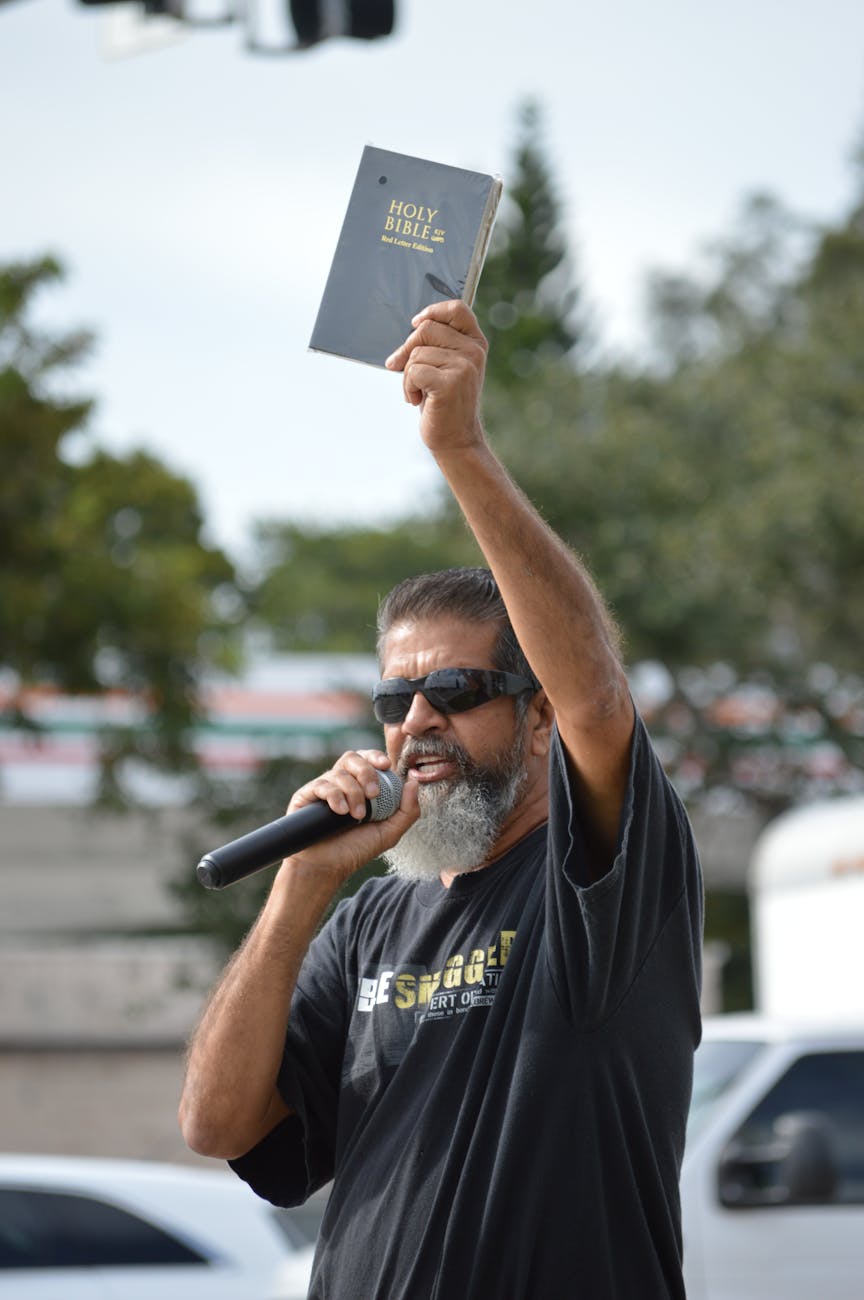
He was placing much of the blame for this on other pastors and institutional leaders– saying that they were at fault for not teaching the names of God. I’m not sure I totally agree with him. I think there is some merit in what he said, but ultimately, when I stand before the throne of judgment, I’m not going to be asked whether my pastor taught me the names of God. I will not be asked how much I knew ABOUT God. I won’t even be asked whether or not I know God–I will either hear that my name is in the Lamb’s Book of Life, or it isn’t! My pastors might face judgment for how true they were in teaching the Gospel, but my mission is to know God experientially. It is MY job to learn who God is, and to follow Him— to trust and obey Him.

But I DO agree that modern churches spend less time on this subject than I remember in my church growing up. Not because we spent so much time on the list of individual “names” of God, but we spent more time in worshipping God for WHO HE IS, and not for what he’s done for me, or what I can be doing for Him, saying about Him, or “identifying” as a Christian, a Christ-follower, or a Believer (and all the tiny differences in meaning that those terms might have).

Part of that comes from the habit of studying the Bible as a narrative. We used to study the “patriarchs” of the Old Testament, the “red letter” words of Jesus Christ, and the letters and “acts” of the Apostles. In fact, it is no longer politically correct to even use words like “patriarchs,” and out of fashion to teach the Bible as historical fact. But there is a value in studying this way– not because the characters are mostly men, or even because they are “heroes of the Faith.” It is important to study them precisely because they are so flawed and broken and in need of a Savior– just as we are! And as they encountered God or walked with Jesus, they saw Him– and NAMED Him– for all of His attributes.
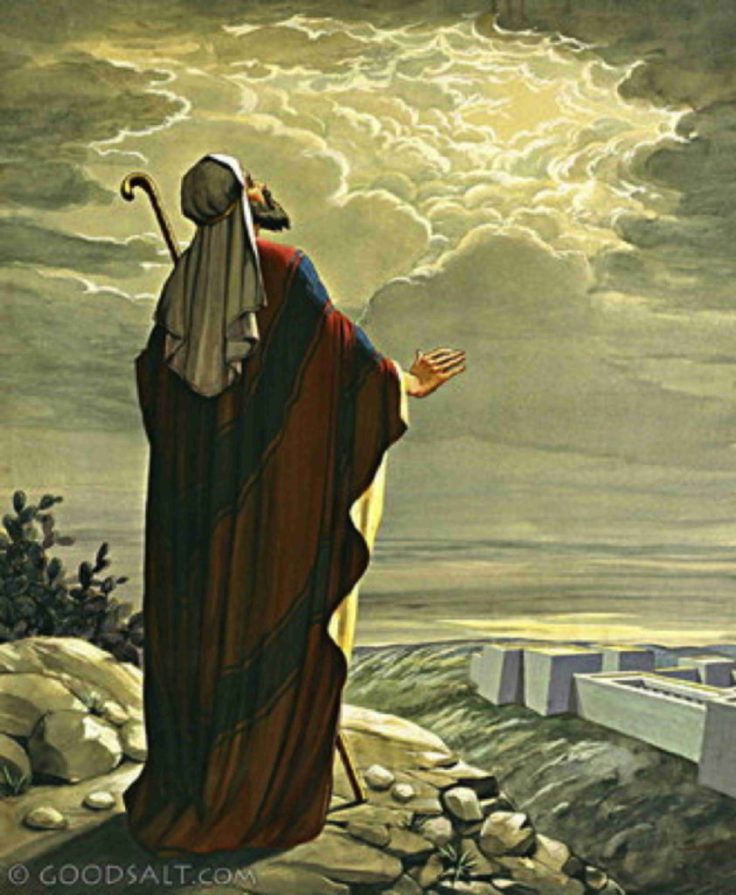
In the Old Testament, He is Yahweh, Jehovah, the LORD. He is Almighty. He is the God who sees, the God who hears, the God who saves, the God who provides, the God who saves, the All-sufficient One, the Lord (who) is my Shepherd, the Most High God, the One whose name is a Strong Tower, the Everlasting God and the Lord of Hosts, among others. Jesus, the promised Messiah, also has a host of names, including Wonderful Counselor, Mighty God, Everlasting Father, Prince of Peace, Lion of Judah, Son of God, Son of Man, Emmanuel, Light of the World, the Living Word of God, Savior, Master, Redeemer, Rabboni, the Bread of Life, the Living Water, the Lamb of God, the Risen Lord, the Alpha and Omega, and many more. What a rich picture of God we get from His Names!

I also remember the old hymns and worship songs doing a better job of helping us to see the God of the Bible. I know we have modern worship songs that include God’s many names and attributes, but others seem to concentrate, not on who GOD is, but who I AM because of God–I’m forgiven, I’m a Child of God, etc. I miss the old hymns that remind me that God is a Mighty Fortress, He is my Vision, my Blessed Redeemer, the Rock of Ages, whose grace is Amazing, and whose Love is “greater far than tongue or pen could ever tell!”

I don’t want to “forget” any of the many titles and attributes of my Father, His Son, or the Holy Spirit. When I lose track of them, I am less likely to worship, less likely to obey, and less likely to turn to Him first in every situation. As we close in on Easter this year, I want to spend some time looking at some of His many Names. But for today, I want to take a deep breath, and worship the one who is “worthy, O LORD, to receive Glory and Honor and Power” (Revelation 4:11).

How Long?

We are preparing for Advent season. We celebrate the coming of our Savior, and His humble birth in Bethlehem over 2000 years ago. We count down the days with advent calendars, candles, and other traditions. And it can be difficult to wait for Christmas Eve and Christmas Day to come.

But imagine those people who lived BEFORE the Advent…those who held the promise, but had not seen it fulfilled. Imagine waiting an entire lifetime without ever hearing the Good News– He is Here! The Messiah has come!

There are promises and hints and prophecies throughout the Bible in what we call the “Old Testament.” And the New Testament is filled with the story of Jesus’ life, death, resurrection, and rule, as well as the outcome of His mission to bring Salvation and Hope to a darkened world. But in between the two testaments there stretches a period of nearly 400 years when God was silent.

I get frustrated when I have to wait 45 minutes at the doctor’s office! Imagine listening to stories from grandparents and elders about promises made a thousand years before, knowing that there was no word, no glimmer of fulfillment for over a dozen generations or more!

And yet, we celebrate the glory of the fulfillment. And on the strength of that glory, and Jesus’ teachings, we are waiting for His triumphant return. A return that hasn’t come in nearly 2000 years.

The difference for us is that we live in the aftermath of the Advent. He HAS already come. He HAS Risen! He has assured us of His return– with His own mouth, in His own words. How long will we have to wait? Will He return within our lifetime? Christians have been asking this question for almost 100 generations now, but we ask with wonder and hope.

The mystery of Advent has become the mystery of the Revelation. We don’t just celebrate the promise given to Abraham or Moses– we celebrate the ongoing promise of Eternity– past and present and future.

I’m reminded of the classic tale by Charles DIckens– A Christmas Carol– where Ebenezer Scrooge is visited by three spirits. He is transported to his own past, sees the present through a different lens, and gets a terrifying glimpse into the future he can expect if he does not repent of his ways. So much of the tale is dark and foreboding, but the ending is rapturous– almost literally. Scrooge’s life has been a narrow life, filled with bitterness, greed, and fear. He spends much of his Christmas Eve adventure wondering about time– how long has Marley been dead? Why appear to Scrooge now? How long before the next spirit will appear? How long will Tiny Tim live? How long has he been haunted– has he missed Christmas Day? Does he still have time to change?

How Long? Ebenezer Scrooge never gets a clear answer about his own future– how long does he have to live? How long will Tiny Tim survive? At first, he is not even sure he HAS survived the night. But he DOES get a clear picture of the glory of hope; the value of time; the joy of promises made and kept; and the true riches of redemption.

We have just under four weeks before we celebrate Christmas Day. In this season of Advent, may we use our time to reflect and rejoice in the promise that was fulfilled so long ago, and in the promise that awaits us for all eternity!

God of the Impossible

35 On that day, when evening had come, he said to them, “Let us go across to the other side.” 36 And leaving the crowd, they took him with them in the boat, just as he was. And other boats were with him. 37 And a great windstorm arose, and the waves were breaking into the boat, so that the boat was already filling. 38 But he was in the stern, asleep on the cushion. And they woke him and said to him, “Teacher, do you not care that we are perishing?” 39 And he awoke and rebuked the wind and said to the sea, “Peace! Be still!” And the wind ceased, and there was a great calm. 40 He said to them, “Why are you so afraid? Have you still no faith?” 41 And they were filled with great fear and said to one another, “Who then is this, that even the wind and the sea obey him?”

Mark 4:35-41 ESV

I’ve been reading through the Gospels this month, and one of the phrases that has stood out for me this year is “ye of little faith.”(or “you have so little faith!) Jesus uses this phrase to chastise His disciples, as well as the crowds– they claim to want miracles, yet when Jesus does miracles, they seem astonished almost to the point of fear. Or they attempt to “explain them away.”

Photo by Andrea Piacquadio on Pexels.com

We live in a world of possibilities– when we are young, we see possibilities everywhere. “When I grow up…” we imagine ourselves as astronauts, or world leaders, or Olympic champions. As we grow older, our world of possibilities grows narrower. We become cynical (or more aware of our own limitations!) and, while we long to see miracles, we neither expect them nor ask for them. We know some difficult or unexpected things are still possible, but we tend to see more “impossibilities.” “My health will never get better.” “My boss will never listen to me.” “I can’t…”

Photo by Andrea Piacquadio on Pexels.com

One of the biggest roadblocks to becoming a Christian (and to continue to grow in faith) is to accept that NOTHING is impossible for God. We set limits on God’s ability, His willingness, His goodness–we expect to be disappointed, disillusioned, and disheartened. And it becomes a self-fulfilling prophecy– we end up disappointed, disillusioned, and disheartened in others, in ourselves…

Photo by Dimitry Zub on Pexels.com

Yet, God has given us an entire book filled with miracles and impossible events that are meant to show us that He is the God of the Impossible; the God of Miracles. From the beginning, God has demonstrated His willingness to make a way when there seems to be no way. From Noah and the Flood, to Abraham becoming the Father of many nations, to bringing Joseph from a pit to becoming the second-most powerful man in Egypt, to the story of Moses leading the Israelites out of slavery…the stories abound. Whether sending food from heaven, water from a rock, or fire from the sky, God’s power is on display throughout the Old Testament. The crowds following Jesus grew up hearing these stories. But after four hundred years of silence, they seemed to remember what God COULD do, but doubt what God WOULD do for those who call on Him.

Jesus walked on water, healed the sick, turned water into wine, cast out demons, raised the dead, and much more. And still the people wanted “proof.” But we are not so very different. Not only do we have all the stories of the Old Testament; we have all the stories of Jesus’ miracles. Yet we still wonder whether God will hear and/or answer our prayers. And it doesn’t take 400 years of silence to cause us to doubt. Sometimes it is four hours, or four days, or four months of seeming silence.

Photo by Skyler Ewing on Pexels.com

Nothing is impossible with God. There are some things that are not productive; some things that are not part of His plan. Imagine Shadrach, Meshach and Abednego praying that God would not allow them to go into the fiery furnace? That wasn’t the plan. Instead, God chose to do the unexpected, the unthinkable–the impossible. He rescued them IN the fire– caused them to come through without being singed. Imagine those who prayed that Lazarus would recover from his illness. That wasn’t the plan. Instead, Jesus did the impossible– raising Lazarus after four days; after the funeral, after the burial, after all possible hope was gone.

God excels in the impossible. He delights in it. What impossible situation are you facing today? God may not choose to remove the situation. But He can take an impossible situation and turn it into a miraculous victory. Not because we demand “proof” of His divinity or power. But because His plans are bigger and better than what we can comprehend.

Photo by Anna Shvets on Pexels.com

I’ve shared a bit about one of my current struggles. My Mom is in her 88th year, and her health is failing. She is very independent and lives alone. My siblings and I are being “stretched” in trying to help Mom navigate several decisions and several changing conditions. God has not taken away her health issues, or conveniently provided an easy transition or simple answers to our questions. But He has been “with us in the fire.” That doesn’t mean that I understand all that Mom is going through, or how best to help her from moment to moment. And I’m not asking God to provide a dramatic “rescue” for Mom as she navigates this part of her journey. But I trust that God has already seen the end from the beginning– none of the “setbacks” or “unexpected events” we face can take God by surprise or leave Him unprepared to use them for His glory and our ultimate good.

A Lot to Discover…

I spent part of last year taking a closer look at some of the figures of the Old Testament. This week, I’d like to take a closer look at one of the lesser figures of Genesis: Abraham’s nephew, Lot.

Photo by cottonbro on Pexels.com

We tend to focus on the teachings of Jesus, and the writings of the apostles in the New Testament. We should. But we should not neglect the lessons to be found in these ancient stories. They have a “lot” to teach us about human nature, and about God’s response to it. They are rich with characters, patterns, metaphors, and foreshadowing.

We first meet the character of Lot, along with his family, at the end of Genesis 11:
27 This is the account of Terah’s family line. Terah became the father of Abram, Nahor and Haran. And Haran became the father of Lot. 28 While his father Terah was still alive, Haran died in Ur of the Chaldeans, in the land of his birth. 29 Abram and Nahor both married. The name of Abram’s wife was Sarai, and the name of Nahor’s wife was Milkah; she was the daughter of Haran, the father of both Milkah and Iskah. 30 Now Sarai was childless because she was not able to conceive. 31 Terah took his son Abram, his grandson Lot son of Haran, and his daughter-in-law Sarai, the wife of his son Abram, and together they set out from Ur of the Chaldeans to go to Canaan. But when they came to Harran, they settled there. 32 Terah lived 205 years, and he died in Harran.
(Genesis 11:27-32 NIV, taken from http://www.biblegateway.com)

When I was reading this passage the other day, I was struck by something I never noticed before, and have never heard in any sermon or Bible study–Lot’s mother is never mentioned, and there is a strong implication that Lot’s parents were never married. The text merely says that Haran became the father of Lot, and that he died. The next sentence, however, says that both his uncles married– and it names their wives. The Bible does not state explicitly that Lot was illegitimate, or that he never knew his mother, but if that is the case, it makes certain things about his life stand in sharp contrast. And, though it says Haran died while his father was still alive, we don’t know how long he was a part of his son’s life. Lot is part of a family, but his position is not well-defined. He is a grandson, and a nephew, but he has no parents or siblings, and he is not adopted or named as an heir by either of his uncles. (Even before Abraham becomes a father, his “heir” is a servant named Eliezer of Damascus, not his nephew– see Genesis 15:1-3) He travels with his grandfather, and then “moves about” with Abraham (Genesis 13), but doesn’t seem to be a part of Abraham’s household. Instead, he is raised by his grandfather, who seems to have given him his father’s portion of the inheritance. Lot isn’t abandoned by his father’s family, but he is not embraced, either.

Photo by Ilkin Safterov on Pexels.com

Lot seems almost to be included in this family history by chance. And, indeed, his name connotes chance and happenstance. People cast lots, play the lottery, and talk about their “lot in life.” Lot, much like his name, seems to depend on chance as he travels through life. His birth is mysterious and obscure, but he has connections to a great and wealthy family. He has great success in building his flocks and herds, enough that the “land could not not support (he and Abraham) while they stayed together” (Genesis 13:6a), but he doesn’t seem to be able to stay out of trouble. He gets used as a pawn in a territorial war (Genesis 14), and must be rescued by his uncle, only to return to the wicked city of Sodom. Angels must drag him out of the city to rescue him again, when God decides to destroy both Sodom and Gomorrah for their wickedness. Bitter and pouting, Lot becomes a pawn for his own daughters in the aftermath of his rescue, ending his days as a footnote in history, as the ancestor of two of Israel’s fiercest enemies– the Moabites and Ammonites.

Photo by Nishant Aneja on Pexels.com

Why is the story of Lot woven into the chronicles of Abraham? What can we learn from his character and life story? How does Lot play a part in the genealogy of Jesus?

Photo by Pixabay on Pexels.com

I’ve challenged myself to learn more–may I pray that you might do the same? Nothing about Lot’s story is written without some purpose–let’s search out what a “lot” God has to share with us in the life of this one man.

Blog at WordPress.com.

Up ↑