Today is March 16. In my area of the world, we abbreviate it as 3/16/26, or just 3/16. So it reminds me of the most quoted verse in the Bible– John 3:16– “For God so loved the world, that he gave his only Son, that whoever believes in him should not perish but have eternal life.” (ESV) This verse is so famous and so quoted, that many times, people just skip the actual verse and just use the reference. In fact, if you just see a poster or sign of reference that says 3:16, it almost always means this verse.
Recently, I saw a short video of a person complaining about seeing such a reference on their soft-drink cup at the fast food chain In-N-Out Burger. The chain prints “John 3:16” on the inside of the bottom of their cups. They’re known for it. They don’t print out the entire verse, just the reference. It’s not blatant or over-bearing– just a modest note on the bottom of their cups. But this person wanted none of it. They started out by liking the food, but they were offended by this tiny reference to a Bible verse. “Keep your John 3:16,” they sneered. “I don’t want your John 3:16.” Apparently, it left a bad taste in their mouth just to see any reference to the Bible. They felt judged and oppressed, I guess.
But John 3:16 is not about judgment. It’s all about Love! For God SO LOVED the WORLD–take a minute to reflect on that. God, the Holy One, who created the world, only to have mankind reject Him over and over again, didn’t destroy it. He didn’t turn His back on the world. He didn’t leave us as a footnote and move on. Instead, He GAVE His ONLY begotten SON. He didn’t come up with a cheap plan for salvation that was just adequate to cover our worst sins and leave us enslaved to our old guilt and shame. He didn’t send a half-hearted emissary to show us what Heaven and Holiness were like. He sent His SON– the heir of the Universe–to live among us, show us how to love and live and worship. And that Son GAVE all of Himself as a sacrifice– not for a select few, but for WHOSOEVER would trust in Him and submit to His Lordship!
WHOSOEVER believes in Him will not perish, but have ETERNAL LIFE! How does that offend and oppress? The message of John 3:16 sums up the whole Gospel of Christ. It is NOT judgment, but Salvation. It is not oppression, but freedom from Sin and Death!
So today, I am thrilled to celebrate 3:16! It is a message of hope, joy, renewal, abundance, purpose, power, and LOVE!
It’s been nearly 45 years since I first heard this phrase, but it has resonated with me ever since. Samuel Taylor Coleridge wrote of it over 200 years ago, speaking of how readers interact with literature, especially when it contains fantastical or supernatural elements. Our high school English teacher and drama coach, Mrs. Barr spoke of it not only in the context of literature but in the context of the theater. In fact, in all art, the artist depends on at least some willing suspension of disbelief on the part of his/her audience.
In visual art, we must believe that a few strategic blobs of color, or carefully shaped pieces of marble or wood have captured something timeless and true about a single moment in time– that movement and emotion and life can be held immortal on a canvas or a statue or a tapestry. We must suspend our disbelief that paint, or wood, marble or stone exists only as itself– in the artist’s capable hands, mere matter transcends its ordinary form to touch our very soul. In music, we can hear, in the well-played notes of an instrument, the sounds of birds, the falling rain, the crashing of thunder, the marching of armies, or the buzzing of bees. Music doesn’t just touch our ears, it can touch our souls. Shakespeare also alluded to this in a comical way: “Is it not strange that sheep’s guts should hale souls out of men’s bodies” (Much Ado About Nothing– Act II, Scene 3) We can listen to a symphony without being moved, but in the willing suspension of disbelief, we can be transformed and inspired by notes on a page and breath being blown into wood or brass or fingers or bows being drawn over “sheep’s guts”.
In literature or in the movies, we must suspend our disbelief that mythical creatures, aliens, monsters, and talking animals live among us as a normal occurrence– for the duration of the story…Dragons must be vanquished, Fairy Godmothers must be allowed to help poor Cinderella to the ball, and The Raven must repeat his ominous line, “Nevermore.” Frodo must hide from orcs and Nazgul in order to reach the Fires of Doom and destroy the One Ring. Charlotte must spin her wordy webs and Papa Bear must exclaim, “someone has been sitting in my chair.” As children, we shed our disbelief readily and enter into the story, falling in love (or having nightmares about) imaginary characters. As adults we become cynical, and lose some of our ability to enter into imagination and other-wordly realms.
I was recently reminded of this concept of the willing suspension of disbelief in two different contexts– loss of Faith, and the deception of the internet– including “fact checking” and AI. Very different experiences, but I think they both tie in.
First, in the loss of Faith. I know so many people, family, friends, even strangers, who write passionately about their loss of Faith. Oh, they don’t call it that. They have other terms, other catchphrases– they talk about their “Deconversion” or their “Awakening”. They are too smart, too savvy, too enlightened to give credence to Faith in Jesus, or in any “god” or divine being. After all, they cannot see “Him” or “it”; they cannot prove His existence (they can’t prove His non-existence either, but that’s another story). Believing in God, they claim, is the same as believing in fairy tales.
And yet…Keats once posited, “Beauty is truth, truth beauty– That is all ye know on earth, and all ye need to know” (Ode on a Grecian Urn). Earlier in his poem, he also says, “Heard melodies are sweet, but those unheard are sweeter; therefore, ye soft pipes, play on; not to the sensual ear, but, more endear’d, pipe to the spirit ditties of no tone…” There is an acknowledgement that we do not just exist in a physical plane, but in a world of metaphysical marvels– memory, hope, and yes, even “fairy tales”.
Of course, we know that there is no Cinderella– no “happily ever after” in this world. Life is not a fairy tale story. But our lives ARE stories– we have a beginning and an end. We want to find a purpose, a reason for being who we are, where we are, and even when we are. We search for our “true” identities. We dream dreams and harbor hopes. We battle evil forces– the demanding boss, the annoying neighbors, blizzards and tornadoes, cancer…And we believe very strongly in concepts of justice and injustice, fairness and unfairness, goodness and evil–metaphysical concepts. We long to be understood, accepted, “seen,” and loved (ever after!). And we must suspend our disbelief in the face of evil to search for the good. We must suspend our disbelief in our own worth to make choices that preserve our health and develop our latent talents. Indeed, we must believe and cherish what we do NOT see or have never experienced, or we will be crushed by our (often temporary) realities. When cynicism and disbelief BECOME our belief system, we become the living dead. Oh, we can continue doing “good” things without believing in God; we can espouse a code of “good living”, we can take care of our bodies and emotions within a framework of humanism and self-esteem. But we will not experience the fullness of Truth, or Beauty, or majesty, that lives in Faith.
Loss of Faith represents, what I would call an “unwillingness” to suspend disbelief, or a tendency to cling to only that which can be experienced on a physical plane. But there is another danger– that of an “unwilling” suspension of disbelief–believing things that are deceptive, because they are presented as “truth.” This includes such things as “fake news” on the internet, “fact checkers” who tilt the truth and “throw shade” on inconvenient or uncomfortable truths, and AI-generated stories meant to “create” truth where none exists.
I would like to say that I am immune to such things; that my knowledge and dependence on truth cannot be subjected to manipulation. But that is not always true. I see a touching story on Facebook about a young person who is missing– please spread the word– only to find out that the post is several months out of date. I see a meme that accuses one political big-shot or a celebrity or even a corporation or business of being corrupt, unfair, evil, etc., and I am outraged– until I realize that the original post was generated by a person or group that is completely unknown to me. I don’t know their true experience, or their motivation in spreading this information (or false information). It MAY be true, it MAY be completely false, but it is most likely somewhere in between– not nearly as bad as portrayed, or as every bit as bad as other politicians, celebrities, or companies who aren’t mentioned in the meme or article.
Outrage— especially outrage that is deliberately and manipulatively generated– is the suspension of not just disbelief, but of discernment. We immediately judge. We immediately feel our blood pressure rise, our cheeks flame, and our breathing accelerate. Webecome passionately angry, but we also become instantly indignant and self-righteous. I would never…I cannot tolerate… But what have we done on a smaller scale? Are we SO innocent? Do we have the authority to judge based on a single article or photo?
But it is not just outrage that can be deliberately and manipulatively generated. AI and bad actors on the internet and other media sources can also manipulate our hopes, our disappointments, and our beliefs in what has happened and what is happening around us. Stories appear online that sound authentic, narrated by well-modulated voices (many of which seem familiar), telling us that this event took place and changed someone’s life, or that this celebrity has finally “spilled the dirt” about beloved co-stars who died a couple of decades ago. Others purport to give “wise words” from aging actors or writers or recently dead corporate gurus. We suspend our disbelief, or our suspicions, because we trust the voice or the photoshopped picture. We choose to believe the worst of people we already dislike. We choose to believe only the best of people we like. If a stranger came up to me on the street with a story like this, I would be suspicious. Who are they? Why are they telling me this? Why should I trust them? But we suspend our disbelief if we see it in print with what looks like credible photos and when narrated by what we assume to be a credible voice. If we bother to look at the source, even that seems credible– I may not have heard of this news service, but it has the word “news” in its heading…
We put our Faith in things seen– even if they are false, while we hold truth and beauty to be suspicious, because we have lost the ability to hope and trust in something beyond our own wisdom and personal perceptions.
We need dreamers and artists and writers who see truth and beauty in the universal and metaphysical realities of faith and hope and majesty. And we need people with the discernment to disbelieve what strangers claim to “show” and “tell” us with their clever manipulations.
Both Faith and “the willing suspension of disbelief” depend on the Will. We have to make choices in what we are willing to believe and how far we are willing to search for the truth– both in what we can see, and in what we cannot.
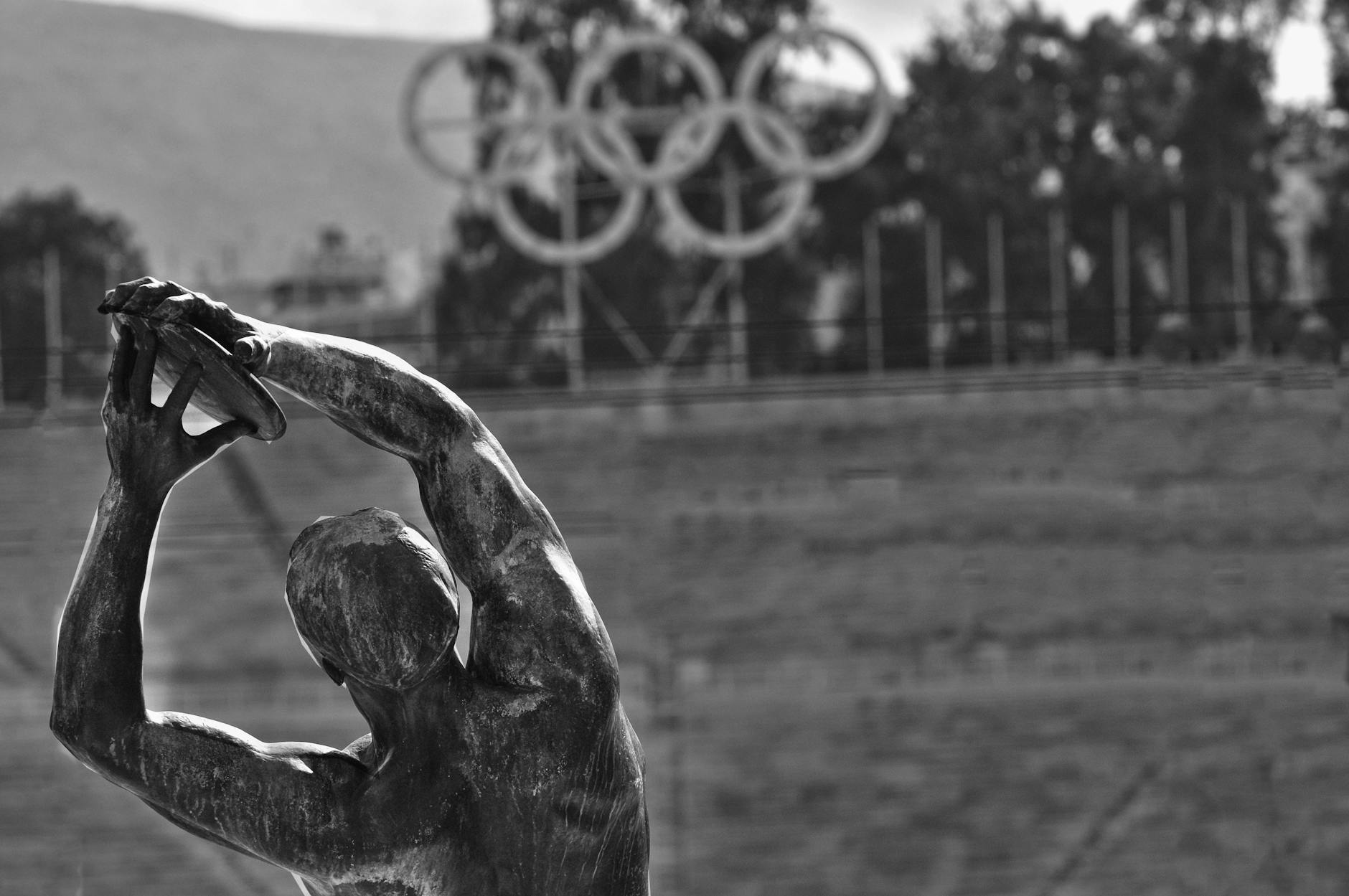
Let me just preface this by saying that I am not watching the Olympics coverage on television this year. That is not in protest of anything, nor does it reflect a keen disinterest in sports or in global events. My husband and I simply do not watch television. But I do spend time on the internet, and I follow news there. So it was with great sadness that I learned of the controversy about the opening night ceremonies and the tableau that seemed to mock “The Last Supper.” It has been with equal sadness that I have watched the angry and offended responses from Christians. I do not mean to say that the tableau was not offensive. I found it ugly. And I think it would have been both shocking and offensive to have seen it in the midst of all the other celebration.
Many of the organizers and presenters of the Opening Ceremonies have made public statements claiming that they either didn’t realize this would be offensive to many, or they didn’t mean it to be offensive. I find this difficult to believe. If the planners, organizers, participants, and crew had absolutely no idea that their tableau had any resemblance to “The Last Supper,” they I would suggest that they are woefully ignorant of European Art and Culture, or they are perhaps unaware of the number of Christians around the world. Yet some of them claim that ignorance/intolerance belong only to those who found their display offensive. They say that their only objective was to pay tribute to the ancient gods of Olympus, for whom the Olympic games are named. They claim that any resemblance to DaVinci’s mural of “The Last Supper,” or any allusion to Christianity were unintended. But they appear to be quite pleased with the furor and controversy.
While I did not see this happen in context, I do have some thoughts on the aftermath of what I have seen this week.
First, I think that Christians, while we should be offended by this display, should perhaps NOT be shocked. We live in a post-Christian, post-religious Western World. The world, especially the Western World, thrives on divisiveness, controversy, and the “shock factor” in entertainment. The tableau that was presented wasn’t just offensive to Christians (though we were likely the primary targets). It was, in its own way, offensive to the ancient Greeks, and to the spirit of the Olympic games. The Olympics are not about Bacchanalian debaucheries, orgies, or feasts of any kind. Nor are the Modern Olympics about the gods of Ancient Greece– not in the way that the Ancient Olympics were. The Modern Olympics are meant to be inclusive to every participating nation and qualifying athlete. The opening ceremonies are traditionally meant to celebrate both the shared heritage and spirit of competition among athletes, and the unique culture of the host country. This display did neither. And the organizers had to have known that. Whatever their real reasons for including this cartoonish and puerile tableau, they had nothing to do with bringing people from all nations and cultures together, or with celebrating the highlights of French culture.
Having said all that, I am somewhat disappointed in the angry responses I see from Christians. We are reacting as though Christ promised us that we would always be respected, welcomed, and esteemed. Yet we serve a CRUCIFIED Savior! How are anger, boycotts, protests, and demonstrations showing honor to Jesus or bringing glory to God? What makes us think that reacting in anger and “playing the victim” will change the minds or hearts of those who created this mess? I believe that is precisely their “point.” They see themselves as victims of God’s righteous laws, and they are reacting TO HIM in anger and rebellion. To see US react in the same way makes them feel justified in their own anger. We live in a culture of outrage– it is our job to rise above the temptation to add to the general outrage. Jesus did not lash out as He was being whipped, taunted, and nailed to His Cross. He prayed for His tormentors, instead.
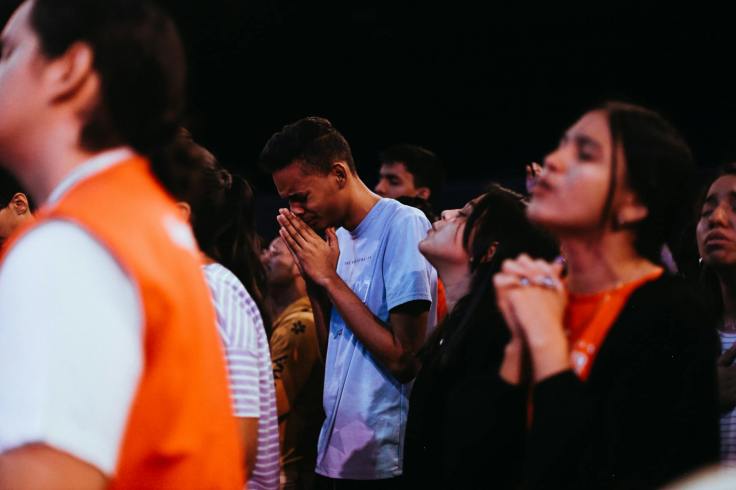
And that brings me to my final point. I think we need– especially in light of these events– to be praying for the Paris Olympics. Pray for the safety of all the athletes. Pray especially for those athletes who are being booed, taunted, and threatened because of their home country, or their religious beliefs. Pray for those who are standing up for what is right, and pray for the hearts of those who are acting in evil, anger, hurt, and deception. Pray that the spirits of division and hatred will NOT hijack this world event, as they have in the past. Pray that Christians will come together to react and to reach out as Jesus Himself did– speaking the truth in love. We do not have to embrace, condone, or accept what is evil. But we must stand firm in the armor of God, rather than attack with the enemy’s weapons!
Remember, we are to run OUR race:
24-25 You’ve all been to the stadium and seen the athletes race. Everyone runs; one wins. Run to win. All good athletes train hard. They do it for a gold medal that tarnishes and fades. You’re after one that’s gold eternally. 26-27 I don’t know about you, but I’m running hard for the finish line. I’m giving it everything I’ve got. No lazy living for me! I’m staying alert and in top condition. I’m not going to get caught napping, telling everyone else all about it and then missing out myself.–1 Corinthians 9:24-27 (The Message)
What happened in Paris last week was offensive and wrong. What we do this week needs to reflect what is right and God-affirming. We don’t need to be silent. We don’t need to be victims. We don’t need to be outraged. We don’t need to be protesting. We need to be praying.
25 Therefore, having put away falsehood, let each one of you speak the truth with his neighbor, for we are members one of another.26 Be angry and do not sin; do not let the sun go down on your anger,27 and give no opportunity to the devil.28 Let the thief no longer steal, but rather let him labor, doing honest work with his own hands, so that he may have something to share with anyone in need.29 Let no corrupting talk come out of your mouths, but only such as is good for building up, as fits the occasion, that it may give grace to those who hear.30 And do not grieve the Holy Spirit of God, by whom you were sealed for the day of redemption.31 Let all bitterness and wrath and anger and clamor and slander be put away from you, along with all malice.32 Be kind to one another, tenderhearted, forgiving one another, as God in Christ forgave you.
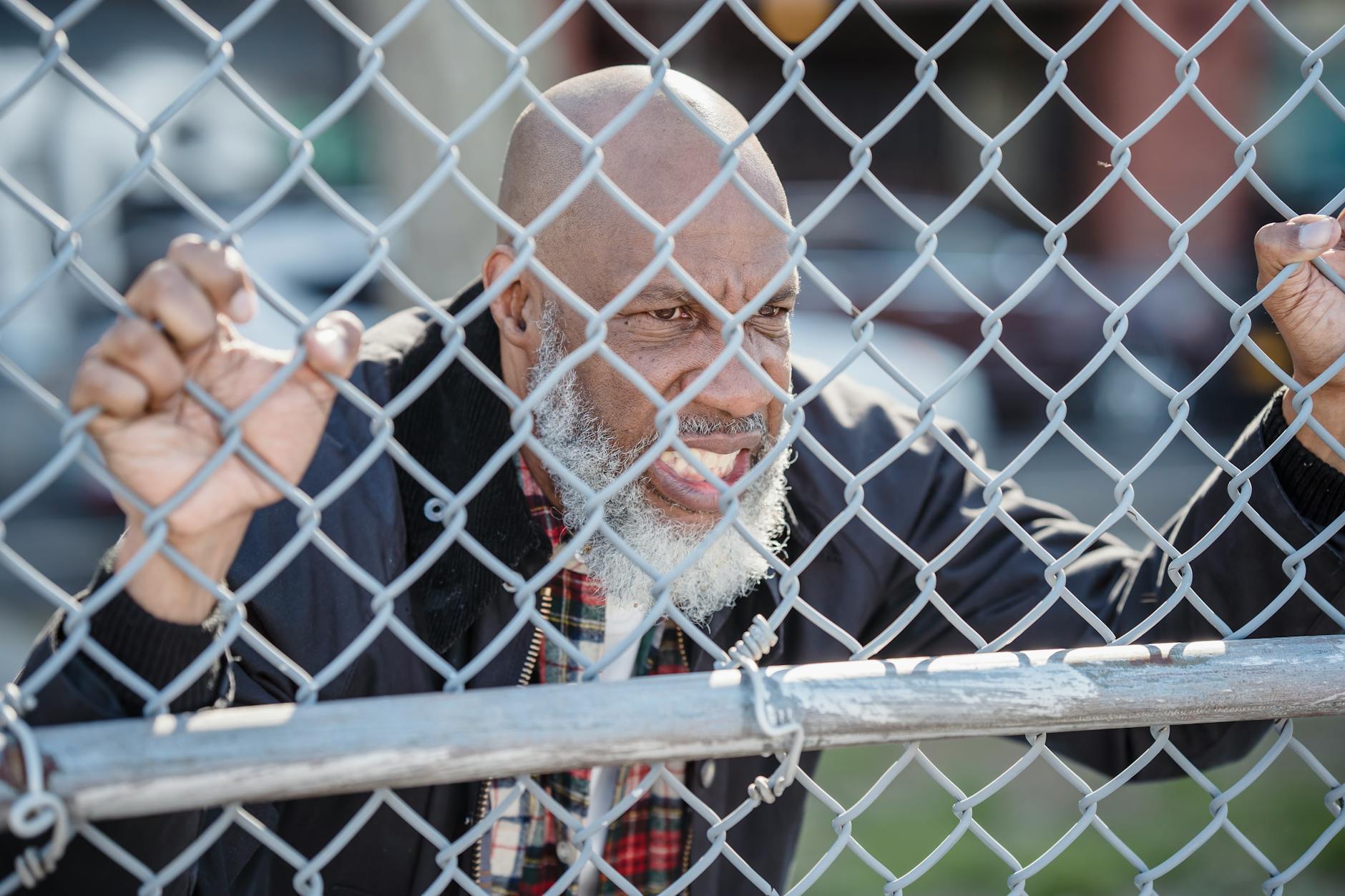
I grew up hearing that anger is a sin. Yet God experiences anger and wrath. And the Apostle Paul says in this passage that we are to “Be angry and do not sin” (Eph. 4:26a).
Anger is an emotion; feeding on anger, wallowing in it, stewing and screaming and acting out under the control of our anger– that is sin. That is why Paul goes on to say that we should “not let the sun go down on your anger ” (4:26b). Anger doesn’t have to be a bad emotion, but it is a bad master. We need to take control over our anger to resolve it, and let it go. In Genesis, God spoke to Cain about this very thing–Cain and his brother Abel had brought sacrifices to God; Abel’s sacrifice was pleasing to God, but Cain’s sacrifice did not find God’s favor. The sacrifices were voluntary– Cain and Abel were not in competition to see who could bring the “best” sacrifice. God had not ordered them to bring a sacrifice only to find fault with Cain’s efforts or the way he chose to present the sacrifice. The scriptures don’t even say that God rebuked Cain or pointed out a flaw in his offering. He simply found favor with Abel’s offering– Abel had brought the best he had; the firstborn of his flocks. Cain had brought “some” of his crops.
The difference in the sacrifices had nothing to do with the content or the manner of offering, but in the intent to worship God halfheartedly, instead of wholeheartedly. God saw that Cain was angry (as well as proud and envious of his brother). Instead of rebuke, God offered grace and wisdom:
Genesis 4:6-7New Revised Standard Version (NRSV)
6 The Lord said to Cain, “Why are you angry, and why has your countenance fallen? 7 If you do well, will you not be accepted? And if you do not do well, sin is lurking at the door; its desire is for you, but you must master it.”
God doesn’t want us to deny our anger or pretend we are never angry. But He does want us to acknowledge it, and deal with it. Why am I angry? What should I do about it? Anger can motivate us to do the wrong things, but it can also spur us to change our course, and do something good. Righteous anger can spur us to speak out about injustice, and seek to correct wrongs. Anger can lead us to our knees, asking God for direction, strength, or His intervention and justice. King David often prayed angry prayers asking God to strike down the people who were plotting against him, or those who were doing evil or mocking God’s people.
I wish I could say that I had mastered this area, but I’m writing as much for my own instruction today as anything else. Here are some wonderful steps we can and SHOULD take to deal with anger:
Pray! Anger can strangle us, or it can sneak up and suffocate us, but the worst it can do is drive us away from our source of help and hope. God WANTS us to come to him. He reached out to Cain in his anger, wanting to draw him near and help him overcome it; He offers us the same help. God can handle our anger– he can give us the power to let it go, and direct our feelings appropriately.
Own it–Angry people tend to deflect responsibility. Yes, other people can say or do things that make you angry, but they can’t make you say or do sinful things in response to their actions. You still bear the responsibility for what you do with your anger– even “righteous indignation.”
Question it!–This is something I have found helpful. Just as God asked Cain, ask yourself, “Why am I angry? Why am I downcast?” And then, answer them honestly. Many times, the root of my anger isn’t justified–instead it’s “just a lie”. I have no right to be angry with someone else when I chose to waste time, cut corners, or neglect to do what was necessary. I have no right to be angry or outraged because someone else feels differently or sees a different side of an issue. In fact, if I keep listening instead of exploding, I might find compassion overriding the anger. I might even learn something new! Or I might better understand why I feel or think as I do, and be better able to explain it to others, instead of just yelling the same thing over again.
Deal with it–This is a difficult one for me. I don’t like confrontation. If someone hurts me, I just want to walk away and lick my wounds. And we shouldn’t confront others WITH our anger, striking out at them and seeking to hurt them. But I have found that a lot of anger and hurt that I have harbored is not only unjustified, but is based on misunderstandings and pride. It takes humility, but it also takes courage to seek out someone to offer an apology you don’t want to give, or to ask for clarification instead of harboring hurt.
Don’t spread it! “Don’t let the sun go down upon your wrath” is not permission to “vent” to seven (or seven hundred) friends by spreading your hurt and outrage until you feel calmer. This is particularly true in the age of Facebook, Twitter, and Instagram. In the short-term, this may seem right– “they need to know what is happening”– but it is just the opposite. Anger often leads to rash judgments, and hasty actions that we can’t undo or call back. If you are not talking with the object of resolving a misunderstanding, apologizing, or offering a positive solution, you are engaging in sin. The old saying, “If you can’t say something nice about a person, say nothing at all” applies here. And it applies about situations and circumstances, too. I am angry about various practices and policies by governments, companies, even churches; what I need to spread is not my anger about them, but awareness of how God can change them, and why we should be seeking His justice, His righteousness, and His grace toward those who have been impacted by them.
Repent of any anger-related sin. Remember, anger itself is an emotion. God experiences it; we are made in His image, so we experience it, too. But God’s anger is Holy; ours is often tainted with other feelings and thoughts– pride, envy, greed– or even other human frailties like misunderstanding, exhaustion, hunger and pain. Instead of feeling guilt over the anger, we need to turn away from the sin that overpowers us in our anger.
For more Biblical wisdom about dealing with anger, see the following:
When violence strikes, I want justice. I want action. I want to make the evil stop.
Just the other day, there was another school shooting in the news. At least six innocent people lost their lives, and another community was ripped apart by grief, shock, and anger.
But is it really justice that I am seeking? Or is it vengeance?
Justice is permanent. Justice is final. Justice takes time. Vengeance is visceral and immediate. Vengeance is a reaction; a retaliation. Justice, on the other hand, is blind to the emotions of the initial event. Vengeance is driven by emotion. Justice comes through the objective application of the law.
Justice is God’s business. I do NOT understand why or how God allows evil to happen in the first place. It hurts. It doesn’t make sense. It is destructive. But it is the nature of Sin. And Sin infects the entire world. We cannot escape from it. We cannot deny its existence. We cannot put an end to it. We can only follow the arduous and imperfect justice systems that are in place for our community or our country. We cannot achieve perfect justice. But God can. And He has promised to do so– in His time, and in His way. This can be comforting, but it can also be frustrating.
Vengeance is also God’s business. God has emotions, just like we do. But His are always under perfect control. God’s wrath is frightening in its power, and paralyzing in its purpose.
Beloved, never avenge yourselves, but leave it to the wrath of God, for it is written, “Vengeance is mine, I will repay, says the Lord.”
As imperfect as our systems of justice may be, they are still systems, with order and time to look at the total situation. Vengeance doesn’t stop to count the cost. It doesn’t stop to listen to the full story. It seethes and coils like a rattlesnake, waiting to inject venom into the first victim to cross its path. Human vengeance never leads to peace.
Also, vengeance is limited to the strength and resources of the avenger. If a shooter takes the life of my loved one, my vengeance is limited to the actions I can take. I may kill the shooter; I may take the life of their family members; but I cannot bring my loved one back, nor can I guarantee that the killer will suffer the same amount or the same way I do. Vengeance never looks forward, and it never offers a solution to move forward. It lives in bitterness and anger and discontent.
As followers of Christ, we are asked to take a stance that seems impossible from a human standpoint. We are asked to keep our hands clean, to keep our minds at peace, and to give our grief, our anger, and our craving for vengeance over to God with no reservation and no option to set the limits or timelines.
To the world around us, this seems weak and even unjust. What if the evildoer “gets away” with her/his crime? What if the victim never gets “justice” in their (or our) lifetime? What if we never “see” justice done? What if God “fails” to avenge us or our loved one? What does the Christian “do” in the face of evil? Nothing?! Fall on our knees and pray?! Offer lukewarm assurances and empty promises?
The problem with evil– especially shocking violent events– is that we can’t see beyond the immediate shock and pain. That doesn’t mean that there IS no pain or shock or anger or frustration if we choose not to react with vengeance. The pain is still very real, and overwhelming. But we choose to make room for faith that sees the larger picture. Faith makes room to see not just justice, but mercy. It allows us to see the overall tragedy of Sin, beyond our immediate tragedy of an individual act. Faith sees beyond our helplessness to God’s Sovereignty. It sees beyond the present pain to future healing.
I pray for the families of the victims in this latest shooting– and for all those who have experienced such violence. And I pray that God will show me what I can do to make a positive difference going forward. I pray for the strength and the faith to let go of hatred, bitterness, malice, and outrage. Finally, I praise God, even in the middle of pain and shock, knowing that He can be trusted to bring perfect Justice– and perfect vengeance–the kind that leads to a peace beyond our understanding. These are not “easy” prayers. They are not blind prayers, or prayers prayed without tears and groaning and questions. But they are real prayers, not empty wishes that I could avoid all unpleasantness or that I could exempt myself (or others) from tasting sorrow, grief or pain. Rather they are prayers that acknowledge that Life is more than struggle; that Love and Mercy are stronger than despair, and God has already won the ultimate victory.
















 Pursuing Prayer