Beyond Our Anger, Lord, Give Us Resolve!

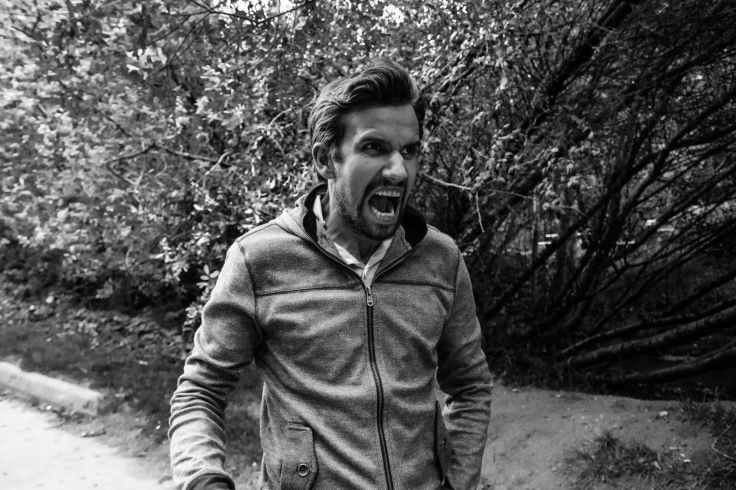
There are a lot of angry people out there. They have ample reason to be angry. The world is filled with darkness, injustice, pain, sickness, violence, oppression..the list goes on. Such things should make us angry. Such things are wrong. They are destructive. They are evil.

Photo by Pixabay on Pexels.com

But anger, even justified, cannot heal. It begets more anger, and yet more evil in the name of vengeance. Anger alerts us to evil, but it cannot be allowed to fester and corrode all that is good.

God created us with emotions, like anger, but He desires us to bring them under His discipline to become instruments of good. All the way back in Genesis, God cautioned Cain in his anger https://www.biblegateway.com/passage/?search=Genesis+4%3A1-16&version=NIV God did not condemn Cain for his anger, but he warned him not to be mastered by it. Cain did not listen, and in his anger, he committed the first murder. God’s wrath against Cain was swift and terrible– God cursed the ground, so it would not produce for Cain; He drove Cain to wander in the barren wilderness. Even so, God put a mark of protection on Cain, and promised His own vengeance on anyone who would try to kill him. God’s mercy overwhelmed simple retribution. God had the power (and the right) to strike Cain dead. He chose to let Cain live with the dark consequences of his anger.

Photo by Pixabay on Pexels.com

God understands that we will get angry– He gets angry, too! But God sees beyond anger, beyond the immediate pain and rage that we feel when confronted with evil. God’s ways are eternal and Holy and right.

If we turn to God in our anger– if we cry out to Him and wait for His wisdom, He can turn even our anger and bitterness into something far better– resolve. We can resolve to bring good out of tragedy; we can resolve to work, and sweat, and pray, and stand firm in the midst of the storm. If anger is like fire– swift and destructive, then resolve is like a mountain–enduring and offering shelter, protection, and a fixed reference. Fire can scorch the mountain. But it cannot move it or destroy it.

Photo by Pixabay on Pexels.com

We are living in uncertain and evil times. Let us acknowledge it; even be angered by it. But then, let us bring our anger, our pain, our confusion– and our hope–to God. As God warned Cain, if we do not do what is right, sin will be crouching at our door, desiring to have us; to destroy us and drive us away from God’s presence. If we deny our anger, if we push it down and pretend that it has no power to touch us, we are playing with fire. But if we bring it to God, acknowledging the struggle, crying out in our pain, God can turn our anger into resolve– steadfast through fire and storm and wind and time. Solidly committed to what is good and right and truly just.

Photo by August de Richelieu on Pexels.com

Anger, violence, vengeance–all promise easy justice and powerful change. But once the fire of emotion and action has passed, we are left with ashes and death. But on the mountain of resolve, even the ashes become mixed with the good soil underneath to produce new life and growth. The good endures. The good resolves to endure. Goodness is eternal. Let us seek the good, and seek that God would, beyond our anger, grant us resolve.

Jesus Died

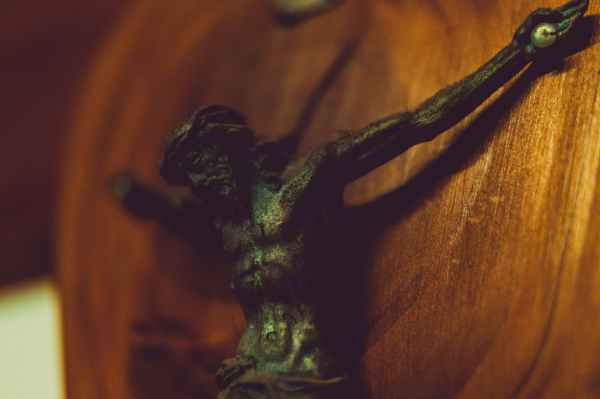
On this Good Friday, it may seem redundant and unnecessary to point this out, but Jesus died. As the world around us faces a global pandemic, we are forced to face our own mortality. People are dying from COVID-19– people we know; people we know about; people we have never met. Their deaths are more than just statistics. They represent personal loss to all their friends, family, and people in their communities. Jesus’ death was more than just another execution– more than just another dead body to be disposed of before the start of the Sabbath.

Jesus. Died. Emmanuel– God with us– died. Ceased to live. Bled out and stopped breathing. His body was cold and lifeless, wrapped in burial cloths and laid in a tomb. This was not just like sleeping, or missing a heartbeat. He was gone. This is not normally cause for celebration– this was not a “Good” Friday.

Photo by Pixabay on Pexels.com

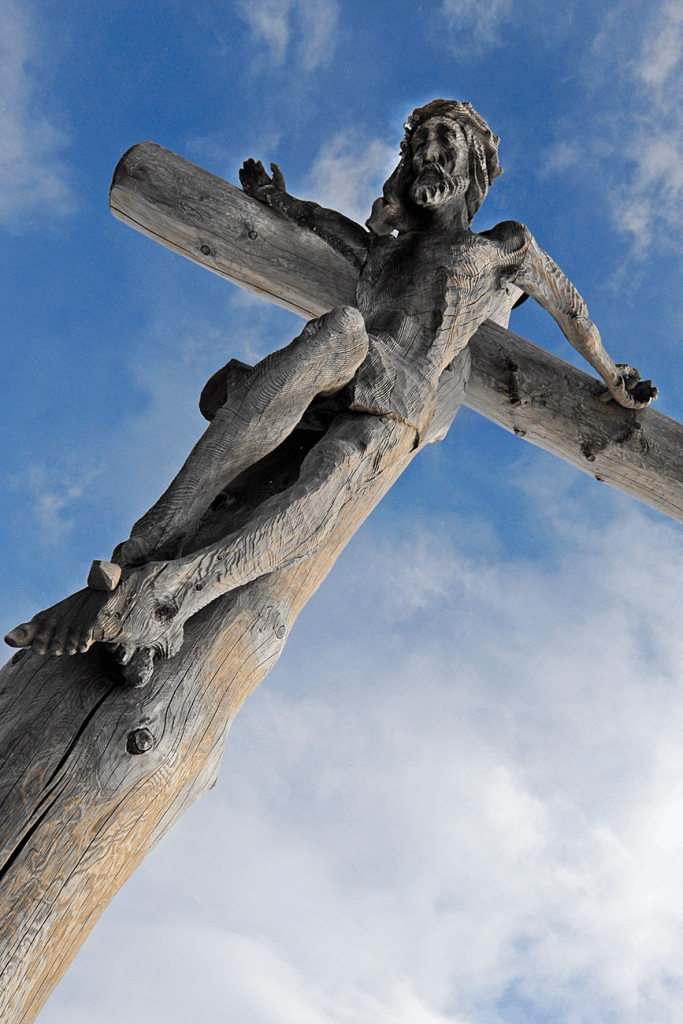
Jesus was not the only religious leader to die at the hands of enemies or rivals. The fact that his followers would commemorate or memorialize his death is not unusual or incomprehensible. But Jesus wasn’t just assassinated. He was condemned to die as a criminal. His death wasn’t just shocking or violent– it was humiliating, vile, excruciatingly painful, and involved public ridicule and anguish. There is nothing glamorous or brave or victorious about a cross. Christians who wear cross necklaces or t-shirts with blood-covered spikes might just as well wear handcuffs or ankle bracelets, or a picture of Jesus in an electric chair to show their devotion to a man who died as a criminal. Even though Pilate declared that he could find nothing wrong, he still allowed the conviction and death sentence to stand. Jesus didn’t win against his enemies– he lost, and he lost everything.

Photo by ahmed adly on Pexels.com

In our rush to celebrate Easter, and the “rest of the story,” sometimes we lose sight of the cross. Jesus– creator of the universe, perfect in the eyes of the law, beloved by God the Father–died a cruel, humiliating, senseless death. Those who are dying today of COVID-19 are struggling for their next breath, exactly as Jesus did so long ago. Jesus did not just “give up,” he didn’t just go into a coma as a gesture, knowing he would wake up in three days anyway, so why struggle for that next breath, or push through that cramp in his arm or leg, or let the sweat and blood from his forehead run into his eyes, unable to wipe them away or keep the flies from landing around his nose or ears… Jesus died– He heaved and strove and agonized until his heart and lungs and muscles could do no more.

We talk about Jesus as the “Lamb of God, who takes away the sin of the world” (John 1:29). Earlier in Israel’s history, God rescued the entire nation of Israel from their slavery to the Egyptians. He caused the angel of death to visit all of Egypt and kill all the first-born throughout the land. (https://www.biblegateway.com/passage/?search=Exodus+12&version=ESV)

All of Passover is a foreshadowing and visual representation of what was to happen at the crucifixion. Jesus became the sacrificial lamb, whose life would be given, and his blood be used, to save us from death and destruction, and allow us to be free. His body was broken, just like the bread of the Passover, to give us life.

Just as the lamb’s blood was placed on the sides of the door posts, Jesus’ blood stained the two ends of the cross where his hands were nailed. It stained the top and bottom of the cross where his head and feet bled, just as the lamb’s blood was placed on the top of the door frame and dripped to the ground beneath.

Photo by Harrison Haines on Pexels.com

Jesus became a metaphysical “doorway”, painted with blood, through which we can enter into a place of safety, forgiveness, and promise. But only by going through the door– only by trusting fully in the work of Jesus’ death (and resurrection)– that we can be saved.

It wasn’t merely the act of painting the lamb’s blood on a door that saved anyone– it involved going into the house, and obeying the word of the Lord. It was wrapped up in preparing for a journey in which they would leave behind their slavery and old way of life, and walk through uncharted territory, led by God’s spirit, to a land of promise they had never seen. No Egyptian, by merely smearing blood on the doorposts or wrestling with the angel of death, or wearing a mask or staying behind locked doors, could defeat the plague. No Israelite could ignore God’s instructions, and roam the streets, trusting the the blood on the doorposts would cover him three blocks away. Death–and life– came on God’s terms. Wearing a cross necklace and “looking the part” won’t substitute for true faith that results in repentance, obedience, and discipleship.

Jesus died. And he rose again! But he didn’t do it so we could sail through life on our own terms. He came to show us that God can take our slavery, our sin, our failure, our sickness and sorrow, even our death– even senseless, humiliating, forsaken death– and give victory, life, and peace to those who follow Him.

And THAT makes this a very Good Friday, indeed!

Death Cannot Stop True Love

I’ve spent the past few days revisiting one of my favorite movies, The Princess Bride. The movie is based on a “fractured” fairy tale, written by William Goldman. In it, a spoiled young farm girl falls in love with a lowly farm hand. When he leaves to make his fortune, the girl promises to wait for his return. When word comes back that he has been killed, she swears that she will never love again, and becomes a pawn of a wicked prince.

** SPOILER ALERT**

Of course, her true love, Westley, has not been killed, and when he finally finds Buttercup, she has agreed to marry the wicked prince, who has had her kidnapped and plans to kill her. “Why didn’t you wait for me?, ” Westley asks. “Well..you were dead,” replies Buttercup. “Death cannot stop true love. All it can do is delay it a while, ” says the intrepid Westley, to which Buttercup replies, “I will never doubt again.”

In true fairy-tale fashion, Westley and Buttercup must face many obstacles, including all the dangers of the “fire swamp,”capture, torture, a fake marriage ceremony, and Westley being “mostly dead”– again– before they can have their happy ending. But in the end, “true love” wins over all trials and obstacles, and Westley and Buttercup “live happily ever after.”

We live in a post-modern age, where people tend to sneer at notions like fairy tales, true love, and “happily ever after.” We are more likely to echo the words of the bitter Dread Pirate Roberts, who tells Princess Buttercup that “life is pain, highness, and anyone who tells you differently is selling something.” Ironically, the Dread Pirate Roberts is really Westley in disguise. His life is filled with painful trials, and “inconceivable” obstacles, but he perseveres, and his “happily ever after” makes all that came before fade from memory. Because, in the end, death CANNOT stop true love. It may take a few miracles, and lots of patience, forgiveness, and faith, but true love “bears all things, believes all things, hopes all things, endures all things” (1 Corinthians 13:7 ESV)

God’s love is true– it is sure and enduring. God’s presence goes with us even into the valley of the shadow of death–even if the shadows and darkness block our sight; even if death seems sure to win. His rod and staff are not tools of torture and dread, but reminders that He is there to guide us, even if we cannot see His face in the gloom.

Photo by Francesco Ungaro on Pexels.com

Life is filled with pain–and Westley was right; anyone who tells you differently is selling you something. God doesn’t promise that our path will always be on smooth ground in sunny pastures. We may face separation from loved ones, flame spurts and quicksand, betrayal by friends, battles with giants, wicked rulers, even rodents of unusual size. But in each of these situations, we have God’s very presence to comfort us and help us endure to the end. And the “happily ever after?” It is eternal and glorious like nothing we have ever known or even imagined.

Photo by Sachin C Nair on Pexels.com

Fairy tales are not real– but God’s word is. The very reason such tales and myths and legends endure is because they echo what we know to be true– Truth, and Love, and Justice, and Honor, and Hope, and Faith–they are eternally enduring and strong. We recognize the truth that “Death cannot stop true love– all it can do is delay it for a while.” https://www.biblegateway.com/passage/?search=Romans+8%3A31-39&version=ESV

Victims and Victors

My husband and I own a small retail business.  Last winter, we were victimized by shoplifters.  They stole several items, worth over $1,000.  The same couple stole items from other businesses in the area.  The police investigated, compared descriptions of the suspects, traced their movements, and got an arrest warrant.  The couple fled, and it took months to find them and bring them into custody.  They have been arrested, and we have been to court for a preliminary hearing, with another potential court date in about a month.

blur close up focus gavel
Photo by Pixabay on Pexels.com

The court sent us a long series of papers to fill out, including a victim impact statement, where we were to describe how the suspect’s alleged actions impacted us personally, as well as how our business was damaged.  Even though this was not a personal crime (we weren’t physically threatened or harmed, or specifically targeted with an intent to ruin our business), there are still scars–distrust, fear, frustration, and loss, to name a few.  Just because a crime isn’t personal, doesn’t mean that no one suffers.  It has been an awkward process to write out the victim statement, and to appear in court and recount all that happened that day, but it has also been a good process.

crime scene do not cross signage
Photo by kat wilcox on Pexels.com

Being a victim is not a pleasant experience.  It is frightening, humiliating, maddening, and bewildering.  “How could this have happened?”  “Why did it happen to me/us?”  “What did I/we do wrong?”  These are honest questions that go unanswered.  But the biggest question may be “Where was God when this happened?”  Didn’t he know?  Didn’t he care?  Why didn’t he act to stop this crime?  Why did he allow it to touch us?

In the months since this happened, I’ve learned to ask some other questions of God–

  • What other “bad” things have you kept from us without our knowledge?  What good things have you showered on us that we took for granted?
  • Who else has suffered the same or worse things– how can I reach out with empathy or understanding?
  • Where are people suffering without justice?  Even though we have had a long wait, we know that the police and court system have been working for us.  Where are people living who suffer without hope, in silence, and in fear of seeking help?
  • What can we learn from this experience?  How can we make our store and our community “safer”?  How can we heal, and bring justice instead of wallowing in hurt or seeking revenge?

green leafed plant on sand
Photo by Engin Akyurt on Pexels.com

God has a plan, even in times of trial and questioning.  We all will be victims at some point in our life–of injustice, of crime, of disease, of poverty, of losses, of disaster, and of sin’s consequences– our own sins and the sins of others.  We can also be victors, through the power of the Holy Spirit.  We can overcome bitterness and addiction; we can triumph through cancer, depression, or heartbreak; we can rise above setbacks and circumstances; we can choose forgiveness and healing over hatred and self-sabotage.  We can move from being perpetual victims to eternal victors, through Jesus Christ our Lord!

Blog at WordPress.com.

Up ↑