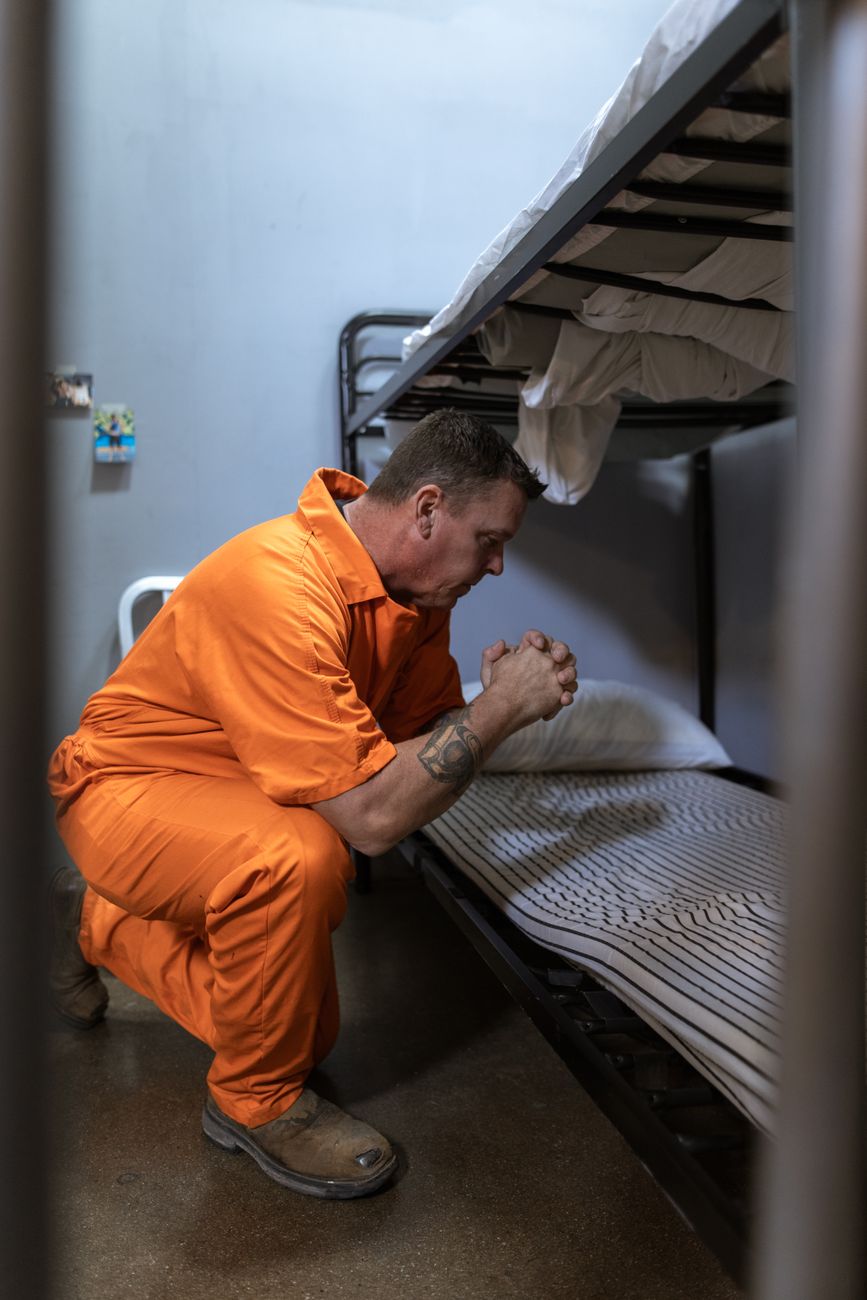
Prayer and Politics

At the risk of alienating several family members and friends, I feel I need to make the following statement:  The United States of America is not, has never been, and will never be a “Christian Nation.”  I am not saying this in disparagement of my homeland– I’m not suggesting it is an irreligious nation.  But I think the term “Christian Nation” gets used presumptiously to suggest that America is uniquely righteous, or immune from criticism or judgment.  America is not a theocracy, and it is not a bastion of Christian virtue.  We are a nation “under God”, but not a nation that recognizes God as its supreme ruler.  Our government, while based on principles handed down through centuries of Judeo-Christian practice, is built around documents written by and for the people of this nation, independent of their adherence to that practice or to those doctrines.  1st Amendment and Religion

Our government does not sponsor Christian churches, nor does it require its citizens to belong to a particular religion or religious group in order to enjoy its rights, freedoms, and protections.  We do not have federal laws that punish those who believe other tenets or practice other faiths that do not fall under the Judeo-Christian umbrella.  Our courts may limit the practice of religion (including Christianity) when it conflicts with a “compelling”  governmental interest, such as public safety.  And our citizens who are practicing Christians are not united in how they apply Christianity to politics, and vice-versa.  Our members of Congress are not elected based on their adherence to a religious practice, and our leaders are not required to be clergy (the very thought is pretty laughable to most of us in today’s political climate!).  America is designed to be a nation that practices one of the most basic tenets of the Bible–that humans have the gift of Free Will, and the right to use it.

Having said all that, I also want to be clear that the Judeo-Christian tradition has played and (for now) continues to play an enormous role in our laws, societal construct, and civilization.  I’m not here to ignore that or dismiss it as unimportant.  My goal is to point out that prayer and politics should not be conflated or equated–prayer is not and never has been the equal of political thought or action–prayer is always superior!

sunset-summer-flag-america.jpg

As Christians, not only in America, but anywhere in the world, we are called upon to live worthy of Christ and his Gospel.  That doesn’t mean burying our heads in the sand or staying silent in the face of evil and injustice– we should be engaged in our communities, and in our civic responsibilities.  But it also doesn’t mean that we protest, promote, plot, and proceed politically in our own power or wisdom.  We are commanded to pray for those in leadership and authority– those we voted for and those we didn’t!  We are commanded to submit to those same authority figures, to show them honor and respect, even if we are opposed to their policies and seeking to reverse those policies.  We are commanded to live (as much as it depends on us) in peace with our neighbors, to love our enemies, and bless those who curse us.   Our patriotism and our political expression must be in line with, and submit to, our commitment to follow Christ.  To show contempt or hatred for our nation and its leaders is to show contempt for the God who is sovereign over them.  But that same God will not excuse us for turning a blind eye to sin and corruption, or worse yet, covering it up or calling it righteousness.  Our prayers, both personal and political, need to be based in truth and love.

Even as we live in tumultuous times, we are commanded to pray.  In relation to our nation and our society, I think there are at least four important things to keep in mind:

  • Our real citizenship is in Heaven.  Praying for our nation, its leaders, its laws, etc., is in line with Scripture; worshiping our nation, its leaders, its laws, etc., is idolatry.
  • Our neighbors, our nation, our world– they won’t change because we enact a new law, win an election, change the economy, or wipe out war.  People, nations, and societies will change because they have had an encounter with Jesus Christ, and they have been transformed by his Grace.  Are they seeing HIM in our actions, our Facebook and Twitter feeds, our interactions on the street; are they hearing HIM in our conversations; are they overwhelmed by HIS grace when they meet us?  Pray that God will help us be faithful in the small things.  Our actions speak louder than our words– and that includes the words of our prayers!
  • God’s ways are not our ways–we need to be careful that we are not praying for (and demanding, and offering on our part) a quick compromise, a superficial spirituality, and a cheap grace that substitutes for a deep and lasting revival.  Don’t ask God to “fix” the world and then wonder why he sends the repairman to your door, or recruits you to scrub toilets!
  • We are in a battle, but it is not with people and it is not going to be won by playing politics–we must learn to identify the real enemy, so we can put on the correct armor and reach for the right weapons.  Our shield is not the flag– it is Faith.  Our sword is not a clever argument– it is the simple truth of the Gospel.  Victory has already been declared.  Remember to rejoice when we pray for our nation and our world– the Lamb has Overcome!

Prayer connects us to the power of the King of Kings and Lord of Lords, whose banner over us is Love.

jesus-christ-good-shepherd-religion-161289.png

Peace Like a River…

When peace, like a river, attendeth my way,
When sorrows like sea-billows roll;
Whatever my lot, Thou hast taught me to say,
It is well, it is well with my Soul.
(It Is Well with My Soul–Horatio Spafford)

…He leadeth me beside the still waters. He restoreth my Soul–Psalm 23:2b-3a)

When Horatio Spafford wrote the poem that later became this famous hymn, he was not writing from a place of peaceful circumstances. He had suffered a series of financial and heartbreaking personal losses (https://www.christianity.com/church/church-history/timeline/1801-1900/horatio-spafford-it-is-well-with-my-soul-11633070.html). He knew very well that our lives will be blessed by pleasant and peaceful times, and tossed about during storms and waves of loss and despair. But through it all, God’s presence is the source of our strength and hope.

Our Shepherd leads us where we need to go. He gives us everything we need. But He doesn’t give us only ease and pleasure and rest. Such a life leads to complacency, apathy, and spiritual atrophy. He makes me to lie down in green pastures; He leads me beside the still waters– He restores my soul. Even though these thoughts come in two separate verses, I think there is a close link between the phrases. We need rest; we need restoration. And we find it when we are drinking deeply from the “still waters”– cool and clear and life-giving waters–the “living water” that only Jesus provides. We are often attracted to swift water– white water rafting, ocean surfing, waterfalls, sailing, etc. Moving water is exciting and full of energy. And moving water is good. But it can be overwhelming to fight against the current or the power of falling, churning, running, or raging water. Without being anchored to something stronger than the waves; without help to overcome the pull of the current or a way to get to shore safely– we would be lost.

Storms and tides will be a part of our life– there will be dangers, and toils, loss, and unexpected heartaches. Sometimes, they come from our own foolish choices; often, they come because we live in a broken and fallen world filled with diseases and disasters beyond our control. God doesn’t lead us into storms just to leave us there, flailing and treading water with no end in sight. His goal is to lead us to the still waters and to restore our souls. The same river that contains white water will reach a peaceful valley, where it will run deep and wide and slow– perfect for restoring our souls and reviving our hearts.

It is a comforting thought that God, our Shepherd, will lead us beside still waters. But that is not always our lot. God’s promise is not that we will always have quiet, calm waters in life. God’s promise is that He will lead us safely through even the raging storm– and that His presence will provide a peace that defies our temporary surroundings and our trying circumstances.

Spoiler Alert!

I love being “in the know”–being part of a great secret and knowing that I got the information first (or at least earlier than someone else).  But I don’t like spoilers– learning about things that I was hoping to discover for myself.  I don’t want to know the ending to that new novel from my favorite author until I read it.  I don’t want to know how the new blockbuster movie ends before I have had a chance to see it.  I don’t want to know that my favorite character in a TV show dies at the end of season three before watching it in all its tragic impact.

There are, however, some “spoilers” that should be shared, and God has given them to us in His word.

  • First and foremost– in the battle of good and evil– God Wins!  The victory has already been won, and the outcome is certain.
  • Second– Christ Messiah will return to earth.  He will come in triumph and glory.  While none of us know the hour or the day of that return, it will come quickly, like a flash.
  • Before Christ’s return, we will face chaos and trouble in this world.  That is also certain, though we have the power to face it and God has the power to turn it to good.
  • We will face death and the judgment of God–those who trust in Jesus Christ will still die; we will still be judged.  Only the blood of Christ, and our faith in his finished work will save us from the wrath our acts deserve.
  • Every knee shall bow, and every tongue confess, that Jesus Christ is Lord to the Glory of the Father (Phil. 2:10-11).
bow down

Knowing these “spoilers” doesn’t ruin our prayer life– instead, that knowledge gives us the power, the passion, and the promise to pray as if our lives depend on it!  Moreover, it should move us to pray and act on these truths in all our dealings with others.  Not to become arrogant about our knowledge, but to be compassionate and forgiving toward those who don’t have it or haven’t accepted it.


A Whole “Lot” of Trouble

I’ve been following the story of Lot– a Biblical character in the book of Genesis, and the nephew of Abram/Abraham. I left off in Genesis 13, where Abram and Lot had to separate their flocks and herds. Abram offered Lot the opportunity to choose the best of the land– and Lot jumped at his opportunity. He chose the well-watered valley along the Jordan river, near the thriving cities of Sodom and Gomorrah, and moved his tents just outside of Sodom.

But the author of Genesis (likely Moses, writing generations later) adds a single sentence that foreshadows events to come: “ But the people of this area were extremely wicked and constantly sinned against the Lord.” (Genesis 13:13 NLT via http://www.biblegateway.com). It doesn’t take very long for this small detail to add up to a “lot” of trouble. The fertile Jordan valley may look like a paradise, but there are perils and pitfalls all around. In Genesis 14, we hear of a great war– five regional kings against four– with Sodom and Gomorrah caught in the middle. (https://www.biblegateway.com/passage/?search=Genesis+14%3A1-16&version=NLT) The armies and kings of Sodom and Gomorrah flee the battlefield, and straight into a series of tar pits. The opposing armies loot the cities, taking all the food and supplies. They also kidnap Lot and take all his possessions, because he was “living in Sodom.”

Notice two important details here– Lot is no longer pitching his tents outside the city; he has moved into Sodom. When we make the choice to live “on the outskirts” of evil, thinking we will remain separate and untouched, we are asking for trouble. Lot cannot live in paradise and avoid the evil and war all around him. And he isn’t prepared for the consequences. The war is happening all around him, yet he has made no plan to escape or to fortify his home or property.

Secondly, Lot wasn’t among the army or fighting with the kings– on either side! Lot stood for nothing; fought for nothing; defended nothing. Lot placed all of his hope and faith in blind chance– thinking somehow he would be spared the violence and war happening all around. He seems to have had no concern about his neighbors or their fate. He seems indifferent to their losses, and uncaring of their needs. One might argue that if the neighbors were so wicked, Lot had no obligation to help them, but his level of apathy and inactivity suggest that Lot was both self-centered and inept.

One of Lot’s men manages to escape and bring word of this disaster to Abram, who mobilizes his men, makes a daring night raid on the army of the five kings, rescues Lot and restores all of the stolen property and other kidnapped people. The king/priest of the city of Salem (meaning peace) blesses Abram. The rescued King of Sodom offers Abram all the captured loot in exchange for the people, but Abram refuses. Unlike his nephew, who is enticed by lands and goods and wealth, Abram seeks only peace and goodwill.

This might have been the end of Lot’s troubles; he might have learned a valuable lesson. But he didn’t.

Will we?

He’s Already There (and Here, and Everywhere!)

Sometimes, when I pray for a particular person, I say, “God, please BE with …..” But I’ve had to rethink that wording. Because God is already with ….. Instead, what I really mean to pray is that God’s presence will be felt and acknowledged by the other person; that God will move and act in such a way that the focus will shift to HIS almighty power and provision in a certain situation.

God is omnipresent. There is no place in Heaven or on Earth where God is NOT. In fact, the only place where we could be removed from God’s presence is in Hell. In fact, the most horrifying aspect of Hell is that it is the complete absence of God’s presence. The misery, torture, and fear of Hell is a direct consequence of God’s absence.

There are many situations in our lives when it may seem that God is absent, or that God has turned His back on us. Sometimes, this is really because WE have chosen to turn our backs on God. He is right there, but we are deliberately looking the other way. Other times, God is there, but He chooses not to remove an obstacle or circumstance that is causing us pain or grief. We don’t always know why He seems silent or inactive. But He is there, inviting us to trust His timing and wisdom in every situation. He delights with us, and He grieves with us. He may not give an instant answer to our questions or doubts, but he sits with us, ready to hold our hand and wrap us in His loving care. He doesn’t give up and leave us when the going gets rough. He is closer than a whisper, and He sees and hears everything. No matter what darkness we face, His light can guide us through.

The Psalmist, King David spoke of this with wonder:

I can never be lost to your Spirit! I can never get away from my God! If I go up to heaven, you are there; if I go down to the place of the dead, you are there. If I ride the morning winds to the farthest oceans, 10 even there your hand will guide me, your strength will support me. 11 If I try to hide in the darkness, the night becomes light around me. 12 For even darkness cannot hide from God; to you the night shines as bright as day. Darkness and light are both alike to you. (Psalm 139:7-12 The Living Bible)

The Apostle Paul also spoke of God’s abiding presence, through Jesus Christ:

35 Who shall separate us from the love of Christ? Shall tribulation, or distress, or persecution, or famine, or nakedness, or danger, or sword? 36 As it is written,

“For your sake we are being killed all the day long;
    we are regarded as sheep to be slaughtered.”

37 No, in all these things we are more than conquerors through him who loved us. 38 For I am sure that neither death nor life, nor angels nor rulers, nor things present nor things to come, nor powers, 39 nor height nor depth, nor anything else in all creation, will be able to separate us from the love of God in Christ Jesus our Lord. (Romans 8:35-39 ESV)

Jesus Himself promised His eternal presence as well:

Matthew 28:20–“…And behold, I am with you always, to the end of the age.”
Hebrews 13:5 (quoting Jesus)…’for he has said, “I will never leave you nor forsake you.”’
John 14:18– “I will not leave you as orphans; I will come to you.”

No matter where you are today, God’s already there! No matter what difficult road you have to travel; no matter how long it takes you; no matter what other obstacles you will face, God’s already there! Whether you are resting in green pastures or walking through the valley of the shadow of death (see Psalm 23), God is with you– He’s already there!

And as we pray, God is already there– He already sees the future. He’s already redeemed the past. He has already seen the end from the beginning, and yet He patiently sits with us in the present, offering comfort and hope.

“Piece” of Mind

I gave that fellow a piece of my mind! I let him know how wrong he was, how backward, how ill-informed. And he just wouldn’t see reason.
He had the nerve to call me hateful, judgmental, and “toxic!” Doesn’t he understand? He is selfish, rebellious, arrogant, and “lost.” I was just trying to give him a warning. If he doesn’t repent, he will end up in Hell. I was good enough to spend my valuable time trying to set him straight, and all I got for it was abuse! Well, you know what they say, “Hate the sin, love the sinner.” At least I tried.

I gave that woman a piece of my mind! I let her know how judgmental and backward and hateful she is. Who is she to tell me what to think? She called me a sinner and told me I was going to Hell– and then she wants me to thank her for it?! She was completely unreasonable. Why would I want to spend time with someone like that? People like her are what’s wrong with this world. They talk about love, but only if you act and think exactly like them– what kind of “love” is that? What a hypocrite!

It’s so easy to give others a “piece of” our minds– to make snap judgements or lash out with a “gut” reaction. And social media makes it that much easier! I see someone’s post or a viral meme and I react immediately. I “like” it or I laugh at it as ridiculous. I quickly type an angry “correction” or point out why the other person is “wrong.” (And they may genuinely BE wrong– sometimes their posts are out of date or contain verifiably false information.) But is my hasty reactionary post really necessary? Is it really my place to humiliate someone else in the name of (self) righteousness? Have I mis-read or misunderstood what I saw? Am I so much more righteous, that I can point my finger? What is the true purpose of my response– to provide constructive correction, or to signal my own virtue and superiority? How did Jesus give a “piece” of His mind to sinners in His own ministry?

This is especially problematic within the Christian community. There are some doctrinal issues that are of great importance, that should not be misused. But it is the Holy Spirit that brings correction. That doesn’t mean we must stand silent or give acceptance to heresy, but we should do it humbly, with love and thought. Anger is often the mate of arrogance and pride. We are quick to dish out correction, but slow to accept it! We need to exchange “piece” of mind with “Peace” of mind!


Christ’s Example of Humility
So if there is any encouragement in Christ, any comfort from love, any participation in the Spirit, any affection and sympathy, 2 complete my joy by being of the same mind, having the same love, being in full accord and of one mindDo nothing from selfish ambition or conceit, but in humility count others more significant than yourselves. Let each of you look not only to his own interests, but also to the interests of others. Have this mind among yourselves, which is yours in Christ Jesus, who, though he was in the form of God, did not count equality with God a thing to be grasped, but emptied himself, by taking the form of a servant, being born in the likeness of men. And being found in human form, he humbled himself by becoming obedient to the point of death, even death on a cross. Therefore God has highly exalted him and bestowed on him the name that is above every name, 10 so that at the name of Jesus every knee should bow, in heaven and on earth and under the earth, 11 and every tongue confess that Jesus Christ is Lord, to the glory of God the Father.
Lights in the World
12 Therefore, my beloved, as you have always obeyed, so now, not only as in my presence but much more in my absence, work out your own salvation with fear and trembling, 13 for it is God who works in you, both to will and to work for his good pleasure.
14 Do all things without grumbling or disputing, 15 that you may be blameless and innocent, children of God without blemish in the midst of a crooked and twisted generation, among whom you shine as lights in the world, 16 holding fast to the word of life, so that in the day of Christ I may be proud that I did not run in vain or labor in vain. 17 Even if I am to be poured out as a drink offering upon the sacrificial offering of your faith, I am glad and rejoice with you all. 18 Likewise you also should be glad and rejoice with me.

Philippians 2:1-18 English Standard Version (ESV) (www.biblegateway.com) Emphasis added.

Through Christ’s example, and through the working of the Holy Spirit, we are to let Him transform our minds:

Do not conform to the pattern of this world, but be transformed by the renewing of your mind. Then you will be able to test and approve what God’s will is—his good, pleasing and perfect will. (Romans 12:2 NIV)

Lord Jesus, help me to give others the “Peace” of Your mind today, rather than a “piece” of mine! Help me to offer, not my opinion or my “superior” understanding of the Gospel, but rather your humility and devotion to speaking the Truth in Love for my neighbor.

The Seven-Layer Prayer

Bethelchurch

Growing up, I loved going to pot-luck meals at our little country church.  Neighbors, family, and friends would bring large dishes of home-cooked deliciousness for all to feast on as we chatted, laughed, and encouraged one another.  There were certain dishes we all could count on–homemade yeast rolls, courtesy of Lulu M.  Jello with fruit was my mom’s standard.  Another lady almost always brought meat loaf.  Baked beans, candied carrots, fried chicken, chocolate cake, scalloped potatoes– my mouth still waters just from the memories!  The wonderful woman who has since become my mother-in-law brought her famous cookies, and often, a seven-layer salad.

I love Mom’s seven layer salad, and I have learned to make my own variation.  It’s easy, it’s delicious, it’s healthful, and it travels well.  I’ve seen other recipes that use different vegetables, don’t use eggs or meat or mayo–I’m sure they’re ok, but I’m happy to stick with the basic outline that follows below.

I was thinking about the seven-layer salad the other day, and I realized that you can use a similar “recipe” for prayer.  So here’s my modified “Seven-Layer Prayer” recipe:


  • First, start with a layer of “Let Us”
    • Prayer doesn’t happen without an act of the will.  We must be deliberate about setting aside time and thought for prayer every day.  We should “leaf” the busyness and chaos of the day and “romaine” in fellowship with the Father!
salad vegetables vegetarian lettuce
beans carrots close up colorful
  • Next, add a layer of “Care”-rots (shredded).
    • 1 Peter 5:7 New King James Version (NKJV)

      casting all your care upon Him, for He cares for you.
    • Give your worries and cares over to the One who cares most about you and all those you love.
  • Now you can add the “Peas” that passes all understanding
    • Trust that God is in control.
    • Trust that God hears and answers prayer.
    • Trust that God is Good, Wise, and Loving.
    • Rest in the knowledge that “God’s Got This!”
board cheese close up dairy
  • Here’s where I like to add some “Meet” (usually bacon!, sometimes ham or chicken)
    • While it’s vital that we spend time in personal, private prayer, God also wants us to meet regularly with others for fellowship, mutual encouragement, accountability, PRAYER, and guidance.
  • Now it gets a little dicey–diced onion (sometimes I substitute green onions or sliced or diced mushrooms)
    • Time to peel back the layers, and cut through to the root of anything that is getting in the way of a closer walk with God–confess it and give it over to Him.
    • Sometimes, this process may cause tears, or involve a little dirt– clean it up before you proceed!
  • Time for some dressing– mayonnaise or salad dressing.  Annoint your salad, and your prayer, with oil.  Remember, God has annointed you to spread His love and grace to others.  Don’t forget to add this to your prayer life.  Just as the dressing will coat all the elements of the salad, so God’s Spirit will surround and influence your words and actions done for Him!
  • “Cheese!”  It’s a “gouda” idea to round out prayer with a time of joyful thanksgiving.  Pile it on– God’s given us a LOT for which to be “grate”-ful!
  • Finally, the garnish– Hard-boiled eggs.  These remind me of the new life we have in Christ, the Triune nature of God (we used to have lessons in Sunday School about the egg having three parts but being a single egg.  We don’t use the shell in the salad, of course, but you can’t make a boiled egg without all three parts…), and also, the yolk reminds me of Heaven’s streets of gold.  In prayer, we should remember God’s faithfulness in fulfilling His promises, and the hope we have in Him.
watering plants with a watering can

That’s the basic recipe for a seven layer salad– enough of each ingredient for a healthy “layer”.  I’ve added extra layers a couple of times–diced tomatoes or peppers are good if you are planning to eat the salad quickly, but they will cause sogginess  if you let the salad sit.  (Also, if you use peas, use fresh if you can– drain canned peas, or get rid of any ice crystals if using frozen peas. )

A good seven-layer prayer should also be presented fresh, and savored.  It’s delicious, it’s good for you, it feeds others, and it travels well!  Try some!

Looking Back

pexels-photo-273011.jpeg

In my pursuit of prayer, I have found it helpful to keep a Prayer Journal.  One of the reasons is that I can look back and see what prayer concerns and issues I prayed for weeks, months, or even years ago.  I also save space in my journal to go back and fill in how God answered those requests, or what progress has been made in those areas of concern.  see also: Proactive Prayer Points

The Bible warns us to be very careful about looking back…the most famous example is the tragedy of Lot’s wife (Genesis 19).  In looking back, she lost her chance to rebuild a life after the destruction of Sodom and Gomorrah, and was turned into a pillar of salt.  In the book of Exodus, the newly freed Israelites grumbled about their circumstances and looked back with fondness on their lives in Egypt, forgetting their oppression in their homesickness for certain foods (Exodus 16).  Spending too much time and energy on the past leaves us with little motivation and energy for the present or future.  The past should never become more important to us than moving forward.  If we long for the past, if we romanticize it or cling to it, fearing the changes and opportunities to come, we can stagnate, and miss the blessings playing out right before our eyes.

pexels-photo-191842.jpeg

But we should take some time periodically to look back in order to gain perspective.  The same Children of Israel who grumbled about leaving Egypt, once they arrived in the Promised Land, were commanded to remember their wandering in the wilderness, and told to teach their children about the past (Deuteronomy 8).  Holidays and religious rites were instituted as reminders of the past.  But this kind of looking back gives us renewed encouragement, incentive, and momentum to keep going by showing us how far we’ve come, and reminding us of God’s faithfulness.

One of the great benefits of reading through the Bible is that we are reminded of all the times God acted on behalf of His people– from providing for the Israelites in their 40-year desert odyssey, to protecting Christ’s early disciples as they spread the Gospel. God’s faithfulness is demonstrated time and again– for His Glory, and for Our benefit. God was at work then, and He is still at work in our own time! One great old hymn challenges us to “Count (our) blessings– name them one by one. Count (our) many blessings; see what God has done!” It is encouraging and inspiring to call to mind all the times that God has “shown up” in difficult circumstances or protected us from other dire events or losses that we don’t even know about.

I am especially encouraged when I see how God has answered prayer–so often, I’ve forgotten about trials and struggles that have come my way–issues that seemed huge in the moment, but in hindsight look insignificant.  Sometimes, God’s answers were immediate and breath-taking.  Sometimes, they were subtle and were revealed in several stages.  Sometimes, the answers revealed how God was working beyond anything I imagined!  Often, the requests reveal how I have grown (or not!) to trust him more or to listen better to those around me.

pexels-photo-1007977.jpeg

And, just like that, I also have material to add to today’s prayers– gratitude for prayers answered, hope for new growth, praise for God’s faithfulness, and confession for times I have doubted or looked back in envy or regret.

Where’s the Joy?

I love puns– friends from all over the world send me the craziest puns, “punny” images, silly videos, and awful jokes.  Except for those that are patently offensive and find their humor at someone else’s expense, I really enjoy them all.

clear bubble

Someone has said that puns are the lowest form of humor, but I disagree.  In fact, I often find that puns, like humor in general, can cause us to explore a serious topic in ways we would otherwise avoid.  The image above tickled my funny bone, but it also caused me to think.  Where is my Joy?  Do I bottle it up and hide it down in my cart, or does it bubble up, iridescent and smelling of sunshine (and possibly lemons) from deep down in my heart?

I especially find myself looking for joy in the ordinary tasks of life. I really do not enjoy doing dishes, for example. But I can find joy– not the brand of dish soap, but the real thing!– even in such an ordinary chore. I can find joy as I clean the toilet, as I sort clothes for the wash, as I drive around town to do errands, and as I set aside time to pray for family and friends who are hurting and discouraged.

Prayer is a serious topic, but it shouldn’t be joyless.  Even in our troubles, we can be confident that we are loved, cherished, and precious.  In our grief and sorrow, we are not overwhelmed (though it often feels as if we are) when we have this kind of joy.  It will wash away despair, anger, doubt, and weariness, as it rises up.  We pray for so many other things– health, wisdom, forgiveness– we should also pray for Joy.  Not the false and fleeting joy of a silly pun, or the veneer of joy that lies and says that “everything is great.”  We need the kind of joy that sings through tears, laughs at storms, defies despair, and shakes the rafters! 

Many people read about Jesus and conclude that He was a great teacher, but very sober and serious. And the Bible describes Him as a “man of sorrows” and one “acquainted with grief.” (Isaiah 53:3). Yet the Gospels also show Jesus as a man who welcomed children, shared meals with His friends, entered into wedding celebrations, and told His disciples to rejoice in the midst of persecution. Jesus was not a man who took life lightly, but He was a man who felt joy in simple things. He was able to relax in the joyful knowledge that even grief and pain are temporary, and our circumstances do not define our life. And joy is also listed as a fruit of the Spirit (see Galatians 5:22-23–“But the Fruit of the Spirit is Love, Joy Peace, Patience, Kindness, Goodness, Faithfulness, Gentleness, and Self-Control. Against such things, there is no law.”

We need the quiet, blessed assurance that God is in His Heaven and even if all is not well with the world, God still has everything well in hand. Such joy, lodged deep in our heart and soul can keep us from buckling under the weight of loss, the exhaustion of stress, and the threat of chaos.  It can fill us with peace and contentment, even as we go through ordinary or even dreary days. We need a new “Dawn” of “Joy” (yes, I had to include another pun). We need to pray for joy. We need to cherish it.  And we need to pass it on.

The world could really use it!

Dona Nobis Pacem*

*”Grant Us Peace!” (In Latin, Dona Nobis Pacem)
“When Peace like a River attendeth my Soul…”
“Peace be with you..”
“Give Peace a Chance..”
Peace that passes all understanding–Phil.4:7

We spend our days rushing, working, worrying and stressing, always hoping for a time of peace, believing that if we work hard enough, rush fast enough, hope fervently enough, we will be rewarded with peace.

But this is contrary to the Biblical pattern. God has already given us a blueprint for peace, rest, and contentment. And it doesn’t involve working harder! It involves trusting more. And that involves waiting and resting. God wants us to work, yes, but He also wants us to rest, to seek times of solitude, meditation, and silence. This is not a suggestion given to a holy few–it is a principle to be practiced by all of us. God wants to give us peace for the asking—not for the earning.

When prayer becomes a priority, and not just something that happens in our “spare” time, or after all the “important” things get done, we should find that peace is a by-product of our pursuit. Taking time for prayer gives our mind a new focus, calms the rhythms of our heart and body. It forces us to step aside from the frantic pace of life– to lift our eyes (or close them) away from the flickering light of the tablet or phone, to sit (or stand or kneel) still and apart from whatever task is beckoning, and listen, not to the blare of the radio or TV or street noise, but to the underlying sounds of life–heartbeats, breathing, the slow ticking of a clock, or the retreating rumble of the world. We close our eyes to the distractions of “to do” lists and calendars, comparisons and competitions. We set our hearts on all that really matters in the long run.

Photo by Luis Quintero on Pexels.com

Most importantly, through our time spent in prayer, we access the source of peace– The Prince of Peace! And it is this same Prince of Peace who will “grant us peace” if we just ask. You may not be able to set aside hours for blissful meditation. But if you ask, God will help you guard your time, and help you find those few precious moments of prayer and peace– peace with Him, peace that comes from Him, peace that passes all understanding.

Blog at WordPress.com.

Up ↑