Jacob’s (Third) Dysfunctional Family

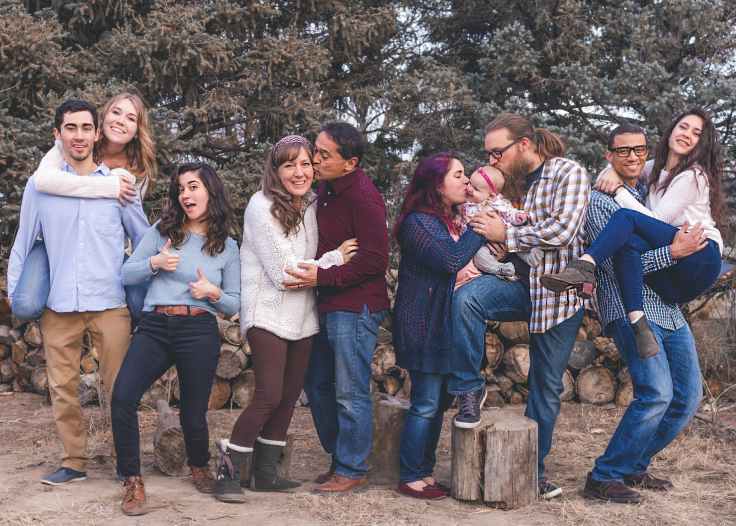
The Bible is not a series of stories about super heroes, though it is often taught that way in Sunday School. Instead, it is the story of ordinary, flawed and hurting people who encounter a Holy and Majestic God. Jacob is one such person, and nearly half of the book of Genesis revolves around Jacob’s families– his parents and brother, his father-in-law’s household, and his own wives and children, extending to his grandchildren and even great-grandchildren.

Jacob grew into a man of great integrity and wisdom–a man of power and influence, wealth and consequence. But he was far from perfect, and his family caused him no end of headaches and heartaches. From the bickering and rivalry of his wives and their servants, to the violent clashes of his many sons, Jacob knew very little peace.

Photo by Pixabay on Pexels.com

It is important to note that, while the “God of Jacob” protected him, blessed him, and gave him a new name, He did not make life smooth and comfortable for him. We are not given great insight into Jacob’s parenting style, but we know that he had a favorite son, Joseph, and that his favoritism caused resentment among the others . Unlike his own father, though, Jacob interacted with all his sons, giving them each responsibilities and training them to work together. On his deathbed, he had blessings for each son that tied in to his strengths and weaknesses. We know that Jacob was highly respected by his sons, and that in the end, they did not disperse and lose contact with each other, but lived together in the land of Goshen in Egypt– even after the time of the famine that drove them there.

Even in a family of blessing, there will always be some level of dysfunction, struggle, hardship, and pain. Favoritism, discord, envy, resentment, unforgiveness– it all starts in families among flawed people living in a fallen world.

Photo by Craig Adderley on Pexels.com

So often, we try to present ourselves and our families “in our Sunday best”– we want people to be impressed by our show of piety or “good manners” or “problem-free” family life. We pretend that we never argue, never harbor bitterness, never have tantrums or meltdowns or sarcastic “episodes”. God is not looking for picture perfect families…He is looking for families who are honestly and earnestly seeking Him.

Surely, after his encounter with God, Jacob changed. He was a better man than before. But he was never the “perfect dad”, the “perfect husband”, or the “perfect man.” And his family wasn’t a model of decorum and harmony. But God did not turn his back on this dysfunctional family. He did not disown Jacob or cancel all the blessings He had promised. Instead, he solidified the promise he had made to Jacob’s grandfather and father, creating in Jacob’s sons the twelve tribes that would make up the nation of Israel. Just as Jacob’s family wasn’t perfect, the nation of Israel was never perfect– it still isn’t. But God has chosen to pour out His grace on imperfect people throughout history– it’s His specialty!

If you are experiencing disharmony or even angry clashes with family members– take heart and hope from reading about Jacob’s trials and triumphs. Remember to take your pain, resentment, hurt and worry to “the God of Jacob.” God was with Jacob through all his many struggles, including the heartaches of “losing” his favorite son, losing his beloved wives, suffering during the famine in Canaan, having to move to Egypt in his old age, and watching his sons struggle with their own families and trials. Out of each struggle, God brought renewal, hope, rescue, and promise. And remember, God will not abandon you (or your children) because your family experiences disharmony or you have wayward family members. Others may pass judgment on appearances, but God sees the heart– He’s in the business of fixing that which is dysfunctional– not promoting those who hide behind a “perfect” facade.

Photo by Trinity Kubassek on Pexels.com

Jacob’s family was not perfect– but they were perfectly poised to show God’s power, protection, and grace!

Let All Within Us Praise His Holy Name


O holy night! 
The stars are brightly shining 
It is the night of the dear Savior’s birth! 
Long lay the world in sin and error pining 
Till he appeared and the soul felt its worth. 
A thrill of hope the weary world rejoices 
For yonder breaks a new and glorious morn!

Refrain:
Fall on your knees 
O hear the angel voices 
O night divine 
O night when Christ was born 
O night divine 
O night, O night divine

Led by the light of Faith serenely beaming 
With glowing hearts by His cradle we stand 
So led by light of a star sweetly gleaming 
Here come the wise men from Orient land 
The King of kings lay thus in lowly manger 
In all our trials born to be our friend.

Refrain
Truly He taught us to love one another 
His law is love and His gospel is peace 
Chains shall He break for the slave is our brother 
And in His name all oppression shall cease 
Sweet hymns of joy in grateful chorus raise we, 
Let all within us praise His holy name.

Refrain


From /www.songsforteaching.com/christmas/oholynight.php
Photo by Pixabay on Pexels.com

To the untrained eye, it was not a Holy Night– The streets of Bethlehem were crowded and dusty. The night, even if the stars were shining, was filled with noises and smells that fell far short of anything sacred or glorious. There were strangers clogging the city’s streets and inns and homes– extra animals to shelter, extra mouths to feed, extra waste everywhere. It was a weary world, it was in error and it was pining– but it was also noisy, angry, distracted by petty inconveniences and worried by chaos and upheaval and oppression.

Photo by Jeswin Thomas on Pexels.com

There was nothing special about the night itself. It was NOT a Holy Night until Holiness arrived in the form of a squalling infant born to a teenage mother and a carpenter/stepfather who were compelled to beg for shelter in an unfamiliar city full of squalor and resentment. People had come from all over to be nothing more than numbers in an unpopular bureaucratic nightmare. This child might have been no more than a number to the governor of the region, or to the Roman Empire, or to the Herod, the hamstrung pseudo-ruler of Judea–but His coming split history in two; it redefined the value of a single, simple soul! This was the night when the creator entered His creation AS a member of the creation– a child among other children; a helpless baby in a fallen and depraved world, vulnerable to disease, cruelty, abuse, starvation, exposure and exploitation. This God/Man would see and hear, and smell and feel the ugliness of leprosy, poverty, hunger, homelessness, despair, grief, madness, war, slavery, loneliness, betrayal, and death.

Photo by Sharefaith on Pexels.com

In His lifetime, He had no home of his own. He built no monument, founded no schools or hospitals, fought no (physical) battle, and toppled no governments. But, in the years since that otherwise ordinary night, majestic cathedrals have been built and have stood for hundreds of years; nations and governments have been transformed; hospitals, clinics, shelters, sanctuaries, universities, and institutions have served the poor, the sick, the outcasts, the weary, the forgotten, and the lost. The world is still fallen– there is still injustice, slavery, weariness, sickness and sin around us. But, because of that night, we are not waiting in utter darkness–as the Apostle John writes:

Photo by Pixabay on Pexels.com


16 For God loved the world in this way: He gave his one and only Son, so that everyone who believes in him will not perish but have eternal life… 19 This is the judgment: The light has come into the world, and people loved darkness rather than the light because their deeds were evil. 20 For everyone who does evil hates the light and avoids it, so that his deeds may not be exposed. 21 But anyone who lives by the truth comes to the light, so that his works may be shown to be accomplished by God.

John 3:16, 19-21 Christian Standard Bible
Photo by Nicholas Githiri on Pexels.com

We live on the other side of that ordinary, Holy Night– we will never know the darkness of a time without a Gospel of Peace on Earth, Goodwill to Men–we are witnesses to the power of Divine Love in human flesh. We have reason to “fall on (our) knees” and “let all within us praise His Holy Name!”

Photo by Victoria Borodinova on Pexels.com

My prayer is that we would all “hear the angel voices” this season and be able to worship in the fullness of joy this Christmas.

I-Bug

It started out small– a glItch, really.
Every tIme I began to type, the same thIng would happen.
At fIrst, I barely notIced.

After all, It wasn’t lIke I couldn’t read my own wrItIng.
It wasn’t In every lIne or word;
It was a sIngle letter.

But then It began to spread.
As tIME passed, It becaME more dIffIcult.
I notIced a theME.  I could stIll read the words,
But theIr MEaning was gettIng lost In
SoME way I couldn’t quIte deterMINE.

It was begInnIng to spIll Into MY speech;
IMpossIble to MEnd; MEldIng Into MY mInd’s
NIches, MErgIng wIth MEdIocre comMEnts
And MYsterIous MEltdowns.

I I I I I,

ME ME ME ME ME.

As I and ME took over, yo_ went mIssIng.
ThIngs were s_ddenly less peacef_l…
Even Jes_s seemed sIlent In the dIn of ME and MINE.
SIn and prIde– I co_ld always be fo_nd there.

It was a fast-spreadIng vIr_s– s_rely leadIng to MY r_In:
_ntIl I lIstened to a stIll, small whIsper…
A Holy breath of fresh, clean, wholesome change.

AAAHHH!

Exhaling the I’s and ME’s, and breathing in YOU–
Brought hope and healing; renewal,
Perspective and life.

A Brief Word About Shoes

I’m really sick of hearing about shoes in the news lately.  But, surprisingly, I think it’s time for a brief word about shoes— from a Biblical perspective.

man reading a book
Photo by Tri Fatono on Pexels.com

The Bible has a lot more to say about shoes than most of us realize.  Way back in Exodus, when God called Moses from the burning bush, He commanded Moses to take off his shoes.  Later, in Deuteronomy, the Israelites are reminded that during their years of wandering, their shoes did not wear out– God took care of even the smallest and lowliest of details in providing for their needs in the wilderness.

fashion footwear grass outdoors
Photo by Tobi on Pexels.com

Boaz secured the right to marry Ruth through an old ritual involving an exchange of sandals.  The prophets used shoes to indicate the coming exile, and the need for people to be prepared to leave their homeland.


apples colors fashion field
Photo by Valeria Boltneva on Pexels.com

In the New Testament, John the Baptist declares Jesus’ superiority by saying that he (John) is not worthy to latch Jesus’ shoes!  And the Apostle Paul includes shoes (or sandals or boots) in his list of spiritual armor, asking us to wear on our feet the readiness of the gospel of peace (Ephesians 6:15).  A Christian’s shoes are to be used to bring good news and peace– not anger, protests, and divisiveness.


brand trademark cobblestones community denim pants
Photo by Ingo Joseph on Pexels.com

Shoes are meant to serve a useful purpose.  They protect our feet from surfaces that are hot, cold, wet, dusty, or rough.  They provide traction, allowing us to start and stop moving on pavement, gravel, rocks, and flooring.  Some shoes even provide arch support so we may stand and walk for hours with minimum damage to our bones and nerves.  Shoes allow us to walk farther, run faster and with more confidence, and stand firm.

man person street shoes
Photo by Gratisography on Pexels.com

The most ridiculous thing about all the fighting over a shoe’s ad campaign is that it’s not about the SHOE–and no one is entirely clear on what it IS about– is it about race, police, injustice, patriotism, lack of patriotism, residual guilt over slavery, respect (or lack of respect) for military and/or rescue personnel, the NFL, Black Pride, White Privilege, income inequality, all of the above, something entirely different?  Mostly, it seems to be about anger, hurt feelings, hatred, and generic outrage.

None of that seems like a shoe I want to wear.

action air balance beach
Photo by Rafael on Pexels.com


Lord, from my head to my toes, I want to bring peace, hope, and love to this world in YOUR NAME.  Help me not to be blinded or distracted by all the world’s empty substitutes.  Let me wear the shoes that make my feet ready to bring your gospel of peace and reconciliation to others.  May I walk and run and climb and stand in Christ’s name and for His sake.  Amen.


Where Your Treasure Is…

Our church held a hymn-sing and ice cream social last Sunday.  It was an informal evening service, but we heard testimony of the power of hymns to shape our worship, and to help us remember scripture’s promises.  We also had the chance to just “call out” a favorite hymn to sing together.  We probably sang 15 or 20 hymns that night, and each one had special meaning to many in the congregation.  We treasure certain songs, certain verses, certain stories– they feed our soul, encourage our heart, steel our thoughts, and pour balm on our wounds.

church-bank-wood-benches-161060.jpeg

One hymn we didn’t sing the other night, though it is a favorite of many, was “Sweet Hour of Prayer.”  Sweet Hour of Prayer– lyrics and much more here  In getting ready to post for today, I thought about this hymn.  We treasure the thought of prayer being sweet and bringing relief, but do we treasure prayer enough to spend an hour or more at it?  If I add up the time spent in morning prayers of devotion, grace at mealtime, evening prayers, and “quick thoughts to heaven” throughout the day, it probably adds up to an hour…but I spend more time writing about prayer each day than I actually spend practicing it.  And when was the last time I got so caught up in prayer that I lost track of time and spent over an hour at it in one sitting?

pexels-photo-707676.jpeg

In the Sermon on the Mount, Jesus warned that we should not lay up treasures for ourselves on earth, but to store up treasures in heaven, “For where your treasure is, there will your heart be also.” (Matthew 6:21 KJV)  This is true of our material treasures, but also our spiritual treasures, our thought treasures, and our time.  When I hear “Sweet Hour of Prayer,” one of my first thoughts is always, “That would be nice, but I don’t have an hour to spend praying– I’d never get anything done!”  But would I have said that about watching my favorite TV show?  Spending an hour on Facebook or shopping at my favorite store?

God is beyond time– he’s not counting the hours, minutes or moments we spend with Him.  But he feels our absence and our distraction just the same.  He isn’t trying to pull us away from important things to waste our time– he wants to pull us away from the things that weigh us down, worry us, haunt us, and eat up the precious time He has given us.

grayscale photography of people walking in train station
Photo by Skitterphoto on Pexels.com

I have found that when I feel “too busy” to spend time with Jesus, it’s a good time to pause and make time for prayer.  When I do (and it’s not as often as I should), three things happen:

  • I want more!  That time refreshes me, calms my spirit, and removes the burden of  worries, failures, and frustrations.
  • I accomplish more–maybe it’s a case of God re-ordering my other priorities; maybe he just gives me the power to work more efficiently; maybe it’s a miracle–but I find that the “time crunch” I worried about seems to melt away.
  • Jesus becomes “more” to me– I grow closer to Him, and closer to the person He created me to be.

Bloom Where You Are Planted

I love living in Southwest Lower Michigan– especially in the spring.  We have blossoms everywhere– apple blossoms, cherry blossoms, dogwood, red buds, tulips and irises, hyacinth and daffodils.  The rich earthy smell of freshly plowed gardens and fields permeates the air, and rides on the breezes coming off Lake Michigan.  Birds, newly returned from their winter wanderings are busily building nests, chirping away, while the sun’s rays chase away the last of the winter chill each morning.  There is color and new life everywhere you turn.

pexels-photo-165542.jpeg

We have a lot of spring festivals in the area, most of them centered on the blooms and blossoms that fill the countryside.  Gardens, orchards and fields are not just for show around here– they are also important parts of our economy and eco-system.  Without a good spring full of blossoms, buds, and blooms, we may have a disastrous harvest in the fall, and run-off of the soil; bees will die off, wild and domestic animals will have less grass and fewer berries to eat.  A late spring can shorten the growing season and shrink the harvest; an early spring can bring buds out too soon, only to have them lost to a late season frost or to have them mature too early and be burned in a mid-summer drought.

And yet, I have seen crocuses burst through two inches of snow; buds that defy harsh weather and cruel winds.  I have seen daffodils blooming where there once was a house and a yard, but now there are only brambles and foundation stones.  I have seen trees twisted and split by long-ago storms– one side dead and rotting, but with buds and new branches on the other side.

crocus-flower-spring-purple-60120.jpeg
pexels-photo-1031413.jpeg

It is easy to bloom when you are in a lovely flower bed, with tilled earth, fertilizer, gentle rains, just the right amount of sun, and protection from the winds and pests and birds.  But it is more spectacular to bloom in the desert; to defy the odds and stand in stark contrast to brambles, a broken-up sidewalk, or a litter-filled back alley; to bloom in the snow and sleet or weather a flood or a tornado.

pexels-photo-1035739.jpeg


Not always so with prayer.  Sometimes, it is easier to pray when we feel our own needs and shortcomings; when we are driven by our circumstances to call out for help.  When all is well, we may be grateful, but we may also begin to slack off.  We stop asking for wisdom and guidance, coasting in the beauty and ease of a good life, and forgetting that the beauty and the ease– indeed the life itself– is not our right, but a gift.  Amid so many other beautiful prayers, ours seem drab and ordinary, almost unworthy of God’s notice.

But God DOES notice– he has placed each of us where he wants us to bloom and grow– to pray, to fellowship, to walk with other believers and give off the fragrance of His grace as we live our lives in obedience to Him.  Have you been planted in an apartment complex?  Have you been planted as a suddenly single parent of three kids?  Have you been planted on a campus?  In a group of friends that all have Harleys?  Or one block from a rescue mission or homeless shelter?  A classroom full of high-energy first-graders?  A community that has had a lot of crime and blight?

pexels-photo-991681.jpeg

God has not placed you in circumstances to reward or punish you, but to grow you in the soil that can produce the best harvest.  Is your prayer list filled with needy people who live in turmoil and rebellion?  Bloom where you are planted– you may be the only person praying for your cantankerous neighbor– the only raindrop or fertile soil s/he will ever encounter.  Has God placed you in a family of people who taunt you for your faith?  Bloom where you are planted– pray for strength to stand firm in the beauty of meekness and compassion in the face of their taunts and disdain.  Are you in a greenhouse full of self-righteous orchids making you feel dowdy and wilted by comparison?  Bloom where you are planted– pray for God’s eyes to see the beauty in yourself, as well as those around you, and stop trying to be an orchid where God needs a lily.

Has God planted you in trying circumstances?  Bloom where you are planted– pray for God’s Peace as you face each day:

Matthew 6:25-34 English Standard Version (ESV)

Do Not Be Anxious

25 “Therefore I tell you, do not be anxious about your life, what you will eat or what you will drink, nor about your body, what you will put on. Is not life more than food, and the body more than clothing? 26 Look at the birds of the air: they neither sow nor reap nor gather into barns, and yet your heavenly Father feeds them. Are you not of more value than they?27 And which of you by being anxious can add a single hour to his span of life?[a] 28 And why are you anxious about clothing? Consider the lilies of the field, how they grow: they neither toil nor spin, 29 yet I tell you, even Solomon in all his glory was not arrayed like one of these. * 30 But if God so clothes the grass of the field, which today is alive and tomorrow is thrown into the oven, will he not much more clothe you, O you of little faith? 31 Therefore do not be anxious, saying, ‘What shall we eat?’ or ‘What shall we drink?’ or ‘What shall we wear?’ 32 For the Gentiles seek after all these things, and your heavenly Father knows that you need them all. 33 But seek first the kingdom of God and his righteousness, and all these things will be added to you.*

34 “Therefore do not be anxious about tomorrow, for tomorrow will be anxious for itself. Sufficient for the day is its own trouble.

*Emphasis added

Can You Hear Me Now?

We experienced some storms last week, and while we didn’t have a lot of damage from the winds and rain, my husband and I lost our internet connection over the weekend.  No wireless internet meant no Facebook, no WordPress, no e-mail, and no cash register at our little shop downstairs.  We had to do every transaction by hand until we could rig up something so our smart phone could accept cards; no new chip cards, no Apple Pay or PayPal.  And while our phone could begin to accept limited credit payments, it could not provide any printed receipts, nor could it do double duty– we either had a phone or a point-of-sale device, but not both!

It was an inconvenience, but not a disaster.  I thought about thousands of people who are stuck in the aftermath of hurricanes, tornadoes, floods, earthquakes, and blizzards who have no electricity, no phone lines, no cell service, no roads, no water or sewer lines–cut off from common necessities and basic communication.  Suddenly, an emergency becomes even more tragic because of the isolation, and the inability to ask for help or to hear any message of hope.  (Of course, my husband would like me to put in a short plug here about the advantages of amateur radio– the radios can run on battery power and still connect over hundreds of miles!)

sound-speaker-radio-microphone.jpg

Isolation is an earthly concept.  God is eternally Triune.  He created us for relationship; from the very beginning, he declared that it is not good for “man” to be alone (Genesis 2:18)  God instituted marriage, and families, and communities so that we would stay connected, and he himself came to walk and talk with mankind in the Garden of Eden before the Fall.  It is mankind who hid from God and broke off communication– one of the effects of Sin is the desire to run away, to separate, to isolate and cut off relationships and break off contact.

That is one reason that prayer is so basic; so essential.  It is a lifeline to the one who loves us best, who knows what we need, and has the power to hear us, to help us, to lift us up wherever we may be, whatever our circumstances.

pexels-photo-787452.jpeg

But sometimes, even when we want to talk to God, it seems impossible to speak or feel like he hears us.  Sometimes, we are the ones who can’t come up with words, or can’t settle our minds to seek his face.  Sometimes, we pour out our hearts and wait in silence for an answer.   Why should it be that just when we need it most, prayer seems the hardest?

I wish I had a pithy, perfect answer.  I don’t know.  I have a few incomplete thoughts, though:

  • what comes easily has less value to us.  Cheap and pointless conversation doesn’t make us work hard, but it also leaves us empty and unsatisfied.  Crying out to God is hard–it humbles us, it strips us bare and uncovers all our pretenses and subterfuge.  The true depth of our need is ripped out of us like a tumor, and it hurts, but it is a healing hurt.  Waiting in silence can cause us to become restless and to doubt, but it also can cause us to listen more attentively– we strain to hear the answer; we stop the white noise of busyness and half-hearted hand-wringing, and listen with our whole being.  And the smallest whisper– that still, small voice– has the power of the first rain after a long drought.  We are revitalized and our strength renewed as never before.

pexels-photo-546657.jpeg

  • sometimes, though not always, we find prayer difficult because we have not really prayed for a long time (if ever)– we have developed a habit of saying words to the empty air and thinking that the words themselves hold some power of hope or magic or self-fulfilling prophecy.  When life’s realities cannot be wished away with simple words, we search for distractions, for other types of words, for other “realities”, when we should be searching for our maker and the lover of our souls.
  • sometimes, it is a matter of unacknowledged or unconfessed sin that keeps us from breaking through in prayer.  However, there are many people who will use this as a default position, and that, too, is wrong.  Jesus had such difficulty in praying at Gethsemane that he sweat drops of blood— NOT because of unconfessed sin, but because his heart was that overwhelmed.  Still, we should examine ourselves to see if we have started to move away from God– better to turn back than to go father afield.
  • sometimes, as with Christ in the Garden, our hearts are just overwhelmed in the moment– it’s hard to breathe!  It’s hard to go on; it’s hard to ask for help; it’s hard to keep the faith.  Just because it’s difficult, don’t give up– even if all you can do is groan or whimper–even if it feels like God has closed up the heavens and left you alone–don’t give up.  God DOES hear, he DOES care.  Sometimes, we are inches from victory– don’t give up!

And what can we do during those times?  Again, I wish I had better answers, but what I have, I want to share– some from my own experience, some wisdom from others, some of both:

  • Learn to “pray outside the box”–
    • Sing–sing the blues, sing an old hymn, sing along with the radio, sing like nobody else is listening
    • Write it out– write a letter, write an angry letter if you have to– write a rant, write a poem, write out all your questions
    • Move– dance, pace, run, punch a pillow, do some sit-ups, mop the floor, scrub the sink– as you get a rhythm going, add your thoughts or questions to your movements
    • Cry it out– it’s ok to cry, moan, sob, weep, or just stare into space and rock yourself to sleep after all the tears have dried up.  Jesus wept (John 11:35)– what makes us think that we can’t?

landscape-nature-man-person.jpgpexels-photo-256658.jpeg

  • Count your blessings
    • Make a list of what you have; what you have to be grateful for; what you have experienced and enjoyed now or in the past
    • Make a list of your questions, concerns, needs, wants, wishes–Now think back ten years and make a list of what you wanted then, and how many of those concerns have been answered, altered, or forgotten.
    • Put yourself in another time or place– what do you have here and now that others lack?  How do your present troubles compare to what others have had to deal with?
  • Ramp up your pursuit of God in other areas–
    • Search for answers in His word
    • Seek the companionship of someone you trust who will help you keep on going
    • Seek out counselors, web sites, and/or a church group or family who can keep you from becoming isolated

pexels-photo-935944.jpeg


The single most important thing is to continue the pursuit– seek God with all your heart–and you will find him sufficient through the silent times, as well as through the roaring of the fiercest storms.


Great Expectations

Earlier this week, the Duke and Duchess of Cambridge (otherwise known as Prince William  and Kate Middleton), welcomed their third child.  As with most royal births, there was a lot of fanfare and speculation well in advance of the actual delivery.  Early tabloid reports hinted at twins; bookmakers were figuring odds for delivery dates, names– even what the Duchess would be wearing as she brought the newborn outside for his first “sighting”.  As of the writing of this blog, the name has yet to be announced, which is cause for more speculation and anticipation.

pexels-photo-50632.jpeg

Preparing for a newborn is exciting, and filled with certain expectations.   We imagine what the baby will look like, what kind of personality s/he will have, all the wonderful discoveries to be made. But we need to be careful not to let our expectations become idols.  There’s nothing wrong with hoping for good outcomes, but it can be dangerous to get locked into a particular expected outcome.  Children surprise us (in good ways and other ways) be being themselves, and not who or what we expect them to be.

pexels-photo-185934.jpeg

When we pray, we sometimes come with certain expectations–that God will answer in a certain way or on a certain timeline.  This is not the same as having faith.  Faith says that God will hear our prayer; that he knows best, and that he will act in accordance with his own love and mercy.  It doesn’t mean that he will give us what we want when we want it, or that he will give us what makes us comfortable and happy.  His answers may seem difficult or even painful to accept– certainly not what we were expecting.  When he chooses to answer in ways that don’t meet our expectations, we wonder why.  When he chooses to say “wait,” or even, “no,” we may feel cheated and even resentful, instead of thankful that our prayers are heard by a loving God.  Often, we have built up such expectations of what “the best” should look like that we miss the real miracle God is giving us instead.

pexels-photo-236287.jpeg

Worse, there are times when our expectations reveal a lack of faith or a lack of understanding of God’s ways.  We pray for peace, but what we really want is ease and comfort.  Peace– real peace– is often revealed in times of stress, hardship and loss!  We don’t want stress; we don’t pray for stress, but stress and hardship are going to come into our lives at some point.  Praying for peace won’t bring stress, any more than not praying will keep it away!  We expect the peace to come without the battle; we expect the growth to come without the growth pains; we expect to win the race without having to run!

Sometimes we won’t even pray for what we really want or need because we expect that God will “test” us or give us difficult circumstances if we ask for certain things (like patience or peace).  We see God as some sort of cosmic con artist, who teases us with the promise of good things, only to laugh as we suffer.  But this is a wrong view of God.  God doesn’t play games or “trick” us by giving us hardship when we ask for healing, though it may feel like it at the time. Suffering and hardship are not the gifts of God– his amazing gift is the ability to redeem even the worst of circumstances and bring joy and rest and peace that passes any expectation, any dread, or any understanding we have.  Often, our very desire for extra patience, peace, and joy are opportunities for us to learn more about God’s grace–and more about ourselves.

Life seldom meets our expectations–God is waiting to exceed even our wildest dreams!  Don’t just pray expecting something good might happen.  Pray expecting God to SHOW UP!


Taxing Prayers

It’s tax time in my neck of the woods, and that means that a lot of people are praying.  Some are praying for a tax refund; others are praying that their tax bill is lower than expected, or that they can somehow find the money to pay it.

Taxes are not pleasant, but they are a constant reality of this world.  Even Jesus had to pay taxes–to an oppressive foreign empire, no less.  The people of his time wanted him to lead a rebellion against Roman occupation.  But even if he had done so, their own religious leaders collected Temple taxes.

There are a lot of other unpleasant realities in this life– injustice, bigotry, hatred, disease, natural disasters, accidents, and death.  God doesn’t remove them, no matter how hard or how earnestly we pray… he may send healing, comfort, or strength to get us through a crisis, but he never promised to end poverty, or remove the consequences of sin, or wipe out cancer–YET.

These are the taxing prayers that we continue to pray– prayers that come from our pain and longing for a new Heaven and a new Earth.  It is in our fallen nature to yearn for the perfection of God’s original creation;  a world we have never experienced, but for which our souls were designed.  In praying for things to be made “right”, we acknowledge that they are, in this present age, very wrong.  And we acknowledge that our best efforts can never be “enough” to overcome the ravages of sin.  Finally, in bringing them to God, we acknowledge that only He has the power and wisdom to “fix” them– in His time.

pexels-photo-449627.jpeg


Taxes are not pleasant, but there will come a day when they are abolished.  God’s love, his mercy, his blessings– they are tax-free, and they are in endless supply.

Even during tax season, that’s something to celebrate!

Surprise!

The world is full of surprises– some good, some bad.  Open your mailbox on any given day, or walk down the street…you are bound to see something unexpected.  You may get a bill you forgot about, or run into an old friend.  There are surprises in the weather patterns, in traffic patterns, in relationships, in jobs, all around our houses and neighborhoods, in world events.  Some are shocking, some delightful, and any of them can change our days or even our lives.

We like pleasant surprises; we fear the unpleasant ones.  But most of us don’t pray for them.  We pray for miracles–healing and rescue and transformation–pleasant outcomes that we hope for or imagine.  We pray for ease and comfort, or wisdom and strength to face the bad times.  But we don’t ask God to surprise us.

Why don’t I ask God to awe me?  Dazzle me?  Surprise me?  Sometimes I fear that he might surprise me with what my past actions deserve.  More often, I simply want to stay in the comfort and simplicity of what I already know.  I don’t want to be delighted; I just want to be entertained.

pexels-photo-96405.jpeg

One thing I know, but I need to be reminded:  God does not give bad surprises.  He does not send ANYTHING into my life that can’t be used for my good and his glory.  The world will send tragedy and I will have to face the consequences of Sin– mine and others’.  I may be unfairly treated at work; I may be struck by a drunk driver and paralyzed.  I may face difficult losses, and inexplicable circumstances.  And the mistake is to see these as “surprises” from God.  God never promised a pain-free, problem-free life in this world, but he surprises us with the kind of gifts that overcome and even confound our tragic circumstances– the power to forgive, to be joyful, to have peace, and share love.

John 16:33 English Standard Version (ESV)

33 I have said these things to you, that in me you may have peace. In the world you will have tribulation. But take heart; I have overcome the world.”

Matthew 7:9-11 New International Version (NIV)

“Which of you, if your son asks for bread, will give him a stone? 10 Or if he asks for a fish, will give him a snake? 11 If you, then, though you are evil, know how to give good gifts to your children, how much more will your Father in heaven give good gifts to those who ask him!

The road ahead is full of surprises–that’s a great reason to pray.  God loves to surprise us with good things– that’s another great reason to pray for them!

gift-jeans-fashion-pack-157879.jpeg


Blog at WordPress.com.

Up ↑