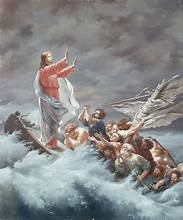
Christmas is a joyful season– for most people. And it is a giving season; a busy season; a bright and noisy season. But for most of us, it is NOT a peaceful season. Our small city had a lighted parade earlier this month It was festive and bright; there were a lot of happy people cheering on marching bands, floats, dancers, decorated fire engines and tractors, horse-drawn carriages, and other entries. People were eating, drinking hot cocoa, enjoying the entertainment, and even singing carols. The whole downtown was decorated with brilliant lights and banners and festive plants. But before the parade started, and after it ended, there were angry drivers trying to find (or leave) parking spots, bawling toddlers, rowdy people who had more to drink than just the cocoa, and several others who were just tired, and cold, and overstimulated.
While parades and festivities, parties and pageants have become part of the seasonal celebrations in many parts of the world, they are not what Christmas is really about. Jesus did not come to the world to bring “fun.” He did not come to bring toys or games, parties or feasts. He did not come to bring cheerful songs and fragrant holiday decorations, or hot cocoa and cookies. The angels who announced His arrival did not bring good tidings of candy canes, flying reindeer, or twinkle lights.
We sing about “Peace on Earth.” We talk about it, send greeting cards about it, and pray for it. But what do we MEAN when we talk about Peace on Earth, Good will to Men (Humankind)? For many, it is a wish or a prayer that wars would end, or that the petty differences between rival political factions or even rival churches would end. We speak of global peace or universal peace– peace between men (and women). And it is good that we should want such peace. But is that really the kind of peace Jesus brought with Him? He didn’t put an end to wars and disagreements during His ministry here. He didn’t “settle the score” for those who experienced oppression– the Roman Empire remained; the tax collectors still took more than their fair share; there was still slavery and abuse; greed and adultery and murder did not cease. And the world has been noisy, and messy, and angry and depressed in the two millennia since. And yet…
There IS peace on earth–it is the profound peace that comes with “Good will to Men.” God’s good will found its ultimate expression in the gift of the Savior. There may still be wars and pestilence, angry drivers, bad hair days, injustice, confusion, grief, and pain among people. But there is power to be at peace in the midst of it all– the power of a Peace that passes all understanding (Philippians 4:7); the power of Peace with God (Romans 5:1).
Jesus came to a world that knew only the rumor of such peace. Even King David– a “man after God’s own heart,” a man who wrote songs about peace and safety and joy in God’s presence–knew this kind of peace as something that had been promised. David could know the immediate peace of God’s forgiveness; he could know the blessings of obedience and the restoration of the joy of salvation (Psalm 51:12). But the everlasting Peace that has been accomplished by the Advent of the Christ– David, Moses, Abraham, and all the prophets had longed to know it; to experience it from within.
And THIS Peace we can experience– not just during the Advent and Christmas Season, but throughout our lives. Chaos, loneliness, grief, separation, injustice– it HAS BEEN defeated. It has no power to separate us from God’s Good Will or from His Loving embrace! The noise and anger and clutter and abuse is still real. We should not ignore it, and we certainly must not contribute to it or sanction it. But we no longer have to live without hope; we no longer have to fret and live in constant fear or defeat.
There is no parade tonight as I write this– there are still lights and occasional noises downtown– a door closing, a dog barking, a car passing. But there is Peace within– no matter how loud or bright, how festive or even forlorn things seem.
“He rules the world with Truth and Grace, And makes the nations prove The glories of His Righteousness And wonders of His Love.”
Christmas is a time of wonder. Even stories that have little to do with the birth of the Christ Child– Frosty the Snowman, or A Christmas Carol, or The Grinch Who Stole Christmas–involve miracles and wondrously unexpected transformations. We thrill to see redemption and hope triumph over gloom and bitterness. We cheer when the Grinch’s small heart grows three sizes, or when Rudolph the Red-Nosed Reindeer makes the team and leads Santa through a snowstorm. We want to believe that there is a special magic about the first snowfall of each year; that the very coming of Christmas Eve holds a special promise of Peace and Goodwill.
But the ultimate Wonder is that of God’s Love for us:
God SO LOVED the world– not because the world was lovable; not because the world’s people were just and kind and honorable; not because God was blinded to the world’s sickness and sorrows and just wanted to feel “groovy” about the world. God just loved the world SO MUCH…
That He GAVE– God didn’t just talk about Love and Joy and Peace– He GAVE–His only begotten Son. He, the creator, became the created– the ruler of the universe became a helpless baby born in a crowded city, banished to a barn because there was no room reserved for his coming. God gave lavishly, sacrificially, completely– He poured out His majesty to take on humanity, and then poured out his human life in service and sacrifice. He kept nothing back– none of his power to avoid injustice, shame, or death; none of his glory or majesty. He suffered the indignity of dusty roads, homelessness, sleepless nights, and crucifixion. He suffered the loneliness of misunderstanding and betrayal by his friends and family.
That WHOSOEVER BELIEVETH IN HIM– Whosoever! Not the noble, not the rich, not the “eminently qualified,” not the beautiful or strong or intelligent “enough.” God yearns to bring the wonder of redemption to the very ones who are ready to give up; to those who know they don’t deserve God’s love and grace; to those who have not known joy or peace, only darkness and grief– those who cannot earn God’s favor can have it in abundance, if only they believe that God exists, and that He rewards those who earnestly seek Him (Hebrews 11:6)
SHALL NOT PERISH, but have everlasting/eternal life–What a wonderful promise! Wonderful because it is beyond our ability to fathom; wonderful because it is undeserved and unexpected; wonderful because it is the ultimate expression of limitless, eternal LOVE. We think of Death as inevitable and permanent–But Christ came to show us that death is temporary and powerless! Hope and Joy, Love and Peace– they have already WON. They are the reality– the rest is only a vapor.
Christmas is so much more than any story of transformation or redemption– it is THE story of redemption; the reality upon which all other stories rest. It is THE Wonder of the Ages– That God would love us beyond limit, beyond even our imagination, and that He would do so as a helpless Baby in a Manger.
5 Likewise, the tongue is a small part of the body, but it makes great boasts. Consider what a great forest is set on fire by a small spark. 6 The tongue also is a fire, a world of evil among the parts of the body. It corrupts the whole body, sets the whole course of one’s life on fire, and is itself set on fire by hell.7 All kinds of animals, birds, reptiles and sea creatures are being tamed and have been tamed by mankind, 8 but no human being can tame the tongue. It is a restless evil, full of deadly poison.9 With the tongue we praise our Lord and Father, and with it we curse human beings, who have been made in God’s likeness. 10 Out of the same mouth come praise and cursing. My brothers and sisters, this should not be. 11 Can both fresh water and salt water flow from the same spring?
James 3:5-10 NIV via biblegateway.com (emphasis added)
‘We have two ears and one mouth so that we can listen twice as much as we speak.’
Epictetus (Greek philosopher)
Have you ever made a tape of you speaking, and played it back to listen to yourself? Or have you had someone remind you of what you said earlier in the day or week? Have you been astonished to hear what came out of your mouth (or how someone else interpreted your words)? James, the brother of Jesus, had much to say about the dangerous power of an untamed tongue. “Fire”, “poison”, “corrupt”, “restless”, “evil”, and “deadly” are harsh words, but we should heed James’ warning.
Out of the same mouth come praise and cursing… Out of the same mouth come worship and complaining… Out of the same mouth come encouragement and gossip… Out of the same mouth come blessings and bitterness… Out of the same mouth come hymns of heaven and threats of hell…
And it’s not just our mouths, anymore. I see (and have seen it in my own feeds) posts on social media that make me wonder if the person posting is aware of what they posted just minutes or hours before–rants and boasts, complaints and smug condemnation sprinkled with Bible verses about Peace and Love, and pictures of puppies. We copy and paste, write and speak “in the moment” out of the emotions and thoughts that we allow to govern us. And while we may forget our momentary outbursts and random sarcastic comments, others do not. God does not ignore them, either. He can and will forgive them, but He isn’t “fooled” by our gracious cover-ups and flowery quote boxes.
Especially in this election season, it is tempting to let emotions and “righteous” indignation cause us to speak or post in ways that show disrespect, disdain, and even hatred toward neighbors, co-workers, and (yes, possibly) relatives who may vote differently or for different reasons than we do. We hurry to post or “share” clever put-downs or preachy thoughts about what others should “know” or how they should think and act. But would we say such things in person? Do we really mean to hurt others in our quest to be “right” or clever or morally virtuous in the eyes of a few people we barely know?
When I pray today, I need to “listen” to what I’ve been saying lately. Do I need to deal with hidden anger or resentment? Do I need to confess (both to God and to someone else) about gossip? Do I need to reconsider the way I speak about my relationships and my achievements (and failures!)? Do I need to stop following or sharing certain sites or content? Do I need to spend less time talking and posting than listening and praying?
The same mouth that praises God should be speaking life, peace, healing, and hope to those around me. The same mouth that promises to follow Christ, should promise to reach out to those for whom He died. The same mouth that gives thanks for Salvation should be eager to share the Good News.
The tongue is powerful–whether as a weapon or a tool; whether controlled or out of control. God wants to teach us to use it as a tool for good. Not just when we pray, or worship, but every time we use it!
We lost a family member a couple of weeks ago. We were shocked and heartbroken to hear of his loss. To know that we will never get to hear his laughter or watch his eyes crinkle up over a good joke; never hear him enthuse over history or a great movie; never enjoy the fellowship of being in the same room together again. He never got to retire from his job; never got to walk his daughters down the aisle; never got to enjoy the house he and my sister-in-law planned to build.
BUT
Chris had a wonderful life in many ways. He and his wife have three amazing adult children. He got to enjoy plenty of days loving nature and enjoying a good sunset over Lake Michigan. He harvested many morels each spring. He made music. He helped hundreds of people in hundreds of little ways. He was blessed.
We went to Chris’s funeral last weekend. We helped celebrate his life– his accomplishments and achievements, his vivid personality, his sense of humor– and we celebrated his Faith. Yes, there were tears at the funeral. We will miss Chris in the years to come. But we share his faith and his great hope. We will miss him temporarily. We will grieve for a few years. And then, we will experience a joy that will make us forget the grief! Not only will we see Chris again– to laugh together and share stories and songs– we will be in the presence of our source of Life, and Hope, Joy and Peace! We will be surrounded by the great cloud of witnesses as we live eternally with the One who loves us best!
Many years ago, another man died. There was grief, stunned disbelief, and terror. The family, friends, and followers of Jesus Christ mourned. They hid. Their world was dark with despair and anguish. All these years later, we look at paintings and sculptures of Jesus suffering on the cross. But, while we shudder at the horror of all He suffered, we do not look on such pictures with fear or despair. The Cross is not a symbol of Death’s ultimate victory, but rather its ultimate defeat. Jesus didn’t stay dead. His body was buried, but He did not stay there. We celebrate, not the horrors of the Cross, but the limits of its power to steal our joy.
This is where grief meets hope. It is where the past is overwhelmed by the promise of Eternity. Christians grieve– of course we do. We love life, and we grieve to see it end. We love being with friends and family– we feel an emptiness and an ache when someone we love is “missing.” But we do NOT grieve without hope. We acknowledge the brief sting of loss. But Death loses its sting in the light of Christ’s victory. There is no lasting victory in the grave. Our time is short; we are powerless to stop death from taking us; from taking our loved ones. But Eternity beckons! Even our time on earth gives us daily reminders– the sun rises each morning; spring comes after each winter; children grow into parents, and we get to love another generation.
Even when life is hard; when grief looms large and hope seems dim– hope does not disappoint! Because Christ LIVES!
Chris was buried earlier this week– his body was buried– but he LIVES. He is healed and freed of all the pains and frustrations of this earthly life, and because of Christ’s gift of Grace and Redemption, Chris is living all that he once hoped for. Because of Christ’s great gift, many of us will someday join him in singing God’s praises, in laughter, delight, and endless joy!
This is the week of our local County Fair. People around here are pretty excited. The exhibits, the rides, the animals, the events and attractions, the food, the games…there is a little something for everyone. I love watching the faces of the children– their wonder and excitement is contagious as they see the various farm animals, or ride the Merry-Go-Round, or discover the joys of Cotton Candy and Elephant Ears.
I grew up with the County Fair– not just as a visitor, but as a participant. And I am encouraged to see a new generation showing animals, exhibiting craft projects, learning new skills, and having fun. Some of them will return as 4-H parents; some to work as judges or to volunteer at a booth for local churches, clubs or businesses ; some to visit from out of town with their own children and grandchildren. There is something about a County Fair that is simple and pure–something that can inspire childlike wonder, even in adults.
Childlikeness is something we are called to by Christ. He loved children, and He told His disciples that if they wanted to be part of God’s Kingdom, they would have to become like little children (See Matthew 18:2-4). We are to pray to Our Father, having childlike faith in His good will and His promise to hear us. Childlike faith is not “blind” faith. Children are often frightened by the big animals or loud noises at the Fair. And they tend, (especially small children) to want to hold hands or stay close to those they know. But they also want to see and experience “everything”– because they trust that their parents and the Fair organizers will not put them in jeopardy. A childlike attitude and trust in God brings us the kind of joy and peace we see in children as they discover, rejoice, explore, and enjoy life– especially during Fair week.
This is not to be confused with childishness. While Jesus encouraged His disciples to have childlike faith, He reminded them that the “children of Israel” had often behaved with childish disobedience and complaining. God is a loving Father. He wants children who follow Him out of love, and who trust Him completely. But He will also lovingly discipline those who have developed a childish rebellious streak. I didn’t see much childishness at last year’s fair, but when I did, it was not exhibited by children, but by those who consider themselves adults. Tantrums, selfish demands, complaining about the weather or the crowds or the noise… While the children at the fair were gracious “winners” and “losers” at the shows, patient and content (for the most part) as they waited for rides or food, some of the adults were grouchy, whine-y, and difficult to please. I’m sure I missed a couple of epic meltdowns by toddlers, and some tears from a few exhibitors, but most of the children were just thrilled to be able to go to the Fair again.
It is easy to recognize and call out childish behavior in others. Obnoxious, foolish, self-centered, unreasonable– those are just some of the adjectives such behavior warrants. A childlike attitude is also easy to recognize– eager, grateful, joyful, hopeful, teachable, honest and open, loving and caring. Oddly, I know several adults who sneer at childlike behavior, even as they exhibit childish behaviors. They brag about their very “adult” approach– cynical, “realistic,” confident, “tough,” clever, independent, and self-sufficient. But they are stressed, angry, bored, distrustful, lonely, and sad. Our loving Father wants so much better for us! Being with childish people is tiring and depressing; being around childlike people is refreshing, joyful, and encouraging!
I’ve been thinking this week about my own attitude. The County Fair will come and go this year, but each day comes with wonders and struggles, competitions, waiting in lines, and dealing with crowds. Do I face them with an attitude that is childlike or childish? Do I trust God to be with me when I go through new experiences, even if they are a bit daunting? Or do I complain and demand my own way, expecting to “win” every game or competition, dragging myself and others through stress and tears? Father, help me to see Your world through childlike eyes of wonder and gratitude. Help me to see others with the love and joy You alone can inspire.
We were reviewing last week’s VBS at our church–sharing stories, “crunching” numbers, evaluating the various elements that made up each day… One of the phrases that came out of our various talks and meetings was that Bible School week had been “bathed in prayer.” What does that actually mean?
For me, it represents how prayer surrounded us– much like bath water.
It covered every part of our efforts– we prayed for the children who were registered– and those who came unexpectedly as guests. We prayed for the families of the children–those from our church, those from neighboring churches, and those who are unchurched. We prayed for all the volunteers– teens, adults, those who where there each day of VBS, and those who helped before and after with decorations, building, providing supplies and funding, advertising, etc. We prayed for each team– teaching, drama, singing, videography, sound and lights, registration, group leaders, science and crafts, snacks, sports and games, record-keeping, security, and more! We prayed weeks before VBS, and we are still praying that the seeds planted last week will grow and produce a harvest!
It flowed freely. We had organized prayer meetings, and spontaneous outbursts of prayer. We prayed in the “opportune moment” and in the planned schedule. Prayer was a consistent part of each day, but came in random bursts, as well. It came from staff, from volunteers, from children and retirees. Everyone can’t work at VBS– but everyone can pray!
It “cleansed” our efforts. It is easy to get side-tracked with the chaos and fol-de-rol of an event like Bible School. It is easy to lose focus and let stress, frustration, and even bitterness worm their way into our efforts. On the very first day, our registration and check-in system crashed– and this could have been a disaster. But we had prayed before; we prayed during our confusion, and we praised God that, system or no, HE knew who was there, where they should go, and how we should respond to THEM. We are in the middle of a construction project in our children’s wing– we had to plan around fewer classrooms available, and less indoor space. On the hottest week of the summer (so far) we had to hope that the weather would cooperate for our games. God provided cloud cover on at least two of the mornings, and overnight showers– we did not have to deal with heavy rains or the worst heat of the day on any of our days! And (at least partly) because we had prayed in advance, we were grateful instead of stressful about our circumstances, marveling at God’s provision.
Praying brings peace– like the clean and relaxed feeling you have after a good soak in the bath! And I hope that peace was reflected in the way we welcomed each child each day– in the way we listened, and in the way we spoke; in the way we encouraged, and in the way we taught; in the way we interacted with the children, and with the other volunteers.
We tend to “bathe” our “big concerns” in prayer. But what about our “little things?” What if we spent as much time praying about our next doctor appointment? Our next church service? Our next family outing?
We NEED prayer! Our efforts, without prayer, humility, and submission to the Spirit of the Lord, will be fruitless. With prayer, our lives, efforts, and plans will be clean, and bring Glory to God!
Just a thought– but if we bathed more things in prayer, we might just receive more “showers of blessing!”
*Note: This was a post from a couple of years ago, but I thought it was worth posting again, as this past week has also been somewhat hectic…
This has not been a “peaceful” week– unexpected changes of plans, setbacks, last-minute opportunities–even the good things have not been restful or without some stress. I’m writing this mere hours before it’s supposed to be published. It’s getting close to midnight, and I’m exhausted. I’ve had writer’s block, and decided to look through an old hymn book for inspiration.
Happening upon an old favorite, I was ready to turn the page– I’ve already used this hymn for inspiration before. But one line caught my eye in a new way: “O, what peace we often forfeit, O, what needless pain we bear All because we do not carry Everything to God in prayer!” I’ve sung this hymn dozens, maybe even hundreds of times, and I always focus on the last phrases. I know so well the “needless pain” of not praying. I also know the restlessness and stress of “going it alone” and not seeking God first. But I was struck anew by the phrasing.
Most of us would say that we are seeking peace, not asking for stress or anxiety or worry. We would say that we finally find peace when we pray. But how many of us are aware that we already HAVE peace, and we are losing it or even giving it away when we don’t pray?
What a friend we HAVE in Jesus All our sins and griefs to bear What a privilege to carry Everything to God in prayer Jesus has already promised us PEACE–“Peace I leave with you; my peace I give to you. Not as the world gives do I give to you. Let not your hearts be troubled, neither let them be afraid.” (John 14:27 ESV) ; “do not be anxious about anything, but in everything by prayer and supplication with thanksgiving let your requests be made known to God. And the peace of God, which surpasses all understanding, will guard your hearts and your minds in Christ Jesus.” (Philippians 4:6-7 ESV)
Prayer doesn’t just help us find peace, it keeps us from losing peace.
I found that to be true this week–even with the surprises and last-minute changes, I have felt a peace that I can’t explain through ordinary means. It isn’t anything I’ve done differently, or anything about my circumstances. It comes from taking everything to God in prayer. I didn’t have to “find” peace– I never lost it!
What a wonderful privilege! (And, by the way, the writer’s block I was experiencing evaporated as soon as I refocused on taking it “to the Lord in prayer!”) It is still before midnight, and I will sleep in peace.
19 1-2 Ahab reported to Jezebel everything that Elijah had done, including the massacre of the prophets. Jezebel immediately sent a messenger to Elijah with her threat: “The gods will get you for this and I’ll get even with you! By this time tomorrow you’ll be as dead as any one of those prophets.” 3-5 When Elijah saw how things were, he ran for dear life to Beersheba, far in the south of Judah. He left his young servant there and then went on into the desert another day’s journey. He came to a lone broom bush and collapsed in its shade, wanting in the worst way to be done with it all—to just die: “Enough of this, God! Take my life—I’m ready to join my ancestors in the grave!” Exhausted, he fell asleep under the lone broom bush. Suddenly an angel shook him awake and said, “Get up and eat!” 6 He looked around and, to his surprise, right by his head were a loaf of bread baked on some coals and a jug of water. He ate the meal and went back to sleep. 7 The angel of God came back, shook him awake again, and said, “Get up and eat some more—you’ve got a long journey ahead of you.” 8-9 He got up, ate and drank his fill, and set out. Nourished by that meal, he walked forty days and nights, all the way to the mountain of God, to Horeb. When he got there, he crawled into a cave and went to sleep. Then the word of God came to him: “So Elijah, what are you doing here?” 10 “I’ve been working my heart out for the God-of-the-Angel-Armies,” said Elijah. “The people of Israel have abandoned your covenant, destroyed the places of worship, and murdered your prophets. I’m the only one left, and now they’re trying to kill me.” 11-12 Then he was told, “Go, stand on the mountain at attention before God. God will pass by.” A hurricane wind ripped through the mountains and shattered the rocks before God, but God wasn’t to be found in the wind; after the wind an earthquake, but God wasn’t in the earthquake; and after the earthquake fire, but God wasn’t in the fire; and after the fire a gentle and quiet whisper.
13-14 When Elijah heard the quiet voice, he muffled his face with his great cloak, went to the mouth of the cave, and stood there. A quiet voice asked, “So Elijah, now tell me, what are you doing here?” Elijah said it again, “I’ve been working my heart out for God, the God-of-the-Angel-Armies, because the people of Israel have abandoned your covenant, destroyed your places of worship, and murdered your prophets. I’m the only one left, and now they’re trying to kill me.” 15-18 God said, “Go back the way you came through the desert to Damascus. When you get there anoint Hazael; make him king over Aram. Then anoint Jehu son of Nimshi; make him king over Israel. Finally, anoint Elisha son of Shaphat from Abel Meholah to succeed you as prophet. Anyone who escapes death by Hazael will be killed by Jehu; and anyone who escapes death by Jehu will be killed by Elisha. Meanwhile, I’m preserving for myself seven thousand souls: the knees that haven’t bowed to the god Baal, the mouths that haven’t kissed his image.” 19 Elijah went straight out and found Elisha son of Shaphat in a field where there were twelve pairs of yoked oxen at work plowing; Elisha was in charge of the twelfth pair. Elijah went up to him and threw his cloak over him. 20 Elisha deserted the oxen, ran after Elijah, and said, “Please! Let me kiss my father and mother good-bye—then I’ll follow you.” “Go ahead,” said Elijah, “but, mind you, don’t forget what I’ve just done to you.” 21 So Elisha left; he took his yoke of oxen and butchered them. He made a fire with the plow and tackle and then boiled the meat—a true farewell meal for the family. Then he left and followed Elijah, becoming his right-hand man. 1 Kings 19 (The Message)
As a child, I was confused by this story from the life of Elijah the prophet. Just before this, Elijah had challenged the prophets of Baal and Asherah. He was outnumbered 850 to one, yet he stood defiantly, and asked the people of Israel to choose between their false gods and the one true God. God had produced fire on the mountain and shown His mighty power, while the false prophets were humiliated and later slain. It was a stupendous victory! And yet, Elijah, when told of Queen Jezebel’s anger, fled in terror, hid in the wilderness, and asked for death! Surely, Elijah remembered what God had just accomplished. Surely he knew that the same God who sent fire and ended the drought could protect Elijah from harm. Didn’t he? And I expected that God would react with consternation at this display by Elijah–how ungrateful to throw such a pity party after God had done such a miracle!
But God did the most curious thing. He could have sent a powerful reassurance. He could have ordered Elijah to return to the palace to deal with the wicked king and queen–finish the job and bring divine justice to Israel’s ruling family. He could have called Elijah out over his bad behavior and lack of faith. But God let Elijah whine and run away. And after Elijah threw a temper tantrum, God sent an angel to bring him food and water. Finally, God allowed Elijah to see His power in the forms of a mighty wind, an earthquake, and a fire. And it was THEN, and only then, that God spoke to Elijah in a still, small voice– a whisper– something so intimate and comforting that Elijah could not fail to recognize that it was the voice of God.
God CAN and will do mighty miracles. But so often, He prefers to work in a whisper. He is Glorious, and Powerful, and Omnipotent– yes. But He is also intimate and gentle and nurturing– especially with those who have ears to listen; those who have been broken down; those who need a quiet voice of reassurance and peace.
As I have grown older, I see so much in this passage that I couldn’t see as a child. I see how often I “lose it” just after I think I’ve won a great victory. I see how many times God has come to me in whispers and little gestures– just when I need a gentle hug and a simple reminder of His care. God is not the one who points out my temper tantrums and lack of faith. God doesn’t yell recriminations at me– even when I know I deserve them! I see how often I throw a tantrum, and expect God’s wrath, only to be met with His arms around me, calming me, lifting my head so I can look into His eyes of compassion and mercy. God is my Father– and a gentle, wise, and loving Father. And when He draws me close– He whispers of His Love.
Yes, God sent fire from the mountain. He caused justice to be done upon the false prophets. It was mighty; it was fierce; it was devastating. God IS a God of wrath– and even prophets can get wounded in the fight. There is evil in the world, and when we stand up to it, it is exhausting– even when we know God is with us. But God knows our limits. He will often give us more than we can handle– in our own power– and He will pull us through the kind of trials that test and stretch those limits. But He is also preparing a time and place of rest and His quiet whispers of encouragement and hope when we are tempted to give up.
God didn’t just whisper empty promises or nice-sounding platitudes when He finally spoke to Elijah. He brought a new message– someone else would be God’s instrument of justice for Ahab and Jezebel. Someone else would come alongside Elijah in his ministry. And someone else (7,000 someone else-s in fact!) WERE being faithful. Not only had God been with Elijah in the past, God had been preparing the future for Elijah to receive rest, and for others to rise up and carry on. He could have shouted this message from the mountaintop. But He wanted to whisper His message of hope to a faithful prophet who needed quiet reassurance after a difficult battle.
I don’t know what God wants to whisper to me (or to you) today. But I pray that we will have ears to hear, and hearts to respond. And God will whisper to us, whether we just defeated an army of enemies, or just woke up from a much needed nap! He will gently remind us that He loves us in our tantrums just as He loves us in our victories. And He will whisper, because that’s how close He really is in our every moment!
Today is May 8th. Historically, this is known as V-E Day, or Victory in Europe Day. On this day, in 1945, the German forces surrendered, ending World War 2 in Europe. Parades and parties broke out in several cities. People celebrated the end of war and the promise of peace. But the war was NOT over– not for everyone. War continued to rage in the Pacific for several months. Prisoners in concentration camps were still being liberated, many of whom had lost their homes and families. And the devastation across Europe and North Africa would take decades to clean up. Millions were still facing food rationing and homelessness; there were unexploded bombs and land mines, craters and ruins–all was not suddenly peaceful and prosperous.
The events of V-E Day happened years before I was born. But my parents and grandparents remembered it well. And as someone who loves history, I look back on events of the past and ask, “What can I learn from this day?”
Today, I want to look at what “victory” looks like. Not the thrilling victory of winning a race, or the victory of one army over another in a past century, but true “victory”–an end to all war and struggle and pain and uncertainty. What will that look like?!
In my life, I have experienced small victories, and victories that seem large in the moment. Graduation ceremonies, job promotions, signing the papers on a new car or house, saying “yes!” when David proposed, and later celebrating our marriage with friends and relatives at our reception…These were all moments of celebration and victory. But like the victory of V-E Day, there was still work to do, challenges to face, and even difficulties and set-backs that clouded each victory. Even my greatest Victory– coming to faith and knowing my name is written in the Lamb’s Book of Life– is in the “here and now.” I still face trials and temptations in this life, even though I can claim victory over Sin and Death through the work of Jesus Christ. But true “Victory” is in the “not yet.”
It can be tempting, when celebrating our earthly victories, to get caught up in the momentary feelings of success and happiness. But what happens on May 9? What happens after the parade? What happens when we face the next challenge? I find myself too often disappointed with the fleeting nature of my victories in life. And in the disappointment, I lose not only the joy of the victory, but the strength of the promise of victories yet to come!
There is a day coming– one that will make V-E Day pale in comparison! Some day, the forces of Evil will be utterly crushed. It will be total surrender. No occupying forces, no rationing or homelessness, and no more death or destruction for those who have trusted in Christ. Just sweet Victory. In a moment; in the blink of an eye, God will say, “ENOUGH!” The war will end. The suffering will end. The waiting will end. The dead will rise and the living will be changed.
I can only imagine what that day will truly be like. But I can live with the certainty of a coming day of “Victory.” I can know the hope and the joy of each small victory today, as it reminds me that there is much more to come!
Thank you, Jesus, for each small victory today. Thank you for the ultimate Victory that I find in You!
Do you pray fervently? Do you pray faithfully? I confess that sometimes I go through periods of fervent prayer, but it doesn’t always last. And, while my goal is to pray faithfully, I sometimes struggle with daily prayer seeming bland.
Thankfully, God does not demand constant fervor and faithfulness (though He does provide His Spirit to help us with both!) God wants us to come before Him exactly as we are; He KNOWS exactly what we are feeling, and He wants us to experience His presence THROUGH both the peaks and valleys. Experience has taught me that faithfulness in prayer can often lead to renewed fervor. Fervor and ardency can be influenced by our emotions. I pray most fervently when I feel needy, or when I am swept up in joy, or when I am surrounded by others who are riding a particular emotion. But I pray most faithfully when I choose to step out in spite of my emotions or circumstances.
Recently, I was reading in 2 Chronicles about “Good King Asa” of Judah. If you read chronologically through the Bible, you meet King Asa in 1 Kings (briefly in chapter 15), and again in 2 Chronicles (chapters 14-16) Both times, he is classified as a “good” king in Judah, one who “did what was right in the eyes of the Lord.” He reigned for 41 years, and was a champion of reform. He was a fervent and devoted king throughout most of his reign, and was mourned upon his death. But sadly, King Asa ended his reign in rebellion against the God he had so staunchly served for most of his life.
God had blessed Asa with astonishing military victories and years of peace and prosperity. But after 36 years of faithful and fervent service, Asa seems to have turned his back on his faith. Another army threatened to invade Judah, and Asa, instead of turning to God as before, brokered a treaty with another local king for protection. He sent silver and gold from “the treasuries of the House of the Lord” to King Ben-Hadad of Aram for help in repelling the army of King Baasha of Israel (the northern kingdom of the Jews). He bribed Ben-Hadad to break his treaty with Israel, and together, they sacked the fortifications and caused Baasha to back off.
In spite of King Asa’s victory, the Lord sent a prophet to rebuke him. King Asa, who had sought the Lord throughout more than three decades of devoted service, became so angry that he had the prophet thrown in jail. He then began oppressing his own people! Three years later, Asa developed a severe disease in his feet. But instead of calling on God, he consulted only his own court physicians. He suffered for two more years before finally dying. This “Good” King, famous for his passionate pursuit of reform and devotion to God, ended his life embittered, angry, diseased, and despotic.
God still chose to use King Asa for good– Asa’s reforms were a key ingredient in keeping Judah from suffering the fate of neighboring Israel. Asa’s reign was marked by years of peace and prosperity. Many of the faithful Jews living in Israel moved to Judah, where Asa’s reforms meant that could worship freely and fully. In fact, there was such a revival that people took extreme vows to follow God whole-heartedly. What a shame that the leader who inspired such devotion would himself fall victim to greed, pride, and bitterness, and fail to truly experience the blessings he had helped bring about!
I pursue fervent prayer. I want to serve God whole-heartedly, and I want all the joy and peace of a close relationship with Him. But I also want to serve God faithfully, even when I don’t feel the passion I had last week or last month. Because I know that God is both Eternally Fervent and Eternally Faithful!
If you are going through a season where the feelings just aren’t as “strong” as they have been in the past; if you are tempted to coast on the strength of past victories; if you are wondering why your prayer life is flagging, or lacking in the zeal you once had– DON’T GIVE UP! Don’t let your story end up like Asa’s.
We are called to FINISH the race. And yes, we want to race to “win the prize” (1 Corinthians 9:24). But remember that our strength comes from God, not our own desires.
Therefore, since we are surrounded by so great a cloud of witnesses, let us also lay aside every weight, and sin which clings so closely, and let us run with endurance the race that is set before us, looking to Jesus, the founder and perfecter of our faith, who for the joy that was set before him endured the cross, despising the shame, and is seated at the right hand of the throne of God. (Hebrews 12:1-2 ESV)
We don’t have to make a choice between fervor and faithfulness, but let’s not pursue one without the other. Let’s be fervent in the sprinting, and faithful in the long stretches. Let’s finish the race well!