May Day Mishaps

Today is the first of May– May Day. May Day has a long history, with pagan origins tied to the celebration of late spring or early summer. In many European nations, there would be dancing around a May Pole, or May bush, floral garlands, and floral bouquets offered at various shrines, including to the Virgin Mary. In some communities, girls vied to be crowned the “May Queen,” while stories were told of fairies. May Day was popular in the United States for many years around the turn of the 20th century– with parades, flower baskets, and more. It is less popular in modern times, and many of the floral parades and festive outings take place around Memorial Day, instead.

When I was a child in elementary school, we made paper “flowers” and a small paper coronet with a loop handle for May Day. I remember making daffodils, hyacinths, and tulips out of construction paper and other craft materials, and making the coronet “baskets” out of decorated paper cones. We glued or stapled the pieces together to take home. Then, we were encouraged to loop the handle over the door knob at the front door of our house when we got home, knock, and run and hide around the corner. Presumably, our mothers or babysitters would see the gift of flowers and wonder who could have left them there. It was a fun game to play, and a way to celebrate the season of wonderful spring flowers.

Unfortunately, when we did this in kindergarten, my flowers got trampled on the bus. It was a rainy day, and my flowers fell in the aisle, where a boy stepped on them with muddy sneakers. They were ruined. I cried and cried, and another boy on the bus gave me the flowers he had made. It was a thoughtful gesture– one I’ve never forgotten– but I remained desolate. I told my mother the whole sordid story, and she told me that, in her day, they had picked wildflowers, such as violets and even clovers, and tied them with a string to leave on someone’s porch. Then she took me outside, and we made a small bunch of violets with a couple of “Dutchman’s Breeches.” I didn’t get to surprise her, but we had such fun looking for wildflowers together.

I loved this game so much, I decided to go a step further the next year. We made paper “bouquets” at school, just like the previous year. Mine stayed clean and dry, and I hung it on the doorknob and mom pretended to be surprised. But later, I took one of our juice glasses from the cupboard, and picked a nice bunch of my mom’s live daffodils and hyacinths, a couple of her irises, and a tulip. I tried to arrange them in the juice glass, but it was too short and small to hold all the flowers I had picked. I left it on the porch, near the door, and knocked and hid, waiting to see my mom’s delight at her “surprise” bouquet. But instead of delight, I heard her wail– “Oh, no! My flowers!” The glass had tipped over, the flowers lay limply all over the porch, and the glass had rolled onto the ground. I thought I had made a wonderful surprise. Instead, I had made a mess. I had picked almost all of Mom’s best daffodils, and all of her pink hyacinths. I had trampled some of her other irises to get to the one I wanted. She only had a few tulips, and I had picked the only red one.

My intentions were good, but my execution was poor. And the result was disappointing and hurtful to us both. Mom didn’t realize I was right around the corner hearing her dismay, and I didn’t realize my “gift” would fall so flat.

It’s been over 50 years since my “May Day Mishap,” but there are some lessons I have never forgotten:

  • Picked flowers die! Mom wasn’t angry with me for wanting to pick flowers, but she knew that picked flowers would wilt and die. In later years, Mom loved receiving hanging flower baskets, and planters with live flowers. And we had many memories of planting live annuals in the front yard or at graves near Memorial Day– flowers that might take root and spread joy throughout the summer months. In the same way, there are so many “showy” projects that vie for our attention– projects that may seem urgent or offer quick rewards like status or money. We are tempted to “pick” projects that will make us look good or feel good in the moment. But the really important projects are those that have lasting impact, even if they don’t “show” as well. We are wise to invest in “little” things that have lasting impact over “big” but fleeting activities and investments.
  • When giving gifts, it really is the thought that counts! My mom was just as delighted by the “second-hand” flowers I got from my classmate as she was by the the ones I made the next year. Not because his were “better” than mine, but because they demonstrated that I had a good friend at school with a kind heart. My “mishap” gift came, in part, because I wanted to give a “better” gift, not because I wanted to delight my mom, but I wanted to impress her. My mom was a saver– she saved all my old school papers, old valentines, birthday cards, and more. And she saved letters from her friends and family– over eighty years of them! Not because the cards and letters themselves were so wonderful, but because each one came with good wishes. She had an entire farmhouse of good wishes and thoughtful memories when she passed away in 2023.
  • Relationships are more important and more valuable than resources. I loved looking for wildflowers with my Mom that year of kindergarten. It’s one of my favorite memories of May Day. And I still remember the kindness of my friend, Ken, whose heart has since led him to the mission field on more than one occasion. No May Day flowers will last over fifty years, but friendships and relationships can and do!
  • Forgiveness is sweeter than flowers. I was so astonished to think that my error in judgment had caused my mother pain– and yet, when she found me, she hugged me tight and gently offered both forgiveness and correction. She demonstrated exactly the way our Father loves us. So often, I want to come to God with a bouquet of praise, or a basket of good works, leave it before His Throne and run away and hide. But God isn’t impressed by my flowers or my grand gestures. He wants to spend time with ME. Every year, he sends fields of wild flowers; in every season of life He sends friends, helpers, and other blessings. And, more than anything, He wants to share all of it with me. Not because I deserve it, but because He is so full of love and forgiveness. He wants to remind me to “come home” to His gracious arms. He is not waiting to scold me, punish me, or make me feel small. He wants to hug me, and with patience and gentleness, He will offer His Love, and correction. No matter what “May Day Mishaps” I may have.

This May Day, I am encouraged by God’s faithfulness, His forgiveness, and the power of His love. I hope you are, too!

Mustard Seeds..

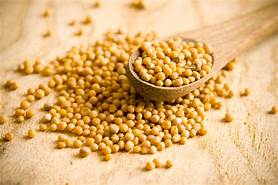
He said to them, “Because of your little faith. For truly, I say to you, if you have faith like a grain of mustard seed, you will say to this mountain, ‘Move from here to there,’ and it will move, and nothing will be impossible for you.”

Matthew17:20 ESV (via biblehub.com)

Faith is a vital part of life, and especially a life in pursuit of prayer. If I don’t believe that God exists, and that He rewards those who earnestly seek Him (Hebrews 11:6) then my prayers are little more than wishes made on a star or empty dreams.

Photo by sobhan joodi on Pexels.com

During Jesus’ ministry on earth, He lamented often that His disciples had so little faith. And yet, He said that if they had “faith like a grain of mustard seed,” nothing would be impossible. In fact, Jesus used seeds in a lot of His teaching. He talked of seeds scattered on different types of soil; mustard seeds growing into large plants; seeds in good soil yielding exponentially large harvests. There is something about seeds that can teach us about the nature of faith. And, according to Jesus Himself, we need to learn about and practice faith in greater measure!

Photo by Karolina Grabowska on Pexels.com

So what are some of the seed lessons we still need to learn?

  • Seeds start out small. Jesus used a mustard seed, mentioning that it is one of the smallest of all seeds. So often, we want to start out “large” in our faith. We see our doubts as failure, rather than immaturity. We see our slow growth as weakness–and it is! It is that very weakness that God wants to use to show HIS strength. When Jesus “lamented” that the disciples had so little faith, He wasn’t condemning them– instead He was pointing out that faith is a process–that seeds GROW into larger plants.
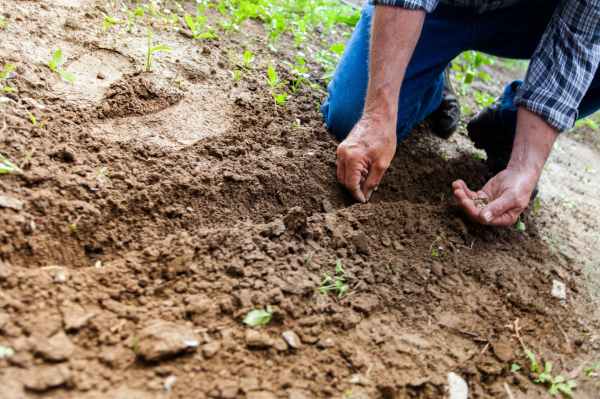
  • Seeds do not produce plants unless they are planted! I see websites and Christian bookstores selling jewelry featuring a small glass case with a tiny mustard seed inside. It’s a nice reminder of Jesus’ teaching about faith, but carrying around a mustard seed is NOT the same thing as having faith like a mustard seed. Faith that is never planted and rooted in good soil will remain nothing more than a seed– useful as a piece of decoration, perhaps, but dormant and unproductive. If I have faith “like a mustard seed” in money, or power, or in my own wisdom and skills, it is no more effective than if I throw it on the sidewalk, wear it around my neck, or put it in my pocket.
Photo by Torsten Dettlaff on Pexels.com
  • Seeds need soil, light, and water. Faith doesn’t grow in isolation. I need to listen to others, share with others, and, most of all, live in the good soil of God’s word. I need to pray for others– and I need the prayers of others! I need to talk to God daily; but I also need to read His words to me daily!
  • Seeds are designed to produce a harvest– fruit, grain, trees, and new seeds! I get distracted, thinking of how faith impacts MY life and my Christian walk. God wants me to grow stronger in my own, yes. But He wants my faith to be multiplied by being visible. Even a root vegetable sends a shoot or a plant above-ground, so there is evidence of growth underground. In doing go, the original seed will disappear! There are days when I cannot see my “mustard seed.” But that is (I hope) because the seed is becoming a mustard plant– producing evidence of God’s sustaining power and love, and providing “seeds” for others to plant.
Photo by icon0.com on Pexels.com

There are days when my faith may feel small and dead. But I need to remember that the power is not in the “seed” of faith– no matter how small; no matter how large its potential–it is in planting that seed and letting God’s power transform a seed into fruit that will last!

Photo by Pixabay on Pexels.com

More more on this topic, see:https://www.crosswalk.com/faith/bible-study/what-does-jesus-mean-by-faith-as-small-as-a-mustard-seed.html

Planting Seeds

I live in Michigan, and our state is in the news, because our Governor has issued a new set of restrictions in light of the ongoing COVID-19 outbreak. There is a “Stay Home; Stay Safe” measure restricting travel and “non-essential” business until the end of April. But parts of her new executive order have drawn criticism–especially her restriction of gardening and landscaping activities. Larger stores are not allowed to sell plants and seeds and gardening implements, as they are considered “non-essential” (as opposed to food and medicine purchases). It is still unclear whether or not gardening centers or roadside businesses can still sell plants or seeds if that is their primary business.

Photo by Engin Akyurt on Pexels.com

Thousands of residents are upset about these restrictions, and the slippery logic behind allowing liquor sales, sales of lottery tickets, and recreational marijuana, and allowing access to abortion clinics, while seeming to single out gardening, landscaping, home improvement (we can’t buy paint), and other reasonably “safe” activities, and prohibiting families from being with their loved ones– especially those who are dying of non-COVID-19 related causes.

I am not faulting those who are upset, and I won’t use this space to either fault or defend our governor. These are challenging times, and tempers flare, patience grows thin, and people are not always going to think or act at their best.

Photo by Paul Theodor Oja on Pexels.com

My point is that we– all of us– are sowing seeds during this time. Maybe not vegetable seeds or herbs or flowers, but seeds of discontent, seeds of anger, seeds of bitterness, and seeds of pride. We don’t need soil or seed packets or starter plants to sow a crop of good or bad spiritual produce. We don’t need to visit a store or garden center to bloom where we are planted.

So today, my prayer is that I would plant the following seeds:

Photo by Maggie Zhao on Pexels.com
  • Kindness–Words and deeds that show honor, respect, and love for those around me. Not just my friends, but also those who count themselves my enemies, and those with whom I disagree. Kindness multiplies and brings a fruitful harvest.
  • Joy–Not phony happiness, but true joy– the kind that doesn’t deny hardship, but gives strength in tough times. The kind that grieves with those who grieve, but offers hope and compassion. It is a sweet balm that brings healing and a lingering fragrance.
  • Patience–Waiting is not easy. It is not comfortable. But it is quiet strength that doesn’t give way to panic and anger. Patience is a “hardy” plant for any season.
  • Forgiveness– Forgiveness must be carefully tended in times of distress and uncertainty. We must prune away pride and hurt feelings and the desire for vengeance. Forgiveness is a rare and precious plant.
  • Gratitude/Contentment–I woke up today. That was a blessing. I opened my eyes and saw a roof over my head. I was warm and wrapped in blankets in a bed in a bedroom in my own apartment. I turned on a light, pulled clothes out of my closet, took a shower, and looked in the refrigerator where I had a choice of food to eat. I can breathe without a respirator, I can walk and use my arms and hands. I can speak and listen. Even in the midst of these times– even if I had no home or food, no running water, and I tested positive for COVID-19, or cancer, or MS–God is with me; God loves me; God knows everything about me; God sent His own Son to die for me when I was still a sinner! Gratitude is like a morning glory, declaring beauty, not because of its surroundings, but because that is its nature and its purpose. We can do the same!
  • Faith–I saw a meme the other day that said , “If a tiny virus can do this much damage, imagine what mustard-seed-sized faith can do! There is so much confusion, so much doubt, so much despair right now. But Faith, like a mustard seed, can spread and grow, even under (sometimes especially under) adverse circumstances. And Faith is another strong plant that can withstand the strong hot winds of adversity and weather great storms.
  • Love–Love is like a tomato plant– it just keeps growing and giving and producing. But, like a tomato plant, we need to watch out for blight and worms. True love drives out fear, overcomes, endures…you’ve probably heard all the cliches. But love also involves risk, rejection, and even pain. Make sure you plant your love in good soil and give it the supporting frame of faith in the one who IS Love.
Photo by Kaboompics .com on Pexels.com
  • and finally, Prayer– Prayer is a root vegetable; it grows in good soil and where is can’t always be seen. Prayer can thrive in times of quarantine. It is (or should be) untroubled by what is happening “above ground.” It needs the “living water” of God’s Holy Spirit, and the good soil of faith. Its roots are deep, and it provides nourishment for the soul.

Bringing in the Sheaves

It is harvest time where I live. It is especially fraught with significance this year, as we have had a bad growing season– heavy rains in the spring and low temperatures meant that much of the planting was delayed or cancelled. Fields that normally produce excellent crops of corn or wheat or soybeans look stunted and sickly, or they lie barren. Recent rains and threats of early snow mean that crops must be harvested now or lost, even if the yields are low or the crops not fully mature. While there will be a lot of grief and exasperation among farmers this year, there will also be relief and rejoicing in certain quarters.

Photo by Kaboompics .com on Pexels.com

The Bible uses farming and harvest imagery to describe the Kingdom of Heaven. Jesus told the parable of the sower and seed in Matthew 13 (also in Mark and Luke– see here:https://www.biblestudytools.com/bible-stories/parable-of-the-sower.html), and He spoke of fields being ripe for harvest (John 4:34-38/www.biblegateway.com/passage/?search=John+4%3A34-38&version=NIV)

Photo by Dominika Roseclay on Pexels.com

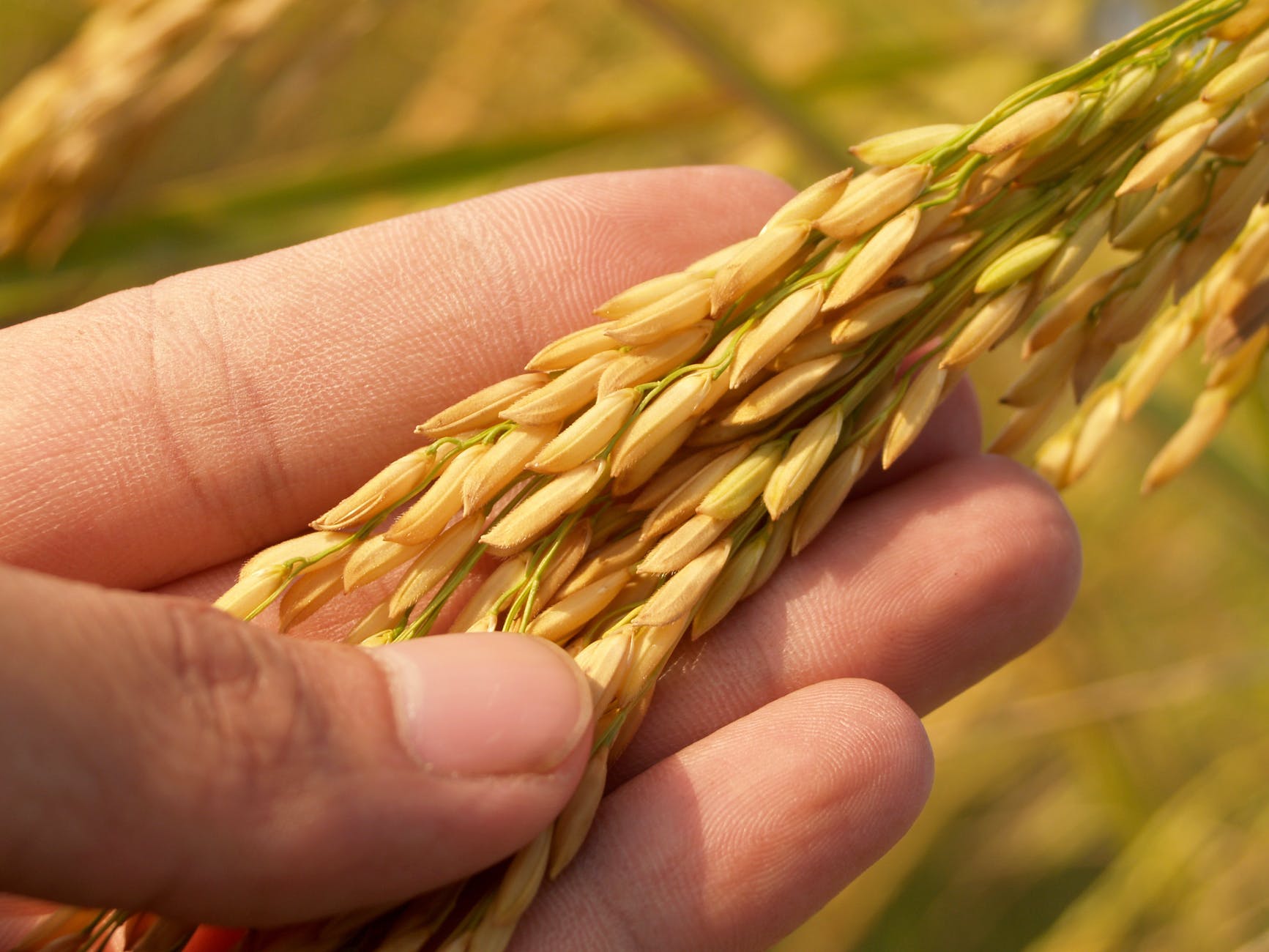
As followers of Christ, we are both harvest and harvesters. Like seed, we “die” to our nature, and grow and mature in newness of life by the Holy Spirit. And like farmers and harvest workers, we are called to plant seeds, to “sow” the Gospel of Christ, to tend to one another’s growth and nurture, and to “harvest” a crop– bringing others toward repentance and faith.

Another song from my childhood impressed itself upon me during my worship time today– a simple chorus, but filled with joy. Our mornings, evenings, sunny days and wintry nights may be filled with sowing seeds and tending crops; the work may seem tedious or even thankless. But we can take joy in knowing that there is a joyful and glorious Harvest ahead. Some day, we will be gathered together– not a puny harvest hastily gathered to avoid spoiling, but an abundant, fruitful harvest of God’s love lavished, nourished, and brought to perfection.

Lord, thank you for the reminder that all of this life –even the trials and frustrations–will produce a harvest of praise and worship. Give me the strength and wisdom to work joyfully for Your glory today. Help me to sow the seeds of Grace and Truth that come from your word, and to help others grow. Help me to respond with eagerness to the Holy Spirit’s prompting and counsel, and be a blessing to those around me. Amen.

Blog at WordPress.com.

Up ↑