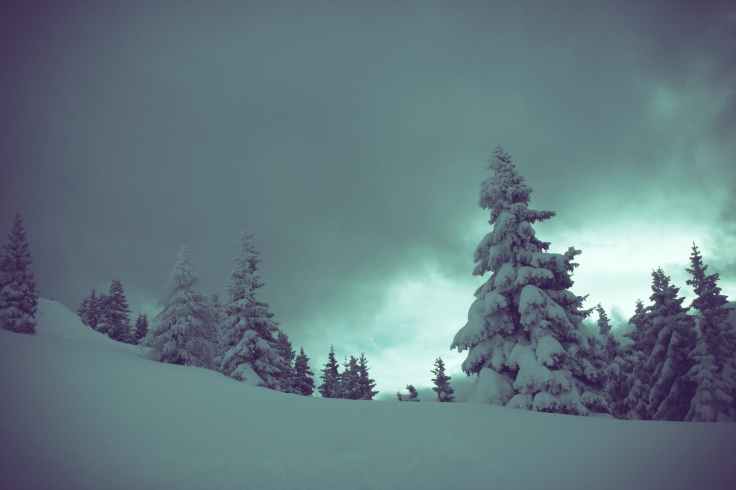
Father,, Today is a dreary day. It is not warm or sunny; it is not filled with joy or peace. The house is a mess. I’m not even dressed. I feel emptied and drained.
Even though I can’t see Your glory in my surroundings, I know You can see The glory of eternity. You see the brighter days ahead. You are already there, Celebrating.
You have not journeyed here to Listen to my prayer… Because You have always been here Right beside me. You are not put off by my Dirt or disheveled appearance; You are not unaware of my sadness– You know my thoughts before I think them! You know my emotions better than I know myself!
Today is a dreary day, But it is just a speck in the fullness of Your Eternal Light. Shine into my darkness Dispel the dreariness around me. Help me to reflect, not the clouds, But the Son!
Thank you, Lord. Even on a dreary day, In Your presence, there is fullness of Joy– Not the giddiness of a sunny springtime, But the glow of a hearth-fire, Sustaining me.
So my praise today may not explode In bright colors and exclamations. But it will be a steady and steadying Ember–warm enough to survive Ready for You to Ignite tomorrow’s fresh flame!
Therefore, there is now no condemnation for those who are in Christ Jesus, because through Christ Jesus the law of the Spirit who gives life has set you free from the law of sin and death.
I looked in the mirror this morning. There it was again, right in the middle of my forehead… “Failure.”
The label peeled off. But some residue was left behind. I could feel it. Every time I knit my brow, Every time I tried to smile, Every time I tried to look up.
I cried out, “God forgive me. I’m a failure.” But I thought I had been forgiven before. Why was I still wearing the label? Why did it keep coming back?
I looked closer at the label I had thrown away. “Made in USA.” Not “Made in Heaven” Labels are made on Earth. By other people. In my own mind.
This time, when I looked up, I couldn’t feel it. But I saw the others– Wearing labels, just like me. “Failure” “Hateful” “Unwanted” “Used” “Unworthy”
And the labels were all made somewhere on Earth– “USA” “Pakistan” “China” “Zimbabwe” “Honduras”
The labels were hard to ignore. Someone had put them there for all to see. But what if I could look beyond the labels And just see the faces? Look into the eyes of my sister, And see the beauty God had intended to be there.
Father, Help me remember that there is NO Condemnation for those who belong to you. Condemnation comes from others. You are the righteous Judge, NOT the prosecutor. You have the authority to condemn– yet you offer Grace to anyone who will repent. Your only label is a banner of Love that says “Precious to the Lord.” Help me see Your label– whether in the mirror on on the street– whenever I look around.
I just finished reading a book about atheism– or more accurately, a book about the unreasonableness and faulty logic of modern atheism as espoused by many scientists and philosophers. https://www.goodreads.com/book/show/56614922-is-atheism-dead One of the arguments concerns the view, held by many atheists, that life exists only in the material– in other words, that only “matter” “matters.” They argue against the existence of the soul, or the uniqueness of mankind in relation to other living things. There is nothing beyond science and whatever science can explain. Therefore, there is no God. If there is no God, and we were not created in His image, they argue, then there is no Heaven or Hell, and nothing beyond what we can experience with our senses. There is no purpose for our lives; no consequences for our thoughts or actions; no higher power or authority than our own. We are simply a product of the evolutionary process and a sum of our material components. Our thoughts are simply products of brainwaves firing in a certain pattern; our emotions conditioned and triggered by no more than a series of chemical and physical reactions to stimuli.
It is not my intention to argue or take the time to explain in the same detail that was in the book I finished, but I was struck by one of the points the author made. Without a belief in the God of creation, it is illogical and inexplicable that we should be affected emotionally by ANYTHING outside of the realm of material experience and scientific study. That means that we cannot fully explain or appreciate art, music, the grandeur of the night sky, the softness and warmth of a baby’s cheek, the thrill of a perfect sunset, the memory-evoking smell of a loved-one’s perfume or after-shave…our senses should not “move” our emotions. We can analyze a piece of artwork– it’s color or composition, the balance of light and dark, or the perfection of its perspective. But we cannot explain why it is “art,” or why it “speaks” to us (or turns us off!) We can discuss sound waves and tonality in music, but we cannot explain why certain songs move us to tears or cheer our spirits. We cannot say what makes a poem “connect” to something in our psyche, such that its lines come to us almost unbidden in times of distress.
But all of this makes amazing sense in a world where God exists– a God that is the Author of Creation; of Glory; of Compassion and Wonder. God not only exists– He makes Himself known in the music of a waterfall, in the gentle fall of snowflakes, in the scent of lilacs, and in the smile of someone we love. And He has given us the ability to feel awe, and to strive to add beauty, art, and meaning to the world around us. This is unique among His creation. Birds sing; dogs romp and play; flowers bloom– but they do not fall to their knees in worship; they do not compose sonnets or build cathedrals in acts of sheer adoration. They are not moved to tears or stunned into silence by sun glinting on a spider’s web– even the spider ignores the beauty of its own functional creation.
We are fearfully and wonderfully made–and wonder-ful-ly made! Today is a great day to look and listen for God’s glorious touches all around us. And it’s a great day to reflect back to Him all the wonder and glory of Who He Is in praise!
The heavens declare the glory of God; and the firmament sheweth his handywork. Day unto day uttereth speech, and night unto night sheweth knowledge. There is no speech nor language, where their voice is not heard. Their line is gone out through all the earth, and their words to the end of the world. In them hath he set a tabernacle for the sun, which is as a bridegroom coming out of his chamber, and rejoiceth as a strong man to run a race.His going forth is from the end of the heaven, and his circuit unto the ends of it: and there is nothing hid from the heat thereof.
I went on a “weight-loss” plan because my doctor said I should. Even so, I didn’t give up meat or chocolate, Or sweets, or even television, like some others did.
I didn’t give up shopping. I didn’t give up social media. I didn’t give up…anything for this short season.
But today I acknowledge that Lent isn’t really about What I have or haven’t given up. It’s about what YOU gave up. You gave it all: Your Glory; Your Power; Your Majesty. You became a simple man. A servant of men. A man without a home; Without prestige; Without a title.
You were betrayed; Falsely accused, Corruptly tried, Shamefully condemned, Brutally beaten, Crucified. So that I might gain eternal life.
You do not judge me for what I haven’t given up for a season. You do not withhold your love and forgiveness; Waiting for me to learn the disciplines of Lent. You ask for more than that– and less. You ask me to follow you–to leave it all behind. You ask me to give up my life– only to find it again in You.
Let me reflect today on what more I need to give up: My pride. My apathy. My selfishness with time and money. My need to have my own way; My own comforts.
May I be free to serve you; To serve others. May I be ready to give up whatever is Keeping me in thrall; Keeping me enslaved; Keeping me from serving you with abandon.
Show me how to let go Of all but You– That You may be my All.
I sit here, on this heap of ashes: sifting through cold dust motes– There is no heat, no burning embers, no trace of what was.
Such is the nature of sacrifice. You don’t desire the stench of a half-burnt ram, or a singed goat. You don’t relish a pile of smoking bones, or a half-hearted heart.
But you honor ashes and sacrifice given With a whole and willing heart– Even a broken one.
Your holiness consumes all that is temporal. The ashes left are what you desire; the essence, the emptiness. In exchange for them, you pour out Life and blessing, gladness and healing.
As I sift through the ashes, I will not find the life I built, The dreams I nurtured, The honor I sought: Instead, I will find evidence of the Holy Fire. The ashes will be scattered to the wind. They will fall on the waters. They will become incense and prayers. I will wear them on my forehead: Your Holiness has burned away the dross. My sacrifice is gain, not loss.
When I get the time, I’ll kneel down and pour out my heart. When I get the time, I’ll lift up my hands in worship. When I get the time, I’ll really dig in to God’s Word. When I get the time…
But first:
I have to find the time to read that new novel, Make another batch of cookies, Call my friend, Look at my Facebook feed, Watch the news, Do a couple of crossword puzzles, And write my blog about prayer…
Lord, forgive me for putting you first in print, but not in deed. Thank you that you offer me a chance to use my time more wisely. Thank you for the opportunities to spend time with you– and with those you love so much. Help me to count my days (Psalm 90:12), that I may apply my heart to wisdom, and not just busy-ness.
This morning, I woke up inside– protected from the rain and wind and cold. I woke up in a bed. I woke up with blankets for my body and a pillow for my head. I woke up, and moved my head, my hands and feet, arms and legs. I sat up and wiggled my toes. Thank You!
Photo by u0414u0438u0430u043du0430 u0414u0443u043du0430u0435u0432u0430 on Pexels.com
This morning, I woke up to hear my husband’s breathing. I woke up to the knowledge that I am not alone. I woke up to the knowledge that I am loved. I felt safe and comforted. Thank You!
This morning, I woke up knowing that even if I had none of the things I just mentioned, that I still have reasons to Thank You– Things I take for granted; things I haven’t even noticed; things I have not yet seen. Thank You for who You are. Thank You for Your Faithfulness; Your Majesty; Your Sovereignty. Thank You for the beauty of sunsets and snowflakes; for the seasons and the centuries; for family and friends; for triumphs and even for the tears that sometimes come my way. Thank You that you are greater, and deeper, more powerful and more tender than all that I know or imagine.
Transformed Humble Able to do “all things” through Christ No longer slaves to Sin Known by our Love for each other Fruitful Upheld in the power of His Love
Wilt Thou forgive that sin where I begun, Which is my sin, though it were done before? Wilt Thou forgive those sins through which I run, And do them still, though still I do deplore? When Thou hast done, Thou hast not done, For I have more. Wilt Thou forgive that sin by which I have won Others to sin? and made my sin their door? Wilt Thou forgive that sin which I did shun A year or two, but wallowed in a score? When Thou hast done, Thou hast not done, For I have more. I have a sin of fear, that when I have spun My last thread, I shall perish on the shore; Swear by Thyself that at my death Thy Sun Shall sine as it shines now, and heretofore; And, having done that, Thou hast done, I have no more.
A Hymn to God the Father John Donne, 1623
John Donne
I enjoy studying the poetry of John Donne. https://www.biography.com/writer/john-donne Even though he lived 400 years ago, he wrote about very timeless and personal topics. Donne lived during a time of religious tumult and persecution. Born into a Catholic family, he later converted to Anglicanism and became a powerful preacher, as well as a poet, and lawyer. Throughout his life, he wrestled with deep theological questions of sin, guilt, redemption, and death. Yet he did so with wit, humor, and passion. The poem above, written during a long illness and near the end of his life, is filled with puns on his last name, Donne. Would God’s redemptive work ever be “done” in “Donne?” He struggles with the knowledge that his sins, having been forgiven, must be forgiven again and again. Does God never say, “Enough! I am done!?” What about stubborn sinful habits? What about sins that have led others to sin? What about last-minute, unconfessed sins?
The real question is, “How sufficient is God’s Grace?” Does God sprinkle out Grace sparingly on each sinful act, or does Christ’s blood cover All? Do our stubborn, habitual acts of rebellion pile up to a point where God cannot forgive? Having forgiven us once, twice, seventy times seven– is there a limit to His willingness to pour out Mercy? Theologically, the Bible is clear. The answer is a resounding, “NO.” God will not withhold His Grace from those who have sought it. God will never be “Done” with “Donne.” Nor will He be “done” with any of us who have chosen to follow Him. But in his all-too-human logic, Donne jokingly suggests that though God “hast” done/Donne, He “hast not” done/Donne. In other words, while Donne “belongs” to God– he has confessed his sins, and eagerly seeks to follow Christ, he still wrestles with fears that his small sinful acts prove that God does not fully “have” him– that He still lives separated from God.
But the final sin of the poem is fear– fear that somehow, at the last, Death will prevail, and Donne will “perish on the shore,” rather than be taken into Heaven. He pleads that Christ’s blood (“Thy Sun/Son”) will be sufficient; that God’s promise of eternal life will indeed hold true, and that the work of salvation is indeed “done.” In the end, the poet hopes that “Thou hast Donne.” And he must trust that God’s promises will hold, for “I have no more.” Donne cannot stop death, he cannot do anything to save himself from sin, but he can be “done” with worry and trust in “Thy Sun/Son.”
Photo by Samuel Theo Manat Silitonga on Pexels.com
I am strangely encouraged by Donne’s poem. We all have moments of questioning and niggling doubts. And even though we “Know” the truth, our fears and emotions can play tricks on our mind. But Donne, even while putting such doubts and fears on paper, takes them to the Source of Hope. This is not a poem of accusation or despair. It is an honest and passionate desire to hear God’s calm assurance. And it is part of a long tradition that runs through the Bible. Jacob literally wrestled with an angel of the Lord (Gensis 32), Moses argued with God about going back to Egypt (Exodus 4), David questioned God (Psalm 10); even Jesus asked God, “Why have you forsaken me?” (Matthew 27). But in our doubts and questions, God’s still, small voice echoes, “I will never leave you nor forsake you.” (Hebrews 13:5), “My Grace is sufficient for you.” (2 Corinthians 12:9), and “Neither height nor depth, nor anything else in all creation, will be able to separate us from the love of God that is in Christ Jesus our Lord.” (Romans 8:39).
God’s work is ongoing, but it is also “done”– it is complete, whole, sufficient, and eternal. And even if we occasionally wonder and even question, we can choose to rest in His promises. Just as the poet concluded, if God “hast” done/Donne, “I have no more”– he needed to have no other fear of sin or sin of fear. And through Donne’s poetry, God’s assurance is being passed on– the work continues to be “Donne!”