What If?

As I am writing this, people in my country are voting or preparing to vote in a Presidential election.  Many of them are voting in fear, confusion, or anger, and asking, “What if my candidate/cause/political party doesn’t ‘win’ today?”  “What if I voted for the ‘wrong’ policies or people?”  “What does the future hold?”

These are not uncommon or unrealistic questions, but they are questions that can waste our time and sap our energy in hypothetical posturing.  The writer of Ecclesiastes says:

alone beach calm dawn

Ecclesiastes 11:1-6 King James Version (KJV)

11 Cast thy bread upon the waters: for thou shalt find it after many days. Give a portion to seven, and also to eight; for thou knowest not what evil shall be upon the earth. If the clouds be full of rain, they empty themselves upon the earth: and if the tree fall toward the south, or toward the north, in the place where the tree falleth, there it shall be. He that observeth the wind shall not sow; and he that regardeth the clouds shall not reap. As thou knowest not what is the way of the spirit, nor how the bones do grow in the womb of her that is with child: even so thou knowest not the works of God who maketh all. In the morning sow thy seed, and in the evening withhold not thine hand: for thou knowest not whether shall prosper, either this or that, or whether they both shall be alike good. 

woman wearing grey long sleeved top photography

It is not wrong to wonder about the future, but we cannot be sure that our actions will always produce the results we long for– especially when we have little control over other people’s actions and consequences.  The first two verses of this passage warn us not to “put all of our eggs in one basket”.  As free citizens in a democratic republic, we shouldn’t put our trust in any one political party, platform, or politician.  Nor should we live in a social or political “echo chamber”, listening only to the views and ideas with which we feel most comfortable, or least challenged.  However, we should look at the long-term consequences of proposals and the reasons behind them before we promote change just for the sake of it.

The third verse reminds us that some changes and events are beyond our knowledge or control.  It’s not that our vote “doesn’t make a difference” or that we’re on “the wrong side of history”– it may mean that history has taken a detour surrounding a certain issue.  It may mean that God is allowing for something we have not imagined (as He did in the days of Habakkuk). Get some great “Insight” into the Book of Habakkuk here.

aerial photo of buildings and roads

But there is more wisdom to come in verses 4-6.  Waiting for certainty of outcome, or being distracted by our circumstances or every “wind of change” can lead us to miss the very real opportunities for present action.  God has given us everything we need (see 2 Peter 1:3-5) for godly living and godly decision-making.  That doesn’t mean that our decisions will always reflect popular “wisdom”; it doesn’t even mean that our decisions will be the same as all other fellow believers and followers of Christ.  It DOES mean that we can make our decisions without fear.  God knows us– He understands your heart and mind better than anyone; He knows why people who agree on spiritual matters may not agree on politics.  But more than that, God KNOWS the future!  He knows all the things that we merely guess at.  So we should act in the present with the best information we have, and leave the rest to the God who knows best.

girl wearing blue denim dress shirt

Modern politics relies heavily on conjecture– polls, predictions, pledges, projections, plans, and campaign promises.  But God is still sovereign over all nations, governments, and peoples.  Instead of asking, “What if..” we should be asking of God, “What now?!”   And we need to be ready to listen and obey!  Let’s pray today for the wisdom to listen more, act with confidence, and trust our future to the one who has already seen it!
The Right Side of History

My nation– and even my community–is divided right now. People argue, accuse, blame, and reject their neighbors because of political beliefs. And they defend the “rightness” and righteousness of their own beliefs–even when they must compromise on other beliefs and teachings of the Bible. Some people use the phrase “I’m on the right side of history..” or “History will prove us right.” And they cross their arms, jut out their chin, and stand smugly convinced that they have won the argument.

Photo by Vera Arsic on Pexels.com

But history books are written by human beings– and usually those human beings who are in power. “History” is constantly in flux– some things that were deemed “virtuous” or “necessary” in the past are looked on with horror today. Times change; societies change; customs and morals change.

Photo by Wallace Chuck on Pexels.com

When we justify our politics, or our actions to others in this way, we are really saying, “whatever I am doing, saying, or supporting today will be judged “righteous” by future generations. And that may be so. Those who advocated for the abolition of slavery in America over a century ago should surely qualify as people who were on the “right side of history.” Yet, in the past year of rioting across my country, many of the statues that were toppled, and spray-painted, and chiseled, and marred were of abolitionists. Their moral prowess notwithstanding, they were seen as “old, white men” in old-fashioned clothing, whose lives and legacies were long forgotten, or confused with other “old, white men” who had supported slavery during the same time period. We delight in “debunking” cherished histories, toppling our heroes, and rewriting traditions. And we often compare our “struggles” to those of previous generations, even if the comparisons are skewed or largely non-existent. And in our fight to push forward a particular narrative or policy; in order to “take back” a certain position or tradition, we often lose our moral compass, believing the lie that “the end justifies the means” or that “might makes right.”

Photo by RF._.studio on Pexels.com

In order to be on the “right side of history” today, people tend to make certain compromises– regardless of what “side” they choose. Political parties tend to support diverse causes and groups. Whatever good policies they promote, chances are they also promote policies and beliefs that are in direct conflict with scripture. Words like “compassionate,” “wholesome.” “traditional,” “patriotic”, “liberal,”and “progressive” may sound noble, but they often mask actions and policies that are corrupt, wicked, and destructive.

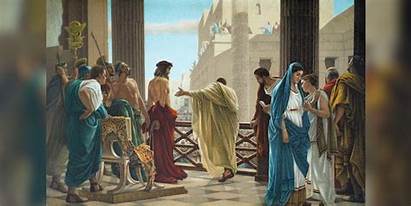
As Christians, we must be careful not to make “comfortable compromises” and to avoid righteous-sounding justifications. Just as importantly, we must be careful when confronted with labels and accusations, not to over-react or respond with bitterness or arrogance. If someone accuses me of being “hateful” or “gullible” because of my political beliefs, it is tempting to puff up and respond in kind. No one likes being judged. In fact, we are told in scripture NOT to judge, lest we be judged in kind. (Matthew 7:1-6) Jesus was often misunderstood, hated, falsely accused. He went to the cross after being found innocent by Pilate– who compromised by offering the Jewish people a choice of the innocent Jesus or the condemned Barabbas, instead of commanding that Jesus be released. In spite of his compromise, Pilate is not considered to be on the “right side of history” for his political masterpiece.

In fact– we are ALL on the WRONG side of of history! No matter how righteous our beliefs, ALL have sinned and fall short of the glory of God (Romans 3:23). Our allegiances, our morality, our political affiliations– none of them will save us from the just judgment of God, or the wavering judgments of future generations. We need, more than ever, to hold fast to the truth, and to seek God’s wisdom. When the final “history” is written, I want to be on God’s side!

Photo by Ray Bilcliff on Pexels.com

Blog at WordPress.com.

Up ↑