The Ghost of Christmas Present

If you missed my last blog post, I’m looking at the story of A Christmas Carol, by Charles Dickens. It may not seem like a “jolly” Christmas story, or even a “religious” story, but it is “spiritual.” Ebenezer Scrooge is literally haunted by three spirits over the course of Christmas Eve. Last time, I spoke of the Ghost of Christmas Past. Today, I’d like to look at the Ghost of Christmas Present.

I know, Christmas was a few days ago– we’re currently at the cusp of New Year’s Eve, but these few days between Christmas and New Year’s Day can often feel jumbled up and run together. And, traditionally, the Christmas season is not just one day, but twelve days, stretching from December 25 to January 6. So today is still technically part of “Christmas.”

In “A Christmas Carol”, Scrooge is actually visited by four spirits. The first is the ghost of his old friend, Jacob Marley, who offers Scrooge both a dire warning, and a chance of redemption. Scrooge has already been visited by Marley, and by the ghost of Christmas past– a look at the moments and people who have shaped Scrooge’s life up to the present. Scrooge has seen both happiness and tragedy in his life, but the “light of truth” carried by the first ghost has shown how Scrooge has rejected happiness, instead embracing a life of fear, loneliness, and greed.

The next spirit, the Ghost of Christmas Present, focuses less of Scrooge himself, and more on the people he has ignored or rejected. This spirit shows Scrooge what he is missing by hoarding his wealth and isolating himself from the rest of the world. It is a picture that many of us would do well to study!

One of the first stops is the home of Bob Cratchit, Scrooge’s underpaid, put-upon clerk. Scrooge makes use of Bob’s time and skills, without ever showing any interest in him as a person. Scrooge is oblivious to Bob’s existence outside of the counting house. He assumes that Bob has a family, but he has no idea who makes up that family. The Ghost of Christmas Present forces Scrooge to see that Bob and his wife have several children, including a sickly and crippled son named Tiny Tim. Though they have very little money (thanks in part to Bob’s meager wages!), they have plenty of love and happiness. Scrooge fears many things that may happen, while his clerk faces very real fears that “haunt” him every day. Yet Bob does not complain, does not exhibit bitterness, and does not hide away from the world.

Next, the ghost takes Scrooge to see his nephew. Scrooge keeps his nephew at a distance because of his bitterness and fear. But in doing so, he is missing out on his nephew’s kindness, wit, and warm circle of friends. Scrooge has treated his nephew with disdain, fearing that the younger man is jealous of all his riches. But the ghost shows Scrooge that his nephew actually feels sorry for his uncle. Again, Scrooge has great wealth, but his nephew is content, and even very happy with his lower station in life. He loves his wife and enjoys friendships that make him wealthier in many ways than his uncle!

Finally, the ghost of Christmas Present shows Scrooge a sight he would never willingly see– the suffering and neediness of the poor, whom Scrooge has sneeringly consigned to death. Rather than seeing humanity, Scrooge sees only people who might drain him of his wealth– the undeserving poor who “cost more than they are worth.” The ghost reminds Scrooge of an earlier off-handed remark about helping those who would rather die than go to workhouses: “If they’d rather die, then let them do it–and decrease the surplus population!” The ghost warns Scrooge that he should be very careful in declaring who is among the ‘surplus population’. In heaven’s eyes, Ebenezer Scrooge himself might have less worth than ‘the least of these.’

 And the King will answer them, ‘Truly, I say to you, as you did it to one of the least of these my brothers, and sisters you did it to me.’ “Then he will say to those on his left, ‘Depart from me, you cursed, into the eternal fire prepared for the devil and his angels. For I was hungry and you gave me no food, I was thirsty and you gave me no drink, I was a stranger, and you did not welcome me, naked and you did not clothe me, sick and in prison and you did not visit me.’ Then they also will answer, saying, ‘Lord, when did we see you hungry or thirsty or a stranger or naked or sick or in prison, and did not minister to you?’ Then he will answer them, saying, ‘Truly, I say to you, as you did not do it to one of the least of these, you did not do it to me.’ (Matthew 25:40-45 ESV)

Scrooge’s feelings and senses are overwhelmed by what he experiences. The present surrounds him– the sights, the smells, the laughter, the cold of a dark winter’s night, and the heat from a roaring fireplace; the stench of the docks and homeless camps, and the aromas of Christmas dinner; the colors and lights of decorations, toys, and costumes; the ringing of bells, and the singing of Christmas Carols. Once again, Scrooge can hear music and laughter, he can sense the love and compassion, but he can only participate on the periphery. The music haunts him, but it comes from others, not from his own frozen heart.

So, what happens to us in this Christmas present? Do we feel connected to the joy and gratitude, the love and hope of the season? Or are we isolated by worry, frozen in fear, enslaved by anger or greed? Christmas is often a time of great sadness and loneliness. And sometimes, the laughter and the lights seem hollow and fake. Especially in the days just after Christmas, we can feel let down, abandoned by the promise of merriment and fulfillment brought by parties and gifts and feasting and entertainment. Outside, the winter is still cold, the bills keep coming in the mail, and fears and worries cloud our days. Some of our fears are very real– disease, grief, loss, sudden changes in circumstances and relationships–Christmas lights and music alone cannot cut through the fog.

My prayer for today, and for the New Year at our doorstep, is that we would open our ears and eyes and hearts to what is around us– acknowledge that we live in a fallen and often worrisome world, but recognize that there are opportunities all around us, as well. We don’t have to isolate. We don’t have to live in constant fear. Christmas isn’t just a day; it isn’t just a season– Christmas is about Christ coming to dwell with us!

Open your ears! Listen to the music of the season– “Peace on Earth! Good Will to Mankind!” “JOY to the World! The LORD has come!” “Let Heaven and Nature Sing!” “Glory to the Newborn King!” Keep listening to the promises of God’s Word– “Never will I leave you nor forsake you!” “Lo, I am with you always!”

Open your eyes– see the wonderful opportunities to share both joy and sadness with others. Seek out the great opportunities to give and receive help and love and fellowship! See the good things that the LORD has done– the friendships and family in your life; the beauty of nature, the ‘wonder of His Love!’.

Open your heart– Receive the greatest Gift! Redemption; new birth; eternal and abundant Life! Choose life and gratitude and humility. Practice childlike faith, hope, and JOY!
The Prince of Peace

They have healed the wound of my people lightly, saying, ‘Peace, peace,’ when there is no peace. Jeremiah 8:11(ESV)

While people are saying, “There is peace and security,” then sudden destruction will come upon them as labor pains come upon a pregnant woman, and they will not escape. 1 Thessalonians 5:3 (ESV)

Peace I leave with you; my peace I give to you. Not as the world gives do I give to you. Let not your hearts be troubled, neither let them be afraid. John 14:27 (ESV)

I have said these things to you, that in me you may have peace. In the world you will have tribulation. But take heart; I have overcome the world.” John 16:33 (ESV)

Jesus answered: “Watch out that no one deceives you. For many will come in my name, claiming, ‘I am the Messiah,’ and will deceive many. You will hear of wars and rumors of wars, but see to it that you are not alarmed. Such things must happen, but the end is still to come. Nation will rise against nation, and kingdom against kingdom. There will be famines and earthquakes in various places. All these are the beginning of birth pains…21 For then there will be great distress, unequaled from the beginning of the world until now—and never to be equaled again. Matthew 24:4-8; 21 (NIV)

One of the prophetic names given to Jesus in the book of Isaiah is “Prince of Peace” (Isaiah 9:6). And yet, Jesus did not bring an end to the Roman occupation of Judea while He walked the earth. He did not end slavery or war or oppression. He did not bring the kind of “peace” that most of us look for even today. We live in a world of war, dissention, upheaval, and chaos. There is hatred, injustice, slavery, abuse, and oppression, and none of the efforts to bring peace in our world have succeeded in wiping out any of these evils. In the nearly 2000 years since His crucifixion and the rise of the Christian Church, these evils have remained. Great strides have been made over the years– slavery is officially outlawed in many areas of the world; human rights have been codified. Humanitarian efforts have greatly decreased the number of people who die of starvation and disease, homelessness and exposure to the elements. But there are thousands, and indeed hundreds of thousands of people around the world who are refugees from their home countries, who are denied human rights, who live in fear of bombing raids and terrorist attacks.

Where is the Peace?

Jesus spoke freely of the tribulations His followers through the generations would face. He never promised us a world without any trouble. He promised that, in this life, we WILL have trouble. And it will increase over time. People will grow suspicious, hateful, and cold. Nations will rise up against other nations; families will be divided in such a way that one’s greatest enemies will be their closest relatives! Wars and natural disasters will intensify. And ONLY Christ’s return will stop any of it. Human efforts may make a difference for a short while, or make a small difference for a long while, but nothing we can do, single-handedly or as a human race, will deliver us from the evil that lives in the human heart. In fact, we often delude ourselves into thinking that we can change the world on our own; we seek to force our plans on others “for their own good,” little knowing that we may be sowing the seeds of bitterness, backlash, and revenge.

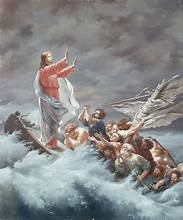
Jesus Christ is the Prince of Peace. He will administer perfect peace and justice when He returns. And in the meantime, He offers us an inner peace that passes all understanding. We can experience peace as bullets whip around us; as we are being misunderstood, mistreated, and abused; as we face injustice and oppression. We can do this because Jesus gave us the example. He did not fight back or even complain as He was arrested, falsely accused, sentenced, and executed. He did not seek to force everyone to accept His rightful claims. He did not even protest the unjust treatment of His people by the Romans.

What He did instead was to focus on God’s mission– He interacted with those who were suffering; He healed the sick; He brought comfort to those who were grieving. He brought sinners to repentance and sought to make peace between individuals and God. Jesus is the Prince of real and lasting Peace– not just peace in “our time” or peace for a generation, but eternal and everlastingly joyous Peace. This is the kind of peace that sees trouble and tribulation for what it is– temporary and transformational. Suffering can make us bitter or better, and Jesus shows us how to experience the latter. When we protest instead of pray, we forfeit that peace. When we pray, we gain wisdom in how to stand firm against injustice without losing our own peace and perspective.

These are not peaceful times, but we can still experience peace, hope, trust, endurance, joy, and light in the days ahead, thanks to our Prince of Peace.

Jehovah Jireh– The God Who Provides

Often when I am praying, I’m asking for something– “Bless this food,” “bring healing to _______,” “help the victims of (insert recent natural disaster) to find shelter, food, water, etc.,”..

God is a provider. He is the owner of everything, yet He chooses to share good things with us. He provides for the birds of the air and the flowers of the field. He provides for insects and elephants. He provides water and sunlight for all the plants– whether in the rain forest or the desert. He provides air for us to breathe and provides plants to recycle what we breathe out. He provides for the orphan and the widow, the homeless and the dispossessed. And for those who seem to “have it all”– God is the ultimate source of their riches, too.

In the book of Job, we meet a man who seemed to “have it all.” He was wealthy, healthy, respected, and surrounded by family. And when it all disappeared in a flash, his response was very telling. He said, ” Naked I came from my mother’s womb, and naked I will leave this life. The Lord gives, and the Lord takes away. Blessed be the name of the Lord.” (Job 1:21 CSB). Job had learned that in good times or bad, God was his provider. And Job’s faith in God’s provision and His faithfulness gave him hope, even in the worst of his troubles.

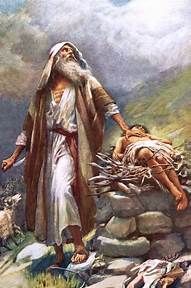
The first time we hear of Jehovah (or Yahweh) Jireh is in the story of Abraham and Isaac and the sacrifice at Mount Moriah. God asks Abraham to take his son– the son of the promise; the son for whom he had waited so long– and give him as a sacrifice. Nowhere else in the Bible does God ask for a human sacrifice– in fact, God says He detests the practices of the nations and religions who sacrifice their children to Molech or other gods. Yet, when Abraham obeys, in spite of whatever fear or horror is conjured up by the command, God stops him and provides a ram as an alternate sacrifice. Abraham names Him Jehovah Jireh– the LORD who will provide–as a result of that experience. (See Genesis 22)

But Jehovah Jireh means more than just God providing what we need in the moment or what we ask for in prayer. It also means, “the LORD who perceives, or experiences.” God does not just stand removed from our situation and write a blank check for us to cash when or how we see fit. God is with us (Emmanuel) and sees our deepest and most profound needs. He also sees our daily and even seemingly silly needs. He knows, He cares, and He provides good gifts. God did not send Abraham and Isaac alone on their perilous mission. He was right there, ready to step in and provide what was needed. What an amazing turn-around for Abraham. He went from anguish to absolute joy in those precious moments, and learned to know God in a personal, experiential, and powerful way.

Sometimes, we lose sight of that. Sometimes, it seems as though God is far away and indifferent, or even cruel. When Job accepted the loss of his wealth, his health, his status, and all of his children, it was not easy for him to say, “Blessed be the name of the LORD.” God had taken away nearly everything– in fact, the only things Job had left were some unhelpful finger-pointing friends and a complaining wife! But God restored everything that Job had lost, and then some! God does take away. And it hurts. He doesn’t stop us from experiencing heartache and grief. But even then, He is Jehovah Jireh– the LORD who experiences; the LORD who perceives. He does not leave us without hope or comfort, if we seek His face. As the Psalmist says: “The nights of crying your eyes out give way to days of laughter.” (Psalm 30: 5b The Message)

The story of Abraham and Isaac; the story of Job and his losses– each points us to another truth about how God is our provider. He provided His own Son to be our sacrifice– to pay the debt for our Sin, and to give us Eternal Life (see John 3:16). God experienced all the anguish and loss of death so that we would only have to taste it once. Jesus lost everything to gain our redemption. And He rose victorious over death, so we can have hope and joy in this life and in the life to come!

Recently, I was worried about finances– not because we had no money, but we had unexpected bills. I asked the LORD to provide, knowing that He could, but expecting that we would have to raid our “rainy day” fund to get through the week. But God had an amazing surprise– an unexpected gift of $100! Just when we needed it. God could have provided ten dollars, or a thousand dollars. He could have allowed us to dip into the “rainy day” fund and provided some unexpected money the following week. But I believe God saw, not just our monetary need, but my need to be reminded of His loving care and faithfulness. God knew what we needed. He provided what we needed. And He shared in our experience of dependence on Him and joy in His creative answer.

I don’t know where I will be today or tomorrow. I don’t know what needs are on the horizon. And I don’t know how or what God will provide. He may not provide healing for a disease, but strength for the fight. He may not provide a cash gift for our material needs, but He may provide opportunities to trade with neighbors or earn extra money when we need it next. Whatever God chooses to do– whatever He gives or takes away– He is my provider of abundant life. “Blessed be the Name of the LORD!”

(For more about this Name of God, see https://www.christianity.com/wiki/god/what-does-it-mean-that-god-is-jehovah-jireh.html)

“…Lose All Their Guilty Stains!”

“There is a fountain filled with blood
Drawn from Immanuel’s veins;
And sinners plunged beneath that flood
Lose all their guilty stains.”
William Cowper

I love old hymns. So often, they express Biblical truths in simple purity, or in soaring poetry, that captures both the imagination and the memory.

Recently, I was listening to a radio broadcast of a sermon about mercy. It was a wonderful sermon, and the pastor talked about the richness and wideness of God’s mercy and lovingkindness in various situations– when we face injustice, pain, loss and grieving, guilt, and even when we are unaware of it throughout our life (Psalm 139:16-17) From the womb to the tomb, we live in the Mercy of God– God extends His Mercy and Grace for as long as we are alive to call out for it, accept it, and receive it. More than that, His Mercy and Lovingkindness endures forever (Psalm 136).

Later that day, I was doing housework– I had dirty dishes to wash and laundry to do. And there were stains! I have plastic dishes that I used to heat up leftovers in the microwave, and some of those leftovers had tomato-based sauce or cinnamon or turmeric. The dishes have a film of red or brown or yellow that didn’t come out, even when I washed and soaked them. A few of the stains will eventually fade away, but some of them will never come out. I also have clothes that are stained. David and I still wear them around the house, but there are paint stains, ink stains, oily stains, and mustard stains that didn’t come out the first time I washed (or the second or third time!)

As humans, we all have stains of one type or another. We try to hide them; we try to scrub them; we try to cover them up. Some of our stains are external and visible– scars or blemishes, imperfections and disabilities, worn or tattered “second-hand” clothes, missing teeth, poor posture, obesity, being “too” short or tall–things that people notice right away. Other stains are deep inside– guilt, shame, fear, anger, hatred, bigotry, envy, arrogance, hopelessness, depression, broken-heartedness, loneliness– we try to hide them by isolating, covering up, pretending that all is well, or denying the extent of our brokenness.

I was touched by the sermon about how God’s Mercy reaches us in all of these circumstances. The Bible is full of examples of God’s Mercy and its transforming power. But the words of this old hymn came to my mind, and a deeper realization swelled as I sang them quietly in my own heart: “And sinners plunged beneath that flood LOSE ALL THEIR GUILTY STAINS!”

I spend time washing and scrubbing at stains– silly mistakes, accidents, upsets– and even if I am successful, I can often point out where the stains were or find the last vestiges of them on an old shirt or a white plastic bowl. But I don’t “LOSE” stains. I don’t have the power to make stains totally disappear– especially stubborn ones like ink and oil. But the stains I worry about most– guilt, pain from my past, worry about how others might judge me– these stains are all in my doubting mind. In God’s Mercy, THEY DON’T EXIST! That doesn’t mean that others WON’T still judge me, or that I won’t still remember old hurts. But God WON’T! Their power is broken. God has removed them as far as the east is from the west (Psalm 103:12-14)

Sin leaves stains in our lives– even if the sin wasn’t ours to begin with. That person who bullied me in third grade– that left a stain. The way I reacted– that probably left a stain, too. When I nearly died as an infant– that wasn’t my sin, or even my parent’ sin. But it left a stain because I was born into a world where we have disease, defects, and disasters. I have Diabetes. Part of that “stain” can be blamed on things I ate, and lifestyle choices I made. Part of that is genetic. There are people who live with abuse, injustice, chronic pain, and lasting heartaches. And God’s Mercy didn’t stop any of that from staining their lives.

But the “fountain…drawn from Immanuel’s veins” is powerful enough, and God’s Mercy is amazing enough to make those stains disappear. In this life, I still have to deal with diabetes, fatigue, misunderstandings, and my own sinful lapses. People still struggle with cancer, poverty, war, and doubt. But the stains won’t follow Christians into eternity. There won’t be any vestiges of uncleanness; there won’t be any memory of the hurts and losses we suffered during this lifetime. Christ’s blood is powerful enough, and His Mercy vast enough to make the effects of sin DISAPPEAR!

Too Much of a Good Thing

My late uncle came to know Christ– really know Christ– later in his life.  He and my aunt spent their final years doing advanced Bible studies by correspondence course– hour after hour studying Hebrew and Greek, filling out paperwork, sending it in, and waiting for the next lesson (this was before the explosion of online classes and internet shortcuts).

When Uncle Fred was diagnosed with ALS (Lou Gehrig’s disease), and he knew his time on earth was drawing to a close, he planned his funeral service, and it was incredible– uplifting, encouraging, hopeful!  This from a man who, earlier in life, had had anger issues, numerous issues with money, and serious doubts about God.  One of his favorite scripture passages came from Proverbs, and it surprised me a bit.  It wasn’t about promise or hope or power or expectation.  Instead, it was about discipline and correction and balance.

Proverbs 30:7-9 New International Version (NIV)

“Two things I ask of you, Lord;
    do not refuse me before I die:
Keep falsehood and lies far from me;
    give me neither poverty nor riches,
    but give me only my daily bread.
Otherwise, I may have too much and disown you
    and say, ‘Who is the Lord?’
Or I may become poor and steal,
    and so dishonor the name of my God.

The first request is one we might expect– keep me from lies and falsehood. Not just the lies of others, but keep ME from lying. After all, this is in keeping with the ninth commandment. And we need God’s help to keep away from all sins, including self-deception!

walk human trafficking

The second phrase is a little harder to swallow– “Give me neither poverty nor riches”– OK, I don’t want to be poor, and it’s probably not good for me to be super wealthy.  I’ll just be a comfortable middle-class sort of person. 

It’s the last phrase that catches us– “But give me ONLY my daily bread.”  Excuse me?  I don’t know about some of you who may be reading this, but I don’t want ONLY my daily bread.  What about all those verses that say we can ask for ANYTHING in Jesus’ name and he will do it!?  What about being prepared in and out of season–what about savings accounts and retirement plans and having extra to give to those in need?  What about a cozy lake cottage or a really nice vacation?  Don’t I deserve to treat myself?  Haven’t I earned a few creature comforts?  I give to charity, and I volunteer at church. I don’t need to be rich, but “only my daily bread” sounds a bit like poverty…

The next verse gives the reason, and also the test.  “Otherwise, I may have too much and disown you and say, ‘Who is the Lord?’ Or I may become poor and steal, and so dishonor the name of my God.”  It’s tempting at this point to brush off the warning.  After all, I haven’t disowned God, have I?  I still go to church and write about prayer.  What more does God want of me…Who is God to ask more of me?  Who is the Lord to tell me what I can’t have…We don’t start out denying or disowning God, but we begin to question his ways, and our own obedience.  Similarly, we don’t think we are stealing or dishonoring God’s name, but how many of us have tried to “beat the system” to get ahead instead of turning to God or the church for help?  Tax breaks that are questionable, lying (see verse 8a again…) about our income to qualify for federal programs or grants, “borrowing” from family or friends with little or no plan for how to repay them…  I wish I could say I didn’t know anyone who had ever bragged to me about they had “cheated” just a little, or that I had a perfect track record in this area.

view of tourist resort

This passage is filled with wisdom, but it is not wisdom we teach in many of our churches today.  Yet it is exactly what God teaches by example and what he expects of us.  Did not Jesus pray for God to “Give us this day our Daily Bread?”  He didn’t ask God to pour out the storehouses of Heaven so we could add a pool in the back yard, or afford a new car, or get that extra pair of shoes or the latest new gadget.  Yet he prayed with the complete confidence that God would not withhold any of his needs or cause him to live in shame or starvation.

man holding sheep statuette

It’s not as though God has commanded us to live as paupers and beggars– look at the way he provided for the Israelites in the wilderness.  He provided, quite literally, their daily bread/manna.  Just enough for each day, with a double portion for the Sabbath.  Just enough– just a sufficient amount.  No one had to worry about losing their food supply to theft, packing it up to travel, using it up before the expiration date, or comparing one brand to another to check for gluten or preservatives or recall notices.

No one had to worry about whether their shoes were the right color to match their favorite outfit, or if they had enough gas in the tank for their next move.  God provided all their needs when they absolutely COULD NOT.  And he provided more than just their basic needs– they had herds and flocks; he provided water and grazing for them, too.  He had caused the Egyptians to give them gold and jewels as they left Egypt, so they would have enough (and far more than enough) to make all the tools and objects for the tabernacle, and still have a medium of exchange when they reached their new homes in the Promised Land.

But God did not encourage His people to seek after riches–even for His sake. When David wanted to build an elaborate temple, God sent word that, while David’s intention was good, He (God) did not need a Temple; nor did He want David to build one. And David listened and humbly thanked God for the blessings he already had, and the opportunities God had provided for him. Solomon DID build the temple, but he allowed the riches flooding into his kingdom (among other things) to turn his heart away from God.   He built an elaborate Temple, but then he spent even more time and money to build his own palace and throne! He collected horses from Egypt and many foreign wives (expressly forbidden for the kings of Israel– see Deuteronomy 17:14-17). And he fell into cynicism and idol worship.

Our current culture (at least in the U.S. and in much of the rest of the world) tends to be consumed by…consumption.  Having the newest and latest and best of everything.  Seeing to our own comfort and self-esteem and satisfaction– often at the expense of our devotion to Christ and our service to others.

adult beautiful elegant eyewear

There’s nothing wrong with nice things– helpful tools, comforts, pleasures– God doesn’t want us to be miserable or full of a false humility that throws away opportunities and rewards.  But he needs us to see that not every “good” thing is the “best” thing for us.  We CAN be too rich, too thin, too smart, too proud…you get the idea.  Too much of a good thing can blind us to the BEST thing!

God’s Economy

“Times are tough!” I hear many people complaining about the economy lately. And they have good reason– gas prices, food prices, housing prices, taxes– everything is getting more expensive, and wages or other sources of income just aren’t keeping up.

While we may worry about the current economic conditions, we need to step back and look at a different economy– God’s economy.

This weekend, I wrote out checks and paid bills. I even put some money in the offering at church. But God doesn’t look at the amount of money I paid or gave away, how much I spent or saved, earned or invested. He’s aware, of course, of such things, but God looks at a different “bottom line.” God cares how I spend or save money, whether it’s pennies or thousands of dollars. But He also cares how I spend my time and energy. And my life is “richer” than just the money in my bank account or the things in my house.

God doesn’t give us everything we want– He loves us too much for that. Life isn’t about having the most “toys;” it isn’t about having the easiest or most entertaining experiences. It isn’t about “winning” and having “more.”

I have noticed that the happiest people are often those who have had to struggle the hardest. In God’s economy, it is His pleasure to give more than we can ask or imagine– but often in ways we would never expect. (see Ephesians 3:20-21) In God’s economy, I am rich. Not because of anything that I have done, or earned, or because I was born to a wealthy family or because I won the lottery. I am rich because of what God has done. And if I am tempted to doubt that, I can begin listing all the blessings of God– and I will run out of space and time!

God has given me life. I didn’t choose to be born. I did not have the power to create myself. But God made me unique among all the people who have ever lived. He gave me a body, a mind, a soul, and a spirit. He gave me thoughts and dreams and opportunities to grow and enjoy life.

God gives me hope and purpose and a reason to live. Life can be difficult. It can be painful. It can be tempting to see only the darkness, the grief, the regrets. But it can be beautiful. It can be almost painfully beautiful, sometimes. What a gift. And what a gift God offers in each new day. A new chance to hope. A new chance to strive. A new chance to make a difference.

God has given me family and friends. And sometimes, that can be a struggle! We aren’t perfect, and we don’t always see eye to eye. We step on the toes or we step on the feelings of others. But we also make each other laugh. We make each other stronger. We help each other grow. We enrich the lives of others, and others enrich our lives in return.

God has given me His word– His promises; His love-letter; His wisdom; His counsel; His power to shape my story. And yours! The Bible is not just a collection of stories or words. It is Truth. It is Grace. It is how we can KNOW the riches God has for each of us.

God has given me His Salvation. No matter what today brings; no matter what has happened in my past– whether things I have done, or things that have been done to me–God sees me as His child. And if I believe in Him; if I trust Him to be who He says He is– my Father, my Savior, my Lord–He will throw my past and my guilt “as far as the east is from the west”(see Psalm 103:12). I am debt-free! And I will inherit all that God will share with His children throughout eternity!

And God has given my His Presence. I am never alone. I am never forsaken or forgotten. NEVER. (Hebrews 13:5) If I am sitting in despair on an ash heap, seeing no hope and no future, God is sitting there with me, waiting for me to see Him, and accept that He is more than “enough” to get me through.

And with such riches, I can follow God’s lead and be generous in return. I don’t have the power to give life, but I can celebrate it, advocate for it, protect it, and remind others of its beauty and promise.

I can encourage others– with acts of service, with a smile, by faithfully lifting them up in prayer. What if we thought about hugs as endowments? What if, in God’s economy, every hug you give is worth $2,000? What if every prayer is like investing in a bank account? What if your smile is worth a fortune to someone today? I can be a friend to someone who feels unseen or unheard. I can share a conversation with someone who feels lonely. I can share a burden for someone who just needs a helping hand.

I can share God’s promises. I can share His wisdom. I can share His compassion. I can share His Mercy and Grace with those who least expect or “deserve” it. I can share my hope and my joy. I can help someone look up and look beyond a bad day. And where there is suffering and pain– I can share that, too, knowing it is part of God’s good economy. And maybe, as I offer my presence, I can help someone else see the presence of God sitting there with us both!

You may not feel very rich today. And in this world’s economy, you may be in great need. God may not shower you with cash or assets in the present moment. But God has promised to give you everything you truly need for life and Godliness (2 Peter 1:3-4)

Praying for Time

When I was a late teen, and into my early twenties, I loved English pop music, including the duo, Wham! Their music was bubbly, upbeat (mostly), and easy to sing along to. I listened along, sang along, watched their videos, and danced along. When the duo broke up, I was eager to follow the rise of singer/songwriter George Michael, whose first two solo albums I bought and listened to, as well. But the tone of his solo music was different. There were danceable, singable tunes, but they were darker and more cynical. And many of the songs were less about enjoying life and more about social commentary, confusion, and even despair. The songs were well-crafted, but they were haunting, rather than enjoyable or uplifting. They spoke of sadness, depression, and world-weariness.

One of the songs that has haunted me for years was from his second album, “Listen Without Prejudice.” In it, he talks about greed, poverty, apathy, and a loss of innocence. It’s called “Praying for Time,” but the tone of the song suggests that time has all but run out.

And yet…

One of the ideas that still shines through the words of the song is that prayer–specifically praying for time–may be the only hope that we can still cling to. And in a time of darkness and hopelessness, prayer can reach beyond “wounded skies” to a God whose Grace extends even to His children who have “slipped out the back door.”

There is something about the idea of time as a gift from God that stays in the soul, long after most hope is gone. I think it is why we are so driven by the concept of time and time “running out” as we hustle through our busy lives. I think it is why we spend time avoiding “down time” and “alone time” and the quiet time we should take to reflect, meditate, and yes, even time to pray. And I think, too, that it is why we recognize that wasted time is a sin– that there is a purpose in our time on Earth that transcends having “fun” or living for our own selfish aims. George Michael often used “spiritual” words and phrases for his songs– often with a cynical twist, pointing out some of the hypocrisy he saw around him (and occasionally, within himself).

These are the days of the open hand
They will not be the last
Look around now
These are the days of the beggars and the choosers

This is the year of the hungry man
Whose place is in the past
Hand in hand with ignorance
And legitimate excuses

The rich declare themselves poor
And most of us are not sure
If we have too much
But we’ll take our chances
‘Cause God’s stopped keeping score

I guess somewhere along the way
He must have let us all out to play
Turned his back and all God’s children
Crept out the back door

And it’s hard to love, there’s so much to hate
Hanging on to hope
When there is no hope to speak of
And the wounded skies above say it’s much, much too late
Well, maybe we should all be praying for time

These are the days of the empty hand
Oh, you hold on to what you can
And charity is a coat you wear twice a year

This is the year of the guilty man
Your television takes a stand
And you find that what was over there is over here

So you scream from behind your door
Say, “What’s mine is mine and not yours”
I may have too much but I’ll take my chances
‘Cause God’s stopped keeping score

And you cling to the things they sold you
Did you cover your eyes when they told you
That he can’t come back
‘Cause he has no children to come back for

It’s hard to love, there’s so much to hate
Hanging on to hope when there is no hope to speak of
And the wounded skies above say it’s much too late
So maybe we should all be praying for time

“Praying for Time” George Michael, Listen Without Prejudice, 1990 (lyrics taken from Lyrics.com)

In an interview, George Michael analyzes his own lyrics:

While he mentions “He” and “God,” it is clearly humanity he blames for the apathy and selfishness, greed and scandal, the “empty hand” and “wounded skies” mentioned in the song. And his repetition of “all God’s Children” and its counterpart, “no children to come back for,” is aimed at US– people who “slipped out the back door,” moving away from God and embracing our own wickedness. WE have entered this time of hopelessness and despair. WE have crafted it in our own ignorance, and then in our own pride and stubbornness. But we can still pray for time– time to repent, time to return, time to reach out to others with compassion and hope. What the song just barely misses is that prayer can open so much more than just time. Prayer can bring renewal, justice, redemption, and eternal hope! God hasn’t stopped “keeping score,” by any means. But He is holding back the wrath and judgment we all deserve, giving us time to seek Him! Most of all, we can pray, not with desperation, but with confidence– even in times of confusion and distress, because we have an Advocate, Jesus Christ, who hears all our prayers– desperate, confused, ashamed, angry, hopeful, offered with no more than a mustard seed’s faith.

George Michael, like all of us, lived in a fallen world. He was looking at the world, and seeing injustice, greed, apathy, corruption, violence, and the ravages of Sin. His own life was plagued with sorrow, tragedy, pain, injustice, drug addiction, betrayal, and the effects of Sin– both his own and others’. I don’t know if he ever found peace and hope in this life. I hope so. His gifted life ended early and tragically. But his song lives on with a warning, and a hint of promise, too.

We SHOULD all be praying for time– time to change. Time to repent, and seek God’s wisdom. Time to reach out to a darkened world with more than despair and dark analysis. To reach out with the Hope of Christ, who brings Redemption, Justice, and MERCY! We should be praying for time to meditate on the Goodness of God, as well as time to see the needs of others. We should be praying for wisdom to share our resources, and to multiply the good we can do– things that only God’s power can really accomplish. We should be praying for connection– restored relationships, and renewed fellowship with the Father. We should be praying for time to pray! Not just a desperate kind of prayer that this song suggests, but a lifelong pursuit of prayer that connects us to the Source of Hope, Joy, Peace, Power, and Love.


This year, while I don’t often listen to George Michael’s music anymore, I will be “praying for time.” And I will be investing more time in prayer! I hope you will join me in the time God has gifted us with this year!

For more analysis of the song and its relation to prayer see the following:

Making the Most of Every Opportunity

4-5 Celebrate God all day, every day. I mean, revel in him! Make it as clear as you can to all you meet that you’re on their side, working with them and not against them. Help them see that the Master is about to arrive. He could show up any minute!
6-7 Don’t fret or worry. Instead of worrying, pray. Let petitions and praises shape your worries into prayers, letting God know your concerns. Before you know it, a sense of God’s wholeness, everything coming together for good, will come and settle you down. It’s wonderful what happens when Christ displaces worry at the center of your life.
8-9 Summing it all up, friends, I’d say you’ll do best by filling your minds and meditating on things true, noble, reputable, authentic, compelling, gracious—the best, not the worst; the beautiful, not the ugly; things to praise, not things to curse. Put into practice what you learned from me, what you heard and saw and realized. Do that, and God, who makes everything work together, will work you into his most excellent harmonies.
10-14 I’m glad in God, far happier than you would ever guess—happy that you’re again showing such strong concern for me. Not that you ever quit praying and thinking about me. You just had no chance to show it. Actually, I don’t have a sense of needing anything personally. I’ve learned by now to be quite content whatever my circumstances. I’m just as happy with little as with much, with much as with little. I’ve found the recipe for being happy whether full or hungry, hands full or hands empty. Whatever I have, wherever I am, I can make it through anything in the One who makes me who I am. I don’t mean that your help didn’t mean a lot to me—it did. It was a beautiful thing that you came alongside me in my troubles.

Philippians 4:4-22 (The Message)

I have been blessed with the opportunity to do a couple of short-term mission trips. I am not a “Missionary” in the traditional sense. I have not left friends and family behind to move to a new culture or live among strangers for years to spread the gospel. I basically took some working vacations, met dozens of wonderful new friends, learned about the work they are doing in their community, and joined in helping them with a couple of small projects (painting, sorting donated clothes and shoes, working in the school, helping organize a library, putting together scrapbooks, etc.) I was able to go back and visit five times over a dozen years and watch as the children grew up, the school added on, the staff changed, and the mission work focus became broader and more community-focused.

Two things about visiting the mission field– you meet amazing people and you hear amazing stories. Some people will become life-long friends. Some people teach you and touch you in unexpected ways, even if they cross your path only on a single day. Some stories make you re-evaluate all the things you take for granted. Some stories leave you laughing or crying along with your new friends. Some just leave you speechless.

One such story happened on my first visit. We went on a “field trip” to see a developing community not too far from the border between the Dominican Republic and Haiti. Hundreds of Haitian refugees had flooded into the D.R., and at least two mission groups from the U.S. and Canada were working to provide housing, healthcare, and schooling for homeless families. Several teams of workers had already started building small cinder-block houses, a couple of bath houses/bathroom facilities, etc. in an area that used to be a sugar cane field. The houses were serviceable, and had basic electricity and running water. However, the water was only good for washing, not for drinking. The houses were close together, with very small plots for gardening, but the land was rocky and dusty. There was a centralized “administration” building, with a small clinic and other basic community services, a small elementary school, and a small chapel. Most of the homes had an electric light bulb hanging from the ceiling, but no other appliances. Meals were still cooked over a small open fire in the main room of the house. Cots or bed rolls took up most of the other room. The bathrooms were in the communal bath houses.

Not the actual location, but this is not too different from what the first houses were like– very basic.

I set the scene above so the circumstances are clear. These families were happy to be alive, and to have any shelter at all, but they were not living in luxury, nor were they moping and in despair about their condition. Part of our visit was to bring awareness to what efforts were already underway, and what needs were still outstanding. Medicine was scarce; many of the families had at least one person who was HIV positive, and many of the others had issues resulting from malnutrition and untreated childhood diseases. Jobs were hard to come by– the sugar cane plantations and rum factories had a history of exploiting their workers, and very few other jobs were open to Haitians who either didn’t speak the language or had no work permit/official identification. The mission organizations were not set up to provide jobs, income, or food and water. They were surviving on donations, which were sporadic and usually consisted of non-perishable items like clothes and hygiene items (toothpaste and soap).

Into this scene, the mission had received a princely donation of several hundred pairs of flip-flops. One of the bigger department store chains in the states and an overstock of black and white flip-flops– different sizes, but all the same style and colors. There were enough that everyone in the community could have a new pair of shoes! However, after the shoes were distributed, the administrators noticed that people were still going around barefoot. Very few of the people were wearing the new shoes. Finally someone asked if there was a problem with the shoes.

The answer they received is the heart of the story, and a lesson I have never forgotten. The people were very grateful for the shoes. But their greater need wasn’t for shoes. God had heard their prayers and supplied their need. Several enterprising members of the community had bundled dozens of pairs of flip-flops, carried them nearly eight miles into the nearest beach-front town, and found a spot along the beach where they sold the shoes to foreign tourists. Other groups did the same thing. Using the money from the sale of the flip-flops, they bought bottled water and produce at other roadside stands, carried them back to the community. This way, such items would be readily available while they waited for crops to grow in their gardens or a closer source of drinking water could be found.

On a later trip, we visited this community again. There were flowers, gardens, and two or three “colmados” (Dominican-style corner markets), which had grown out of two or three houses being torn down and reassembled. The community was flourishing. The “administration” center was still used mostly as a clinic and community meeting center, but some of the community members were administrators there. The school and church had grown, and there was now an arts and crafts center; community members were making candles, necklaces, wood carvings, and other items for sale at the beach, where they now had an established booth. God had used hundreds of unwanted, discarded shoes to supply an opportunity for people to work together and build a thriving community. There are still issues– health issues, domestic issues, economic issues– plaguing this settlement. But it is now “home” to hundreds of families who once had nowhere to go, and it is a beacon to surrounding communities, giving hope to hundreds more in the area. And, while some of the community members still go barefoot, most have shoes– shoes they chose and bought and paid for with their own money!

I’ve told this story before, because it is such a strong lesson in looking for and making use of every opportunity. God’s gifts are never wasted on us IF we choose to see them as gifts. Even our abundance– our “leftovers” and “overstocks” can benefit others in ways we might never imagine. And our efforts– even small ones taken in the midst of struggles– will pay dividends when we trust in God to supply our true needs.

When Prayer is Not Enough…

“Stop praying and DO something!”

“I’m sick of thoughts and prayers…it’s time for action.”

“Prayer doesn’t work!”

Photo by Markus Spiske on Pexels.com

What happens when your prayers don’t seem to make any difference? People around you complain that you are passive, even apathetic about critical needs. “People are dying!” “People are suffering, and you want to stop and pray?!”

YES! Buy why do I continue to advocate for prayer in the face of overwhelming injustice and evil? Shouldn’t I be talking about action? Shouldn’t I be posting plans to end injustice or poverty or war? Shouldn’t I be willing to say that sometimes, prayer just isn’t enough?

Well, firstly, I believe that Prayer is far more powerful than most people know. Prayer IS enough, because GOD IS ENOUGH! I can’t stop gun violence, or human trafficking, or an epidemic. I can’t– not with all the resources in the world; not with all the action I can muster; not with any effort or plan or army of willing human helpers. And neither can anyone else. I can march in protest, I can write and call and badger legislators to change laws or enforce the laws we already have. Such actions might make me feel better– they might even have some immediate effect. But they won’t “fix” the continuing and underlying problem of Sin. Only God can do that, and He WILL do it. He may choose to work through human agency to right some wrongs or change the immediate future, but our world is broken, and God’s ultimate plan is bigger than just a convenient patch for Sin’s consequences.

Photo by Pavel Danilyuk on Pexels.com

However, I will concede that sometimes prayer, by itself, is not nearly “enough.” Prayer must be paired with Faith. I know many people who say that prayer “doesn’t work,” not because they didn’t pray, or weren’t sincere in their desire or their wish for God to act on their behalf, but because they believe in their desire– their wish or their plan– more than they believe in God’s goodness or His ability to bring good out of whatever struggle we are facing.

This is not a simple concept– that God is eternally good even in the midst of evil and horror– it can be painful beyond words. God may choose to allow the sin of drunk driving to take the life of an innocent person in our family, or leave us permanently paralyzed. Or He may allow war to strip us of all that we own– our home and our freedom. How can we possibly view such circumstances as “good?” Why does God allow for violence and injustice? Why does He allow it to continue– seemingly unabated and unchecked? How can God call Himself “Good” while letting evil touch our lives and the lives of millions innocent people? Praying — and continuing to pray– in such circumstances seems like a mockery of our pain and grief. It seems like God is deaf to our cries– indifferent, or even watching smugly from a distance. Why pray to such a God?

But IS this what God is really like? And why do we believe the worst about Him, rather than trust that His wisdom and Love are actually greater than what we can comprehend or experience in the present? Why do we blame God for the evil we see in others? Why do we ignore our own actions or inaction that often contribute to our situation? Why do we believe that God “owes” us a life without sorrow and pain– even as we see others suffering the consequences of sin– sometimes because of our failures? Why do we insist that God always act in accordance with OUR desires, when we often will not act in accordance with His? Why do we “test” God with prayers in our times of trouble, when we will not trouble Him with our prayers in times of peace and plenty? If anyone should have led a life without sorrow or pain, it should have been Jesus. Jesus prayed all the time– He even taught others how to pray (Matthew 6:9-15). He was completely obedient to His Father. Yet God’s own Son faced heartbreak, betrayal, and a painful, unjust death on the Cross. He wept over the death of a close friend– a death He Himself could have prevented (and later reversed)! (John 11) He was in such deep distress in the Garden of Gethsemane that He sweat blood! (Luke 22:44) God’s plan is not for us to live a life free of trouble, but a life of victory OVER despair and doubt!

Seeking “more” than prayer is often seeking “more” than God–as if we can do better on our own. As though we can out-love, out-give, out-do, and over-power the God of creation;the God of the Cross, and the God of the Resurrection and the Life. Deriding prayer is deriding the God to whom we pray– we minimize His power and His compassion while inflating our own. If God doesn’t exist, one might argue that it doesn’t matter– but then, why waste time deriding what doesn’t exist?! Prayer matters because God DOES exist, and because God matters Trusting God means being willing to wait and accept His will; even if we don’t get the answer we want. God’s ways are not our ways, but that doesn’t mean they are inferior or ineffective. God will not “undo” our circumstances, but He will help us through our circumstances. He won’t take away our grief. But He will shape it into something with purpose– if we let Him.

Finally, there are times when prayer must be paired with action. It IS enough to pray for God to act. But when God prompts US to act, and we do not, our prayers are empty words. Faith may lead us to wait, but it won’t lead us to sit idly by when we have the opportunity to help. Faith may lead me to keep taking the next step– even when I can’t see the way forward. Faith may lead me to let go of a dream I thought would be “enough.” It may lead me into the valley of the shadow of death– in my own life, or on behalf of someone else. I can’t take away someone’s grief at the loss of a child– but I can share in it. I can listen and offer friendship, rather than a quick platitude and a few empty words. I can continue to be there when others fade away. I can’t undo the horrors of war– but I can help care for refugees, and I can work to build peace in my neighborhood, even as I pray. I can take the next step in making someone else’s burden just a little lighter, and making the world a little brighter wherever God gives me the chance. And prayer is one way I can focus on the source of strength, wisdom, and compassion to allow me to do my part better.

Photo by Liza Summer on Pexels.com

The next time you hear someone saying that prayer is “not enough,” remember that no human effort will ever be “enough” to do what only God can do! But prayer taps into the power and grace that is “sufficient” for all our greatest needs.

It Came Without Ribbons…

In the Dr. Seuss classic, “How the Grinch Stole Christmas!,” the bitter and devious Grinch tries to “steal” Christmas from the village of Whoville. He steals all the things the Whos of the village seem to need in order to celebrate a holiday he hates. He hates their gift exchanges, their feasting, their singing, and their general happiness, all of which serve to remind him of his own loneliness and gloom.

With mounting glee, the Grinch proceeds to pile up his hoard of goodies– presents, decorations, food, anything that could serve to make the holiday cheery and bright. He loads up all his stolen loot and takes it to the top of a mountain, where he plans to dump it. But first, he stops to savor the shock and pain he expects to hear as the Whos discover that their holiday has been ruined. He waits in the cold of a clear dawn to hear wailing and lamenting, but the sound he hears instead is singing…the Whos have come together to sing a hymn of gratitude and peace. There is no lamenting; there is no distress. Instead there is a peaceful acceptance that the new day has brought joy and goodwill that has nothing to do with all the trappings of celebration.

He hadn’t stopped Christmas from coming. It came!
Somehow or other it came just the same.
And the Grinch, with his Grinch-feet ice cold in the snow,
Stood puzzling and puzzling, how could it be so?
It came without ribbons. It came without tags.
It came without packages, boxes or bags.
And he puzzled and puzzled ’till his puzzler was sore.
Then the Grinch thought of something he hadn’t before.
What if Christmas, he thought, doesn’t come from a store.
What if Christmas, perhaps, means a little bit more.

How the Grinch Stole Christmas!–Dr. Seuss
Photo by Susanne Jutzeler on Pexels.com

The first Christmas came without any of the festive trappings we’ve added over the years. There were no groups of cheery carolers; no jingle bells and tinsel; no greeting cards or candy canes. Jesus came in the dead of night, in the midst of chaos and terror, as people were groaning under the oppression of an invading empire, being forced to travel long distances to be counted and taxed by their oppressors. There were no Christmas parties, no brightly decorated trees, no stockings filled with treats, no cookies and cocoa on a cold night. The gifts would come later– and they would be followed by death threats and exile! But Jesus came! He came just the same!

Photo by Jeswin Thomas on Pexels.com

This year, Christmas will come– with or without ribbons or tags. Christmas will come to those who are homeless, and those who are lonely in palaces and mansions. Christmas will come in spite of efforts to erase the holiday from our culture. It will come just like the dawn of each new day– quiet in its wonder and glorious in its simplicity. Christmas doesn’t come wrapped in shiny paper or announced with blaring horns and neon lights. Christmas comes just as Christ came so many years ago–wrapped in rags, laid in a straw bed on a cold, dark night; announced to simple people going about their business, signaled by a single star ignored by most, wondered at by others. Christmas will seep into the hearts and eyes of those with child-like faith and willing to sing when things are darkest.

God chooses to come in simplicity– He creeps like the dawning day; He sighs like a gentle breeze; He comes as a harmless infant, or a wandering teacher and healer. And when our Christmas Day comes without ribbons and boxes or feasting and lights– it will come just the same. Christ will enter darkened hotel rooms and alleys, He will sit beside hospital beds and in makeshift refugee shelters. He will sneak into homes where Christians huddle in secret, and He will knock gently on the doors of the lonely and the lost. Because Christmas DOESN’T come from a store. It doesn’t come from our bounty and our glittering decorations. It comes from the heart– the heart of God, who SO loved the world, that He came! And He will come this year, just the same!

Photo by Josh Willink on Pexels.com

Blog at WordPress.com.

Up ↑