Building Blocks of Healthy Prayer

When I was in elementary school, we learned about nutrition. Back then, we were taught that there were four basic food groups (nutrition education has gone through several “cycles” since then– food pyramid, healthy plate, “eating the rainbow”, etc.). Eating a healthy balance of foods is essential to good health. If I only eat meat, or only sweets, I will not be healthy. If I just eat whatever or whenever I feel like it, my body won’t get all the necessary nutrients to grow, fight off diseases, and stay strong.

Pursuing a healthy prayer life includes essential “building blocks” or nutrients, as well. Over the course of many years, I have seen various guidelines and acronyms to help include different building blocks in prayer. I want to share a couple of them again today. These guidelines are just that– guidelines. But they can help balance our prayer life, and help it grow.

The first acronym I learned, and the one I have used for decades, is ACTS. Here’s how it works:

  • Adoration/Acknowledgement– begin each prayer by acknowledging God’s Sovereignty, His Holiness, His Goodness, and other qualities worth worshipping. This helps put you in the right frame of mind when talking to God. I am not just talking to a neighbor or a “good buddy”– I am speaking with the One who holds all of Creation in His hands! And He WANTS a relationship with me! He is all-powerful: there is nothing I can ask that He cannot do! His is all-loving: there is nothing I can ask that He won’t filter through His loving wisdom and will. Even if I don’t know what to ask for; even if I ask for the “wrong” thing– God will only allow those things that He can use for good. God is beyond space and time: He knows all that has happened– all the triumphs and tragedies of my life so far, and all that is to come. He is LORD: He is in control– now and forevermore. Whatever seemingly impossible circumstances I face, they are nothing compared to the eternal, almighty plans of God.
  • Confession–This doesn’t mean an endless repetition of all my failures and sins from six months ago, or raking myself over the coals for not being “holy enough.” This is an honest assessment of who I am in relation to God. God is Holy and perfect. I am not. If I acknowledge God’s goodness, I must also acknowledge that I fall short. I don’t know everything. I don’t always act with the right motives. I NEED the Holy Spirit’s guidance, and I DEPEND on Christ’s finished work on Calvary for my Salvation. This should naturally lead to
  • Thanksgiving/Trust– I can trust God to save me, NOT because of who I am, but because of what He has done. I can see God’s hand working in and around and through me as I yield to His Spirit in me. I can recall, and acknowledge so many of the ways that God has blessed me and others around me. Once I have these building blocks in place, I can bring burdens to God through
  • Supplication– this is just a fancy term for asking God to work His will in specific areas– healing, guidance, encouragement, strength, understanding, submitting to His will, and following Him. I can ask for personal help, or lift up family members, neighbors, friends, and yes, even enemies! I can pray about situations great and small–from wars and famines to lost keys and short tempers.

I learned about ACTS when I was in college, and I have found it to be a great guideline. While I don’t use it for every prayer– sometimes an issue calls for immediate and direct supplication, for instance– I find that using this in daily prayer helps me grow in faith, patience, endurance, and hope. When I come to God in panic or stress, and I haven’t built up a healthy, consistent practice of prayer, my words can be anemic– lacking in faith and based on my fear or anger. I pray with my focus on problems, rather than on God’s power to overcome any circumstance. Using ACTS helps me remember that it is GOD who “acts,” and always for the best!

The second acronym I have used is PRAY. It is very similar to ACTS, but the end focus is slightly different:

  • Praise/Adoration– once again, it begins with praising the God who is worthy; the God who hears me, sees me, loves me, and knows what is best. I cannot live victoriously without remembering the source of hope and victory, and putting my heart in HIS hands.
  • Repentance– as with Confession above, this is not an act of groveling and rehearsing past shame. It is acknowledging anything that I might be holding on to that gets in the way of my worship of and submission to God’. E.M. Blaiklock, the Christian apologist from New Zealand once said: “God alone knows how to humble us without humiliating us and how to exalt us without flattering us.”  Repentance is not about humiliation or holding on to guilt, but rather about staying humble and honest about our need for God’s Grace and Power. And turning from anything that might get in the way of following Jesus Christ.
  • Ask– once we have a right view of who God is, and who we are, we are free to ask Him whatever is on our mind, and share our questions, fears, burdens, etc., with the One who has all the answers!
  • Yield/ “Yes, LORD!”– The final step is making sure we are ready to listen and respond to God as we expect His answer. No matter what God’s answer may be, we should trust and obey His wisdom above our own.

I have come to value PRAY as a wonderful tool to help in my pursuit of prayer, and in my broader pursuit of Christlikeness. Both ACTS and PRAY help me pray “better.” It’s not that God grades my prayers or listens more or responds differently: but it helps me to better appreciate the power of prayer, and the power behind prayer. Individual prayers can change circumstances, but the pursuit of prayer is meant to change US as well. Prayer that shapes us, helps us grow– if that isn’t at least part of our pursuit of prayer, we are missing out on what God wants to do through us, and not just for us.

It is important, just as with nutrition, that we have a healthy balance in our prayer life. That balance consists of worship, repentance, sharing our burdens, showing gratitude, and offering ourselves in humble service. Prayer is too important to just “wing it.” We need to pursue it with the same (or better!) dedication that we give to our physical health.

Tips for Praying Scripture

At least once each month, I want to give some practical tips I have learned that have improved my pursuit of prayer over the years. Today, I want to talk about praying scripture.

On its surface, praying scripture just means reading or saying Bible verses back to God. Of course, some Bible verses or passages lend themselves to this practice, while others do not. (Lists of genealogies in the Chronicles come to mind…) Sometimes, it requires that we change a pronoun or verb tense, or otherwise personalize the scripture, but we are echoing God’s “Word” back to Him in an act of worship. We may be echoing God’s literal words, or repeating words of worship spoken centuries earlier. Some examples:

“Lord, in the beginning YOU created the heavens and the earth”…(from Genesis 1:1)
“Give praise to the Lord, proclaim his name;
    make known among the nations what he has done.
Sing to him, sing praise to him;
    tell of all his wonderful acts.
Glory in his holy name;
    let the hearts of those who seek the Lord rejoice.
Look to the Lord and his strength;
    seek his face always.” 1 Chronicles 16:8-11

Create in me a pure heart, O God,
    and renew a steadfast spirit within me.
Do not cast me from your presence
    or take your Holy Spirit from me.
Restore to me the joy of your salvation
    and grant me a willing spirit, to sustain me.
(Psalm 51:10-12)

“On my bed I remember you; I think of you through the watches of the night” (Psalm 63:6)

“Search me, God, and know my heart; test me and know my anxious thoughts. See if there is any offensive way in me and lead me in the way everlasting” (Psalm 139: 23-24)

Now to YOU who are able to do immeasurably more than all we ask or imagine, according to Your power that is at work within us, to You be glory in the church and in Christ Jesus throughout all generations, for ever and ever! Amen. (taken from Ephesians 3:20-21)

There are some benefits of doing this, but also some pitfalls. First the benefits:

  • Praying scripture can help us when we just don’t know what to say. Sometimes, we are so burdened or so exasperated, or so overwhelmed with emotion, that our words are swallowed up. But a remembered passage of scripture may allow us to speak our emotions in a way that our own words cannot. Sometimes, scripture will give us a focus that we lack, allowing us to put aside distracting thoughts, as well.
  • Praying scripture can help us memorize or review scripture. It can be helpful to read scripture aloud as a prayer, or even repeat key verses as prayer. Sometimes, we will be studying scripture and it speaks to us in a way that causes us to stop and pray it back.
  • Praying scripture can keep our prayers grounded. When we are tempted to pray selfish, momentary requests, scripture reminds us of God’s majesty, sovereignty, and timeless nature. Scripture magnified God and puts our petty worries and desires in their proper perspective.
  • In a group setting, praying scripture can help others focus better, or inspire them to remember another scripture passage that relates to what you have just prayed!

There are many other benefits of praying scripture, but there are also a few pitfalls:

  • Beware of using scripture as a substitute for your own thoughts and concerns. It is powerful to pray the Bible as it relates to your own worship and emotions, but God doesn’t want to hear only the echo of His words– He wants to hear them coming from your heart, as well as your lips. The ancient prophets warned against those who used a form of worship that lacked conviction and submission to His will.
  • Don’t feel bad when you say a prayer that does not contain a direct scriptural quotation– praying scripture is a tool and a guide, not a ritual or requirement. Don’t feel arrogant or superior when you DO pray scripture– it is a tool and a guide, but it does not make your prayer more effective or more Godly than an earnest prayer without a scripture reference.
  • Don’t “cherry-pick” scripture to pray in a way that is out of context or goes against the overall flow of scripture. Two of the most overused and misused scripture passages are Romans 8:28 and Jeremiah 29:11. They are both verses of promise and encouragement, and certainly can be used in prayer. But in context, they are meant to encourage those who are in the midst of anguish and despair, NOT promises to make life carefree or answer a selfish desire for an immediate good outcome.

If you have never (or rarely) tried praying scripture, I hope you will incorporate this tool into your pursuit of prayer. Whether you use a print Bible, scroll through a list of verses on line, or draw upon memory, you will find God’s words to be uplifting, convicting, encouraging, and wholly sufficient as you pour out your heart to your Maker. And if you already use this practice, I hope these tips will help you remember to use scripture wisely and appropriately as you pursue and practice a closer walk with God.

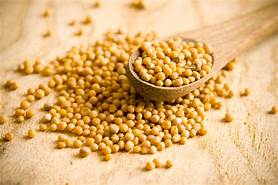
Mustard Seeds..

He said to them, “Because of your little faith. For truly, I say to you, if you have faith like a grain of mustard seed, you will say to this mountain, ‘Move from here to there,’ and it will move, and nothing will be impossible for you.”

Matthew17:20 ESV (via biblehub.com)

Faith is a vital part of life, and especially a life in pursuit of prayer. If I don’t believe that God exists, and that He rewards those who earnestly seek Him (Hebrews 11:6) then my prayers are little more than wishes made on a star or empty dreams.

Photo by sobhan joodi on Pexels.com

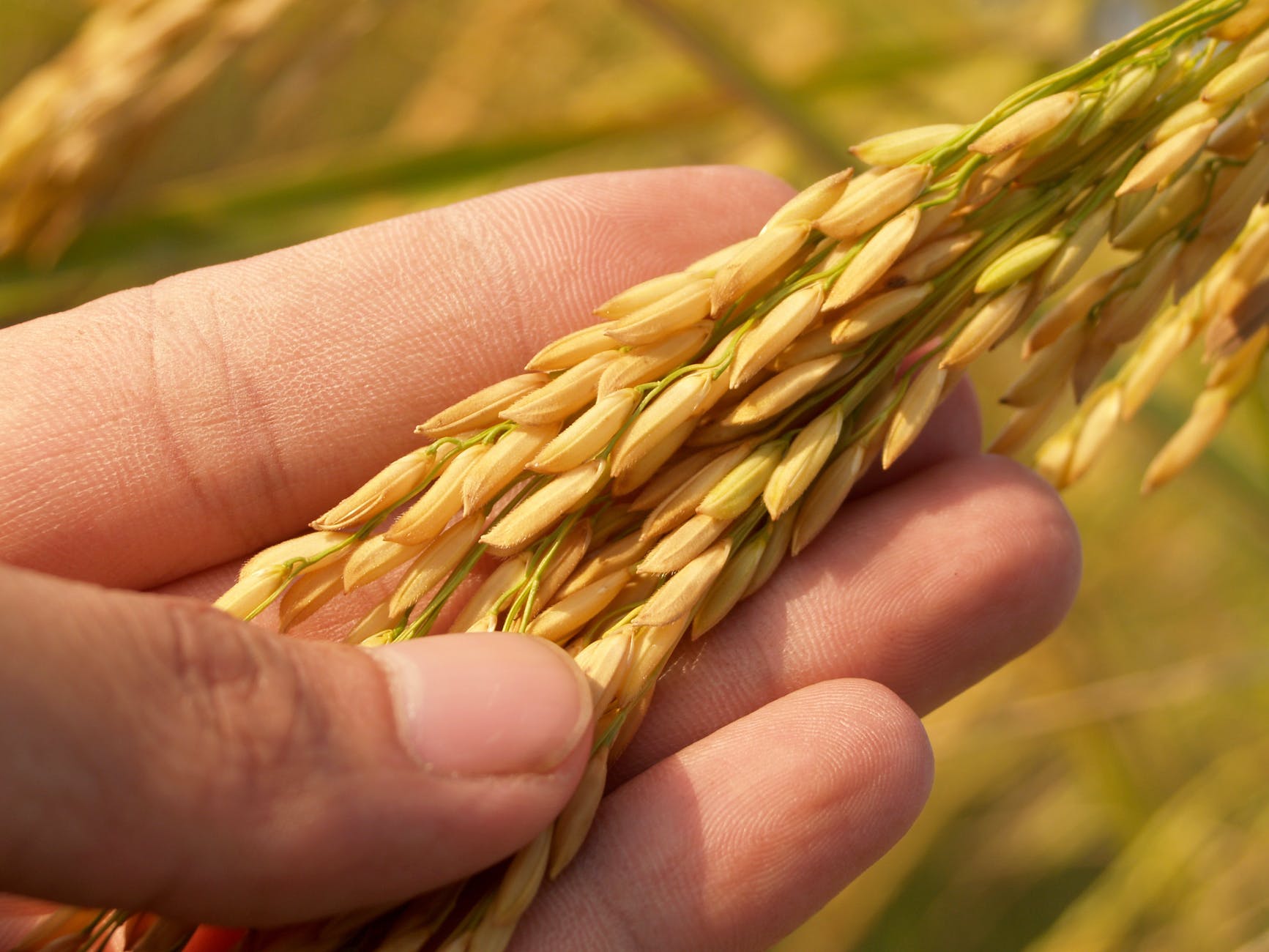
During Jesus’ ministry on earth, He lamented often that His disciples had so little faith. And yet, He said that if they had “faith like a grain of mustard seed,” nothing would be impossible. In fact, Jesus used seeds in a lot of His teaching. He talked of seeds scattered on different types of soil; mustard seeds growing into large plants; seeds in good soil yielding exponentially large harvests. There is something about seeds that can teach us about the nature of faith. And, according to Jesus Himself, we need to learn about and practice faith in greater measure!

Photo by Karolina Grabowska on Pexels.com

So what are some of the seed lessons we still need to learn?

  • Seeds start out small. Jesus used a mustard seed, mentioning that it is one of the smallest of all seeds. So often, we want to start out “large” in our faith. We see our doubts as failure, rather than immaturity. We see our slow growth as weakness–and it is! It is that very weakness that God wants to use to show HIS strength. When Jesus “lamented” that the disciples had so little faith, He wasn’t condemning them– instead He was pointing out that faith is a process–that seeds GROW into larger plants.
  • Seeds do not produce plants unless they are planted! I see websites and Christian bookstores selling jewelry featuring a small glass case with a tiny mustard seed inside. It’s a nice reminder of Jesus’ teaching about faith, but carrying around a mustard seed is NOT the same thing as having faith like a mustard seed. Faith that is never planted and rooted in good soil will remain nothing more than a seed– useful as a piece of decoration, perhaps, but dormant and unproductive. If I have faith “like a mustard seed” in money, or power, or in my own wisdom and skills, it is no more effective than if I throw it on the sidewalk, wear it around my neck, or put it in my pocket.
Photo by Torsten Dettlaff on Pexels.com
  • Seeds need soil, light, and water. Faith doesn’t grow in isolation. I need to listen to others, share with others, and, most of all, live in the good soil of God’s word. I need to pray for others– and I need the prayers of others! I need to talk to God daily; but I also need to read His words to me daily!
  • Seeds are designed to produce a harvest– fruit, grain, trees, and new seeds! I get distracted, thinking of how faith impacts MY life and my Christian walk. God wants me to grow stronger in my own, yes. But He wants my faith to be multiplied by being visible. Even a root vegetable sends a shoot or a plant above-ground, so there is evidence of growth underground. In doing go, the original seed will disappear! There are days when I cannot see my “mustard seed.” But that is (I hope) because the seed is becoming a mustard plant– producing evidence of God’s sustaining power and love, and providing “seeds” for others to plant.
Photo by icon0.com on Pexels.com

There are days when my faith may feel small and dead. But I need to remember that the power is not in the “seed” of faith– no matter how small; no matter how large its potential–it is in planting that seed and letting God’s power transform a seed into fruit that will last!

Photo by Pixabay on Pexels.com

More more on this topic, see:https://www.crosswalk.com/faith/bible-study/what-does-jesus-mean-by-faith-as-small-as-a-mustard-seed.html

Blog at WordPress.com.

Up ↑