Be Not Afraid

Have you ever anticipated something so wonderful, that, when the time came, you were almost afraid of it? Afraid that the anticipation would exceed the wonder of the actual event? Afraid that the wonder would be eclipsed by some unforeseen tragedy? Afraid that your dreams were too big? That you could never deserve such happiness or blessing?

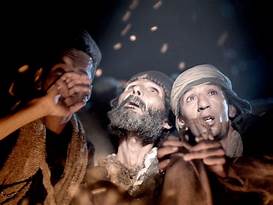
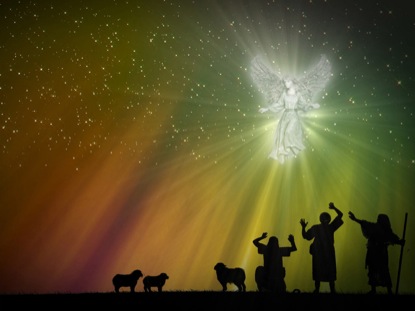
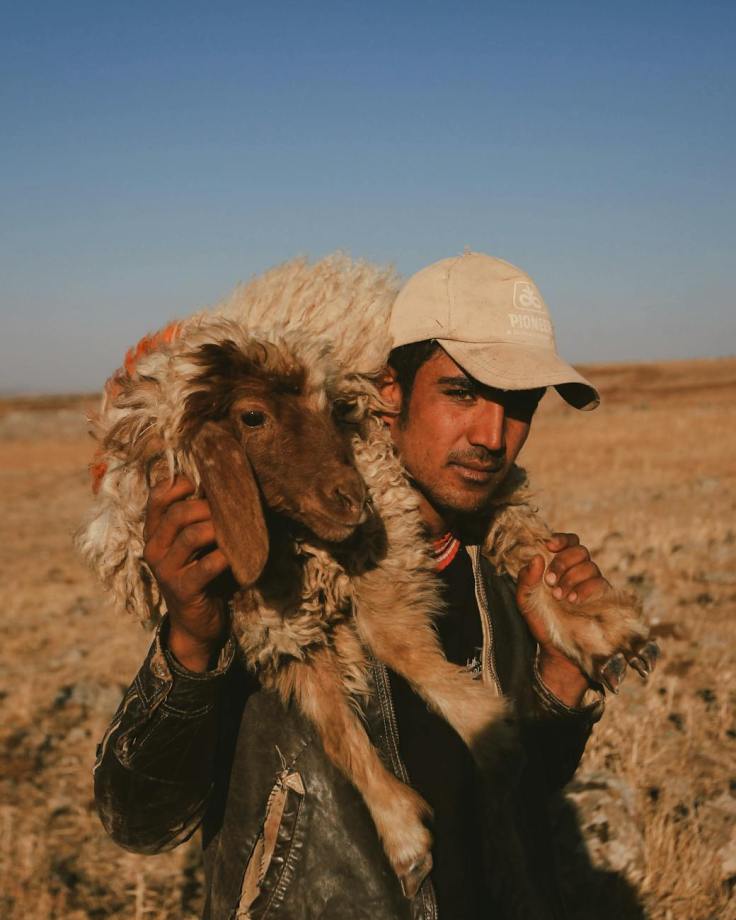
 That night there were shepherds staying in the fields nearby, guarding their flocks of sheep.  Suddenly, an angel of the Lord appeared among them, and the radiance of the Lord’s glory surrounded them. They were terrified– but the angel reassured them. “Don’t be afraid!” he said. “I bring you good news that will bring great joy to all people. The Savior—yes, the Messiah, the Lord—has been born today in Bethlehem, the city of David!  And you will recognize him by this sign: You will find a baby wrapped snugly in strips of cloth, lying in a manger.” Suddenly, the angel was joined by a vast host of others—the armies of heaven—praising God and saying
 “Glory to God in highest heaven,
    and peace on earth to those with whom God is pleased.”
When the angels had returned to heaven, the shepherds said to each other, “Let’s go to Bethlehem! Let’s see this thing that has happened, which the Lord has told us about.” 
They hurried to the village and found Mary and Joseph. And there was the baby, lying in the manger. After seeing him, the shepherds told everyone what had happened and what the angel had said to them about this child. All who heard the shepherds’ story were astonished, but Mary kept all these things in her heart and thought about them often. The shepherds went back to their flocks, glorifying and praising God for all they had heard and seen. It was just as the angel had told them.” Luke 2:8-20 NLT (Emphasis added)


The shepherds on that first Christmas were terrified– their ordinary night had been shattered by the appearance of an angel of the LORD. And that was only the beginning! The angel announced the birth of Messiah– Christ, the LORD– in the nearby village of Bethlehem. And then an angelic host– a vast army– of angelic beings chose to worship in the skies that, just moments before, had been dark, still, and lonely.
“Fear not!” “Be not afraid!” Through the terror and overwhelming glorious radiance came a calm voice. “I bring good tidings of great joy!” “..shall be to ALL people…” “PEACE on earth!” “Christ is Born!”

The fulfillment of centuries of longing was finally here. The central hope of the entire nation of Israel had arrived. And the angel left no doubt that the shepherds were welcome, even commanded, to GO and see this miracle with their own eyes. The Biblical account says that they did go– but it also says they stopped to discuss it first. They talked it over and decided to face the mixture of thrilling joy and weak-kneed trembling. Could it really be?! The Messiah! Here and now! But…a babe? Wrapped, not in robes of glory, but in swaddling cloths? And…lying in a manger? Surrounded by sheep and donkeys? What if this was a cosmic hoax? What if there was a mistake? Would they be disappointed? Ashamed? Turned away because of their lowly status?

“Be Not Afraid!” The shepherds talked it over. How could they NOT go and see? What if the news was true?! And in going, they became the first ordinary witnesses of the most extraordinary birth in history! They came. They saw. They believed! And they worshipped.

And then, they shared their experience with others. They went back. They probably shared the news first with the sheep, rehearsing how they would spread the fantastic tale to those who still lay sleeping. But they may also have shouted it in the streets, waking up all the neighbors with the joyous news. The Bible doesn’t give us details. But it does tell us that they went back with joy and gladness. And conviction–“It was just as the angel had told them.” Nowhere in the Bible story did they show any more fear. They had no doubt. The wonder of Christ’s birth was everything they had been told to expect, and more!

This Christmas, we look back at the shepherds, and we try to recapture the wonder of that Holy Night, and the visit of the angels, and the discovery of a tiny Savior in a manger. And we will have the opportunity to celebrate, just as the shepherds did.

What will be our response to His coming? Will we spend this season glorifying a praising God? Will we “astonish” our neighbors as we tell about the Savior’s birth, and His subsequent death and resurrection? Will we heed the angel’s calming tones to “Be Not Afraid” as we encounter the Messiah? As we go “back to (our) flocks” and fields and daily life?

I pray that we will “consider well” this Christmas how “our good God” gave us His “beloved Son”– born in a humble manger, willing to die a humiliating death He did not deserve so that we could be free from the curse of Sin and Death. And may we pray for the courage and conviction to live out and speak out the Joy and Glory of His coming!

Words Are Not Enough

When tragedy happens, words are not enough to bring justice, resolution, and immediate peace to the situation. “I’m so sorry,” or “I’m here for you,” or “I’m praying for you…” In themselves, the words have no power to change circumstances. Words cannot bring back a lost loved one or undo a fire or earthquake or violent attack.

Yet, when we say that we are sorry, or that we are “here,” or that we are praying, we are offering more than just the words we speak. We are offering to share someone’s grief; to help in practical ways that can ease even some of the suffering; to call attention to God’s presence in every situation, no matter how dire.

Prayers are more than just the words we speak. In Romans 8:26, the Apostle Paul says, “We do not know what we ought to pray for, but the Spirit himself intercedes for us through wordless groans.” Prayer often involves our entire being– body, soul, mind, and spirit–as we bow our heads or lift our hands, sweat, groan, go through a range of emotions from grief to praise, and try to express our heart cry in muddled words.

But prayer is not about US. It is not about our words or our emotions or even our desires. Prayer is about staying connected to God. In ourselves, we will always be insufficient. We may be able to take actions that will help others (or ourselves) achieve some measure of relief or understanding when things go terribly wrong. But we cannot bring complete justice; we cannot reverse what has already happened; we cannot guarantee outcomes. In prayer, we give outcomes and justice to the Only One who can bring true healing, justice, and peace out of our tragedies. We give up on the idea that our own thoughts and actions can overcome all the things that are beyond our control. And we lift up our questions, our fears, and our deepest hurts, with whatever measure of Faith we have, to the one we trust to make all things right. And we relinquish the idea that God MUST give us what we desire in the moment to believe that He gives us what is best according to His eternal plan.

Prayer isn’t simple. It isn’t a “cop-out.” It is a sacrifice. God may never answer our desire for an explanation, or for revenge in this life, or for a re-instatement of all that we think we deserve. But prayer connects us to the Sovereign Heart of God. Prayer doesn’t change our circumstances. It changes the way we respond to them. It changes the way we see ourselves and our own limited power. It changes the way we see others– even those who would harm (or have harmed) us.

Words are not enough– but Prayer taps into the all-sufficiency of God. That is more than enough. And the more we pursue and practice Prayer, the more we will understand its power and sufficiency.

The “Fake” Good News

I keep hearing about, and seeing reports of “Fake” News.  Even the term “Fake” News is somewhat misleading–is it news?  Is it False News?  Is it “fake” because it never happened, or because it has been exaggerated or taken out of context?  Or because it doesn’t say what I want it to say?  How do I know what is “real” news anymore?

The biggest problem with “Fake” news is that it “feels” real, true, and important.  In reality, it may be none of those things.  Yet there if often a kernel of fact, or a dusting of truth that makes it hard to disprove or dispel.  And, if it had already been accepted as legitimate news by thousands, it’s even harder to stop it from being spread.

But the more insidious problem with “fake” news is the time wasted trying to sort truth from fiction, and plain fact from exaggeration and distortion.  If my friend sends me an article, or a video, or a photo, I may accept it as true on the strength of my friendship.  But what if they’re just passing it on from another source?  What if I see it from a recognized news source?  Do I dare question it?  And if so, where do I turn to verify it?  There are several fact-checking websites, but even they have biases that cause them to weigh facts differently in various situations.  Whatever assumptions we used to hold about “neutral” reporting have been proved wrong.  We are being conditioned to trust none of what we hear and less than half of what we see!

pexels-photo-256868.jpeg

What about the “Good” News that Christians carry into the world?  Is it like the “Fake” news we see on TV or read about on our tablets?  And if someone challenges our faith in God’s word, how can we prove that the Gospel is not “Fake”, and that our Faith is not just more hype with smoke and mirrors?  If we are pursuing prayer, shouldn’t we be confident that our prayers are not in vain and that our faith is sound?

The claim of “Fake” news makes an assumption that there is such a thing as “True” news.  Similarly, saying the Gospel is “Fake” assumes that there is an alternate truth.  But the real burden of proof is on those who want to push for the alternative.  The truths of the Bible have been time-tested, and shown to be real.  The challenges I hear most often are to the exceptions, not the rule.  I don’t hear anyone saying that “Thou shalt not steal” is a “fake” morality.  Instead, I hear that, “Christianity is fake because I know Christians who cheat and steal.”  I don’t hear people claim that “it is not morally wrong to kill.”  Instead I hear them justify exceptions.  “I’m not promoting abortion as a good thing.  I don’t think it’s right to kill another human being, but this is just a fetus, and anyway, I’m just protecting a woman’s right to her own body.”  “I don’t think it’s ethical to force someone to stay alive if they are in pain and they want to die.”  “You can’t go around just killing anybody, but I think it would be better for everyone else if ___________________ (insert the name of a group– Down’s Syndrome children, Jews, Sunnis, Hutu/Tutsi) didn’t exist.”  “I don’t believe the morals found in the Bible are wrong.  I just don’t think you need to believe the rest of it to “be moral.”

People point to single passages, single verses, even single words to “prove” that the Bible is racist, sexist,  intolerant, and promotes violence.  The Bible includes many examples of people NOT following God’s laws, and yes, the results are grisly.  And there are difficult passages when God calls for a wicked city to be destroyed completely.  Critics are not wrong to point out that the Bible is not about perfect people behaving perfectly.  And the same Loving God who frees the slaves from Egypt is the God who destroys Jericho, and Sodom and Gomorrah.  Taken out of context, these few examples may seem to cast doubt on the authority of God’s word.  Yet the same critics who pound away at the same few examples in the Bible discount hundreds of instances of  historical events that highlight human sacrifice, genocide, mass infanticide, slavery, torture, and all sorts of other evil that occurred without the Bible’s influence.  Moreover, I hear a lot about claims against “Christians” who fought in the Crusades or owned slaves–I hear a lot less about Christians who worked to end slavery and the slave trade, or Christians who founded universities, charitable institutions, or brought revivals that sparked decades of social progress throughout countries and continents.

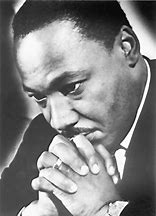
pexels-photo-305530.jpeg mlkjr

I don’t hear many people claim that there was no such person as Abraham, or King David, or Solomon, or Nebuchadnezzar, or Pontius Pilate or Caesar Augustus.  But they want to deny the historical reality of Adam and Eve, Jesus of Nazareth, and the Apostle Paul, who are found in the same Bible.  Why?  Because if Adam and Eve are real, there must be a creation and a creator.  If Jesus really lived and said the things that are attributed to him, we must deal with the claim that he was Messiah.  If the Apostle Paul really lived and wrote his letters to the churches of Asia Minor, we must deal with his claim that he encountered the risen Christ and his life was dramatically and eternally changed.

However, there is a “Fake” gospel– Good news that doesn’t match the Biblical account–a “Fake” Christ that only said or did or “would do” what we want him to say or do; a Christ that isn’t holy or righteous, but just loves us because it’s the “zen” thing to do; a Christ who is without power to save or to sanctify; a Christ who is without mercy and loves only those who look the part or say the right things.  How do you spot a “Fake” Christ and a “Fake” Gospel?  Get to know the real ones of the Bible.  You’ll soon be able to spot an “imposter.”

“Fake” News will always fail the test of time and the challenges of real evidence.  Good News will transcend the test of time and the challenges of faulty evidence.

person-clinic-cross-religion-54333.jpeg

Christ Has Died, Christ Is Risen, Christ Will Come Again!  THAT’s the Good News!


“To Love Thee More Dearly…”

How can I love Jesus more than I already do?  If I can love him more, does that mean that I don’t love Him enough?  That I don’t really love Him as much as I think I do?  That I love Him the wrong way?  How can I “love thee more dearly…day by day”

I want to explore the second prayer in the folk rock song “Day by Day” from the musical “Godspell” (see my last post).  When I write about pursuing prayer, this is a major focus of the pursuit– to develop my love for Jesus.  But there’s more to it than just spending more time, or even “better” time in prayer.

silhouettes of couple kissing against sunset

I love my husband, and that love grows over the years– not because we are in an eternal “honeymoon” period, where life is rosy and all I know about him is the wonderful image I’ve built up–but because in living with him, working with him, even struggling with him, I learn to value who he really is.  I learn about qualities I never knew he had.  I learn to trust him and respect his judgment; I learn about the deepest part of his heart that he only shares with those closest to him.  And even though I learn about his faults, I see him desiring to be the best that he can be.  In his turn, my husband does the same with me– learning my strengths and weaknesses.  Together we learn how to work together to strengthen and support each other.  We even learn how to argue better!

But we all know marriages (and no marriage is immune) where doubt, distrust, disdain, and despair creep in.  The very qualities that attracted us in the beginning become sore spots that tear us apart.  The joy is swallowed up in little hurts that go unresolved; little misunderstandings that grow into lengthy silences and slammed doors.  Struggles that should bring us together cause us to run to separate corners.  Our feelings change, our hopes are dashed, and our relationship crumbles

woman and man sitting on brown wooden bench

Relationships require trust–if I say that I love God, but I don’t trust Him, I’m not being honest with myself.  If I pray to Him, but I don’t really think He’s listening; if I read His word but make excuses for my continued disobedience–I don’t really love Him.  I may idolize Him, even worship Him.  But I don’t really love Him.

adults couple couple walking grass

Unlike a marriage partner, family member, or close friend, God’s love for us never changes.  We never have to pray that Jesus should love US more dearly.  It’s impossible.  The same love that spoke the universe into being and designed you to be the awesome and unique person you are, is the same love that stretched out his arms so they could be nailed to the cross– the same love that calls out to you no matter what you’ve done or who you are and offers you peace, joy, and rest.  Loving Jesus isn’t a matter of measuring how I feel about Him from day to day, but spending each day learning to know Him better for who He is and not just what He has done or what He can do for me.  The prayer should be for me to really learn better how to honor Him, how to trust Him, how to obey Him, praise Him, listen to Him, and walk close to him.

More about this last one next time…

How Great Thou Art

Then sings my soul, my Savior God to Thee; How great Thou art, how great Thou art!

wild-flowers-flowers-plant-macro-40797.jpeg

Clouds dot the cerulean sky,
A gentle breeze whispers,
And flowers nod as I walk
A country path.
Then sings my soul.

photo of buildings near ocean

Trees bow and rain coils,
Gales roar and city streets
Shiver as I wait
In sheltered awe.
Then sings my soul.

pexels-photo-539944.jpeg

A newborn nestles in my arms
Making sucking noises
In its slumber,
As arms and legs
Learn to measure open space.
Then sings my soul.

trees in park

Families gather in black
Murmuring comfort
In somber tones
As they learn to
Measure the empty space.
Then sings my soul.

animal avian beak bird

How Great Thou Art!
How awesome in power!
How glorious your Creation!
How mysterious your ways!
How lavish in Life,
And triumphant over Death!

My souls sings;
Sometimes sweet and low,
And sometimes keening.
My soul dances;
It reels and skips and sways.
My soul cries and laughs and trills.
But always, it says,
“How Great Thou Art!”

sky space dark galaxy

All Creation Sings His Praise

Tigers and turtles; flamingos and fleas; whales and warthogs; skinks and skunks; rocks and rosebuds; Eskimos and Ecuadorians–God’s world is filled with variety.  Chirping birds and thundering herds; roaring seas and buzzing bees.  Colors, sounds, smells, and sensations– we are surrounded by glimpses of glory, echoes of eternity, and hints of Heaven.

daylight forest glossy lake
cascade creek environment fern

Often, we take for granted the beauty of God’s creation– we don’t stop seeing it, we just stop marveling at it.  Instead of drinking it in, we drown it out.  We criticize, analyze, and theorize…why did God make rats?  how does He exist outside of time?  when will He change the seasons this year (will we have spring?  how long will winter last)?  what is the purpose of dust?  why are some animals (or rocks or plants) colorful, or noisy, or deadly, or smelly, or slow?   And we miss the forest for the trees– we get caught up in the amazing details and infinite variety in creation, and miss the majesty of the creator– His sense of the ridiculous in things like tumbleweeds and walking sticks, dust devils and platypuses, or His artistry in butterfly wings, dew on spiderwebs, and cascading waterfalls– in geodes and dimples and mewling kittens.  We miss the elegant design in a bees knees, or galaxies, or a banyan tree.

God creates– it is an element of His character.  And we are made in His image– we long to create.  From drafting sentences to making a pie to shaping a piece of wood into something sturdy and useful– we long to produce, to concoct, to cause growth, to heal, to nurture, and to effect change.  We are also created with a deep appreciation of creation– the wisdom and the work it takes to set planets spinning, and ecosystems cooperating, and to unfold a new sunrise every morning.

sunset sunrise nature field

If you haven’t already, take a few minutes asking God to open your eyes and ears to the song and dance of creation today–from dandelions to darting dragonflies to the amazing variety of people dodging traffic or making conversation around you.  Join in!

Coming Out of the Closet

For anyone who is reading this expecting a big announcement or a shocking confession– please don’t read too much into the title…this is a blog about a lifestyle of prayer, not about gender identity or sexual orientation.  I want to talk about the benefits of communal prayer as opposed to prayer that is deeply personal, and takes place in isolation.

There is a time and place for solitary meditation and prayer, and it should become our habit and practice to meet with God daily.  But we are told that we should also meet with and interact with others– and this includes sharing our prayer life.  For many years, I was one of the “lone rangers.”  I rarely met with others specifically to pray or even share prayer concerns.  I would get notices on FB or e-mail, or in the church’s weekly newsletter, but it wasn’t the same.  Just as God wants to hear our hearts and share communication and communion with us, he wants us to share closeness with others.

gracelady

Why isn’t it enough to just go into the closet (or other quiet space) to pray?  What are the benefits of praying with a small group?  Here are some:

  • We need social interaction– FACE-TO-FACE interaction.  God did not create us to live in isolation. We need to have eye contact, hear inflections and tones of voice from others, and to have others listen to ours.  We need to share more than just stories on a screen– we need to share laughter, tears, and common ground.  We make deeper friendships when we share concerns (not gossip), struggles, and triumphs (not bragging).  And we can share burdens, recipes!, helpful tips, jokes, and more
  • Meeting with others helps us keep our perspective–when we are alone, our problems become bigger; our joys fade, and our talents waste away.  Meeting together helps shrink our worry and pride, ignite our hope, and drive our confidence.  It also opens up our world to the experiences and concerns of others and teaches us about differences and commonalities
  • Our faith is strengthened to hear from others who are “in the same” place in their walk; it encourages us to hear from others who have been “through the fire”; it reminds us to be grateful, and gives us an opportunity to build someone up if we have been in their shoes; and it amazes us to hear again what a mighty God we serve, and how he has been faithful
  • Communal prayer creates a time to break us out of our routine– whether that routine is zooming or “glooming”– we need to mix things up and get out of our rut
  • God commands us to meet together, to live in unity, and to lift each other up

Can you think of other benefits?  Are you in the habit of praying with others?  If not, you may be wondering– how do I find others?  What are the ground rules (if any)?  Are there issues I should be aware of?

Once again, I can list a few that come to mind or that have arisen from experience:

To find others:

  • Join an existing group– a Bible study group that includes prayer time; a weekly or monthly prayer meeting group; a special interest group within a local church– Moms of Pre-schoolers, or a Dorcas group, or a volunteer group that includes prayer
  • Start up a group!  Meet weekly, twice a week, monthly– whenever, wherever, and whatever works for you and a few others.  If you don’t have a space in your home or don’t want to meet at a church, be creative– meet at a park or a local coffee house, or take turns hosting a prayer meeting with others in your group.  Don’t be discouraged if there are only two in your “group”; and don’t feel bad about keeping your group limited– you may find enough interested people to form two or three groups in your neighborhood!
  • Think outside the box– you may stumble on to a group during your commute to work each day; in your child’s play group; at the gym; at a neighborhood church you have never visited (it doesn’t mean you are being “unfaithful” to your church to reach out to fellow brothers or sisters throughout the week!)

Ground rules:

  • Groups should have some structure, leadership, and accountability
  • Participants (including leaders) should be careful not to confuse gossip for “concerns”, or use the group for a sounding board, on-going therapy, or a captive audience for their personal drama or their political or social agenda
  • Group leaders need to create boundaries, so participants feel free to share real burdens and concerns but take responsibility for others’ privacy and vulnerability
  • Groups should be open to visitors, new members, and seekers of all backgrounds
pexels-photo-754769.jpeg

Issues to watch for–Any group that is made up of humans can fall victim to unhealthy and unwholesome practices.  Just because a group meets with good intentions and calls itself a prayer group doesn’t mean that it is a “safe” place to meet.  Keep your eyes and ears open for the following:

  • Groups that make you feel uncomfortable for showing up, or for sharing (or not sharing every one of) your authentic concerns, your questions, or your feedback.  Sometimes, we can feel uncomfortable sharing about ourselves because we feel shame or guilt about our past or about our lack of knowledge or experience; sometimes we’re defensive or hypersensitive because we’re in a new situation.  But if you are being made to feel ashamed or isolated or patronized, especially if you are being labeled or discriminated against, get out.  LEAVE– shake the dust off of your shoes as you go  (One caveat here– there are groups that meet for specific issues (see below)…if the group is meeting to pray as parents of toddlers, and you aren’t a parent or grandparent or aunt or uncle of a toddler– not only will you feel uncomfortable, but so will the rest of the group.  You should still leave this group, but you can forego the shoe shaking…)
  • Groups that have one or two members who dominate and intimidate the other members.  Leaders need to provide boundaries and structure, but they should not squash authentic dialogue or force everyone to listen to someone else’s “true confessions” (especially if it’s a repeat of the last meeting!)  This is more a “comfort zone” issue than the first one– some groups just have a couple of “talkers” and a couple of “listeners”–the point here is that there needs to be a balance so that all members have a chance to contribute
  • .
    arrogant
  • Groups that get “taken over” or sidetracked by a single issue– unless that is what you signed up for.  If you are a group whose purpose is prayer, it’s not safe to assume that everyone in your group will also want to go on a protest march or volunteer an entire Saturday at the soup kitchen.  There’s nothing wrong with other activities, but it shouldn’t be a requirement of your prayer group (see above)
  • Groups that are only “token” prayer groups–they may “share” what’s going on in their families as “requests” but they don’t actually take time to pray about them in the group setting.  They talk and eat, and maybe even say “spiritual” things.  There’s nothing wrong with friends getting together, whether they pray or not, but if you’re going to call it a prayer group or a prayer meeting….
  • pexels-photo-618544.jpeg
  • That brings me to the group that uses “prayer” as a cover for gossip or grumbling.  Prayer should be constructive and God-centered.  If it isn’t either, it isn’t really prayer.  Even if it sounds positive and holy, if it is centered on how “blessed” you are, or what you know God needs to do in someone else’s life– it isn’t really prayer unless His name is magnified and ours is minimized.
  • Any group that does not honor God’s word, God’s sovereignty, or God’s goodness–Not every group that prays is praying to Almighty God, in the name of Jesus Christ, or for His will to be accomplished.  While prayer groups should be open to all people, and there are wonderful opportunities for ecumenical and all-faith prayer in the public forum, a weekly or monthly prayer group is probably not the best venue.  That being said, I recommend exposure to various Christian prayer styles and practices– formal and ritual prayer, spirit-filled worship prayer, gospel-infused crying out, simple “popcorn” utterances, and eloquent prayers that roll off righteous tongues in an engaging crescendo, punctuated with holy hushes.
pexels-photo-267559.jpeg

A Drop in the Bucket

We had a leaky faucet the other day–drops of water dripping into the sink, “plink…plink…plink.” It was an annoyance. I put a container under the faucet to catch the water as it came out. It wasn’t a large container, but it filled up and had to be emptied, before it could overflow. It seemed such a waste; each drop just dribbling away to no good purpose.

Sometimes, I feel like my prayers must be like those drips from the faucet; that they are just drops in a huge ocean of prayers and requests being poured out by people all over the planet. But that is not true. According to the Bible, God experiences our prayers as an aroma, like incense, rising up to Heaven, where He breathes them in. (See Psalm 141:2 and Revelation 5:8, among others.)

My prayers may feel small and insignificant, but they blend with the prayers of others into an intoxicating aroma of praise, worship, dependence, submission, obedience, sacrifice, awe, reverence, reflection, repentance, joy, and even grieving tears. My prayers are part of something magnificent and mysterious. So are yours!

To pray is to offer ourselves to God– our thoughts and emotions, our time, our gratitude, our honesty, our humility, and our joy.

Just think of the power of a majestic waterfall, or the might of the ocean waves– all made up of tiny individuals drops of water. Water can turn turbines to produce electricity; water can carve canyons our of rock; and water can change landscapes or reshape landforms. And there is power in the volume of water, or of prayer. But there is also the mighty power of the Holy Spirit inhabiting our individual prayers. Each single “drop in the bucket” holds amazing worth and power in God’s hands.

So don’t turn off the spigot of prayer today. Let each drip and drabble do a mighty work!

Treetop Prayers

There is a zoo, about an hour from my house, where you can climb up on a platform at certain times of the day, and feed giraffes.  Since giraffes are not native to the American Midwest, this is probably the closest I ever have come, or ever will come, to a live giraffe, and I have enjoyed the opportunity to interact with this unique member of God’s creation.

Giraffes are grazers, but their unique bodies are not best designed for munching on grass or other low-lying plants.  Instead, their focus is on the tops of trees and tall bushes.  For me to feed a giraffe, I need to be at the level of the tree branches.  And it changes my perspective.  I’m no longer paying attention to ants and blades of grass.  I can see landscapes and clouds for miles stretching out around me.  Not a bad view at all!

pexels-photo-772662.jpeg

Yet giraffes are still grounded–they do not soar like eagles, above all the clouds and unattached to the earth.  Giraffes must still be on guard and prepared to flee danger from predators or grass fires.  But their unique height and perspective give them a better view to see the danger from far off, and act accordingly.

Sometimes, I think we are called to pray with a giraffe’s perspective–to look up and out and pray from the treetops–a little closer to God and leaving behind the small things of the world.  Lofty prayers of gratitude and praise; prayers that recognize that there is a big world of wonder all around us.  Prayers that look ahead and can see trouble on the horizon; to seek God’s face early and prepare for hard times ahead.

pexels-photo-235734.jpeg

This doesn’t mean that we will always be in a place to pray treetop prayers. Sometimes, we need to pray from the depths. There are days when we cannot lift our eyes without help from the very God to whom we pray. But we are called to walk THROUGH the valleys, not to stay in them! We should feel confident that God will still hear us, no matter where we may be.  But the Bible reminds us often that we should look up, ascend, raise our eyes, and change our perspective.

  •  I lift up my eyes to the hills. From where does my help come? My help comes from the Lord, who made heaven and earth. Psalm 121: 1-2 (ESV)
  • Lift up your eyes and look to the heavens: Who created all these? He who brings out the starry host one by one and calls forth each of them by name. Isaiah 40:26
  • Since, then, you have been raised with Christ, set your hearts on things above, where Christ is… Set your minds on things above, not on earthly things. Colossians 3: 1-2
  • But as for me, I watch in hope for the Lord, I wait for God my Savior; my God will hear me. Micah 7:7
  • So we fix our eyes not on what is seen, but on what is unseen, since what is seen is temporary, but what is unseen is eternal. 2 Corinthians 4:18
  • “Surely then you will find delight in the Almighty and will lift up your face to God.” Job 22:26
  • “But you, Lord, are a shield around me, my glory, the One who lifts my head high.” Psalm 3:3

I plan to take some time today for treetop prayer.  Will you?

Sacrificial Prayer

I call this blog “Pursuing Prayer.” I believe prayer is a pursuit; a discipline that one can learn from, grow into, and practice faithfully in life. But prayer is also a sacrifice. It involves giving of time, space, and honest reflection.

Sometimes, prayer is a willing and joyful sacrifice. I want to come and spend time with My Father in praise and worship, adoration, and even asking for His guidance and wisdom. But sometimes, the sacrifice is hard. I may dread coming to God when I know I have been dishonest or unfaithful. Like any relationship, I cherish the easy times, the relaxing times, and the expectations of challenges met and conquered. I don’t look forward to the hard work, the waiting, or the corrections that God may have for me.

One type of sacrifice that doesn’t belong in the prayer of a believer is the Sin sacrifice. As described in the Old Testament books, the sin sacrifice had to be given to cover over the sins of individuals, priests and even the entire nation. The Israelites even had to give a sin offering for unintentional or accidental sins!

Unfortunately, I sometimes make the mistake of thinking that I must make a similar “sin sacrifice” in my prayer life– that I have to rehearse and recount all my past sins before God will hear me or act on my behalf. And that is NOT Biblical. If we are truly trusting in Jesus’ finished work on the cross, we are not obligated to offer token sacrifices as a means of covering over our past. Christ’s blood IS sufficient! (See 1 John 2:2, 2 Corinthians 5:21,1 Peter 2:24, and Romans 5:9 among others)

So when I talk about prayer of confession, I’m not talking about pouring out long laundry lists of sins I committed last week or thirty years ago. God already knows– in fact He knew about them before they happened!–and He has already forgiven me. That doesn’t mean that He wants me to pretend they never happened or that He doesn’t want me to feel the regret or understand the consequences of what I have done. Instead, He wants me to understand and rejoice in His overwhelming Mercy and Grace! My sacrifice, when I confess my sins, is a sacrifice of praise for God’s willingness to offer what I can never earn or deserve or atone for– complete forgiveness and restoration! I am agreeing with God about who I am and what I’ve done, AND about what He has done for me!

There are other times when prayer can be a difficult sacrifice. Sometimes, I am compelled to pray for those who have hurt me, or those whose actions have hurt others. I am commanded to pray for leaders– that may include church leaders who have sinned, or national leaders who have broken their promises or caused great damage. I am commanded to love my enemies, even if they never repent for things they have done.

Once again, I should be reminded of the sufficiency of Christ’s sacrifice for our sins. He didn’t just die for my Sin; He died for the sins that were committed against me. I may still feel the pain and consequences of that Sin for as long as I live on this earth. But I can trust and be confident that God has dealt with it. And that causes me to rejoice, because I can’t turn back time; I can’t undo the bad things that have happened; I can’t create perfect justice to punish my enemy. But I can let go of the burden of trying to make things “as they should be.” God will do it; He has promised! I can stop wallowing in the “what ifs” or the “what-could-have-beens;” the endless “whys” and “why me’s” that take up so much of my time and focus. Instead, I can leave them as a sacrifice on the altar of prayer, pledging my trust in the Almighty to heal and help me forgive as I have been forgiven.

We don’t practice the old animal sacrifices of the Old Testament. And we don’t have to! But sacrifice is more than just bleeding sheep and burning incense. Sacrifice is offering all of who we are to the One who created us, sustains us, forgives us, and gives us abundant life!

Blog at WordPress.com.

Up ↑