
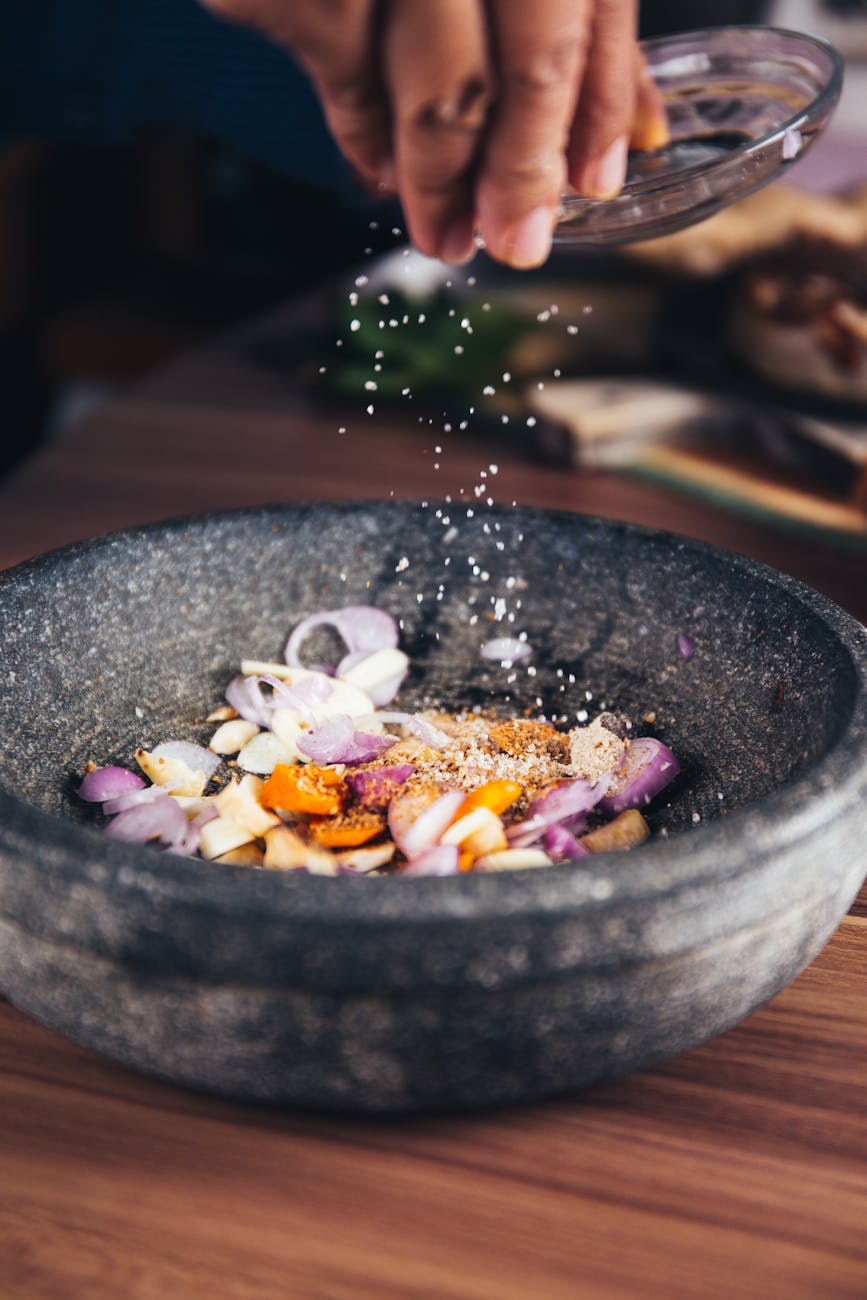
Recipe for Prayer

I love to cook. I’ve been cooking for most of my life, and sometimes, I don’t use a recipe. Often, it’s a dish I’ve made so many times, I make it from memory. Other times, I’m adapting for ingredients I have, or substituting one cooking technique for another.

But I don’t recommend creating a new dish without a recipe or guideline. Cooking is a lot like chemistry– too much of one ingredient, or leaving out another one entirely, can result in disaster! You can’t just throw together a little of this and a little of that, cook it for who knows how long, and expect good results.

The same can be said for pursuing prayer as a lifestyle. I use a “recipe” for prayer. And yes, there are times when I vary from it. But a good, healthy prayer LIFE should contain the following four ingredients:

Praise/Worship/Adoration: After all, we are not praying to an unknown being with unknown qualities. We are praying to the One True God, whose marvelous attributes are worthy of unending praise. If I am praying regularly, and NOT praising God, what is the purpose of my prayer? It can devolve into a laundry list of my complaints, worries, wishes, and whims, instead of being a conversation between a child and her Beloved and Faithful Father.

Confession/Repentance/Review: This ingredient is a stumbling block for many people. If we have been forgiven, why do we need to confess or repent? God already knows our deeds, and Jesus’ death and resurrection have already removed our sins as far as the East is from the West, right? Right. But Confession is not about beating ourselves up over wrongs we cannot undo. Rather, it is simply agreeing with God about our condition and actions. Yes, Jesus has forgiven me. But I need to acknowledge who I am before Him. I am forgiven, not by being better than someone else, or even better than I was before, but because God has extended His Grace and Mercy. And if I don’t remind myself of this fundamental truth, I may forget, and begin to believe that I no longer “need” God’s mercy in my life.

Asking/Requests/Supplication: Supplication is an old word that means asking or pleading. Once again, this can be a stumbling block in a couple of different ways. As with confession, God already knows what we are going to ask. He already knows our needs. Saying them isn’t about making God aware; it’s about giving us a chance to seek HIS mercy, HIS will, and HIS answer. And it’s about acknowledging HIS sovereignty in all aspects of our life. I can’t count the number of times I have asked God for something, and realized that I was not really asking, but rather trying to dictate to God what I wanted to have happen. If I’ve started with the first two ingredients above, I quickly realize that, while God knows what is in my heart, He also knows what is best– and often that is much larger or better than I can imagine!

Thanksgiving/Responding/Yielding: The last ingredient in a healthy prayer life is a heart bursting with Thanksgiving and willing response to God’s Love and Care in my life. Prayer is, at heart, a conversation we have with God. And part of any good relationship is affirming that bond. If I talk with my friend, and even ask a favor, or share some of my burdens, I don’t just walk away without acknowledging how much their friendship and love mean to me– regardless of whether they respond immediately to my request. And I don’t listen to their loving advice and support and walk away as though they never spoke. Prayer should include a time of saying, “YES!” to our relationship with Jesus. YES, I trust you. YES, I gladly accept Your will and all the blessings You have provided in my life. YES, I will obey you and follow you!

Of course, every prayer and every pray-er is unique. Some prayers will have more asking than confessing; others will be “heavy” on Thanksgiving (especially those coming up later this month!). But it is good to stop and consider how the “ingredients” of prayer are producing a harvest in the way we live and the way we pursue a Godly lifestyle. For more about this topic, see https://www.dailyeffectiveprayer.org/prayer-acronym/ and also https://proverbs31mentor.com/acts-prayer/.

Building Blocks of Healthy Prayer

When I was in elementary school, we learned about nutrition. Back then, we were taught that there were four basic food groups (nutrition education has gone through several “cycles” since then– food pyramid, healthy plate, “eating the rainbow”, etc.). Eating a healthy balance of foods is essential to good health. If I only eat meat, or only sweets, I will not be healthy. If I just eat whatever or whenever I feel like it, my body won’t get all the necessary nutrients to grow, fight off diseases, and stay strong.

Pursuing a healthy prayer life includes essential “building blocks” or nutrients, as well. Over the course of many years, I have seen various guidelines and acronyms to help include different building blocks in prayer. I want to share a couple of them again today. These guidelines are just that– guidelines. But they can help balance our prayer life, and help it grow.

The first acronym I learned, and the one I have used for decades, is ACTS. Here’s how it works:

  • Adoration/Acknowledgement– begin each prayer by acknowledging God’s Sovereignty, His Holiness, His Goodness, and other qualities worth worshipping. This helps put you in the right frame of mind when talking to God. I am not just talking to a neighbor or a “good buddy”– I am speaking with the One who holds all of Creation in His hands! And He WANTS a relationship with me! He is all-powerful: there is nothing I can ask that He cannot do! His is all-loving: there is nothing I can ask that He won’t filter through His loving wisdom and will. Even if I don’t know what to ask for; even if I ask for the “wrong” thing– God will only allow those things that He can use for good. God is beyond space and time: He knows all that has happened– all the triumphs and tragedies of my life so far, and all that is to come. He is LORD: He is in control– now and forevermore. Whatever seemingly impossible circumstances I face, they are nothing compared to the eternal, almighty plans of God.
  • Confession–This doesn’t mean an endless repetition of all my failures and sins from six months ago, or raking myself over the coals for not being “holy enough.” This is an honest assessment of who I am in relation to God. God is Holy and perfect. I am not. If I acknowledge God’s goodness, I must also acknowledge that I fall short. I don’t know everything. I don’t always act with the right motives. I NEED the Holy Spirit’s guidance, and I DEPEND on Christ’s finished work on Calvary for my Salvation. This should naturally lead to
  • Thanksgiving/Trust– I can trust God to save me, NOT because of who I am, but because of what He has done. I can see God’s hand working in and around and through me as I yield to His Spirit in me. I can recall, and acknowledge so many of the ways that God has blessed me and others around me. Once I have these building blocks in place, I can bring burdens to God through
  • Supplication– this is just a fancy term for asking God to work His will in specific areas– healing, guidance, encouragement, strength, understanding, submitting to His will, and following Him. I can ask for personal help, or lift up family members, neighbors, friends, and yes, even enemies! I can pray about situations great and small–from wars and famines to lost keys and short tempers.

I learned about ACTS when I was in college, and I have found it to be a great guideline. While I don’t use it for every prayer– sometimes an issue calls for immediate and direct supplication, for instance– I find that using this in daily prayer helps me grow in faith, patience, endurance, and hope. When I come to God in panic or stress, and I haven’t built up a healthy, consistent practice of prayer, my words can be anemic– lacking in faith and based on my fear or anger. I pray with my focus on problems, rather than on God’s power to overcome any circumstance. Using ACTS helps me remember that it is GOD who “acts,” and always for the best!

The second acronym I have used is PRAY. It is very similar to ACTS, but the end focus is slightly different:

  • Praise/Adoration– once again, it begins with praising the God who is worthy; the God who hears me, sees me, loves me, and knows what is best. I cannot live victoriously without remembering the source of hope and victory, and putting my heart in HIS hands.
  • Repentance– as with Confession above, this is not an act of groveling and rehearsing past shame. It is acknowledging anything that I might be holding on to that gets in the way of my worship of and submission to God’. E.M. Blaiklock, the Christian apologist from New Zealand once said: “God alone knows how to humble us without humiliating us and how to exalt us without flattering us.”  Repentance is not about humiliation or holding on to guilt, but rather about staying humble and honest about our need for God’s Grace and Power. And turning from anything that might get in the way of following Jesus Christ.
  • Ask– once we have a right view of who God is, and who we are, we are free to ask Him whatever is on our mind, and share our questions, fears, burdens, etc., with the One who has all the answers!
  • Yield/ “Yes, LORD!”– The final step is making sure we are ready to listen and respond to God as we expect His answer. No matter what God’s answer may be, we should trust and obey His wisdom above our own.

I have come to value PRAY as a wonderful tool to help in my pursuit of prayer, and in my broader pursuit of Christlikeness. Both ACTS and PRAY help me pray “better.” It’s not that God grades my prayers or listens more or responds differently: but it helps me to better appreciate the power of prayer, and the power behind prayer. Individual prayers can change circumstances, but the pursuit of prayer is meant to change US as well. Prayer that shapes us, helps us grow– if that isn’t at least part of our pursuit of prayer, we are missing out on what God wants to do through us, and not just for us.

It is important, just as with nutrition, that we have a healthy balance in our prayer life. That balance consists of worship, repentance, sharing our burdens, showing gratitude, and offering ourselves in humble service. Prayer is too important to just “wing it.” We need to pursue it with the same (or better!) dedication that we give to our physical health.

Blog at WordPress.com.

Up ↑