Why Do I Pray?

I pray every day. But why? There are short, glib answers– “Prayer works,” or “The Bible tells me to.” Or I could say that it’s just a “good” habit, or that it “does something” for me. But prayer is more complex than that. I can give a lot of generic reasons for someone to pray. I can list (and have listed) many benefits of regular prayer. But what are my personal reasons for praying?

Prayer does “do something” for me– lots of somethings. Not every time; not always in the same measure, but prayer can:

  • Put me in a better mindset; it changes my focus and my attitude. When I pray, the world around me shrinks, along with all the worries and distractions it presents. Instead, I begin to focus on “God” things– the metaphysical reality that I am not the center of the universe, and my limited understanding is not enough to navigate life in its fullest sense. Jesus offers “abundant life” (See John 10:10)– life to the full. And prayer ignites that, taps into that, and lifts me from futility and confusion to meet with One who sees the end from the beginning.

  • “Recharge my batteries.” Prayer, meditation, “quiet time”– they are all similar, and they all have a physical benefit. Spending time in prayer can lower blood pressure, promote clearer thinking, and increase a person’s ability to withstand stress. Prayer can improve mood, but it can also improve the body’s ability to fight off depression, infection, and other stress-related issues. This is very personal for me, because I have struggled with stress and depression at various times in my life, and prayer can calm me, help me to change negative thought patterns, and endure hardship better than anything else. (Please note this does not mean that I don’t also need to do other things– proper diet, plenty of sleep, hydration are all necessary. Some people may require medication– prayer is not a substitute for good health advice, rather it is an integral part of being physically and spiritually healthy.)
  • Deepen my faith. God doesn’t always give immediate and clear answers to my prayers. In fact, it may feel sometimes as though He has forgotten me. So why continue to pray? Because God DOES answer prayer. Often, He answers in surprising and unexpected ways. Sometimes His answers come so slowly, so subtly, that I might miss them– if I weren’t keeping track. This is one of the great benefits of keeping a prayer journal or diary…I will often see an old entry, one that I had given up on or forgotten, and realize that God answered it weeks ago without any startling revelation or dramatic rescue. If I only pray when I expect God to do the impossible immediately, I may miss the development of something even more amazing that I imagined!

  • Become a vital part of my discipleship. Being a disciple literally involves discipline…I can’t say that I follow Christ part-time. Ignoring daily habits, like prayer and Bible study; failing to make time for fellowship with others; depending on my feelings instead of God’s Truth to guide my life– is hypocritical. Also, prayer should open my heart and mind to others who need to BE discipled. And this leads me to another benefit…Prayer can
  • Help me develop empathy for others. As I pray for others, I learn more about the struggles they face; I learn about their deeper needs. For instance, I may begin praying for someone with a chronic illness to be healed. And that is good. But as I pray for them daily, I learn that along with healing, they desire help with everyday chores that they can no longer do, or they need support and encouragement. Maybe they need rides to doctor appointments and tests. If I am praying for someone struggling with past mistakes or addictions, I learn to see with eyes of compassion and encouragement, rather than judgment and self-righteousness. It’s not just about praying for the “big” needs but learning to pray for (and find ways to help with!) intermediate needs as well. Finally, prayer can…
  • Remind me that I am never alone! I don’t pray to a brick wall, nor do I pray in a vacuum. I LOVE meeting with our local prayer group every week. I love hearing the others pray. I love being reminded that God listens to my prayers– The Father listens; The Son is my intercessor; The Spirit translates even my groans and mumbles–God delights in hearing from me! (See Zechariah 3:17; Hebrews 13:5; others)

So, Yes, I would say that “Prayer works.” But not in the sense that I can show that God has answered my requests exactly how or when I wanted. There are prayers I have prayed for most of my life that have not been answered “my way” yet. Reckoning with hurtful words and deeds from my past; family members who still haven’t accepted Christ; friends who are still facing the consequences of sinful life choices; situations and circumstances that I would like to see changed. And I don’t have any jaw-dropping evidence that my prayers can cure cancer or end world hunger or make my life problem-free. Quite the opposite. But I DO have evidence that Prayer has made a difference in my life; that I HAVE seen lives changed in ways that are impossible to explain away; that prayer is worth pursuing.

And that is why I pray.

Jesus’s Prayer List

Meanwhile, the moment we get tired in the waiting, God’s Spirit is right alongside helping us along. If we don’t know how or what to pray, it doesn’t matter. He does our praying in and for us, making prayer out of our wordless sighs, our aching groans. He knows us far better than we know ourselves, knows our pregnant condition, and keeps us present before God. That’s why we can be so sure that every detail in our lives of love for God is worked into something good. God knew what he was doing from the very beginning. He decided from the outset to shape the lives of those who love him along the same lines as the life of his Son. The Son stands first in the line of humanity he restored. We see the original and intended shape of our lives there in him. After God made that decision of what his children should be like, he followed it up by calling people by name. After he called them by name, he set them on a solid basis with himself. And then, after getting them established, he stayed with them to the end, gloriously completing what he had begun. So, what do you think? With God on our side like this, how can we lose? If God didn’t hesitate to put everything on the line for us, embracing our condition and exposing himself to the worst by sending his own Son, is there anything else he wouldn’t gladly and freely do for us? And who would dare tangle with God by messing with one of God’s chosen? Who would dare even to point a finger? The One who died for us—who was raised to life for us!—is in the presence of God at this very moment sticking up for us. Do you think anyone is going to be able to drive a wedge between us and Christ’s love for us? There is no way! Not trouble, not hard times, not hatred, not hunger, not homelessness, not bullying threats, not backstabbing, not even the worst sins listed in Scripture:
They kill us in cold blood because they hate you.
We’re sitting ducks; they pick us off one by one.
None of this fazes us because Jesus loves us. I’m absolutely convinced that nothing—nothing living or dead, angelic or demonic, today or tomorrow, high or low, thinkable or unthinkable—absolutely nothing can get between us and God’s love because of the way that Jesus our Master has embraced us. (Romans 8:26-38– The Message. Emphases added)

I keep a Prayer Journal– (for more info, click here: Prayer Journal). In my prayer journal, I have lists of names– people I pray for on their birthday or anniversary; people I pray for on the anniversary of a loved ones’ death; people who are hurting or in need at a particular time– and some days, the list seems very long. Sometimes the names on my lists are people I know well, but other names are there because I knew them well in the past, or because they are important to people I know well, but I don’t really know them personally. Often, I don’t really know how best to pray for an individual on my list. But imagine if Jesus were to keep a written prayer journal! He doesn’t just pray for people on special occasions or even in their time of trial– He prays continually for all who are His! And He knows each one intimately– He knows our every need better than we do!

You and I (if we are followers of Christ) are CONTINUALLY on His mind, and CONTINUALLY in His prayers! In fact, His Spirit even inhabits our groans and fumbled or aborted prayers. There is not a moment or a set of circumstances in which Jesus has turned His back on us or been distracted by something else. He is our Eternal Advocate, our Ever-Present Help, and our Heavenly prayer-warrior!

What a comfort to know that I don’t have to know exactly how or what to pray in order to lift up my heart-cry to God. My words may be muddled, my mind distracted by fleeting worries or doubts, but if I have placed my trust in Christ, I will never pray in vain. I may not be able to understand how or why or when God will work; I may not understand how my prayers fit into God’s overall plans. But I can pray with confidence that comes from knowing that God is Good, and Christ is my liaison with all that is Sovereign and Good. I cannot be separated from any of that by my own inadequacies or my lack of understanding. I cannot be kept apart from God by any personal failings or any forces working against me. And my fumbling prayers cannot be intercepted or twisted or negated by the enemy.

Your name is on Jesus’s prayer “list”; you are in His constant prayers before the Father. And each of your prayers is personally siphoned through the Holy Spirit and the Son to be presented– perfected– to the Father! What a captivating and encouraging thought! What an Amazing God we serve!

A Prayer “Bucket List”

Have you ever considered making a “bucket list?” A bucket list is a list of experiences or goals you want to fulfill before you “kick the bucket.” Many people challenge themselves to do 212 adventurous things or visit 100 exotic places or reach 25 life goals (or a combination of several different experiences).

Such lists can be helpful as a way to challenge ourselves to come out of our comfort zone and try new things or visit new places. But they can also produce stress, as we try to achieve some goals or challenges that may be unrealistic or overly selfish.

In pursuing prayer, I have challenged myself to do certain things. It is a sort of “prayer bucket list.” And I find it helps keep my pursuit of prayer vital and exciting.

What does a “prayer bucket list” look like? For me, it involves some key challenges to stretch the way I think about, and practice, prayer:

  • Develop and keep a Prayer Journal– this helps me track my prayers throughout the year. Each day, I pray for a certain region of the world. It may be a nation, a state or province, a major city, or even a major geographical feature. I also pray for people I know who are celebrating a birthday or anniversary. And I keep a running list of current requests for health issues, family issues, etc. Finally, I leave plenty of space to track God’s answers to these prayers! Over the years, I can see how God has led me to pray, and how He has responded to those prayers. See more here : Prayer Journal
  • Make a consistent time each day to pray– I try to pray and do Bible study first thing in the morning. But you can do it at night, or on your lunch hour, or any other time. But it helps to be consistent in taking dedicated time out of each day to visit with God one-on-one
  • Pray corporately–I belong to a weekly prayer group that meets for an hour every Wednesday to pray for local concerns, our church leadership, the needs of people in our church and in our families, as well as national and global issues. While prayer is also a solo endeavor, it is amazing to pray with other Christians, whether in person, or on a streaming prayer service, or at a prayer event.
  • Learn about and practice different “methods” of prayer– I’ve challenged myself to pray a Psalm or a hymn, to write out prayers, to pray using the ACTS method (adoration, confession, thanksgiving, and supplication) and other outlines for prayer, reciting or reading a prayer like the Prayer of St. Francis or The LORD’s Prayer, and many others.
  • Pray “around the neighborhood”– literally walk around the block (or drive down the street or lane) praying for the households, businesses, people, or even the trees, fields, flowers, streams, etc. that you pass along the way. For your safety, it is best to say these prayers with eyes wide open! If weather or mobility prohibits this, you can draw a map or list and pray over that instead.
  • Pray the phone book– (I used to do this, but we don’t have phone books like we used to, so any random list will do)–pray for people on the list. You don’t have to be acquainted with them, just pray for the name. God already knows them far better than we do, anyway!
  • “Thank you for…”prayers–instead of closing your eyes for prayer, keep them open and thank God for everything you can see around you: the walls of the room, the furniture, the clothes you are wearing, your fingers and hands, the floor or carpet, the ceiling or roof– if you’re outdoors, you can thank God for the grass, trees, sidewalk, cars, buildings… I’m always amazed at how much I take for granted when I do this– pencils and breath mints and stamps in my desk, for instance.

And there are a lot of other “bucket list” items you can add:

  • Travel prayers–say a prayer in a cathedral in a foreign city; pray while traveling in a bus or on an airplane..
  • Rhyming prayers–try to make your prayer rhyme– at least some of the time!
  • Raised hand prayers– keep your hands raised to heaven for the entirety of your prayer. You’ll end up developing some arm muscles!
  • “Campfire” prayers– pray in a natural setting. This is especially meaningful near sunset or in a setting with a spectacular view of God’s amazing creation.
  • Prayer retreat– get away for an entire day to pray and commune with God
  • School yearbook prayers– go through one of your old yearbooks from school. Pray for all your classmates! Thank God for your teachers (or thank Him that you passed out of their class!) This also works for staff lists and bosses at your current place of employment.

Ultimately, prayer is not about a particular list or method or “experience.” But it should be part of the challenge of the Christian Life, and something that we pursue with intention and enthusiasm. If making a “bucket list” helps, then we should consider it as a way to build our prayer life and become part of our legacy.

“Your Mission, Should You Choose to Accept It…”

Anyone old enough to remember the old TV show, or anyone who has seen the movies with Tom Cruise, will recognize the title quote from Mission Impossible.  A message, containing details of a top secret mission, would be sent to an agent of the CIA.  After the message had been delivered, it would self-destruct, and the agent would set out to save the world from terrorists or other worldwide threats.  It made for exciting entertainment– speeding trains, double agents, close calls with assassins, death-defying stunts, and lots of explosions– all happening in exotic locations around the world.

Prayer doesn’t usually involve death-defying stunts or explosions, but in can involve a mission, and exotic locations.  As I started keeping a prayer journal, I wanted to pray for people around the world– except I’m not a world traveler.  I’ve never been to Fiji or Burundi, Greenland or the Gobi Desert.  I know some missionaries who have lived or are living overseas, and their newsletters are helpful and personal– I can pray for them, for their fellow workers, and for their neighbors and friends and circumstances across the globe.  But I wondered, couldn’t I do more?  What if I set aside one day for every country on earth– to pray for that country and its people even once a year?  That might seem like an impossible mission.  How can I pray effectively for a country if I don’t even know where it is or how to pronounce its name?  Thankfully, I have a lot of help.  The internet is a great resource for finding out about countries, especially those in the news.  But one of my favorite resources is the CIA!pexels-photo-319968.jpeg

The Central Intelligence Agency of the United States of America is not just in the spy business.  They collect “intelligence”– facts about our world and every country in it–maps, statistics, flags, forms of government, populations, literacy and mortality rates, and so much more. https://www.cia.gov/the-world-factbook/
By visiting their site, you can find out more about any country in the world, and use that information to pray for very specific needs–countries that have been ravaged by war, disease, faltering economies; those countries facing turmoil from burgeoning immigration or sectarian violence.  You can find out the official language(s) of any country, the approximate breakdown of religious affiliation, the percentage of the population that suffers from obesity, illiteracy, or poverty– even some of the history and social structure. Are there major rivers or mountain ranges in that country?  What natural resources do they have (or not have).

knowledge-book-library-glasses-159743.jpeg

As I put together a yearly prayer journal, I realized that there are actually more days than countries. But that’s ok. In a single year, I can pray for every nation, but I can also lift up each state in the U.S., every Canadian province, and several major world cities! I can even pray for continents and oceans and focue on one geographic area every day!

I don’t spend hours poring over each country, city, state or continent each day– sometimes, I just lift up that area by name, knowing that God already knows the needs and situations in each place better than I ever could (even with the help of drones and spies).  But when I have the time, I like to learn more about the amazing diversity of peoples, languages, cultures, and circumstances around the world.  It reminds me that God has all of them in his hand, on his mind, and in his heart at all times.  It’s a big world out there, though it often seems to be shrinking.   God is Bigger!  There are a lot of tragic circumstances and heartbreaking issues around the world.  God is still Sovereign!  There are millions of people in remote and forgotten corners of the world– God sees and cherishes all of them!

I still have my “first world” problems, and personal issues to bring to the throne of Grace, but what a privilege to be able to lift up others– people I have never met in places I will never be able to visit–knowing that I can have a tiny part in the work God wants to do in their lives, as well as in mine.

This Little Light..

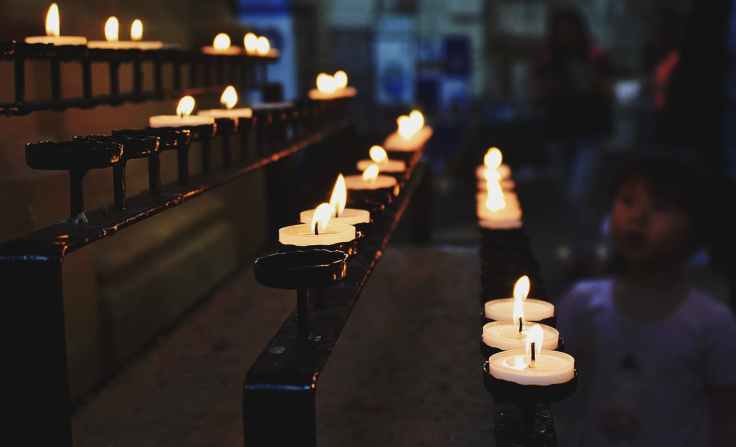
Many Christians are celebrating Advent by lighting candles. So I thought I’d just mention a couple of quick thoughts about how prayer is like a candle:

Even a small candle can provide enough light to make a real difference in the darkness. Sometimes, we feel our prayers are small and ineffective, like a single candle in a dark room. But a single candle can pierce the darkness and offer hope and focus and even warmth where there was none before. In the season of Advent, we light candles to mark the weeks of waiting for the One who is the Light of the World to come into the darkness. His light was enough to save the world from the darkness of Sin and Death. And it is This Light who hears our prayers and intercedes for us. It is This Light who empowers us to share hope and love where it is most needed right now, right where we are.

We are never a single candle! Not only do we have Christ living in us, and His Holy Spirit empowering us; God’s people around the world, through all places and times, are praying. Imagine seeing a single candle at the end of darkened room. Now, imagine how much brighter to see a long table lined with a row of candles, or a room lit by chandeliers and wall sconces with dozens of candles. Even if they are spread out– especially if they are spread out– they will fill every corner of the room with light and warmth. This is one of the reasons it is so important to pray for believers around the world, and to pray with other believers, through prayer nets, prayer meetings, prayer lists and blogs, and prayer journals.

Our prayers are powerful. Not because of our “candle”, but because of the light God provides when we pray

Please Pray for Me

How do I respond when someone asks me to pray for them? That may seem like a silly question. It seems obvious that if someone asks for prayer, my response would be to pray. But is that what I am really doing?

I caught myself a few years ago on Facebook saying one thing and doing another. Someone would post a prayer request. I would reply in the comment section that I would pray, that I was “sending prayers”, or that I was praying for them– but then I wouldn’t. I would forget; or I would sort of send up a quick, “God help so-and-so” and move on. It doesn’t mean that I never prayed at all about their situation. But I felt that my comments were more about being “seen” as a prayer warrior than actually being faithful in prayer.

There are many people who have said they are praying for me at certain times in my life. And maybe all of them have. But there are some people who stop whatever they’re doing and pray NOW. They don’t just pray FOR me, they pray WITH me. And they enter into my situation. They pray specifics. They pray for God’s will to be done– even if it isn’t pretty or easy. They pray for my growth and not just for my immediate relief.

I don’t always pray that way for others. I can’t always drop what I’m doing to enter into someone else’s situation. But I’ve stopped being so glib on Facebook. If I have the time to comment, I have the time to stop and say more than a quick prayer. I may not know specifics and details, but when I do, I can lift those up to God. And I can always spend time lovingly asking God to work His Perfect Will in the lives of those who are seeking prayer support. After all, God knows ALL the details, and far better than I do!

Keeping a prayer journal really helps. Especially when I keep it close at hand. I can easily jot down the name or request of the person who has asked for prayer. And having it in my journal means that I will see it again; I will revisit the request, pray about it again, or write in how it was answered (if I know).

So what?

None of this makes me a better person or a better prayer warrior than my neighbor. That’s not the point. The point is it makes me a better prayer warrior than I was before. It helps me see how interconnected we all are– we ALL need prayer, and we ALL need to seek help sometimes. It helps me to be more consistent and disciplined in my prayer life. It keeps me grateful– grateful that I can do something to help others; grateful for the gifts and blessings I have; grateful that God listens and answers prayer; grateful that God has given me so many friends and family to love. And it helps me to be more transparent about my own needs and struggles.

On that note, I am asking for prayer today, as David and I have some decisions to make as we get older. Some decisions are about finances; others relate to our health and lifestyle changes we may need to make. We want to honor God with our “golden” years, whether that involves continuing to live upstairs above our store, or moving and selling the store.

So please pray for me.
Thank you.

Praying in Tune

I have a song that Jesus gave me,
It was sent from Heaven above;
There never was a sweeter melody,
‘Tis a melody of love.

I love the Christ who died on Calvary,
For He washed my sins away;
He put within my heart a melody,
And I know it’s there to stay.

‘Twill be my endless theme in Glory;
With the angels I will sing;
‘Twill be a song with glorious harmony,
When the courts of Heaven ring!

In my heart there rings a melody,
There rings a melody with Heaven’s harmony;
In my heart there rings a melody;
There rings a melody of Love.

Hymn by Elton M. Roth (1891-1951)

close up of ukulele

My grandfather had perfect pitch–he could hear a musical note and tell you what the note was or whether it was “in tune”.  He loved music and taught himself to play several musical instruments, including trombone, ukulele, auto harp, thumb harp, saxophone, violin, flute, banjo, dulcimer, trumpet, penny whistle, ocarina, and harmonica.  My grandmother played piano, organ, and a host of percussion instruments.

brass classic classical music close up

My grandfather could hear perfect pitch, but he rarely sang.  He could make wonderful music with instruments, but not with his own voice.  He might have done so, but he never bothered to practice.  In fact, while he could play a multitude of instruments, he never became proficient on any of them.

music note book and silver soprano flute close up photography

Prayer is accessible to anyone, as is music, but tuning and practice are required if we want to pursue prayer as a discipline and a means to develop a more harmonious relationship with God.  Prayers that are out of tune can be sharp– nagging, complaining attempts to bargain with God; or they can be flat– lifeless and empty of trust and affection.  Prayers that lead to growth, healing, and change are those that are “attuned” to the heart of God.  What a sweet song of praise when we live in harmony with God and others– working, growing, sharing, and singing together.

pexels-photo-730588.jpeg

I don’t have perfect pitch– I can usually hear if my voice or my flute seems out of tune with another instrument or other voices, but sometimes I need help.  The same is true of my pursuit of prayer.  I need help to keep in tune– a prayer journal is one tool I use.  But it also helps to have a prayer group or prayer partner, a prayer list, or a book of prayer.  For more ideas, see:  Proactive Prayer Points  and Prayer Journal.

ancient antique architecture art


Recording God’s Answers

I keep a prayer journal. Every day, I have a list of people, places, and issues that prompts me to pray. Of course, I can pray about other things, as well. I can praise God for the day’s blessings, the weather (or provision in spite of the weather); I can confess failings and ask for God’s forgiveness. I can lift up things that are not on “today’s” list. But the list reminds me of so many things– the blessings of family and friends; the richness and vastness of God’s power and sovereignty; His faithfulness over so many years…

In my journal, I also keep a “running tab” of God’s many answers to prayers. Some of the answers bring joy; some bring wonder; some even bring tears. I have prayed for several people battling cancer. Many have gone into remission, but most have eventually died. I prayed for people during COVID. Many recovered– some slowly, some miraculously– but many others died. I have prayed for “little” things, like finding my keys (YES!), or making a sales goal at the store (NO). And some prayers have yet to be answered–I don’t know why or when, but I trust God has heard them all, and that His will and His answers will come– in His good time.

Often, I will look at the front side of the journal page (requests and reminders), and some of the requests are a year or more old. Then, I turn to the back side and look for the answer. Sometimes, in my haste, I have neglected to write the answer, so I will add it, with a small prayer of thanks. Sometimes, I have forgotten the exact outcome. Sometimes, I am encouraged to keep praying for a clear answer or outcome for an ongoing situation. But I am amazed at the number of prayers I have prayed over a year’s time, and how God has provided answers, big and small.

It is sometimes easy to forget the answered prayers amidst the worries of daily life. We are more concerned with the next crisis or the immediate needs before us. But it is helpful to record God’s answers (even the “NOs”) as we receive them. When we “count our blessings,” we can often stand amazed at some of the ways that God has “moved in mysterious ways” to answer things we once thought impossible, or overwhelming in the moment. Looking back, we can sometimes see how, and even why God has allowed us to go through experiences that seemed strange or unwelcome. And we can be reminded that the same God who answered all those prayers is listening to our current requests (and praises!).

God DOES answer prayer. He IS faithful. And when we keep a record of it, it increases our faith for the moments when we are still waiting on His answers!

Who Is My Neighbor?

One of the best known among the parables of Jesus is the story of the “Good Samaritan.”  Jesus tells the parable in answer to a follow-up question from a n expert in the law:


The Parable of the Good Samaritan
25 On one occasion an expert in the law stood up to test Jesus. “Teacher,” he asked, “what must I do to inherit eternal life?”
26 “What is written in the Law?” he replied. “How do you read it?”
27 He answered, “‘Love the Lord your God with all your heart and with all your soul and with all your strength and with all your mind’; and, ‘Love your neighbor as yourself.’”
28 “You have answered correctly,” Jesus replied. “Do this and you will live.”
29 But he wanted to justify himself, so he asked Jesus, “And who is my neighbor?”
30 In reply Jesus said: “A man was going down from Jerusalem to Jericho, when he was attacked by robbers. They stripped him of his clothes, beat him and went away, leaving him half dead. 31 A priest happened to be going down the same road, and when he saw the man, he passed by on the other side. 32 So too, a Levite, when he came to the place and saw him, passed by on the other side. 33 But a Samaritan, as he traveled, came where the man was; and when he saw him, he took pity on him. 34 He went to him and bandaged his wounds, pouring on oil and wine. Then he put the man on his own donkey, brought him to an inn and took care of him. 35 The next day he took out two denarii and gave them to the innkeeper. ‘Look after him,’ he said, ‘and when I return, I will reimburse you for any extra expense you may have.’
36 “Which of these three do you think was a neighbor to the man who fell into the hands of robbers?”
37 The expert in the law replied, “The one who had mercy on him.”
Jesus told him, “Go and do likewise.”

Luke 10:25-37 (NIV)

Jesus paints with a broad brush, here– perhaps because the law expert “wanted to justify himself.”  Our neighbor is anyone who crosses our path, engages our attention, and has a need for mercy, or help, or encouragement.
How do we apply this to prayer?  Most of us are willing to pray for those in dire need or those close to us– friends, family, and such.  But there is so much more we can do!  Prayer is powerful and mysterious–much more so than most of us realize.  If we want to pursue prayer, we need to consider how we can lift others up–including our “neighbors” who may not otherwise come to our attention.  Here are a few suggestions to try:

  • Make lists.  It’s easy to list members of our families or close friends.  Try some other lists:  co-workers;  the people who live on your block or on the floor of your apartment building.  Are you feeling really adventurous?  Dig up an old yearbook or staff directory from an old job; list all the people in local, regional, state or provincial, and federal government who directly represent you.  Lists will help you to remember to pray for people, not because you already love them or know their needs, but because God already loves them and knows their needs!
  • Find a focus–Choose a person (maybe someone who is facing chronic pain, or someone you don’t know as well as you would like, or even someone at random:  Pray earnestly for that person every day for a week– or a month!  Don’t turn it into a bludgeon (“I think you should know I’m praying for you, because I think you really need it…” In fact, you don’t need to tell the other person you are choosing to focus on them, but you may wish to ask if they would like prayer and how they would like you to pray for them).  
  • Pray for your enemies!  You may not have a long list of “enemies”, but it is likely that you know several people who are “difficult”.  Don’t pray at them or about them– pray for them.  If they have caused you pain, ask for the grace to forgive them.  (Keep asking as necessary!)  Ask the Lord to bless them, and to help you be an encouragement to them.  This is one of the most difficult things you will ever pray, but it can be life-changing.
  • Pray the calendar–write in three or four names or general prayer requests for each day of the year.  For example, on February 14, I could pray for my nephew who has a birthday, three couples I know with anniversaries that day, and for those I know who struggle with being alone on a day when others celebrate their relationships.  On February 15, I can pray for those who broke up yesterday (even if I don’t know of anyone specific), for a friend who celebrates her birthday that day, and for marriage and relationship counselors.
  • Pray the newspaper.  NOT the TV or internet news!  By this, I mean that the newspaper is organized into sections– pray for national and international news issues one day a week.  Another day, pray for local issues; weather/environment on another day, etc.  When I do this, it causes me to see God in every aspect of what is happening around me– business, government, entertainment and culture…
  • Remember that prayer is not about “being good enough.” The primary purpose of pursuing prayer is to speak to, and hear from, and to obey God. As God’s Spirit inspires you, pray for whoever, or whatever, or wherever He leads you. Using tools may make it easier to get started, but don’t make the tools an idol that distracts from the focus of communing with Our Creator.
  • There is no perfect formula for being a “Good Samaritan” in prayer.  But there is good reason to pursue ways that God can be glorified (and we can reach maturity in our walk with God) through our prayer life.
  • See more suggestions in the pages section of the blog.

As Far as the East is From the West..

In blogging about prayer and in keeping a prayer journal, there is one type of prayer I don’t dwell on very often.  Prayers of confession and repentance are very important, but I don’t  include them in my journal and I don’t spend much time analyzing them.  It’s not that I want to ignore them or that I want to give a false impression that I don’t say them.

arrogant

I’m a saint–but only in the sense that Christ’s blood is my atonement and my only hope of salvation.  He who started the work is still working, and there’s a lot of work yet to be done.  So, while I include prayers of confession and repentance in my practice of pursuing prayer, I don’t write them down or share them publicly.

Photo by Mikhail Nilov on Pexels.com

Here are some of the reasons I don’t spend more time talking about confession:

trueconfessions
  • Confession is not meant to be a public spectacle.  It is generally private and very personal between an individual and God.  Apologies may be public, and repentance may include public atonement or recompense, but those are not prayer; rather they are the actions taken in conjunction with  and as a result of prayer and confession.
  • Confession is fundamental– it’s not a prayer option, or a stylistic preference–every one of us has sinned, and we all need to admit to our sins, bring them before the throne of God’s grace, and ask for his forgiveness.  Hiding sins, denying sins, or lying about them will get in the way of all our other prayers.
  • Writing about past sins keeps them alive and keeps the focus on me and on my faults, rather than on God and on His Grace.
  • Making confession public has a tendency to devolve into gossip and self-justification.  Descriptions of my sinful actions will necessarily be from my incomplete and very biased point of view.  Other people can be misrepresented and hurt.
  • But the last reason is my favorite– I don’t waste time writing down and discussing past sins because GOD HAS FORGOTTEN THEM!  Writing them down, rehearsing them, analyzing them–even analyzing how I might approach confession won’t change God’s response:

10 he does not treat us as our sins deserve
    or repay us according to our iniquities.
11 For as high as the heavens are above the earth,
    so great is his love for those who fear him;
12 as far as the east is from the west,
    so far has he removed our transgressions from us.

Psalm 103:10-12 New International Version (NIV)
  • The key is that we DO confess– humbly, consistently, and with a heart of true repentance.  What follows is a free and forgiven conscience, no longer weighted down or pulled off focus by guilt and doubt.
pexels-photo-941693.jpeg

Blog at WordPress.com.

Up ↑