Prayer in the Cyber Age

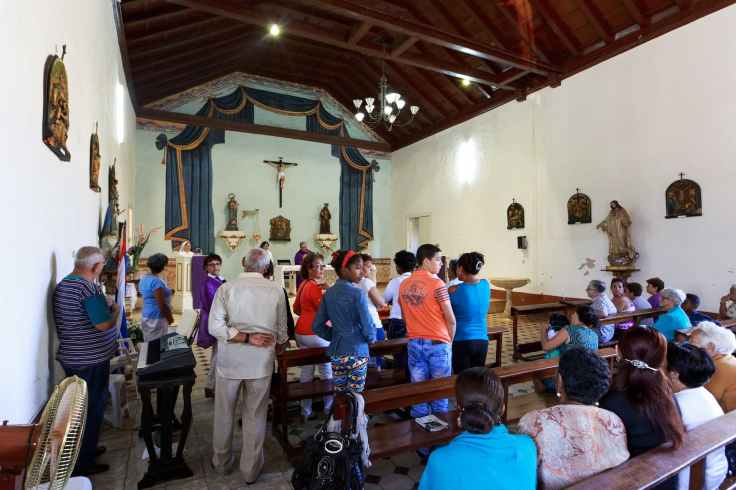
I attend a weekly prayer meeting at our church. A small group of us meets one morning a week to share prayer concerns, pray for our pastors and church workers, missionaries, community members in need, etc. It usually lasts just about an hour. On a “good day,” we have about seven people.

I grew up in a small rural area, and our little country church had a weekly Wednesday evening prayer service. On a “slow night,” we might have seven people. Sometimes, we had thirty or more (nearly half the church congregation)! They lasted about an hour and a half. When I was in college, we had groups that met once a week for prayer. It wasn’t always the same group, but it met at the same time, and, again, we sometimes had as many as thirty in attendance– for prayer. Often, we met in a dorm room, so it was cramped, and many of us were sitting or kneeling on the floor. Once, we had a fire drill, and my feet had “fallen asleep” and I had to be helped as we walked to the exit!

I don’t say this to disparage our current small group, but to point out some of the differences between life in the 1970s, 1980s and today. My current church has activities every Wednesday evening, and much larger attendance than the little country church ever attained. And prayer is still a small part of the Wednesday evening programming. Prayer is encouraged in small groups, individually, and we pray during service. But sustained time set aside for prayer– what the old hymn refers to as “Sweet Hour of Prayer”–in a group setting is becoming more of a rarity.

There are many reasons for it– some good, some not so good.

On the “good” side, it must be noted that corporate prayer today has expanded far beyond the traditional in-person prayer meeting. Prayer can be skyped, group-chatted, zoomed, and conference-called. Prayer can be “hosted” in one location, with satellite groups around the world praying in real time together. In such ways, thousands, and even millions of people can be joined in prayer. This is an amazing development!

And, along with such developments, prayer has become far more global, and far more immediate. I can receive a text or e-mail notifying me of a prayer request from nearly anywhere in the world, and know that I am joining with a host of other Christians when I stop and take a few moments to pray right then.
So what’s the “downside” of cyber prayer?

Speaking as one who has lived the experience of meeting with the same people at a dedicated time over many years specifically to pray, I have observed the following benefits:

In-person prayer meetings offer a more intimate time of fellowship, compassion, and service. I’m not just seeing other people on a screen, reading a text message, or even filling an auditorium seat as part of a huge “movement”– I’m sitting in a circle, breathing the same air, hearing the same hum of the furnace or fluorescent lights, the sound of others breathing, sighing, or even crying quietly around me. Sometimes, I’m holding another person’s hand, or giving them a hug. I am not just among fellow believers, I’m with family. We get to know one another in a deeper way. I know their families, their personal struggles and victories. I learn the rhythm of their prayers, and the issues closest to their hearts– and they know mine! And that can be a scary thing at first– building the kind of trust that intimate fellowship demands. But it pays off a thousand-fold!

In-person prayer meetings are also focused in a different way. Cyber prayer usually focuses on a specific need– sometimes an immediate, or even temporary issue. In-person prayer focuses on the long term discipline of praying. I have prayed with groups over years for lost relatives or unresolved health issues. And while that may seem depressing to read about, in practice it teaches patience, and deepens faith. As a group, we see God’s answers develop according to HIS timing and HIS plan. Sometimes, we see issues resolved quickly; other times, we see how God strengthens us in our trials; and still other times we see God do surprising and miraculous things just as we’ve almost given up hope. And there are some answers we may never “see.” But, primarily, we are not praying for an outcome– we are praying as a pursuit of Christian living; developing a life of prayer, faith, and obedience. We spend much of our time in prayer lifting up requests, but we also spend much of our time in praise, worship, adoration, confession, and thanksgiving– because prayer is a holistic pursuit.

Which brings me to another benefit, one that may not seem obvious at first. Meeting consistently and weekly for prayer is a habit. It builds a character of faithfulness and true compassion like very little else I’ve encountered. God can “show up” wherever two or three are gathered (see Matthew 18:20), and because God is beyond time and space, He can be present in a church meeting room, in cyberspace, or in outer space! But we are temporal. We have to learn patience, hope, and faithfulness. We learn to be trustworthy of the feelings and confidences of others by sharing our hearts. We learn to serve by the practice of serving those around us over an extended period of time. We learn patience by waiting on the Lord, stopping our busy, deadline-driven, goal-oriented lifestyle to make time for the development of our faith.

Finally, in a post-COVID society, sustained, regular, corporate prayer is also sustained, regular, corporate fellowship. We live in an increasingly isolated society. With more people on the earth than ever before, we are more lonely, depressed, anxious, and self-absorbed than ever before. Even in Church! Many people attend service regularly, but still feel unconnected and uninvolved. And others get “involved” in every activity, often burning themselves out trying to “outdo” themselves (or others). Activities that promise fellowship can sometimes fall “flat” in the face of social expectations. We attend, hoping to “get something” out of an experience. We want to be entertained, challenged, encouraged, uplifted, etc. But often, our expectations are not met. We don’t feel included, or we feel overwhelmed. We imagine we are being compared to others (or we do the comparing!), and feel that we fall short. We don’t know enough, do enough, are not “enough.” And we give up. We give up on the church, on other Christians, on God.

Committing to attend a weekly prayer meeting pulls us “out of ourselves.” We learn to pray for the needs of others. We learn to share our own needs and allow others to pray for us. We learn to be transparent and authentic. We learn to forgive.

Prayer is amazing– in any form. Communicating with the God of the Universe is an unspeakably miraculous opportunity, made possible BY God, THROUGH God, for OUR benefit. Prayer in the cyber age is diverse, global, immediate, and effective. But let’s consider the blessing of old-fashioned Prayer Meetings, and not forsake the practice of meeting together (see Hebrews 10:25) , in person, with no other goal than to spend a sweet hour in prayer!

In My Heart There Rings a Melody

As I edit this, the sun is shining and melting the last of an early spring snow. It’s been a mostly pleasant day, and I’m writing this in anticipation of a pleasant week ahead. This will post on Monday morning– a brand new week, hopefully filled with new opportunities and adventures. Of course, not every day is like this. Some days are dreary, full of stress and anxiety, and filled with challenges and even tragedies. But I have been thinking about a song I learned in childhood, one that has blessed me over the years and helped me on many a dreary day, as well as on days like today.

“I have a song that Jesus gave me,
It was sent from heav’n above;
There never was a sweeter melody,
‘Tis a melody of love.

I love the Christ who died on Calv’ry,
For He washed my sins away;
He put within my heart a melody,
And I know it’s there to stay.

In my heart there rings a melody,
There rings a melody with heaven’s harmony;
In my heart there rings a melody,
There rings a melody of love.

‘Twill be my endless theme in glory,
With the angels I will sing;
‘Twill be a song with glorious harmony,
When the courts of heaven ring.

On days like today, it is easy to sing a happy tune– sunlight, shimmering snow and icicles, viewed from my nice cozy perch by the window–but the joyful song that Jesus brings rings through good days and bad; sorrow and stress; triumphs and failures. It is eternal and filled with the limitless Love of God. It is a song of peace that passes all understanding, and a confidence that sees beyond circumstances.

Sometimes, when life seems devoid of light and peace, it has less to do with our actual circumstances, and more to do with our unwillingness to look up from them. Throughout the Old Testament (and even in the New Testament) people would create songs as part of their worship–some songs celebrated God’s provision and protection; others spoke of His character and His faithfulness. But these songs weren’t just for celebration and services of worship– they were used to remind us in good times and bad, that God’s love never changes. The same God who brings victory and miracles will be with us in times of despair. The same God who sees us in our most desperate hour of need is there with us when we are enjoying a beautiful sunset.

Today, I pray that we would take a few moments, find a song or a Psalm, and just sing a prayer to our maker. It doesn’t have to be a peppy song of praise– it may even be a song of yearning or anguish– but let it be a song that rises above our day and finds the ear of the One who loves us better than anyone else. It doesn’t matter if you can’t carry a tune; God listens to the heart! Sing the song that Jesus gives to you today. Your heart will be blessed. And it will bless the very heart of your Maker, as well.

Saint Patrick’s Breastplate

In honor of St. Patrick’s Day yesterday, I am reprinting one of his prayers, called St. Patrick’s Breastplate. For more on this and other prayers attributed to St. Patrick, see https://slife.org/saint-patricks-prayers/.


St. Patrick (also known as Padraig or Padrig) lived in the fifth century during the last of the Roman era in Britain. Held as a slave in Ireland as a young man, he escaped and returned to his home. However, he felt called to return to the land of his captivity as a missionary. Today, he is celebrated for his efforts to bring the Good News of Christianity to the very people who had enslaved him. The following prayer is attributed to St. Patrick. It is as relevant today as it was over 1500 years ago:

I arise today
Through the strength of heaven;
Light of the sun,
Splendor of fire,
Speed of lightning,
Swiftness of the wind,
Depth of the sea,
Stability of the earth,
Firmness of the rock.

I arise today
Through God’s strength to pilot me;
God’s might to uphold me,
God’s wisdom to guide me,
God’s eye to look before me,
God’s ear to hear me,
God’s word to speak for me,
God’s hand to guard me,
God’s way to lie before me,
God’s shield to protect me,
God’s hosts to save me
Afar and anear,
Alone or in a multitude.

Christ shield me today
Against wounding
Christ with me, Christ before me, Christ behind me,
Christ in me, Christ beneath me, Christ above me,
Christ on my right, Christ on my left,
Christ when I lie down, Christ when I sit down,
Christ in the heart of everyone who thinks of me,
Christ in the mouth of everyone who speaks of me,
Christ in the eye that sees me,
Christ in the ear that hears me.

I arise today
Through the mighty strength
Of the Lord of creation.

But Even If He Does Not…

16 Shadrach, Meshach and Abednego replied to him, “King Nebuchadnezzar, we do not need to defend ourselves before you in this matter. 17 If we are thrown into the blazing furnace, the God we serve is able to deliver us from it, and he will deliver us[c] from Your Majesty’s hand. 18 But even if he does not, we want you to know, Your Majesty, that we will not serve your gods or worship the image of gold you have set up.”

Daniel 3:16-18 (NIV)

I hear a lot of American Christians complaining about the “dark days” in which we live. And indeed, they are dark. There is great evil in the world– wars, famines, injustices, hatred, division, greed, and immorality. But, along with complaints, I hear a note of whining. Isn’t God supposed to deliver us from just such evil? Isn’t He supposed to clear the way for us to love one another in peace and harmony? Surely, it can’t be His will for us to be laughed at, spit upon, misunderstood, and treated with contempt?!

The ancient nation of Israel was conquered and sent into exile. Israelites who had abandoned their faith, as well as those who had steadfastly served the Lord, were ripped from their homeland and marched to Babylon. Worship in the Temple of Jerusalem ceased. The Temple itself had been destroyed. There were no tabernacles, no festivals– none of the systems and structures of worship left available to God’s people. Yet some still worshipped– in homes, isolated from their fellow Jews, or in secret groups. They were not surrounded by reminders of when “their” religious beliefs were considered the cultural norm. Nor did they live in a culture that practiced religious “toleration” as we understand it today.

In the book of Daniel, the commitment of s handful of exiles is detailed as it comes in conflict with the oppressive control of the Babylonian (and later the Persian) Empire. Daniel and his three friends are challenged by the pressure to compromise and adapt to their surroundings. They are tempted and bribed by the promise of power in the court– if they can compete with other Babylonians. But they secretly hold fast to their “old” diet, and religious practices. They refuse to eat the rich food of Babylon– or bow to its gods.

In Chapter 3 of Daniel, the three friends, Shadrach, Meshach, and Abednego, refuse to bow to a golden statue of Nebudchadnezzar, the megalomaniac for whom they worked. Even though he had appointed them to high offices, he refused to “coddle” them in their worship of a foreign god. He demanded that they bow to his statue– something God had commanded them NOT to do.

It might have been easy enough to secretly meet in homes and celebrate Passover without alerting those around them. It would have been possible for them to hide scrolls containing the ancient words of their historians and prophets, to be read or studied. But they were being asked to publicly bow to a statue of their King– to acknowledge him as a “god.” And they refused. As court officials, their refusal was not just a minor snub, but a scandalous insult. Yet they stood firm.

Shocked and angered, Nebuchadnezzar, a notoriously cruel and impulsive king, gave them a generous “second chance” to save their careers and lives by obeying his orders. Amazingly, the three did not even spend a moment considering their options. They answered, boldly, courageously, and graciously, that they would not bow down to the statue. And God rescued them from the fiery furnace, so that not even their hair was singed by the flames– even though their captors were killed in the very act of pushing them into the furnace! God not only rescued them– He appeared WITH them in the midst of the flames. This so astonished Nebuchadnezzar, that he ordered them released and proclaimed that no one should say anything against the God of Shadrach, Meshach, and Abednego–an incredible act of religious toleration for that culture and time.

The story of The Fiery Furnace is well-known. I’ve used it before in my posts. But today, I’d like to focus on just one little phrase that stood out to me this week. When brought before Nebuchadnezzar the first time, the three men said, “we do not need to defend ourselves before you in this matter…” (v. 16).

How tempting it might have been to have defended their refusal– to give Nebuchadnezzar a lecture on God’s Law and His past miracles. But they refused to explain or defend their actions. They merely gave testimony of their faith that God COULD save them, and that, “even if He does not..” they were willing to die rather than dishonor Him. And Nebuchadnezzar SAW the proof of their faith in a way that their words and arguments could not have accomplished!

Most of the time, when I hear Christians talking about this story, they focus on the miraculous deliverance of the three men from the flames. The lesson is that God will be with us, no matter what. He can deliver us FROM the flames, but often, He chooses to deliver us THROUGH the flames. And that is a wonderful lesson and a true promise.

But that deliverance should not overshadow the quiet dedication of the three men. Before God joined them in the fire, they were already committed to dying in silence to obey God rather than their earthly king. They stood to lose everything– their lives, their legacy of faith, their service, their families (who might have been left destitute or even subject to punishment)– all of it was riding on their willingness to suffer injustice and torture. We know that God “showed up”– literally– in their defense. And they certainly knew that God COULD save them. But they also acknowledged that “if He does not..” they were still willing to die. And they were willing to do so, not acknowledged as martyred heroes, but as convicted criminals.

Centuries later, Jesus Christ would appear before Pontius Pilate, who asked Him to give a defense. Astonished at Jesus’ refusal to argue and plead for His life, Pilate came to the conclusion that “I find no fault in Him.” (John 19:4) Jesus willingly accepted an unjust sentence of Death, offering no argument or defense, except the Truth. No one came to His rescue. And God did NOT spare His life! The Son of God died as a criminal on a Roman cross, betrayed by Jewish leaders. Yet, Jesus’ obedience; His willingness to die brought US life, and forgiveness and peace!

There are millions of believers in Christ today who must be prepared to face a “fiery furnace” moment–maybe it involves death or torture. Perhaps it only involves being teased or despised by a neighbor or a classmate at school. And we may pray for deliverance–that is natural. But how often do we give up the chance to argue, and justify our diligence, our “right” to worship “our” way? How ready are we to be seen as foolish, or even rebellious to the culture of the day? We long for God to come to our physical rescue– to join us IN the fire– but are we willing to let Him be our defense? Are we willing to be humble in the face of obvious injustice, and let God speak up on our behalf? And what if He does not?

The Apostle Paul also faced this dilemma. Not only were there Greek and Roman officials who thought him a fool, there were Jews– his own people– who were going around defaming him, denouncing him, and spreading lies and rumors. Paul (never one to let a good argument go unargued!) spent much of his time in letters writing out his defense of the Gospel. But, in his own defense, he downplayed his position and his great knowledge of the scripture. He was not defending himself “in these matters”– he was defending the Truth of the Gospel! He also acknowledged that God could use even detractors and tormentors to spread the Gospel. And he often urged fellow believers to live in peace with their unbelieving neighbors, even those who taunted them!

It is tempting in Western Culture, where Christianity has been normalized, to think that when we defend ourselves, we are defending Christianity. But what if, like Shadrach, Meshach, and Abednego, we let God be our defense– in the flames, in the courtroom of public opinion, in our own families? What if we followed Jesus’ example and remained calm and confident, even under duress? What if we lived humble and quiet lives of integrity, ready to submit even to the flames or the cross, serving even those who would stoke the fires or pound the nails? God might just “show up” in ways we never could have imagined! Courage is often seen as boldness and speaking up in our own defense. But, sometimes, it takes greater courage to stand silent and let our actions– even when they are disparaged and misinterpreted– speak as a testimony of God’s power.

Praying Like Daniel

The Bible tells a story of Daniel, and when I was a child, I always focused on the dramatic part of the story. Daniel was “set up” by some of his rivals, and he ended up being thrown into a den of lions. But God shut the mouths of the lions, and Daniel was rescued. Indeed, his accusers were later given the same sentence and the lions gobbled them up in short order! (See Daniel 6 https://www.biblegateway.com/passage/?search=Daniel%206&version=NIV) Daniel’s miraculous rescue astounded even the king who had sentenced him! And it has served as a testimony of God’s faithfulness and His power to save those who love Him.

But, as in most Bible stories, there is much more going on behind the scenes. Daniel’s enemies were able to set him up because of his very public habit of praying three times a day to the God of Israel. Morning, noon, and night, Daniel fell to his knees, right in front of his open window, and prayed. We don’t know if his prayers were said aloud, shouted out for all the world to hear, but his habit was visible– it was well-known among his neighbors, friends, and enemies and it was unvarying. Daniel did not brag about his habits, or “force his beliefs” on others. But it was clear that his success and his wisdom were directly related to his devotion to God. Daniel’s enemies could find no other way to bring about his downfall, so they resorted to a trick.

Daniel’s enemies devised a clever scheme. While his habits were well-known among most people, they were not known or respected by the new king. Darius had just taken over the land, after the disastrous regency of Belshazzar (see Daniel 5). He was a wise ruler, and he had appointed 120 satraps (officials) to administer the various regions in this kingdom. Over these 120 officials, he had three special administrators, one of whom was Daniel. But Daniel had so distinguished himself, that Darius planned to put him in charge over all the others– second only to the king. Darius knew that Daniel was a brilliant administrator. But he didn’t know about Daniel’s devotion to God. And so, Daniel’s enemies capitalized on this one aspect of Daniel’s character.

Darius was approached by a group of his officials and convinced into signing an edict making it illegal (and punishable by death!) for anyone, anywhere in the kingdom to pray to any god or human being — except King Darius–for an entire month. Like so many such schemes, the object here had nothing to do with honoring King Darius, stamping out religious extremism, or any of the other so-called “reasons” they gave. And nowhere in the text does it mention that anyone else in the kingdom was “charged” under this new edict. In other words, their sole purpose was to “eliminate the threat” of Daniel being given power over them (and, possibly, their corrupt practices).

How easy it might have been for Daniel to avoid getting “caught” praying during that time. In theory, he could have shut his window. He could have taken thirty days “off,” trusting that God would know the circumstances. He could have simply prayed in a different part of his house– standing up, or walking around– and silently, surreptitiously changed his habit every so slightly. He could even have lied, saying that he was following the new law and praying to the King. But he never offered an excuse or tried to justify his disobedience of the corrupt law.

Why did someone as brilliant as Daniel not take a few simple steps to avoid the lion’s den?

The answer to this question requires a look at the context of Daniel’s life. This incident takes place near the end of Daniel’s life. He was likely in his eighties or nineties! He had been in captivity since he was a teenager. He had been ripped from his homeland, and sent to a place with a completely different language, culture, and religion. And he had served at least four different kings over several decades. He had survived other attempts to force him to compromise, blend in, and be like others around him. He had seen other schemes to corrupt worship of the One True God. He had survived other threats to his life. And through all those years, we have every reason to believe that Daniel’s habit of prayer had grown stronger, not weaker. The same teen who prayed fervently that God would allow him to return to his homeland was still on his knees– every day– praying for deliverance. Even while he faithfully served his captors, he prayed. At no time did Daniel ever experience this deliverance. For all we know of the Bible story, Daniel died in Babylon– still a captive.

But Daniel’s prayers reached Heaven. Later in the book that bears his name, Daniel tells of extraordinary visions he received about Babylon, Israel, and other nations and empires that would arise in the future. Daniel’s faithfulness and devotion serve as examples, even for our own age. But Daniel prayed all those years without seeing his hopes fulfilled in his lifetime.

Do I have the courage and conviction of Daniel? Oh, what we might experience if more of us were “guilty” of praying like Daniel prayed! If someone tried to “set me up” like Daniel’s enemies did– would there be enough evidence to convict me of being a Christian? Would someone be able to “catch” me praying at home every day? Without fear or compromise? Would I give up after a year in captivity? Would I stop praying if I were being laughed at? Arrested? Persecuted?

Do I give up when I don’t get an immediate answer to my prayers? Do I decide it’s just too difficult to keep praying for “my impossible?” For unsaved relatives, or unresolved health problems? For peace in war-torn areas, or relief for famine-ravaged regions?

I love Matthew West’s song about this issue, and I have attached a video. I hope it inspires you as it has inspired me to keep praying– knowing that God has “heard every single word you’re sayin’.”

Let’s resolve to pray like Daniel– Don’t stop! Don’t compromise! Don’t give up!

But Not Yet…

I really need to go on that diet.
I really should call my Aunt Kay.
I need an hour of peace and quiet.
And time to sit and pray.

But I’m scrolling through Facebook.
I’m following the news.
I just need another look;
This meme has so many views..

I should greet that new couple at church.
I should make them feel at home.
But I need a cup of coffee first.
And my hair should be re-combed.

My Bible waits by my chair–
Unread these past four days.
Later, I know it will still be there–
Ready to catch my gaze

Tomorrow, or the next day.
God will understand.
I want to follow His Way,
But this wasn’t what I planned.

I got caught up in a magazine
I stopped to shoot the breeze–
My house is needing to be cleaned
Before I get on my knees.

I “had to,” “should have,” “had a mind”
To spend time with God, and yet
My day’s flown past, and now I find
I’ve only time to fret.

“Not yet” was my sad refrain
“Not yet” kept me on the go.
“Not yet” robbed me once again
Of time spent with One who loves me so.

And so my day was filled and rife
With wasted time and small regrets.
I missed the more abundant life
Of trust grown from obedience.

The internet will still be there
Tomorrow and the next day;
But the trust built up in an hour of prayer
Can never be taken away.

Today may be busy with “urgent” needs and countless distractions. But there will only be one “today” to meet with God– in prayer, Bible study, meditation, and worship. What is my priority today? Even if I can’t “find” an entire hour in my busy schedule, have I made a plan and a priority to meet with God? Am I searching for opportunities to serve Him and encourage others, or am I too busy searching for my own entertainment and fulfillment? What are the empty things in my life that I should be telling, “Not yet?”

God’s Economy

“Times are tough!” I hear many people complaining about the economy lately. And they have good reason– gas prices, food prices, housing prices, taxes– everything is getting more expensive, and wages or other sources of income just aren’t keeping up.

While we may worry about the current economic conditions, we need to step back and look at a different economy– God’s economy.

This weekend, I wrote out checks and paid bills. I even put some money in the offering at church. But God doesn’t look at the amount of money I paid or gave away, how much I spent or saved, earned or invested. He’s aware, of course, of such things, but God looks at a different “bottom line.” God cares how I spend or save money, whether it’s pennies or thousands of dollars. But He also cares how I spend my time and energy. And my life is “richer” than just the money in my bank account or the things in my house.

God doesn’t give us everything we want– He loves us too much for that. Life isn’t about having the most “toys;” it isn’t about having the easiest or most entertaining experiences. It isn’t about “winning” and having “more.”

I have noticed that the happiest people are often those who have had to struggle the hardest. In God’s economy, it is His pleasure to give more than we can ask or imagine– but often in ways we would never expect. (see Ephesians 3:20-21) In God’s economy, I am rich. Not because of anything that I have done, or earned, or because I was born to a wealthy family or because I won the lottery. I am rich because of what God has done. And if I am tempted to doubt that, I can begin listing all the blessings of God– and I will run out of space and time!

God has given me life. I didn’t choose to be born. I did not have the power to create myself. But God made me unique among all the people who have ever lived. He gave me a body, a mind, a soul, and a spirit. He gave me thoughts and dreams and opportunities to grow and enjoy life.

God gives me hope and purpose and a reason to live. Life can be difficult. It can be painful. It can be tempting to see only the darkness, the grief, the regrets. But it can be beautiful. It can be almost painfully beautiful, sometimes. What a gift. And what a gift God offers in each new day. A new chance to hope. A new chance to strive. A new chance to make a difference.

God has given me family and friends. And sometimes, that can be a struggle! We aren’t perfect, and we don’t always see eye to eye. We step on the toes or we step on the feelings of others. But we also make each other laugh. We make each other stronger. We help each other grow. We enrich the lives of others, and others enrich our lives in return.

God has given me His word– His promises; His love-letter; His wisdom; His counsel; His power to shape my story. And yours! The Bible is not just a collection of stories or words. It is Truth. It is Grace. It is how we can KNOW the riches God has for each of us.

God has given me His Salvation. No matter what today brings; no matter what has happened in my past– whether things I have done, or things that have been done to me–God sees me as His child. And if I believe in Him; if I trust Him to be who He says He is– my Father, my Savior, my Lord–He will throw my past and my guilt “as far as the east is from the west”(see Psalm 103:12). I am debt-free! And I will inherit all that God will share with His children throughout eternity!

And God has given my His Presence. I am never alone. I am never forsaken or forgotten. NEVER. (Hebrews 13:5) If I am sitting in despair on an ash heap, seeing no hope and no future, God is sitting there with me, waiting for me to see Him, and accept that He is more than “enough” to get me through.

And with such riches, I can follow God’s lead and be generous in return. I don’t have the power to give life, but I can celebrate it, advocate for it, protect it, and remind others of its beauty and promise.

I can encourage others– with acts of service, with a smile, by faithfully lifting them up in prayer. What if we thought about hugs as endowments? What if, in God’s economy, every hug you give is worth $2,000? What if every prayer is like investing in a bank account? What if your smile is worth a fortune to someone today? I can be a friend to someone who feels unseen or unheard. I can share a conversation with someone who feels lonely. I can share a burden for someone who just needs a helping hand.

I can share God’s promises. I can share His wisdom. I can share His compassion. I can share His Mercy and Grace with those who least expect or “deserve” it. I can share my hope and my joy. I can help someone look up and look beyond a bad day. And where there is suffering and pain– I can share that, too, knowing it is part of God’s good economy. And maybe, as I offer my presence, I can help someone else see the presence of God sitting there with us both!

You may not feel very rich today. And in this world’s economy, you may be in great need. God may not shower you with cash or assets in the present moment. But God has promised to give you everything you truly need for life and Godliness (2 Peter 1:3-4)

So Close…

I’ve been reading in the book of Numbers this week. Numbers is not the most exciting book of the Bible. Many of the chapters are about the census, or about further rules and regulations concerning sacrificial offerings, etc.. But the chapters from 11-15 detail a series of rebellions– grumblings against Moses and efforts to return to Egypt. These rebellions happen after over two years after God had led the people out of Egypt. For two years, they have been protected, fed, sustained, and instructed by God himself. His spirit has appeared as a pillar of cloud by day and a pillar of fire by night throughout their journey. They have had manna and quail to eat, water from the rock to drink, and they have seen the vast army of Egypt drowned in a matter of minutes, while they were led through the sea on dry land! 

And now, they are so close to the “finish line.” They are on the very doorstep of the land of Canaan; the land God had promised to GIVE them. All that is left is for Moses to send out some scouts to bring back a report about the land– its cities and farmland, its people and its produce. Those two years must have seemed like a lifetime, but now it would be coming to an end. God would provide a homeland; a place to build houses, raise crops, rear their children, and settle into lives of peace and prosperity.

So what happened? The scouts brought back a factual report. The land had fortified cities, and lush farmland. It was already planted with plenty of fruit trees and vineyards. And there were ancient people groups with mighty warriors. Israel had just taken a census. They also had mighty warriors, and a lot of them! Moreover, they had God’s promise that the land would be GIVEN to them as their inheritance.

They were so close! Victory, rest, and prosperity were so close they should have been able to taste them. Instead, their warriors moaned and wailed like infants. The same people who had vowed to follow the Lord at Mount Sinai, now planned to walk away from His promised prize. They decided to turn around and go back to slavery in Egypt–the same Egypt that God had decimated two years earlier by sending plagues and destroying its army.

Two years of camping and living “on the road,” lost in two hours of grumbling and fear-mongering. And the punishment? Forty years of needless wandering–time to realize what had been thrown away in petty worrying and imagining the worst. Time to regret their reaction and their failure to trust God. Time for God to show them, once again, His ability to keep them safe and sound in the desert places.

And the learning curve would be a steep one. Almost immediately, a group decided that they would “prove” to God that they were ready to conquer Canaan– on their own. But it didn’t work. Then a group decided that Moses was to blame for their misfortune. But they were “swallowed up.” In the forty extra years of wandering, group after group would challenge Moses (and God) and be destroyed from within.  Moses, who had already lived forty years in the wilderness tending sheep, would have to repeat the task, shepherding the entire nation of Israel for forty long and difficult years. And even he would fall victim to his own frustrations, calling water from another rock, but doing it “his” way. Even Moses would fall in the wilderness, never getting to enter the promised land.

How many times have you noticed that the closer we get to a goal, the more likely we are to fall short. We sabotage our own efforts, or we rebel against good instruction. Sometimes we just give up a few yards short of the finish. We are just over half-way through the month of February. What goals or resolutions did you make for this year? How many of them have you stuck with?

Here are three things I take away from the lessons of Numbers 11-15:

  • Look Beyond. Don’t take your eyes off the prize! The scouts’ report was not all bad. Yes, the cities were walled and the warriors were big and fierce. But the walls of Jericho were eventually brought down without a single battering ram, siege ramp, or arrow! Don’t ignore the trials ahead, but don’t let them blind you to the blessings beyond them!
  • Look ahead, not behind. Don’t waste time living in past comforts or running from past mistakes. God has something better than whatever we’re going through now. But God isn’t waiting on the other side. He is beside us, around us, WITH us right now. He is patient with us. It may take us two years (or forty-two!) to reach a goal, but if we learn to follow God, we will never be forsaken.
  • Look UP! God’s spirit didn’t appear on the ground around the Israelite camp. He appeared as a pillar. God called Moses UP on Mount Sinai. We need to stop looking back at our past, or around, comparing ourselves to others, and look at God’s promises. In relation to our goals and dreams, we need to LIFT them up in prayer! Daily!

We are so close! Let’s keep going in the right direction towards God’s promises.

Attitudes of Prayer

One day, a minister arrived later than usual for the mid-week meeting at the church where he served. He heard raised voices, and found that several of his parishioners were arguing about congregational prayer.

Stan said the congregation ought to stand.

Neil thought they should all kneel.

Ima Bower insisted that everyone should bow their heads.

Mr. Folger thought everyone should fold their hands as well.

Ray Sands declared that his hands would be raised toward Heaven during the prayer.

Iris didn’t believe in closing her eyes,

Lydia Schutter disagreed.

Selma wanted to pray scripture.

Rhys thought it would be best to recite The Lord’s Prayer at each service.

Cy Lentz just wanted everyone to pray silently in his/her seat.

Gabby Orson wanted to pray in tongues.

Andy Holder wanted everyone to hold hands when they prayed.

Wanda Singh liked the idea of praying hymn lyrics.

Mary Lee liked that idea, as long as the hymns were upbeat choruses, and not somber old hymns.

Harry and Rush both championed short prayers.

Ruth Lesley insisted that all prayers be formal, written, and submitted to the pastor for approval.

Pastor Ora Freer was dismayed by all the bickering. When the room quieted a bit, he made a suggestion.

“I think we should cancel our midweek service tonight. While I have heard about many “Attitudes” of Prayer here this evening, I don’t think we have the right “Attitude” for prayer together at this time. Perhaps next week, we can talk about which of your methods would please God the most. In the meantime, you may pray at home in any “attitude” you choose.

The next week, only five people showed up for the midweek meeting. But they had one of the most refreshing and productive prayer meetings ever held at that church.

What matters most in prayer is not the attitude of our body, the volume or nature of our words, or the nature of our expression– what matters most is the attitude of our hearts. This is especially true when we gather together. Insisting on one “right” way to pray whenever we meet with others can get in the way of our real purpose, which is to meet with GOD. God wants to hear from us–and He wants to hear us providing support and encouragement to others, even in our pursuit of prayer.

A “Lot” to Learn

I learned a “lot” studying the character of Abraham’s nephew, Lot. (Read Genesis 13, 14, and 19) Today, I want to summarize…

  • Our lives depend on choices, rather than chances…Lot experienced many opportunities and some tragedies beyond his control. But even when God gave Lot some amazing opportunities– even when He offered miraculous rescue–Lot continued to make bad decisions or no decision at all. When have I done the same? Do I wait for chance and circumstance to find me? Do I drift along without making wise choices, allowing life to carry me to my next destination? Or do I seek God–His wisdom, His Word, His provision–and choose to obey Him?
  • Not making a choice IS making a choice…Lot chose to live outside of Sodom– but he ended up in the city. Lot spent much of his time NOT making decisions or plans. He chose inactivity, chose to be vulnerable to attack, chose to live in a city so wicked it was doomed to destruction, chose to compromise and bargain with his wicked neighbors, chose to drag his feet (literally) about leaving, chose to let his daughters control his destiny and legacy. How often do I pray for God to direct my steps and guide my life, and then sit on the couch doing nothing? Lot’s story doesn’t include a single instance of Lot taking initiative. He simple reacts to, takes advantage of, or accepts whatever opportunities or misfortunes befall him. And he doesn’t see his inactivity as a sin or rebellion against God. But he never CHOOSES to follow God; to seek Him or obey him. He assumes that not choosing active rebellion and evil is enough. Have I done the same? Do I think that because I am not actively involved in wickedness that I am honoring God with my inaction and apathy?
  • You cannot live surrounded by evil and not be hurt by it. Ignoring the warning signs, tolerating evil because it becomes familiar, turning a blind eye to the ways others are being hurt–if we are not part of a solution, we are part of the problem. Lot had options– he could have moved away from Sodom; he could have stayed outside the city; he could have spoken up about the evil all around him–he did none of those things. He lived a compromised life; a life in denial. What have I done to flee evil? To speak out against injustice and oppression? To stand up for what is right? When have I winked at evil, or turned a blind eye to wickedness? How often have I sat in uncomfortable silence while someone else suffered? Because “it’s not my problem.” “One voice won’t make a difference.” “It’s just the way they are.” “I don’t want to offend anyone by getting involved. It’s none of my business, anyway.” Lot and his family suffered greatly, even as they tried to “coexist” with their wicked neighbors.

That’s a lot to consider in the life of one man. But more importantly, there are a “lot” of things to learn about the character of God in this story:

  • God sees us. God included Lot in the larger story of Abraham– He gave an orphaned boy a family, a fortune, and a future. Lot had done nothing to “earn” God’s protection or favor. He certainly did nothing to deserve being rescued– twice– and he did nothing to show gratitude for either rescue. But God didn’t make a mistake in showing Lot mercy. God wasn’t surprised by Lot’s life choices– He didn’t “fail” Lot, and He didn’t forget about Him– even after generations.
  • God is a judge. We like to concentrate on God’s mercy and blessings, but God’s goodness requires that sin, wickedness, and evil be punished. God doesn’t delight in punishment, but He will not forget the cries of the oppressed. Those who practice evil and seem to “get away with it” will face judgment. If they do not seek God’s forgiveness, they will be destroyed. The cities of Sodom and Gomorrah were destroyed by supernatural fire; Lot was destroyed by his own fears and compromises.
  • God is merciful. God destroyed Sodom and Gomorrah, but He was willing to save the cities for the sake of as few as ten “righteous” people. We know that “There is no one righteous, not even one..” (Romans 3:10), but God thoughtfully listened to Abraham, and promised to seek for anyone who could be considered worthy of saving. That He saved only Lot and his small family was for Abraham’s sake, not Lot’s– yet save them He did. God doesn’t save the “deserving”– He saves the lost!
  • God’s plans are perfect, detailed, and eternal. God saved the unworthy Lot, and even when his family repaid God’s mercy with incest, violence, and wickedness against Israel, God orchestrated the story of Ruth– a story of love, faithfulness, and redemption pulled from the ashes of this tragic story in Genesis. God has a plan for each of us– He already knows if we will participate eagerly in a story of beauty and blessing, or be dragged through a story of compromise and tragedy. But ultimately, our story will be woven into a tapestry of God’s faithfulness, righteousness, and restoration. How we respond will change our life, and potentially, the lives of generations to come. And God will give us opportunities to choose lives of obedience, wisdom, and faith. No matter if we live in Sodom, or wasted earlier chances, we can choose rescue and redemption because of God’s great love and mercy!

The Bible never records a prayer by Lot– whether he DID pray is a matter of speculation. But it seems clear that Lot did not seek God in any meaningful way– he didn’t obey God, he didn’t honor God, he didn’t walk with God as his uncle did. Abraham’s life wasn’t perfect– he lied about his wife, became impatient for God’s promised son and took matters into his own hands– but Abraham learned from his mistakes. He humbled himself, looked to God for wisdom, and trusted Him for the next step. He honored God, built altars, and called on the Name of the Lord. May we call out to the same God of Abraham for guidance and wisdom today.

Blog at WordPress.com.

Up ↑