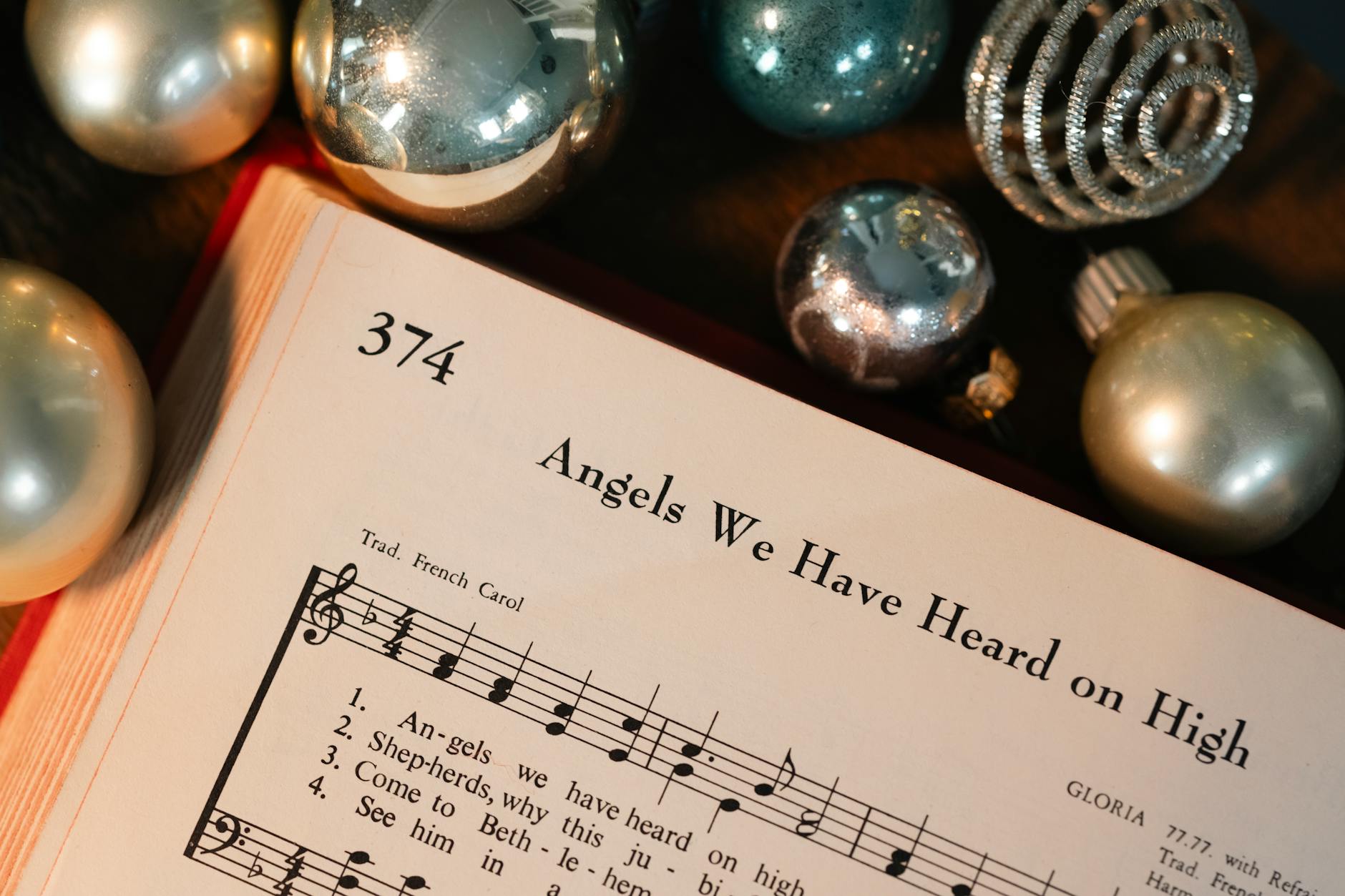
O Come, O Come, Emmanuel!

It is Advent season. We celebrate in four weeks an event that was anticipated for four hundred years! For four centuries, the people of Israel waited for the coming Messiah without ever hearing a word from God. Oh, there were prophecies– some stretching back centuries– that promised he would arrive. But when?!

Imagine praying earnestly for an event that would not happen for another three or four hundred years? Imagine praying into silence for an entire lifetime for an event that even your great-grandchildren would never witness?

We live in a fast world. Fast food, high-speed internet, overnight delivery of packages, instant communication, bullet trains– we have lost the skill of waiting. Yet Advent celebrates the waiting, the anticipation of a birth so amazing and so consequential, that we look back over 2,000 years in wonder!

The birth of Emmanuel was worth the wait. “God With Us” came into the world “at just the right time.” (Galatians 4:4). He was not a moment too early or too late to fulfill all the prophecies and bring Salvation to mankind. Those who prayed faithfully over the centuries may not have lived to see the fulfillment, but they put their hope and trust in the prophets and in the God they served.


We are in another Advent season– we await the return of Christ! We have no way of knowing the exact hour or day (or year or even century) of His return. But with the same wonder and hope of those faithful men and women of old, we should pray for His coming again! We should share the glorious story of His first coming. We should celebrate and worship the Faithfulness of God. He keeps all His promises “at just the right time.”

And as we wait, we must not give up hope or lose our passion for the Mission that Christ left with us. “Go, and make disciples of all nations” (Matthew 28:19-20). As wonderful as Christ’s birth was, it pales in comparison to His triumphant return to judge and rule the earth. May we look back in wonder and forward in joy as we celebrate this season.

Look Up!


My faith looks up to Thee,
Thou Lamb of Calvary,
Savior divine!
Now hear me while I pray,
Take all my guilt away,
Oh, let me from this day
Be wholly Thine!
May Thy rich grace impart
Strength to my fainting heart,
My zeal inspire!
As Thou hast died for me,
Oh, may my love to Thee
Pure, warm, and changeless be,
A living fire!
While life’s dark maze I tread,
And griefs around me spread,
Be Thou my guide;
Bid darkness turn to day,
Wipe sorrow’s tears away,
Nor let me ever stray
From Thee aside.
When ends life’s transient dream,
When death’s cold, sullen stream
Shall o’er me roll;
Blest Savior, then in love,
Fear and distrust remove;
Oh, bear me safe above,
A ransomed soul!

Hymn lyrics by Ray Palmer 1830


 Therefore, since we are surrounded by such a great cloud of witnesses, let us throw off everything that hinders and the sin that so easily entangles. And let us run with perseverance the race marked out for us, fixing our eyes on Jesus, the pioneer and perfecter of faith. For the joy set before him he endured the cross, scorning its shame, and sat down at the right hand of the throne of God. Consider him who endured such opposition from sinners, so that you will not grow weary and lose heart.

Hebrews 12:1-3 New International Version (NIV)

When was the last time you spent a little time sky-gazing?  Looking up at the stars?  Or even looking up at ceiling tiles or roof lines?

Photo by rawpixel.com on Pexels.com

It turns out that the very act of looking up is good for your body, mind, and soul.  Looking down, on the other hand, can, over time, lead to neck and back problems, and contribute to depression.  (for more info, use a search engine to look up “health benefits of looking up” or click here: https://www.spine-health.com/blog/modern-spine-ailment-text-neck )

The author of Hebrews reminds us that we should be “fixing our eyes on Jesus” as we run the “race marked out for us”. This is more than just watching the road ahead or looking up at the sky.  We look up at Jesus because:

  • He is the Author and Finisher (the pioneer and perfecter) of our Faith.  Faith must be anchored…we will believe in something, or we’ll fall for anything, someone has said, and if we don’t make a choice to fix our eyes on Jesus, we will end up looking around or down for something else.
  • He is our guide.  Like a highway sign keeping us on the right road and keeping us from taking a wrong turn, we look to Him to stay on track.
  • He is our example.  In looking up to him, we are also learning how to live and endure and overcome.
  • He is our advocate and encouragement!  How much better will we run when we look up to see Him cheering us on!
  • He is our goal.  We run to Him, so we look up to see how close we are to running into His loving arms.

How Must I Pray for My Enemies?

We are commanded to pray for our enemies. This is not an easy command to understand, let alone follow. Should I pray for the destruction of my enemies? Or should I pray for their success? Surely, God doesn’t want me to pray that they will continue in evil or succeed in corruption and destruction. So where is the balance? What does God want from me?

I wish I had a simple answer, but I don’t. The Bible, however, gives us several examples and guidelines. There are things we should pray for, and things that we need to give over to God.

DO pray for the following:

  • Pray for the protection of your enemies– protection from their own folly, protection from the temptations and wiles of the enemy, etc.
  • Pray for them to choose repentance and accept God’s salvation through Jesus Christ.
  • Pray for their physical, emotional, and spiritual needs. Is your enemy hungry? Suffering from grief or loneliness? Do they have cancer? Are they blind to God’s Grace because they have followed false teachers or doctrines? Pray for their health in all areas and be willing to offer practical help when possible.
  • Pray for their families.
  • Forgive them–pray for the strength to forgive and to let go of any bitterness or resentment against them for past wrongs or current actions.
  • Pray that God will bring peaceful resolution–and be willing to do whatever you can within God’s will to help bring that about.
  • Pray that God will bring Justice–not personal revenge for you. Pray that God will, in His way and His timing, uphold what is righteous and wholly just.

DO NOT pray for:

  • Their destruction. If they are not following Christ, they are already on the road to destruction! Praying for their death, or physical harm is not Biblical. This does NOT mean that we cannot pray that their deception should be exposed, or their power over others for evil should not be stripped away. Remember, our “enemy” is not the person or persons involved, but the EVIL they represent. If you are tempted to pray for someone’s death or wishing them to get cancer or cheering on those who would hurt them, YOU are just as guilty of grieving the Holy Spirit as they are!
  • Their triumph. “Praying for your enemy” is not the same as cheering them on. Forgiving them is not the same as praying that they get a “free pass” on past behavior.
  • God to “make” them change. God desires that we choose to follow Him. Pray instead that God will bring opportunities for others to want to seek Him, and to choose repentance.
  • Them to apologize, grovel, or be humiliated so that you can feel better. God MAY cause any of those things to happen, but we should not demand our own importance over God’s Grace.

Along with these guidelines, we should remember that we must treat everyone with respect and love. But that doesn’t mean that we compromise on the truth. Many of “our” enemies are really in rebellion against God and His Word. We can continue to love and respect their humanity and their need for compassion without condoning their behavior or accepting as valid their false narratives.

David spares Saul’s life in the cave (1 Samuel 24)

King David often prayed about his enemies. And some of his prayers may seem like the ones on the DO NOT list above. David often prayed that his enemies would be vanquished; that their names would be blotted out, or that they would fall victim to their own traps. But David also refused to harm his arch-enemy King Saul. Though God had promised that the kingdom would be taken from Saul and given to him, David refused to kill one who had been anointed as king of Israel (see 1 Samuel chapters 24 and 26). David killed many men in battle, and he committed murder in ordering the death of Uriah, but he showed kindness to Saul’s family, rather than punishing them (2 Samuel 9). God punished David for murder, but He blessed David for showing compassion to his enemies.

Jesus prayed for His disciples– that they would grow in Love and Grace. He instructed them to pray for those who have hurt them (Matthew 5:43-48). He never prayed for the destruction of the Pharisees or the Roman oppressors who caused so much suffering in Judea. Instead, he healed the son of the Roman official (see John 4:46-54) who asked for help. Even when the mob came to arrest Jesus in the garden before His crucifixion, He healed the ear of the soldier, after Peter cut it off trying to defend Him. And on the Cross, Jesus prayed that the father would “forgive them, for they know not what they do” (Luke 23:34)

Stephen, as he was being stoned, prayed for the forgiveness of his killers. Saul, who became the Apostle Paul, would have heard this prayer as he stood guarding the coats of the assassins. Throughout the epistles, we are reminded to pray for our enemies, AND to do our best to live in peace with them. (Romans 12:18; 1 Timothy 2:1-3; see also 2 Peter 3:9)

It is very tempting to want God to step in and do what we want– bring instant justice and punishment to those who harm us. But that is NOT God’s will. It IS His will that we should trust HIM to bring about true justice and to bring others to repentance. Including our “enemies.”

Full Disclosure

I like to know things–I like to solve puzzles, figure out mysteries, learn trivial facts.  I want answers.  So when I go before God in prayer, I often ask questions.  Why is this person suffering?  When will their suffering end, and how?  Where were you in this disaster (as though God had stepped out for a minute and wasn’t aware of what happened)?

silhouette of fireman holding hose

God stays silent.

I can grow frustrated in the silence or I can learn to trust.  That doesn’t mean that I no longer want answers; just that I am willing to wait on God’s sovereign timing.  It also means that I am need to more about God’s nature–God doesn’t keep secrets or withhold knowledge because He wants to torment me, or frustrate me, or play some cosmic mind game (though some people accuse Him of doing just that).  God withholds full disclosure of His plans, His reasoning, and His nature out of love and compassion.  Suppose I could see into the future, even give out warnings, but had no power to stop disaster from coming.  Not only would I be haunted by the disaster itself, but by the full knowledge of its coming.  Suppose I could see a miracle in advance; know when and how it would unfold.  There would still be joy, but it would be muted by the foreknowledge– of course there would be a happy ending; of course there would be a miracle– I saw it all from afar off.

photo of person holding ball

The Apostle Paul touches on this in 1 Corinthians, chapter 13.  This is commonly known as the “Love Chapter”, and the first half is frequently quoted at weddings and church sermons.  But the end of the chapter is a wonderful message of hope and faith, ending with Paul’s triumphant statement about all three:

1 Corinthians 13:8-13 English Standard Version (ESV)

Love never ends. As for prophecies, they will pass away; as for tongues, they will cease; as for knowledge, it will pass away. For we know in part and we prophesy in part, 10 but when the perfect comes, the partial will pass away. 11 When I was a child, I spoke like a child, I thought like a child, I reasoned like a child. When I became a man, I gave up childish ways. 12 For now we see in a mirror dimly, but then face to face. Now I know in part; then I shall know fully, even as I have been fully known.

13 So now faith, hope, and love abide, these three; but the greatest of these is love.

monochrome photography of a man looking in front of mirror

God loves us with a perfect love.  Because of that, I can trust Him, and have hope in the midst of my questioning.  So when I pray with questions, I can know that God has “filed them away”– He is fully aware of my situation, questions and all, and He is fully faithful to answer them all in His perfect wisdom and timing.  Someday, I will know– not only all that I don’t know now, but why I had to wait.

God will provide full disclosure. with compassion, love, and wisdom that only He can give.

When Sorrows Like Sea-Billows Roll..


November 10th marks the 50th anniversary of the wreck of the Edmund Fitzgerald, an iron freighter that sank in Lake Superior. The gale-force winds tossed the ship (carrying over 26,000 tons of iron) in waves of over 35 feet. All 29 sailors aboard the ship were lost. The event has been memorialized in song and stories, and in at least one museum display at Whitefish Point Michigan, near where the wreck occurred. The bell tolled 29 times, once for every life lost in the storm. Fifty years later, families are still haunted by the tragedy– a continuing reminder of the fragility of life, and the power and destructive force of winds and waves.

Some days, the hits just keep coming– an unexpected expense, a misunderstanding at work, a fender-bender during the commute, a plumbing nightmare, a migraine, the phone call with bad news.  Each new pain rolls over us, throwing us off balance, and trying to drag us under like a storm-tossed ship.

pexels-photo-355288.jpeg

“Even so, it is well with my soul.”  The story of this favorite hymn has been told many times, but it bears repeating. ( It Is Will With My Soul. wikipedia.org )  The author of these words had lost everything– his only son had died; shortly afterward, he lost almost all his money and property in the Great Chicago Fire of 1871.  A friend, knowing of his troubles invited him to bring his family to England for an evangelistic campaign.  Mr. Spafford (the above-mentioned author of the hymn) had to stay behind and sent his wife and four daughters ahead.  Their ship, the Ville du Havre, was struck by another vessel and sank.  All four of the daughters were drowned, and only his wife survived to send him news of the tragedy.  As he made the heartbreaking voyage to rejoin his wife, he passed the place where his daughters had most likely gone down.  At that moment, Mr. Spafford felt a welling of peace and hope beyond human understanding, which led him to pen the words that have given comfort to so many in the years since:

When peace, like a river, attendeth my way,
When sorrows like sea billows roll;
Whatever my lot, thou hast taught me to say,
It is well, it is well with my soul.

Nothing can prepare us for the sorrows that sweep over us at unexpected moments.  Nothing can stop them, and though we know they will come, no one knows how high they will rise, or when they will crest and break around us.  No one except the one who set the boundaries of the sea, the one who has walked on its waters, and the one who can calm the storm.

pexels-photo-127160.jpeg

God doesn’t remove the sorrows or tragedies from our life or prevent them from washing around and over us.  But for those who trust in him, there is a promise that we will not be consumed. We may be in a storm-tossed boat in the middle of a raging sea, but at our faintest cry, Jesus will walk on choppy waves to be by our side and bring comfort.  He will teach us to be in awe of him as he commands the winds and waves to obey him.  He will teach us to trust him in the good times and the bad.  He will teach us to say, “It is well with my soul!”

35 Who can separate us from the love of Christ?
Can affliction or anguish or persecution
or famine or nakedness or danger or sword?
36 As it is written:
Because of You
we are being put to death all day long;
we are counted as sheep to be slaughtered.[a]
37 No, in all these things we are more than victorious
through Him who loved us.
38 For I am persuaded that not even death or life,
angels or rulers,
things present or things to come, hostile powers,
39 height or depth, or any other created thing
will have the power to separate us
from the love of God that is in Christ Jesus our Lord!
Romans 8:35-39 (HCSB)

What if?

What if–
I say the wrong thing, and ruin someone’s day?
Or perhaps I get lost and lose my way?

What if–
I get bad news about my health
Or suddenly lose all my worldly wealth?

What if–
Friends turn to foes this week?
What if I can’t find the peace that I seek?

But

What if–
I take it to the Lord in prayer?
Bring Him every question and care?

What if–
God prevented that unseen wreck;
Stopped me from falling and breaking my neck?

What if–
God saw the looming temptation
And removed me from the situation?

How many times had God stepped in
And quietly saved me from the effects of Sin?

And when He hasn’t–do I really know
If my life would be better if God never said, “No!”

What if–
I trusted and always gave praise
When God’s answers reveal His mysterious ways?

What if–
I ask and seek and knock,
Knowing my God is the Eternal Rock?
Knowing that God hears, and cares, and sees
Much more than I do when I’m down on my knees.

“..casting all your anxieties on him, because he cares for you.” 1 Peter 5:7 (ESV)

Solitary Prayer?

So often when I pray, I do so in isolation, and I think of it as a solitary activity.  I am communicating with God– often silently–it is a private conversation.  Or is it?

At any given moment on any given day, millions of prayers are ascending to Heaven.  Consider the arithmetic of prayer– millions of prayers, millions of pray-ers, and God is part of each one–twice the number of participants.  But God is triune– so now there are four participants in every “personal” prayer, and four participants for every one in a group prayer!  It’s mind-blowing to think of all the spiritual investment that is happening through prayer at this very instant around the world.  And in heaven?  Our prayers ascend; God likens our prayers to incense– a pleasing aroma.  If I light a scented candle, or burn incense, the aroma is not personal– it permeates the air, penetrates my clothing, clings to my hair, lingers and touches on all who are nearby.  This doesn’t diminish the intimacy of prayer, but transcends it, and transforms it.  God is relational– from the intimacy of private prayer to the glory of his kingdom– he wants us to belong, to share, and to love.  Love doesn’t happen in a vacuum.  It is not a solitary activity, nor one in which anyone is “just a number.”

I think we are often deceived and intimidated by numbers and statistics.  We sometimes feel very small and powerless and alone.  We measure our prayers by their duration or the number of our words, or how small our perceived influence.  We pray alone or in a tiny group, or seem to get swallowed in a crowd, and we think our prayers travel a linear path to God’s ears and they are ended.  May our eyes be opened to the reality that we are never alone, never helpless, and never unimportant to God–that our prayers, like incense, linger, radiate, and echo as they ascend.

fog-dawn-landscape-morgenstimmung-163323.jpeg

God uses the small and humble things in life to confound those who think they are wise and powerful and important.  He is the God who changes our suffering into sufficiency, and our abiding into abundance.  He multiplies our faith, and increases our joy; he divides our sorrows and cancels out our sin.  He hears our every sigh.  He dries our every tear.  He knows our every thought.  He inhabits the praises of his people– let that sink in as we pray today.


What Would Jesus Pray?

Several years ago, it became incredibly fashionable (literally) to wear t-shirts, necklaces, and especially bracelets with the four letters, WWJD– which stood for “What Would Jesus Do?”  This was supposed to serve as a reminder that the wearer was an ambassador of the Kingdom of God, and was supposed to be a follower of Jesus, and thus should act in accordance with what Jesus would do in any given situation.  Stuck in traffic–What would Jesus do?  Presumably, we would not lose his temper, honk and scream obscenities, or rudely try to cut or push others off the road.  Tempted by the scantily clad actors and actresses in a new R-rated movie– What would Jesus do?  Presumably, he would not attend R-rated movies filled with sexual situations in the first place, or, finding himself tempted, he would leave the movie.

I think the intention was good in the beginning– even scriptural in a sense.  The Children of Israel were commanded, in Deuteronomy 6: 8 to “tie them (God’s commandments, laws, and decrees) as symbols on your hands and bind them on your foreheads.  Write them on the door frames of your houses and on your gates.”  Throughout the Bible, the patriarchs, prophets, Jesus, and the apostles, often spoke of keeping God’s Word in our hearts and on our minds as we go through our daily routines.  This short reminder should help us do just that– redirect our thoughts to the One we are to follow.  As far as it achieved that goal, it was a good thing.

The problem is that it didn’t work that way for most people.  The jewelry or the t-shirt didn’t serve as a reminder to the wearer, but as a symbol to everyone else.  “Hey, look at me!  I’m wearing a fashionable accessory with a cryptic message that lets you know that my thoughts and actions represent Jesus here on earth!”  Ironically, Jesus would have been the last person to wear such an item– not only because he wouldn’t have to ask the question (BEING Jesus, and all), but because his focus was on others–Jesus didn’t wear his heart on his sleeve, or his wrist, and he didn’t call attention to his own righteousness.  Instead, he spoke to outcasts, and touched lepers.  He acted in accordance with God’s wishes, not because he had decided what he thought God would want him to do, but because he knew who God wanted him to become.

One of the worst casualties of the WWJD craze is that many people substituted their own wisdom for a study of God’s word– in other words, they imagined what Jesus would (or might) have done, instead of learning and following what he DID.  Of course, Jesus was never stuck in a traffic jam.  But he did face demands on his time, and stressful situations.  He was never tempted by movies or internet porn, but he was surrounded by a culture that had “religious”  “temple” prostitutes, along with sexual immorality not that different from what we see today.  The Bible doesn’t give us a picture of Jesus planning and executing a strategy for specific temptations– it DOES give us specific examples of people over a long period of time who failed or triumphed over temptations, big and small, and of people who turned to God for strength to overcome temptation and grace when they had fallen.  It also gives us a picture of Jesus living a life that was perfectly pleasing to God– including a life of prayer.

What would Jesus pray?  Look at John 17.  Look at Luke 11:1-4 or Luke 22: 39-48.  Look at Mark 14: 32-42.  There are many examples of Jesus’ prayers– prayers that pour out his heart to his Father– in faith, in pain, in grief, and in hope.  In fact, it would be appropriate to say in answer to the question, “What would Jesus do?”– Jesus would take it to God in Prayer! Look at the way He taught His disciples to pray:

“And when you pray, do not be like the hypocrites, for they love to pray standing in the synagogues and on the street corners to be seen by others. Truly I tell you, they have received their reward in full. But when you pray, go into your room, close the door and pray to your Father, who is unseen. Then your Father, who sees what is done in secret, will reward you. And when you pray, do not keep on babbling like pagans, for they think they will be heard because of their many words. Do not be like them, for your Father knows what you need before you ask him.
“This, then, is how you should pray:

“‘Our Father in heaven,
hallowed be your name,
your kingdom come,
your will be done,
    on earth as it is in heaven.
Give us today our daily bread.
And forgive us our debts,
    as we also have forgiven our debtors.
And lead us not into temptation,
    but deliver us from the evil one.
For if you forgive other people when they sin against you, your heavenly Father will also forgive you. But if you do not forgive others their sins, your Father will not forgive your sins. (Matthew 6:5-15 NIV)

Jesus did not ask the Father to give His disciples a blueprint of “Holy” activities or attitudes. He asked for fundamentals– that God’s Kingdom would come; that God would meet our daily needs; that God would forgive us as we forgive others; and that God would steer us away from temptations and evil. For everything else, Jesus directed His disciples to DO what He did, not ask what He would do. Reach out to those who are needy and hurting with love and practical help. Forgive. Tell the Truth. Worship God above all else, and go to Him in prayer.

Jesus didn’t come to earth and live his life to make us great, or successful, powerful or popular by the world’s standards.  He came to seek and to save those who were lost.  He asks us to do the same– not in our own strength or success, but in the overflow of the grace and power he has poured into us.  T-shirts and jewelry are nice, but Jesus used his life–his time, his love, his talents, his words and his actions in accordance with God’s will and God’s wise commands to bring people to himself.  Then he did what none of us could do– he fulfilled God’s law, becoming the perfect sacrifice for our sins, and conquering Sin and death.  What would Jesus do?  He DID IT!  It is FINISHED!  Our part is not to do what only God can do, but to what he has asked of us and trust him to do the rest.

bow down

This is also true in our pursuit of prayer.  I often get side-tracked in wondering if my prayers match up to what Jesus might have prayed in the same situation– and that shouldn’t be my immediate focus.  Prayer is, as I have to keep reminding myself, a pursuit.  It is a process and a journey, and an ongoing, deepening conversation with the one who loves me best.  And it is not a one-sided conversation– God answers my prayers, not just by meeting immediate needs or changing circumstances.  He speaks through his law, through the Psalms and prophets, through the Gospels and the Epistles, and through the godly wisdom of friends and counselors and ministers of his Grace.  And in doing so, he teaches me to pray.

May I stop worrying so much about the length or the style or the “worthiness” of my prayers.  May I instead listen, and learn, and continue the pursuit.

“Don’t Mess With Mister In Between”

This popular song came out in 1944, as thousands of soldiers were dying in World War 2, and millions were facing homelessness and starvation in Europe, Asia, and northern Africa. Its syncopated rhythms and upbeat lyrics helped focus minds and hearts on hope in a world torn apart by war, hatred, and despair. Further lyrics refer to biblical characters Jonah and Noah, and their experiences facing “dark” times.

The Bible gives us similar (and more specific) advice. The Apostle Paul wrote from prison to believers in hard-pressed Philippi:

Do not be anxious about anything, but in every situation, by prayer and petition, with thanksgiving, present your requests to God. And the peace of God, which transcends all understanding, will guard your hearts and your minds in Christ Jesus. Finally, brothers and sisters, whatever is true, whatever is noble, whatever is right, whatever is pure, whatever is lovely, whatever is admirable—if anything is excellent or praiseworthy—think about such things. Philippians 4:6-8 (NIV)

In other words– Accentuate the Positive and latch on to the affirmative!

To the Ephesian believers, he says:

The Old Way Has to Go (or, Eliminate the Negative):

And so I insist—and God backs me up on this—that there be no going along with the crowd, the empty-headed, mindless crowd. They’ve refused for so long to deal with God that they’ve lost touch not only with God but with reality itself. They can’t think straight anymore. Feeling no pain, they let themselves go in sexual obsession, addicted to every sort of perversion. But that’s no life for you. You learned Christ! My assumption is that you have paid careful attention to him, been well instructed in the truth precisely as we have it in Jesus. Since, then, we do not have the excuse of ignorance, everything—and I do mean everything—connected with that old way of life has to go. It’s rotten through and through. Get rid of it! And then take on an entirely new way of life—a God-fashioned life, a life renewed from the inside and working itself into your conduct as God accurately reproduces his character in you. What this adds up to, then, is this: no more lies, no more pretense. Tell your neighbor the truth. In Christ’s body we’re all connected to each other, after all. When you lie to others, you end up lying to yourself. Go ahead and be angry. You do well to be angry—but don’t use your anger as fuel for revenge. And don’t stay angry. Don’t go to bed angry. Don’t give the Devil that kind of foothold in your life. Did you use to make ends meet by stealing? Well, no more! Get an honest job so that you can help others who can’t work. Watch the way you talk. Let nothing foul or dirty come out of your mouth. Say only what helps, each word a gift. Don’t grieve God. Don’t break his heart. His Holy Spirit, moving and breathing in you, is the most intimate part of your life, making you fit for himself. Don’t take such a gift for granted. Make a clean break with all cutting, backbiting, profane talk. Be gentle with one another, sensitive. Forgive one another as quickly and thoroughly as God in Christ forgave you. Ephesians 4:17-32 (The Message)

But what does it mean when the song says, “Don’t mess with Mister In Between”? The Bible gives some advice on this as well. The Apostle James has much to say about such a man in the first chapter of his epistle. He talks about being steadfast, not doubting, not double-minded, and not swept up in temptation, blaming others, and justifying his own philosophies:

22 But be doers of the word, and not hearers only, deceiving yourselves. 23 For if anyone is a hearer of the word and not a doer, he is like a man who looks intently at his natural face in a mirror. 24 For he looks at himself and goes away and at once forgets what he was like. 25 But the one who looks into the perfect law, the law of liberty, and perseveres, being no hearer who forgets but a doer who acts, he will be blessed in his doing. James 1:22-25 (ESV)

To James, “Mister In Between” is a shadow man, a person without root or discipline, who will listen to the word of truth, but then turn back to the darkness of the world to justify inaction and/or wrong actions. Mister In Between wants to straddle the fence between sin and obedience, revenge and forgiveness, anger and patience, comfort and compassion. But that doesn’t work. Such a person lives in a false reality– one where his/her “truth” changes with each new experience or emotion, each new encounter with pleasure or grief.

Jesus Himself spoke of the dangers of living “In Between”:

Then he said to them all: “Whoever wants to be my disciple must deny themselves and take up their cross daily and follow me. 24 For whoever wants to save their life will lose it, but whoever loses their life for me will save it. 25 What good is it for someone to gain the whole world, and yet lose or forfeit their very self? 26 Whoever is ashamed of me and my words, the Son of Man will be ashamed of them when he comes in his glory and in the glory of the Father and of the holy angels… 62 Jesus replied, “No one who puts a hand to the plow and looks back is fit for service in the kingdom of God.” Luke 9:23-26;62 (NIV)

13 “You are the salt of the earth. But if the salt loses its saltiness, how can it be made salty again? It is no longer good for anything, except to be thrown out and trampled underfoot.14 “You are the light of the world. A town built on a hill cannot be hidden. 15 Neither do people light a lamp and put it under a bowl. Instead they put it on its stand, and it gives light to everyone in the house. 16 In the same way, let your light shine before others, that they may see your good deeds and glorify your Father in heaven. Matthew 5:13-16 (NIV)

We may not be in the midst of a World War (though some reading this may be experiencing war, persecution, and suffering), but we are all involved in a great Spiritual Battle. There are negative forces and philosophies warring with God’s Truth– Anger, Despair, Hatred and Vengeance, Pride, Envy, Power, Greed, and many more. We need to keep our thoughts positively turned toward “whatever is true”.. and noble and praiseworthy– we need to keep our thoughts, prayers, and actions in tune with the teachings of Jesus. We also need to “eliminate” the negativity in our lives– doubts, regrets, shame, lust, bitterness, jealousy, and empty adherence to things of this world– we need to turn our back on old ways of thinking and doing (or NOT thinking or doing) and focus on Jesus. And we need to avoid “messing” with Mister In Between– stop compromising, stop trying to straddle the fence between loving others and making them feel comfortable or superior in their sin at the cost of our own soul.

It sounds easy and jaunty to “accentuate the positive.” But it involves commitment, and the willingness to let go of the negative and the complacent that creeps into our lives. That’s my prayer for today. I hope it is yours, too.

Prayers From the Cockpit

Years ago, a decorated fighter pilot, Robert Scott, wrote a book with the title, “God is My Co-Pilot.”  It was made into a movie, and the title became a  popular phrase for bumper stickers, posters, and more.

Theatrical trailer for “God Is My Co-Pilot” –youtube

More recently, there have been several people who have spoken out against the catch-phrase, by saying something to the effect of ,”If God is your co-pilot, someone is sitting in the wrong seat!”  I mean no disrespect to Mr. Scott, the book, the movie, the bumper stickers or even the critics, but I think both sentiments kind of miss the point.

There is a much better analogy in the title of an lesser-known book by another pilot.  Pilot and high school basketball coach Floyd Eby wrote a book called “Calling God’s Tower– Come In, Please.”

51pdlJsYI0L._SX325_BO1,204,203,200_

I’m not a pilot or a coach, and I’m not claiming that Scott’s title is bad, or that Eby’s book is “better.”  Certainly, when I pray, I believe that God is always right beside me, that he hears me, and that he knows my thoughts and my heart intimately.  I think that is the intent of the co-pilot analogy, and as such, it rings true.  But God is much more than a partner, a co-pilot, or a colleague.  The danger of this thinking is that we take God for granted.  If God is my co-pilot, I won’t turn to him for help unless something is going wrong and “my way” isn’t working.

“I am the vine; you are the branches. The one who remains in me and I in him produces much fruit, because you can do nothing without me.” (John 15:5 CSB)

So what about “switching seats?”  Shouldn’t God be my pilot?  He is God and I’m not.  It is true that this represents a better view of God’s authority and sovereignty.   It is also true that God is greater, stronger, and wiser than I am.  But I think this view, though more accurate in portraying our position, gives rise to another dangerous idea– that I can sit back and be little more than a passenger, while God does all the flying.  One of the valid criticisms of modern Christianity (especially in America), is that we know about Christ, and talk about Christ, but we don’t always live for Christ.  We see the finished work of Christ as an excuse to sit back, smug and complacent about morality, evangelism, obedience, and good works.  We shout, “Jesus Paid it All!” and mumble “All to Him I Owe.”  We want to sit in the cockpit for the pretty view, but we don’t want to learn how to fly the plane.

 I know how to be brought low, and I know how to abound. In any and every circumstance, I have learned the secret of facing plenty and hunger, abundance and need. I can do all things through him who strengthens me.” Philippians 4:12-13

God has given us the privilege and the responsibility to be the pilots (or drivers, or captains) of our lives–He gives us the free will to make choices and steer our behavior or actions.  We are not helpless passengers on a fatalistic trip through this life.  He has equipped us to know the thrill of soaring and banking and flying through the clouds.  But God doesn’t leave us to fly blindly through the haze and clouds and glare.  He gives us his word, which, like a map, chart, instrument panel, or GPS system, shows us where and how we should go.  And, like the air control tower, he gives extra guidance, listens to our needs, and provides assurance as we stay tuned to him.

God also sees and knows more than we do in our cockpit.  When I’m “calling God’s Tower”, he knows all that goes on above and below, ahead and behind– he knows about the storms in the distance or the other planes scheduled to arrive or take off from the airport.  I can trust his advice, his commands, and his presence more than my own judgment or eyesight.

I want to learn how to fly; I want to soar like an eagle, and I want to come in for a safe landing at the end of my journey.  I need to keep in constant contact with God’s tower and follow His wise flight plan.

landscape-aircraft-clouds-storm-38574.jpeg


Blog at WordPress.com.

Up ↑