Jesus’s Prayer List

Meanwhile, the moment we get tired in the waiting, God’s Spirit is right alongside helping us along. If we don’t know how or what to pray, it doesn’t matter. He does our praying in and for us, making prayer out of our wordless sighs, our aching groans. He knows us far better than we know ourselves, knows our pregnant condition, and keeps us present before God. That’s why we can be so sure that every detail in our lives of love for God is worked into something good. God knew what he was doing from the very beginning. He decided from the outset to shape the lives of those who love him along the same lines as the life of his Son. The Son stands first in the line of humanity he restored. We see the original and intended shape of our lives there in him. After God made that decision of what his children should be like, he followed it up by calling people by name. After he called them by name, he set them on a solid basis with himself. And then, after getting them established, he stayed with them to the end, gloriously completing what he had begun. So, what do you think? With God on our side like this, how can we lose? If God didn’t hesitate to put everything on the line for us, embracing our condition and exposing himself to the worst by sending his own Son, is there anything else he wouldn’t gladly and freely do for us? And who would dare tangle with God by messing with one of God’s chosen? Who would dare even to point a finger? The One who died for us—who was raised to life for us!—is in the presence of God at this very moment sticking up for us. Do you think anyone is going to be able to drive a wedge between us and Christ’s love for us? There is no way! Not trouble, not hard times, not hatred, not hunger, not homelessness, not bullying threats, not backstabbing, not even the worst sins listed in Scripture:
They kill us in cold blood because they hate you.
We’re sitting ducks; they pick us off one by one.
None of this fazes us because Jesus loves us. I’m absolutely convinced that nothing—nothing living or dead, angelic or demonic, today or tomorrow, high or low, thinkable or unthinkable—absolutely nothing can get between us and God’s love because of the way that Jesus our Master has embraced us. (Romans 8:26-38– The Message. Emphases added)

I keep a Prayer Journal– (for more info, click here: Prayer Journal). In my prayer journal, I have lists of names– people I pray for on their birthday or anniversary; people I pray for on the anniversary of a loved ones’ death; people who are hurting or in need at a particular time– and some days, the list seems very long. Sometimes the names on my lists are people I know well, but other names are there because I knew them well in the past, or because they are important to people I know well, but I don’t really know them personally. Often, I don’t really know how best to pray for an individual on my list. But imagine if Jesus were to keep a written prayer journal! He doesn’t just pray for people on special occasions or even in their time of trial– He prays continually for all who are His! And He knows each one intimately– He knows our every need better than we do!

You and I (if we are followers of Christ) are CONTINUALLY on His mind, and CONTINUALLY in His prayers! In fact, His Spirit even inhabits our groans and fumbled or aborted prayers. There is not a moment or a set of circumstances in which Jesus has turned His back on us or been distracted by something else. He is our Eternal Advocate, our Ever-Present Help, and our Heavenly prayer-warrior!

What a comfort to know that I don’t have to know exactly how or what to pray in order to lift up my heart-cry to God. My words may be muddled, my mind distracted by fleeting worries or doubts, but if I have placed my trust in Christ, I will never pray in vain. I may not be able to understand how or why or when God will work; I may not understand how my prayers fit into God’s overall plans. But I can pray with confidence that comes from knowing that God is Good, and Christ is my liaison with all that is Sovereign and Good. I cannot be separated from any of that by my own inadequacies or my lack of understanding. I cannot be kept apart from God by any personal failings or any forces working against me. And my fumbling prayers cannot be intercepted or twisted or negated by the enemy.

Your name is on Jesus’s prayer “list”; you are in His constant prayers before the Father. And each of your prayers is personally siphoned through the Holy Spirit and the Son to be presented– perfected– to the Father! What a captivating and encouraging thought! What an Amazing God we serve!

That Voice in Your Head

Most days, I post about Pursuing Prayer from the “praying” end…how do I pray, what attitude do I have about praying, why do I pray, etc.

Today, I want to explore the “responding” end…how do I know when God is answering my prayer, or what he’s asking me to do in response to his will?  While I don’t have a complete answer, I do want to share some wisdom– some from experience and some from Biblical principles and others’ testimony.

Isaiah 55:8-9 English Standard Version (ESV)

For my thoughts are not your thoughts,
    neither are your ways my ways, declares the Lord.
For as the heavens are higher than the earth,
    so are my ways higher than your ways
    and my thoughts than your thoughts.

God moves in a mysterious way, His wonders to perform. He plants his footsteps in the sea, and rides upon the storm. William Cowper

It often surprises people to learn that “God works in mysterious ways” is not actually in the Bible.  God’s ways are NOT our ways, and his thoughts are not our thoughts, but his answers to prayer are not always obscure and unknowable.  God does not delight in vexing us and making us guess and second-guess his will.  It would be easy if God always answered our prayers with a flashing neon sign that gave a simple, one-sentence directive– “Take two aspirin and call me in the morning.”  “Click your heels together and say, ‘There’s no place like home.'” “Hakuna Matata.”  But pithy platitudes and easy answers are not God’s way, either.  God created each of us as a unique reflection of his divine image– his answers will be uniquely designed to fulfill his will and meet our deepest needs, not always in ways we expect or understand.

pexels-photo-942317.jpeg

So how do we discern God’s will when there is no neon sign or simple answer to our prayers?  Here are a few guiding principles:

  • God will NEVER answer your prayer by contradicting himself or compromising his holiness.
    • God will not answer your prayer for money by giving you an opportunity to cheat or steal.  He will not answer your prayer for a husband by throwing you into the arms of someone else’s.
    • Just because God doesn’t send a lightning bolt or physically stop you from doing something doesn’t mean that he has given his OK.  If he ALLOWS you to sin, that doesn’t mean that he APPROVES of your sin or that it is his answer to your prayer.
    • God will never ask you to do harm to yourself or others as an answer to your prayer.  Vengeance, sacrifice, atonement, and retribution are the province of God alone.  I believe that God asks us to be vigilant in defense, and allows us to take up arms in defense, but to initiate a feud, to seek personal vengeance, or to act out vigilante justice is to flout both God’s authority and the authority of the powers God has set in place over us.
  • God MAY use circumstances or people to answer your prayer.  But the same principle above applies– circumstances that lead to sinful actions are NOT God’s answer to your prayer; people who advise you to do what you know is contrary to God’s holiness are not sent from God– no matter how appealing the prospect, no matter how powerful the person or persons.  That being said, God may choose to use the most unlikely of persons or events to bring about a resolution to your need–LET HIM!  Don’t judge a gift by the size, the shape, or the wrapping paper!

gift-made-surprise-loop-39006.jpeg

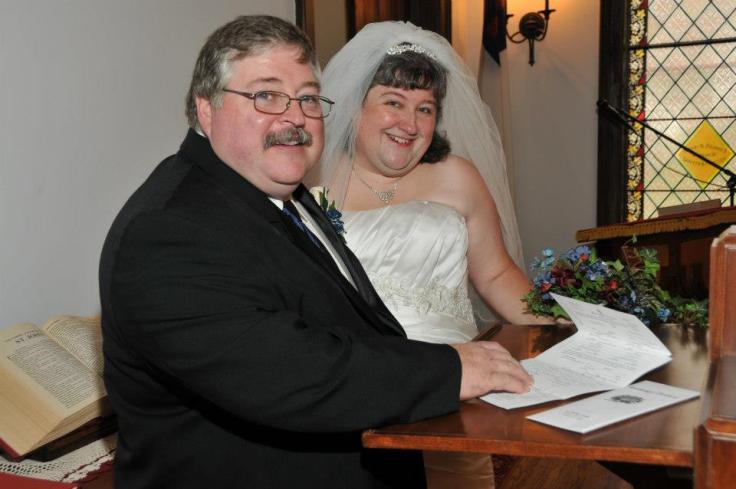
  • God may use time to answer your prayer.  I prayed for a husband from the time I was a young girl– I married at age 46.  Waiting doesn’t mean that God has forgotten about you; it doesn’t mean that you aren’t worthy of an answer or ready for an answer– sometimes your answer isn’t ready for you!  There are two caveats I want to share from my own experience of waiting for an answer:
    • Don’t give up!  God knows the desires of your heart– but keep praying anyway.  Well-meaning people will say awful, hurtful things– that you aren’t praying enough, or praying the “right” way; that you must be hiding un-confessed sin; that you need to try some other way to get what you want, or to hurry God along.  In my case, I had people trying to fix me up, suggest dating services, remind me that my “clock” was ticking (it was broken, but they didn’t know that), or suggest that it just wasn’t God’s will that I marry, and I should pray for him to take away the desire for a husband.  Listen to folks like this (if you must) with half an ear and less than 10% of your heart– let them cause you to re-examine your heart and your desires, but don’t let them cause you to give up or doubt God.  That was not their intention, but it can often be the result of their ill-considered words.
    • Do the next right thing.  Doing nothing while you wait for the perfect answer gets you nowhere.  Wringing your hands and pacing gets you nowhere.  God wants our trust and our obedience.  As we wait for more specific direction, we need to trust that doing the next right thing IS the RIGHT thing to do.  This was the hardest lesson for me, but the one I most needed to learn.  So while I waited, I moved ahead step-by-step.  I made a lot of friends, gained a lot of experiences, and learned about marriage by watching the examples of others (both good and bad).  I got involved working with children, first as a secondary teacher, and then as a librarian.  I got to spend nearly thirty years of my working life surrounded by young people.  I got to laugh with them, love on them, mentor them, dream with them, discipline them, and cry over them (and send them home).  I didn’t just “settle for” a single lifestyle– I learned to embrace it.  I learned to be grateful for the wonderful opportunities I had as a single woman, and to anticipate the changes that marriage would bring, should it come along.  I learned that marriage should be a means to an end, not the end itself– that marriage done right is not about my growth and fulfillment; not even about his growth and fulfillment; but about OUR growth together and toward Godliness.
  • Trust “that voice in your head”– (not the one that speaks out loud and gets you strange looks!) –but your God-given conscience, and the guidance of the Holy Spirit.  “That still, small voice” is often the most personal way God speaks to us.  In my own life, it was taking the risk to leave a career I loved (teaching) to reach for a deeper dependence on God.  I left the security of my teaching position for three part-time jobs (at one point), no health insurance, and a move to a new community where I knew virtually no one.  I had other choices, other more appealing options, chances to reconsider.  I wasn’t being pushed out of teaching–in fact, I left just as my options at the school were opening up for bigger and better things.  Yet I felt compelled to leave.  I had no safety net waiting– I ended up in libraries, but that wasn’t my original plan.  There were many people counseling me to reconsider– and their reasons were compelling.  But as I stood firm, other voices came along to encourage me.  I believe they were sent by God to confirm that this risk was from him and for my good.
  • Don’t trust “that voice in your head”–No, I’m not trying to confuse you or contradict what I just said.  But this is another caveat (see above).  We are told to “test the spirits”, and sometimes, that voice in your head is NOT the Holy Spirit.  In the case I mentioned above, I had to follow all the other principles of discerning God’s will.  In my case, leaving teaching did not violate God’s holiness or come about because I wasn’t willing to follow God’s leading–I wasn’t leaving teaching to try my hand at a get-rich-quick scheme, or because I had lost my desire to work with students, or had lost faith in God’s sovereignty in my life.  God DID use circumstances and people to confirm my decision and help me grow through the experiences that followed.  God used time to help me transition from schools to libraries, and prepare me for other opportunities, including short-term missions trips and marriage.  I can’t even begin to list all the ways I tested and examined what I felt God was leading me to do before I made the leap.  That much testing may not always be necessary, but we need to be careful not to rely on our own understanding (Proverbs 3:5-6), but to Trust in the Lord with all our hearts.  He WILL direct our paths when we do that.

pexels-photo-618955.jpeg

  • Finally, Pray for it– pray for discernment, for wisdom, for strength to do the right thing!  Won’t God DO IT!

The “Fake” Good News

I keep hearing about, and seeing reports of “Fake” News.  Even the term “Fake” News is somewhat misleading–is it news?  Is it False News?  Is it “fake” because it never happened, or because it has been exaggerated or taken out of context?  Or because it doesn’t say what I want it to say?  How do I know what is “real” news anymore?

The biggest problem with “Fake” news is that it “feels” real, true, and important.  In reality, it may be none of those things.  Yet there if often a kernel of fact, or a dusting of truth that makes it hard to disprove or dispel.  And, if it had already been accepted as legitimate news by thousands, it’s even harder to stop it from being spread.

But the more insidious problem with “fake” news is the time wasted trying to sort truth from fiction, and plain fact from exaggeration and distortion.  If my friend sends me an article, or a video, or a photo, I may accept it as true on the strength of my friendship.  But what if they’re just passing it on from another source?  What if I see it from a recognized news source?  Do I dare question it?  And if so, where do I turn to verify it?  There are several fact-checking websites, but even they have biases that cause them to weigh facts differently in various situations.  Whatever assumptions we used to hold about “neutral” reporting have been proved wrong.  We are being conditioned to trust none of what we hear and less than half of what we see!

pexels-photo-256868.jpeg

What about the “Good” News that Christians carry into the world?  Is it like the “Fake” news we see on TV or read about on our tablets?  And if someone challenges our faith in God’s word, how can we prove that the Gospel is not “Fake”, and that our Faith is not just more hype with smoke and mirrors?  If we are pursuing prayer, shouldn’t we be confident that our prayers are not in vain and that our faith is sound?

The claim of “Fake” news makes an assumption that there is such a thing as “True” news.  Similarly, saying the Gospel is “Fake” assumes that there is an alternate truth.  But the real burden of proof is on those who want to push for the alternative.  The truths of the Bible have been time-tested, and shown to be real.  The challenges I hear most often are to the exceptions, not the rule.  I don’t hear anyone saying that “Thou shalt not steal” is a “fake” morality.  Instead, I hear that, “Christianity is fake because I know Christians who cheat and steal.”  I don’t hear people claim that “it is not morally wrong to kill.”  Instead I hear them justify exceptions.  “I’m not promoting abortion as a good thing.  I don’t think it’s right to kill another human being, but this is just a fetus, and anyway, I’m just protecting a woman’s right to her own body.”  “I don’t think it’s ethical to force someone to stay alive if they are in pain and they want to die.”  “You can’t go around just killing anybody, but I think it would be better for everyone else if ___________________ (insert the name of a group– Down’s Syndrome children, Jews, Sunnis, Hutu/Tutsi) didn’t exist.”  “I don’t believe the morals found in the Bible are wrong.  I just don’t think you need to believe the rest of it to “be moral.”

People point to single passages, single verses, even single words to “prove” that the Bible is racist, sexist,  intolerant, and promotes violence.  The Bible includes many examples of people NOT following God’s laws, and yes, the results are grisly.  And there are difficult passages when God calls for a wicked city to be destroyed completely.  Critics are not wrong to point out that the Bible is not about perfect people behaving perfectly.  And the same Loving God who frees the slaves from Egypt is the God who destroys Jericho, and Sodom and Gomorrah.  Taken out of context, these few examples may seem to cast doubt on the authority of God’s word.  Yet the same critics who pound away at the same few examples in the Bible discount hundreds of instances of  historical events that highlight human sacrifice, genocide, mass infanticide, slavery, torture, and all sorts of other evil that occurred without the Bible’s influence.  Moreover, I hear a lot about claims against “Christians” who fought in the Crusades or owned slaves–I hear a lot less about Christians who worked to end slavery and the slave trade, or Christians who founded universities, charitable institutions, or brought revivals that sparked decades of social progress throughout countries and continents.

pexels-photo-305530.jpeg mlkjr

I don’t hear many people claim that there was no such person as Abraham, or King David, or Solomon, or Nebuchadnezzar, or Pontius Pilate or Caesar Augustus.  But they want to deny the historical reality of Adam and Eve, Jesus of Nazareth, and the Apostle Paul, who are found in the same Bible.  Why?  Because if Adam and Eve are real, there must be a creation and a creator.  If Jesus really lived and said the things that are attributed to him, we must deal with the claim that he was Messiah.  If the Apostle Paul really lived and wrote his letters to the churches of Asia Minor, we must deal with his claim that he encountered the risen Christ and his life was dramatically and eternally changed.

However, there is a “Fake” gospel– Good news that doesn’t match the Biblical account–a “Fake” Christ that only said or did or “would do” what we want him to say or do; a Christ that isn’t holy or righteous, but just loves us because it’s the “zen” thing to do; a Christ who is without power to save or to sanctify; a Christ who is without mercy and loves only those who look the part or say the right things.  How do you spot a “Fake” Christ and a “Fake” Gospel?  Get to know the real ones of the Bible.  You’ll soon be able to spot an “imposter.”

“Fake” News will always fail the test of time and the challenges of real evidence.  Good News will transcend the test of time and the challenges of faulty evidence.

person-clinic-cross-religion-54333.jpeg

Christ Has Died, Christ Is Risen, Christ Will Come Again!  THAT’s the Good News!


“Praying Favorites”

We all have lists of “favorites”– favorite color, favorite foods, favorite songs, favorite bands, favorite movies, favorite books…the list goes on and on.  And we all have our comfort zones– preferences, habits, traditions, routines– that impact the way we go through our daily lives.  There is nothing inherently wrong with having favorite things or preferences.  But we can let such things become idols or obsessions that get in the way of prayer and worship.

We all know someone who has a “pet peeve”–it comes up in every conversation, overshadows more important issues, and becomes a defining characteristic of that person.  “Grammar Nazi”, “Clean Freak”, “Political Junkie”,  that person who always spoils the new movie by giving you their critique; the person who can spot a piece of lint on your sweater from across the room; the person at the restaurant who is never satisfied…

We probably also know someone who “plays favorites”– they show favoritism in their families, in the workplace, and in other situations, to the detriment of others.  They are unjust in their treatment; giving very unequal amounts of attention, time, energy, and love to those around them.  This world plays favorites– we have celebrities, rock stars, corporate bigwigs, power brokers, tyrants, and billionaires, while countless millions remain nameless,  forgotten, and oppressed.

God doesn’t “play favorites.”  He chooses to bless both the just and the unjust; he offers the same salvation and mercy to rich and poor, foolish and wise, famous and forgotten, sanctimonious and scandalous; to any who will receive him.  We must remember this in our prayers.  God wants to hear our heart-cry; he wants all of it– our favorite praises, our naked confessions, our pet peeves, and our deepest needs.  He does not bless us based on who we are, or how urgent our request may be to us–remember, he knows what is on our mind before we do!  AND, he already knows our deepest needs, and which seemingly unimportant moments will have the greatest impact in our lives, and in our world.


heart-mussels-harmony-love-161002.jpeg

One of the benefits I have found in keeping a prayer journal is reading back requests and needs I have raised–for two reasons.  First, I am amazed and encouraged to see all the ways God has answered prayer over the months and years as I look back.  I am reminded, humbled, astonished, and grateful–I receive fresh inspiration to worship, evidence to trust, and encouragement to hope.

journal

Second, I am watching to see if I am “praying favorites”–spending more time listing and praying for “rock star” requests (miraculous healing, “prayer chain” prayers from the internet for people I don’t know, selfish prayers, praying for people based on their “importance”, etc.) than for the “other things” (my friend who wants prayer because she’s having a bad day, that friend who wants me to pray that his mother’s car will start after a cold and snowy weekend, confessing that “little” sin, praying for my annoying neighbor who just lost her cat, etc. ),  There’s nothing wrong with praying for the former, unless those prayers are squeezing out other needs and getting in the way of being wholly open before God and seeking His heart and others’ needs above my own preferences.

Just a Vacation?

There is an old joke about a church that invited a visiting pastor to speak.  The church secretary called him to ask the title of his sermon, and he very pompously announced that he would be speaking about “Justification by Faith, and Not of Works.”  He was astonished to find, when he arrived to preach, that his pronouncement had been misinterpreted.  The sign outside read, “Come this Sunday– Just a Vacation by Faith, and No Work!”

Christians often give the impression, and sometimes operate under the false belief, that we are on vacation– permanently; that our lives are, or should be, ones of carefree enjoyment and counting our blessings.  We say things like “Let, go, and Let God!”; “This world is not my home!”, and “Won’t God Do It!”  We wait for God or someone else to “fix” the problems around us, saying that “I’m praying about it.” It’s not wrong to say any of these things in context– we SHOULD let go of our needless worry and our constant running after the things of this world.  We should remember that our citizenship is in Heaven.  We should remember that  it is God working all things together for good, and that “He who began a good work (in us) will be faithful to complete it.”  And prayer should always be the first step we take.  But that doesn’t excuse us from action.  The Bible never paints a picture of saints on vacation.  We have a race to run, seeds to plant, and battles to fight.  We are not tourists in our neighborhoods and communities.  We have a job to do.  God gave us hands, and feet, and voices, and brains.  He intends that we use them for his service.

clasped-hands-comfort-hands-people-45842.jpeg


We must remember this in our prayer life, as well.  We need to “carry everything to God in Prayer,” the little things, the tough things, the awkward things.  We must speak words of truth and encouragement, and challenge, to ourselves as well as others.  We must not grow weary of doing good.  God has promised an abundant life, with an easy yoke and rest for our souls.  He promises to strengthen and encourage us in the work we do.  Best of all, he promises that we will be “Justified” by our faith in HIS finished work.  Our work will not be in vain, and our faith will be rewarded– not with a splendid vacation, but with eternal life with our Creator.  Now that’s a trip worth working for!

Batting Averages

It’s Baseball season, and one of the statistics that many people follow is the batting average. The batting average is the number of hits achieved over the number of times “at bat.” So, if a batter hits the ball once over the course of three times “at bat” during a typical game, he is batting at 33% or .333. Batting averages may fluctuate during the season. A typical batting average is around .250, or one hit for every four times at bat. That means the average player fails to get a fair hit 75% of the time! A really great hitter may reach a temporary batting average of .500! That means he is still failing at half of his attempts.

I don’t like to fail. I don’t like the feeling that my first efforts are sometimes just not good enough to succeed. But often my first efforts are not my best efforts. And it is better for me to fail and to learn, than to have easy success and grow proud and complacent. Failure means that I still have something to learn; I still have room for improvement; and I still need “coaching.” I can’t have success on my own.

I have a “prayer batting average.” And to outward appearances, my “average” is pretty low. For each time I pray, I may get a “hit”– an instant, positive, definitive answer– for one of ten or so of my many requests. That’s just the way it goes. I may pray for six people to be healed or have their health restored; two people to resolve relationship issues; one person to get a job or find a better apartment; and three lost souls to be saved. God will not immediately grant all those requests. That’s not because I am a failure at praying, however. Prayer is not a “magic bullet.” Prayer is a dialogue with God. When I pray over a long period of time for a certain outcome, God may be working to change the situation in His own way and in His own time. And He may also be working to change MY perspective or outlook on a particular situation.

Like the baseball player who practices his swing, I pursue prayer with a goal of becoming better at it–better at understanding how it works, and why it is so important to a closer relationship with God. My goal is not to have God automatically answer prayer “my way.” Rather, it is to understand how God is working in, and through, and around the situations I can see. In His wisdom, He works in ways I cannot see to accomplish His perfect will.

And as I continue to pursue prayer, God allows me to participate in that perfect will– even when my “batting average” seems low or inefficient. Life is filled with “fast balls” and “wild pitches.” I must learn when to swing, how to swing, and how to work as a “team player” in the Kingdom.

So today, let’s not get discouraged if our prayers don’t seem to be “hits.” Our job is not to be perfect– our job is to pursue fellowship with the One who IS!

Photo by Pixabay on Pexels.com

A Prayer “Bucket List”

Have you ever considered making a “bucket list?” A bucket list is a list of experiences or goals you want to fulfill before you “kick the bucket.” Many people challenge themselves to do 212 adventurous things or visit 100 exotic places or reach 25 life goals (or a combination of several different experiences).

Such lists can be helpful as a way to challenge ourselves to come out of our comfort zone and try new things or visit new places. But they can also produce stress, as we try to achieve some goals or challenges that may be unrealistic or overly selfish.

In pursuing prayer, I have challenged myself to do certain things. It is a sort of “prayer bucket list.” And I find it helps keep my pursuit of prayer vital and exciting.

What does a “prayer bucket list” look like? For me, it involves some key challenges to stretch the way I think about, and practice, prayer:

  • Develop and keep a Prayer Journal– this helps me track my prayers throughout the year. Each day, I pray for a certain region of the world. It may be a nation, a state or province, a major city, or even a major geographical feature. I also pray for people I know who are celebrating a birthday or anniversary. And I keep a running list of current requests for health issues, family issues, etc. Finally, I leave plenty of space to track God’s answers to these prayers! Over the years, I can see how God has led me to pray, and how He has responded to those prayers. See more here : Prayer Journal
  • Make a consistent time each day to pray– I try to pray and do Bible study first thing in the morning. But you can do it at night, or on your lunch hour, or any other time. But it helps to be consistent in taking dedicated time out of each day to visit with God one-on-one
  • Pray corporately–I belong to a weekly prayer group that meets for an hour every Wednesday to pray for local concerns, our church leadership, the needs of people in our church and in our families, as well as national and global issues. While prayer is also a solo endeavor, it is amazing to pray with other Christians, whether in person, or on a streaming prayer service, or at a prayer event.
  • Learn about and practice different “methods” of prayer– I’ve challenged myself to pray a Psalm or a hymn, to write out prayers, to pray using the ACTS method (adoration, confession, thanksgiving, and supplication) and other outlines for prayer, reciting or reading a prayer like the Prayer of St. Francis or The LORD’s Prayer, and many others.
  • Pray “around the neighborhood”– literally walk around the block (or drive down the street or lane) praying for the households, businesses, people, or even the trees, fields, flowers, streams, etc. that you pass along the way. For your safety, it is best to say these prayers with eyes wide open! If weather or mobility prohibits this, you can draw a map or list and pray over that instead.
  • Pray the phone book– (I used to do this, but we don’t have phone books like we used to, so any random list will do)–pray for people on the list. You don’t have to be acquainted with them, just pray for the name. God already knows them far better than we do, anyway!
  • “Thank you for…”prayers–instead of closing your eyes for prayer, keep them open and thank God for everything you can see around you: the walls of the room, the furniture, the clothes you are wearing, your fingers and hands, the floor or carpet, the ceiling or roof– if you’re outdoors, you can thank God for the grass, trees, sidewalk, cars, buildings… I’m always amazed at how much I take for granted when I do this– pencils and breath mints and stamps in my desk, for instance.

And there are a lot of other “bucket list” items you can add:

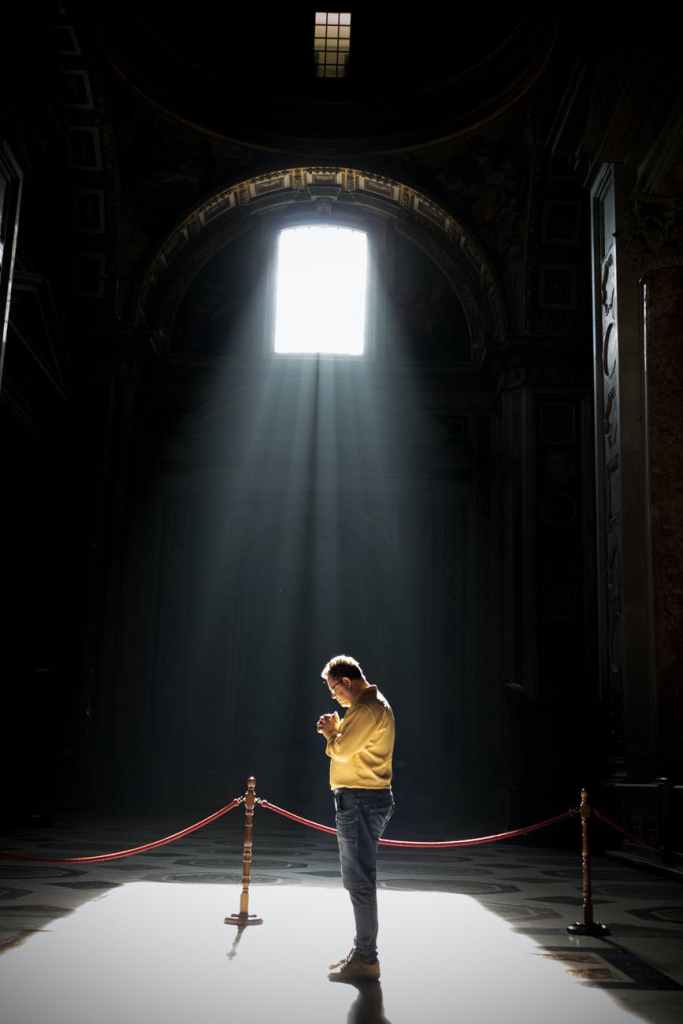
  • Travel prayers–say a prayer in a cathedral in a foreign city; pray while traveling in a bus or on an airplane..
  • Rhyming prayers–try to make your prayer rhyme– at least some of the time!
  • Raised hand prayers– keep your hands raised to heaven for the entirety of your prayer. You’ll end up developing some arm muscles!
  • “Campfire” prayers– pray in a natural setting. This is especially meaningful near sunset or in a setting with a spectacular view of God’s amazing creation.
  • Prayer retreat– get away for an entire day to pray and commune with God
  • School yearbook prayers– go through one of your old yearbooks from school. Pray for all your classmates! Thank God for your teachers (or thank Him that you passed out of their class!) This also works for staff lists and bosses at your current place of employment.

Ultimately, prayer is not about a particular list or method or “experience.” But it should be part of the challenge of the Christian Life, and something that we pursue with intention and enthusiasm. If making a “bucket list” helps, then we should consider it as a way to build our prayer life and become part of our legacy.

Dance With Me

Have you ever had an “earworm”? You know– a popular song, often one that’s been overplayed, and you stopped liking it ages ago– “that” song pops into your head and you can’t seem to make it stop. Maybe it’s the theme song from The Flintstones, or a Celine Dion ballad that was wonderful the first fifty times you heard it on the radio; maybe it’s a commercial jingle, or Darth Vader’s theme from Star Wars. Whatever it is, it seems to follow you all day, or even all week.

I had an earworm the other week. It was a song that was popular a few years ago by a group called “Walk the Moon.” My husband and I took a brief vacation, and it seemed like every time we stopped to get a bite to eat, this song was playing. It’s called, “Shut Up and Dance With Me.” It’s a peppy, upbeat tune about a young man who meets his dream girl at a dance and decides that he and the woman are destined to be together forever. But instead of listening to his protestations of instant love, she simply pulls him onto the dance floor, saying, “Shut up and dance with me.” Pop music magic.

I say all this to set up an unexpected revelation. With this earworm playing in my head, it seemed to be distracting me even as I was trying to pray and read my Bible each morning last week. “Please, LORD, make this go away!” But there it was, just the same. Certainly not a song that Jesus would want me singing–even silently, right?

But then, I thought about the subtle message of the song– beyond the “love at first sight” and slightly pushy feminist vibe– “Stop talking. Stop trying to analyze everything. Just enjoy this. Engage with me. BE with me in the moment. Follow my lead.”

And suddenly, I could hear Jesus calling me. He would never use rude language, but how often does He gently ask me to stop fretting or trying to learn more about Him, when I could enjoy being with Him in the moment? When He invites me to “follow” Him, do I think of it as a summons to trudge along behind Him in grim obedience? Or do I see it as an invitation to let Him lead me in a dance? Last week, I wrote about following Jesus “more nearly.” Am I letting Him lead me through the valley of the shadow of death (Psalm 23) or lead me in a dance at the Wedding Feast of the Lamb (Revelation 19)? I think He asks us to do both.

Prayer doesn’t have to be solemn all the time. Yes, I need to acknowledge that Christ is far more than a dance partner at a discotheque. But Jesus wants to celebrate our relationship, to revel in it. There will be days of sorrow, pain, and grieving in this life. But there will be other days, now and throughout eternity, when Christ’s simple request is “dance with me!” Accept my blessings. Choose to revel in My Presence! May today be one of those days!

“To Love Thee More Dearly…”

How can I love Jesus more than I already do?  If I can love him more, does that mean that I don’t love Him enough?  That I don’t really love Him as much as I think I do?  That I love Him the wrong way?  How can I “love thee more dearly…day by day”

I want to explore the second prayer in the folk rock song “Day by Day” from the musical “Godspell” (see my last post).  When I write about pursuing prayer, this is a major focus of the pursuit– to develop my love for Jesus.  But there’s more to it than just spending more time, or even “better” time in prayer.

silhouettes of couple kissing against sunset

I love my husband, and that love grows over the years– not because we are in an eternal “honeymoon” period, where life is rosy and all I know about him is the wonderful image I’ve built up–but because in living with him, working with him, even struggling with him, I learn to value who he really is.  I learn about qualities I never knew he had.  I learn to trust him and respect his judgment; I learn about the deepest part of his heart that he only shares with those closest to him.  And even though I learn about his faults, I see him desiring to be the best that he can be.  In his turn, my husband does the same with me– learning my strengths and weaknesses.  Together we learn how to work together to strengthen and support each other.  We even learn how to argue better!

But we all know marriages (and no marriage is immune) where doubt, distrust, disdain, and despair creep in.  The very qualities that attracted us in the beginning become sore spots that tear us apart.  The joy is swallowed up in little hurts that go unresolved; little misunderstandings that grow into lengthy silences and slammed doors.  Struggles that should bring us together cause us to run to separate corners.  Our feelings change, our hopes are dashed, and our relationship crumbles

woman and man sitting on brown wooden bench

Relationships require trust–if I say that I love God, but I don’t trust Him, I’m not being honest with myself.  If I pray to Him, but I don’t really think He’s listening; if I read His word but make excuses for my continued disobedience–I don’t really love Him.  I may idolize Him, even worship Him.  But I don’t really love Him.

adults couple couple walking grass

Unlike a marriage partner, family member, or close friend, God’s love for us never changes.  We never have to pray that Jesus should love US more dearly.  It’s impossible.  The same love that spoke the universe into being and designed you to be the awesome and unique person you are, is the same love that stretched out his arms so they could be nailed to the cross– the same love that calls out to you no matter what you’ve done or who you are and offers you peace, joy, and rest.  Loving Jesus isn’t a matter of measuring how I feel about Him from day to day, but spending each day learning to know Him better for who He is and not just what He has done or what He can do for me.  The prayer should be for me to really learn better how to honor Him, how to trust Him, how to obey Him, praise Him, listen to Him, and walk close to him.

More about this last one next time…

Three Things I Pray…

In the Broadway musical, Godspell, there is a simple ballad, “Day By Day,” in which the singer(s) express a desire to be closer to Jesus. Day By Day/YouTube  There are three “prayers”– 1) to see thee more clearly; 2) Love thee more dearly, and 3) follow thee more nearly.  I have heard various opinions and critiques of the musical, from the use of clown makeup and vaudeville tunes, to the marginal grammar of this song.  But I’d like to spend some time digging in to the three simple prayers.

clear close up dark dew

Today, I want to look at (literally) the first prayer– “to see thee more clearly”.  There is one prayer, but I think it can be broken down into two parts.

First, I want to SEE God.  God is Spirit–an invisible essence– and yet he manifests himself in a million different ways all around us.  God is in the inky, endless blackness of a moonless night, and in the vibrant colors of spring blossoms; in the glaring reflection of the sun off the lake, or the gray and palpable mist over the meadow.  He is in the wrinkled face of my neighbor, and the exuberant smile of a toddler, and the beauty of a horse running or an eagle soaring.  But I can see all of this and more and still not see God.  I can focus on the creation and miss the creator.  I can focus on the beauty and learn nothing of the artist.  I can see the amazing variety of people in the world– skin tones and eye shapes, facial expressions, and body language, dimples and hairstyles and nose-wrinkling, and hand-wringing, and miss the Love of God for each one.

brand trademark cobblestones community denim pants

Sadly, I can sing this prayer, pray for insight, and still miss seeing God.  I can trample His creation, dismiss His presence, and hate the people He loves enough to die for; people who bear the stamp of His image.

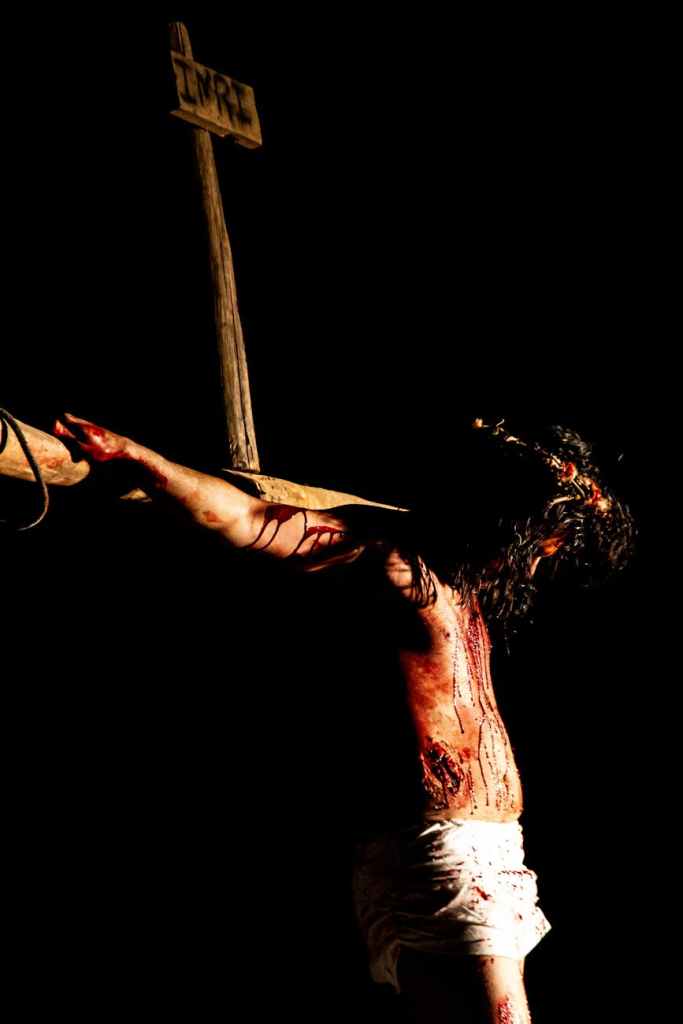
And I want to see Him “more clearly”–I want to see him as he really is, and not as I imagine him to be.  We live in an age of glossy retouched photos of models and celebrities; we “see” their image, without knowing what they truly look like, and without knowing anything about who they really are inside.  In many ways, God is only slightly less invisible than the real people around us.  How many people do we ignore in a day’s time?  How many do we glance at, only to get stuck on a single detail (a hair on their sweater, or something caught in their teeth, or a receding hairline or blotchy face).   How many people surprise us by not being like the image they project?   I don’t want to see a Photoshop Jesus; a glossy, smiling image of someone who says only what I want to hear, and looks like nothing ever touches him.  I want to see the Jesus who wept over the death of his friend; the Jesus who laughed with delight as he talked with children; the Jesus whose eyes were full of compassion even as he was dying on the cross.  I want to see the Living Word of God.


cross jesus summit cross

Jesus is close– closer than we think.  I want to spend today seeing him more clearly.

Blog at WordPress.com.

Up ↑