Talk is Cheap

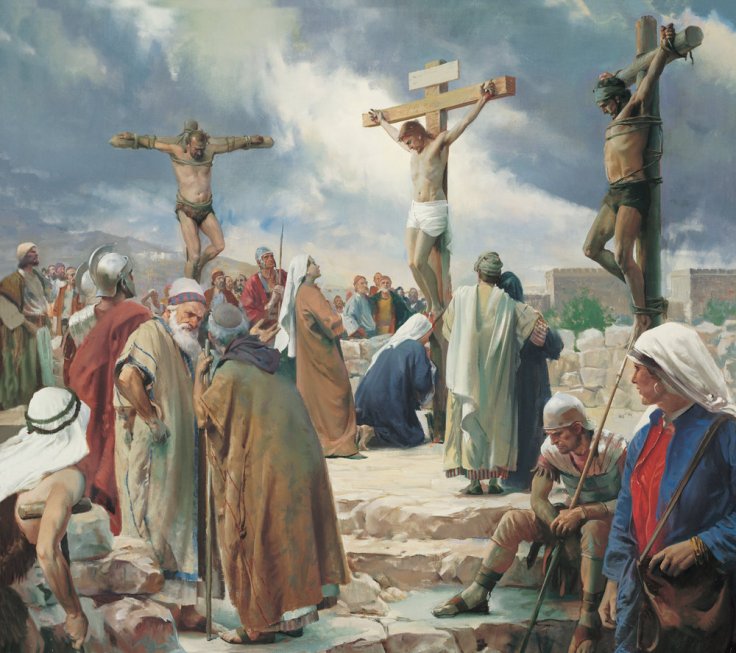
We are entering the season of Lent.  It is supposed to be a season of reflection, repentance, confession, and preparation.  Some people refer to it as a spring cleaning of the soul.  It is a time when many give things up or abstain from things– certain habits or routines, certain foods or activities.  This can be a good practice for many reasons– it teaches us discipline and patience; it reminds us of all that Christ gave up for us; it turns our focus from common earthly things to spiritual matters; and it frees us from habits and routines that have not only pulled us away from God, but away from each other.

I grew up with very mixed, and mostly negative, feelings about Lent. Neither my family nor my church celebrated Lent.  Many of my friends did, and their stories did very little to change my views.  I saw the season as drudgery, self-imposed punishment, dreary and legalistic, a cheerless, fruitless, and (mostly) meatless way of counting down to Easter.  No one seemed to “celebrate” it– it was more like they endured it.  My views have since changed, but I don’t think they were all that uncommon, and I think I was missing something of great value, something I would like to explore.

There are three important elements of Lent that I have struggled with, and I would like to share what I’ve learned.

  • There is great value in sober, somber reflection.  Our world is constantly calling us to revelry, happiness, entertainment, activity, and superficial comfort.  We see weakness in mourning for, and admitting to, our sins. We judge those who are serious and sober as “stodgy”, “boring”, and “prosy”.  We feel awkward in stillness and silent self-examination.  But the Bible paints a very different picture.  And the practices of fasting, confession, and meditation, practiced across a spectrum of religions, have been shown to promote better physical, mental, and emotional health, as well as spiritual well-being.

godlysorrow

  • Because we don’t value Godly sorrow– we sometimes substitute other practices that make a mockery of what Lent should be about.  I know I am not perfect, but I don’t want to feel that emptiness, that bankruptcy of spirit, that comes with honest confession and repentance.  In fact, I sometimes “glamorize” what is really petty.  I justify my bitterness, I excuse my selfishness, I “confide” my dislikes and judgmental thoughts about others.  And I bring these sins before God, not in sorrow and humility, but in scandal, as though he will be shocked or even entertained by my wayward behavior

trueconfessions

  • Which brings me to the third thing–cheap grace.  I spend a lot of time talking about Christian living– about the value of prayer, and confession being good for the soul.  I talk about being forgiven, and loving God, and wanting to serve him better.  But I have fallen into the very bad habit of seeing God as Ward Cleaver, or Ozzie Nelson– lovable and authoritative, but not Sovereign or supremely Holy –“There, there, child.  That’s all right.  You’ve confessed, and you’ve learned your lesson.  We’ll just forget that ever happened.”   Lent should lead us to dependence on God’s amazing grace.  It is the work of Christ in us– and only that– that saves, renews, and empowers us.  There is a danger in our culture that we cheapen grace by making the focus on what we know, or say about Christianity, rather than what God does through us.  Cheap grace leads to cheap talk–in my daily life, and in my prayer life.

This year for Lent, I’m not going to talk about giving up fast food, or Facebook, or shopping at my favorite store.  I’m not going to set a checklist or a target for random acts of kindness or giving alms.  I’m not even going to set a schedule for extra prayers or a list of special prayers just for this season.  There’s nothing wrong with any of those; in fact, if you’re thinking of doing any of the above (or all of the above), I encourage you to do it with all my heart.  My prayer for the next forty days will be to invite God to clean out the pretense and hand-wringing, sweep away the cobwebs of analyzing and making excuses, and empty my heart of pride, self-sufficiency, and false guilt, so that he can fill it again with love for him and for others.  Love that is more than cheap talk.  Love that pours out life and renewal– just as Christ poured out his blood on Good Friday, poured out glory on Easter morning, and poured out power at Pentecost.  Not because it was part of a 40-day program of renewal, but because it could not be contained.

But it starts with ashes and repentance.

psalm139

4:13

My husband and I spent last week suffering from the flu. We slept– a lot! And we woke up at odd times, day and night, with coughing fits, getting medication, etc., only to fall back to sleep in minutes. One such time, I woke up and looked at the bedside clock– 4:13 a.m.

But the numbers stood out to me, not as a reminder that it was the early part of a new day, but as a reminder of a Bible verse– Philippians 4:13: “I can do all things through Christ, which strengtheneth me”(KJV).

Growing up, we attended a small country church, and every summer, I attended Vacation Bible School, where we got points and prizes for memorizing certain verses. I also joined my mother in participating in a Bible memorization program sponsored by our church. We memorized entire passages and chapters, as well as several key verses, like the one above. I say all this, not to brag about myself, my mother, or our church, but to testify to the power of memorizing scripture– especially when one is young. It’s been nearly 50 years since we did the program, and I don’t remember all the verses we studied. But often, in moments when I’m not even thinking clearly, those sacred words are still stored away in my heart and mind. Something as simple as a clock’s numerals can unlock the truth of scripture. I was certainly not rehearsing Scripture’s promises as I woke up nauseous and achy, but three numbers were enough to give me a lifeline of hope!

Did I feel as though I could “do all things” at 4:13 in the morning as I fled to the bathroom? Not a bit. But I took great comfort in the remembering that I can do all things “through Christ, who gives me strength (NIV)” I can trust HIM for healing, and that He will be present even when– especially when– I have no strength of my own.

Later in the day, reflecting on the way that just a few numbers can redirect my thoughts to God’s promises, I remembered other “timely” hints. I’ll leave just a few here below:

  • 1:03– 2 Peter 1:3 “His divine power has given us everything we need for a godly life through our knowledge of him who called us by his own glory and goodness.”
  • 1:09– Joshua 1:9 “Have I not commanded you? Be strong and courageous. Do not be afraid; do not be discouraged, for the Lord your God will be with you wherever you go.”
  • 3:23– Lamentations 3:23 “They (Your mercies/Your compassions) are new every morning’.; Great is your faithfulness.”
  • 4:18–Proverbs 4:18 “The path of the righteous is like the morning sun, shining ever brighter till the full light of day.”
  • 4:19– 1 John 4:19 “We love because He first loved us.”
  • 5:25– Galatians 5:25 “Since we live by the Spirit, let us keep in step with the Spirit.”
  • 6:33– Matthew 6:33 “But seek first his kingdom and his righteousness, and all these things will be given to you as well.”
  • 8:28–Romans 8:28 “And we know that in all things God works for the good of those who love him, who have been called according to his purpose.”
  • 9:25– Luke 9:25 “ What good is it for someone to gain the whole world, and yet lose or forfeit their very self?”
  • 10:10– John 10:10 “The thief comes only to steal and kill and destroy; I have come that they may have life and have it to the full.”
  • 11:01– Hebrews 11:1 “Now faith is confidence in what we hope for and assurance about what we do not see.”
  • 11:25– John 11:25 “Jesus said to her, “I am the resurrection and the life. The one who believes in me will live, even though they die”
  • 12:12– Romans 12:12 “ Be joyful in hope, patient in affliction, faithful in prayer.”

Sowing the Wind

“They sow the wind, and reap the whirlwind…”  Hosea 8:7

Hosea was a prophet who foretold the destruction (and eventual restoration) of his people.  God was pouring out his judgment against an unfaithful nation, and he used the tragic family life of Hosea as a living example of his dealings with Israel.  Hosea married a prostitute; an unfaithful and unloving spouse who chased after men with ready money and cheap gifts.  But when her activities resulted in slavery, shame, and despair, Hosea redeemed her and restored her as his wife.  In the same way, God had made a promise to the people of Israel, but they had broken their covenant and followed their own rules, chasing after the surrounding cultures, with their foreign gods and their hedonistic rituals, including human sacrifice, temple prostitutes, and divination.  There are many metaphors used throughout this book, but one that often stands out is the short phrase found in chapter eight.  In it, God is talking about the unfaithful priests and leaders of Israel, who have not only betrayed God in their rebellion and idolatry, but have led others astray.  God says of them that they have sown the wind, and are reaping/will reap the whirlwind.

How does this relate to us today in our pursuit of prayer?

I believe that many of us are sowing the wind– we do it in our careless words, gossip, rumor-mongering, complaining, babbling, prattling, and yes, in our half-hearted obedience, and our tepid prayers.  We often come to God, not eager to commune with him, or to hear his voice, not in humble adoration and open confession, but to complain, wheedle, and boast.  We pay lip service to his Holiness, while refusing to give up that bad habit that “isn’t really all that bad.”  We thank him for his Grace, but harbor resentment against a neighbor or family member who slighted us.  We ask for him to bring us success in our plans and ventures without really making sure if they line up with his will.  We excuse our lack of attendance at church, and our failure to spend time in God’s word.  We make rash promises to do “better” if God just gets us through this week.  We ask for his blessing, and thank him for the riches he has bestowed on us, but we turn our noses at those in our backyard who are in need.  We are bold about posting “Christian” sayings on Facebook, X, Pinterest, and Instagram–almost as bold as posting about our favorite new Brew Pub or Spa trip or “almost inappropriate” joke, or latest political rant.  Except that our “Christian” posts are less entertaining and more critical of others.  (They’re usually really pretty, though– pictures of flowers or mountain streams or desert sunsets–it’s really easy to “like” and “share” a sunset!.)  We cheapen the Gospel, we cheapen the Christian walk, we cheapen prayer, when we pursue it as a hobby or a social habit. Bur prayer is not something we do only because (or only when)  it makes us feel “good” or “better”– it is something we pursue because it brings us life and peace for eternity, and it brings glory and joy to the King of Kings.

“They sow the wind, and reap the whirlwind…”  There is a price for this shallow, careless pursuit of something that looks and feels vaguely like Godliness.  It is the whirlwind…being tossed about by “every wind of doctrine” as Paul warns against in Ephesians 4.  It is being caught up in doubts and half-truths, compromises, hypocrisy, division, scandal, and shame.  It is having to face the onslaught of detractors and persecution that come as a result of so many of us abusing and misrepresenting the very Gospel of the one whose name we carry.   “Oh, what peace we often forfeit; Oh, what needless pain we bear; All because we do not carry everything to God in prayer.”  The words of that old hymn are no less true today– when we trifle with prayer, carrying only our selfish needs, our petty complaints, and our flimsy agendas to God in prayer, we pay a huge price.

There is another metaphor, this one in the Gospel of John, that I think helps us combat this tendency to “sow the wind”–  Jesus says of himself in John 15 that he is the vine, and we are the branches.  If we are faithful, we remain in him– we draw our life and strength from him– and we are fruitful.  Remaining in him, we are grounded– he provides the roots that keep us from blowing every which way.  And he provides the nourishment, and strength to grow and produce more fruit.

I say “we” because I too am guilty of having sown the wind.  The great news, in Hosea and in the Gospel of John, is that God is eager to restore us– to graft us in–to welcome us home after our storm-tossed wanderings.  Let’s get serious about abiding in God, instead of scattering the latest “feel-good” religious spam.  God, forgive me for the times I have cheapened your precious gift of prayer.  Help me to abide in you, and refrain from careless words to you, about you, and about others.

Transformative Prayer

This cute meme has been making the rounds on Facebook and Pinterest a couple of years ago.  It suggests that prayer turns meek kittens into mighty lions.  And it can.  Most times it should.  But how often do we experience this level of transformation when we pray?

I write this blog, partly in response to comments I’ve heard or read that belittle the effectiveness and the power of prayer.  I talk a good game when it comes to prayer–I pray daily, I keep a prayer journal, I consider myself a prayer veteran, even a prayer warrior.  I believe in the transformative power of prayer.  So why do I often feel like a kitten both before and after prayer?

I’m afraid that, too often, I really don’t want to be transformed when I pray.  I want to be heard; I want to be comforted; I want to be refreshed.  But I don’t really want transformation.  Transformation is not cute or comfortable–it hurts, it stretches.  Transformation requires risk and commitment in the face of uncertainty.  I want to be a kitten who thinks of herself as a lioness, but I want a cozy lap to rest on, and a bowl of gourmet cat food laid out for me.  Kittens may wrestle with yarn or mice; lionesses wrestle with crocodiles and wildebeests.  I want to lift up those in pain, those who struggle, those in need– but I want to do it from the comfort of my own quiet corner.

If my prayer life isn’t causing changes in every other aspect of my life, I need to be concerned.  Prayer that never calls me into battle; prayer that leaves me feeling comfortable while others suffer..that isn’t really prayer.  That is giving lip service without heart-service.

But I also need to be careful to be transformed by the renewing of my mind (See Romans 12: 1-3).  Prayer should be transforming my heart and mind, but in Christ’s likeness.  Christ, who is not only the Lion of Judah, but the Lamb of God.  There are times when I should charge out of the prayer room, energized and ready for battle.  But it must come from God’s spirit, and not my own pride or in conformity to the world’s pattern of fighting.  Transformation doesn’t come about just because I say any prayer– it comes about as I walk and talk with the Father, the Son, and the Holy Spirit.  I don’t have the power to transform myself, nor do I have the power to decide the nature and speed of my journey.

I think sometimes, I see it as all or nothing– either I am running full speed ahead and making great conquests (Lioness), or I am mewling  and helpless (Kitten).  But God sees the bigger picture.  Sometimes,  we should enter the prayer room as kittens and leave like lions; other times we should enter as lions and leave as lambs– recognizing that our own roaring will never win the battle, and also recognizing that sometimes, in quiet obedience and sacrifice, we are doing what is necessary in the larger plan.  What should never happen is that we go running into the prayer room eager and ready to serve, and come sauntering or swaggering out, puffed up with our own importance, but unmoved toward others.

So the challenge is to go into the prayer room, expecting to be transformed– by God, for God’s glory, into the people God wants us to be– expecting to be changed, stretched and challenged.

pexels-photo-415380.jpeg

Sacrificial Prayer

I call this blog “Pursuing Prayer.” I believe prayer is a pursuit; a discipline that one can learn from, grow into, and practice faithfully in life. But prayer is also a sacrifice. It involves giving of time, space, and honest reflection.

Sometimes, prayer is a willing and joyful sacrifice. I want to come and spend time with My Father in praise and worship, adoration, and even asking for His guidance and wisdom. But sometimes, the sacrifice is hard. I may dread coming to God when I know I have been dishonest or unfaithful. Like any relationship, I cherish the easy times, the relaxing times, and the expectations of challenges met and conquered. I don’t look forward to the hard work, the waiting, or the corrections that God may have for me.

One type of sacrifice that doesn’t belong in the prayer of a believer is the Sin sacrifice. As described in the Old Testament books, the sin sacrifice had to be given to cover over the sins of individuals, priests and even the entire nation. The Israelites even had to give a sin offering for unintentional or accidental sins!

Unfortunately, I sometimes make the mistake of thinking that I must make a similar “sin sacrifice” in my prayer life– that I have to rehearse and recount all my past sins before God will hear me or act on my behalf. And that is NOT Biblical. If we are truly trusting in Jesus’ finished work on the cross, we are not obligated to offer token sacrifices as a means of covering over our past. Christ’s blood IS sufficient! (See 1 John 2:2, 2 Corinthians 5:21,1 Peter 2:24, and Romans 5:9 among others)

So when I talk about prayer of confession, I’m not talking about pouring out long laundry lists of sins I committed last week or thirty years ago. God already knows– in fact He knew about them before they happened!–and He has already forgiven me. That doesn’t mean that He wants me to pretend they never happened or that He doesn’t want me to feel the regret or understand the consequences of what I have done. Instead, He wants me to understand and rejoice in His overwhelming Mercy and Grace! My sacrifice, when I confess my sins, is a sacrifice of praise for God’s willingness to offer what I can never earn or deserve or atone for– complete forgiveness and restoration! I am agreeing with God about who I am and what I’ve done, AND about what He has done for me!

There are other times when prayer can be a difficult sacrifice. Sometimes, I am compelled to pray for those who have hurt me, or those whose actions have hurt others. I am commanded to pray for leaders– that may include church leaders who have sinned, or national leaders who have broken their promises or caused great damage. I am commanded to love my enemies, even if they never repent for things they have done.

Once again, I should be reminded of the sufficiency of Christ’s sacrifice for our sins. He didn’t just die for my Sin; He died for the sins that were committed against me. I may still feel the pain and consequences of that Sin for as long as I live on this earth. But I can trust and be confident that God has dealt with it. And that causes me to rejoice, because I can’t turn back time; I can’t undo the bad things that have happened; I can’t create perfect justice to punish my enemy. But I can let go of the burden of trying to make things “as they should be.” God will do it; He has promised! I can stop wallowing in the “what ifs” or the “what-could-have-beens;” the endless “whys” and “why me’s” that take up so much of my time and focus. Instead, I can leave them as a sacrifice on the altar of prayer, pledging my trust in the Almighty to heal and help me forgive as I have been forgiven.

We don’t practice the old animal sacrifices of the Old Testament. And we don’t have to! But sacrifice is more than just bleeding sheep and burning incense. Sacrifice is offering all of who we are to the One who created us, sustains us, forgives us, and gives us abundant life!

Prayer Bullies

When I first felt the urge to blog about prayer and prayer life, I held off a bit.  I think prayer is many things– important, impactful, practical, personal, holy, and humbling.  I finally decided to start writing, not because I am an expert on prayer, or that I have mastered the practice, but because I feel passionate about growing in my prayer and praying with more knowledge, focus, and impact. Seven years and over 900 posts later, I still feel the same. I’m sharing in the hope that you will be encouraged, challenged, and equipped to do the same.  I want to explore the many aspects of prayer and learn all that it can be. But one thing prayer should never be is a bludgeon.

I find it embarrassing to be in the company of certain fellow Christians when I hear them try to stop a discussion or argument with the phrase, “I’ll pray for you.”  There are many times and ways one can say this phrase in love and mean it as a sincere gesture, but sometimes it is as condescending and insincere as a Southern, “well, bless your little pea-pickin’ heart.” They want a type of “mic-drop” moment; an argument-ending, argument-winning phrase, and this is what comes out.

“I’ll pray for you”, in this context, suggests that you (and only you) have a problem.  I don’t need to listen to, reconsider, or even try to understand your argument, because I have already determined that you have no valid point, and I have no obligation to hear you out. I know I’m right and you are not. 

But more than that, it suggests two horrible things about prayer that are untrue and misleading.  First, it suggests that my only interest in praying for you is to “fix” you.  In other words, I can’t convince you to see things my way, so I will reluctantly spend some of my precious time praying that you see things my way.  I won’t listen to you, try to understand you, or give you any of my respect, but I will do my best to bring your bad behavior and/or faulty beliefs to God’s attention (in contrast to my.own).  Prayer should never be a threat, or a weapon to be used against another person. Nor should it be a boast about one’s self-righteousness or moral superiority.

Secondly, this way of saying, “I’ll pray for you” suggests that prayer is leverage; that I have God on some kind of leash.  I pray when things aren’t going my way, and God “fixes” them–including people who don’t share my theology or doctrine or worship preference.  Anyone who prays with this mindset is not really praying, and God will not be impressed or coerced into doing anything that goes against His will– no matter how “righteous” I may believe it to be.

One of the dangers of writing and talking about prayer in a public forum is the risk of seeming to or actually to impose personal preferences, practices, and beliefs on others.  I hope to suggest many prayer thoughts and practices that I find true, helpful, challenging, or even dangerous, but I don’t want to insist that there is only one way to think about prayer or to practice it.  Prayer is our way of communicating with our creator.  He didn’t make us all the same; we don’t all like the same things, we don’t all interact the same way; we don’t have the same talents, passions, or responses to the world around us.  The one constant in prayer is God.  What I believe about God will determine how I pray, why I pray, maybe even when or how often I pray.  But it won’t determine God’s character or his actions toward another person.  I cannot make God make you do anything.  I cannot use God as some kind of enforcer or hypnotist or brain-washer– nor should I wish to.  Because that’s not how God works, either.  He desires that everyone come to Him willingly.  He invites us into relationship with Him, not abject humiliation and mindless submission.

I do pray for people who dislike or despise me, who dishonor or deny God.  I pray for their health, their safety, and their redemption.  I pray for family and close friends and complete strangers.  But I should do so knowing that God cherishes each person–gave his life for each one.  God is not a bully, even though he has been characterized as such by some.  God wants us to pray for everyone–not with pride or bitterness or an agenda, but with his compassion, grace, and love.

“Sheepish” Prayers

“The Lord is my Shepherd…” (Psalm 23: 1)

How often do I recite this favorite Psalm without really thinking about it? In the words of this Psalm, I am loved, cherished, sustained, and led by Him. But am I in reality? Do I submit to His leadership and guidance? When I pray, am I really coming to meet with my Shepherd, or am I trying to meet with God on some other level or in some other relationship?

I’ve been reading through the first few books of the Bible. I’m in Numbers right now, and Moses is leading the Israelites through the wilderness. The spies have just returned from Canaan, and the people have rebelled against God, weeping and accusing God of leading them to the Promised Land only to have them die in battle with the giants of the land.

I read through this and shake my head, but haven’t I done similar things in my walk with God? I want to avoid the wilderness. I want to walk in the green pastures, but I don’t want to travel through the valley of the shadow of death to get there! I look at obstacles and setbacks as though God were sitting far away, arms akimbo, laughing at my struggles; in reality, He is right beside me all the way, waiting to help me overcome each obstacle and gain victory together with Him. I’m looking at the giants, when He wants me to trust Him for the milk and honey He has promised. I still have to face the giants, and the battles ahead– but I don’t have to face them alone. I don’t have to face them in my own strength, my own limited wisdom, or my limited vision.

But here’s what I am learning as I read through this section of the Bible right now:

God IS with me. He doesn’t leave me or give me anything HE can’t handle. But I have to walk through the wilderness. I have to fight battles. I have to face giants. I have to learn to trust for my daily bread– whether it is manna or money to buy bread–daily. I have to listen to His voice; not impose my plans and ask for Him to bless them.

God doesn’t want me wrapped up or caged: He will not take away my freedom to follow (or NOT follow) Him. And when I wander, He may allow me to wander in circles for a while (hopefully not forty years!), but He will still be right there, ready to lead me when He sees that I am ready to move forward.

He will supply all that I really need– water from the rock, bread from Heaven– not because I have the money or resources, I think I’ve earned, but because He IS my provider. He can part the Red Sea; He can destroy Pharaoh’s armies. He can make the earth swallow up those who threaten me and defy Him. I am safe, even in the wilderness, when I stay close to the Shepherd!

He will counsel and correct me. He will offer forgiveness again and again. He will not leave me lost or unable to return to His side. He will be a “Presence” in my life, wherever I go– day or night.

He sees me and He hears me– which is both comforting and fear-inducing. But it is a healthy fear; an awesome and reverent fear; one that keeps me humble. After all, I am a sheep, NOT the Shepherd! I can call out to Him, and He knows where I am (because He is right there, too), and He knows what I need. God saw the Israelites worshipping the Golden Calf even as He was speaking to Moses up on the mountain. God heard Moses as he pleaded for mercy, even in His anger and wrath.

He calls me by name. The Bible, especially the Old Testament, is full of individual names. Not just the ones we study in Sunday School; not just the ones in the children’s stories; but names of the leaders of the various tribes of Israel, and names of the spies, names of craftsmen God had selected to build the Ark and all the items needed for the Tabernacle, and names of those who rebelled. I am not lost in the crowd; I am not forgotten among the many. God knows me intimately– just as He knows you!

Even when my prayers seem like whining, bleating, plaintive “baa-ing”, I know my Shepherd hears. And He delights to hear from me. He delights in leading me through the wilderness and providing for my every need. And His promises sustain me when I don’t know what’s coming next, or I fear what I see on the horizon.

So I will pray today, and tomorrow, and every day, knowing that even my– especially my– “sheepish” prayers are not in vain.

Journaling Prayer

Full disclosure– I’m not any type of expert on either prayer or journal writing.  But I do keep a prayer log of sorts, and I want to share how that works for me, and why I think it is helpful.

My prayer “journal” is actually a set of four standard notebooks I picked up on sale about two and a half years ago at an office supply store.  Each notebook has 100 pages.  I have labeled each page with a day (February 12, for example) at the top– three months to each notebook.  Below the date, I list people I know who are celebrating birthdays or anniversaries that day, as well as people who died on that day.  Below that, I save space for urgent prayer requests as I become aware of them.  To the side, I list a place (a country, city, or community) to pray for that day.  In the front cover or each notebook, I have a list of focus areas to pray for each day of the week, as well– things like family, leaders and authority figures, cultural issues, missions, etc.  The back side of each page is left to record answers, results, and updates.

The journal/notebook approach is not meant to lock my prayer life into a fixed routine; it is not a checklist of what I must pray for each day (and nothing else or added to everything else).  I don’t take the notebook with me everywhere– instead, I have a small notepad in my purse to jot down thoughts or requests. Sometimes, I record these in the larger notebook later, but not always.  I review the journal once a day, but I pray throughout the day– sometimes raising the names and places in the journal, other times people or situations as they come to my heart or mind.  The point is not to make an unnecessary burden of prayer.  The point is to remind me that prayer is a pursuit–an ongoing discipline as well as an intimate pouring out of my heart to God.

I’ve come to delight in turning the pages to see:

  • who is having a birthday/anniversary today– who might be encouraged with a FB post, a call or card or e-mail message
  • where in the world can I lift up people I may or may not know?  There are enough days in the year to pray for every country in the world, every U.S. state, and several major world cities or local communities–and while my list is in alphabetical order, I could have organized by geographic location, or simply listed random places for each day.  Some days, the places are familiar; other days I am inspired to look up information on places like Burkina Faso or find out more about West Virginia…
  • what was I praying about a year ago? Often, I find that my prayers have fallen into a particular pattern– and maybe I need to redirect my focus. Have I been mostly coming to God with burdens, or do my prayers reflect a heart of worship? Humility? Dependence on Him?
  • how faithful God has been over the years! Maybe there’s a burden that I’ve been praying about over many months or years, but far more often, I have forgotten the “urgent” need I was praying about just a few months ago–God answered in ways I did not anticipate. And those requests that are still “unanswered?” God HAS an answer. I just don’t know it yet.


Does the journal make me a better person or a better pray-er?  Well, prayer isn’t a competition, so while I would hope that it helps me develop perseverance, compassion, faithfulness, hope, trust, and wisdom in the practice and pursuit of prayer, it doesn’t make me or my prayer life “better” than someone else’s.  It is, however, a tool that is helping me chart the progress in this pursuit, and so I recommend it based on that experience.

If you feel (like I did for so many years) that your prayer life is haphazard and you want to grow in prayer, I encourage you to start with a simple journal– you don’t have to write out every thought or every request.  You don’t have to have a plan for every day.  But keep a remembrance of your prayer life –even a single item each day for a week, or a month–to look back on, and to move you forward.

For more detailed information, see my page about prayer journaling. Or do a search for “prayer journals.” You may find a system that works better for you– not because prayer needs to be systematic, but because prayer is a journey, and every journey can benefit from a journal!


When God says, “Wait!”

I hate waiting. Most people do. I hate waiting rooms at the doctor’s office or the waiting area at the garage or the DMV. They try to make it a bit more pleasant with music, or a TV, or magazines lying around to keep you occupied. But usually, I spend the whole time thinking of “useful” things I could be doing if I wasn’t sitting around waiting. Recently, I published my first book, and I had to wait for freshly printed copies to be sent to my door. Every day, I waited for the delivery van to pull up– and every day, I missed it. Finally, I had to pick them up at the post office. Those few days seemed to take forever.

But I have learned over the years that waiting is necessary, and even good sometimes.

I was thinking about my first “real” teaching job–not student teaching or getting called in as a substitute, but a permanent position. I applied for a teaching job in my hometown. They needed an English teacher for middle and high school– perfect! I felt the interview went well, and I was a “known quantity”– many of the staff knew me from my time as a student just a few years before. Nevertheless, I waited and waited and finally got bad news. The job had gone to another applicant with more teaching experience. I was disappointed. I had prayed so hard, and it seemed like the perfect “fit.” I knew I should trust that God knew about my situation, and had everything in hand, but I just felt the outcome wasn’t “right.” What would I do now? I looked for other teaching positions, but could find nothing. I ended up doing substitute teaching. It was sporadic and unpredictable. I wasn’t really teaching as much as babysitting– especially in classes like elementary music!

Still, I learned a lot about classroom discipline; something I hadn’t really experienced much of before. My student teaching had been done with master teachers who were amazing examples of quiet but stern management. Even when they “turned their class over” to me in the final weeks, the students knew that their other teachers would back me up in a classroom situation.

Not so with substitute teaching! Not only was I “on my own” in the classroom, I frequently traveled to schools where I knew no one on staff and no one knew me. I had no idea what kind of discipline was practiced by either the teacher or the administration at some of the schools. Most were ok, and staff were friendly and supportive. Most of the students were typically a bit naughty, but not out of reason. But not all! There was one class of over thirty-five fourth- and fifth-graders whose teacher had left no lesson plans, and another day at a high school where the entire staff was intimidated by the football team– most of whom were in the same third hour class. The lesson plan called for them to do research in the library– the librarian hid– and I was trying to stop them from literally throwing the pumpkins that were meant to be decorations at each other!

All this to say that after several months, I got a phone call. It was my old school, wanting to know if I would be interested in finishing out the school year in the position I had applied for the previous fall. It turns out the teacher they had hired had serious health issues and had missed over 60 days! They had been trying to fill in with substitutes, but wanted someone who could bring stability and order to the classes for the last marking periods of the year.

My first week in the new position was a nightmare. Every class had fallen behind. The succession of substitutes had given up. The classes lacked discipline and focus. In fact, the other regular teacher had written off all the students as irredeemable hooligans, and she was glad to give up the position. My first day, one of the high school students attempted to sneak out of the window at the back of the classroom, while another classmate tried to sneak out the door! And I found out that my last hour class was to be held in the middle school band room– it was a computer class! I had to commute from the high school to the middle school, which took up part of my preparation period, so I had little time for planning or grading paperwork.

In spite of all the challenges, that first “trial by fire” proved that I really was a “fit” for the position after all. I spent another seven years teaching in my hometown. Eventually, my schedule was changed and I no longer had to commute. I loved my students (most of them), and I am still in touch with some of them to this day! Even the ones from that first disastrous partial year.

God did not answer those first eager prayers that I should get the teaching position right away. And even when I finally “got” it, it was filled with challenges and obstacles. But in the waiting, God was there. Even in the difficult substitute assignments, and the adjustments, and the questions about why I didn’t get the job when I first interviewed.

God may not tell us audibly why He wants us to wait. He won’t tell us how long we must wait. And He generally doesn’t put us in a “waiting room”, filled with soothing music or distracting TV ads or old magazines. But we can trust that God has good reasons for us to wait– whether it’s for a job, or a spouse, a chronic illness, loss of income, or change in circumstances. What He asks is that we trust Him, and that we continue walking a praying in faith. Because I will be worth the wait.

Prayer Requests

As someone who pursues prayer passionately, you might suspect that I hear a lot of prayer requests. And I do. And even so, it’s not enough. I always look for more! I admit to trolling on Facebook for prayer requests; following the church newsletter for prayer requests; and even asking friends if they have any requests when we chat. But what about prayer requests that aren’t exactly requests–

“Oh. It’s really nothing. I’m not worried about it or anything…”
“We’re just going through a rough patch. Nothing to be really concerned about…”
“It’s just something I have to deal with..”
“The doctor says it’s a chronic condition, so it’s just something I have to get used to…”
“I know so many other people who are hurting worse than we are…”

Sometimes, prayers are shortened or even missed because we are looking for prayer requests instead of prayer opportunities. Prayer is an opportunity to talk to God about anything that is on MY mind or in MY heart. Often, it comes in the wisp of a stray thought about someone else. Maybe I haven’t heard from them in weeks (or even years!), but suddenly, they are on my mind. Suddenly, I have an opportunity to pray for them. Do I know what is on their heart or mind? Probably not. But God knows! That schoolmate from fifth grade? Pray for them. So what if I only remember their first name– or their maiden name or their childhood nickname–God knows! That former co-worker who was having a rough time with her teenage son ten years ago? Ten years have passed! I know the son is now an adult. I don’t know if the relationship is better or worse now than it was a decade ago. I don’t even know for sure that the co-worker or her son are still alive. But God knows! My neighbor who seems to be doing fine, but I keep thinking about them, and I don’t know why– God knows! Each one is an opportunity to pray– nothing elaborate or specific– just to lovingly lift them up before God’s throne!

And what about the “actual” requests that I hear or see on-line? Sometimes, there are no details or specifics about “what” I am praying for. But it doesn’t matter. Because God already knows. Even more, He knows the end from the beginning, even if it isn’t exactly what is being requested. I can lift up in prayer situations about which I know very little– because God knows. And for those situations that seem dire or impossible– God knows those, too. And I can lift them up with confidence, even when I have no answers and the problems seem overwhelming.

This sounds easy, but it’s not. It forces me to step away from each request, each situation in which I might try to stake my own “claim.” Yes, I want my friend’s cancer to disappear, or my co-worker and her daughter to have a repaired and healthy relationship. But I don’t have the first clue how to make that happen. I don’t have any answers. I don’t know what GOD has planned in those situations. And while I know what sounds or feels good in the moment, I don’t know what is best in the grand scheme of things. But God knows! He doesn’t want me to solve each problem; He doesn’t need me to offer my “best” suggestion of how He should solve it. All He wants is for me to trust HIM to care for each need. In HIS way, in HIS time, and in the fulness of HIS love!

During Jesus’ ministry here on earth, He prayed many times, but His prayers rarely dwelt on details about specific situations. In fact, in teaching His disciples how to pray, He included the phrase, “THY kingdom come, THY Will be done in earth as it is in Heaven.” (Matthew 6:10) And that is a perfect phrase to exercise, whether I have a specific request, or a flash of memory, or a nagging worry about someone or something.

The same is true when it is my turn to request prayer. There are many times I find myself like the people I quoted above– trying to make light of a situation or avoid actually requesting prayer. It may sound humble and self-deprecating, but there is an element of arrogance in saying “I don’t need prayer for …”(whatever situation). We ALL need prayer. We ALL need to live in the assurance that we can “cast all our cares upon Him, for He cares for us” (1 Peter 5:7 paraphrased). And we need to acknowledge that we should share our cares with others as they share their cares with us. And that we need to allow for God to involve others in the way He cares for us. Asking for prayer is a way of allowing others to share our concerns– and share in our joy of receiving answers to prayer! Requesting others to pray for us is not a weakness. We are not being a burden on others when we allow them to pray for us.

That is not to say that I need to publish every problem and concern on Facebook or in the Church Newsletter! Nor should I try to dictate how or when or what others should pray for me. But it does mean that I must be open to sharing the very real struggles I have with trusted friends, especially if they ask how they can pray for me. Even the “chronic” ones; even the “silly” ones. Because I don’t know how God may use that opportunity in THEIR life; nor do I know how God may use their prayers to bless my life.

But GOD knows!

Blog at WordPress.com.

Up ↑