A Sacrifice of Praise

Hebrews 13:15 English Standard Version (ESV)

15 Through him then let us continually offer up a sacrifice of praise to God, that is, the fruit of lips that acknowledge his name.

bow down

Praise is an essential part of prayer– God is worthy of our continual praise and worship.  He is eternally good and thoroughly righteous; all-powerful and all-wise.  The author of Hebrews reminds us that we are to offer a sacrifice of praise–continually– to God.

This is more than just a simple “Praise the Lord” uttered when we are at church or surrounded by fellow believers.  A “sacrifice” of praise implies more than just a gift or even an acknowledgement of God’s worthiness and majesty.  It implies cost, and hardship; a giving up of something precious in the act of worship.

Sometimes, the sacrifice is small–giving up our right to take credit for God’s mercies; being thankful (instead of jealous) of our neighbor’s success.  Other times, the sacrifice is painful– praising God in the aftermath of a daughter’s rape, or a spouse’s betrayal, or acknowledging God’s goodness after a diagnosis of cancer or dementia.

pexels-photo-133170.jpeg

God isn’t looking for false and empty worship–He wants us to be real.  Sometimes, the sacrifice isn’t eloquent, polished, or “pretty”; it comes with tears, tormenting questions, and anguish.  Sacrifices are poured out, broken, or burned up– dreams that have been dashed, hopes and plans that have been abandoned, heartaches that crush the soul.

God wants these sacrifices– but not because He is a cruel God who wants to see us crushed and hopeless.  God wants these sacrifices because only when we are ready to put them on the altar can He make the exchange– Beauty for ashes; eternal hope for temporary dreams; trust and security for our doubts and fears.

In the same verse (Hebrews 13:15), the author describes the sacrifice of praise as the “fruit of lips that acknowledge his name.”  The Hebrews to whom he was writing were making a huge sacrifice in just uttering the name of Jesus.  They were beset on all sides– from the Jews who did not acknowledge Jesus as the Messiah; to the Romans who were using them as scapegoats for troubles within their Empire.  In the midst of their troubles, God did not ask them to slaughter their enemies, or to create a separate society and live only to themselves.  He didn’t ask for impossible deeds of daring–though many endured persecution and became martyrs for the Cross of Christ.  God asked for the sacrifice of praise.  God’s ways are not our ways– his weapons are not our weapons, and his words are not our words– God’s words are more powerful than any weapon or plan that we could ever imagine.

pexels-photo-546657.jpeg

The practice of praying the various names of God and titles of Jesus and the Holy Spirit– Almighty, Father, King of Kings, Lord of Lords, Counselor, I AM, Savior, Redeemer, etc.–is the essence of praise.  In times of trouble, God’s attributes may seem hidden, but when we acknowledge what we do not see, we are harvesting the fruit of our faith and putting it on the altar.

Adonai–LORD

I’m choosing to focus for a few posts on the Names of God– titles, descriptions of His Character–that we can (and should) use in thinking about and praying to God. Today, I want to look at the term LORD, or Adonai, and what it signifies.

In English, we use the word “lord” to refer to someone who has power or authority over something– think “Lord of the Rings” or “lord and master”– someone with the power to control. In Hebrew, the word “Adonai” also means “Lord”, but in the plural form, denoting special respect or reverence. In the Bible, when we see LORD (in all capitals), it refers to the ONE who has power over all things– THE LORD, or MY LORD. (For a more detailed explanation, see https://www.christianity.com/wiki/god/what-does-adonai-mean.html)

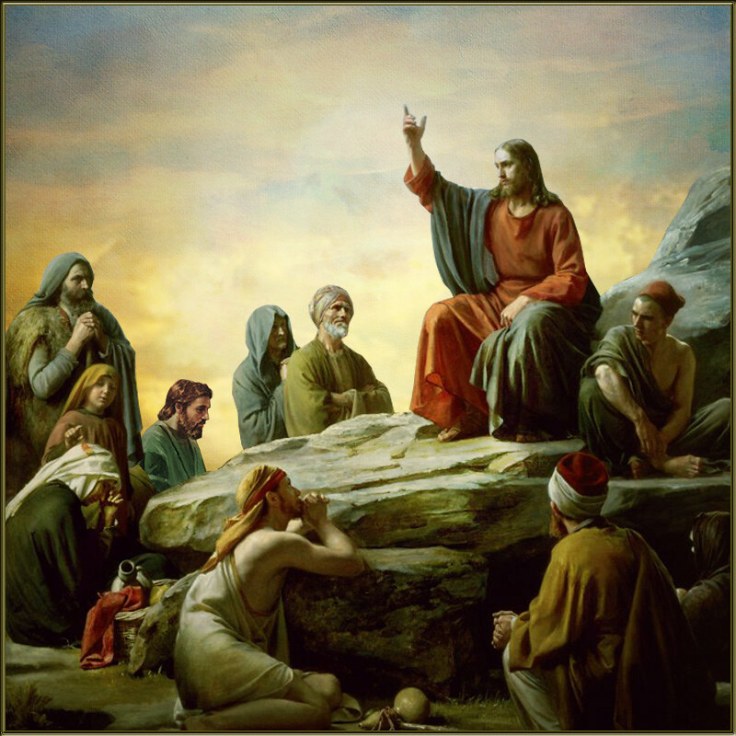
There is an interesting passage in Jesus’ Sermon on the Mount in which Jesus uses the term “Lord.” He warns that not all those who use the phrase, “Lord, Lord” will enter the Kingdom of Heaven.

21 “Not all who sound religious are really godly people. They may refer to me as ‘Lord,’ but still won’t get to heaven. For the decisive question is whether they obey my Father in heaven. 22 At the Judgment many will tell me, ‘Lord, Lord, we told others about you and used your name to cast out demons and to do many other great miracles.’ 23 But I will reply, ‘You have never been mine. Go away, for your deeds are evil.’ (Matthew 7:21-23 The Living Bible)

We can use the name “Lord” and still not understand how fully Sovereign and Holy He is. When we acknowledge Jesus as “Lord”, we may simply mean that we think of Jesus (and the Father) as a “Lord” over certain aspects of our lives– He controls the weather, or we can pray to Him to change our present circumstances or make someone else do what we can’t make them do. But Jesus is not just a “Lord.” He is THE LORD–He is Adonai. This name (when printed in all caps) is often used as a substitute for the given Holy Name of God (Yahweh or YHWH). It IS who He IS– the One LORD over all creation. The One who is the Master of ALL. If we call Him, “Lord,” but ignore what He says, and only turn to Him as a last resort, or use His name only to sound Righteous, we are literally taking His Name in Vain and breaking the third Commandment!

What amazes me is that THE LORD of the universe wants to hear from me! He has no need of a relationship with me; there is absolutely nothing that I can bring to Him– even my obedience is only an acknowledgement of who He already IS, and the power He already has over me. He CAN make me obey Him; He has the power to circumvent my will and impose His will upon it. Yet, He chooses to ask me to follow Him; He not only tells me to obey Him, He tells me why and how! And He gives me the power (through His Holy Spirit) to do it!

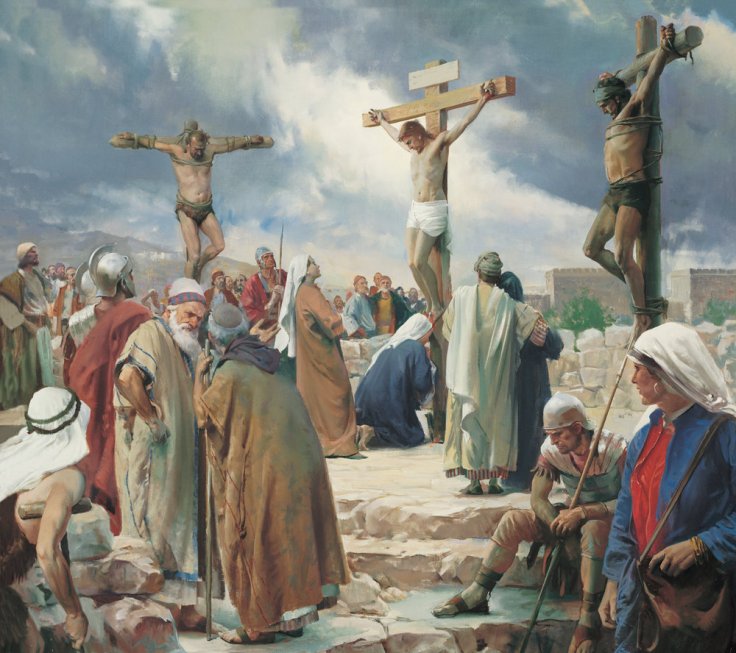
God is ADONAI– He is THE LORD! And He is patient, compassionate, and humble. When Jesus came, lived among us, and died on the cross, it wasn’t because any of us deserved His substitutionary sacrifice for our Sin. It was an extension of His nature AS “LORD.” And isn’t that worth a prayer of worship today!

Blog at WordPress.com.

Up ↑