Have you ever prayed at a stoplight? I don’t mean the kind of prayer where you ask God to turn the light green “NOW” or ask Him to please keep the yellow light from turning red as you speed through it… Have you ever used the time waiting at the stoplight to pray? Or time spent waiting in line at the bank? Waiting to pick up your kids from school? Waiting at the copier for a batch-print? Waiting for your number to be called at the license bureau?
Time is a commodity– a precious gift. And too often, we lament that there “isn’t enough time” for prayer in our lives. We may lead busy lives, filled with activity. But how much time do we spend waiting for “something else,” or “someone else,” to show up or happen or finish happening?
Instead of growing frustrated in these times of waiting, why not utilize our time by praying? The Apostle Paul urged believers to “16 Rejoice always, 17 pray without ceasing, 18 give thanks in all circumstances; for this is the will of God in Christ Jesus for you.? (1 Thessalonians 5:16-18). Paul and Silas never waited at a stoplight for any of their mission trips, but I’m sure they experienced “down” time in many of their travels. And what better time to pray than when you are stuck on a ship (or a commuter train, bus, taxi, etc.) ?
Of course, I don’t recommend praying with your eyes closed as you drive, but you can still pray. You can pray as you drive, bike, hike, shop, sit, or eat! You can pray from the doctor’s office, or the laundromat– anywhere you have to wait. You can pray silently, or out loud (as long as you’re not interrupting others). You can pray about “small” things or deep concerns. You can pray for 5 seconds or 20 minutes. Just Pray!
Just a couple of tips to help make this a habit:
Keep a running prayer list on your phone or device– or on a simple notepad– somewhere handy when you are traveling.
Have a daily focus for prayer, so when you are stopped, you already have a topic in mind; one that can be picked up as a thread throughout the day. (For more help with this, see my page on “Prayer Points.”) For example, on Mondays, I pray for family and friends; if I’m stuck in traffic, I can pray for one (or two) of them. If I’m waiting longer, I can pray for a whole family! If I’ve already prayed in the morning for the whole family, I can think about friends with whom I’ve lost touch!
Use your “stoplight” moments for praise– think of one to three things for which you are thankful; or “pray” a short chorus or a verse you have memorized.
Practice 1 Thessalonians 5:18, and thank God for your current circumstances. Are you at the dentist, waiting to get your tooth filled? Thank God you have teeth, and the means to keep them healthy! Are you picking up your daughter from softball practice? Thank God for her ability and interest in sports!
You might be amazed at how many opportunities God gives throughout each day to spend time with Him in prayer– and how quickly all that time “flies” as you are “just waiting” around!
One of the prayer models I like to use often is based on the acronym ACTS. ACTS stands for Adoration, Confession, Thanksgiving, and Supplication. I like this model because it is well-rounded. It works like this:
ADORATION–I love to begin prayer by remembering and acknowledging God’s worth, His supremacy, His Holiness, and His majesty. It sharpens my focus on the WHO of prayer, rather than the WHAT of my worries or doubts. And it puts everything in the proper perspective. Sometimes, I come to God by praying a Hymn, or praying a Psalm, or remembering the many names of God.
CONFESSION–Confession is important in prayer, and since I want to concentrate on it, I’ll come back to this element below.
THANKSGIVING– Thanksgiving returns me to remembering what God has already done– for me, for others, throughout history, and just yesterday in my life. Instead of prayer being all about my needs, wants, or concerns, prayer should be an honest conversation with God. And that must include gratitude, because God is truly GOOD! If you ever doubt that, think about the first five minutes of your morning. If you awoke, you are alive (thank you, God!). If you heard your alarm, opened your eyes and saw anything, if you were lying on a bed, in a shelter with a roof, if you were able to sleep through the night without the terrors of war, slavery, starvation, torture, or chronic agonizing pain, you have much for which to be grateful. If you were able to get out of bed on your own, able to eat breakfast, get dressed, and you have a job to go to or a purpose to fulfill in this day, you are among the blessed. To withhold praise and thanksgiving is to miss one of the privileges of life.
SUPPLICATION–Yes, we bring requests to God. And He already knows what we need, what we desire, and what He has planned for us. So supplication is not about making God aware of our needs. But it is another act of acknowledging that God hears and responds to us. Because that’s the kind of God He IS! And because we have spent time Adoring, Confessing (to), and Thanking God, we know that we can present our requests without fear or doubt.
Most of us are fine with Adoring, Thanking, and Saying our requests, but Confession can be tricky– especially in our culture. What are the elements of Confession that trip us up? Mostly, I think, it’s a misunderstanding of what confession is (within the element of prayer) and what it is NOT.
Confession is defined as admitting to guilt, or to a crime or sin or wrongful act. But, even more basically, confession is an admission that we are not the ultimate authority over our lives or the lives of others. As such, we must confess before we can accept God’s atonement for our Sin. If we do not confess our need for God, we cannot accept, understand, or appreciate the depth and nature of His sacrificial Love for us. So when we pray, we must confess, not only God’s Glory in the heavens and the Earth, but His Sovereignty in our lives; His authority over our emotions, our thoughts, and our actions. King David gave us many great examples of confession in his Psalms– and they can be terrific models to use in our own prayers. (See Psalm 6, Psalm 32, Psalm 38, Psalm 51, and others.)
Confession in prayer is not primarily a list of our petty missteps– though we should be willing and able to name them, rather than denying what we’ve said and done–but a daily admission of God’s right to determine how we conduct our thoughts, our habits, our priorities, and our relationships, and acknowledging that God is Merciful, Gracious and Loving– beyond all our failures, mistakes, and even past rebellion. Confession shouldn’t focus so much on what we’ve done, as on how God is able to free us from guilt and shame, and how we intend to move on away from the past. We confess that our ways are not Holy, and in doing so, we underscore that God’s ways ARE Holy, perfect, wise, and good. God already knows our thoughts and actions, but WE need to be reminded of our goal– to run the good race (see Hebrews 12:1, and 1 Timothy 6:12) to follow Christ; to become more like God each day!
Confession is primary to the Christian Life– we confess that ONLY by the work of Jesus (the cross and resurrection) can we be reconciled to God. We cannot pray openly to God if we don’t believe–and confess– that this is true. God is not fooled by sweet talk or glib arguments. We cannot believe that Jesus’ atoning death and resurrection saved us if we don’t believe that it was necessary and good for Him to do so. And besides, confession is good for the soul!
“If we confess our sins, he is faithful and just to forgive us our sins and to cleanse us from all unrighteousness.”
1 John 1:9 (KJV)
Confession has a negative reputation in many Christian circles, and it is misunderstood in others. Just listing our sins or admitting we did something wrong doesn’t have any value without the positive confession that Jesus is “the way, the truth, and the life.” (see John 14:6) In fact, a better definition of Christian confession is this– agreeing with God about who I am (a sinner/imperfect/unable to attain Holiness on my own), and who HE is (perfect/Holy/Sovereign/the One who Loves me absolutely)
When we pray today, I hope we will confess– positively, profoundly, willingly, and whole-heartedly. I hope we will humbly and honestly confess any actions or habits that are interfering with our Christian walk. And I hope we will joyfully confess that Jesus is LORD; that we are trusting in Him to guide us, intercede for us, and give us the power to live more abundantly in this life, and throughout eternity. What a great way to pray!
Have you ever been the “victim” of a surprise party? Maybe you sensed that something was “up”, but you were still shocked and elated to see old friends or family all wanting to wish you well on (or near) your birthday, anniversary, wedding, retirement, or even “just because”. Even if you “catch on” or if someone “spoils” the surprise, it can be a wonderful celebration. (Or, on occasion, a disaster.)
Have you ever been on the planning side of a surprise party? Several years ago, we threw a surprise birthday/retirement party for my father. It required several months of planning. We invited cousins from out of town, co-workers, neighbors, and old friends. We gathered old pictures and mementos to display, ordered cake and balloons, and tried to keep the excitement under wraps, lest my father guess our intentions. All the details fell together, except we couldn’t figure out how to get him to the party without guessing. Dad was a genius at “sussing out” secrets and surprises, and also at setting them up. We wanted to turn the tables and give him the best surprise of his life.
Then, less than a week before the party, my aunt (my mom’s sister) died in a car accident. The funeral was arranged for the same day as Dad’s celebration. We suddenly had to wrestle with a decision– to cancel or to forge ahead. With so many coming from out of town, we decided to stick with the original plan. It would be difficult– my aunt’s funeral was scheduled earlier in the day, and there would be about an hour to drive from one event to the other. Dad was certainly surprised–already dressed in his best suit, he drove from a funeral in one town to a party in his honor 20 miles away. From flowers and tears to laughter and cake…it was a day unlike any other. The first several minutes were surreal and jarring. But it was also cathartic. As difficult as the day was, we honored both my father and my aunt. Being surrounded by family and friends, some of whom joined us for both events, became a healing and encouraging experience. It was not the surprise we expected–certainly not the surprise we had planned.
Several years later, (in fact, after my father had passed away) we planned another surprise party– this time for my mother. Mom had, of course, been part of the planning (as well as the trauma) of the first event. As with the first party, we invited family from out of town, ordered cake and balloons, gathered photos and memorabilia, and wondered how to get her to the event without suspicion. All went as planned, and we had a wonderful time. Mom was delightfully surprised, and even more so for having been through the experience of the prior party.
What does any of this have to do with prayer? Well…we prayed for both parties. We prayed that all would go well, that Dad and Mom in their turn would be surprised, that guests would arrive safely, and that the parties would both please and honor the recipient. God answered both prayers. His ways are not our ways– but He is eternally good. He gave us strength for each day in its turn, in the midst of surprises– pleasant, painful, and both together!
But, far more, the two parties offer an illustration of God’s grace in the area of knowledge and foreknowledge. “If I had only known…” is a common phrase, and one that we could readily apply to the Dad’s party. But if we had known the end from the beginning, would we have changed our plans? When we say that we want to know the future, we’re generally asking to know a specific outcome of a specific event– without considering the greater consequences and impact of that outcome. When we pray, we generally pray for a specific outcome, again without knowing the full consequences. What seems like a disastrous outcome to us may be God’s way of preparing us for an unexpected blessing. God doesn’t send bad gifts– disasters come (and God allows them in His sovereignty)–but He doesn’t send disaster and pain to mock us or ruin our lives. Instead, in the midst of tragedy, He gives us unexpected strength, comfort, and sometimes, even joy.
If we had known that Dad’s party would be shadowed; that my aunt would die so suddenly, we might have given in to despair and bitterness. And though the party brought unexpected comfort, it did nothing to erase the overall grief of my aunt’s passing. But we learned so many things that day. We were reminded that our time with Dad was precious– that life itself is precious– in a solemn and powerful way. We were able to receive comfort from unexpected sources. We would not have shared our tragedy in such a public way with those who did not even know my aunt. But circumstances forced us to do so, and in the process, we were able to continue to honor her in the celebration.
If we had known all that would happen at Dad’s party, and not seen it through, we might never have risked planning a party for Mom. If we knew in advance all the joys and tragedies we would face, we would never learn how to trust God for the next step in life. Even more, we would live in constant dread of looming tragedies and negate all the joy of discovery and wonder. We might not be driven to take risks if we already knew their outcome, and we might not learn from our mistakes if we already knew their consequences…and because our lives are so short, we might only see the short-term consequences, and never see the ultimate outcome.
God is above and beyond time– He is the creator of all things, including time. He has decreed for us a beginning and an end to life on earth, and He has decreed that we should life our lives with a certain amount of suspense– of not knowing what the future holds. It holds both triumph and tragedy– trial and temptation. Life is filled with surprises– catastrophes, ecstatic joy, and “a-ha” moments–as well as peacefully uneventful moments to reflect and enjoy.
As we pray today, we can be thankful that God’s knowledge is perfect, and that His power is sufficient to hold us in the midst of shock, lift us in the midst of tragedy, and surprise us with joy along the way. And we can ask Him to grant us the wisdom to trust Him fully when we don’t see the end from the beginning– or from the middle–of the storm.
I really need to go on that diet. I really should call my Aunt Kay. I need an hour of peace and quiet. And time to sit and pray.
But I’m scrolling through Facebook. I’m following the news. I just need another look; This meme has so many views..
I should greet that new couple at church. I should make them feel at home. But I need a cup of coffee first. And my hair should be re-combed.
My Bible waits by my chair– Unread these past four days. Later, I know it will still be there– Ready to catch my gaze
Tomorrow, or the next day. God will understand. I want to follow His Way, But this wasn’t what I planned.
I got caught up in a magazine I stopped to shoot the breeze– My house is needing to be cleaned Before I get on my knees.
I “had to,” “should have,” “had a mind” To spend time with God, and yet My day’s flown past, and now I find I’ve only time to fret.
“Not yet” was my sad refrain “Not yet” kept me on the go. “Not yet” robbed me once again Of time spent with One who loves me so.
And so my day was filled and rife With wasted time and small regrets. I missed the more abundant life Of trust grown from obedience.
The internet will still be there Tomorrow and the next day; But the trust built up in an hour of prayer Can never be taken away.
Today may be busy with “urgent” needs and countless distractions. But there will only be one “today” to meet with God– in prayer, Bible study, meditation, and worship. What is my priority today? Even if I can’t “find” an entire hour in my busy schedule, have I made a plan and a priority to meet with God? Am I searching for opportunities to serve Him and encourage others, or am I too busy searching for my own entertainment and fulfillment? What are the empty things in my life that I should be telling, “Not yet?”
The Bible is filled with images of family–long lists of “begats” and genealogies, parables about sons and fathers, brothers, weddings, brides and grooms…God is even described as our Father, with Christ as “the son.”
One of my hobbies is genealogy– tracing my family’s roots back through several generations and several different places. While the Bible warns that we should not get caught up in “endless” and vain genealogies that lead to false pride and foolish divisions (1 Tim. 1:4/Titus 3:9), there are many good reasons to pay attention to families, family histories, and family dynamics.
First, the family is God’s design– God instituted marriage, parenthood, and family units. It is God’s will and purpose that we should not live in isolation and self-absorption, but learn to depend on and be responsible to others. Families honor, protect, love, provide, comfort, teach, encourage, build and work together. Even in a broken world, filled with dysfunctional and chaotic family relationships, the purpose and design of “family” is still part of God’s good and perfect plan for living. Broken families and toxic relationships are not a failure of God’s plan– they are the result of Sin’s power to distort and corrupt the Good that only God can create. The great news is that God also has the power to restore and redeem individuals and families; offering “rebirth”, adoption, and an eternal “inheritance” within His family!
Second, families can teach us about the astounding and limitless love of God. There is something about the bonds of familial love that stretch us beyond our regular capacity to hope, to sacrifice, to share, to grieve, to endure, and to forgive. Who has seen a mother or father go hungry so their child can eat; or a sister or daughter donate her kidney or bone marrow to help heal a family member? Or a father carry his son who could not walk, or a wife who visits her aging husband when he no longer knows her face? How can we see such devotion and not be struck by how much greater, wider, deeper, and more eternal the Father’s love is for each of us?
Third, family (particularly the idea of genealogies and long family histories) teaches us the eternal nature of God. We live our lives as part of three or four generations– a span of 70 or 80 years for many of us–and we concentrate our efforts on “making our mark” for less than that entire span. But even the longest of our lives are so short in the span of God’s plan for His people. We have one lifespan to play an important role in the story of centuries. When we fail to understand that role, we can miss our sense of purpose in life. Sometimes, we overestimate our own importance or miss the significance of our own legacy. Even “important” people are forgotten, or have their legacies tarnished or rewritten in the pages of history. And those people who never made the history books are often the inspiration for actions and movements that span generations and change nations. When I study the history of my own family, I find lives that were cut short by war or disease– yet these lives shaped the lives (or were the lives) of my ancestors, and without them, I would not be who or how or where I am today. Maiden aunt, baby brother, empty seat at the table– every life touches others in ways that God alone truly comprehends. “Coincidental” meetings, “unplanned” children, migration patterns, epidemics– all loom large in a single generation, but they all become part of the fabric of each person’s “history.”
Lastly, genealogy reminds us that we are all one enormous family! There is so much talk on the news and online about all our differences– language, culture, skin tone, beliefs, skills, abilities, interests, even diets!– and it is important to note that God loves variety and created us each with unique and precious differences to reflect His infinite character. But sin twists our differences into conflicts; sin spreads lies about God’s character, and thus, about how we (or others) reflect, honor, understand, acknowledge, or obey our amazing creator. Differences may cause division in our broken world, but they do not cancel God’s mercy or limit the reach of His love for us all.
This lesson is being brought home to me in a secondary way as I see the time approaching for my 40th high school class reunion. Of course, we are not all directly related. And we are all the same general age, rather than being multi-generational. But it struck me that our class has been very much like a family– we grew up together; we learned to get along (most of the time), to share, to work together, to understand and appreciate our differences and our unique gifts–we send birthday greetings and share pictures, we laugh together, grieve together, share fond memories and special connections with one another. We pray for one another, argue with one another, encourage one another, and challenge one another. There are some who have distanced themselves–whether through physical distance or emotionally– from the rest of us. Some have even ended their earthly journeys. But that doesn’t make them any less a part of our class/our family. We are short and tall, thin and stout, hairy and bald, dark and light complected; we are single, married, divorced, and widowed– some with children still at home; some with no children at all. We are rich and poor, healthy and ill, walking around with scars and wounds and unresolved questions, arrogant assumptions, or chips on our shoulders. And we are optimists and mentors, healers and teachers, helpers and protectors. We are loud and quiet, social and task-oriented, driven and laid-back, dreamers and doers. And in my genealogy research, I have made genetic and marriage connections to about 1/3 of them! We really ARE family, and I can show how we are related! How small would this world seem if we looked at our brothers and sisters across the world, and realize that those connections are so much greater than the differences that divide us?
I’m also in the process of writing a book about my family. I estimate that there are nearly 500 people who can claim the same ancestral “roots” from the same two people, who lived through some of the most amazing events of the twentieth century! Once again, we don’t all look , or act, or think alike– some are tall, some are tattooed, some are old, some are newborns, some argue about college football teams, or politics. Some of us speak other native languages or live very different lifestyles. But we love each other, encourage each other, and many of us share our prayers and concerns and joys and pains. My great-grandparents (and all their children) left a legacy of love and faith that continues to influence and inspire the fourth, fifth and sixth generation to follow!
When we pray for others, we are always praying for our family! Praying for our neighbors and classmates and co-workers– we are praying for family! Praying for our enemies, for strangers, for those who look and speak differently than us–We are praying for family! May God give us eyes to see and hearts to love our brothers and sisters, sons and daughters, cousins and even the “long lost family members” and lift them up in prayer to the One who loves us and wants to bring us all into His family!
One day, a minister arrived later than usual for the mid-week meeting at the church where he served. He heard raised voices, and found that several of his parishioners were arguing about congregational prayer.
Stan said the congregation ought to stand.
Neil thought they should all kneel.
Ima Bower insisted that everyone should bow their heads.
Mr. Folger thought everyone should fold their hands as well.
Ray Sands declared that his hands would be raised toward Heaven during the prayer.
Iris didn’t believe in closing her eyes,
Lydia Schutter disagreed.
Selma wanted to pray scripture.
Rhys thought it would be best to recite The Lord’s Prayer at each service.
Cy Lentz just wanted everyone to pray silently in his/her seat.
Gabby Orson wanted to pray in tongues.
Andy Holder wanted everyone to hold hands when they prayed.
Wanda Singh liked the idea of praying hymn lyrics.
Mary Lee liked that idea, as long as the hymns were upbeat choruses, and not somber old hymns.
Harry and Rush both championed short prayers.
Ruth Lesley insisted that all prayers be formal, written, and submitted to the pastor for approval.
Pastor Ora Freer was dismayed by all the bickering. When the room quieted a bit, he made a suggestion.
“I think we should cancel our midweek service tonight. While I have heard about many “Attitudes” of Prayer here this evening, I don’t think we have the right “Attitude” for prayer together at this time. Perhaps next week, we can talk about which of your methods would please God the most. In the meantime, you may pray at home in any “attitude” you choose.
The next week, only five people showed up for the midweek meeting. But they had one of the most refreshing and productive prayer meetings ever held at that church.
What matters most in prayer is not the attitude of our body, the volume or nature of our words, or the nature of our expression– what matters most is the attitude of our hearts. This is especially true when we gather together. Insisting on one “right” way to pray whenever we meet with others can get in the way of our real purpose, which is to meet with GOD. God wants to hear from us–and He wants to hear us providing support and encouragement to others, even in our pursuit of prayer.
We like to point out scripture that assures us that God will hear (and answer) our prayers. We like to remember God’s promises of blessing and peace and grace. And we tend to ignore or forget that there are some prayers that God has said He will not hear or answer.
God will not answer prayers that are selfish, or hypocritical. He will not answer prayers offered in pride, self-righteousness, or unbelief (see Luke 18:9-14, and Hebrews 11:6). He will not listen to prayers offered by those who oppress the poor, those who worship idols, or those who practice violence. And He will not listen to the prayers of those who reject Him, and remain in sin. https://www.gty.org/library/questions/QA160/does-god-answer-the-prayers-of-unbelievers (Please note: I don’t totally agree with the general conclusion here, but there are several great references for the individual points..)
Please note that God does not say that He will not answer prayer based on WHO a person is–God does not refuse to answer prayers based on a person’s age, nationality, gender, physical health, mental health, height, weight, social status, or any other label, including their past religious affiliation! This means that a sincere prayer of a person who is seeking God may be heard ahead of (or instead of) a prideful prayer of someone who claims to be a Christ-follower.
God is sovereign and omniscient– He knows what is in each heart, and He answers, not according to who we are, but according to who HE is. And just as He can separate our sins “as far as the east is from the west” (Psalm 103:12), and “remember (our) sins no more”(Hebrews 8:12), He can choose not to hear prayers that are offered with wrong motives or offered in defiance of His sovereignty and holiness.
None of this takes away from the fact that God DOES hear and answer prayer…God LOVES to hear from anyone and everyone who seeks His face. Nothing external can separate you from His love. Come with your anger, questions, sorrows, pains, gratitude, hope; bring your failures, your fears, and your triumphs. But God, like a wise father, doesn’t suffer fools and fakers. Even if you can fool your neighbors, friends, family, or yourself, you cannot fool God. He doesn’t want a false narrative– He wants you as you really are. He wants you to acknowledge who He REALLY is. And He will listen with an everlasting love and compassion to all such prayers!
Social media is a dangerous place these days. Everyone is an expert on something– pain, medicine, race relations, politics, religion… I’m an expert, too. I am an expert in my own opinion! I know all I ever need to know about how I feel, what I’ve experienced, how I would solve all the world’s problems, and what everyone else should know, do, and think.
And when I pray, I am an expert in what I want, and what God should do–right?
Turns out, the Bible disagrees with me. Prayer is not about telling God what I think He should do. And one of the things He doesn’t want me to do is go about telling everyone how much I know and how right I am about everything.
I know– it flies in the face of common thought and practice. But my words are not to be about how good I am, how smart I am, how righteous I am, how “woke” I am, or how tolerant I am. My words shouldn’t be all about ME. When I do speak (or write), it should be for one of four reasons:
To praise– to bring honor and glory to God for who He is and all that He has done. To rehearse and proclaim His good deeds and righteous acts so that others may hear and praise Him, too.
To encourage, build up, edify, or heal others. Words have the power to bring hope, energy, confidence, light, and love. They also have the power to destroy, devalue, and discourage. Finally, words have the power to suck energy, waste time, and bring confusion and chaos. When I speak carelessly, selfishly, or foolishly, it does nothing to build up others. (And it probably doesn’t do me much good, either!)
To speak truth and stand up for righteousness–not in an arrogant way, and not to win “points”, but to honestly and firmly defend what I know to be true. I must realize that there will be others who will stand in opposition to the truth and refuse to hear what I say. Others will misconstrue and misrepresent the truth. It is NOT for me to make them believe– only to stand up and give voice to the truth when I see it under attack.
To express unique and creative thoughts, which is part of praising my maker. Everyone has SOMETHING to say– something that expresses their inner thoughts and unique perspectives. That should cause me to take great joy. And it should cause me to take the same joy in helping others find their voice and share their stories and ideas. Not because I’m “right” about the world, or because they are “right” in their ideas. But because God gave each of us a voice. I can listen and not agree; they can do the same. But sometimes, in the act of listening, we do more to come to understanding and agreement than we ever do by speaking. And in being allowed to speak freely, we might listen to ourselves more carefully, too.
Jesus spoke wonderful parables, deep and thoughtful prayers, piercing sermons, and tender words of encouragement and love. But He also listened–not only to the critics and enemies, but to those who hid in the shadows; those who were outcast and oppressed; those whose voices were drowned out by the crowds. He was RIGHT! More than anyone ever, He had the right to be heard…He chose to listen as well as speak. Jesus was more interested in being Himself than being “right.” More interested in showing love than showing off. More interested in understanding than overpowering. Jesus spoke–but He also laughed, and wept, and lived, and listened.
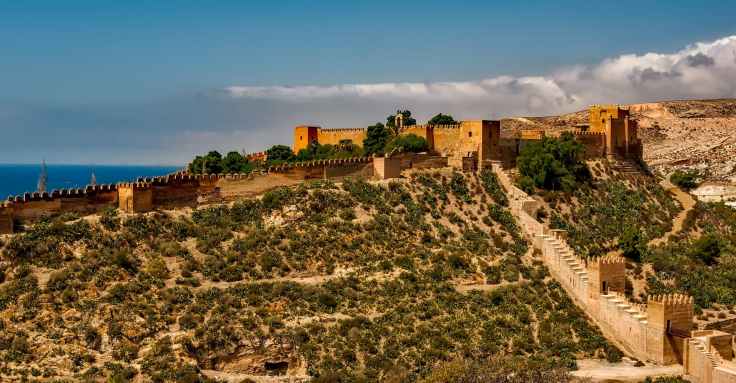
“A Mighty Fortress is our God; a bulwark, never failing..” These words are known and sung (in various translations and languages) around the world. But Martin Luther wrote this song over four hundred years ago. What relevance can these words have in an age of nuclear bombs and globalized economies and climate change? What do they mean to us today?
I don’t live in a nation of many castles. There are two stone “mansions” in the small town where I live. They seem tiny compared to mansions in other parts of the U.S. and the world. And we have a small armory; home to a National Guard outpost. But a mansion (or even an armory) is not the same as a castle or a fortress. Mansions are built to be impressive; armories are built to be immediately prepared for disasters or attacks; castles are built to be impregnable and permanent. Our God is not just a fortress; one outpost among many mighty gods– He is The Mighty One–uniquely sovereign, eternally victorious, and perfectly protecting all within His power.
And this protection doesn’t depend on my might or fighting ability, or my weapons or strategies. It depends on my being inside the fortress, safe and sound. The war rages all around, but it cannot defeat me, so long as I am in the fortress.
There are mighty castles, forts, towers, citadels, and walls around the world– all built by people and victims of the ravages of war, time, weather, fire, bad management, etc. Over the years, types of fortresses have given way to new weapons designed to bring them down. Wooden forts are susceptible to fire; stone castles can be brought down by catapults, battering rams, and bombs. Underground bunkers can even be ruined by earthquakes or nuclear assault. And yet, we are still amazed at the power and legacy they represent. Many have stood for hundreds or even thousands of years. But God is eternal; His might and protection will never fail. No weapon forged or imagined can triumph over His power and sovereignty.
Prayer brings us into the safe and powerful presence of God Almighty. There is nothing of our worries, our guilt, our doubts, or the accusations of the enemy that can shake the foundations of God’s fortress. And the cornerstone is none other than Jesus Christ– unshakable, victorious, and eternally one with the Father and the Spirit.
That doesn’t mean that we won’t ever find ourselves in battle, trusting in God’s armor against the arrows of the enemy. But the war is already won– His Kingdom is forever! And ever!
I keep a prayer journal. I’ve written about it several times on this blog. I keep track of people and places to pray about every day of the year. But I also have a tool I call “Prayer Points.” Each day of the week, I like to focus on a different aspect of life around me. One day a week, I focus on family matters. Another day, I focus on finances. Yet another day is all about cultural influences. And one day is for community. When the weather allows, I love to take walks around my neighborhood. And as I walk, I think about how I can pray for my community. I pray for the local churches (including, but not limited to my home church). I pray for the local schools, our local community college, and our local day care facilities, and their influence over our children and grandchildren. I pray for our local businesses– the grocery stores, the insurance reps, the chiropractor’s office down the street, the local bakery, the museum across the tracks (the train station, while I’m at it). I pray for houses, parks, families and pets, trees and roads, too! I am amazed at how much I notice on my walks as I am thinking of ways to pray.
It’s winter in our area right now, so I can’t physically take a walk around the block without bundling up. But I can walk the perimeter of my small shop and mentally take a walk around the neighborhood, praying as I pace back and forth. I did this the other day, and couldn’t believe how quickly the time had passed! And next week, I can take another “walk” as I pray for gas stations, fast-food restaurants (as well as the local diners and bistros), the library, the post office, the hospital….
I post this, not as a model for everyone who reads this. Some people live in remote areas– where I grew up, there were only about seven houses and four fields on “my block”! And it may not be possible, or even safe to walk around your neighborhood praying for specific buildings. But mentally, we can each consider how to pray for “our” neighborhood. It may be your neighborhood at work, or on your commute, or at school. It may be the neighborhood of your closest village or your apartment complex or cul-de-sac. You may wish to draw a map to remind you to pray for those around you. You may be able to drive around periodically. You may wish to list your closest neighbors in a journal or planner.
It’s important for our prayers to be inclusive–to reach out and carry burdens for those around us. That doesn’t mean ignoring our own needs or concerns. But it can help put those needs in perspective. We are not meant to “do life” alone. We are part of our communities, whether we acknowledge it or not; whether we participate in community life or not. And that should find reflection in our pursuit of prayer.
Have you taken a walk around the block lately? Have you noticed situations around you that call for praise or petition? What are some of the ways you see God working in your neighborhood? How would you like to see more of God’s hand at work there? In what ways might God be calling you to become more involved in community activities or one-on-one with your neighbors?























 Pursuing Prayer