Blessings Come Down

When I was a small girl, we learned a song in Sunday School. It was primarily about the parable of the “house built on a rock.” (See Matthew 7:24-27) The first verse spoke of the wise man, who built his house on the rock. The second verse spoke of the foolish man who built his house on the sand. But the third verse challenged listeners to “build your life on the Lord Jesus Christ.” The first two choruses spoke of the rains coming down and the floods coming up; the third chorus said that “the blessings come down as the prayers go up.”

Photo by zeno ferenczi on Pexels.com

Sometimes, memories forged in childhood come back to tease our thoughts as adults. We had a much-needed but powerful rain storm the other night. While it didn’t lead to floods, it did dump a lot of water on fields that were in great need of moisture. And it reminded me that many farmers and gardeners had been praying for rain. Rather selfishly, my husband and I had been praying for sleep– some of our neighbors had been setting off fireworks for several nights in a row, well into the late hours of the evening, keeping us awake, and terrorizing some of the Veterans in the neighborhood. The rain cut their activities short last night (even as it kept us awake with thunder, lightning, and raindrops on the roof!)

But I was also reminded that prayer works much like the water cycle. Prayers go up, much like dew getting absorbed every morning, or water droplets evaporating in the sun. We don’t see any change. There is nothing dramatic about evaporation or silent prayers in the night. Prayers go up from many different people in any different places with many different needs. And they seem to end up evaporating.

Photo by Johannes Plenio on Pexels.com

Sometimes, we look up and see empty skies, and wonder– Did God hear my prayer? Will He answer? The skies seem empty and silent for weeks. And then we see clouds–sometimes dark and threatening– and we wonder again. What is God doing? Where is the rain? Will it bring floods and winds and disaster? What went wrong?

Photo by Pixabay on Pexels.com

Sometimes, our prayers seem to bring, not showers of blessing, but trouble and heartache. And yet.. God’s answers may not fit our thoughts or desires. I certainly didn’t want thunder and lightning instead of fireworks– both are noisy and aren’t conducive to restful sleep. But the rain brought much-needed nourishment to flowers and crops. It brought down the super hot temperatures, and lowered the humidity (a little). It even cleaned the dust from my vehicle, saving me from making a trip to the car wash! Of course, these are small effects of a single storm. And the noise of the rain, while loud, finally lulled me to sleep, so in a sense, my prayer was answered. It wasn’t what I had imagined, But the principle is the same. Even in our storms, disasters and tragedies, there are blessings– if we have the heart to look for them. God’s presence can bring us comfort and encouragement even in the darkest night, and in the floods of life.

Photo by Eva Bronzini on Pexels.com

Just as the parable and the song remind us– building a life on the Rock of Jesus Christ, including a lifestyle of prayer, will keep us strong and resilient in the storms of life– whether we’re facing raging floods or a simple downpour, we can find hope in the faithfulness of God’s provision. God WILL provide– in His time and in His way– everything we truly need. The sand, dust, and even some of our earthly treasures may be washed away, but, as long as we are built up on the Rock, we will be blessed– sometimes in the most unexpected ways.
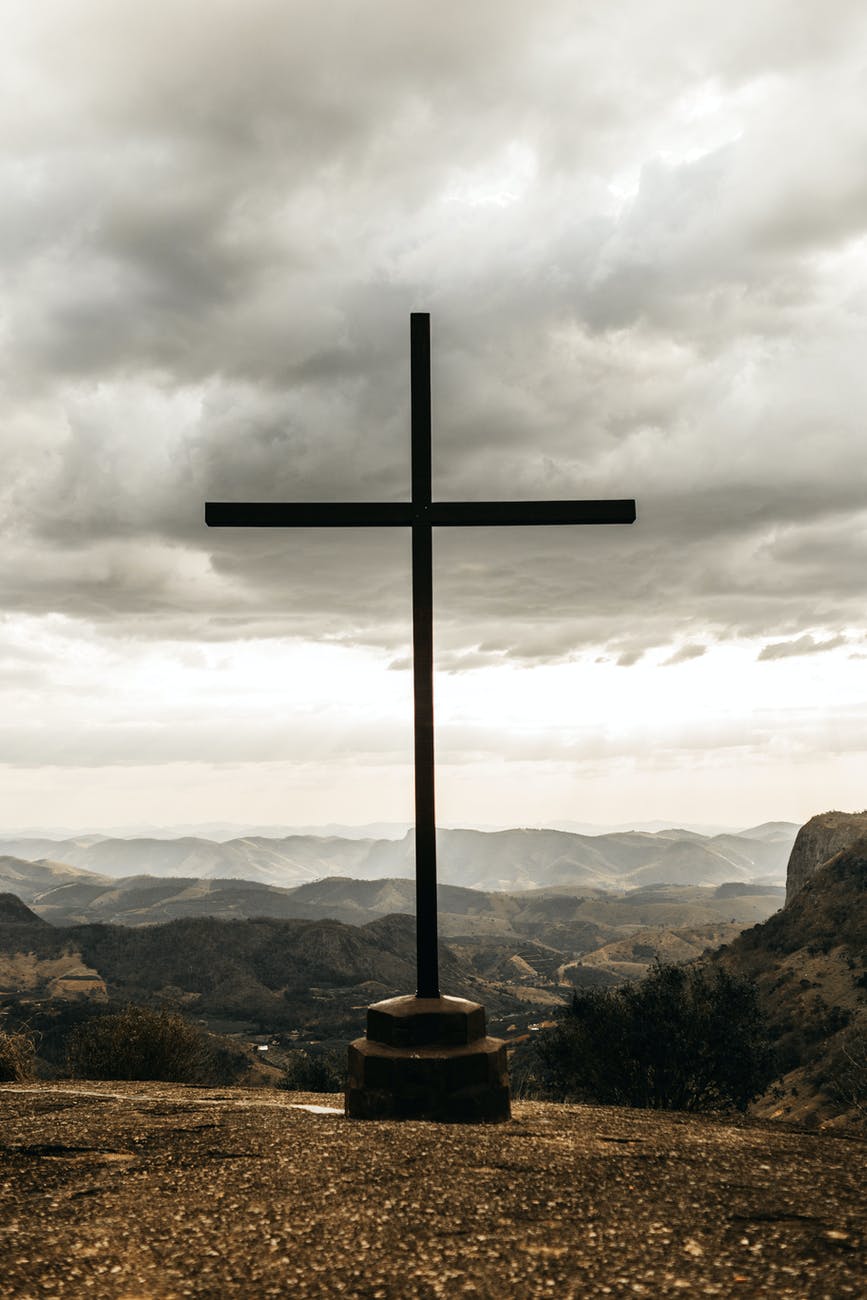
Photo by Jonathan Borba on Pexels.com

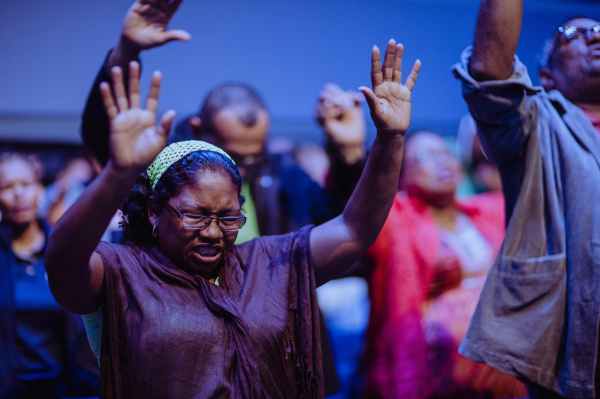
Let’s keep sending the prayers up!
A Garden of Prayer

It’s gardening season– many with gardens are reaping an early harvest of tomatoes, peas, beans, and other vegetables. I live in town, and have no space for a garden, but I have memories of working in my mom’s and grandma’s gardens. Gardening takes a lot of work, and involves a lot of elements. A life of prayer also requires a lot of discipline and certain elements:

Photo by Gustavo Fring on Pexels.com
  • Plowed ground– we need hearts that are softened and humble, ready to listen and respond.
  • Seeds of faith– even those as small as a mustard seed!
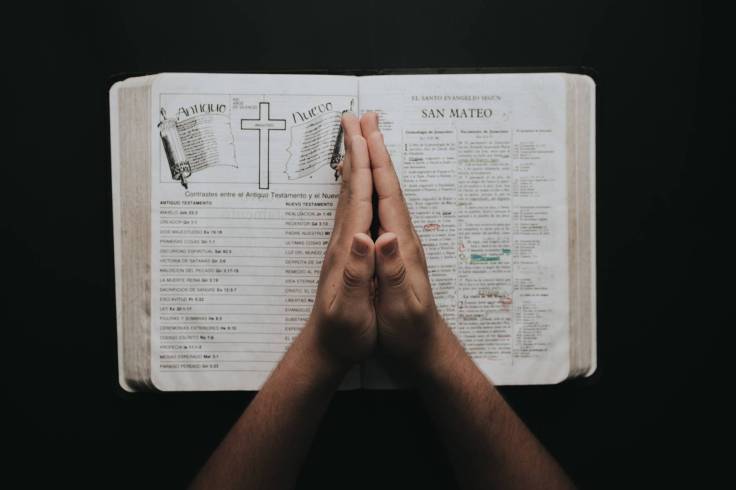
  • “Son”-shine–we can follow the examples of the prayers of Jesus, as well as His teachings on prayer.
  • Living Water–Jesus gives us living water in His words and His life. The more we spend time with Him (through prayer and in His Word), the more we will experience the nourishment He provides!
  • Cultivation– it is not enough just to plant a seed and leave it. We need to spend time in devotion, worship, prayer, scripture reading, and fellowship daily if we want growth. We also need to “weed out” sinful habits and thoughts that keep us from trusting God’s will and timing.
  • Workers for the harvest–Our lives should be producing fruit. But fruit that isn’t harvested and shared will go to waste! And we should also be ready to harvest the fruit of others– encouraging and building one another to better growth and adding to the Kingdom.
  • Helper “Bees”– like Bee Kind; Bee Patient; Bee Humble; Bee Generous; Bee Industrious; Bee Joyous; Bee Faithful; Bee Grateful; Bee Truthful; Bee Gentle; etc.
Photo by Pixabay on Pexels.com

Prayer is always “in season,” and always produces a harvest. It takes dedication and faith, but it is so worth it!

Free to Pray

Today, the United States will celebrate our “Independence Day.” Two hundred forty-six years ago, fifty-six men pledged their lives and fortunes by signing a Declaration of Independence from Great Britain and the rule of its king, George III.

We talk a lot about freedom and independence on this day. For many, it is a bittersweet reminder that not all Americans were “free” during the first decades of our existence as a nation. For others, it serves as a rallying point to urge for further movement toward freedom from tradition and restraint. We talk of freedom and independence as though the terms are interchangeable…as if the only way to understand freedom is in the context of independence from someone or something else. We want to be free from the constraints of tyrants, oppressive bosses, or prudish parents. But freedom from something implies freedom to do or become something else.

Photo by cottonbro on Pexels.com

In the case of our fledgling nation, freedom from the British Empire meant the freedom to create a new nation– not just to modify an old national identity, but to create a new identity; to have a new “birth” of freedom. Freedom from oppressive rule does not eliminate the need for restraint and responsibility. Indeed, it creates a great need to define limits and practice self-discipline. Total freedom– without boundaries, rules, or responsibilities– leads to its own destruction.

A few years after the Declaration of Independence, once “freedom” had been won by long years of war and the sacrifice of many soldiers and their families, some of the same men were joined by others to draft a national Constitution. Almost immediately, the Constitution was amended to include a Bill of Rights, outlining certain Freedoms which had been implicit, but were now spelled out for all to uphold. The very first of these rights covered the freedom of expression– both in speech, and in worship.

Photo by Sharefaith on Pexels.com

Americans have the freedom to speak. We can speak publicly about our thoughts, our feelings, our beliefs– without the fear of imprisonment or government retaliation. We can write or post blogs, regardless of whether others agree with us, or like what we have to say. This is an incredible freedom– I can create novels or poetry; I can recite speeches or create persuasive advertising; I can talk for hours about nothing at all! But it also comes with responsibility– I could write falsehoods about my competitors, or speak out disparagingly about a neighbor. I could do great damage with my words. My neighbor or competitor might take me to court and sue me for libel or defamation, but the damage would already be done.

Photo by EKATERINA BOLOVTSOVA on Pexels.com

Americans also have the right to religious expression. Our Supreme Court recently upheld the right of a high school football coach to say a prayer on the football field after a game. Americans can assemble for worship, whether in a church, a mosque, a synagogue, or an open field. We can pray– aloud, in a group, over a loudspeaker, even–and the Government cannot legislate that only “approved” prayers are allowed. This might make a few people squirm– Wiccans, Baptists, Scientologists, Hassidic Jews, Shi’ites, Druids, and Satanists ALL have this right. But each of us has the responsibility to respect the rights of all to pray.

Photo by Ivan Samkov on Pexels.com

But that brings me to this point– we have the freedom to pray under the Constitution, but that freedom means nothing to the Christian without the greater Freedom to Pray granted by God Himself. Anyone can offer a prayer to empty air, to a created idol, to a metaphysical “being”–but governments cannot give us the freedom to be HEARD, to be WELCOMED into the presence of the Almighty. Only God gives that freedom– and He gives it to ALL who seek His face! I don’t have to be an American to pray. I don’t have to be given the legal right to pour out my heart to my Heavenly Father– HE invites me to pray. All I need is the belief that God hears and responds to my prayer– even a silent one delivered in peril of Government retaliation. God’s invitation is more powerful than any oppression that seeks to stop me from calling on His Name!

Photo by Tima Miroshnichenko on Pexels.com

God took great pains to illustrate this in bringing the Israelites out of Egypt. God took a “nation” of slaves out of Egypt, and led them through the wilderness and into their own inheritance in the Promised Land. They had the freedom to pray, and to worship this Great God. But over the years, they lost that freedom, and ended up going into exile, slaves to the pagan nations around them. Yet God remained faithful, hearing their prayers even from the nations where they enslaved. God’s promises and His invitations remain, regardless of the rise and fall of Empires or religious movements.

So today, especially in light of my right as an American to pray freely and publicly, I want to challenge myself, and anyone reading this to spend time today in earnest prayer and thanksgiving. What a privilege to be “Free” to pray!

Looking For God In the Storm

On Monday night, several strong storms moved through our area. There were also severe storms in other places, like Mexico City, and around Manila– high winds, heavy rains, hail, and flash flooding. Our town did not see much damage, but some nearby towns had many trees down and power outages, followed by near record-high heat.

Often when storms come, we question– “Where is God?” Doesn’t He see our suffering? Why does He allow it? We look for evidence of God’s goodness in spite of the storms in our life. We may even look for evidence of God’s goodness in the aftermath of a storm– “Well, it could’ve been worse..” But in the past couple days, I have seen evidence of people finding God IN the storm. At least a couple of friends were watching the storm approach and/or pass by, and they were able to capture a picture showing lightning striking through a rainbow!! Others have pictures of a glorious red sunset. Both pictures remind us of God’s faithfulness and His promises. God never promised that we would never see storms, but His rainbow reminds us that He will have mercy. A red sunset also speaks to sailors and farmers of better weather to come with a new dawn. God is not absent, waiting to speak after the storm is past. He is right there in the middle of the storm for those who are looking.

Photo by Pixabay on Pexels.com

Another thing I noticed is that several people have become evidence of God’s care in, through, and in the aftermath of the storms. Several people have volunteered to help clean up downed trees, or offered to provide food and water, or even (air-conditioned) shelter for those without power. Many such people have suffered some damage themselves. But their hearts are open to help their neighbors in their time of need.

Photo by Kampus Production on Pexels.com

I don’t recommend that we put ourselves in grave peril to see signs in the raging storms, nor am I trying to shame those who cannot volunteer to help in times of crisis. When storms come, it is wise to take shelter and TRUST that God sees us, knows our greatest needs, and will not leave us without hope. But it is also a great time to look for ways we can both SEE God and SERVE others.

Praying can help us in both ways. We should seek to praise God at all times–even in times of storms and trials. Instead of focusing only on the problems we face, we can be reminded of all the times God has been faithful in the past and remember all the promises He has kept! Instead of focusing on our own losses or pains, we can focus on praying for the needs of others and praying for wisdom in how to be helpful and encouraging. Because God is with us. Always!

Photo by Efigie lima Marcos on Pexels.com

The same mighty power that brings the storm is available to withstand it. God IS present IN the storm, just as He is present before and after. Sometimes, we ignore Him during times of ease and comfort. Sometimes we miss His voice in the raging wind and pounding hail. Sometimes, like Jesus’ disciples, we forget that God controls the winds and waves, and we let fear get the better of us for awhile. We wonder if God is “asleep on the job.” (See Mark 4:35-40) But a single word is enough to calm whatever storm is raging around us.

What a powerful God! What an encouraging reminder.

I Stand At the Door and Knock

I was being pestered by telemarketers the other day, and it struck me that God is the exact opposite of a telemarketer. Telemarketers call, generally when it is inconvenient, to sell you a product you did not know you even wanted! They may ask polite questions, but their goal is not to help you– rather, their goal is to sell you their product. They may have your name from a list (they usually slaughter the pronunciation of mine) , but more often than not, they simply call your number at random. They’ve never met you, nor do they intend to develop a long-term relationship with you. They are not interested in your family, your background, or your most pressing needs.

Photo by MART PRODUCTION on Pexels.com

God is not a telemarketer. He isn’t trying to “sell” you anything. He cares deeply and personally about who you are, and what you need. He knows you– even better than you know yourself! And He says, “Behold, I stand at the door, and knock: if any man hear my voice, and open the door, I will come in to him, and will sup with him, and he with me.” (Revelation 3:20) He doesn’t say that He will make an appointment to come to your door at His convenience. He doesn’t say that He will pound on your door and insist that you answer. He doesn’t say that He is there to make you a “limited-time offer you won’t want to miss…” The image in Revelation is that of a close friend who is always as close as your doorstep and waiting to fellowship with you.

Photo by Jack Sparrow on Pexels.com

The wonder of prayer is just that– God is ALWAYS, ALWAYS available and ready to listen, comfort, protect, encourage, forgive, advise, and just “BE” present. He invites Himself, but waits for our response to His gentle knock. He doesn’t walk away in disgust when we pretend we’re not at home. He doesn’t break in to our house, or peer through the window or blow up our voice mail box with frenzied messages.

Sometimes, WE are like the telemarketer– calling on God, insisting that He come to our rescue, or answer our doubts and questions, only to speed off without so much as a “Thank you.” And God still waits on the doorstep, waiting to come in and “sup” with us. So often, we have an agenda; we believe that God must have one, as well– that He wants a certain phrase or certain action, and then He will “go away” again, satisfied that He has “made a sale.” But God wants us to walk with Him in relationship (see Genesis 5:21-24; Genesis 6:8-9; Micah 6:8; Matthew 9:9; John 8:12; John 10:27; 1 Peter 2:21, etc.) In this sense, prayers is not an activity, but a pursuit and a way of life– an ongoing conversation between companions along their journey.

Photo by Alexavier Rylee Cimafranca on Pexels.com

May we enjoy today’s journey and welcome the company of the One who created us, pursued us, redeemed us, and who loves us best!

When You Get What You Pray For…

We’ve all heard stories of people who wish for something, only to get a very different result… One story goes like this: An older man, recently retired, grew bored with his new life, particularly as he now spent all day with his aging wife, who complained about her arthritis and all the extra housework. He wanted to be spontaneous and enjoy his new-found freedom, but she never wanted to go anywhere. One day, a genie offered him one wish– anything he wanted! So the man wished for a wife who was 30 years younger than him. The next day, he awoke to find the same aging wife asleep by his side. Discouraged, because he thought his wish had not been granted, he got up to use the bathroom. As he entered the bathroom and saw his reflection in the mirror, he was shocked to notice that he had aged 30 years overnight!

Photo by Andrea Piacquadio on Pexels.com

Many people are convinced that God is like the genie in that story. We pray for something good, and God will send us something unpleasant, instead. We say that God is good, but often, it seems like He delights in sending us obstacles, struggles, and even grief. Why would He do such a thing? Of course, the man in the story was not asking for something noble or righteous, but we feel that God will somehow “twist our words” and give us something “less” than the good that we pray for. We want complete and rapid healing, not a lengthy struggle or a slow degeneration. We want “that” dream job, not being stuck with a dead-end job (or waiting for any job to come along). We want justice and an end to oppression–now– not waiting in silence for God to act.

Photo by Sora Shimazaki on Pexels.com

Habakkuk struggled with just such a situation. His nation was in decline. Justice was being perverted and denied, people were suffering in the midst of violence and wickedness, and God seemed to be ignoring it all. He had prayed for God to restore justice and rescue his people from wicked leaders. But God’s answer, when it finally came, was stunning. God was raising up another nation– one known for its incredible power and cruelty–to conquer the land of Judah and execute harsh justice. There would be no easy escape. Judah would be invaded and conquered. But God’s shocking answer also contained promises. First, “the righteous person will live by his faithfulness” (or “the just shall live by faith” Habakkuk 2:4) a promise echoed by the Apostle Paul in the first chapter of Romans. In other words, even in times of incredible injustice and trouble, God will take care of those who are faithful. Even when He seems silent, God is watching over those who put their trust in Him. He has not forgotten the innocent or the oppressed. They can trust Him even in the worst of circumstances. Secondly, God promises that the arrogant and wicked will be punished– including the invaders who are coming to conquer Judah.

Photo by Alex Andrews on Pexels.com

God is sovereign and all-powerful. We are not. God is not a genie in a bottle–obligated to grant our every wish. Even when we pray sincerely for good things, God does not always answer in our time frame or in the way we imagine He will. But God is faithful and good. He does not pull a “bait and switch”– listening to our prayers and giving us something harmful or shabby in place of something better. God’s best for us may not look easy or pleasant from this side of things. But God can be trusted to see us through to the other side– where we can see the wisdom and glory of His plan. In the meantime, our choice is the same as Habakkuk’s– we can continue to complain, or we can wait and watch to see God’s solution unfolding.

Photo by Andrea Piacquadio on Pexels.com

I needed to review Habakkuk’s story this week. It seems as though wicked forces have the upper hand in our world today. Whether it’s the lingering effects of COVID, or the wars raging in various parts of the world, high inflation and skyrocketing prices, or corruption in high places, things look pretty grim. It is tempting to complain, or to let anger and frustration cloud my thinking, or push me into inappropriate actions. There ARE things I should be doing–praying (!), helping others, and living a life of integrity and courage. But most of all, I need to trust God to be sovereign and good– through the easy times, and through the trying times.

Photo by Suliman Sallehi on Pexels.com

I will never wake up to find that I have aged 30 years overnight (though it may feel that way some mornings!). And I will never wake up to a world where God is not in control, or where justice and mercy are no more! I can pray with confidence that God will answer, and that His answer is better and wiser than what I can imagine. And that is a very encouraging thought for today. So my prayer is that I would have the courage to stand at the watchtower, anticipating and expecting God’s movement– even if…

Though the fig tree does not bud
    and there are no grapes on the vines,
though the olive crop fails
    and the fields produce no food,
though there are no sheep in the pen
    and no cattle in the stalls,
 yet I will rejoice in the Lord,
    I will be joyful in God my Savior.
The Sovereign Lord is my strength;
    he makes my feet like the feet of a deer,
    he enables me to tread on the heights.

Habakkuk 3:17-19a (NIV)

Two Ears

“We have two ears and one mouth so that we can listen twice as much as we speak!”

Epictetus
Photo by Anna Shvets on Pexels.com
Photo by Lord Pixel on Pexels.com

I write about prayer–how I pray, when I pray, how other people pray, what the Bible says about prayer– but prayer is a two-way street. God desires to hear from us. But He also desires that we should listen. In fact, there is really nothing that we can “tell” God that He doesn’t already know. But there is much that we can learn when our mouth is shut and our eyes and ears are attuned to what God is telling us!

God rarely speaks to us directly, as another human would. God spoke to Moses face-to-face (see Exodus 33), and Jesus spoke directly to hundreds of people during His earthly life and ministry. He also spoke directly to Saul of Tarsus on the road to Damascus, though not face-to-face (see Acts 9). But most of us never hear the actual voice of God. Yet He is constantly sending us messages– if we are listening.

Photo by Ricardo Esquivel on Pexels.com

Often, He sends messages through His word. When we read the Bible, or hear it read aloud, a certain passage or phrase will suddenly stand out, offering comfort, conviction, or insight as we need it. Sometimes, it is the gentle prick of our conscience, or an urgent “sense” that we are to do something (or NOT do something). It may even sound like a voice in our head– our own or someone else’s–urging us to do something out of the ordinary or out of our comfort zone. Sometimes, He speaks to us through the wisdom and insight of someone else–a neighbor, a friend, a family member; sometimes even a stranger–and we get a sense that what we are hearing is “bigger” or more important than just words. And sometimes, God “speaks” through our other senses– in the beauty of a sunset, or the cool breeze at the end of a hot day; through the wordless songs of a bird or a rippling brook; the smell of warm bread–His way of reminding us that He is present, and He is Good.

Photo by Andrea Piacquadio on Pexels.com

We need to listen for such moments and messages. But we also need to listen carefully. Not all “feelings” are from God; not all “wisdom” is inspired. God will NEVER send us messages that are in conflict with His character. He may call us to do things that seem impossible, uncomfortable, “strange,” or even potentially “dangerous,” but He will not tell us to do something that contradicts His own word. God may nudge you to leave a toxic relationship, or move to another city or country to spread the Gospel. He may urge you to speak to a stranger on a bus, or give something away to a friend without knowing why. He may ask you to befriend someone who is homeless, or mentor a child, or volunteer your time in ways or places you never imagined. But God will never suggest (or send someone else to suggest) that you cheat on your spouse, or abuse the trust of a child, or mislead your neighbor, or steal from a stranger– NEVER.

Photo by Eren Li on Pexels.com

It isn’t just that God gave us two ears (and two eyes!) so that we can look and listen twice as much as we speak– we NEED to listen twice as much and twice as closely.

How will I listen today? How will God speak? When will I close my mouth, so that I can open my ears? Will I watch as well as listen? Lord, help me to hear You. Help me to discern your voice above the noise and busyness around me today.

The Same Music

There is a story of a man who played his violin in the subway. He played a classical piece; and then another. He played for 45 minutes. Trains came and went. People rushed by. A few paused for a moment– some dropped a dollar or two in his open violin case.

Photo by Pixabay on Pexels.com

The same man played his violin later that evening in a grand concert hall. He was the featured soloist in a symphony orchestra. People dressed in gowns and suits paid a couple hundred dollars each for tickets to hear him play. They sat spellbound as his music filled the air. This was the same music, played by the same man, on the same violin as before. The only difference was how people listened.

Photo by Roxanne Minnish on Pexels.com
Photo by Luis Quintero on Pexels.com

When we pray, we’re not praying to an audience of rapt listeners. We’re pouring out our heart to our Heavenly Father. And it is music to His ears! Whether we are praying through our tears in a lonely jail cell or a war-torn shelter, or praying in a grand cathedral, or on a yacht in the Mediterranean; whether we are praying in broken phrases punctuated by heartbreak, or singing praises– it is the same music to Our Father’s ears.

Others may judge our words or our lives to be worthless. Others may not bother to listen to us; they may even try to silence us or drown us out. But God is ready to listen even to our weakest whimper, or our loudest scream.

God sends us music in return– the smile of a neighbor; the sunlight breaking through clouds; that unexpected sense of His presence in the middle of the darkest night.

Are we listening? Or are we rushing to catch the next train?

Photo by Shinobu on Pexels.com

Praying Scripture

This is not a great secret or a new discovery, but a reminder that we can “pray” the Scriptures. Sometimes, we do this in corporate prayer, as in a congregation reciting “The Lord’s Prayer” together. But often, it is when we are reading God’s word, or a particular verse haunts our memory that we echo the words in our prayer life. There are so many benefits from this:

Photo by Luis Quintero on Pexels.com
  • We are joining in a great tradition– much of Scripture records the prayers of the patriarchs and of Jesus Himself. When we echo those words, we affirm them–both to God and to ourselves.
  • We are praying in the light of the truth–God’s own words on our lips can keep us from trying to put our words in God’s voice!
  • We are deepening our understanding and experience of Scripture– making it personal, rather than just a learning exercise or a daily duty.
  • We are deepening our experience of Prayer– it is more than just me talking to God. It is me agreeing with God’s Word, and God’s Word literally speaking through me.
  • We are reminded of what prayer can do– many of the prayers of Scripture are followed by answers, from prophecies to miracles to movements of the Holy Spirit.
  • We are reminded that God answers prayer that is consistent with His will– not all Biblical prayers were answered in the ways that their petitioners hoped or expected!

The Bible is full of wonderful examples of prayers. Here are just a few to get started:

  • Abraham’s prayer for God to spare Sodom in Genesis 18 (v. 23-32).
  • Moses praying for God to forgive Israel’s sin and disbelief in Exodus 32 (v. 31-32)
  • Moses praying for a successor to lead Israel into the Promised Land (Numbers 27:16-17)
  • Gideon’s prayer for guidance in Judges 6
  • Manoah’s prayer for help in raising his son Samson in Judges 13
  • David’s prayer in 2 Samuel 7 (v.18-29)
  • Elijah’s prayer for God to send fire from Heaven in 1 Kings 18 (v.36-37)
  • Several of the Psalms, including 3, 51, 90, 102, 103, 105, and many others.
  • Hezekiah’s prayer for God to save Israel from their enemies in Isaiah 37 ( v.16-20)
  • The prayer of Jebez in 1 Chronicles 4:10
  • Habakkuk’s prayer for revival in Habakkuk 3: 2-19
  • Jesus’ prayer in Matthew 11:25
  • Jesus’ prayer for His disciples (John 17)
  • Jesus’ prayer in the Garden of Gethsemane (Matthew 26:39-44)
  • Jesus’ prayer from the cross in Luke 23:34
  • Stephen’s prayer in Acts 7:59-60
  • Prayer of worship in Heaven in Revelation 5:13

https://christian.net/resources/the-top-most-powerful-prayers-in-the-bible/

In addition, Bible passages that describe the Character and Majesty of God the Father, the Son, and the Holy Spirit can be used as prayers of worship and adoration. Bible stories and events can be lifted up in worship of God’s power and faithfulness through the ages. Jesus’ teachings (such as the Beatitudes) can be lifted up as the desire of our hearts, and as requests for the strength and wisdom to follow Him.

Photo by cottonbro on Pexels.com

Now unto him that is able to keep you from falling, and to present you faultless before the presence of his glory with exceeding joy, To the only wise God our Saviour, be glory and majesty, dominion and power, both now and ever. Amen.

Jude 1:24-25

Unwelcome or Uncomfortable?

I really enjoy going to church. I love our church family. I love the sanctuary. I love singing and worship. I love the teaching from the Bible each week. I always feel welcome and comfortable and inspired. Well…almost always.

Have you ever visited a new or unfamiliar group? It need not be a church– any group that is already established, where you are visiting for the first time? It can be a very uncomfortable experience, even if the other members make an effort to be welcoming. There may be group dynamics with which you are unfamiliar; maybe there are rituals or responses that are new to you, as well. Where should you sit? Are you taking “someone else’s” spot? Are you expected to participate? At what level? Should you introduce yourself, or will you be asked to do so at some point? Will others introduce themselves?

Photo by cottonbro on Pexels.com

I was thinking about all this in relation to church because of Easter service last week. As we entered, several people greeted us with “He is Risen!”, to which we responded, “He is Risen, Indeed!” But not everyone responded– some were confused. As the service started, a husband and wife introduced this phrase as a tradition, explaining the call and the expected response. They welcomed any newcomers, then they invited us to say it as a congregation. This helped make it a more comfortable experience for any visitors.

Photo by Luis Quintero on Pexels.com

I have visited many churches over the years, and some congregations work hard to make everyone feel welcome, and even comfortable. But there is a difference between welcome and comfort. I have visited some churches where I feel welcome, but not very comfortable. The people are nice, the music is upbeat, but there is a restlessness– sometimes inside my own conscience–that makes me squirm. This can be a good thing– a movement of the Holy Spirit. But it can also be a warning that something is “off” in the worship– the focus is not on God, or the message is not true to Scripture, or there is a tension between members of the group that needs to be resolved.

I have also visited churches where I felt comfortable enough, but I did not feel welcome. I knew all the right phrases to say or the words to all the songs and hymns; the seating was soft, and the room was neither too hot nor too chilly. But I felt closed out by the other worshippers. They did not notice that I was there, and they (probably) never noticed that I did not return. No one introduced themselves or made an effort to reach out, nor did they respond when I tried to reach out to them.

How does any of this relate to prayer? Prayer can sometimes be uncomfortable– confession, supplication, confusion, and even doubt. God is not in the business of making us comfortable at the expense of our own good. Sometimes we need to be made uncomfortable in order to take needed steps to change or move ahead. Sometimes, we need to recognize our discomfort as a warning to look around and reevaluate. And sometimes, we need to be patient in our discomfort, as it is only temporary, and stretches our Faith.

But we should never feel unwelcome in the presence of God. God longs to meet with us, even in our discomfort– even at our worst! Jesus modeled this attitude throughout His ministry. He made many people uncomfortable (particularly the Pharisees!), but all were welcome to come, to listen, and to speak to Him. He took time to talk to people that were often seen as outcasts, but He was just as likely to talk to people who thought of themselves as very important. Jesus SAW people. He acknowledged them, and He valued them. As followers of Jesus, we can feel welcome, AND comforted when we come into His presence.

Photo by Kampus Production on Pexels.com

But even more, we should follow the example of Christ when reaching out to others. We are Christ’s ambassadors, and if we make people feel unwelcome and unwanted, they may never understand how wide and deep and immense God’s love for them really is. At the same time, we need to be reminded that others may still feel uncomfortable for their own reasons. We should make every effort to be welcoming, but we should allow for the Holy Spirit’s work as well. We should not push people away, but we should be prepared that some will choose to walk away from uncomfortable truth.

Blog at WordPress.com.

Up ↑