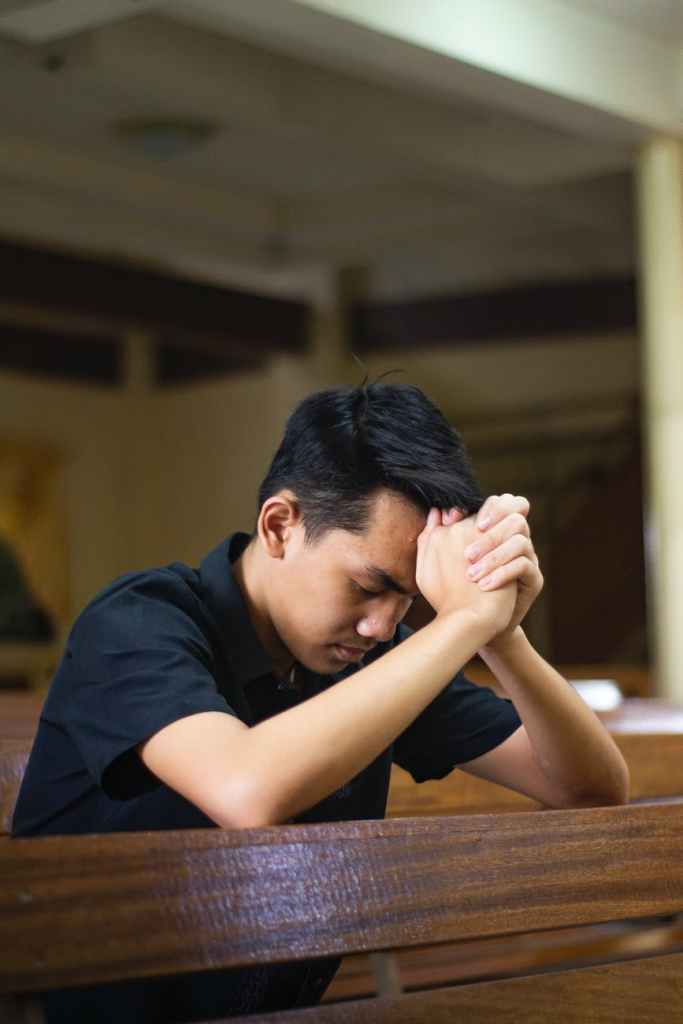
The Bible is full of examples of prayer– long prayers, elegant prayers, short prayers, confident prayers, even arrogant and angry prayers. Much has been written about praying boldly and with confidence. But I want to say just a few words about timid prayers.
Sometimes, our awe of God is so powerful, and our awareness of our own shortcomings so deep, that it makes us pause. We “know” that God hears us; we “know” that God has made it possible to approach Him with assurance in His Love and Grace. But what we “know” and what we “feel” don’t always align. Sometimes this may make us “feel” as though our prayers are lesser, somehow– that God may still listen to our prayers, but will count them as less worthy or that they will be less effective.
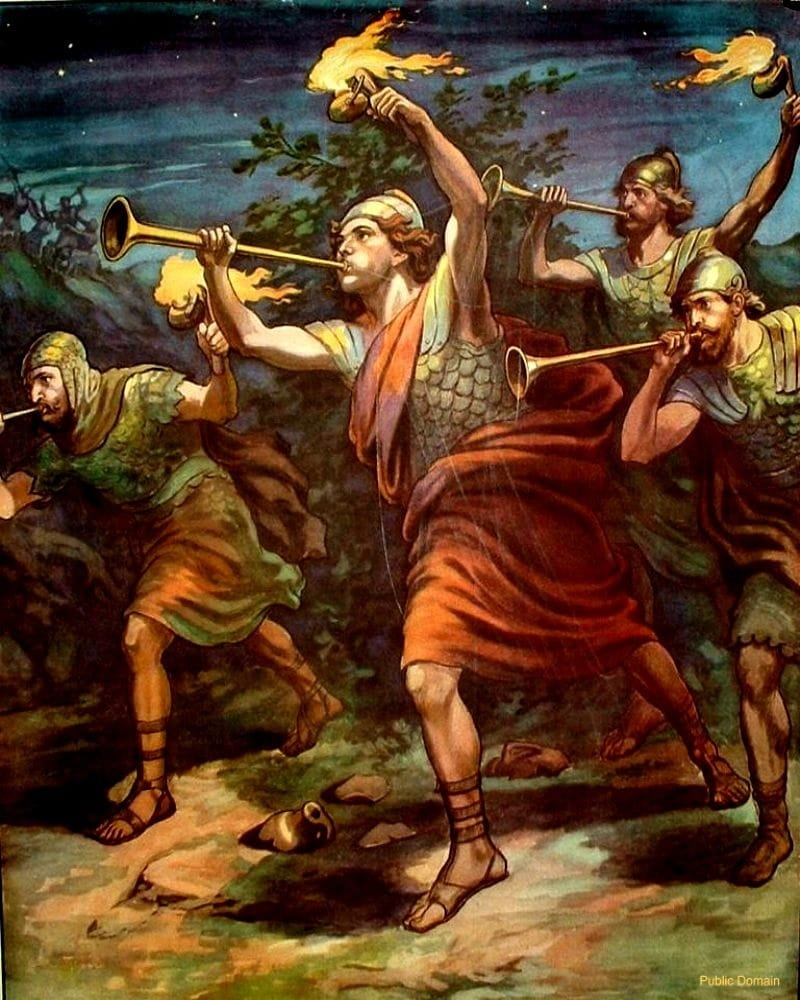
God listens to the spectrum of our prayers–including those when we are timid and fearful, confused and anxious, even those for which there are no words (see Romans 8:26)! Gideon (see Judges 6-8) was timid and reluctant; and yet he prayed for God’s help to strengthen his resolve. He ended up defeating a mighty army with just 300 men, and was listed in Hebrews 11 as one of the heroes of Faith. David’s psalms and prayers include many that are timid and questioning, yet God described King David as a man after His own heart. Even Moses doubted his abilities and prayed that God would send someone else to speak to Pharaoh. God answered Moses’s request, sending Aaron to help, but it was through Moses that God delivered an entire nation!
Sometimes, our timidity can be traced to our doubts or fears. Sometimes, it can be traced to guilt or shame. There are many reasons why we may “feel” timid, frightened, or unworthy to come before a Holy God, to ask for His help or guidance when we feel inadequate, or to admit that we have failed. But we must remember that NOTHING can separate us from God’s Love or from the privilege of praying to Him. A timid heart is not always a humble heart, but a humble heart is often a timid heart. And God promises to give grace to the humble (James 4:6).
We should rejoice with those who pray boldly (and not arrogantly). But never despise the lowly and timid prayer. After all, what makes prayer effective and powerful is not who is doing the praying or what words we use, or even how we feel– it is to WHOM we pray that makes all the difference.
I used to work in a public library. I was the Youth Services Librarian, which meant that most of my time was spent working on building up the collection of children’s books, planning and presenting programming and story times, and going into schools to do book talks and promote library offerings. But I also spent time at the reference desks– both in the Children’s Area and the Adult Services area– and some of my time was spent finding answers to a wide range of questions:
Does the library have books or articles about Okapis (for a 4th grade report)?
Do you carry tax forms for my out-of-state business?
What are the school colors for _______ college (a small community college in Nebraska)?
Do you have a picture of the Egyptian queen Hatshepsut?
What is the title of a children’s book that featured muskrats making chicken soup?
My great-aunt left me a set of dishes and I want to know if they’re worth anything.
Some questions were easy to answer. Some required a little research within the library’s resources. Some were next to impossible and required hours of searching databases, or calling on expert help. Searching a database can be tricky. You need to find solid key words and search terms. For instance, our computer catalog did not recognize the the search term “cooking” or “cookbook.” You had to use the term “cookery” to get the best results. You could also use “cook***” to force the algorithm to look at all words that contained the letters c-o-o-k and any other letters that followed, such as cooks, cookies, cookery, etc. (Many library databases have since been updated, so searches will automatically redirect or refine common terms like this.)
Databases and search engines are amazing things, but they have limitations. They will only search for what you type in, and they will only search in the way they are programmed to do so. Computers (currently) “think” laterally–they do not make leaps of imagination, nor do they second-guess what you might have meant to ask but didn’t. If I want to know about pemmican, but I misspell it, the search engine may not find what I’m looking for.
That’s where algorithms come in. If I misspell pemmican by leaving out the second “m”, the algorithm will look for words close to what I typed, based on thousands of other inquiries. It may ask if I meant to search for pelican, instead. Or it may ask if I want pemmican. But if my spelling is really bad, or if the word I type in is actually another word, the search engine may miss my real inquiry altogether, and send me on a fruitless search. If I’m searching for a children’s book with muskrats and chicken soup, and the search engine doesn’t find both terms in a description, the algorithm will usually stick with the first term, and give me a list of children’s books with muskrats. Hopefully one of them also includes chicken soup… If I type the key words in reverse, I will get a list of children’s books with chicken soup…hopefully one of them includes muskrat characters! And algorithms can be skewed by advertisers or other interest groups that pay to have their information appear more often or first whenever certain search terms are entered.
When people request prayer, they are usually focused on what they perceive as their greatest need. They are searching for an answer; a solution to a specific problem or situation. “Pray for complete healing.” “Pray that my son/daughter will…” “Pray that I get this job.” And it is tempting to pray very specifically. This is not wrong. But sometimes, it limits how we see prayer and how we look at God’s answers. The opposite is also true. Sometimes, we pray so broadly, that we may not see God’s answer for what it is. Sometimes, we pray, hoping to change some sort of algorithm and get to the “top of the list” or get the “right” answer. This is not what prayer is about…we know this, but sometimes, our wants blind us to what we are actually asking (or asking others to ask for).
So what are some of the key words we can use in our prayer requests and prayers? Jesus gives us a fantastic blueprint in The Lord’s Prayer (Matthew 6:9-13):
“Our Father”–remembering to whom we are praying is vital. We are not praying to a distant, absent-minded, shadowy figure; He is our Father. He knows what is necessary, and what is best.
“Who art in Heaven”–God is Omnipotent. There is nothing we can ask or imagine that is too big, too difficult, or too much to ask. That doesn’t mean that God will give us whatever we want, whenever we want it, but it does mean that God is not limited by the same things that limit us!
“Hallowed by Thy Name.”–God is not our “genie in a bottle.” He doesn’t work for us, or at our command. God is sovereign; He commands the Universe. And even though He makes Himself known and wants a relationship with us, He is not like anyone else–He ALONE is GOD. When His answers seem “wrong,” or don’t make sense, it isn’t because He didn’t hear us, or because He doesn’t love us, but His ways are not our ways (Isaiah 55:8-9).
“Thy Kingdom come, Thy will be done on Earth as it is in Heaven”–There are a lot of “good” things that are NOT part of God’s best will for us. There are a lot of difficult and painful things that God can use for our good. He wants to hear the cry of our heart–“I want to be healed.” But He also wants to hear our willingness to accept that healing may not be immediate or easy.
“Give us this day our daily bread”– It is not “wrong” to pray for things in the future, or to pray for “big” or complex things, but our dependence on Him is shown best when we acknowledge our everyday basic needs are met by Him.
“And forgive us our debts as we forgive our debtors, And lead us not into temptation, but deliver us from evil”–Don’t be fooled. God will not ignore our hidden resentments, hatred, disdain, rebellion, and unforgiveness. Our requests can be sidelined by holding on to grudges and harboring secret doubts about God’s essential fairness, as well as hanging on to sinful habits.
God doesn’t need algorithms or special prayer “search terms”. We can come to Him with our requests, and He knows precisely what we want and what we need. But we will learn more about ourselves and about who God truly is when we refine our hearts and our prayer life.
Prayer is both simple and complex. Anyone can pray. There is no single correct “formula” for prayer. God is always listening and hears the prayers of those who sincerely seek Him. I can pray to God in formal words, songs, groans, and scattered thoughts.
But there are times when I don’t know how to pray. More precisely, I don’t know WHAT to pray. When someone is diagnosed with cancer, or a chronic illness, my first instinct is to pray for healing– immediate and total healing. When I hear of a mass shooting, or a blatant injustice, or a natural disaster, I want to pray for all the pain and loss and evil to disappear or be reversed. I want all those things that I know to be “good”– health, happiness, healing, hope, unity, righteousness, and wholeness.
Still, God’s ways are not my ways. God’s “goodness” is not measured in comfort and quick resolutions. I may not understand the goodness of struggle and pain in the short term. I think of disaster as total and irredeemable, and my prayers often come out of my own short-sighted thinking and my own discomfort at the realization of others’ (and my own) weakness and mortality.
There are a few Biblical principles that I find very helpful when I don’t know “how” to pray:
God knows –REALLY KNOWS– all my inner thoughts and feelings. Even more, He KNOWS what will happen, what should happen, and what is best in every situation. I can pour out my desire to see my friend restored to health, or a community re-united in hope, knowing that God is a God of healing and restoration; but also knowing that God’s timing and purposes may involve temporary suffering–even for those I love. Moreover, God knows why I am confused. He knows why I struggle to know how to pray. He doesn’t ask me to always know the “right” answer– He does ask that I trust Him to know and act in His sovereign strength and wisdom. No matter the circumstances, God is still on His throne. And I am not!
Jesus gave us simple but powerful examples of “how” to pray. In “The Lord’s Prayer,” He prayed for simple, personal things– daily bread, forgiveness, guidance–as well as big and overarching things–“Thy kingdom come, Thy will be done..” His trust in the Father’s ability to accomplish all things was absolute, and His relationship was firmly established– “Father…Hallowed by Thy Name.” In the garden, Jesus was clearly suffering, and asked that the “cup” of suffering– the torture of the cross and the inconceivable horror of being rejected as He bore our sins and carried them through death and the grave– be removed. Yet, He submitted His desire, His fears, His anguish, to His Father– “Not My will, but Thine..”
There are other wonderful examples throughout the Psalms, the Gospels, the Epistles, and hundreds of years of Church leaders and saints: their prayers can teach us, encourage us, and embolden us.
Jesus promised that we would have an advocate–the Holy Spirit– who would intercede for us. When we don’t know how or what to pray, the Apostle Paul says that the Spirit makes intercession for us with “groanings which cannot be uttered.” (Romans 8:26 KJV). The Spirit also speaks to our own spirit to help us understand more clearly God’s ways and plans.
I may not always know how to pray, or what to pray. But I can be confident that God hears my prayers. I can come before Him with the assurance that my prayers– and all my thoughts and emotions–are precious to Him because I am His child, redeemed by His sacrifice. My heart may not know all things, but as He continues faithfully completing the work He began in me (Philippians 1:6), my prayers will come more fully into alignment with His will.
When I get the time, I’ll kneel down and pour out my heart. When I get the time, I’ll lift up my hands in worship. When I get the time, I’ll really dig in to God’s Word. When I get the time…
But first:
I have to find the time to read that new novel, Make another batch of cookies, Call my friend, Look at my Facebook feed, Watch the news, Do a couple of crossword puzzles, And write my blog about prayer…
Lord, forgive me for putting you first in print, but not in deed. Thank you that you offer me a chance to use my time more wisely. Thank you for the opportunities to spend time with you– and with those you love so much. Help me to count my days (Psalm 90:12), that I may apply my heart to wisdom, and not just busy-ness.
I have never been to Bahrain. I know very little about Bahrain. All I know is that it is a small country in the Middle East, located on a series of islands in the Persian Gulf. But I prayed for Bahrain the other day. It’s on my prayer calendar/journal. Every day of the year, I have a nation, city, or geographic region (desert, ocean, continent) to pray for. It’s somewhat random, and personal–many of the “cities” are really local small towns or places close to my heart–and it doesn’t make my prayers virtuous or important. My prayers can’t “save” the world, or any corner of it, from natural disaster or political corruption, disease, or any other malady common to our fallen world. So why do it?
First, because God loves and cares about the whole world. It’s easy for me to focus on my surrounding community; my state; my country. I know the people and language and culture here. But there is nothing exclusive about God’s love. Throughout the Bible, it is clear that our God is a global God. Sure, God “chose” Abraham and the nation of Israel to display His Holiness. But He also raised up other nations and leaders– Pharaoh, Nebuchadnezzar, the Queen of Sheba, Caesar Augustus–and sent prophetic warnings to Babylon, Edom, Assyria, Egypt, and many other nations who neither knew Him nor worshipped Him. I don’t know enough to know how many of the people of Bahrain are Christians, Muslims, Atheists, or any other religion. I don’t know how many of them are suffering from depression, domestic abuse, or disease. But I know that God knows– and cares. Even though I am praying “blind,” I am making an effort to “see” God’s heart for others.
Second, as I pray for various nations, I become more interested in them. I learn more about them. I recognize them when they are mentioned in the news, or when I hear about people who live or visit there. Again, this doesn’t make me a better person, or my prayers better than anyone else’s–but it helps me be a more informed (and hopefully more compassionate) person than I was yesterday or last year.
Praying for others reminds me of two important truths: I am very small in the scheme of things– one of more than 8 billion people on the planet! I cannot know them all; I cannot care for them all or influence them, or change their situations. But God can! I serve a God who not only knows all 8 billion individuals; He knows their thoughts, their pasts and their futures–He even knows the number of hairs on each head! The second truth that arises from that is that, small as I am, I am known by God. He cares about ME, just as He cares about each person that breathes. HE can change the small circumstances of my life, and the lives of those I know and love; AND He can raise up kingdoms and break down empires!
Pursuing prayer is about following God. Part of that is learning discipline. God isn’t “grading” me on whether or not I pray for Bahrain, or Belarus, or Boston, or the tiny local town of Baroda. He isn’t going to turn His back on me if I don’t pray for any of these places. And He won’t love me more if I do. But I will get better insight into His character as I learn to pray faithfully, consistently, and compassionately for others– wherever they are.
I’ve written a number of times about my prayer journal. In it, I pray for individuals and individual requests, as well as praying for communities and regions each day of the year. I also use what I call “Prayer Points” for each day of the week. These are broad topics– The Church, Family and Friends, Government and Politics, Community and Services, Global Health (Healthcare, Diseases, Ecology, etc.), Business and Economy, and Cultural Issues. Often, these broad topics will lend themselves to specific needs or requests (which may overlap items in my prayer journal), but there are also times when the topics seem generic and almost overly broad. I use them anyway.
It isn’t because I have any influence over such broad categories– but because God does! And I need to be reminded of that every day. God loves to hear our specific requests– heart cries and urgent needs–even bad hair days and misplaced keys. But He also loves to hear us acknowledge that “all the world” belongs to Him; that He is sovereign over our nations, our culture, His Church, our families, etc. He has authority over world economies, including all the factors we worry about– drought and famine, production, distribution, wealth (or lack thereof). He has the power to overthrow corrupt governments and bring justice. He has the power to defeat disease, and restore forests and rivers; to meet our financial needs, and to save marriages.
Moreover, He knows best in all these situations– even when I know next to nothing! My efforts to change society or fix the planet will be puny, and based on my limited knowledge and experience. Even my outlook on my own small community is limited– I don’t know all the individual people, organizations, or companies that make up my small town. I trust that God, however, knows each teacher, garbage collector, city worker, police officer, fire fighter, mail carrier, nurse’s aid, day care provider, physical therapist, food service worker, accountant, paralegal, banker, and shopkeeper (and all the other valuable members of my community)– AND He knows the number of hairs on each of their heads! It revolutionizes the way I think and the way I pray each day.
Imagine what can happen when we pray this way collectively! Imagine the way it can change our outlook, and our actions. I can be saddened by the state of our culture or the breakdown of families. But I have a Mighty Father who has both the wisdom and the power to redeem them! I know I can trust God with everything– large and small. But it is easy to take that for granted, or to “know” it only in the abstract. Keeping prayer points where I can see them and use them daily helps me to live out the truth that I already know.
So this morning, instead of worrying about our business or the larger economy, I will lift them up into the arms of One who can really make a difference! And I will pray for smaller and more personal requests– those in the hospital or grieving a recent loss; those who are discouraged; those who are celebrating birthdays or anniversaries, promotions or new opportunities; those who are lost, and those who have misplaced their keys (again).
Have you ever been part of something– some project or task– SO monumental and far-reaching that you wonder whether your efforts made any difference? Did you end up with “grunt” work– a seemingly insignificant part of the larger project that left you with lots of questions and very few (or no) answers? Something so tiny that most people would never even know if you did it?
A couple of years ago, I took a temporary job as an enumerator for the U.S. Census Bureau. I was part of a vast team of workers who conducted “follow-up” visits, mostly to addresses that had not responded by April 1. I was excited, and a bit apprehensive; after all, the Census is a pretty big deal. These names and numbers will be part of our nation’s collective history. As someone who loves doing genealogy, the Census is invaluable for discovering information about my family history– names, ages, locations, occupations, origins and ethnicities, and so much more can be learned from Census records.
However, I soon discovered that most of my job consisted of traveling to out-of-the-way locations, and knocking on the doors of empty houses, or trying to find addresses that no longer existed. “Non-response follow-up” usually involves checking on rentals, second homes, vacation homes, and homes that have been vacated, condemned, or even demolished in the years since the previous census. It is a lonely and often frustrating exercise in trying to find what “isn’t,” rather than counting what “is.” Each day, I was given a new list of locations (including some I had already visited without success). But I was commissioned by the U.S. Government to trace each address on that list to the best of my ability, and, wherever possible, to get information about anyone who might have been in residence at that location on April 1.
Sometimes, I was able to get an interview, and document names and ages, or correct information that had been collected earlier. But much of what I did will never be included in the final Census report for 2020. My name will not appear and I will receive no recognition for my efforts(unless as a footnote with the thousands of others who did the same thing). I did get paid for my work, for the time I spent traveling and knocking on doors. And some interviews were not just fruitless, but bordered on abusive. Homeowners were annoyed, or even outraged when I showed up. They had sent in their Census form– for their primary address! Worse yet, there were some times when I showed up after ANOTHER enumerator had come– I had been sent to follow-up on the follow-up! But I was under strict orders about where to go, when to go, what to say (or not say), how to report on each interview (or non-interview). I was under a commission. I took an oath, and I followed orders, just like being commissioned in the military. Looking back, I feel good about the experience. I served my country, and I learned a great deal about the local geography, AND about human nature. For every cranky homeowner, there were others who were friendly and helpful. At the time, though, I often felt drained and dazed at the end of a shift.
As Christians, we are also commissioned. We are to go into all the world and preach the gospel, making disciples of every nation, teaching and baptizing, and being witnesses for Christ. (Matthew 28:16-20/Mark 16:15-18, etc.) Our commission is not to force everyone around us to become Christians, or to demand that they respect us or our message (that is the work of the Holy Spirit– our job is to go and to be witnesses, disciple-makers, teachers, encouragers, and helpers). And part of our commission is to pray–fervently and consistently– to pray for our nation and its government officials (1 Timothy 2: 1-2); to pray for believers around the world, especially for those under persecution (Hebrews 13:3), to pray for those who persecute, ridicule, or despise us (Luke 6:28; Matthew 5:44), to pray for, and interact with grace toward, those who have rejected Christ (Colossians 4:5-6), to pray for the healing and restoration of others (James 5:13-20).
At times, we may not feel like praying for certain people or situations. We may not understand why God allows for corruption in our government or for neighbors to mock our faith or treat us unfairly. We may not understand why some of our prayers seem to be more about what “isn’t” that about what is. We may not understand why God sends us, where God sends us, or when God sends us to go, to act, and to pray. But God IS listening. He knows our every thought, and He sees every need– not just our needs, but the broader needs of our community and our world. May we be faithful with the commission we have been given. It’s a much bigger deal than any Census!
Pursing prayer sometimes leads to taking prayer for granted. Prayer becomes a habit; a daily activity; even a task to check off the list. But prayer is so much more. Prayer is a lifeline; a divine mystery. I can’t explain how prayer “works.” But I know from experience that it transcends the words I speak and the emotions I feel as I pray. I’m not praying to “a higher power” or an abstract “spiritual being.” I pray to the One who created me, and the One who loves me more than I can even comprehend.
More than that, I am praying to the One who oversees the universe, and all the inhabitants thereof. There is something powerful and mysterious about prayer. I was reminded of that just recently, when I asked for prayer for my mother, who fell and injured herself. She is 88 years old, and very frail. She is also beloved by many in her family and community. Within minutes of posting a very general request for prayer, several dozen people had responded– some with a simple message of “praying” or “sending prayers.” The next day, I was more specific, and again, dozens of people responded within minutes– “praying for your mother,” “prayers for healing,” etc.. Suddenly my prayers became more confident and hopeful. And I was reminded of all the prayers I lift up each day–those “daily prayers” that sometimes seem like little tasks. They are unique, personal, and important– not just to me, but to many others.
I shared recently about praying for others’ requests. This is also a privilege. In a mysterious and divine way, when we pray for others we join in God’s work of bringing hope, healing, and love to others. I can pray for others (and they can pray for me) regardless of where I am, or what my situation may be. I cannot always DO something, or BE somewhere. I can always pray. And where I can act, prayer often sharpens and directs my actions to be more effective.
If you’ve ever tried to help in the aftermath of a disaster (as a member of the general public and not an emergency worker or someone deployed to help), you know it can be frustrating. If you’ve ever been caught in a disaster zone, you know it can be frightening AND frustrating. People do their best to help and offer hope, but in times of chaos and lack of communication, people can be left behind and resources can be misdirected or spoiled before they can get to those who need them most. Prayer never gets misdirected. It never goes unanswered or forgotten; it is never a wasted effort. God is faithful. His ways may be difficult for us to understand, but they are not warped, doomed, or limited in any way.
There is great comfort in that reality. Sometimes, we just need to be reminded of how powerful and necessary our prayers are. God loves to hear them. He loves to answer them. He loves to use them for His glory and our wholeness. What a privilege to carry EVERYTHING to God in prayer!
The same applies to praying for someone. I know many people who ask for prayer almost daily –often for the same “little” problems or complaints. The selfish, human part of me sometimes wants to judge what is “worthy” of my prayer, and what is not. But this is not for me to judge. Other people are too proud to ask for prayer. That does not make them better or stronger people, or less “needy” of my prayers. I need to be willing to pray for everyone as I have the opportunity: that includes when they request my prayers (over and over) or when they refuse to share their needs at all. Someone who is struggling with ongoing issues needs my compassion and wisdom, not my judgment. Someone who resents my prayers needs my compassion and wisdom, too. We are to pray without ceasing, not just when we think it is “worth” doing. (see 1 Thessalonians 5:17)
There is a caveat here. My prayer life should not be determined by others’ expectations. I should gladly pray for the person who asks; however, I should NOT let someone else determine how or what I should pray. In other words, if someone is asking me to pray for “healing,” I will gladly lift up their situation and leave it in God’s hands. I will ask God to heal that person according to His will and in His timing. If they are asking me to pray for total instant healing, I will still pray, but I won’t demand of God what is not His will to do. If they are asking me to pray that they win the lottery because they gambled away their rent money, or avoid prosecution for a crime they committed, I will not pray for things that so clearly contradict God’s will. If someone else is telling me not to pray for them, I will not promise NOT to pray at all, but I will not insist that they listen in; nor will I pray that God “fix” them as I would like. I will pray for their safety, healing, well-being, etc.– again, according to God’s will and timing. Some people are afraid that I will pray for them to be saved against their will. Some people think that because I pursue prayer as a lifestyle, that I have an “in” with God– that He will do what I ask, when I ask, because it is me asking. That is not how God, or prayer, operates. I have seen God do miracles, but I have also asked Him for healing that never came in this lifetime, or for things that turned out very differently than I expected. And I have prayed for the salvation of others, but I don’t have the power or authority to change their will or pierce their conscience– that is the work of the Holy Spirit.
Sometimes, it is difficult to keep praying for the same stubborn person, or the same unresolved situation. When God doesn’t answer us how or when we expect, it can seem as though He isn’t listening, doesn’t care, or even taunts us with silence and frustration. It can be tempting to give up– to think that our prayers are “not working.” But, once again, that is not how God, or prayer, “work.” Often, while we are staring at the situation that doesn’t seem to change, we miss seeing the changes happening in other areas of our life, or the obstacles that are being cleared from our path going forward. This is true of prayers we lift up for others, as it is for ourselves. We continue praying anyway. Sometimes, prayer changes our outlook– sometimes prayer even ends up changing how we pray! Prayer isn’t about getting what we want; it’s about getting closer to the heart of God!
So, if we are willing, we can keep praying–seventy-seven days in a row! Even 490 days! Not because God is counting the days or keeping score of our faithfulness, but because we know that God is faithful in ways we cannot see with out limited vision, or know with our limited understanding.
Christmas Eve–people around the world will be celebrating the birth of Jesus Christ. Some will meet for evening and midnight candlelight services tonight. Others will begin celebrating tomorrow morning. Some will celebrate with great solemnity; others with great festivity; some, like the monks chorus above, with laughter and frivolity. Even amid continuing pandemic travel and gathering restrictions, families and individuals will celebrate with music, gift-giving, phone calls, small gatherings, reading Bible passages about Jesus’ birth, feasting, sharing memories, and praying. There are only a few occasions throughout the year that can be said to be nearly universal, but Christmas comes close. Even where it is not celebrated as a cultural phenomenon, complete with tinsel and trees, lights and decorations, it is celebrated by the faithful who thrill with joy at the reminder that God Himself chose to come live with people He created– that He came to share in their day-to-day triumphs and struggles; so much so that He chose to share in our fate: Death. GOD cried out in hunger. GOD shivered with cold, and felt exhaustion. GOD suffered shame and misunderstanding and abandonment. GOD felt agony and struggled to breathe as blood and sweat ran down His brow and into His eyes. And by His coming, and suffering, and dying, HE brought us life and hope, eternal joy and peace! It is the very greatest reason to celebrate– bigger than national holidays or seasonal festivals; bigger than cultural differences and vast distances; bigger than mere tradition or historical remembrance.
For many, this Christmas will be bittersweet– we have suffered greatly; some of us are still reeling from loss and grief. Others are living with fear and confusion about the future. In many ways, our situation is not so different from that first Christmas in Bethlehem. We feel “taxed” by events and circumstances. The world seems dark and dreary and cold. More than ever, we need to listen for the song of the Angels– for “good news of great joy, which shall be to all people.”
And, maybe more than ever in our lifetime, we need to be like the shepherds–eager to seek out the gift of the newborn Savior; Eager to embrace the wonder of Emmanuel; eager to share the hope we find at the manger. Hallelujah! Unto US a child is given; unto US a son is born! (Isaiah 9:6)
I’ve been writing a lot about Advent and Christmas lately, rather than focusing on Pursuing Prayer. But they are part of the same whole. I pursue a life of prayer precisely because Jesus came in the flesh and lived and died and rose again. I believe in the power of prayer because Jesus modeled how to pray– even as He faced betrayal and death. I believe in the gift of prayer because Jesus prayed for me long before I was ever born (see John 17). I pursue prayer with confidence because Jesus keeps His promises.