I’m really sick of hearing about shoes in the news lately. But, surprisingly, I think it’s time for a brief word about shoes— from a Biblical perspective.
The Bible has a lot more to say about shoes than most of us realize. Way back in Exodus, when God called Moses from the burning bush, He commanded Moses to take off his shoes. Later, in Deuteronomy, the Israelites are reminded that during their years of wandering, their shoes did not wear out– God took care of even the smallest and lowliest of details in providing for their needs in the wilderness.
Boaz secured the right to marry Ruth through an old ritual involving an exchange of sandals. The prophets used shoes to indicate the coming exile, and the need for people to be prepared to leave their homeland.
In the New Testament, John the Baptist declares Jesus’ superiority by saying that he (John) is not worthy to latch Jesus’ shoes! And the Apostle Paul includes shoes (or sandals or boots) in his list of spiritual armor, asking us to wear on our feet the readiness of the gospel of peace (Ephesians 6:15). A Christian’s shoes are to be used to bring good news and peace– not anger, protests, and divisiveness.
Shoes are meant to serve a useful purpose. They protect our feet from surfaces that are hot, cold, wet, dusty, or rough. They provide traction, allowing us to start and stop moving on pavement, gravel, rocks, and flooring. Some shoes even provide arch support so we may stand and walk for hours with minimum damage to our bones and nerves. Shoes allow us to walk farther, run faster and with more confidence, and stand firm.
The most ridiculous thing about all the fighting over a shoe’s ad campaign is that it’s not about the SHOE–and no one is entirely clear on what it IS about– is it about race, police, injustice, patriotism, lack of patriotism, residual guilt over slavery, respect (or lack of respect) for military and/or rescue personnel, the NFL, Black Pride, White Privilege, income inequality, all of the above, something entirely different? Mostly, it seems to be about anger, hurt feelings, hatred, and generic outrage.
Lord, from my head to my toes, I want to bring peace, hope, and love to this world in YOUR NAME. Help me not to be blinded or distracted by all the world’s empty substitutes. Let me wear the shoes that make my feet ready to bring your gospel of peace and reconciliation to others. May I walk and run and climb and stand in Christ’s name and for His sake. Amen.
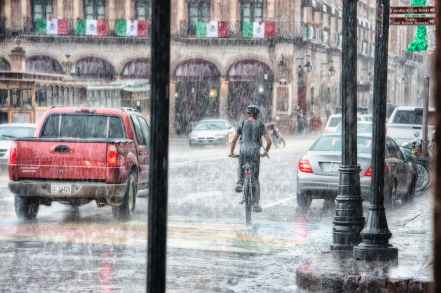
We’ve had a lot of rain lately– torrential bursts that turn our street into a river for a few minutes, before running into the sewer drains. In that time, many small objects come floating by our apartment– fallen leaves, pebbles, cigarette butts, discarded plastic spoons, candy wrappers, etc. The swift waters propel them from wherever they had been– someone’s drive, the alley, the parking lot–past houses and stores and toward the drains. Some of them end up clogging a drain, forming a small pile of trash where there was none before.
The opposite scenario is happening along several coastal areas, where debris is washing up from the ocean and landing on beaches, clogging up deltas and salt marches and having a terrible impact on the environment.
Flotsam and jetsam–the terms come up occasionally in literature or movies. There are characters in Disney’s “The Little Mermaid” with those names. There is a chapter in Tolkein’s “Lord of the Rings” Trilogy (the ninth chapter of the first book of The Two Towers, for purists) titled “Flotsam and Jetsam”. There is even a band by that name. They are almost always used in tandem, and most people use them interchangeably.
But there is a difference. Flotsam is considered debris that ends up in the water by accident, as in the case of a shipwreck. Jetsam is something deliberately thrown overboard or “jettisoned”. Legally, flotsam can be reclaimed by its original owner, while jetsam can by claimed by anyone who finds it. more about flotsam and jetsam from NOAA.
Most of what I’ve seen floating by this week is neither flotsam nor jetsam– it’s merely garbage. And that is what is causing so many problems along the coastlines, as well. Our lands and oceans (and our lives, too) can easily get overrun by waste and packaging and excess. We fill our lives with things that do not have any good purpose, and even if we dispose of them, they can come back to haunt us or hurt others down the road (or on another coast).
Today, I want to pray that God would continue to teach me to find my satisfaction in Him, and to watch out for spiritual flotsam and jetsam:
Flotsam– those things, people, habits, beliefs, promises, warnings, etc. that get washed overboard or lost along the way. May God reclaim relationships, help me relearn good habits, and restore joy in my salvation (Psalm 51:12)
Jetsam– those things I need to jettison–bad relationships, bad habits, faulty thinking, pride, clutter, etc. In His power, and with His help, I need to cast such things aside, or better yet, put them to death and bury them, never again to be reclaimed.
17 As iron sharpens iron, so a friend sharpens a friend.
I’m not really sure why this single verse, this single idea, has been rattling around in my mind lately, but I’ve taken a week off from doing the blog, trying to regroup and refocus, and yet this is the phrase that keeps coming back. So here’s what I’ve been thinking:
Iron –God uses a lot of imagery, analogy, parable, and metaphor throughout the Bible. What does this image suggest? Iron is hard. Iron is used for tools and (in Bible times) weapons. Iron is strong. Iron is forged in the fire. Iron being sharpened can bring out sparks. Iron crafted by a master blacksmith can be forged, shaped, smoothed, hardened, and, yes, sharpened.
God calls us to be useful– light, salt, vessels, iron, hands–we have purpose; we have work to do during our time on earth. Sometimes, that work calls for us to be steadfast, immovable– like iron. But iron that is not being used can become brittle, or rusty, and lose its edge.
“Iron sharpens iron“– We don’t always use iron to sharpen iron– sometimes we use honing stones or grinding wheels or even strops. But we don’t use cheese to sharpen iron– it won’t work. We don’t sharpen it with paper or “positive energy” or a block of wood. How are we staying “sharp”? Do I make an effort to sharpen my skills, my knowledge, my service, my body, mind, and spirit? Am I using the right method and materials to stay sharp?
Who or what do I turn to when I want sharpening? Do I have friends who keep me accountable (and vice versa)? Do I even WANT to stay sharpened and ready for service? Or do I serve without guarding my edge until it becomes dull and useless?
Iron sharpens iron– but not always. Sometimes iron blunts iron. Sometimes it cuts away at it. Sharpening is not accomplished by just banging pieces of iron together randomly. There are circumstances, habits, people, or activities that try to chip away at my surface, that try to crush or bend or destroy. There are others that are not made of iron; they cannot help me stay strong and sharp. I need to be deliberate and careful about what and who I include in the sharpening process. I also need to be as deliberate and as careful about who I “sharpen”. We are here to live, and work, and build relationships together. But I need to learn when and how to “sharpen” others in my life. Otherwise, I can cause great damage to others and to my own soul.
What can I do to keep sharpened and help others stay sharp?
Pray. I don’t have answers, I don’t have the power to stay sharp on my own. But God is the one who can give us wisdom, power, and send us all we need (2 Peter 1:3) Also, seek out a prayer partner or prayer group.
Get involved in Bible Study– seek out a Bible Study group or an on-line resource where you can ask questions, have meaningful discussions, and share insights.
Seek out “iron” friends– friends who will hold you accountable, who will offer support, but also share their own struggles. We all have friends who fill one or the other of these roles, but seek out friends who are not merely takers or givers, but true brothers and sisters in the faith.
Don’t run away from challenges, “tough” questions, and earnest discussions–that doesn’t mean that we need to get pulled into senseless arguments, either; but we are disciples— that’s the same root word as discipline! We need to come out of our comfortable corners and exercise our faith.
In “Pursuing Prayer”, I want to explore ways to develop my prayers; to become “better” at praying– more confident, more Christlike. But along the way, I have found that “better” doesn’t always mean what I think it ought to mean. Sometimes, becoming “better” requires becoming broken.
I don’t like being broken. I don’t want to be shattered, ruined, like a broken vase. I don’t want to pray like a broken record– sending up the same failures, the same weaknesses, the same painful memories. I don’t want to be pinched, and cracked, and mangled. I don’t want to be stretched and molded and squeezed. I want to have comforting chats with God, not drawn-out confessions, or rebukes, or unanswered questions.
It is tempting to avoid brokenness–cover it up, pretend, deny, ignore its existence. I don’t want to bring God my questions, my fears, my hurts. I don’t want to open up the dark places of my soul. I want to wear a smile and make small talk with God–“How are you today?” “Just lovely, Father, and how are you?” “Fine weather we’re having.” “Yes, thank you for the breezes yesterday. And could I just put in a plug for my neighbor’s gall bladder surgery? I told her I would pray for her, so could you just give her a speedy healing? That’d be great. Well, gotta run. Talk to you soon…Oh, and I’m sorry for the way I blew up at the kids the other day. I don’t know WHAT got into me. You know I’m just not that way, right? So I’m just asking for grace to kinda cover that up and make it ok again. Thanks.”
God is not fooled. God is not impressed or amused at our shallow righteousness. He’s not impressed or overcome by our brokenness, either. But He wants it, anyway. He wants all of it. Because He wants to build honesty, intimacy, and most of all, restoration. God doesn’t want us to wallow in our failures, any more than He wants us to gloat in our false perfection. He wants to break the bondage they have over us. He doesn’t get tired of hearing our voices, even in guilt or shame, rage or despair…if they are raised to Him. He doesn’t want us to stay shattered and ruined. But He needs us to be redirected, refreshed, rebuilt, rekindled, and renewed.
There are many things that need to be “broken” to become better– we “break” in shoes, we “break” ground to create a new field or prepare for a new building. We “break bread” to eat it and share it with others. We “break” horses in order to prepare them to run or work more effectively. We “break” bad habits. We even “break” the ice in a new friendship. The point is not to stay broken, but to “break through” whatever is keeping us oppressed and held down.
When I am feeling broken, and I cry out to God, He doesn’t deny my brokenness; He doesn’t turn away in disgust; He doesn’t stick a hasty bandage on my wounds. God acknowledges my pain, He listens to my questions. He loves me enough to come and stay with me through the worst moments–even when others have gone; even when I deny His presence and turn my face to the wall–and He begins the process of turning even those scars and cracks and tears into treasures.
Brokenness is inevitable in our fallen and broken world– God is not out to break us; people and time, circumstances, and even our own good intentions will cause us to fall and fail–am I willing to uncover my brokenness and need, and allow God to reshape my shattered dreams?
Farm animals on display everywhere– pigs, chickens, cows, horses, ducks, geese, turkeys, goats, sheep, rabbits, pigeons, cats, a burro, an emu, and probably more that I missed–perhaps a mule or an alpaca!
Youth competitions for animal showmanship, arts and crafts, etc.
A quilting competition
Commercial and community booths featuring local businesses, churches, political groups, schools, and services
Tractor pulls, horse pulls, Motocross, a Demolition Derby, and a Monster Truck show
Free live entertainment venues
Antique and new tractors on display
People– lots of people…some of them who live in the area, and some who visit from neighboring counties and states.
What does the County Fair have to do with prayer? I suppose for some, there is no connection. For me, there are two ways prayer goes hand in hand with the County Fair:
The local Fair is a long-standing tradition, tying the community together and celebrating its heritage and hope for the future. All around the fairgrounds, there are banners and plaques honoring people who have given of their time and talent to this community– farmers, teachers, civic leaders, doctors, police officers, pastors, donors, veterinarians, business owners, parents, coaches, and helpers. In each generation, people pass on their knowledge, enthusiasm, passion, and excellence to those who will use it, expand on it, modify it, and pass it along to others. In the same way, prayer warriors of the past have inspired and led people to the knowledge and love of Christ– many of the names at the fair represent people who poured love into, and prayed for my generation. They discipled, taught, cared for, and inspired me and so many others. We don’t worship them as idols or honor them in place of God, but we honor the way God used their lives as examples for us to follow. Even those who were not Christ-followers had talents and wisdom that they shared, and God used, to help others. This is a tradition worth celebrating, remembering, and continuing.
The County Fair is a great place to see people I know but don’t always get to talk to
Classmates from school I haven’t seen in ages.
“Children” (now grown with children of their own) I used to babysit.
Former students, from when I was a schoolteacher.
Former neighbors, friends of my family, and people I knew from the church I attended as a child.
Family and extended family who still live in various parts of the county or surrounding counties.
People for whom I have been praying– because I have heard of their needs or seen an e-mail or FB post or talked to a concerned family member.
What an honor and a privilege to spend time (even a short minute or two) to catch up, encourage and be encouraged, or even share a smile or a memory! I might meet up with someone who needs a hug, a simple assurance, or even an “on the spot” prayer. I might also have the opportunity to reconnect, restore a relationship, or even meet a new friend. In addition, I see exhibits with names of people I know– people I can be praying for with joy and gratitude for all that they mean or have meant in my life.
I hope, for anyone reading this, that you can think of times or opportunities when you can connect, reconnect, or form connections with others in your community. Think of ways others have challenged, inspired, or encouraged you. Take a minute to lift them up in prayer, and, if you have the chance, to pass on (or back) some of what they have given you along the way. Imagine what even the smallest connection can do to spread God’s love to others.
Growing up, I loved going to pot-luck meals at our little country church. Neighbors, family, and friends would bring large dishes of home-cooked deliciousness for all to feast on as we chatted, laughed, and encouraged one another. There were certain dishes we all could count on–homemade yeast rolls, courtesy of Lulu M. Jello with fruit was my mom’s standard. Another lady almost always brought meat loaf. Baked beans, candied carrots, fried chicken, chocolate cake, scalloped potatoes– my mouth still waters just from the memories! The wonderful woman who has since become my mother-in-law brought her famous cookies, and often, a seven-layer salad.
I love Mom’s seven layer salad, and I have learned to make my own variation. It’s easy, it’s delicious, it’s healthful, and it travels well. I’ve seen other recipes that use different vegetables, don’t use eggs or meat or mayo–I’m sure they’re ok, but I’m happy to stick with the basic outline that follows below.
I was thinking about the seven-layer salad the other day– it’s a wonderful dish for this time of year– chilled and utilizing fresh produce, and I realized that you can use a similar “recipe” for prayer. So here’s my modified “Seven-Layer Prayer” recipe:
First, start with a layer of “Let Us”
Prayer doesn’t happen without an act of the will. We must be deliberate about setting aside time and thought for prayer every day. We should “leaf” the busyness and chaos of the day and “romaine” in fellowship with the Father!
Here’s where I like to add some “Meet” (usually bacon!, sometimes ham or chicken)
While it’s vital that we spend time in personal, private prayer, God also wants us to meet regularly with others for fellowship, mutual encouragement, accountability, PRAYER, and guidance.
Now it gets a little dicey–diced onion (sometimes I substitute green onions or sliced or diced mushrooms)
Time to peel back the layers, and cut through to the root of anything that is getting in the way of a closer walk with God–confess it and give it over to Him.
Sometimes, this process may cause tears, or involve a little dirt– clean it up before you proceed!
Time for some dressing– mayonnaise or salad dressing. Annoint your salad, and your prayer, with oil. Remember, God has annointed you to spread His love and grace to others. Don’t forget to add this to your prayer life. Just as the dressing will coat all the elements of the salad, so God’s Spirit will surround and influence your words and actions done for Him!
“Cheese!” It’s a “gouda” idea to round out prayer with a time of joyful thanksgiving. Pile it on– God’s given us a LOT for which to be “grate”-ful!
Finally, the garnish– Hard-boiled eggs. These remind me of the new life we have in Christ, the Triune nature of God (we used to have lessons in Sunday School about the egg having three parts but being a single egg. We don’t use the shell in the salad, of course, but you can’t make a boiled egg without all three parts…), and also, the yolk reminds me of Heaven’s streets of gold. In prayer, we should remember God’s faithfulness in fulfilling His promises, and the hope we have in Him.
That’s the basic recipe for a seven layer salad– enough of each ingredient for a healthy “layer”. I’ve added extra layers a couple of times–diced tomatoes or peppers are good if you are planning to eat the salad quickly, but they will cause sogginess if you let the salad sit. (Also, if you use peas, use fresh if you can– drain canned peas, or get rid of any ice crystals if using frozen peas. )
A good seven-layer prayer should also be presented fresh, and savored. It’s delicious, it’s good for you, it feeds others, and it travels well! Try some!
My husband and I are licensed amateur radio operators. This weekend, we participated in an exercise/contest known as “Field Day.” Every year for Field Day, tens of thousands of radio operators across North America spend twenty-four hours trying to make as many radio “contacts” as they can, in conditions that mimic being “in the field” or off-grid. Many groups, clubs, and even individuals will set up in camp sites, open fields, county fairgrounds, barns, sheds, and other locations. Some will use their radios on generators, batteries, solar power, or the lowest power settings available. Some will have campfires and cookouts; others will order in pizza, but all of them will be seeking to make radio contact with people from all over the continent.
To make an official “contact,” certain key elements have to be exchanged. Every licensed amateur operator has a “call sign”– a unique identification code. There is also a “report”, telling how many radio stations are being used by the group, and what kind of conditions and power supplies are being utilized. Finally, there is a section code, telling where the station is located. Most codes are similar to the two-letter state codes used for mailing letters, GA for Georgia, CT for Connecticut, BC for British Columbia. All three elements must be sent, received, and understood by both operators to qualify for a “contact”. In other words, if I am listening, and I hear an operator in Texas give his call sign, his report code and his section code, it doesn’t count unless I know he has heard my information, and he knows I have his. Only if both parties have exchanged and verified all information can the contact be “logged” and counted.
Communicating via radio is an amazing experience, even in this age of cell phones, and Skpye, and social media utilizing satellites. Knowing that your voice is being carried by the thin air and transmitted to someone across miles using simple machines that use less power than a desk fan or a microwave oven is mind-blowing. But on Field Day, it is even more miraculous to listen as thousands of voices are carried simultaneously. The radio hums and crackles with the static of ten thousand tongues all trying to get their message out–“Here I am!” “Can you hear me?” “Did you get my message?” “Where are you?” “Who are you?” Letters and numbers and codes all mingle and form a messy barrage of sound. Voices, beeps, pops, whistles, and more assault your ears, before you can tune into just one understandable voice. There is a thrill in hearing that lone voice calling out their message..they could be anyone from any number of places. You get ready to respond, and then you hear it—static of a hundred other stations trying to get through. All those radio waves carrying the hopes and messages of a hundred or a thousand others just like you, wanting to make contact; wanting to be heard and understood.
Sometimes, miraculously, you get through on your first try– you send your call sign, and the other operator repeats it back, telling you it’s ok to send the rest of your message and receive his/hers. The two of you exchange the three elements, sign off, and you can tune to another frequency and try to make another contact. Most of the time, though, you spend several minutes calling out your ID, hoping to be acknowledged, only to listen as others get to make their contact, waiting your turn. Even more frustrating, as you wait, sometimes the atmospheric conditions change and the voices all fade out into a low buzz of static– the contact opportunity is lost. Conditions may change in another minute– or an hour– or not at all. I may hear from someone in Alaska, or Vermont, but I won’t be able to count them as a contact this year.
Field Day is exciting; sometimes frustrating, sometimes exhilarating. There is a thrill to making a contact and finding out that you’re talking to someone from Alberta, Canada, or South Florida, or Rhode Island, or the San Joaquin Valley in California. It’s exciting to make a contact, and realize it’s someone you know from a neighboring county! We have a logbook program on our computer that “shades in” the various sections as you key in a contact, so our map becomes colorful as the contest period continues, and we tense up to see if we can fill in most of the sections– can we “get” Hawaii? Nova Scotia? Wyoming? South New Jersey? Will the weather and atmospheric conditions cooperate? Sometimes a series of thunderstorms or solar flares can break through or distort the radio waves and make it impossible to stay tuned in long enough to send and receive even a short message. Sometimes, you can make clear contacts with certain regions and not with others, even ones close by– one year, we got zero contacts with a neighboring state, while getting several other regions hundreds of miles away!
While Field Day is exciting, and it serves as a great way to test and practice with radio equipment in case of a nationwide or region-wide emergency, it is still just an event–a single 24-hour period of making contacts with complete strangers (in most cases) for a couple of minutes.
Prayer is a thousand times more amazing than Field Day for a number of reasons. Think about it:
God is ALWAYS listening–twenty-four hours, seven days a week, every moment, every year of our lives.
God is ALWAYS tuned in to our cries– there is no distortion, no static. He hears millions of cries simultaneously and with perfect clarity.
We don’t need a “call sign” or identity code. God knows each voice intimately..He doesn’t have to ask us to speak louder or more distinctly. He doesn’t hear an “accent” or lisp, or rasp in our voice. He doesn’t have to ask us to repeat our request three or four times because He didn’t understand us the first time.
We don’t need a section code– God knows where we are better than any GPS system every invented. We can’t hide from Him, and He isn’t surprised to find out where we are, or where we came from. He already knows where we are and where we’re going!
Our messages can be as personal and as lengthy as we want. God doesn’t need to “hurry up” to get to the next person’s request, and He wants to hear all our thoughts and needs.
Prayer is not an event or a contest– it’s not a practice run–it is an actual conversation with our Loving Father!
You don’t need a license, or a radio, an antenna, or a microphone to contact God!
We can pray for others anywhere, anytime, for any reason, and God already knows the details– where they are, what their needs are, and what is best in the long run. Just as He already knows us intimately, He knows the needs of everyone we’ve ever met– and everyone we haven’t met yet! Some groups will have made upwards of 500 contacts over the course of Field Day– God can make millions in the same moment, and not miss a single one!
God doesn’t want to make contact with us to fill a quota for a contest; He doesn’t want to hear from us because it’s thrilling to hear from someone new. He wants to have a relationship with us– filled with love and trust and hope and joy. He doesn’t just want a Field Day with us– He wants Eternity!
Yesterday was Father’s Day. Father’s Day can be very difficult for many people– in my case, it can be a reminder of how much I miss my Dad, who passed away 20 years ago. Some of my friends have had recent experience in losing a beloved father. For some, the hurt is still there after 50 years, or 70.
For others, it is a difficult day, not because they grieve the loss of a father to death, but because they grieve the absence of a loving father– an absentee father, an unknown father, an abusive father, or a distant, cold, or critical father.
At this point, I generally point to the Father who is eternally loving and faithful– Our Heavenly Father is God of the fatherless and the orphan, the God of restoration and reconciliation. No matter where our earthly fathers are or have been, God is always right by our side.
All that is true, but I want to share something that’s been bothering me. I scrolled down my FB feed, and listened in at church, and talked to a restaurant owner, and looked at the card section at the store. And there’s something missing. It’s not that we don’t honor fathers. I saw a lot of wonderful tributes to dads, husbands, brothers, and sons. I saw sons sitting with their recently widowed father at church; a son honoring his father by taking him out to eat; fathers and sons wearing awesome matching shirts with fun messages, and lots of old photos of dads with their families in years past, as well as newer pictures of dads with goofy toddlers, and pretty girls in prom dresses, and holding newborns.
We honor fathers, but we do not honor Fatherhood. We seem awkwardly proud and surprised when fathers actually show up and do their job. We make it seem easy, even brainless, in comparison to the work of a mother. In fact, there are those who argue that Fatherhood is not necessary for family life. Nothing could be further from the truth. It is POSSIBLE to rear children in a single-parent household (male or female). It is possible to raise strong and healthy children without the presence of a father (or mother). But that doesn’t make it desirable or advantageous for a child, or for society.
What are we losing as a society when we engage in (or stay on the sidelines for) a war on Fatherhood? When we make excuses for bad fathers or mothers who choose to denigrate the men who gave life to their children? What happens when “dad” becomes, not the name of a single influential person in your life, but the name of whichever man is currently living with mom, AND also the man who sees you every other weekend? What happens when the media consistently portray moms as hardworking and wise, and dads are the comic relief?
We are losing the next generation of fathers; the next generation of men with drive and passion to work for something beyond their own whims and wants. We are losing the next generation of women, too– as they struggle to be both mothers and fathers, or choose to be neither because it’s too much trouble to do it alone. We are losing a sense of what it means to be a Father– the honor, the responsibility, the joy and pride, the reward. Worst of all, we are losing the examples of fathers who through their words and actions, are pointing others to our Heavenly Father. God is not a baby-daddy; He is not an absentee father or an every-other-weekend Father. He is not a faceless provider of money for new clothes and college textbooks. He is not a goofy guy who tells bad jokes and pats you on the head once in a while. He is not the one who never shows up for your game or your dance recital because he’s too busy playing golf with the guys.
This isn’t universally true– and I’m so grateful for the men, young and old, who are staying the course, setting the examples, and standing out like beacons of light. And I don’t wish to belittle the women who have had to be both mother and father due to death or other circumstances beyond their control. But we desperately need good fathers. We need fathers who will fight the good fight; not fathers who are Missing In Action. We need active, responsible, faithful Dads. But we need to pray for them. We need to honor them. We need to encourage and support them. More than just one day a year….
My father was a quiet man. He loved music, and jokes, and animals, and peaceful summer nights listening to crickets and sipping tea on the front porch. My father was not a man of lengthy, eloquent prayers. His prayers were often short, and sometimes punctuated with emotional tears. But my father prayed. He led our family in prayer and devotions; he prayed in church on Sunday mornings and Wednesday evenings. He spent much time, head bowed, talking silently with his Savior.
I spoke of a mother’s prayers last month, and they are important. But fathers play a different role. My mother’s prayers always seemed to wrap me in a cozy blanket of affection and hope. My father prayers were more like an umbrella– spreading out over our family to seek God’s protection and grace. Even if Dad’s voice wavered in prayer, his vocabulary was bold, filled with a rock-solid faith, and a deep sense of God’s power and wisdom ready to be poured out on our family.
But the most lasting impression I have of my father’s prayers is that of Dad’s reverence for God. I never, EVER, heard my father take the Lord’s name in vain. (Not even when his favorite baseball team was losing– again!) I never heard him express doubt of God’s care, His provision, or His wisdom. He approached the throne of grace with awe and deep gratitude. He never lost his sense of wonder at God’s creation, or his sense of awareness of and need for God’s mercy.
We need men of prayer. I am so grateful for a husband who prays– regularly, fervently, compassionately, and boldly. What would happen in our world if more men prayed daily in the quiet of their homes or places of work? Our society makes fun of men who pray on public platforms, praising themselves as much or more than they praise God. It denigrates prayer as weakness and hypocrisy, but what if more men of faith led their families in daily prayer? What if, with trembling voices, more men sought out wisdom and strength to meet the challenges they face, instead of putting on a brave but false face of independence and self-sufficiency? What if, instead of excusing vulgarity and cursing, more men took the challenge to clean up their language and set better examples.
If you know men of faith– take some time this weekend to let them know how much their good example means. Encourage them to finish the race, to keep going, and to leave the kind of legacy that matters most. And don’t forget to lift them up in prayer!
15 He said to them, “Go into all the world and preach the gospel to all creation.
The Great Commission (above and also in Matthew 28:18-20) is not a suggestion. It is a command. In the nearly two millenia since Jesus gave this command, the world has grown smaller in many ways– it no longer takes months to sail across oceans or travel over hazardous mountain passes; it no longer takes weeks for letters to arrive. The Bible has been translated into hundreds of languages, and can be downloaded onto phones and other hand-held devices. We don’t even have to physically travel somewhere in order to talk “face-to-face”– we can Skype!
We live in a global society that was unthinkable even one hundred years ago– but there is no less urgency about the Great Commission. God is still sending people out of their comfort zones, away from home and family, to spread His word, to awaken revival, and to bring news of peace and salvation. Not everyone is called to travel, but all are called to go–how can that be?
Prayer is, of course, one element– we can pray for nations, people groups, mission organizations, and individuals around the world. We can also give– money, time, materials–we can commit to being partners and team members “on the home front” or volunteer to visit or do short-term mission work.
I highly recommend both– but I want to issue a challenge to a greater involvement.
Several years ago, I stumbled across a used book (it was already out-of-date when I found it) called Operation World: a day-to-day guide to praying for the world, by Patrick Johnstone. For each day of the year, there was a specific part of the world/people group/nation to pray for, with maps, statistics, the names of national leaders, information or estimates about literacy rates and religious affiliation. Later, I found a yearly calendar/prayer diary that did much the same thing– I assume it is no longer being published as I haven’t been able to find one for many years, and it was a great loss.
In the years since, I have tried to use almanacs, online sources (including the CIA Factbook), “Your Mission, Should You Choose to Accept It…”Proactive Prayer Points and lists in my prayer journal to broaden my outlook. Even more than that, I have found it useful to “GO” to other countries by bringing them into our home– international cookbooks, maps, newsletters from missionaries and mission groups, music, photos, foreign language Bibles or testaments, “adopting” a child through Kids Alive (https://www.kidsalive.org/) or World Vision ( https://www.worldvision.org/)or Compassion International ( https://www.compassion.com/)(either through financial support or prayer support or both).
God so loved the WORLD–He is a global God, who wants so very much for us to love one another, understand one another better, and learn from one another. But He also wants the world to love HIM– not a pantheistic, watered down, homogenized version of a god, but the God of Creation; the God of Salvation and Reconciliation; the Messiah; the Ruler of All.
This doesn’t mean ignoring people close to home– pray for your neighbors, your family and friends, your community, and home nation…but often, we get so involved in our own burdens, our own drama, and our own concerns, that we get cut off and isolated from other children of God– and those who are longing to hear some Good News.













































 Pursuing Prayer