GO!

Mark 16:15 New International Version (NIV)

15 He said to them, “Go into all the world and preach the gospel to all creation.

The Great Commission (above and also in Matthew 28:18-20) is not a suggestion.  It is a command.  In the nearly two millenia since Jesus gave this command, the world has grown smaller in many ways– it no longer takes months to sail across oceans or travel over hazardous mountain passes; it no longer takes weeks for letters to arrive.   The Bible has been translated into hundreds of languages, and can be downloaded onto phones and other hand-held devices.  We don’t even have to physically travel somewhere in order to talk “face-to-face”– we can Skype!

forced perspective photography of cars running on road below smartphone
Photo by Matheus Bertelli on Pexels.com

We live in a global society that was unthinkable even one hundred years ago– but there is no less urgency about the Great Commission.  God is still sending people out of their comfort zones, away from home and family, to spread His word, to awaken revival, and to bring news of peace and salvation.  Not everyone is called to travel, but all are called to go–how can that be?

Prayer is, of course, one element– we can pray for nations, people groups, mission organizations, and individuals around the world.  We can also give– money, time, materials–we can commit to being partners and team members “on the home front” or volunteer to visit or do short-term mission work.

I highly recommend both– but I want to issue a challenge to a greater involvement.

woman wearing grey long sleeved top photography
Photo by Artem Bali on Pexels.com

Several years ago, I stumbled across a used book (it was already out-of-date when I found it) called Operation World: a day-to-day guide to praying for the world, by Patrick Johnstone.  For each day of the year, there was a specific part of the world/people group/nation to pray for, with maps, statistics, the names of national leaders, information or estimates about literacy rates and religious affiliation.  Later, I found a yearly calendar/prayer diary that did much the same thing– I assume it is no longer being published as I haven’t been able to find one for many years, and it was a great loss.

In the years since, I have tried to use almanacs, online sources (including the CIA Factbook), “Your Mission, Should You Choose to Accept It…” Proactive Prayer Points  and lists in my prayer journal to broaden my outlook.  Even more than that, I have found it useful to “GO” to other countries by bringing them into our home– international cookbooks, maps, newsletters from missionaries and mission groups, music, photos, foreign language Bibles or testaments, “adopting” a child through Kids Alive (https://www.kidsalive.org/)  or World Vision ( https://www.worldvision.org/)or Compassion International ( https://www.compassion.com/)(either through financial support or prayer support or both).

God so loved the WORLD–He is a global God, who wants so very much for us to love one another, understand one another better, and learn from one another.  But He also wants the world to love HIM– not a pantheistic, watered down, homogenized version of a god, but the God of Creation; the God of Salvation and Reconciliation; the Messiah; the Ruler of All.

This doesn’t mean ignoring people close to home– pray for your neighbors, your family and friends, your community, and home nation…but often, we get so involved in our own burdens, our own drama, and our own concerns, that we get cut off and isolated from other children of God– and those who are longing to hear some Good News.
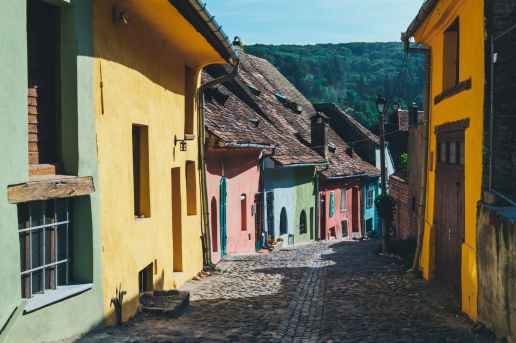
alley architecture building city
Photo by freestocks.org on Pexels.com

Go–whether on a plane or on your knees; at your church or at your kitchen table– GO!

Bloom Where You Are Planted

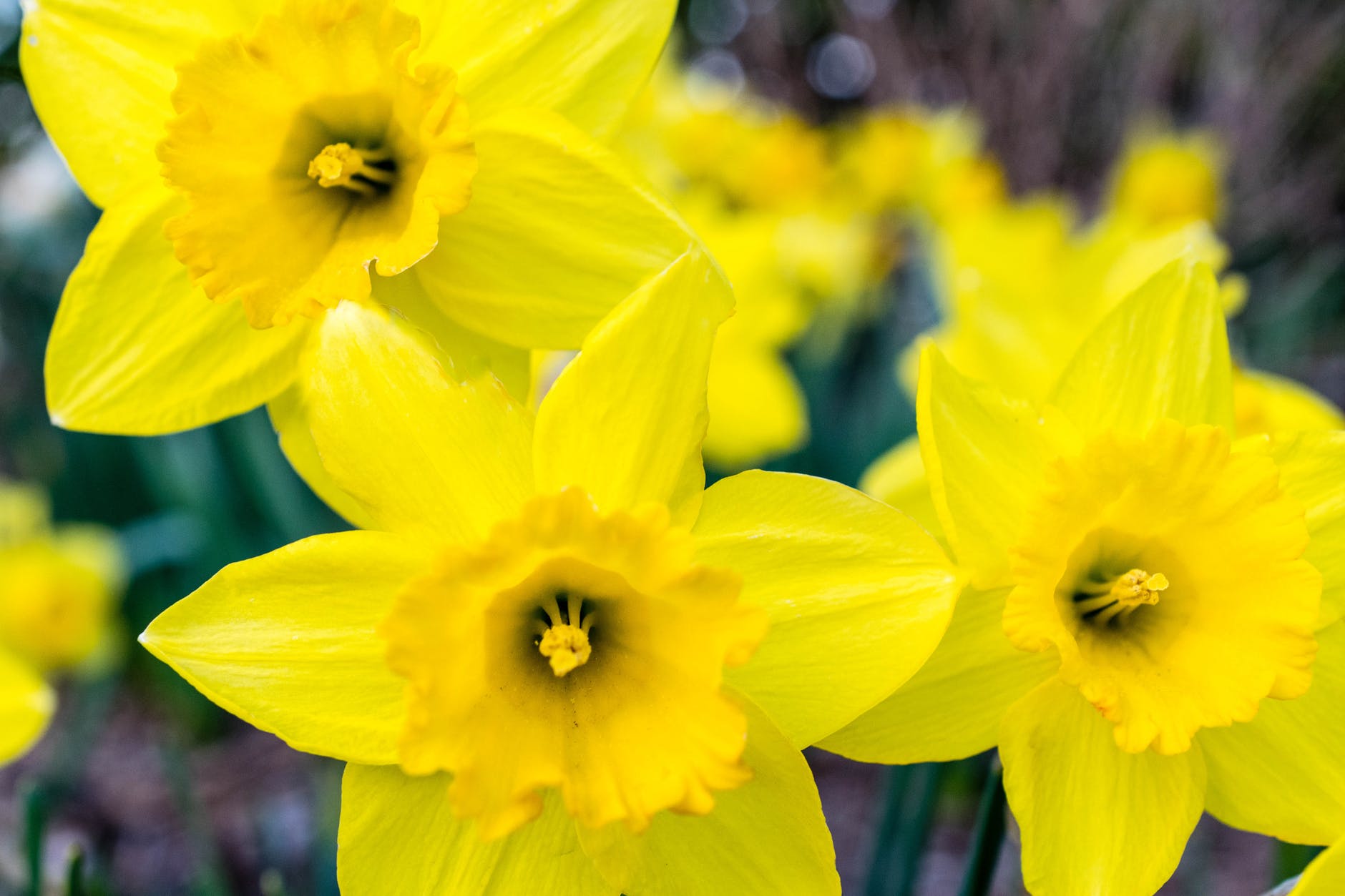
I love living in Southwest Lower Michigan– especially in the spring.  We have blossoms everywhere– apple blossoms, cherry blossoms, dogwood, red buds, tulips and irises, hyacinth and daffodils.  The rich earthy smell of freshly plowed gardens and fields permeates the air, and rides on the breezes coming off Lake Michigan.  Birds, newly returned from their winter wanderings are busily building nests, chirping away, while the sun’s rays chase away the last of the winter chill each morning.  There is color and new life everywhere you turn.

pexels-photo-165542.jpeg

We have a lot of spring festivals in the area, most of them centered on the blooms and blossoms that fill the countryside.  Gardens, orchards and fields are not just for show around here– they are also important parts of our economy and eco-system.  Without a good spring full of blossoms, buds, and blooms, we may have a disastrous harvest in the fall, and run-off of the soil; bees will die off, wild and domestic animals will have less grass and fewer berries to eat.  A late spring can shorten the growing season and shrink the harvest; an early spring can bring buds out too soon, only to have them lost to a late season frost or to have them mature too early and be burned in a mid-summer drought.

And yet, I have seen crocuses burst through two inches of snow; buds that defy harsh weather and cruel winds.  I have seen daffodils blooming where there once was a house and a yard, but now there are only brambles and foundation stones.  I have seen trees twisted and split by long-ago storms– one side dead and rotting, but with buds and new branches on the other side.

crocus-flower-spring-purple-60120.jpeg
pexels-photo-1031413.jpeg

It is easy to bloom when you are in a lovely flower bed, with tilled earth, fertilizer, gentle rains, just the right amount of sun, and protection from the winds and pests and birds.  But it is more spectacular to bloom in the desert; to defy the odds and stand in stark contrast to brambles, a broken-up sidewalk, or a litter-filled back alley; to bloom in the snow and sleet or weather a flood or a tornado.

pexels-photo-1035739.jpeg


Not always so with prayer.  Sometimes, it is easier to pray when we feel our own needs and shortcomings; when we are driven by our circumstances to call out for help.  When all is well, we may be grateful, but we may also begin to slack off.  We stop asking for wisdom and guidance, coasting in the beauty and ease of a good life, and forgetting that the beauty and the ease– indeed the life itself– is not our right, but a gift.  Amid so many other beautiful prayers, ours seem drab and ordinary, almost unworthy of God’s notice.

But God DOES notice– he has placed each of us where he wants us to bloom and grow– to pray, to fellowship, to walk with other believers and give off the fragrance of His grace as we live our lives in obedience to Him.  Have you been planted in an apartment complex?  Have you been planted as a suddenly single parent of three kids?  Have you been planted on a campus?  In a group of friends that all have Harleys?  Or one block from a rescue mission or homeless shelter?  A classroom full of high-energy first-graders?  A community that has had a lot of crime and blight?

pexels-photo-991681.jpeg

God has not placed you in circumstances to reward or punish you, but to grow you in the soil that can produce the best harvest.  Is your prayer list filled with needy people who live in turmoil and rebellion?  Bloom where you are planted– you may be the only person praying for your cantankerous neighbor– the only raindrop or fertile soil s/he will ever encounter.  Has God placed you in a family of people who taunt you for your faith?  Bloom where you are planted– pray for strength to stand firm in the beauty of meekness and compassion in the face of their taunts and disdain.  Are you in a greenhouse full of self-righteous orchids making you feel dowdy and wilted by comparison?  Bloom where you are planted– pray for God’s eyes to see the beauty in yourself, as well as those around you, and stop trying to be an orchid where God needs a lily.

Has God planted you in trying circumstances?  Bloom where you are planted– pray for God’s Peace as you face each day:

Matthew 6:25-34 English Standard Version (ESV)

Do Not Be Anxious

25 “Therefore I tell you, do not be anxious about your life, what you will eat or what you will drink, nor about your body, what you will put on. Is not life more than food, and the body more than clothing? 26 Look at the birds of the air: they neither sow nor reap nor gather into barns, and yet your heavenly Father feeds them. Are you not of more value than they?27 And which of you by being anxious can add a single hour to his span of life?[a] 28 And why are you anxious about clothing? Consider the lilies of the field, how they grow: they neither toil nor spin, 29 yet I tell you, even Solomon in all his glory was not arrayed like one of these. * 30 But if God so clothes the grass of the field, which today is alive and tomorrow is thrown into the oven, will he not much more clothe you, O you of little faith? 31 Therefore do not be anxious, saying, ‘What shall we eat?’ or ‘What shall we drink?’ or ‘What shall we wear?’ 32 For the Gentiles seek after all these things, and your heavenly Father knows that you need them all. 33 But seek first the kingdom of God and his righteousness, and all these things will be added to you.*

34 “Therefore do not be anxious about tomorrow, for tomorrow will be anxious for itself. Sufficient for the day is its own trouble.

*Emphasis added

The Power of a Praying Mother

Mother’s Day is coming, and I wanted to say a few words about the mothers in my life and their legacy of prayer.  My Mom is a prayer warrior.  I blog about prayer, and I pursue a better prayer life, but my Mom is a seasoned soldier,  and the daughter of another mighty woman of prayer.  Most of what I know about prayer, I learned through the examples of my Mom and Gram, but I have also been blessed by the godly examples of my mother-in-law, sister and sisters-in-law, aunts, cousins, and many more.

030

From my Mother, I learned to pray from the depths of my heart.  I have seen and heard her pray through pain, grief, and despair– not just her own, but more often that of someone else.  I have caught her holding back sobs over relatives and neighbors who don’t know or aren’t following Christ.  I’ve seen her pause in silent prayer over the plight of a person who is facing a lost job, or chemotherapy, or a migraine.  She very seldom offers to pray  aloud,”in the moment”, but she prays fervently, nonetheless.


Gramgrad

From my Grandmother, I learned to be patient and consistent in prayer.  Gram was quiet and unassuming, but she had an unshakable faith.  She prayed for years over situations that looked hopeless; often for people who or situations which never changed.  I asked her once how she kept from getting angry and frustrated.  She looked me straight in the eye and said, “We can’t change somebody else, and we can’t make them do what’s right.  That’s not our job.  Our job is to love each other, pray for each another, and let God deal with the rest.”  She died never seeing answers to some of what she prayed for, but that didn’t stop others from taking up the banner, and it never stopped her from earnestly and joyfully “taking it to the Lord in Prayer.”  She never gave up, never lost hope, and never stopped showing compassion.


There have been many other prayer warriors in my life– women (and men) of great faith who sought the Lord, and whose lives and words have had an unimaginable impact.  My family, members of my church family, classmates and friends from school or college, neighbors through the years…some of them have held my hand and prayed with me face-to-face; others have prayed on their knees in private; some have prayed for special needs and circumstances; others have prayed at the Holy Spirit’s prompting, never knowing why, but bowing in obedience.

prayermotherdaughter

Praying mothers are a treasure.  If you have one, or had one, don’t underestimate the value of her example.  And don’t just say, “Thank you”…Pay it forward.  Pray for family, neighbors and friends.  Pray early, pray often, pray without ceasing.  We all need more praying mothers, fathers, cousins, neighbors, co-workers, etc.  If you did not have a praying mother, you have a golden opportunity to become that good example to someone else.  You also have the opportunity to adopt a prayer partner– a surrogate praying mother–to pray with you and for you.

Can You Hear Me Now?

We experienced some storms last week, and while we didn’t have a lot of damage from the winds and rain, my husband and I lost our internet connection over the weekend.  No wireless internet meant no Facebook, no WordPress, no e-mail, and no cash register at our little shop downstairs.  We had to do every transaction by hand until we could rig up something so our smart phone could accept cards; no new chip cards, no Apple Pay or PayPal.  And while our phone could begin to accept limited credit payments, it could not provide any printed receipts, nor could it do double duty– we either had a phone or a point-of-sale device, but not both!

It was an inconvenience, but not a disaster.  I thought about thousands of people who are stuck in the aftermath of hurricanes, tornadoes, floods, earthquakes, and blizzards who have no electricity, no phone lines, no cell service, no roads, no water or sewer lines–cut off from common necessities and basic communication.  Suddenly, an emergency becomes even more tragic because of the isolation, and the inability to ask for help or to hear any message of hope.  (Of course, my husband would like me to put in a short plug here about the advantages of amateur radio– the radios can run on battery power and still connect over hundreds of miles!)

sound-speaker-radio-microphone.jpg

Isolation is an earthly concept.  God is eternally Triune.  He created us for relationship; from the very beginning, he declared that it is not good for “man” to be alone (Genesis 2:18)  God instituted marriage, and families, and communities so that we would stay connected, and he himself came to walk and talk with mankind in the Garden of Eden before the Fall.  It is mankind who hid from God and broke off communication– one of the effects of Sin is the desire to run away, to separate, to isolate and cut off relationships and break off contact.

That is one reason that prayer is so basic; so essential.  It is a lifeline to the one who loves us best, who knows what we need, and has the power to hear us, to help us, to lift us up wherever we may be, whatever our circumstances.

pexels-photo-787452.jpeg

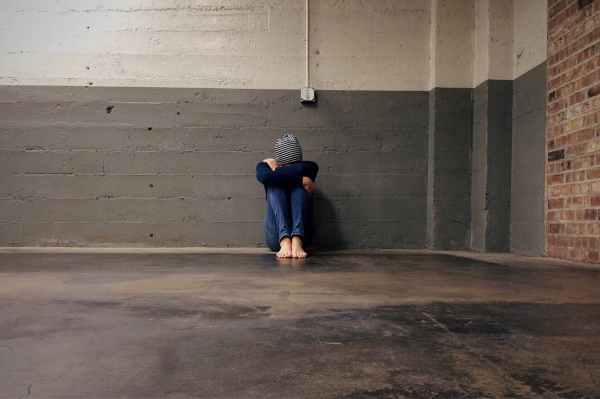
But sometimes, even when we want to talk to God, it seems impossible to speak or feel like he hears us.  Sometimes, we are the ones who can’t come up with words, or can’t settle our minds to seek his face.  Sometimes, we pour out our hearts and wait in silence for an answer.   Why should it be that just when we need it most, prayer seems the hardest?

I wish I had a pithy, perfect answer.  I don’t know.  I have a few incomplete thoughts, though:

  • what comes easily has less value to us.  Cheap and pointless conversation doesn’t make us work hard, but it also leaves us empty and unsatisfied.  Crying out to God is hard–it humbles us, it strips us bare and uncovers all our pretenses and subterfuge.  The true depth of our need is ripped out of us like a tumor, and it hurts, but it is a healing hurt.  Waiting in silence can cause us to become restless and to doubt, but it also can cause us to listen more attentively– we strain to hear the answer; we stop the white noise of busyness and half-hearted hand-wringing, and listen with our whole being.  And the smallest whisper– that still, small voice– has the power of the first rain after a long drought.  We are revitalized and our strength renewed as never before.

pexels-photo-546657.jpeg

  • sometimes, though not always, we find prayer difficult because we have not really prayed for a long time (if ever)– we have developed a habit of saying words to the empty air and thinking that the words themselves hold some power of hope or magic or self-fulfilling prophecy.  When life’s realities cannot be wished away with simple words, we search for distractions, for other types of words, for other “realities”, when we should be searching for our maker and the lover of our souls.
  • sometimes, it is a matter of unacknowledged or unconfessed sin that keeps us from breaking through in prayer.  However, there are many people who will use this as a default position, and that, too, is wrong.  Jesus had such difficulty in praying at Gethsemane that he sweat drops of blood— NOT because of unconfessed sin, but because his heart was that overwhelmed.  Still, we should examine ourselves to see if we have started to move away from God– better to turn back than to go father afield.
  • sometimes, as with Christ in the Garden, our hearts are just overwhelmed in the moment– it’s hard to breathe!  It’s hard to go on; it’s hard to ask for help; it’s hard to keep the faith.  Just because it’s difficult, don’t give up– even if all you can do is groan or whimper–even if it feels like God has closed up the heavens and left you alone–don’t give up.  God DOES hear, he DOES care.  Sometimes, we are inches from victory– don’t give up!

And what can we do during those times?  Again, I wish I had better answers, but what I have, I want to share– some from my own experience, some wisdom from others, some of both:

  • Learn to “pray outside the box”–
    • Sing–sing the blues, sing an old hymn, sing along with the radio, sing like nobody else is listening
    • Write it out– write a letter, write an angry letter if you have to– write a rant, write a poem, write out all your questions
    • Move– dance, pace, run, punch a pillow, do some sit-ups, mop the floor, scrub the sink– as you get a rhythm going, add your thoughts or questions to your movements
    • Cry it out– it’s ok to cry, moan, sob, weep, or just stare into space and rock yourself to sleep after all the tears have dried up.  Jesus wept (John 11:35)– what makes us think that we can’t?

landscape-nature-man-person.jpgpexels-photo-256658.jpeg

  • Count your blessings
    • Make a list of what you have; what you have to be grateful for; what you have experienced and enjoyed now or in the past
    • Make a list of your questions, concerns, needs, wants, wishes–Now think back ten years and make a list of what you wanted then, and how many of those concerns have been answered, altered, or forgotten.
    • Put yourself in another time or place– what do you have here and now that others lack?  How do your present troubles compare to what others have had to deal with?
  • Ramp up your pursuit of God in other areas–
    • Search for answers in His word
    • Seek the companionship of someone you trust who will help you keep on going
    • Seek out counselors, web sites, and/or a church group or family who can keep you from becoming isolated

pexels-photo-935944.jpeg


The single most important thing is to continue the pursuit– seek God with all your heart–and you will find him sufficient through the silent times, as well as through the roaring of the fiercest storms.


What Did You Say?

Every once in a while, I like to check an app that counts the words I use on Facebook.  The end result is a cloud full of words that people see when they read my posts.  (You can see my most recent one above.)

Sometimes, I like the cloud– I love to see it filled with words like Love, People, God, Prayer, Joy, Peace, Thankful, etc.  I’d like to think that this is how I always look and sound.  Of course it isn’t.  I don’t always speak encouragement and love on people.  Sometimes, I complain and rehearse negative self-talk, or I explode and rant about bad drivers, rude customers, constant bills, and more.  Checking on my word count may not keep me from using negative words altogether, but it does show me patterns I may not be seeing or hearing on my own or from my friends.

pexels-photo-211816.jpeg

My prayer life acts in this same way–especially as I journal about my prayers.  I can look back through my prayer journal, and see patterns in prayer requests, notes, and even answers to prayer.  Sometimes, I see patterns of struggle–desperation, need, frustration.  Sometimes, the pattern is steady; other times it is a roller coaster of ups and downs.

It’s important to spend a little time periodically getting feedback like this.  Why?  Because what we actually say (and pray) may be very different from what we think we have said.  Jesus was very careful about words:

Matthew 12:35-37 English Standard Version (ESV)

35 The good person out of his good treasure brings forth good, and the evil person out of his evil treasure brings forth evil. 36 I tell you, on the day of judgment people will give account for every careless word they speak, 37 for by your words you will be justified, and by your words you will be condemned.”

Mark 10:17-18 English Standard Version (ESV)

17 And as he was setting out on his journey, a man ran up and knelt before him and asked him, “Good Teacher, what must I do to inherit eternal life?” 18 And Jesus said to him, “Why do you call me good? No one is good except God alone.

Paul is also careful to distinguish between words:

Romans 5:7-8 English Standard Version (ESV)

7 For one will scarcely die for a righteous person—though perhaps for a good person one would dare even to die— 8 but God shows his love for us in that while we were still sinners, Christ died for us.

I include the last two examples because they both refer to “Good” people.  I want people to see God’s goodness in me.  But idle or careless words and habits can show up in my thought life, my prayer life, my on-line life, and my face-to-face conversations.  In attempting to show how “good” I am (self-righteousness), or how clever I am (even at someone else’s expense), or how__________________________________ (daring, popular, hard-working…you get the idea) I am, it compromises all that I want my life to say about God, and all that He is waiting to say through me.

cheaptalk

Words matter– whether in praying or blogging or commenting on someone else’s post.  I pray that I am making mine count!

Making Waves

Yesterday, students across the nation walked out of class to protest the school shooting that took place a month ago in Florida.  Many have hailed this as the beginning of a new movement; others have decried it as a stunt.  I’m not here to debate the merits of this particular action or even what it may or may not represent.  What I do want to look at is how and why groups are using various methods to “make waves” in our world.

What does it mean to “make waves?”  According to the online urbandictionary.com, it means:  to cause a disturbance, or to create a situation where chaos or controversy will surface

The underlying assumption is that there is a deceptively calm surface that requires a disturbance– that chaos or controversy are already present, and bringing them to the surface is necessary to prevent more tragic results.

If you live near a large lake or the ocean, you may have watched waves in action.  Waves can be powerful, and even tragic, in their own right.  Storm surge waves and tidal waves have been known to decimate coastal areas; even normal wave action can erode shorelines and pull unwary swimmers under the surface.  But waves also serve good purposes– they polish the stones and wash up treasures onto the beaches.  They prevent stagnation.  They help move small creatures that dwell in the sand and shallow waters.

One thing about waves that sometimes passes unnoticed– waves may change in size or power, but they are constant– rolling in and out unvaried in their rhythm from day to day and year to year.  In this sense, no one “makes” waves, except the creator, who started that rhythm and set the boundaries for the lakes and seas.  Instead, we attempt to create bigger, more powerful waves, or make waves where none were before– puddles, or swimming pools, perhaps.  At some point in our lives, we WILL make waves– but what kind, and to what purpose?

waves

My point is not that we shouldn’t try to be agents of needed change in our world– but we should examine the positive and negative consequences of our wave-making.  Are we pushing something to the surface that needs to be seen or discovered?  Are we pulling something under the surface to drown it out?  Are we eroding a foundation, or carving out a new coastline?  Also, are we being consistent in our wave-making?  Are we hoping for a single tidal wave of chaos, or a constant churning action that brings lasting change.

Of course, since this blog is about prayer, I would suggest that prayers are also like waves– each one breaking in its turn, but constantly rolling, churning, and moving forward, bringing things, both large and small, to the shore.  Prayers have a constant rhythm and a subtle roar that masks their full impact.  Prayers, like rolling waters,  intermingle, push each other forward, dance, and rise, and fall with the winds and storms of life, and roll back to rise up again.
Not all prayers are like waves– not all waves are like prayer.  but  shouldn’t we want to make waves in tune with God’s purposes?  Waves answer to God– he can both calm them, and stir them into wild fury; walk on them, or hold them back.

I pray that our prayers and our actions would be consistent with God’s rhythm; that we would embrace changes and actions that bring him honor.

Prayer and Social Media

There are several positive and proactive aspects of prayer I want to explore in this journey, but I don’t want to deny or ignore some of the bad habits and false ideas that sometimes come with prayer.

One of the reasons I am writing this blog (see Prayer is a Pursuit) is to answer some of the critics and detractors of prayer.  Many of these critics are responding to what they see of and about prayer on FB or Twitter, on blogs like this, or on spiritually-minded websites.  If all I knew of prayer came from reading dashed-off posts and prayer memes accompanied by soothing photos, I would have a false and shallow idea of prayer, and one that invites criticism.

The Bible describes, and the Church practices, many different kinds of prayer.  Prayer can be intensely personal and private.  It can be communal or corporate in nature.  There are prayer partners, prayer groups, prayer chains, and congregational prayers.  But prayer is not primarily or ideally a social activity, and its essence is not suited to be broadcast or posted.

Social media can be a very helpful tool TOWARD prayer– requests, needs, and answered prayer can be shared; prayer can be urged and encouraged; prayer can be discussed (as in this post); prayers can be made public as examples.  And people can be greatly encouraged by the knowledge that their needs are being lifted up by family, friends, even strangers across town, across the country, and even around the world.

But prayer on social media also presents real problems, and I’ve gotten caught up in some, so I’m sharing some of what I have learned.  These areas have been stumbling blocks for me– that does not mean that they are “bad” practices in general, or that my questions or criticisms will apply to others.  But if someone else struggles with these thoughts or issues, I hope my journey might help.

  • Social media tends to promote the “tyranny of the urgent”– posts pop up screaming for attention NOW.  I feel pressure to respond immediately with something encouraging.  To say that I am “praying” or “I will keep you in my prayers” is encouraging–but is it true?  A couple of years ago, I realized that, in my desire to comfort and uplift, I had started stretching the truth.  I meant to pray for the person/situation/need…sometimes I sent a hasty and half-hearted thought heavenward before scrolling on.  But I wasn’t really opening my heart to God OR to the person in the post.  As one critic put it– I was making myself feel better.  My words may have given momentary comfort or encouragement, but they were basically empty and hollow.  I made a vow going forward to do one of three things:
    • If I can, I will stop what I am doing and take the time to really pray about the situation BEFORE I respond, comment, share, etc.
    • If I can’t take the time right now, but I have my prayer journal handy, note the concern on today’s page (or tomorrow’s) to make sure I include it in my daily devotional time, so I can pray thoughtfully and whole-heartedly.  Sometimes I will comment after the note is written, or after the prayer has been said.
    • If I can’t stop, add it to my prayer journal, or make a note– I don’t comment or respond.  The other person may not know the difference, but I will.  I don’t want to give a false impression.
  • Social media thrives on drama, algorithms, and visibility.  Recently, I received two similar prayer requests within a day of each other.  Two friends shared about two different men in life-threatening situations needing prayer.  One of my friends’ posts went viral, with people setting up fundraisers for the family, a website, and daily updates.  The other post simply said, “Please share.”  It got a few responses, and one update to say that the man had died of his injuries.  These men were both precious in the sight of God.  They were both badly injured in the line of duty, and both had families who loved them and were in crisis. They were both equally in need, but not equally visible.  I prayed for both, but I wondered at the difference in visibility, and how it might be changing our prayer focus.  I am tempted, as I spend time on social media, to be concerned about those things that are most visible.  But who is hurting in my neighborhood, among my friends, among those people I interact with daily– their needs invisible to me because I’m only focused on what I see online?
  • Social media is both social and self-oriented.  How many people “like” or “follow” me?  How big is the circle of people I can reach?  What impression do others have of me?  But prayer is not about me.  I have a bad habit (shared by many others–especially Americans, I think) of wanting to be seen as independent and self-sufficient.  I want to be the one offering support–the “prayer” and not the “pray-ee”.  But if I’m going to put myself “out there” in either capacity, social media tempts me to measure and compare myself with others.  I am tempted not to ask for prayer for little ordinary things, tempted to exaggerate some pains and downplay others, and tempted to respond to others in ways that make me look “good.”  That’s just human nature, but it’s also sin, especially when selfish concerns and petty thoughts crowd out the natural compassion I should have for others and the honesty I should have about my own weaknesses and strengths.
  • Social media is a “glass house.”  What you post in haste, in jest, or for your “besties” is out there for everyone to see– and judge.  We are told not to judge, lest we be judged (from Matthew 7:1).  There are several groups who love to quote the first part of that verse, but it’s the second part that relates equally to social media.  If I post beautiful words about prayer and encouragement for my Christian friends, and hateful rhetoric about my political foes, I had better be willing to own up to having a double standard.  The same goes for the random offensive, suggestive jokes, the rants about my noisy neighbor and my unsaved relatives.  Sitting in front of a silent screen tempts us to “let rip” with sarcasm, frustration, self-righteous indignation, and self-congratulation.  All of us have probably posted things we later regretted because we think better of our words, or because someone “took them wrong” .  I want to become better at prayer, better at communicating about it, defending it from attack, and promoting it.  But that comes with a responsibility to learn, be honest about my failures, and open about the struggles I face.

I hope to do just that as I journey forward– on- and off-line!

Prayer is a Pursuit

“Stop sending your thoughts and prayers– they are useless.  Get up off your knees and take action, instead.”
I was stunned.  People had been reacting on Facebook to a recent tragedy by posting their concerns.  Most of them were heartfelt messages sending “thoughts and prayers” to the victims and their families.   But they were followed by a backlash of  anger and frustration so visceral that I felt sucker-punched.  Worst was an entire article that suggested that praying was a futile distraction– an admission of helplessness that actually contributed to inaction, injustice, false hope, and secretly condoned violence and victimization as part of “God’s will.”
As I reeled from what I felt was a sharp and hateful article, I stopped to wonder where that kind of anger and bitterness was coming from.  Some of it was obviously a reaction to the tragedy itself– a violent attack resulting in a senseless loss of life.  Such events leave us feeling shocked, confused, and helpless– How could this happen?  Why?  And, often, our questions are directed at God– “Where were you?” “Why did you let this happen?”  “Don’t you care?” We may question God’s goodness, his justice, and his very existence.  Our prayers may even seem futile– unheard and unanswered.
So why did the article and its suggestions shock and hurt me so deeply?  Was it a lurking conviction that the author had a valid point?  Am I wasting my time when I pray for those who are grieving and suffering pain and loss?  Am I wasting my time praying to a God who seems distant in times of crisis?

Which brought me back to the basics–in this case, what IS prayer?

This blog is an attempt to pursue the many interconnected answers to that question.  At its heart, I believe (as do most people of a spiritual bent, regardless of their particular religious tenets) that prayer is an attempt to talk to, to communicate with, God.  But what I believe about prayer is dependent on what I believe about God.  Does he exist?  Really exist?  What (if anything) does he expect of me?  Blind and slavish fealty?  Absolute, if grudging, obedience?  Idle/Idol worship?  A comfortable, acquaintance, a  mutual admiration?  A deep and eternal inseparable relationship?
Our prayers will be shaped by our answers to those and other questions– if I believe that God only wants me to recite a canned response every once in awhile, that’s what I will give.  If I believe that God wants me in perpetual groveling…you get the idea.

So what do I believe about God and how to communicate with him?  First, I believe that Prayer is a pursuit– it is my earnest desire to seek out the God who made me in his image– unique and precious in his sight.  I believe he WANTS to hear from me, and he WANTS to answer with revelation of his nature, his character, his heart.  Second, I believe that prayer is positive, because God is good.  Prayer is not an obligation, though it should be a discipline.  Prayer is not merely a ritual, though there are many forms it may take, from formal recitations to wordless groans.  Prayer moves us toward God, and toward others around us.  It is not static; it is not a vague wish or empty hope.
Third, I believe that prayer is powerful–much more than most of us recognize.  Far from being futile and inactive, I find that prayer leads to dramatic changes.  I have seen miraculous transformations–in myself, in others, even in the wider world–as a result of prayer.  The fact that God doesn’t always give us instant and dramatic answers doesn’t negate those times when he does provide the miracle.  And it doesn’t mean that our prayers were unheard, or unanswered.  Finally, it doesn’t make God complicit with the evil things that happen– God doesn’t give us cancer or send a flood to punish us for something we did or didn’t do, and he doesn’t keep us in pain or allow us to struggle without reason or remedy.

So, I am starting a quest to share my pursuit– things I have learned, am learning, and hope to or need to learn about this amazing gift called prayer.

Blog at WordPress.com.

Up ↑