Smack-dab in the center of Sin and Pride; You could find me in Peril, Intrigue and Rebellion– Guilt surrounded me, pain and despair held me fast. But I was not in Repentance, Mercy, or Grace.
I had to die to “I”– let it go and let the Son redeem the Sin Trade Pride for Prayer, and Hype for Hope.
But I am no longer lost or dead– and no longer a slave to sin or pride. I can now be found in Faith, and Charity; I thrive in Fellowship, I have a Friend in Jesus, A Spirit to guide me, and a vision for Eternity. It is not “I” who lives, but “I AM” who lives in me. Salvation, forgiveness, life, and victory are all mine; Alive in Him, I am found in Christ– sanctified, And never alone.
Romans 8:1-5King James Version (KJV)
8 There is therefore now no condemnation to them which are in Christ Jesus, who walk not after the flesh, but after the Spirit.2 For the law of the Spirit of life in Christ Jesus hath made me free from the law of sin and death.3 For what the law could not do, in that it was weak through the flesh, God sending his own Son in the likeness of sinful flesh, and for sin, condemned sin in the flesh:4 That the righteousness of the law might be fulfilled in us, who walk not after the flesh, but after the Spirit.5 For they that are after the flesh do mind the things of the flesh; but they that are after the Spirit the things of the Spirit.
1 Corinthians 15:57New International Version (NIV)
57 But thanks be to God! He gives us the victory through our Lord Jesus Christ.
A brief note about Scripture references and quotes: I try to give scripture references and quotes in various translations, though I give most in the New International Version (NIV), the English Standard Version (ESV) or the King James or New King James versions (KJV or NKJV). I don’t intend to cause confusion by doing this. There are several excellent translations/versions available, and for a good comparison, there are several wonderful Bible study websites (two of my favorites are Bible Gateway and Bible Hub ). I simply find that there are some nuances that make for easier reading or use in the blog. Often, one translation will have notes and cross references that are wonderful for further study, but confusing to include as part of the blog quote. I encourage anyone to read the verses in whatever translation they have available, feel most comfortable using, or feel is most trustworthy. I also welcome comments or corrections.
Have you ever watched a sporting event–a real nail-biter–and prayed for your team to win? Do you wonder if God is concerned about Little League or High School Basketball, or which team wins the Superbowl? And what about the parents and coaches on both teams praying to him–one side has to “lose”–how does God answer such prayers? DOES he answer such prayers?
While the Bible doesn’t give us a specific answer, I think there are some general principles that apply. When teams prepare for a big game, they may talk about their desire to win, they may study their opponents, assess their own strengths and weaknesses, and give themselves pep-talks about winning, but they don’t practice winning– they practice playing their best, improving those areas where they are weakest, and working to bring their best on game day. They don’t pray to win by default or by bad sportsmanship.
The apostle Paul uses athletic analogies for the Christian life– he talks about running the good race, fighting the good fight, and working to be worthy of the prize. But he doesn’t direct Christians to pray that God gives us a victory. Instead, he points out that the greatest victory– that over sin and death– has already been won! We don’t fight the battles wondering if our victory or loss will turn the tide of the war. We fight in the hope of strengthening our fellow warriors and bringing our victorious Savior more glory and honor.
This holds true in other areas as well. In politics, we fight to win, but not in desperation or despair, knowing that if we lose this battle, God is not defeated or even surprised by the outcome. Even in situations of corruption, despotism, and chaos, God can raise up leaders, topple evil powers, and bring renewal and revival. In war, we fight to win, we fight to defend what we know to be right; but even if we lose the battles, we don’t lose faith.
God doesn’t always give us “wins.” He doesn’t guarantee that we will never face setbacks or disappointments. In fact, sometimes we need to “lose.” We need to lose our selfish ambition, our pride, our drive to compare ourselves with others, our envy and greed, and our failure to submit to God’s best plan.
We pray for victory, but more than victory at any cost, we pray for God’s will to be victorious– for his strength to be shown even in and through our own weakness. We pray for victory on God’s terms– which may mean a painful loss today, and grieving for the night, but joy that comes in the morning. Great teams, great nations, great leaders– are not forged in continuous expectation of easy victory. Sometimes we learn more and become greater by learning from our failures.
Let’s not just pray to win– let’s pray to be more than conquerors (Romans 8:37)!
7 “Ask and it will be given to you; seek and you will find; knock and the door will be opened to you.8 For everyone who asks receives; the one who seeks finds; and to the one who knocks, the door will be opened.
9 “Which of you, if your son asks for bread, will give him a stone?10 Or if he asks for a fish, will give him a snake?11 If you, then, though you are evil, know how to give good gifts to your children, how much more will your Father in heaven give good gifts to those who ask him!12 So in everything, do to others what you would have them do to you, for this sums up the Law and the Prophets.
I’m really bad about asking for help. I don’t mind asking for advice or opinions– I can listen and take the advice or ignore it; accept someone else’s opinion or not. But asking for help puts a certain obligation to accept whatever help is given. It also announces that you have a need; that you are struggling and can’t do “it” on your own. This is especially true in situations where we are embarrassed to admit to shortcomings, inabilities, or perceived failures.
Asking is difficult for most of us. Not just because we must swallow our pride and admit to a need, but because we must hope that whoever we ask will be willing or able to meet that need. Asking becomes more difficult when we don’t know who we can trust. Admitting weakness to someone who is kind is a small risk–it may bruise our pride, or cause the other person to pity us. Asking for help from someone who is deceitful, arrogant, incompetent, or abusive is a recipe for disaster.
Sometimes, we are afraid to ask for help because we sense that there is no help to be given. We wallow in despair, thinking all is lost or hopeless. But fear and despair are not wise counselors–they cannot help us out of our problems; they can’t even see beyond the current chaos or the next panic. Sometimes, we are too proud to ask someone else to do what we feel we should be able to do– others can manage, others can triumph “on their own”– not realizing that they had help along the way, or that they need help in other areas where we are strong.
And sometimes, we don’t want the kind of “help” that is offered. We want help to stay in our comfort zone, even if it means bondage to addiction, or losing an opportunity that comes only with hard work or sacrifice. We want someone to lie to us, keep us comfortable, or flatter us, when our greatest need is someone to challenge us, coach us, and give us the truth, even when it stings. In fact, if we have grown lethargic, entitled, and arrogant, we won’t ask for help– we will demand a lesser form of help that enables us to stay as we are and not help us become who we were meant to be.
So consider this as you pray today– the God of the Universe– creator of galaxies and microcosms, ruler of eternity, the God who hears every sigh of every human on the face of the planet and knows who made it and why, the God who gave His only Son to fulfill the law and restore your soul–this God is waiting for you to ASK Him for help, for guidance, for wisdom, for your daily needs, for forgiveness that only He can give completely. And He promises to give good gifts– joy, peace, hope, love. He will not scorn us in our need– He already knows it, Why are you waiting?
I pray every day. But why? There are short, glib answers– “Prayer works,” or “The Bible tells me to.” Or I could say that it’s just a “good” habit, or that it “does something” for me. But prayer is more complex than that. I can give a lot of generic reasons for someone to pray. I can list (and have listed) many benefits of regular prayer. But what are my personal reasons for praying?
Prayer does “do something” for me– lots of somethings. Not every time; not always in the same measure, but prayer can:
Put me in a better mindset; it changes my focus and my attitude. When I pray, the world around me shrinks, along with all the worries and distractions it presents. Instead, I begin to focus on “God” things– the metaphysical reality that I am not the center of the universe, and my limited understanding is not enough to navigate life in its fullest sense. Jesus offers “abundant life” (See John 10:10)– life to the full. And prayer ignites that, taps into that, and lifts me from futility and confusion to meet with One who sees the end from the beginning.
“Recharge my batteries.” Prayer, meditation, “quiet time”– they are all similar, and they all have a physical benefit. Spending time in prayer can lower blood pressure, promote clearer thinking, and increase a person’s ability to withstand stress. Prayer can improve mood, but it can also improve the body’s ability to fight off depression, infection, and other stress-related issues. This is very personal for me, because I have struggled with stress and depression at various times in my life, and prayer can calm me, help me to change negative thought patterns, and endure hardship better than anything else. (Please note this does not mean that I don’t also need to do other things– proper diet, plenty of sleep, hydration are all necessary. Some people may require medication– prayer is not a substitute for good health advice, rather it is an integral part of being physically and spiritually healthy.)
Deepen my faith. God doesn’t always give immediate and clear answers to my prayers. In fact, it may feel sometimes as though He has forgotten me. So why continue to pray? Because God DOES answer prayer. Often, He answers in surprising and unexpected ways. Sometimes His answers come so slowly, so subtly, that I might miss them– if I weren’t keeping track. This is one of the great benefits of keeping a prayer journal or diary…I will often see an old entry, one that I had given up on or forgotten, and realize that God answered it weeks ago without any startling revelation or dramatic rescue. If I only pray when I expect God to do the impossible immediately, I may miss the development of something even more amazing that I imagined!
Become a vital part of my discipleship. Being a disciple literally involves discipline…I can’t say that I follow Christ part-time. Ignoring daily habits, like prayer and Bible study; failing to make time for fellowship with others; depending on my feelings instead of God’s Truth to guide my life– is hypocritical. Also, prayer should open my heart and mind to others who need to BE discipled. And this leads me to another benefit…Prayer can
Help me develop empathy for others. As I pray for others, I learn more about the struggles they face; I learn about their deeper needs. For instance, I may begin praying for someone with a chronic illness to be healed. And that is good. But as I pray for them daily, I learn that along with healing, they desire help with everyday chores that they can no longer do, or they need support and encouragement. Maybe they need rides to doctor appointments and tests. If I am praying for someone struggling with past mistakes or addictions, I learn to see with eyes of compassion and encouragement, rather than judgment and self-righteousness. It’s not just about praying for the “big” needs but learning to pray for (and find ways to help with!) intermediate needs as well. Finally, prayer can…
Remind me that I am never alone! I don’t pray to a brick wall, nor do I pray in a vacuum. I LOVE meeting with our local prayer group every week. I love hearing the others pray. I love being reminded that God listens to my prayers– The Father listens; The Son is my intercessor; The Spirit translates even my groans and mumbles–God delights in hearing from me! (See Zechariah 3:17; Hebrews 13:5; others)
So, Yes, I would say that “Prayer works.” But not in the sense that I can show that God has answered my requests exactly how or when I wanted. There are prayers I have prayed for most of my life that have not been answered “my way” yet. Reckoning with hurtful words and deeds from my past; family members who still haven’t accepted Christ; friends who are still facing the consequences of sinful life choices; situations and circumstances that I would like to see changed. And I don’t have any jaw-dropping evidence that my prayers can cure cancer or end world hunger or make my life problem-free. Quite the opposite. But I DO have evidence that Prayer has made a difference in my life; that I HAVE seen lives changed in ways that are impossible to explain away; that prayer is worth pursuing.
Meanwhile, the moment we get tired in the waiting, God’s Spirit is right alongside helping us along. If we don’t know how or what to pray, it doesn’t matter. He does our praying in and for us, making prayer out of our wordless sighs, our aching groans. He knows us far better than we know ourselves, knows our pregnant condition, and keeps us present before God. That’s why we can be so sure that every detail in our lives of love for God is worked into something good.God knew what he was doing from the very beginning. He decided from the outset to shape the lives of those who love him along the same lines as the life of his Son. The Son stands first in the line of humanity he restored. We see the original and intended shape of our lives there in him. After God made that decision of what his children should be like, he followed it up by calling people by name. After he called them by name, he set them on a solid basis with himself. And then, after getting them established, he stayed with them to the end, gloriously completing what he had begun.So, what do you think? With God on our side like this, how can we lose? If God didn’t hesitate to put everything on the line for us, embracing our condition and exposing himself to the worst by sending his own Son, is there anything else he wouldn’t gladly and freely do for us? And who would dare tangle with God by messing with one of God’s chosen? Who would dare even to point a finger? The One who died for us—who was raised to life for us!—is in the presence of God at this very moment sticking up for us. Do you think anyone is going to be able to drive a wedge between us and Christ’s love for us? There is no way! Not trouble, not hard times, not hatred, not hunger, not homelessness, not bullying threats, not backstabbing, not even the worst sins listed in Scripture: They kill us in cold blood because they hate you. We’re sitting ducks; they pick us off one by one. None of this fazes us because Jesus loves us. I’m absolutely convinced that nothing—nothing living or dead, angelic or demonic, today or tomorrow, high or low, thinkable or unthinkable—absolutely nothing can get between us and God’s love because of the way that Jesus our Master has embraced us. (Romans 8:26-38– The Message. Emphases added)
I keep a Prayer Journal– (for more info, click here: Prayer Journal). In my prayer journal, I have lists of names– people I pray for on their birthday or anniversary; people I pray for on the anniversary of a loved ones’ death; people who are hurting or in need at a particular time– and some days, the list seems very long. Sometimes the names on my lists are people I know well, but other names are there because I knew them well in the past, or because they are important to people I know well, but I don’t really know them personally. Often, I don’t really know how best to pray for an individual on my list. But imagine if Jesus were to keep a written prayer journal! He doesn’t just pray for people on special occasions or even in their time of trial– He prays continually for all who are His! And He knows each one intimately– He knows our every need better than we do!
You and I (if we are followers of Christ) are CONTINUALLY on His mind, and CONTINUALLY in His prayers! In fact, His Spirit even inhabits our groans and fumbled or aborted prayers. There is not a moment or a set of circumstances in which Jesus has turned His back on us or been distracted by something else. He is our Eternal Advocate, our Ever-Present Help, and our Heavenly prayer-warrior!
What a comfort to know that I don’t have to know exactly how or what to pray in order to lift up my heart-cry to God. My words may be muddled, my mind distracted by fleeting worries or doubts, but if I have placed my trust in Christ, I will never pray in vain. I may not be able to understand how or why or when God will work; I may not understand how my prayers fit into God’s overall plans. But I can pray with confidence that comes from knowing that God is Good, and Christ is my liaison with all that is Sovereign and Good. I cannot be separated from any of that by my own inadequacies or my lack of understanding. I cannot be kept apart from God by any personal failings or any forces working against me. And my fumbling prayers cannot be intercepted or twisted or negated by the enemy.
Your name is on Jesus’s prayer “list”; you are in His constant prayers before the Father. And each of your prayers is personally siphoned through the Holy Spirit and the Son to be presented– perfected– to the Father! What a captivating and encouraging thought! What an Amazing God we serve!
Today, I prayed. I thanked God for Who He Is, and I lifted up those who are sick or needy. I thanked Him for my family and friends, for the freedom to worship without fear, for His faithfulness in providing food and shelter and comforts. I asked Him for wisdom to guide me through the new week; that I would say and do things to bring Him honor and glory.
It was a nice prayer. A safe prayer.
I didn’t cry out my unworthiness, nor did I boldly rejoice in His Holiness, laid over me by His son’s blood. I didn’t plead with Him on behalf of the lost and suffering. I didn’t rage at the continued injustice and evil I see around me. I didn’t spend precious hours listening as He whispered assurances to my soul. I didn’t worship in the splendor of His Lovingkindness.
I got up from prayer, feeling mildly better– I had done my duty. I had spoken with God…or spoken AT Him…I left feeling unchanged.
I sat down to write this blog on prayer. God forgive me for thinking I have more to say to an unseen readership than to You, my Creator!
Everybody has enemies. And when I use the term “enemies”, I’m mosl referring to two types of people. There are the people who are your enemies– they hate you. They are scheming to hurt or destroy you; people who defame or slander you; people who betray you; people who cheat and lie to and steal from and abuse you or those closest to you. Then there are the people for whom you are an enemy– you don’t like them, you don’t trust them, you don’t respect them; you probably defame or gossip about them, and you hurt them, even if it is unintentional. Some enemies fall into both categories, but not all.
And then there are existential “enemies”– not personal enemies, but those who live in opposition to our way of life, or our beliefs, or our nation. There are enemies within and enemies without– those who argue in the street, and enemies who plan catastrophic destruction to entire groups of people. And sometimes, those enemies can include “us.” “Us” v. “Them.”
I would love to say that I have no enemies–of any type. But, alas, they exist. God calls on us to love our enemies, to pray for them, to show them kindness, and to bless them! In our own power, we can’t do this. We can make the attempt to forgive the unforgivable, to love the unlovable, and reconcile the impossible, but we fall short in our attempts: the betrayal is too deep; the hurt is too overwhelming; the damage is irreversible, and the impossible is just…well…impossible.
Loving our enemies is one of the proofs of God’s existence, his goodness, his power, his own boundless love at work through our imperfect words and efforts. Praying for our enemies, showing kindness and grace in the face of hatred and betrayal–these are miracles that defy explanation. That is one good reason to keep praying for the enemies in our lives– God can work through us to effect reconciliation, healing, and peace. And this includes those enemies who want to do is immeasurable harm. We don’t have to pray for their triumph at our expense– but we should be praying for their salvation; for their safety; for their good! Yes, even “those” enemies. God can change even the most horrific situation.
Another good reason is that prayer changes US. Praying for our enemies is difficult. It is humbling. It breaks our pride and forces us to let go of the bitterness and recognize God’s rightful place as judge, avenger, and healer. It reminds us that God’s love, being boundless and eternal, stretches to those people who don’t deserve it, whether that is the hurtful person you don’t want to forgive, or the hurtful YOU who needs to be forgiven. God even loves those who seek our destruction. God loves those who hate HIM! God prayed for those who crucified Him– while He was dying. Can we say that we follow Him and do any less?
But praying for our enemies isn’t just about bringing peace and harmony or transforming us into better versions of ourselves. No amount of willpower, or good intention, or logic, or internal fortitude, or peaceful meditation, or persuasive rhetoric, or even powerful prayer will be enough to eliminate our enemies or make us perfect in love. Our prayers may stop neighborhood chaos or family feuds. They may even cause wars to cease. But they may NOT. Jesus is the Prince of Peace– not me. My job is to recognize that I cannot bring peace, but I can live in the Peace that passes all understanding– even in the midst of chaos and turmoil. And I can show love, even as I stand up for truth and hold fast to God’s Word. Love doesn’t mean that I will compromise. But I will respond with compassion– even in conflict.
We pray FOR our enemies, but not all of our enemies. There are two enemies we need to pray AGAINST– Sin and Satan. They are the true enemies, trying to destroy both sinner and sinned-against. They are not just our enemies, but enemies of God. Both are defeated. Their power is illusory, and their damage, while intensely painful, is temporary. And when we refuse to pray for our human “enemies” we serve their destructive purposes. When we follow our own fears, hurts, and feelings of outrage, instead of God’s wisdom in showing love to our enemies, they gain a temporary victory. And we end up on the losing end!
Today is Memorial Day. For anyone who is unfamiliar with the American holiday, also known as Decoration Day, it is a day set aside primarily to honor soldiers who were killed in battle. In recent years, it has come under some criticism from those who feel that it celebrates a culture of war, or that it places too much focus on the past– especially a past that has been idealized at the expense of progress. Instead, it has become a time of recreation– backyard barbecues, beach parties, and bargain hunting at flea markets and yard sales.
But much of the real focus of Memorial Day has been lost. Memorials should not be used to idolize or idealize the past; but they serve a purpose in reminding us of hard lessons and the need to keep learning from them. Memorial Day is not about being thrilled or puffed up by our past– it is to be reminded of both the good and the bad, and the need to see the larger picture. We have inherited both freedoms and frustrations; triumphs that came at the expense of others, and trials that will impact future generations. It is right and good that we take time to reflect on such things.
The Bible gives us several examples of memorials– signs and altars and ceremonies that are meant to call things to memory. Some of the memorials involve battles, but many more involve both promises and prophecy. We are to remember God’s faithfulness; His power to rescue, redeem, and restore.
Our greatest memorial as Christians, is not a soldier’s tomb– it is the Empty Tomb! It is the reminder that our greatest battle has already been won, and the one who died to bring us the victory has conquered both Sin and Death.
For God so Loved the world, that He gave His only Begotten Son, that whosoever believeth in Him should not perish, but have everlasting Life. (John 3:16 KJV)
Memorial Day is also a good time to remember others in prayer– pray for those who have lost loved ones in the service of our nation; but also those who sacrifice daily for their families, communities, and around the world. Pray for wisdom and opportunity to serve others around us better. Pray for healing and grace– for those who fight internal battles with unforgiveness, betrayal, guilt, vengeance, and more. And don’t forget praise– thank God for His redemptive plan; for the victory won; for the sufficiency of His grace. Thank others around you for their services and sacrifices. Finally, as we honor the sacrifices of others, let’s look for ways we can serve one another better.
Do you ever wonder if your prayers are “too little?” Are you bothering God, pestering him with requests to help you find your misplaced keys, or help you make the green light on your way through a busy part of town? After all, God is the ruler of galaxies– there are over six billion people, let alone the cattle on thousands of hills, sparrows, and lilies of the field for him to consider just on our planet.
I know many people who find it awkward, or even impossible, to offer up “little” prayers. They believe that God is too busy, too important, and “too Holy” to be concerned with their petty wishes. I know others who pray about almost everything– what flavor of ice cream to choose; what color nail polish to wear; whether to join their friends for a game of Monopoly or a trip to McDonald’s… Is there a happy medium; a guideline on what constitutes an “appropriate” subject for prayer? Is there such a thing as a prayer that is “too” little to bring to our Father?
I don’t think so. I think there are prayers that exasperate God because they are selfish and prideful. I think there are prayers that come to God with disrespect and disbelief, and a lack of consideration for who he is. But I think those who come to God asking for his help, his wisdom, his grace, and his protection– no matter how small their request may seem–bless the heart of God and receive his full attention.
God constantly uses the small and seemingly unimportant things of this world to make huge statements of great value. Consider sand. Sand is almost everywhere– it is under our feet, blowing in the wind, all along the beach; it gets in our shoes, between our toes, even in our hair! Sand seems unimportant, even annoying sometimes. We use it for all kinds of things, most of which we consider unimportant– sandbags for weight, sand to play in, or build a temporary sand castle. We use sand to make glass, or to polish stones, or to keep time. A single grain of sand has no value to us, except in the rarest of circumstances, when it becomes the nucleus of a pearl. But God sees each grain of sand. He knows the value of sand. In explaining to Abram about his promise, God said that he would make Abram’s descendants like the grains of sand– beyond counting!
God uses tiny seeds to produce and reproduce big harvests. God uses bugs and insects to create amazing (and sometimes terrifying) structures–giant anthills, enormous beehives and hornet nests, spider webs and more. He uses the simple and even foolish things of this world to confound the wise.
Moreover, God delights in the little things– the details and minutiae. King David, and later Jesus, would be moved to compare our day-to-day living to that of grass, and common birds, and flowers– not because we are not important to God, but because THEY ARE– if the things we take for grated are under God’s constant care, how much more are we!?
Lastly, God ASKS us to be faithful in the little things–to care for the grass and sand and flowers in our midst– to offer up the little prayers and share our “small” concerns with him. I like to remember childhood, and the shared delight of my parents when we made “little” discoveries on nature walks, or learned to make cookies, or grew another inch. It was much easier for them to tie our shoes, but they loved watching us learn to do it. God doesn’t want us to hide in a corner and try to figure out all of life before we come to him. He wants to teach us, help us, and celebrate the small victories with us– as well as the great triumphs.
I think our society has lost its appreciation for the “small” moments and the “stuff” of life. We try to cram our lives full of importance and purpose, only to find it slipping through our fingers like sand.
“Father, thank you for being a God of galaxies and grains of sand. Thank you that no detail is too small for you to notice; that you care about each one. Help me to see the blessings in the “little things” and to seek you first– with my praise and with my ponderings, life’s triumphs and its trials.”
Often when I am praying, I’m asking for something– “Bless this food,” “bring healing to _______,” “help the victims of (insert recent natural disaster) to find shelter, food, water, etc.,”..
God is a provider. He is the owner of everything, yet He chooses to share good things with us. He provides for the birds of the air and the flowers of the field. He provides for insects and elephants. He provides water and sunlight for all the plants– whether in the rain forest or the desert. He provides air for us to breathe and provides plants to recycle what we breathe out. He provides for the orphan and the widow, the homeless and the dispossessed. And for those who seem to “have it all”– God is the ultimate source of their riches, too.
In the book of Job, we meet a man who seemed to “have it all.” He was wealthy, healthy, respected, and surrounded by family. And when it all disappeared in a flash, his response was very telling. He said, ” Naked I came from my mother’s womb, and naked I will leave this life. The Lord gives, and the Lord takes away. Blessed be the name of the Lord.” (Job 1:21 CSB). Job had learned that in good times or bad, God was his provider. And Job’s faith in God’s provision and His faithfulness gave him hope, even in the worst of his troubles.
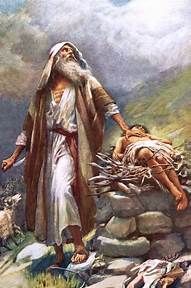
The first time we hear of Jehovah (or Yahweh) Jireh is in the story of Abraham and Isaac and the sacrifice at Mount Moriah. God asks Abraham to take his son– the son of the promise; the son for whom he had waited so long– and give him as a sacrifice. Nowhere else in the Bible does God ask for a human sacrifice– in fact, God says He detests the practices of the nations and religions who sacrifice their children to Molech or other gods. Yet, when Abraham obeys, in spite of whatever fear or horror is conjured up by the command, God stops him and provides a ram as an alternate sacrifice. Abraham names Him Jehovah Jireh– the LORD who will provide–as a result of that experience. (See Genesis 22)
But Jehovah Jireh means more than just God providing what we need in the moment or what we ask for in prayer. It also means, “the LORD who perceives, or experiences.” God does not just stand removed from our situation and write a blank check for us to cash when or how we see fit. God is with us (Emmanuel) and sees our deepest and most profound needs. He also sees our daily and even seemingly silly needs. He knows, He cares, and He provides good gifts. God did not send Abraham and Isaac alone on their perilous mission. He was right there, ready to step in and provide what was needed. What an amazing turn-around for Abraham. He went from anguish to absolute joy in those precious moments, and learned to know God in a personal, experiential, and powerful way.
Sometimes, we lose sight of that. Sometimes, it seems as though God is far away and indifferent, or even cruel. When Job accepted the loss of his wealth, his health, his status, and all of his children, it was not easy for him to say, “Blessed be the name of the LORD.” God had taken away nearly everything– in fact, the only things Job had left were some unhelpful finger-pointing friends and a complaining wife! But God restored everything that Job had lost, and then some! God does take away. And it hurts. He doesn’t stop us from experiencing heartache and grief. But even then, He is Jehovah Jireh– the LORD who experiences; the LORD who perceives. He does not leave us without hope or comfort, if we seek His face. As the Psalmist says: “The nights of crying your eyes out give way to days of laughter.” (Psalm 30: 5b The Message)
The story of Abraham and Isaac; the story of Job and his losses– each points us to another truth about how God is our provider. He provided His own Son to be our sacrifice– to pay the debt for our Sin, and to give us Eternal Life (see John 3:16). God experienced all the anguish and loss of death so that we would only have to taste it once. Jesus lost everything to gain our redemption. And He rose victorious over death, so we can have hope and joy in this life and in the life to come!
Recently, I was worried about finances– not because we had no money, but we had unexpected bills. I asked the LORD to provide, knowing that He could, but expecting that we would have to raid our “rainy day” fund to get through the week. But God had an amazing surprise– an unexpected gift of $100! Just when we needed it. God could have provided ten dollars, or a thousand dollars. He could have allowed us to dip into the “rainy day” fund and provided some unexpected money the following week. But I believe God saw, not just our monetary need, but my need to be reminded of His loving care and faithfulness. God knew what we needed. He provided what we needed. And He shared in our experience of dependence on Him and joy in His creative answer.
I don’t know where I will be today or tomorrow. I don’t know what needs are on the horizon. And I don’t know how or what God will provide. He may not provide healing for a disease, but strength for the fight. He may not provide a cash gift for our material needs, but He may provide opportunities to trade with neighbors or earn extra money when we need it next. Whatever God chooses to do– whatever He gives or takes away– He is my provider of abundant life. “Blessed be the Name of the LORD!”
































 Pursuing Prayer