Objects In the Mirror…

“Objects in the mirror are closer than they appear…” This notice is on the side rear-view mirror of my car. It serves to remind me that I cannot judge distances by what I see– that my mirror is meant to show a wide-range view, rather than one that is precise and in-scale.

Many things in life are similarly distorted. The actual objects in my rear-view mirror don’t appear distorted, but if I back up without considering the warning, I am likely to run into an object and “distort” my back bumper!

The Bible also warns us about distortion and mirrors. In James, chapter 1, the Apostle writes:

22 Do not merely listen to the word, and so deceive yourselves. Do what it says. 23 Anyone who listens to the word but does not do what it says is like someone who looks at his face in a mirror 24 and, after looking at himself, goes away and immediately forgets what he looks like. 25 But whoever looks intently into the perfect law that gives freedom, and continues in it—not forgetting what they have heard, but doing it—they will be blessed in what they do.
26 Those who consider themselves religious and yet do not keep a tight rein on their tongues deceive themselves, and their religion is worthless. 27 Religion that God our Father accepts as pure and faultless is this: to look after orphans and widows in their distress and to keep oneself from being polluted by the world.

James 1:22-27 (NIV)

We can easily read what the Bible says; we can easily hear the truth; we can even recite Scripture– and still be deceived and following a distorted version of God’s Word. As I write this, I can quote James, or another passage of Scripture, and walk away from the keyboard only to spread gossip, or snap at my husband, or in some other way distort what I know to be true about myself and about God.

The Apostle Paul also references mirrors in 1 Corinthians:

Love never fails. But where there are prophecies, they will cease; where there are tongues, they will be stilled; where there is knowledge, it will pass away. For we know in part and we prophesy in part, 10 but when completeness comes, what is in part disappears. 11 When I was a child, I talked like a child, I thought like a child, I reasoned like a child. When I became a man, I put the ways of childhood behind me. 12 For now we see only a reflection as in a mirror; then we shall see face to face. Now I know in part; then I shall know fully, even as I am fully known.

1 Corinthians 13: 8-12

Even though this chapter is famously known as the “Love” chapter, it also addresses our need to be alert, humble, and committed to acting on what we know to be true. We can speak of love, even perform acts of self-sacrifice, yet distort what it actually means to practice Love. If we glance at our lives in the distorted mirrors of pride or worldly comparison, we will lose our perspective and our proper focus– and end up damaging more than just a bumper!

This distortion can also infect our prayer life. We can pray on “auto-pilot”– looking at things in a distorted mirror, instead of focusing on God and putting things in their proper perspective. How many times have I prayed that God would help those in need, without ever considering how He might want me to DO something? Have I asked locally if there is a need I can help meet? Not just with money, but in time or service? Do I pray “globally” but ignore those right in my own back yard? Sadly, I must answer than I have been guilty of such distortion. Or how many times have I been in the one in need, praying for a miracle, while refusing the practical help that someone has offered? Have I prayed that God would “change” someone else’s attitude, without seeing that mine needs to change as well (or instead!)? Have I confessed a sin, without really repenting? There is temptation, waiting in my rear-view mirror– and much closer than it appears!–but I want absolution without discipline. I want help without humility. I want to love others– when it is convenient.

Thankfully, God WANTS us to see clearly. He gives us warnings about the mirrors we tend to use, and His Word helps us correct our focus.
God wants us to see things as they really are– both the horror of our sin and rebellion, and the wonder of His Grace. And sometimes, that means grappling with the distortions in the mirrors of our own making.

Leaning…

(Note: this is an edited and updated post from a couple of years ago.)

“What a fellowship; what a joy divine,
Leaning on the Everlasting Arms…”

Bethel Church, Penn Twp., Michigan

Years ago, growing up in a small community, and attending a tiny rural church in southwestern Michigan, we sang this song often at church. As a child, I liked the tune, but had little idea what the song meant. In fact, when I was very small, before I could read, I misunderstood the lyrics– I thought the congregation was singing “wienies” on the everlasting arms. I made my grandmother laugh when she heard my interpretation! She helpfully corrected me. So I knew the basics. I knew the word fellowship– that was what we called the pot-luck meals and social times we had in the church basement. I knew that Joy was like happiness, only better. I knew that “divine” referred to God and Heaven, and Holy things. But I also knew that leaning was frowned upon– I was told to stand up straight, sit up straight, and never lean back on the two hind legs of the chair in class. How could there by fellowship, and divine joy in leaning? And what were the Everlasting Arms? It sounded like the name of a hotel. It was a long time before I began to understand the joy of leaning, or even falling into the “everlasting” arms of the Savior.

As I have lived, I have grown to understand and cherish these words. There IS a fellowship and a joy divine in learning to lean on the Everlasting Arms of Jesus; to experience the strength and peace that passes my own understanding when I trust fully in Him, instead of in my own plans, whims, dreams, or wishes. There is no shame in leaning on God– in fact, if we don’t learn to lean on the solid wisdom and faithfulness of God, we will slouch into bad habits, “fall” into false teaching, or simply collapse in our own limitations and weaknesses, much like a chair leaning on just two legs! And this fellowship is not only with my Creator, Sustainer, and Savior; it is with all the brothers and sisters around the world who have learned to trust Him, too. I can travel to foreign countries, with different languages and customs, and still feel the kinship and “belonging” with other Christians. It is deeper and more mysterious than just the recognition that we are fellow human beings. It goes even deeper than the love for others who are loved by God. It is the recognition that God’s Holy Spirit surrounds us, flows in and through us, strengthens us, and unites us IN HIM. We are fellow travelers; fellow workers; fellow members of a universal family– one that is more inclusive than nationality, race, ethnicity, language, ideology, or denomination. We can (and do) lean on the ONE who is eternally trustworthy, eternally faithful to walk beside us, empower us, comfort and heal us, and lead us home. And we can lean on each other, knowing that our mutual strength comes from Him.

I love worship services, and I’m thankful that we have an active church where people worship; where the Bible is taught and revered; where families and individuals are welcomed and loved. But I sometimes miss the old “prayer meetings” in the church where I grew up. Every Wednesday night, while the children were (supposedly quietly) playing games, singing songs, and listening to the great stories of the Bible, a faithful (and sometimes rag-tag) group of adults were upstairs in a huddle. Some pulled up chairs and sat in a circle; others knelt the whole time. They prayed for nearly an hour–prayers of thanksgiving and prayers of urgent needs; prayers expressing worship, and prayers expressing inadequacies and failures; prayers for the children downstairs, for other members of the church family; prayers for the community, the country, and the world. As I became a teenager and a young adult, I was privileged to join in. I watched wise, older men and women express their confidence in God’s provision, and pour out their hearts for their children and grandchildren. I listened to young adults asking for wisdom and guidance as they raised families and witnessed to co-workers. I felt the joy and grief and true “fellowship” that came when several hearts turned as one to God.

I have since attended many “prayer meetings”– some planned, some spur-of-the-moment; some held in churches; others held in homes or dorm rooms, even on street corners or grocery stores; some lasting only a few minutes; others lasting hours. I am blessed to be able to attend a weekly “prayer meeting” on Wednesday mornings at my local church. There is something mystical about communal prayer– listening and sharing in prayer with others. The prayers of God’s people are compared to incense– and communal prayer is like a delicately-balanced blend of fragrances, infusing the very room with blessing, and even a touch of Glory. (For more about how prayer is likened to incense, see https://the-end-time.org/2017/06/13/how-is-incense-like-prayer/) It is yet another miracle of the power of prayer, that we can combine hearts and voices to honor God; to lift up very human concerns to the One powerful enough to hold each one in the palm of His hand. It should not replace personal prayer and Bible Study, or communal worship services, but it is a wonderful practice for any Christian to “come alongside” in prayer with fellow believers. It is also humbling to think about how such a seemingly small act can have far-reaching consequences.

God “inhabits” the praises of His people (Psalm 22:3). When we show up and participate in communal worship and prayer, we get a greater sense of God’s presence, His power, His Glory, His Love, and His eternal purpose. What a Fellowship! What a Joy, Divine!

Praying For Justice

There are a lot of unjust things in this world. And there are a lot of things that seem unjust to us, even when we know they will happen; even when we know they are part of God’s will.

Death seems unjust. So does disease. Poverty seems unjust. Natural disasters seem unjust. Yet they are the just consequence of sin. All have sinned; all must die. Sin causes an imbalance in God’s world– therefore, nature acts in ways that cause disasters and disease. Poverty stems from many sources– greed, laziness, theft– and while some of them may be caused by our own sin, many of the causes stem from the sin of others. And justice is usually beyond our ability to exact.

It is deep in the human heart to cry out for “justice.” But most of the time, we only want what we think is fair or proper from our own outlook. And we want it “NOW!” We want things to be simple and convenient. We want to be justified. We want to be “right” and to be “rewarded” for being so.

Jesus told an interesting parable in the book of Luke. It concerns a widow who was denied justice by a corrupt judge. Even though her case had merit, he would not hear it. He was not interested in giving her justice. But she persisted. She finally annoyed him so much that he gave her what was rightfully hers.

18 And he told them a parable to the effect that they ought always to pray and not lose heart. He said, “In a certain city there was a judge who neither feared God nor respected man. And there was a widow in that city who kept coming to him and saying, ‘Give me justice against my adversary.’ For a while he refused, but afterward he said to himself, ‘Though I neither fear God nor respect man, yet because this widow keeps bothering me, I will give her justice, so that she will not beat me down by her continual coming.’” And the Lord said, “Hear what the unrighteous judge says. And will not God give justice to his elect, who cry to him day and night? Will he delay long over them? I tell you, he will give justice to them speedily. Nevertheless, when the Son of Man comes, will he find faith on earth?”
Luke 18: 1-8 (ESV)

Jesus does not mean to imply that God is like the unjust judge. God does not close His ears to our cries for justice; But He also does not see our situation from our point of view. God WILL allow our loved ones to die. He may hear our prayers for temporary healing, but He will not prevent us from all grief or loss. And we may have to live through disease, poverty, and other circumstances that seem unfair or unjust– at least for a while.

Jesus is reminding his disciples (and US!) that God not only hears our prayers, but He cares about our needs, and He hates injustice even more than we do. God will not just act reluctantly to bring about justice for one widow. God will end the sting of death, the corruption of sin, and the need to cry out for justice once and for all. And even in this life, He can and often will give us miraculous answers to our problems with injustice. But there is a caution at the end of this parable. Do we have faith? I don’t mean the kind of faith that hopes and wishes that everyone in a particular situation will “get what is coming to them.” Nor is He talking about a faith that says, “God helps those who help themselves.” Rather, Jesus is talking about a faith that lifts up a situation to Him, knowing that He– and He alone– WILL keep His promises in His time and in His fashion. The kind of faith that can rest secure in knowing that “HE WILL DO IT!”

Are you trusting for justice today? Are you still waiting? Don’t stop praying. But more importantly, don’t stop believing!
Out of the Same Mouth

Likewise, the tongue is a small part of the body, but it makes great boasts. Consider what a great forest is set on fire by a small spark. The tongue also is a fire, a world of evil among the parts of the body. It corrupts the whole body, sets the whole course of one’s life on fire, and is itself set on fire by hell.All kinds of animals, birds, reptiles and sea creatures are being tamed and have been tamed by mankind, but no human being can tame the tongue. It is a restless evil, full of deadly poison. With the tongue we praise our Lord and Father, and with it we curse human beings, who have been made in God’s likeness. 10 Out of the same mouth come praise and cursing. My brothers and sisters, this should not be. 11 Can both fresh water and salt water flow from the same spring? 

James 3:5-10 NIV via biblegateway.com (emphasis added)

‘We have two ears and one mouth so that we can listen twice as much as we speak.’

Epictetus (Greek philosopher)

Have you ever made a tape of you speaking, and played it back to listen to yourself? Or have you had someone remind you of what you said earlier in the day or week? Have you been astonished to hear what came out of your mouth (or how someone else interpreted your words)? James, the brother of Jesus, had much to say about the dangerous power of an untamed tongue. “Fire”, “poison”, “corrupt”, “restless”, “evil”, and “deadly” are harsh words, but we should heed James’ warning.

Out of the same mouth come praise and cursing…
Out of the same mouth come worship and complaining…
Out of the same mouth come encouragement and gossip…
Out of the same mouth come blessings and bitterness…
Out of the same mouth come hymns of heaven and threats of hell…

And it’s not just our mouths, anymore. I see (and have seen it in my own feeds) posts on social media that make me wonder if the person posting is aware of what they posted just minutes or hours before–rants and boasts, complaints and smug condemnation sprinkled with Bible verses about Peace and Love, and pictures of puppies. We copy and paste, write and speak “in the moment” out of the emotions and thoughts that we allow to govern us. And while we may forget our momentary outbursts and random sarcastic comments, others do not. God does not ignore them, either. He can and will forgive them, but He isn’t “fooled” by our gracious cover-ups and flowery quote boxes.

Especially in this election season, it is tempting to let emotions and “righteous” indignation cause us to speak or post in ways that show disrespect, disdain, and even hatred toward neighbors, co-workers, and (yes, possibly) relatives who may vote differently or for different reasons than we do. We hurry to post or “share” clever put-downs or preachy thoughts about what others should “know” or how they should think and act. But would we say such things in person? Do we really mean to hurt others in our quest to be “right” or clever or morally virtuous in the eyes of a few people we barely know?

When I pray today, I need to “listen” to what I’ve been saying lately. Do I need to deal with hidden anger or resentment? Do I need to confess (both to God and to someone else) about gossip? Do I need to reconsider the way I speak about my relationships and my achievements (and failures!)? Do I need to stop following or sharing certain sites or content? Do I need to spend less time talking and posting than listening and praying?

The same mouth that praises God should be speaking life, peace, healing, and hope to those around me. The same mouth that promises to follow Christ, should promise to reach out to those for whom He died. The same mouth that gives thanks for Salvation should be eager to share the Good News.

The tongue is powerful–whether as a weapon or a tool; whether controlled or out of control. God wants to teach us to use it as a tool for good. Not just when we pray, or worship, but every time we use it!

“Now I Lay Me Down To Sleep…”

When I was still a young child, and a new believer in Christ, I learned this bedtime prayer:


“Now I lay me down to sleep.
I pray the LORD my soul to keep.
If I should die before I wake;
I pray the LORD my soul to take.”

I didn’t use this bedtime prayer every night; my parents taught me to say more personal prayers, whether at bedtime or throughout the day. In fact, I found this prayer to be somewhat morbid– praying about death before lying down for sleep. Still, it was an easy prayer to learn, with its rhyme scheme and easy rhythm.

As an adult, I look at this prayer from a very different perspective. I learned it from books, which had included it from revisions of earlier books, including old Mother Goose rhymes. The prayer (or a version of it) dates back to the 17th century https://www.dailyeffectiveprayer.org/now-i-lay-me-down-to-sleep-prayer/, and I imagine the thought of dying in the night was far more persistent than it is now for most children. This prayer offered comfort, not just about one’s own death, but the sudden death of a baby brother or sister, or the death of a neighbor, or one’s parent. Death, which often came in the night, was not to be feared, because God was bigger than both the night and the grave.

But as a adult, I also appreciate the simple trust that is expressed in such a short prayer. I often find myself at night fretting and praying about details and issues that I have tried to rationalize or “fix” in my own power. This prayer puts things in perspective– I pray the LORD my soul to keep. Basically, I lay everything, including my very soul, into God’s hands. Thus, I CAN “lay me down to sleep,” rather than stay up reciting a litany of little worries about which I can do nothing, or have already done what I could.

“If I should die before I wake…” The older I get, the more this line resonates. Not that I believe I am at death’s door, or anything, but death is less of a “monster under the bed” sort of concept than it was as a child. Death is a reality, and yet I can trust God to “take” my soul, snatching it out of the grave and raising me to eternal life with Him. Not because I know better than I did as a five-year-old, or because I have done “good” things over the past half-century and more– but because God said so in His Word, and I can trust Him to do what He says. Just like I learned to do when I was five!

Do I Serve or “Deserve?”

It struck me just the other day how similar these two words are in English. To serve is to work for; to perform a duty; to labor on behalf of someone else. A servant performs duties for a master; a worker serves his or her employer; I serve my customers as they visit my shop. To “deserve” is to work in such a way, or to show such qualities as to merit reward (or punishment).

Much of our Christian life here on earth is centered around service. I serve at church; “I serve a risen Savior;” even this blog is a way of serving– sharing the Gospel and what I continue to learn about prayer. Praying for others is a way of serving them.

But much of our culture centers around what we “deserve.” Even our service is often qualified and judged as being more or less worthy than other service. If I serve on a board of directors, it is considered more worthy, more deserving of respect, than if I serve as a janitor, a junior clerk, or a night watchman. If I serve in a public capacity as an elected official or an ambassador, I am considered more deserving than if I serve as a humble citizen. We see some positions as deserving of more money, more power, more respect, and more worth.

But that is NOT the way God sees our service. God gives good gifts, not because we “deserve” them, but because it is His nature to give. God sends the sunshine and the rain to everyone, regardless of whether they have “earned” a sunny day or “deserve” lovely flowers to grow in their garden. Similarly, when God allows for natural disasters, they affect both “good” and “bad” people in a region. Occasionally, God will show His divine favor by sparing a group, as He did with the Israelites in Egypt. The Egyptians were victims of ten plagues, while the Israelites, living in the land of Goshen, were spared. But that wasn’t because the Israelites “deserved” to be spared, nor that every Egyptian was “deserving” of punishment. Rather, the horror of slavery and oppression of the Israelites caused God to show His righteousness and His power to save those who were being unjustly treated. (A lesson our world has yet to fully learn!) And God promised Abraham, Isaac, and Jacob that He would be with their descendants forever, saving them from those who would oppress them. But in daily life around us, innocent people often struggle, while “bad” people seem to prosper. Why doesn’t God give us what we “deserve?”

What we “deserve” in this life is the consequence of our sin and rebellion against God’s holiness–and that is DEATH. A God without any mercy would simply allow for those consequences to take effect without any opportunity to repent or to experience His Blessing. God does NOT give us what we “deserve” here on earth. However, He notices our “service”– our desire and capacity to do good–at every level. He does not give higher value to those who serve in positions of power or authority– in fact, Jesus taught just the opposite:

25 But Jesus called them to him and said, “You know that the rulers of the Gentiles lord it over them, and their great ones exercise authority over them. 26 It shall not be so among you. But whoever would be great among you must be your servant,27 and whoever would be first among you must be your slave,  28 even as the Son of Man came not to be served but to serve, and to give his life as a ransom for many.” Matthew 20:25-28 ESV

Prayer often seems like a humble service– we often pray alone or in small groups. Very few people are praised for being “prayer warriors,” and many pray without anyone even knowing about it. Except God knows. He hears and He delights in our prayers. We don’t pray in order to “earn” God’s favor, or anyone else’s approval. But we pray to a God who gives us far more than we “deserve.” And we serve a God who delights in even the humble acts we do for others. A God who has promised us Eternal life with Him in Heaven! Not as a reward for our service; not based on our worthiness or self-righteousness, but based on the worthiness of Jesus! Heaven is our reward for His great sacrifice. We don’t “deserve” it, but we can rejoice in it, even as we serve quietly and humbly here on earth.

Prayers of Protection

My husband and I just returned from a week-long vacation. We had a very nice time, just getting away for awhile, relaxing, doing some fishing, and enjoying nature. We like to travel, and we like to take the “back roads” and scenic routes. Even so, we pray for God’s protection as we travel.

Praying for “travel mercies” or safety as we travel is not a magical formula. We were not expecting that God would somehow grant us a problem-free trip. Prayer doesn’t change the possibility that we could be involved in an accident, or our car might break down, or we might be subject to bad weather or natural disaster (on that note, we are praying for those impacted by Hurricane Helene– both residents and travelers). Rather, praying for safety in our travels is an acknowledgement that God knows what the future holds, and we do not. God is able to protect us from harm in a miraculous way, if He so chooses. But He is also able to bring us THROUGH tough times and even disasters. Prayer reminds us that we are not the sole authors of our own circumstances.

Nor does prayer negate our obligation to practice safety–we obey the traffic laws, check to make sure the car is in good condition, we wear seatbelts, and pay attention to driving conditions. Prayer simply reminds us that we are not the sole authors of our circumstances. We expect certain outcomes, but God knows both the expected and the unexpected outcomes; we proclaim our trust in Him, no matter what.

So what happened on our vacation? Was it all smooth sailing (or driving in our case)? Not quite. Yet I believe that God answered our prayers and showed His faithfulness. We took our Jeep and drove almost 500 miles away from home without any major incident. We did have to “pump up” one of our tires, and we experienced some rough driving when we went “off road” due to a wrong turn we took. (We ended up on a designated trail for off-road vehicles, thinking it was a short-cut to a rocky beach!) And, just as we were entering our home town at the end of our trip, we witnessed (but were not involved) in a bad crash involving a vehicle fleeing from the police.

I believe that God was with us–not just because we had a good trip with minimal troubles, but because He has promised to never leave us! I know faithful Christians who have died in terrible car accidents. Two years before I was born, my mother and grandmother almost died in an auto accident. God was still with them! Someone once asked me to think about all the “close calls” and even unknown dangers that none of us can see–We have no idea how many times over we “should” have died or “might” have faced grave dangers. In fact, on another vacation a few years ago, we were within 30 miles of home when we hit a deer. No one was hurt, but it could have been a disaster. The accident that injured my mother was along a route that she drove every day. In fact, most accidents happen within 25 miles of home. How easy to pray for protection for a long trip into the unknown and forget to pray when we are traveling to church on Sunday or to the movies on Friday night! Yet God may have protected us from death a hundred times over in our lives without our knowledge. It is only when we see the frightening possibilities that we acknowledge the miracles of His protection in our lives.

It can be difficult to see the hand of God when a miracle doesn’t happen. When “good” people die or suffer extreme pain as the result of a freak accident. We want life to “make sense.” We want our plans to, well, go as planned. And it can be too easy to claim credit when things DO work out just the way we expected. God did not let bad things happen to other people because He didn’t love them. And He didn’t let David and I have a great vacation because He somehow loves us MORE than others, or because we are somehow “better” or “more deserving” of a good vacation.

God answers prayers of protection– not because He has to, and not always in the way we expect Him to–God’s ways are NOT our ways. But we can trust Him, and continue to pray for protection and mercy as we travel through each new day. He IS Faithful. He WILL not leave us to face the unknown alone.

God’s Mysterious Ways

I write about prayer as a pursuit. Prayer is, at once, both simple and mysteriously complex.

It is a simple thing to pray–to direct one’s thoughts and words toward God. It is no more difficult than having a conversation with another person.

And yet it is not the same as talking to another person. God’s ways are not our ways. He is Holy, Sovereign, and Almighty. We come to God in need, but God has no “needs.” He has no need to confide in us, or ask for our help, or plead with us. Instead, He chooses to share with us His promises and His plans. He allows us to be part of His great work, and asks us to be His hands and feet and voice in this world. He pleads with us to come and spend time with Him and walk in relationship with Him.

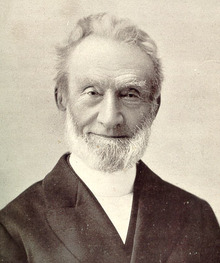
I spent some time recently reviewing the life of George Muller. https://www.georgemuller.org/ George Muller was born over 200 years ago. He was, by his own admission, a liar and a thief in his early years. But when we came to Christ, his life changed dramatically. His life was a series of miracles that attested to his great faith and active practice of prayer. Muller founded several orphanages in England, and he did all of it through prayer. He never did traditional fund-raising: he never asked anyone for money or donations, he didn’t take out loans, he didn’t find “partners” or “sponsors” to pay for any of the needs. He simply prayed. He prayed for money to buy buildings. He prayed that God would send workers. He prayed for food and clothing and furniture that the children would need. And he vowed to take in any (and as many) children who came.

The stories of George Muller’s faith are legendary. He prayed for money to start one orphanage– he ended up with enough for several! He prayed for supplies– people came and gave furniture. Milk wagons broke down and the milk was donated to the orphanage. One story states that there was no food one morning. Muller prayed. Shortly afterward, he went to the door, and there, on the doorstep, lay a 50-lb. bag of rice. No one knows who left it or how it got there. God showed up in miracle after miracle in Muller’s life. And that doesn’t mean that his life was without struggle or heartache. He agonized over friends who were unsaved; he prayed for them over a period of years. One close friend remained unsaved until after Muller’s death. He experienced the heartbreak of losing his wife. But he was consistent in his witness about the power of prayer.

Muller prayed about everything– as we all should, all the time. (Philippians 4:6, 1Thessalonians 5:17) Little, seemingly unimportant things; huge, seemingly impossible things. God cares about them all. He is the Almighty– there is nothing so big (or so tiny) that He cannot do it! There is no heartache or struggle that He doesn’t want to hear about! Nothing can separate us from His Love (Romans 8:38). No matter what we’re going through, we can bring it to God.

But God’s ways– powerful, compassionate, miraculous– remain mysterious. We can trust that God will hear our prayers. But we cannot predict how, or when, or if He will let us see the answers we seek. Nor can we predict how God will use our simple prayers to impact the world around us! George Muller’s orphanages helped more than 2,000 homeless children survive, grow, and in many cases thrive and contribute to the lives of countless others. And the stories of his faith and the hundreds of small but significant miracles he experienced have inspired generations of people for more than a century and a half! And his story is not unique–we have an amazing “cloud of witnesses” (Hebrews 12:1) throughout history testifying to the power of God to hear and answer prayer in mysterious, miraculous, even mischievous ways! From finding lost keys to feeding multitudes; from protecting kittens to rescuing captives; from stretching budgets to saving souls– God’s ways are mysterious, Holy, and wholly good.

Prayer can be such a simple thing– and it can have eternal impact!

Nacho Prayers

Have you ever ordered nachos at a restaurant? I’m not talking about just tortilla chips with sauce– I mean the loaded, deluxe, supreme nachos that some with everything but the kitchen sink. There are several layers of goodness: crispy tortilla chips, smothered in rich, gooey nacho cheese sauce, and piled with spiced meat, tomatoes, green onion, black olives, salsa, chilies, beans, more cheese (shredded), maybe even some mango or avocado, and sour cream. Each flavor is distinct– different textures, different temperatures–yet they come together as they land on your taste buds. And each bite is just a little different– a different ratio of cheese to meat to veggies to chips in each taste.

And that means that my nacho is “not ‘cho” nacho. Even with all the same ingredients, my nacho experience will never be exactly the same as yours.

In a strange way, prayers are kind of like nachos. Prayers have many distinct “ingredients”– confession, praise, anguish, supplication, thankfulness, even questions. And many people can pray with the same ingredients and still offer up unique prayers. My prayer is “nacho” prayer– and your prayer is not mine; even when we are praying together about the same thing.

God loves the variety and uniqueness of our individual prayers. He never tires of “nacho” prayers. And He never compares my “nacho” prayers with yours, or your prayers with mine. Indeed, He loves tasting the individual ingredients in their unique ratio of flavors and elements. He loves hearing our gooey, cheesy emotions, as well as our crisp list of needs; He appreciates the savory outpouring of our praise, as well as the spicy and even bitter tang of our grief.

Can you imagine the tantalizing aroma of our prayers as they rise to Heaven? What satisfaction it brings to God as we pour out our thoughts and concerns to the One who loves us best? God isn’t looking for gourmet prayers. Our prayers may be neatly arranged or completely sloppy. They may contain lumps of worry, or be soggy with emotion; they may be spiced with urgency, or smothered in majestic outpourings of praise. God is still hungry to hear from us!

Praying in the Dark

(This post is an updated version of one that first appeared three years ago, during the COVID pandemic. I have updated a few of the references to reflect the change. There is still a lot of darkness and confusion in the world, but some of the sources have changed a bit.)

The past few days have been a dark place for me. I don’t mean that something horrible has happened, or that my life has been upended. But things seem dim and indistinct. Some things I took for granted turn out to be less than sure. Events have been chaotic and tinged with evil and sadness. The present economy seems far from certain, and rumors swirl around the upcoming elections. Many places around the world are at war, and there is violence, unrest, crime, and uncertainty nearly everywhere. Even traditionally “safe” institutions like the family and the Church are under constant attack. It is difficult to know who or what to trust– everything seems shadowed and indistinct.

I read a novel a while ago, set in the early days of World War II in London. Because of the threat of air raids from Germany, the people were required to “black out” their windows at night, and drive with no headlights. People who had driven or walked around the streets of London with confidence just weeks before were being injured or even killed because they could no longer trust the once familiar streets. Craters and rubble from bombing raids, or hastily built ditches and barricades; hidden dangers filled neighborhoods. And people could not count on streetlights, headlights, or lights in windows to guide them safely home. At the same time, thousands of people, fearing that the Germans would use deadly gas, were carrying around gas masks (just in case!), and leaving them on buses or at pubs or train stations, because they were unused to the extra responsibility. Suddenly, the gas mask they were depending on was lost, and all the extra preparation turned out to be useless, anyway.

It reminds me how often I would see people just a couple of years ago, getting ready to enter a store, only to return to their car for their required mask. Many people wore them “the wrong way:” others wore them for months longer than necessary. Still others wore the same mask for several days but failed to wash their hands. Some people stayed in their homes for weeks, even when they could have spent some time getting fresh air at a park or one their porch or stoop. Others took great risks going to stores where other customers were sick. And many workers had no choice but to report to work, knowing they would be exposed to COVID. Many people refused to get the vaccines once they became available, while others were demanding that everyone had to get the vaccine or be charged with a crime. No one was sure if they were “safe”– even with masks, vaccines, and other protocols. It was a very dark time.

Hard times and difficult situations can cause us to shift our focus and have to learn new routines–even new vocabulary! At certain times, life almost seems “normal.” At others, we seem to be tossed by every new wave that comes along. It can be easy to lose one’s way in the fog and darkness of chaos and changing times.

The Psalmist and King, David, had words of wisdom for times like these: “Thy word is a lamp unto my feet, and a light unto my path.” (Psalm 119: 105 KJV)

Even when things seem dark and it feels like I’ve lost my way, God is right beside me. If I have no other “light” to see by, God’s word will be enough to guide me on. When I pray– even in the dark–God sees me clearly, and knows the way ahead.

Photo by Pat Whelen on Pexels.com

And I needed to be reminded of that again this week.

Blog at WordPress.com.

Up ↑