Let Every Heart Prepare Him Room


Joy to the world, the Lord is come!
Let earth receive her King;
Let every heart prepare Him room,
And heav’n and nature sing,
And heav’n, and heav’n, and nature sing.
Joy to the earth, the Savior reigns!
Let men their songs employ;
While fields and floods, rocks, hills, and plains
Repeat the sounding joy,
Repeat, repeat, the sounding joy.
No more let sins and sorrows grow,
Nor thorns infest the ground;
He comes to make His blessings flow
Far as the curse is found,
Far as, far as, the curse is found.
He rules the world with truth and grace,
And makes the nations prove
The glories of His righteousness,
And wonders of His love,
And wonders, wonders, of His love.
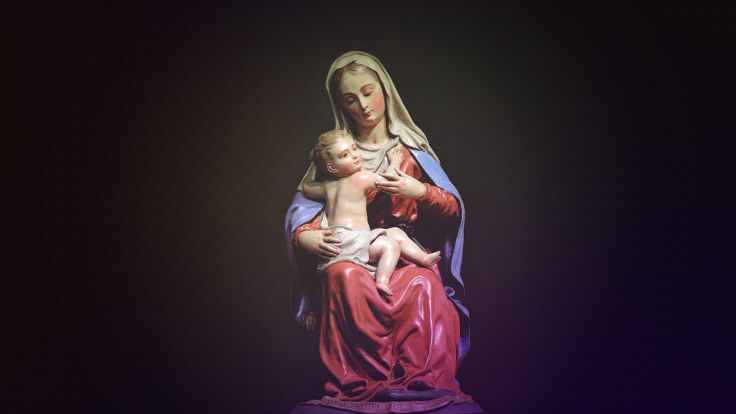
Joy to the World– words by Isaac Watts

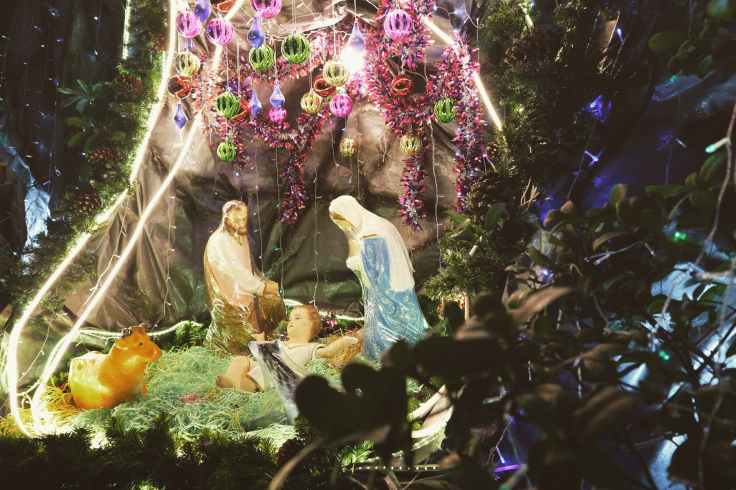
Advent is a time of preparation– joyful preparation. It is an oxymoron to say it, but it is a time when we remember with anticipation. It is a time once again to prepare our hearts for the arrival of an event that happened over two thousand years ago. Each year, we look backward to look forward! And we prepare as though it were all happening anew– the announcement of the angels, the travels of Mary and Joseph and their arrival in Bethlehem, the wise men following a star..

And we prepare for this year’s festivities– the gifts, the food, the decorations, the invitations and greeting cards, programs and parties, caroling and shopping…But in the midst of it all, hopefully, we prepare our hearts to be rekindled, reawakened to the wonder– beyond the star and angels and virgin birth–the wonder that God would ransom the lost, break the chains of sin and death, redeem the fallen and weary world, and pour all of his Glory into the frail cries of a newborn baby. All the rest of the preparation is meaningless if we don’t prepare to be overwhelmed again by the “glories of His righteousness, and wonders of His love.”

“Lord, may our hearts be prepared to accept the wonder and joy of this season. May we have new hearts for the wonders of your great Love for us– that you would humble yourself to live among fallen men and women, and die to set them free. That you would rise triumphant, so that we need not fear death. Thank you for this indescribable gift. Once again, let Earth receive her King with joy as all of heaven and nature sing!”

Epiphany!

I’m late writing this post today. The new year is unfolding faster than I had planned, and I come to this day unprepared.

But that’s kind of the idea behind Epiphany. We focus so much on preparation during the Advent and Christmas season that the season which follows can be lost in the shuffle of “getting back to normal.” Even at the historical birth of Christ, there was a real focus on everyone “getting back to normal” after the hustle and bustle of the census and the travel-weariness it generated. Very few people were focused on “Christmas” because Jesus was still considered one small child in a land of thousands of others. There were no Christmas traditions, no trees to un-decorate, no gift wrapping to put away for next year, no leftover cookies to finish eating. And then, twelve days after the glorious events of Christmas Eve and Christmas Day we celebrate Epiphany.

Also known as Kings’ Day, or Twelfth Night, this is the date we celebrate the arrival of the Magi (Kings or Wise Men) who traveled to Bethlehem to see the newborn King of the Jews. They did not arrive at the same time as the shepherds, and the account in Matthew has them visiting Mary, Joseph, and the Baby in a house. We must assume that Joseph found better accommodations for his family as the rush of census-taking waned, and yet he wanted somewhere safe to stay while the baby was still so small. The Magi came unannounced, unexpected, and “late” in the story.

The word “Epiphany” means a revelation or manifestation of something supernatural. The shepherds had gone through an epiphany when the angels appeared to them in the fields and told them to go to the manger on Christmas Eve. But the Magi, who had been following the star for months, finally had their Epiphany upon seeing the young child several days or even weeks after His birth. We don’t know that it was actually on the twelfth day after Jesus’ birth, but at some point, the Magi arrived at their destination and saw God in the Flesh! And their lives would never “get back to normal!” And their visit was a revelation to Mary and Joseph as well. The Kings brought expensive gifts of Gold, Frankincense, and Myrrh. They also brought the revelation they had received about the threat of Herod and the need to leave Bethlehem. If Mary and Joseph thought the worst was over, they were shocked into action by the warning of the Magi.

And yet, we celebrate this moment in time, this further revelation that a tiny baby was going to change everything. This knowledge that the Wise Men of Old held, and we can hold today– an encounter with Jesus is a revelation of the supernatural–this baby is GOD in the FLESH, GOD with US, GOD living AMONG us, GOD dying FOR us, GOD who will RETURN to REIGN over us. Nothing will ever be “normal” after such an encounter!

And I hope that can be said for all who read this– that we have encountered the Messiah; the Holy Son of God and Son of Man–and we have been forever changed! There is no end to the season of wonder and delight; there is no need for bright lights and tinsel-topped greenery, and no need to put away the joyful trappings of what His arrival really means.

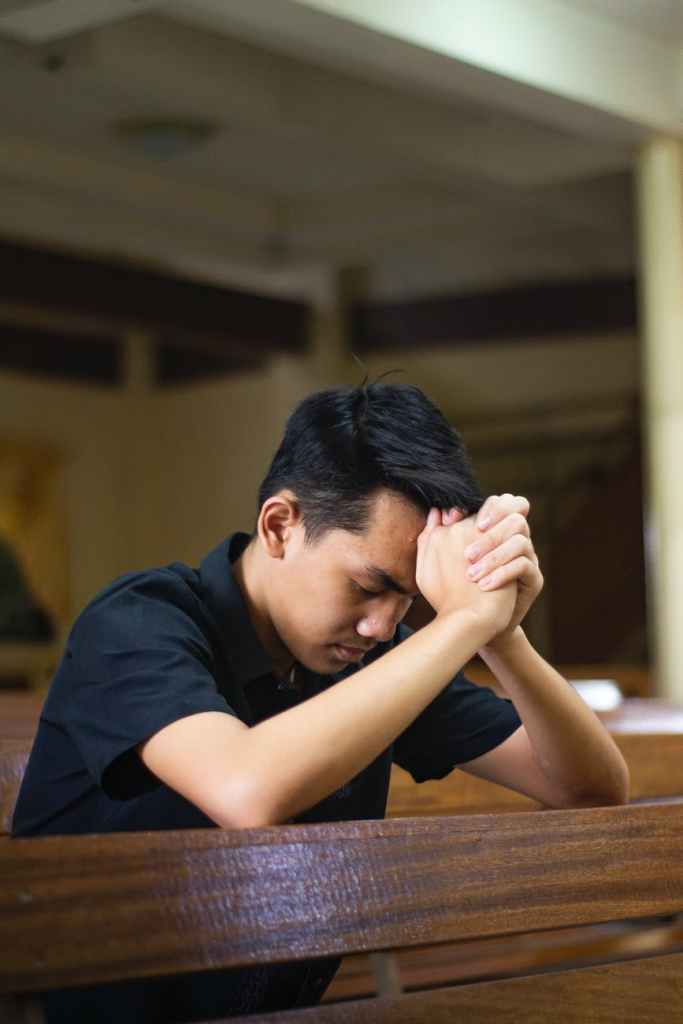
Epiphany should “sneak up” on us– any day, anywhere–it should amaze us and surprise us with Holy wonder as we encounter the reality of “Emmanuel–God with Us!” And it should cause us to respond with prayers. Not only joyful prayers and prayers of thanksgiving, but prayers in our weariness, prayers in our anticipation of days to come and trials to face. Just like the Wise Men, we may have a long and even difficult journey in 2025. But at the end of it we will encounter God– not as a sweet baby in the manger but as our Lord, as well as our constant companion, our champion, and our heart’s desire!

Are You Ready?

Someone asked me yesterday if I was “ready for Christmas.” They wanted to know if I had prepared for the holiday– had I bought and wrapped presents for the family, sent out Christmas cards, decorated the house, baked cookies, etc.? I had to admit that I was not ready in that sense. I don’t generally do much in the way of decorating, and I’ve cut back on the cookie baking, too. I don’t have all the presents purchased or wrapped.

But I AM ready for Christmas– I’m ready to celebrate the coming of Jesus to Earth; His life, death, and resurrection; the new life and hope that resulted from God’s boundless love. I’m ready to sing carols and light candles and rejoice! I’m ready to be awestruck again by the ancient story of shepherds and angels and wise men from the East; of the little town of Bethlehem and the manger stall and a bright star; of a newborn child; the Lord of all Creation wrapped in rags; the Word of God willingly limited to unintelligible cooing and soft cries, to nakedness and infant human weakness.

Being “ready for Christmas” means different things to different people. To many, it means surviving the stress of shopping, going to rounds of holiday parties, and trying to remember that it is supposed to be a season of “peace on Earth.” For others, it means watching the celebration from the outside looking in; facing loneliness, grief, regret, and envying or resenting those who have found joy when all they see is darkness. For some of us, it means reflecting on the amazing transformation we experience because of the coming of this single baby. We remember that there was a time when there was no Christmas– only a dim hope that God would someday send a Savior. Once the prophets could only speak of what had been promised, but not yet seen– could only remind people to “get ready” for something they had never known.

The world was waiting for the Messiah’s coming, yet it was unprepared for His actual arrival.

But the story of Jesus Christ didn’t end with Christmas. It didn’t even end at Easter, with the glorious resurrection. We await the triumphant return of the risen Christ. He is Coming! He will return in an instant…no long period of Advent; no countdown calendars or lists of things to get ready; no angels or stars to announce His arrival; no Christmas pageant or Easter sunrise service–just a trumpet blast and an explosion of Glory. He will not arrive as a helpless babe, or a suffering servant, but as a conquering King. There will be no carols about little towns and sleeping cattle; no time to “let every heart prepare Him room.”

Today, we prepare to celebrate Messiah’s coming. We spend time and money and energy getting “ready” to recreate the Advent of Jesus Christ. How much time have we spent getting ready for His return? I pray that this Christmas season will mean more than just a happy celebration of one event– even one as joyful as the Birth of Christ. Let us prepare our hearts to live out the joy of His Salvation, and prepare to receive our King in triumph.

Prepare Him Room

“Let every heart prepare Him room,
And Heaven and Nature sing!”

from “Joy to the World”, by Isaac Watts

I cleared a space in my living room for a tree.
I placed a Nativity set on our newly-cleaned mantle place.

I found a cozy nook to wrap all the Christmas gifts,
And I used candles and decorations to fill all the empty space.

I cashed in my Christmas club money to buy the gifts
For friends and family.

I set aside money to buy stamps for Christmas cards
And to give to charity.

I cleared my schedule and made time for
All the extra running this Holiday season.

For parties and shopping with friends;
For Church and family–all excellent reasons!

But it wasn’t until I made time and space for the Babe–
God come to Earth as a baby Boy–

It wasn’t until I let go of all of “it” for “HIM,”
That my heart was transformed with Unspeakable Joy!

Christmas has room for bells and lights,
For carols, and cookies, and festive nights.

Christmas has room for laughter and presents.
But it isn’t really Christmas without HIS PRESENCE.

“Let every heart prepare Him room” this year.
Let every heart be filled with true cheer.

Let us Adore Him–far and wide–
This Savior who was born; who died

And rose victorious over the tomb!
Who entered our world in a Virgin’s womb,

The one who came to save the human race;
The one who is filled with “redeeming Grace!”

May Christmas Day, and ALL our days
Be filled with Wonder, Joy, and Praise!

Today, as we celebrate the coming of Jesus Christ into the world, let us remember that He came into a world that wasn’t prepared. There was no room in the inn. There was no baby shower, anticipating the arrival of a long-expected birth. In fact, His birth came without all the trappings that we have added to the Holiday. I love all the wonder of the Christmas Season– all the lights and songs; gathering with family, and friends, Advent services and Christmas Eve candlelight vigils, gifts and cookies, Christmas movies and Christmas cards– I could go on for pages!

But the heart of Christmas comes quietly and simply; when we step back from all the glitter and activity and take in the absolute wonder that the God of the Universe stepped into all the limitations of His Creation– a world of time and space, dirt and disease, broken hearts and broken bodies–and He did it for YOU and for ME. He had to be fed and changed–the ruler of Nations!–and placed in a manger to lie in all the helplessness of infancy. He had to walk wherever He wanted to go. He had to eat and sleep and wait in lines and wash away the dirt and sweat of His exertions. He had to listen to the foolish arguments and explain Himself to critics whose very souls He had lovingly created. And He let them condemn Him unfairly and kill Him in the most painful and humiliating way they could dream up.

Christmas is about Joy bursting into a world that was NOT prepared for it. It is about the inextricable link between suffering and celebration; between seeking and being sought out; between salvation and sacrifice.

Our Joy at Christmas cannot be manufactured by songs or gifts or entertainments. It can’t even be found in rituals and traditions. But when Jesus finds room in our meditations, our relationships, and our lives, Joy is the overflow.

May we all find Joy this Christmas– whether or not we prepared in advance; whether or not we checked off all the items on our “to-do” lists; whether we can afford all the trimmings and decorations; even if we are crying out in the darkness– may the Joy of Christmas burst upon us, just as Jesus burst upon a weary world so long ago! 

“Joy to the world! The Lord has Come!”

Processed Prayer

I love to cook. I love looking at new recipes, and finding new ways to use fresh ingredient, use up that last bit of leftovers, or stretch staple foods like beans, flour, or rice. And I love to pray. I love being able to lift up praises, requests, and even questions. I love knowing that I can confess even my most shameful thoughts or deeds to a God who already knows, loves me more than I can imagine, and stands eager to forgive me and strengthen me to make wiser choices.

Cooking can be exciting, challenging, and creative. But it doesn’t have to be. I don’t have to cook at all in our culture. I can (at some expense) dine out every day, and let someone else do all the work. Or, I can buy pre-made meals, “processed” foods and “instant” mixes– “just add water,” “cooks in 6 minutes,” “ready to eat.” I can pray “processed” prayers, too. I can recite prayers of others, mumble graces by rote, and even read off a list of requests with little or no effort or emotion.

But processed prayer isn’t healthy– no more than processed food. Oh, it won’t seem much different– at first. And it isn’t “bad”–every once in a while. But a steady diet of praying someone else’s words and thoughts doesn’t build a personal relationship. We miss out on the “process” of praying, and the end result is not as fresh and healthful.

When I cook from scratch, I have to follow a process:

  • I need to make sure I have the proper ingredients.
  • Some ingredients need to be seeded, skinned, peeled, chopped, or otherwise readied before they can be used.
  • Ingredients need to be added in the proper order.
  • Measurements are important. 1 teaspoon of salt is not the same as 1/2 cup of salt!
  • I need to use the proper methods– simmer, boil, chill, bake, etc.
  • Timing is crucial, too. Cookies may take 10 minutes to bake– a roast may take 3 hours.
Photo by Gary Barnes on Pexels.com

Praying “from scratch” also follows a process:

  • I have to have the right heart attitude.
  • Distractions need to be put aside.
  • I want to include all the “ingredients” of a deep prayer– Adoration and Praise; Acknowledging God’s Sovereignty and Power; Confession and Repentance; Thankfulness; Presenting my requests; Lifting up the needs of others; and Committing to Listen and Obey God.
  • Timing is important–I need to make time to visit with God in Prayer. It shouldn’t be an afterthought or another activity to squeeze in IF I have a chance!

That doesn’t mean that we can’t (or shouldn’t) pray “in the moment” or recite The Lord’s Prayer, or the Prayer of St. Francis, or another written prayer. It doesn’t mean that we should make all our prayers from a “recipe” or a formula. But if our prayer “diet” is becoming dependent on “processed” prayers, we may need to go back to the kitchen!

Be Ready!

5-9 So don’t lose a minute in building on what you’ve been given, complementing your basic faith with good character, spiritual understanding, alert discipline, passionate patience, reverent wonder, warm friendliness, and generous love, each dimension fitting into and developing the others. With these qualities active and growing in your lives, no grass will grow under your feet, no day will pass without its reward as you mature in your experience of our Master Jesus. Without these qualities you can’t see what’s right before you, oblivious that your old sinful life has been wiped off the books.

2 Peter 1:5-9 (The Message–emphasis added)
Photo by Syed Qaarif Andrabi on Pexels.com

Do you plan for emergencies? Most people have some basic idea or plan for expected circumstances; a first-aid kit for home accidents; a small store of food or water; perhaps a generator in case of a power outage… But how many of us have a plan for the unexpected? Not just a vague idea of “what if…” but a plan. Some people have a stock of toilet paper and bottled water for their house or apartment, but no plan for what to do if they need to evacuate or relocate due to a flood or hurricane, or if they lose electricity for more than three days due to a storm, or if their building should catch fire.

Photo by Roger Brown on Pexels.com

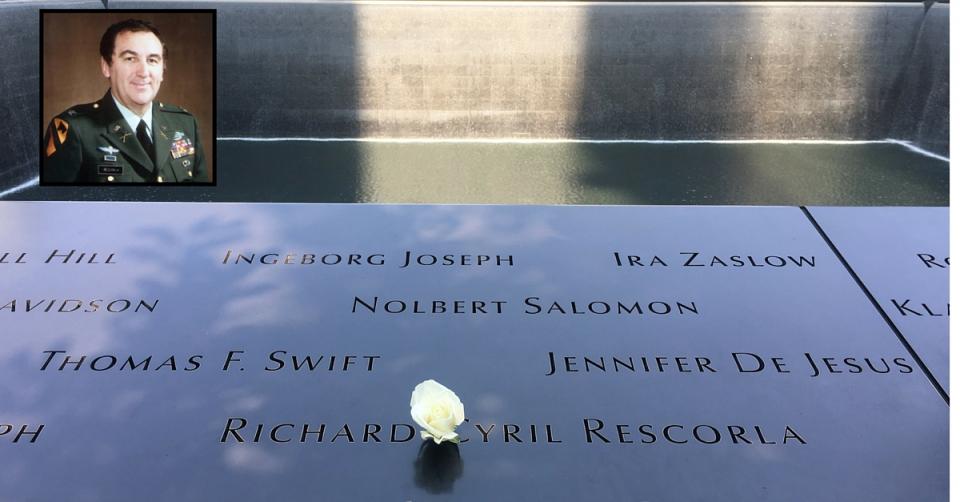
On September 11, 2001, when airplanes flew into the Twin Towers in New York City, several thousand people had to be quickly evacuated from the burning buildings. There were some plans in place; most had been misplaced or forgotten. And the chaos and confusion led to mixed messages– “stay put and wait for help…”,” don’t use the elevators…”,”get out as quickly as possible…”,” the stairways are unsafe…” But the vice president for corporate security at Dean Witter/Morgan Stanley, Richard Cyril Rescorla, was prepared for the worst. He had been planning and rehearsing for years after the failed attacks in 1993. He quickly implemented his detailed plans, ushering hundreds out of offices and into the stairwells, where they descended to safety in spite of the smoke and panic. He went back several times, checking to see who else needed help and guidance. Regardless of where they worked or who they were, Rescorla came with calm reassurance and authority, sending them into the path of rescue workers who could then offer greater assistance. Rescorla himself never made it safety– as he kept going up to get others out, he became trapped and perished when the towers fell. However, his years of planning, and his dedicated efforts on that fateful day saved the lives of hundreds, if not thousands of people. (See more here: https://www.911memorial.org/connect/blog/recognizing-war-hero-who-led-wtc-survivors-safety-911 )

We may not be called on to face another disastrous day like 9/11, but we are called to be alert and ready as we follow Christ. Those who followed Christ during His earthly ministry were called disciples. The name comes from the same root as discipline. They literally “walked” with Christ. They went where He went; they ate what He ate; they slept where He slept; they did whatever He asked them to do. If we seek to follow Christ, we must be ready to live lives of alert discipline. This comes after we take our first steps of Faith, and build on our character and understanding of God’s will. Our actions should not just be spontaneously “good” in the short-term, but patterned on the need to be prepared for the kind of challenges and trials we should expect to face. Just as Jesus was prepared for those who came to challenge Him with trick questions and false accusations, we need to be prepared to be challenged, rejected, and subjected to persecution. And we need to be prepared to respond, not with haughty complacency, outraged panic, or defensive tantrums, but with calm confidence and compassion.

The Apostle Peter, earlier in his letters, urges believers to be ready to give an answer (or a reason) for the hope that they have in Christ. (1 Peter 3:15) And this should not be a knee-jerk reaction to being challenged, or a snide commentary on doctrinal matters. We should be ready to be witnesses for the Majesty, Power, Grace, and Love of God as it has been experienced in our life and the lives of those around us. God never asked us to be His defense lawyers. He asks us to be faithful witnesses–not just of the facts about Him, but about our relationship WITH Him.

Photo by Andrea Piacquadio on Pexels.com

We also need to be prepared to be relocated or evacuated from lives of comfort, complacency, and expectation, in order to GO into the world and spread the Gospel. We will not all be called to be “missionaries” in the traditional understanding of the word, but we ARE all called to be on mission– to be ready to share our hope, our resources, our time, and our love– with others, near and far.

Photo by Porapak Apichodilok on Pexels.com

Today, I pray that God would continue to teach me as I live in obedience…that I would be alert and ready to speak, to walk, and to serve where and when and how HE sends. May I be ready to usher many others to safety as I share and live out the Gospel of Christ!

Keep Silence

We have entered the season of Advent, and as we prepare our hearts for the coming of the Christ Child, one of the first steps should involve quieting our hearts.

Photo by Laura James on Pexels.com

This can be difficult in the daily noise and bustle around us– particularly in this season! We have filled Christmas with sparkle and glitter; the ringing of bells and endless songs about reindeer and jolly fat men and decorated trees. But this is NOT Christmas– not yet. The bright lights of Christmas, the joyful songs of the angel hosts, all need a proper context. And that means a cold, dark night more than 2000 years ago. It means an emptiness. A heavenly silence that stretched over 400 years. Silence from heaven; silence in the earth; silence in the soul.

Photo by Markus Spiske on Pexels.com
Photo by Engin Akyurt on Pexels.com

In silence, we ponder. We wait. We anticipate–perhaps even dread– what may come. What will God say when He finally speaks again? Will it be judgment–severe, holy, deserved, undeniable? Will it be condemnation? Will it be that final pronouncement of God’s Holy Sovereignty, and our utter failure to measure up?

The joy of Christmas comes, not because of seeing light shows and snow glistening on trees, or listening to jingle bells and laughter. It comes from knowing that God’s Word is Peace! It is reconciliation and restoration. It is Freedom and Victory over Sin and silence and eternal Death! It is not first felt in the blaring of anthems and resounding of carols. It is in the soft cooing of new Life coming into a dark and silent world. Of everlasting love being wrapped in rags and gently laid in straw.

God delights in turning earthly things upside-down. And so He comes to us, not with fanfares and regal procession, but in stillness and gentleness, in the middle of a dark and silent night.

Alleluia! Alleluia!

No Particular Place to Go..

Back in 1964, singer Chuck Berry released a song called “No Particular Place to Go.” It was a catchy tune about a couple driving along on a date and having trouble with a new feature in the car– the safety belt– which ends up ruining their plans for a romantic stroll.

This may seem to have nothing whatsoever to do with prayer or Christian living, but stick with me…

Photo by Anna Shvets on Pexels.com

The writer of Proverbs includes a unique chapter https://www.biblegateway.com/passage/?search=Proverbs+9&version=NIV in which Wisdom and Folly–both women–call out to passersby inviting them to visit. Both say the same thing: “Let all who are simple come to my house.” But Wisdom has built her house, prepared the food and wine, and even sent out servants to help. Folly lounges outside her door, offering “stolen” water and “food eaten in secret–though she has done nothing to prepare for visitors, and so has nothing real to offer.

Photo by KoolShooters on Pexels.com

Both women call out, both women extend an invitation–the people are not looking for them; they are just passing by. And most of them have “no particular place to go.” And isn’t that the way with us sometimes? We don’t intend to fall into foolish habits, or get caught up in addictions. Nor do we look for wisdom in our fellowship over a meal, or in spending time at someone’s house. We can be very intentional in our actions, but fall victim to our interactions.

Photo by Julia Larson on Pexels.com

Spending time with people of wisdom– people who will pray with us and for us–is so important. Preparing our hearts for fellowship with others, and for time spent with God is not something we should leave for chance. Just as we take time to “map out” our goals for work or health or finances, we should take care to map out our relationships.

Photo by Mary Taylor on Pexels.com

That doesn’t mean we avoid reaching out to others, and inviting them to enjoy fellowship, or that we must turn down all invitations from others. But we must be careful not to be drawn into folly. Jesus ate with sinners– but He didn’t carouse with them. He spent most of His time with those who wanted to share His love for the Father, and those who wanted to learn wisdom.

Folly never has a “particular place to go.” She wanders aimlessly. She doesn’t see the danger ahead, and she doesn’t look for a better road. Folly drives off recklessly without fastening her safety belt. Folly scrolls through lies and ads and half-truths on the internet. She gets pulled into relationships that are unhealthy and activities that are unproductive. And she wakes up dazed and confused and unfulfilled.

Photo by MART PRODUCTION on Pexels.com

Wisdom walks in the way of insight– well-marked paths that lead to a clear destination. Wisdom seeks traveling companions who share the same destination. Wisdom pursues the truth, in person and on-line. Wisdom drives defensively and wears a safety belt (and knows how to operate it!) Wisdom seeks shelter that is safe, where she can be well-fed and find rest. She wakes up refreshed and ready to continue the journey.

Photo by Pixabay on Pexels.com

The fear of the Lord is the beginning of wisdom,
    and knowledge of the Holy One is understanding.
 For through wisdom your days will be many,
    and years will be added to your life.
 If you are wise, your wisdom will reward you;
    if you are a mocker, you alone will suffer.

Proverbs 9:10-12 (NIV)

Take My Life..

We have entered the Lenten season, and many of us have made plans to “give up” something for the 40 days leading up to Easter–chocolate, or certain meats, or a certain habit. It is traditional to use this time leading up to Holy Week to focus on preparing our hearts to receive the Gift of salvation that comes from Christ’s resurrection on Easter.

But, in a larger sense, there is nothing we can do to prepare for Grace– it is completely unmerited favor. My willingness to deny my sweet tooth for six weeks cannot make me ready for God to allow His wrath to fall on His Holy Son, so that I can be declared righteous for all eternity. It is no more than a gesture.

Photo by Francesco Paggiaro on Pexels.com

God is not impressed by our Lenten traditions. This doesn’t mean that we should not make the gesture; it doesn’t mean that we cannot grow closer to God by such observances. But we must not place too much reliance on them. Jesus Christ is the Author and Finisher of our faith (Hebrews 12:2). He gave up far more than we can imagine in order to rescue us from all that we deserve. Jesus not only gave up His human life on the Cross, He gave up His throne, His status, His omnipresence, and His omnipotence. He allowed Himself to be subject to human authorities, and He served those He had created.

Photo by Pixabay on Pexels.com

Jesus didn’t just “give up” something on His way to the Cross. He offered everything He was! May we seek to do the same. May we pray, along with Jesus in the Garden, “..not my will, but Yours be done..” (Luke 22:42)

A Whole “Lot” of Trouble

I’ve been following the story of Lot– a Biblical character in the book of Genesis, and the nephew of Abram/Abraham. I left off in Genesis 13, where Abram and Lot had to separate their flocks and herds. Abram offered Lot the opportunity to choose the best of the land– and Lot jumped at his opportunity. He chose the well-watered valley along the Jordan river, near the thriving cities of Sodom and Gomorrah, and moved his tents just outside of Sodom.

Photo by Pavel Bondarenko on Pexels.com

But the author of Genesis (likely Moses, writing generations later) adds a single sentence that foreshadows events to come: “ But the people of this area were extremely wicked and constantly sinned against the Lord.” (Genesis 13:13 NLT via http://www.biblegateway.com). It doesn’t take very long for this small detail to add up to a “lot” of trouble. The fertile Jordan valley may look like a paradise, but there are perils and pitfalls all around. In Genesis 14, we hear of a great war– five regional kings against four– with Sodom and Gomorrah caught in the middle. (https://www.biblegateway.com/passage/?search=Genesis+14%3A1-16&version=NLT) The armies and kings of Sodom and Gomorrah flee the battlefield, and straight into a series of tar pits. The opposing armies loot the cities, taking all the food and supplies. They also kidnap Lot and take all his possessions, because he was “living in Sodom.”

Photo by Arvind shakya on Pexels.com

Notice two important details here– Lot is no longer pitching his tents outside the city; he has moved into Sodom. When we make the choice to live “on the outskirts” of evil, thinking we will remain separate and untouched, we are asking for trouble. Lot cannot live in paradise and avoid the evil and war all around him. And he isn’t prepared for the consequences. The war is happening all around him, yet he has made no plan to escape or to fortify his home or property.

Photo by Suliman Sallehi on Pexels.com

Secondly, Lot wasn’t among the army or fighting with the kings– on either side! Lot stood for nothing; fought for nothing; defended nothing. Lot placed all of his hope and faith in blind chance– thinking somehow he would be spared the violence and war happening all around. He seems to have had no concern about his neighbors or their fate. He seems indifferent to their losses, and uncaring of their needs. One might argue that if the neighbors were so wicked, Lot had no obligation to help them, but his level of apathy and inactivity suggest that Lot was both self-centered and inept.

Photo by Pixabay on Pexels.com

One of Lot’s men manages to escape and bring word of this disaster to Abram, who mobilizes his men, makes a daring night raid on the army of the five kings, rescues Lot and restores all of the stolen property and other kidnapped people. The king/priest of the city of Salem (meaning peace) blesses Abram. The rescued King of Sodom offers Abram all the captured loot in exchange for the people, but Abram refuses. Unlike his nephew, who is enticed by lands and goods and wealth, Abram seeks only peace and goodwill.

This might have been the end of Lot’s troubles; he might have learned a valuable lesson. But he didn’t.

Will we?

Blog at WordPress.com.

Up ↑