Alpha and Omega

What does it mean when I pray to “the Alpha and the Omega?”

“I am the Alpha and the Omega,” says the Lord God, “who is, and who was, and who is to come, the Almighty.” Revelation 1:8 (NIV)

God exists. He is not bound by space or time. He was, and is, and will always be. And He is LORD of all that is, or was, or is to come. He is the source of all things, and they do not exist before or after or beyond Him.

As that relates to prayer– there is NOTHING that can take God by surprise; nothing that can exhaust His energy or His resources; nothing He has begun that won’t be completed; nothing lost that cannot be recovered or renewed. I can pray to Him about the most hopeless situation, knowing that God has already seen it from beginning to end.

He is Alpha– “The Beginning”–Except that God has no beginning or end. We do, and we understand time as a linear function. Everything else that we experience has a beginning, a middle, and an end in time. Dawn signals the beginning of the day; sunset marks the end of the day. Weeks, months, and years all have a beginning and an end. Our life cycle has a beginning and an end– we are conceived and born; we live; and we die. But we have a God-given curiosity to know “beyond” our own beginning. We study to see what came before us– history, genealogy, archaeology, paleontology– we want to know where we came from. And this is distinctly human. Cats don’t wonder about their lineage; dolphins don’t scour the seabed looking for bones and shells that may tell them about their ancestors. Humans, created in the image of God, want to understand and experience eternity past. And that is what God is– He was before the beginning. He is the source of our beginning. The Apostle John sums it up:

In the beginning was the Word, and the Word was with God, and the Word was God. He was in the beginning with God. All things were created through Him, and without Him nothing was created that was created. In Him was life, and the life was the light of mankind. The light shines in darkness, but the darkness has not overcome it. John 1:1-5 (Modern English Version)

He is Omega–“The Ending”–God has no end. But we do (at least our earthly life does). We do not want to think of death as the “end.” Scientists are constantly trying to explain what happens “after” death. And in spite of those who claim that there is “nothing,” most people have a hope (or dread) of what comes next. Even those who do not “know” God have a sense of immortality and eternity. We obsess about our “impact” our “legacy” on earth. How will we be remembered by those who come after? How long will our name still be part of someone’s memory or history? What is our ultimate destiny? Our ultimate “end” is to be with God. It is our purpose. It is how our earthly lives will be judged to have had real meaning. Was God our beginning and our end? Was He our first and last priority? Our best and highest thought? Heaven awaits us. There will be an “end” to life as we know it. But for those who trust in Jesus, there will be no endless darkness or soulless existence:

No longer will there be any curse. The throne of God and of the Lamb will be in the city, and his servants will serve him. They will see his face, and his name will be on their foreheads. There will be no more night. They will not need the light of a lamp or the light of the sun, for the Lord God will give them light. And they will reign for ever and ever. Revelation 22:3-5 (NIV)

When I pray to God, I’m not praying to the God of the Old Testament, the God of Ages Past, or the God of my parents– well, I AM– but more than that, I am praying to the God who always was, who surrounds me every second of NOW, and who will always be exactly as He always has been– Almighty, All-Knowing, Holy, Abundant, Gracious, Loving, Trustworthy, and All-Sufficient.

Believest Thou This?

John 11 (KJV)

In the Gospel of John, there is the curious story of Lazarus. Lazarus and his two sisters, Martha and Mary, were good friends of Jesus. There are other stories throughout the gospels of Jesus interacting with this family. But this story appears only in John’s gospel, and it contains some details that raise several questions.

The story begins with an urgent message. Lazarus is gravely ill, and the sisters send word to Jesus to come quickly. Yet Jesus seems to dismiss the message, saying that it is not a sickness that will end in death, and he lingers two days before he decides to begin the journey toward Bethany. There is no sense of panic or urgency in Jesus’s response. And, though it says he loved Mary, Martha, and Lazarus, he seems unmoved by their obvious distress.

When Jesus finally arrives, Lazarus has been dead for four days. The two sisters both mention, with some bitterness, that if Jesus had come sooner, their brother need not have died. Jesus never gets defensive, but he challenges the sisters about their faith. In his exchange with Martha, he says that her brother will rise again. She agrees that he will rise again in the resurrection at the end of time. But Jesus redirects her faith–“I am the resurrection, and the life: he that believeth on me, though he were dead, yet shall he live: And whosoever liveth and believeth in me shall never die. Believest thou this?” (v. 25b-26). Her statement of faith, in spite or her grief and bitterness, prompts her to act. She goes to find her sister and bring her to the Savior, that she might be comforted.

Martha’s faith is small comfort in the circumstances. Her brother is still dead. His body lies rotting in a nearby cave. Her faith is fixed in the distant future, even as the author of Life and Eternity stands next to her. Her belief is wispy– more of a wish or a dream than the solid God-in Flesh standing before her.

Yet Jesus chose to use this seeming defeat as a showcase for His power to give life and resurrection. Many people who saw this were transformed and put their trust in Him. Others saw Jesus’ growing ministry as a threat to their own power and authority. They reacted with fear and even anger, that Jesus would bring the miraculous into their well-ordered normality. The Pharisees, including the chief priest, Caiaphas, determined that Jesus must die in order to “save” them from the Romans. Instead of seeing Him as the agent of their eternal salvation, they saw Him as an obstacle to their limited “freedom” to operate under the Roman oppression.

What is my faith like as I pray today? Do I believe that God “could’ve” or “should’ve” solved a problem in my past? Do I believe that God is not acting fast enough or decisively enough? Do I have a wispy faith that God will make all things right in Heaven, but is uninterested in the “here and now?” Do I believe that God’s answers might upset my life or cause me to “lose” control?

God, as you challenge my faith, help me to declare even my weak and imperfect belief; help me to act on it, and bring others to you for comfort. For in doing, so, I may be preparing the way for an incredible miracle– for revival and renewal; for the glory of Your great Name! And help me to see your answers through eyes of faith, and not fear of the unknown. Help me to trust you for the future I cannot see– a future that is in your capable and loving hands.

Out of Time

We’re are approaching the end of another year. It’s time to finish old projects, close out budgets, put away the old calendars, and get ready to start writing a new year in our planners and checkbooks. As we prepare for a “new” year, we set new goals, start new projects, and think ahead to what “will be.”

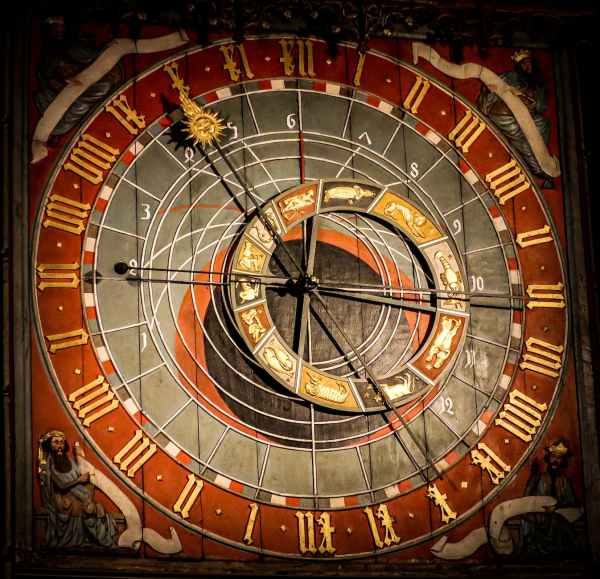
But, if you think about it, New Year’s Day will just be another day in a new week. The week actually begins on Sunday, regardless of when January first falls. We will go to sleep– possibly after midnight–and wake up just as we’ve done all the days of the past year, and all the days to come in the “new” year. Time is cyclical, as well as chronological. Time doesn’t go backward, but neither does it stop and “start over” when we complete a weekly cycle or at the end of a month, or year, or even a millennium. It just keeps repeating the natural cycles of day and night, moon cycles, and yearly orbits around the sun.

Yet, New Year’s Eve and New Year’s Day are important reminders about the nature of Time. God created the cycles of time– days and weeks, months and years–even though He exists outside of the boundaries of time. And God created the world with a beginning, and an “end.” As humans, we exist within these boundaries. Our years have beginnings and ends; our lives here have a beginning and an end, as well, even if the rest of the world keeps cycling around our short time on this planet.

New Year’s Eve reminds us of our own mortality. We need to be aware of the brevity of life, and the value of our time. We will come to an end. We will “run out” of time. Our plans and actions need to be accomplished in the time we have left. We may see the dawn of the new year, and of the year after that– but we do not know the moments and days we have left in our earthly lives.

But New Year’s Day also reminds us that God has NO end! His mercies are new EVERY morning, every week, and every new year! New Year’s Day reminds us that we can break old cycles and start fresh. We can look forward, instead of always looking back at past mistakes and regrets. And we can rely on God to continue to sustain us through days and weeks and years as they come and go.

Someday, we will be enter eternity. Time will no longer limit us. There will be no deadlines or endings for our dreams and activities. We will never “run out” of time. And we will never face an end of our access to God’s goodness and His Presence.

Photo by Bich Tran on Pexels.com

That is true today, at the “end” of this year, and it will be equally true in a few days, in the “new” calendar year. The calendar may change, but God never will! And we will never “run out” of time to spend with Him– if we have trusted Him for Salvation. What a wonderful thought as we “close out” one year and step into the unknown future of another!

Commencement Exercises

We’re entering graduation season. I’m already seeing notices of friends and family members who are, or who have family members, graduating from colleges and universities. Others are graduating from local high schools in the coming weeks. It’s an exciting time, when we celebrate achievements, encourage future success, and show support.

Photo by RODNAE Productions on Pexels.com

We often call the graduation ceremony “commencement exercises.” Commencement means “beginning.” But so often, the celebrations seem to focus on the past. We look back on memories and accomplishments, we bid tearful farewells to friends who will go their separate ways, we console parents whose children will be “leaving the nest.”

Photo by Feedyourvision on Pexels.com

Graduation is supposed to be a time of looking forward. But it can be difficult to celebrate things that have not happened yet. We wish all the graduates well, but we cannot guarantee that the road ahead will be filled with success. In fact, we can almost guarantee that the road ahead will hold obstacles, failures, struggles, and suffering along the way! Sometimes, it may be easier to focus on what we already know and have experienced, than to dwell on the unknown. But—

We are also heading into a season that has traditionally been one of many weddings. My parents, one set of grandparents, my brother and sister and their spouses– all were married in the month of June. At weddings, we don’t focus on the past– we look forward and celebrate all the possibilities of the future. It truly IS a time of “commencement”– a beginning of a new family. We don’t console the parents on “losing” their child; instead we congratulate them on adding a new member to the family. We don’t focus on the past achievements (and certainly not the past relationships!) of the new couple– instead, we eagerly anticipate the new life they will forge together.

Photo by Fernanda Latronico on Pexels.com

In light of weddings, graduations, and commencements, it may seem odd that I would be thinking about funerals, but I see a connection. Funerals are not celebrations in the same sense as weddings and graduations. They are solemn times of mourning loss and the end of life. We honor the memory of our loved one– we cherish the memories and achievements and relationships that were in the past, but we don’t decorate with balloons and ribbons; we don’t sing and dance and make joyful noises; we don’t speak of the future…

Photo by Pavel Danilyuk on Pexels.com

This is appropriate and natural. But at some point, as Christians, we should think beyond the end of this life and celebrate the “commencement” of eternal life. This short chapter of life has ended, but our loved one has merely “graduated” to a new and better life. Of course we grieve– we will miss the relationship we have shared in this life; our loved-one’s presence; shared jokes and memories of the past, or in the present; the familiar voice and listening ear; words of wisdom just when we need them– but our grieving is tempered with hope and joy. Not only will we meet again, but we will share a new life and a new relationship. The present may seem bleak, but the future looks very bright, indeed!

Photo by Aaron Burden on Pexels.com

Whatever type of “commencement” exercises await us this season, I hope we will take joy and find peace in the knowledge that God is planning exciting new beginnings at every stage of our lives and in the lives of others. Commencement awaits!

Praying For the Past

I was thinking earlier this week about a past friendship– one that involved pain, abuse, and struggle. While we have moved on, and I hope we have both found peace and closure, there are still memories, both good and bad. The past has a way of popping up at odd moments, and sometimes, it pops up in pain.

Photo by RF._.studio on Pexels.com

Prayer isn’t really about the past. What’s past is gone– but it can be redeemed. That is the Good News of the Bible. God is about redeeming our past, and transforming our present and future. When Jesus prayed, and when He taught His disciples to pray, He never mentioned the past. So what do we do with the past when it comes to prayer?

While I don’t have any complete or definitive answer to that, I do have a few thoughts:

  • Don’t wallow in the past. If Jesus has redeemed you, He has redeemed your past as well. Rejoice and be thankful for this incredible gift! We can’t erase the past, but we don’t have to keep living there.
  • Focus on the present, and give both your past and your future into His hands. It’s easy to say, and to write, but it takes time and effort and the work of the Holy Spirit to continue to do this. It’s a daily task!
Photo by Teona Swift on Pexels.com

If you are still bothered by aspects of your past, ask for wisdom to do the following:

  • Pray for wisdom to learn from the past–both your mistakes, and situations you have had to face.
  • Pray for courage to face the past– to apologize, to make atonement, or to rebuild relationships where possible, and the courage to let go of situations you cannot “fix.”
  • Pray for those people and situations that were part of your past–acknowledge them, and lift them up before God’s Throne of Grace.
  • Pray for release from lingering feelings of guilt, and lingering temptations to return to past behaviors and/or toxic relationships.
Photo by Min An on Pexels.com

The past can be powerful in shaping our present and future. God knows this, but He wants to remind us that He is MORE powerful! That doesn’t mean that we will sail through the present, or that we won’t carry scars from our past. But those scars are not the whole of our story, any more than the grave is the end of it.

He who was seated on the throne said, “I am making everything new!” Then he said, “Write this down, for these words are trustworthy and true.”

Revelation 21:5 (NIV)

Writing the Next Chapter

Welcome to the year 2020! The next 366 days stretch before us– new, unknown, and ready to be discovered, experienced, LIVED!

Photo by nappy on Pexels.com

It is tempting to make bold plans, resolutions, or vague wishes for all the days at once– trying to fold the entire year into a single goal or set of goals. But is this consistent with Biblical principles?

Today, I want to pray, as Jesus did, that God would “give us THIS DAY our daily bread”– that I would walk and talk with my Savior each day, each moment as it comes. That doesn’t mean that I make no plans or goals for the future; rather, I keep things in a proper perspective. God knows the future much better than I do. I know where I am and where I’ve been (hopefully!), but only God knows everything that lies ahead. My job is not to dream about the finish line, but to continue running the race– step by step and moving forward, my eyes fixed on Jesus:

Photo by Pixabay on Pexels.com

Therefore, since we are surrounded by such a great cloud of witnesses, let us throw off everything that hinders and the sin that so easily entangles. And let us run with perseverance the race marked out for us, fixing our eyes on Jesus, the pioneer and perfecter of faith. For the joy set before him he endured the cross, scorning its shame, and sat down at the right hand of the throne of God. Consider him who endured such opposition from sinners, so that you will not grow weary and lose heart.

Hebrews 12:1-3 (NIV) taken from http://www.biblegateway.com

Life is like a long race; it’s also like a story. As we enter a new year, we can look around and see where the story has brought us. Some of us are in crisis. Some of us have just defeated a giant, or survived a trip down the raging rapids. Some of us are headed for disaster, or about to head into battle. Some of us are caught in a trap and we can’t see any hope of rescue.

Photo by bruce mars on Pexels.com

I can’t change the race course I must face in the coming year. Nor can I change the story I’ve lived so far– I can’t change anyone else’s. But I know this– the next unwritten chapter is in God’s expert hands. God, the author of miracles and second chances. God, who turns shepherd boys into heroic kings; God, who transforms prostitutes into saints; God, who sends Himself naked and shivering into His rebellious creation knowing He will suffer and die at the hands of those He loved into being, and knowing that this death is not the end, but a glorious beginning! This God has a triumphant and joyous ending in store for me– for you!

Photo by Vlad Cheu021ban on Pexels.com

God has given us the amazing story of our lives–and the next chapter is here. God also gives us the amazing opportunity to write the next chapter. He will guide us through the process– bring in new characters and plot twists, or send us to new places through unexpected channels–but we have the power to choose the next step. Today and every day.

My prayer for this new year is a prayer for this new day. Tomorrow, I get the gift of taking the next step; of writing the next sentence!

Photo by Pixabay on Pexels.com

Blog at WordPress.com.

Up ↑