What Costs Me Nothing…

We’re coming up to Thanksgiving in the U.S. next week. Many families will sit down to sumptuous meals–turkey with dressing/stuffing (depending on what region you live in), pumpkin pies, sweet potatoes, corn, beans, rolls or muffins, salads, mac and cheese, casseroles, cranberry sauce, and more. Some will settle in front of big screen televisions to watch American football, and parades crowded with giant balloons and marching bands. Some will have modest gatherings with family and friends.

Photo by RODNAE Productions on Pexels.com

And the following day– Black Friday– they will rush to malls and giant box stores to take advantage of the spectacular sales. People will buy hundreds of dollars worth of Christmas gifts, all with the satisfaction that they might have spent a lot more if they had not braved the crowds and the 4 a.m. opening times (some will begin shopping on Thanksgiving Day for the “head start.” Others will stay comfortably and safely indoors and spend their money shopping on-line).

Photo by Artem Beliaikin on Pexels.com

All of this costs money, of course. But for many Americans, it is not a real pinch to celebrate Thanksgiving. And we will say “Thanks,” and count our many blessings. We will also give. Charities and organizations are already taking donations. We can give $10 at the store to help buy meals for the hungry. We can buy small gifts to be sent overseas or to be given to the children of those in prison, or those who are homeless. We can buy coats (or hats or mittens, etc.) for those who have none. These efforts cost some money, too.

Photo by cottonbro on Pexels.com

But how much of these efforts comes from true “thankfulness” and how much from other sources– pride or guilt or a sense of duty? For what am I truly grateful at Thanksgiving? Thankful that I have so much? Thankful that I have the power to help others? Thankful that I have the day off to go shopping?

Photo by Tim Douglas on Pexels.com

It is easy for some of us to be thankful and generous–in our own eyes. I can give with the click of a button, and money I barely know I have is taken from my bank account and deposited in the account of a charity I may know very little about. I never have to see the people who are helped, and I never have to see what they have suffered or how my gift makes a difference. In fact, I don’t really have to see whether my gift even arrives where I imagine or does what the charity has promised. Some organizations are more transparent than others, and more reputable or honest than others, but I can feel good just by giving. In some cases, I can “make a difference” without any cost at all– just “like” a certain site, or fill out a survey. I can “give” without even giving!

In recent years, however, I have been surprised by those who have tried to make me feel bad about giving. They are not angry because I have not given, or have given very little, or given to dishonest charities. No. One lady was outraged that I should give to an organization that sends toys, hygiene items, and school supplies to needy children in countries around the world. What caused her outrage? Three things–the toys were “too American”–the instructions were printed in English, or they were “frivolous” toys like jump ropes and “matchbox” sized cars and trucks. Also, some of the boxes and wrapping were printed with cartoon-like children, which she felt were “racist” in their depiction. Finally, the spokesperson for the organization had been portrayed by the media as narrow-minded and “hateful” toward the issue of gay marriage. Her solution: she was never going to give to such an organization. She was urging people to give to groups that were providing livestock, instead. Here, she felt, was a useful gift. Chickens, goats, cows–these were gifts that would truly make a difference. And such gifts can and do make a difference– in rural areas, where there is space and enough grass or other food to sustain such animals. Her gift will have little impact on a child living in Nairobi, or Tegucigalpa, or Kosovo. I am glad she has the means and the desire to give and to help. And the organizations who provide such gifts are worthy–I mean no disrespect to any of them. But giving should be a joyous outpouring of love and thankfulness, of compassion and humility. If that means helping a rural community get milk and meat, that’s wonderful. If it means sending a stuffed animal, some silly socks, and some soap and washcloths to Lebanon, that’s great, too. Even if I don’t like the wrapping paper…

Photo by Pavel Bondarenko on Pexels.com

My point is that a lot of our “giving” has become more about virtue signaling than joyously sharing with others to meet their needs. It costs a lot more in money to send a goat to Peru. But it may cost a lot more in time and energy to spend a day serving meals at a homeless shelter, or volunteer to rebuild in a community hit by a tornado or hurricane. And even though there may be a monetary cost to some of our gifts, in some ways, our “giving” costs us nothing. Not just little or nothing in dollars and cents, but little in emotion or thought or effort. There is nothing personal, or heartfelt, or sacrificial about some of our giving.

Photo by Liza Summer on Pexels.com

And if that is true of our giving to strangers, what does that say about what we “give” to our families, our neighbors, and to God?

Photo by MART PRODUCTION on Pexels.com

During the reign of King David, there are many instances of celebration and thanksgiving. But there are also stories of heartbreak, loss, and repentance. In one of these incidents, King David angered God by taking a census. His conscience caused him to ask God’s forgiveness and ask what could be done to take away the guilt. God sent the prophet Gad to give David three choices, but David left it in God’s hands. God sent a vicious plague that swept toward Jerusalem. When the angel of death reached the threshing floor of a man named Araunah the Jebusite, God told him to stop. David could actually see where God had stopped the plague, and immediately went to buy the threshing floor, so he could build an alter and sacrifice to the Lord in repentance and in thanksgiving for God’s mercy.

Read more about the story of David in 2 Samuel 24
Photo by Ihor Lypnytskyi on Pexels.com

King David had plenty of money. He also had authority, and the respect of his people. Araunah offered to give David not only the field, but the oxen to make the sacrifice. As the king, David could have taken the land and oxen– he could even have demanded them of Araunah. But David paid for it all, saying that he would not give to God that which had cost him nothing.

Photo by Kampus Production on Pexels.com

In this season of giving, it can be tempting to measure the value of our gift by the monetary cost, or by the value WE receive from giving. But true giving should involve a willing and joyful sacrifice of our pride and our time. Sometimes, this may mean NOT giving a toy or a goat–it may mean giving an apology, or a second chance, or being willing to give up a turkey dinner or a shopping trip, in order to visit a shut-in, or spend some much needed time on our knees.

Having said that, there are plenty of things we can give that cost us “nothing”–smiles, a warm welcome, a listening ear, reaching out for reconciliation, and most of all, a heart-felt “Thank You.” Sometimes, these gestures cost us nothing– sometimes, they are a sacrifice. But they are gifts that really make a difference.


Praying with Confidence

What does it mean to pray with confidence?

Does it mean that we pray with the sure knowledge that God will give us whatever we ask for?

Photo by Andrea Piacquadio on Pexels.com

22 Then Jesus said to the disciples, “Have faith in God. 23 I tell you the truth, you can say to this mountain, ‘May you be lifted up and thrown into the sea,’ and it will happen. But you must really believe it will happen and have no doubt in your heart. 24 I tell you, you can pray for anything, and if you believe that you’ve received it, it will be yours.

Mark 11:22-24 (New Living Translation)
Photo by Pixabay on Pexels.com

This is a difficult concept– and one I don’t fully understand. But I do believe the following:

  • “Confidence” means: “A trusting, or reliance; an assurance of mind or firm belief in the integrity, stability or veracity of another, or in the truth and reality of a fact.” (from studylight.org) Our trust is not in the power or our own words or in our worth, but in the power of God’s will to act justly, righteously, and in His sovereignty. I cannot ask God to act against His will and have confidence that He will give me what I ask for. Even if I ask for a miracle– like moving the mountain into the sea–I must trust that God will do it because it is part of His plan; not because God must obey my whims.
  • The more I learn of God’s power and love– by seeking Him, following Him, and experiencing His Grace–the more I will ask in confidence and assurance.
  • The more I seek my own will and ignore God’s wisdom, the more I will ask in arrogance and/or doubt.
  • Confidence will change the tone of our prayers from beseeching to believing–instead of asking for an outcome we don’t really expect, we will ask expecting that God already knows the outcome that is best.
  • Confidence doesn’t need immediate results. That mountain may not be moved in an instant. That doesn’t mean that it won’t be picked up and thrown into the sea–perhaps in our lifetime; perhaps in a year; perhaps in a thousand years. We sometimes trust in God’s power and willingness, but we forget to trust His timing.
Photo by Michelle Leman on Pexels.com

We can pray in confidence. In fact, we must learn to pray with confidence! And we can be confident that it will happen!

Photo by Ian Panelo on Pexels.com

3-6 Every time you cross my mind, I break out in exclamations of thanks to God. Each exclamation is a trigger to prayer. I find myself praying for you with a glad heart. I am so pleased that you have continued on in this with us, believing and proclaiming God’s Message, from the day you heard it right up to the present. There has never been the slightest doubt in my mind that the God who started this great work in you would keep at it and bring it to a flourishing finish on the very day Christ Jesus appears.

Philippians 1:3-6 (The Message)
Photo by Alyona P on Pexels.com

The LORD God Almighty Is His Name

He who forms the mountains, who creates the wind, and who reveals his thoughts to mankind, who turns dawn to darkness, and treads on the heights of the earth— the LORD God Almighty is his name.

Amos 4:13 NIV (via biblestudytools.com)
Photo by Quang Nguyen Vinh on Pexels.com

To whom do you pray? I know many people who address their prayers to “Our Father.” Others pray to the Name of Jesus, or to “Abba,” or even through a saint. I’ve heard some even use terms like “Daddy God,” or “The Man Upstairs.” But the One who hears our prayers, the Triune God of the Universe, is altogether Holy, Righteous, Sovereign, and Supreme. We forget that or diminish that to our peril.

Photo by Tima Miroshnichenko on Pexels.com

That doesn’t mean that we cannot draw near to our Creator– in fact, He wants us to call on Him and commune with Him. But He is more than just another someone we can talk to. He sees us– and He sees through us! We may be able to “fool” our friends and even our family with a false smile or half-attentive listening, but God is not fooled by our appearance or our shallow actions.

Photo by Dids on Pexels.com

The people of Israel, during the time of Amos’s writing, had formed a bad habit of “fake” worship. They prided themselves on their rituals– morning sacrifices, tithes, offerings, etc. They were religious– on the surface. But their lives were filled with greed, selfishness, corruption, pride, and apathy. They not only knew there was injustice all around them, they were willing participants!

They had pushed a loving and merciful God to His limits. He had sent plagues, famines, war, and other disasters to humble His people and shake them out of their sinful stupor. Hard times can bring people together; disasters can cause them to turn their eyes to Heaven; to ask for help, and to offer help to their neighbors. But these stubborn people used hard times to take advantage of those who were already in trouble– the rich watched in comfort and disdain as their countrymen starved. They cheated and hoarded while others were dying.

Photo by George Webster on Pexels.com

Sadly, the Israelites of Amos’s time are not so very different from people in our own time and countries. God’s warnings and pleadings don’t sound out of place in 21st century America. Or Europe. Or anywhere else. We have a form of worship– people who brag about their Mega-churches with worship orchestras, bistros, indoor playgrounds for the kids, light shows, and more; people who attend every “Christian” concert that comes to town, or attend retreats and seminars. And there’s nothing overtly “wrong” about such worship. But it has to translate into WORTH-SHIP–recognizing that God is not just another superstar; that His House is not just a place to be entertained or meet other “nice” people. That His Word is not just a bunch of stories about “other” people who messed up, with a list of suggestions on how to live a “better life now.”

Photo by Karolina Grabowska on Pexels.com

“He who forms the mountains, who creates the wind, and who reveals his thoughts to mankind, who turns dawn to darkness, and treads on the heights of the earth— the LORD God Almighty is his name.” May we never forget or take for granted WHO God really is. And may we always recognize His Worth and Majesty. May we be quick to listen and obey Him, and quick to repent when we go astray. That’s what He was asking through Amos and the other prophets– that’s what He asks of us today.

Prayer Priorities

What’s the most “important” prayer you can pray today? Sometimes, we think it is the prayer we pray in a moment of crisis. Or maybe the one we are asked to lead in front of a congregation. But the setting or the situation doesn’t make one prayer more important than any other.

It’s almost a trick question, really. Jesus never taught that some prayers were more “important” than others. But He did teach the some prayers were more effective than others. And His answers may be surprising to some.

Photo by sergio omassi on Pexels.com

The prayers Jesus praised were prayers of humble confession and needy request. God doesn’t judge our prayers– He judges the heart of the Pray-er. Jesus praised the prayer of the Tax Collector over that of the self-righteous Pharisee (Luke 18:10-14). While others might have been impressed by the Pharisee’s words and confidence, Jesus heard the desperation and the dependence of the Tax Collector. Just before this exchange, Jesus told the parable of a persistent widow, whose constant nagging resulted in getting justice from corrupt judge (Luke 18:1-8). It’s a strange parable–the woman is not meekly accepting of her situation; the judge is corrupt, initially refusing to do the right thing. Yet Jesus prefaces the story by telling his followers to “always pray and not lose heart.” (v. 1) So, the very prayers we dismiss– the nightly prayers for our loved ones, the “unspoken” request we lift up on behalf of a friend, or the seemingly unanswered requests–are no less important than any others.

Finally, Jesus praised (and prayed!) prayers that were “real.” He poured out His heart to His Father in the Garden of Gethsemane; He lifted up His friends’ needs at the Last Supper (John 13-17); He said simple grace before feeding the crowds.

Photo by RODNAE Productions on Pexels.com

So often, we judge our efforts when we pray– did we say the “right” thing? Did we say it the “right” way? Did we leave something out? Forget to say something? But God knows what is on our heart and in our mind. He knows what we “meant to say.” He knows everything we need– and all the needs of everyone else we could mention! He already knows all His names and attributes! And though He loves to hear us speak words of praise, He also listens to our heart, and–26 In the same way, the Spirit helps us in our weakness. We do not know what we ought to pray for, but the Spirit himself intercedes for us through wordless groans. 27 And he who searches our hearts knows the mind of the Spirit, because the Spirit intercedes for God’s people in accordance with the will of God. (Romans 8:26-27 NIV via biblegateway.com)

There is one caveat– because God knows our heart, He also “sees through” prayers that are insincere, proud, self-centered, and thoughtless. Some of the most “important-sounding” prayers fall short of touching God’s ears. He will not listen to the prayers of those who wish to “strike a bargain” with Him, or convince Him of their own self-worth. That doesn’t mean that God doesn’t value each one of us– after all, He became Sin who knew no sin, so that we could become the Righteousness of God (2 Corinthians 5:21). But God’s love is a gift–when we try to bargain for His gifts and earn His Grace with our eloquence, we lose sight of Who He Is.

Photo by Alex Green on Pexels.com

Many centuries before Jesus walked the earth, Hannah poured out her heart in tears, wordless anguish, and groaning. (1 Samuel 1). Her prayer was such a mess, the priest, Eli, accused her of being drunk! But God heard her heart, and answered her prayer, and because of her great faith, her son, Samuel led Israel through some of its most trying times. Hers was a very “important” prayer.

What if our stumbling effort to pour out whatever is on our hearts and lift it up to Almighty God–our praise, our failings, our grief, our desperate need–is be the most important prayer we can pray today?

No, Not One…

I would like to be thought of as a good, honest, decent sort of person. I think most people would say the same; some might claim flippantly that they don’t care, but very few people are indifferent to public opinion. We want to be liked and respected by others– we want to be included. But we also want to be “right.” There is a confidence that comes from knowing that our opinions and morals are shared by those around us, and that we are accepted.

Photo by Kampus Production on Pexels.com

We live in a world full of “right-ness”, but much of what used to be considered good, right, and moral, is now seen as intolerant, mired in sexist or racist traditions, hateful, and “wrong.” And the temptation is to rise up in defense of what we know to be right– to be identified with it, and to claim it as our own. It is tempting to pray that others will “see the light” or even “get what is coming to them” in light of where they stand on moral issues.

Photo by Andrea Piacquadio on Pexels.com

But God’s standard is much higher. God loves us all with an unfathomable and everlasting love, but He is not impressed by our self-proclaimed righteousness. Nor does He declare us “better” or “more righteous” than our neighbors based on what we believe or how we argue. “There is NONE righteous, no not one.” (Romans 3:10) Our righteousness comes from Grace by Faith (Ephesians 2:8).

Just because God loves us all, and just because none of us can earn God’s favor by what we do or say, doesn’t mean that morality is relative or even irrelevant. We should still fight to correct faulty characterizations of God and His Righteousness. But we must be careful not to let it become a personal crusade; to let self-righteousness blind us to our own dependence on God’s Grace.

Photo by Nikita Krasnov on Pexels.com

If we spent as much time learning humility as we spend trying to humiliate our rivals, we might see that our reputation is safe in God’s hands!

The Right Side of History

My nation– and even my community–is divided right now. People argue, accuse, blame, and reject their neighbors because of political beliefs. And they defend the “rightness” and righteousness of their own beliefs–even when they must compromise on other beliefs and teachings of the Bible. Some people use the phrase “I’m on the right side of history..” or “History will prove us right.” And they cross their arms, jut out their chin, and stand smugly convinced that they have won the argument.

Photo by Vera Arsic on Pexels.com

But history books are written by human beings– and usually those human beings who are in power. “History” is constantly in flux– some things that were deemed “virtuous” or “necessary” in the past are looked on with horror today. Times change; societies change; customs and morals change.

Photo by Wallace Chuck on Pexels.com

When we justify our politics, or our actions to others in this way, we are really saying, “whatever I am doing, saying, or supporting today will be judged “righteous” by future generations. And that may be so. Those who advocated for the abolition of slavery in America over a century ago should surely qualify as people who were on the “right side of history.” Yet, in the past year of rioting across my country, many of the statues that were toppled, and spray-painted, and chiseled, and marred were of abolitionists. Their moral prowess notwithstanding, they were seen as “old, white men” in old-fashioned clothing, whose lives and legacies were long forgotten, or confused with other “old, white men” who had supported slavery during the same time period. We delight in “debunking” cherished histories, toppling our heroes, and rewriting traditions. And we often compare our “struggles” to those of previous generations, even if the comparisons are skewed or largely non-existent. And in our fight to push forward a particular narrative or policy; in order to “take back” a certain position or tradition, we often lose our moral compass, believing the lie that “the end justifies the means” or that “might makes right.”

Photo by RF._.studio on Pexels.com

In order to be on the “right side of history” today, people tend to make certain compromises– regardless of what “side” they choose. Political parties tend to support diverse causes and groups. Whatever good policies they promote, chances are they also promote policies and beliefs that are in direct conflict with scripture. Words like “compassionate,” “wholesome.” “traditional,” “patriotic”, “liberal,”and “progressive” may sound noble, but they often mask actions and policies that are corrupt, wicked, and destructive.

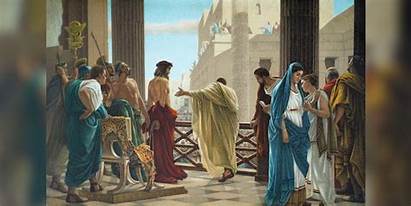
As Christians, we must be careful not to make “comfortable compromises” and to avoid righteous-sounding justifications. Just as importantly, we must be careful when confronted with labels and accusations, not to over-react or respond with bitterness or arrogance. If someone accuses me of being “hateful” or “gullible” because of my political beliefs, it is tempting to puff up and respond in kind. No one likes being judged. In fact, we are told in scripture NOT to judge, lest we be judged in kind. (Matthew 7:1-6) Jesus was often misunderstood, hated, falsely accused. He went to the cross after being found innocent by Pilate– who compromised by offering the Jewish people a choice of the innocent Jesus or the condemned Barabbas, instead of commanding that Jesus be released. In spite of his compromise, Pilate is not considered to be on the “right side of history” for his political masterpiece.

In fact– we are ALL on the WRONG side of of history! No matter how righteous our beliefs, ALL have sinned and fall short of the glory of God (Romans 3:23). Our allegiances, our morality, our political affiliations– none of them will save us from the just judgment of God, or the wavering judgments of future generations. We need, more than ever, to hold fast to the truth, and to seek God’s wisdom. When the final “history” is written, I want to be on God’s side!

Photo by Ray Bilcliff on Pexels.com

Simple Prayers

I know some people who refuse to pray aloud in groups. Some of them are just modest or shy, or they get tongue-tied and feel awkward. But some of them refuse because they feel their prayers are “inadequate.” They wish their prayers were eloquent or flowery, righteous-sounding or inspiring, but they don’t believe their prayers are “enough.”

Photo by Rodolfo Clix on Pexels.com

But God listens with perfect ears. He hears beyond our words. Simple, humble prayers– spoken or silent–are His favorite kind!

We often waste our time trying to impress God (or others) with our words. But God isn’t waiting to be impressed– He’s waiting to spend real time with His child!

When children are first learning to speak, we delight in their coo-ing and lisping. As they grow, we sometimes tune out their babbling, their stories, their griping, and their whining. But as the years go by, we miss hearing their voices, and we long to have them call and talk to us– even for a few minutes.

Photo by nappy on Pexels.com

God never tunes out our babbling, but when we don’t pray, He misses the sound of our voices and the sharing of our thoughts, just like any parent would.

Never discount the power and the value of simple prayers. God doesn’t!

Stop, Drop, and Pray!

Does it ever feel like you spend your days “putting out fires?” Taking care of little problems before they become bigger problems? Never getting a chance to rest or relax before the next crisis hits? Trying to put out a fire that keeps getting out of hand?

Photo by Produtora Midtrack on Pexels.com

Fires can become very dangerous very quickly. Experts advise that we shouldn’t try to stay and fight a fire for which we are not equipped–it puts you and others at far greater risk. There is a simple phrase that can help people survive and escape a house or building fire: Stop. Drop. And Roll. A similar phrase can be helpful in facing the spiritual and emotional “fires” we face: Stop. Drop. And Pray!

Photo by Jeremy Bishop on Pexels.com
  • Stop! Often when we face trials, our first reaction is to rush in and try to “save” things– ourselves, our loved ones, our possessions, our pride…the list goes on. This is a natural reaction, but not always the wisest course. In the initial panic, we are likely to make poor judgments, and miss warning signs. With the best of intentions, we can make situations worse: maybe we don’t have the skills, the equipment, the authority, or the knowledge to offer salvation or safety. That doesn’t mean that we must walk away from danger, or fail to offer help when we are able to do so. But it means that we must remember that Salvation and Wisdom come from God.

Photo by Vlad Bagacian on Pexels.com
  • Drop. Fire is an obvious danger, but smoke is a silent killer. We can see fire; we can feel the heat of it. But the smoke can immobilize us long before the flames reach us. Spiritually, we may be able to see obvious sins in others, but ignore the smoke of compromise and apathy in the air all around us. Smoke rises– just like pride, and arrogance, and denial. We need to be “on our knees” –lowly and humble– if we want to keep from getting choked and suffocated.
Photo by Tobias Rehbein on Pexels.com
  • Pray! Pray with a heart to listen for good advice and obey. Sometimes, we need to stay still and wait; sometimes we need to flee! Sometimes we need to get involved; sometimes we need to walk away. We don’t need to know the next seven or eight steps, however. We need to do the next right thing– even if it seems insignificant in the face of the threat. What we can see is not always where the danger is greatest, nor where the help is most available.
Photo by Emre Kuzu on Pexels.com
  • Finally– Don’t wait until you are in danger to practice these steps or prepare for what may lie ahead. There is a popular but unbiblical phrase: “God helps those who help themselves.” But this is NOT what God says! God says that He will help those who humble themselves (Luke 14:11; James 4:10); those who seek Him (Psalm24:6; Amos 5:4); and those who believe (Mark 9:23; John 20:29).

Praying in a Time of Protest

There is a sickness in our world. Call it racism, or bigotry, or prejudice. Call it power, or oppression, or tyranny. Trace its roots to fear, to greed, to a lust for power, to pride, to hatred… Expose it as government overreach, police brutality, white supremacy, corruption, indifference to the suffering of others. Protest it with signs, looting, rioting, tear gas, lines of police officers in riot gear, shouting, and anger. Lots of anger.

Photo by Pixabay on Pexels.com

There is not enough anger in the world to heal it.

Anger is a natural and even God-given emotion. God gets angry; even wrathful. It is right to be angry at injustice and hatred; division, greed, apathy, inequality, brutality, oppression, poverty, sickness, and death– they are unnatural, wrong, maddening.

Photo by Denniz Futalan on Pexels.com

But anger, even justified anger, cannot heal. It cannot build up, bind wounds, create peace. Anger feels powerful. It is active, dynamic, it tears down and threatens some of the powers that have, in their time, threatened us or those we love. It draws mobs that seem to share our anger– it looks like solidarity, even unity. It makes headlines. It creates “buzz.” It feels righteous and “right.” And it creates change. In the short term, anger “works.” Surging anger forces the oppressor to be quiet, go into hiding, make some small concessions…for now. Maybe they will pass legislation. Maybe they will give lip service to certain ideals. For now.

Photo by Daria Shevtsova on Pexels.com

God understands anger– he even shares anger. Jesus even got angry. But God does not sanction letting our anger spill into vengeance, violence, and retaliation of sin for sin. Our anger does not give us the right to judge others, oppress others, steal destroy, or condemn.

The New Life
17 Now this I say and testify in the Lord, that you must no longer walk as the Gentiles do, in the futility of their minds. 18 They are darkened in their understanding, alienated from the life of God because of the ignorance that is in them, due to their hardness of heart. 19 They have become callous and have given themselves up to sensuality, greedy to practice every kind of impurity. 20 But that is not the way you learned Christ!— 21 assuming that you have heard about him and were taught in him, as the truth is in Jesus, 22 to put off your old self,[f] which belongs to your former manner of life and is corrupt through deceitful desires, 23 and to be renewed in the spirit of your minds, 24 and to put on the new self, created after the likeness of God in true righteousness and holiness. 25 Therefore, having put away falsehood, let each one of you speak the truth with his neighbor, for we are members one of another. 26 Be angry and do not sin; do not let the sun go down on your anger, 27 and give no opportunity to the devil. 28 Let the thief no longer steal, but rather let him labor, doing honest work with his own hands, so that he may have something to share with anyone in need. 29 Let no corrupting talk come out of your mouths, but only such as is good for building up, as fits the occasion, that it may give grace to those who hear. 30 And do not grieve the Holy Spirit of God, by whom you were sealed for the day of redemption. 31 Let all bitterness and wrath and anger and clamor and slander be put away from you, along with all malice. 32 Be kind to one another, tenderhearted, forgiving one another, as God in Christ forgave you.

Ephesians 4:17-32 ESV via http://www.Biblegateway.com (emphasis added)

If you have read this far, some of you will say that I am being unfair– speaking out against protesters, but not against the evil they are protesting. And if I have never spoken out against injustice, if I have never called upon people to seek peace, never lifted my hand to help my neighbors, never encouraged, never offered help, never shared in others’ grief, then I am the worst of hypocrites. Stop reading.

Photo by nappy on Pexels.com

Anger asks us to act NOW– it asks us to abandon patience, prayer, and the promises of God, and take matters into our own hands–in our own power, in the moment, for the moment. And it tells us that we can and should act in the place of God to achieve what we believe to be His ends. Often, it asks us to act with little information, no time to reflect, and at the behest of others, who wish to use our anger to further their ends. Anger tells us that we can force evil people to surrender their power without being corrupted by it. And anger tells us that it has the only solution– the only action– that can bring peace.

Photo by BROTE studio on Pexels.com

Does this mean that no one should be angry? That we should do nothing active in the face of evil? ABSOLUTELY NOT! We should speak truth to our neighbors– not just the truth of our anger, but the truth of our hope for justice, our dependence on God, our love for our brothers and sisters, and our need for Mercy. We must not turn a blind eye to injustice, but we must work toward justice– not just vengeance. We must not sit silent in the face of bigotry, but we must love extravagantly– even those who seem unlovable and unwilling to love us in return. We must not silence those who are angry and hurt, but listen with respect and compassion–as we would wish to be heard.

Photo by Luis Quintero on Pexels.com

And we MUST pray! Pray for the grieving; pray for our enemies; pray for justice; pray for peace. Pray even when we don’t have the answers– especially when we don’t have the answers. Pray–fervently, feverishly– pray on our knees and as we pace in frustration. Pray like we’ve never prayed before. Pray until we break a sweat; until we hunger and thirst for GOD’S presence on every street corner, and in every household, and at every riot, and every government office. Those who would silence our prayers and hold them in disdain are trying to silence the power of God Himself! They cannot win, but they can keep us from sharing in God’s ultimate victory by marching in a fake war, instead of defending the Kingdom. We must take our anger to God and let Him show us the path to justice, action, peace, and healing. He may ask us to step out in ways we never imagined–loving our enemy; sharing the gospel; standing in solidarity with those we used to fear; forgiving those who have hurt us; asking forgiveness from those we have hurt.

Photo by Juhasz Imre on Pexels.com

There is not enough anger to heal the world. There is enough Love to save it!

Any One Who Is Without Sin…

I was re-reading a familiar passage in the gospel of John recently, and I was struck by a truth I had missed before. In the first part of John 8, there is a story about a woman caught in adultery https://www.biblegateway.com/passage/?search=John+8%3A1-11&version=NIV I have read this story many times, and even heard sermons preached on this passage. What struck me this time wasn’t exactly new material, or a new reading, but a new understanding of a detail that was there all along.

The story begins with Jesus teaching a crowd of people in the temple courts in Jerusalem. His teaching is interrupted by a group of Pharisees and teachers of the law. They have a woman caught in the act of adultery, and they come to Jesus asking his opinion about stoning her. They obviously know the laws of Moses, because they cite them. But they cite only a certain portion of the law, and they want Jesus to weigh in (so they can use his own words to trap him).

Photo by Sharefaith on Pexels.com

Jesus turns the tables, and passively bends down to write letters in the sand. He says only, “If any one of you is without sin, let him be the first to throw a stone at her.” One by one, the accusers and the crowd– everyone except Jesus–melts away. Finally, Jesus asks who is left to condemn the woman. There is no one. Jesus refuses to condemn her, and sends her on her way, telling her to “Go, and sin no more.”

Photo by Engin Akyurt on Pexels.com

Four details I want to highlight in this story:

  • There was already a crowd around Jesus before the Pharisees and teachers arrived. They did not bring this woman to Jesus to get an honest answer to a question, or to bring about justice (for that, they should have brought both her AND the man involved!); they brought her to a very public spot to humiliate her and trap Jesus. She was a pawn in a political and religious game, and she was guilty of a crime that was punishable by death. She was accused and forced to stand before a crowd to be condemned without a trial. So often, I read this passage, and my focus is on Jesus and the woman and the Pharisees– I forget that there is a crowd of ordinary people being “played” by the Pharisees for their own purposes.
  • Jesus never answers the question at hand. According to the laws of Moses, the woman should be stoned. That is the point the Pharisees want Jesus to address. They have set him up. If he agrees with their interpretation of the laws of Moses, he should insist that the woman be stoned. But this will be in violation of the Roman laws, and will lead to Jesus being arrested by the Romans. But if Jesus upholds the Roman law, he will be turning his back on centuries of Jewish tradition dating back to Moses. The problem is that the Pharisees have resorted to some half-truths. The laws of Moses DO speak of stoning; they speak of adultery being punishable by death– for both the man and the woman involved. However, the Priests and leaders of Israel have not followed this practice. King David committed adultery with Uriah’s wife. Neither one was stoned or condemned to death. There are no records of other adulterous couples being stoned throughout Israel’s history. So it is rather disingenuous for the Pharisees to bring this case to Jesus and ask him to speak judgment where they will not. Jesus knows this is not about actual justice; it isn’t really about the law of Moses– because they are not following it themselves! By turning the tables back on them, Jesus exposes their hypocrisy and failure in front of the very crowds they are trying to impress with their clever plans.
  • One by one, the woman’s accusers melt away. But it’s not just them, it’s the crowd of ordinary people– the ones who were likely riled up by the Pharisees and teachers. Think about the mob mentality–a guilty woman, caught in the act and brought before a teacher with moral authority–there is nothing like scandal to get a crowd of anonymous bystanders worked up and ready for blood. Yet, Jesus’ gentle reminder that any of us could be found “guilty” of something and condemned to shame and punishment puts out the flame of anger and resentment, and causes the mob to evaporate. No one is left to accuse, to curse, to insult, to humiliate, or condemn.
  • Finally, it’s down to Jesus and the sinful woman. There IS one person there who is without sin– one person who has the right to throw stones, to judge, to punish. Yet he reaches out with compassion and mercy. He is still righteous– he doesn’t shrug off the woman’s sin. He doesn’t say, “Well, that’s no big deal. Let’s just pretend that never happened.” or “I think you’ve learned a valuable lesson here today, young lady.” He simply says, “Neither do I condemn you. Go now and leave your life of sin.”
Photo by Ivandrei Pretorius on Pexels.com

Next time, I want to address each of these details from a practical standpoint in light of modern circumstances, and what lessons I am taking from Jesus’ actions.

Blog at WordPress.com.

Up ↑