They have healed the wound of my people lightly, saying, ‘Peace, peace,’ when there is no peace. Jeremiah 8:11(ESV)
While people are saying, “There is peace and security,” then sudden destruction will come upon them as labor pains come upon a pregnant woman, and they will not escape. 1 Thessalonians 5:3 (ESV)
Peace I leave with you; my peace I give to you. Not as the world gives do I give to you. Let not your hearts be troubled, neither let them be afraid. John 14:27 (ESV)
I have said these things to you, that in me you may have peace. In the world you will have tribulation. But take heart; I have overcome the world.” John 16:33 (ESV)
4 Jesus answered: “Watch out that no one deceives you. 5 For many will come in my name, claiming, ‘I am the Messiah,’ and will deceive many. 6 You will hear of wars and rumors of wars, but see to it that you are not alarmed. Such things must happen, but the end is still to come. 7 Nation will rise against nation, and kingdom against kingdom. There will be famines and earthquakes in various places. 8 All these are the beginning of birth pains…21 For then there will be great distress, unequaled from the beginning of the world until now—and never to be equaled again. Matthew 24:4-8; 21 (NIV)
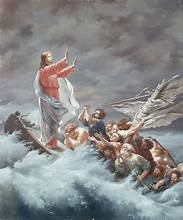
One of the prophetic names given to Jesus in the book of Isaiah is “Prince of Peace” (Isaiah 9:6). And yet, Jesus did not bring an end to the Roman occupation of Judea while He walked the earth. He did not end slavery or war or oppression. He did not bring the kind of “peace” that most of us look for even today. We live in a world of war, dissention, upheaval, and chaos. There is hatred, injustice, slavery, abuse, and oppression, and none of the efforts to bring peace in our world have succeeded in wiping out any of these evils. In the nearly 2000 years since His crucifixion and the rise of the Christian Church, these evils have remained. Great strides have been made over the years– slavery is officially outlawed in many areas of the world; human rights have been codified. Humanitarian efforts have greatly decreased the number of people who die of starvation and disease, homelessness and exposure to the elements. But there are thousands, and indeed hundreds of thousands of people around the world who are refugees from their home countries, who are denied human rights, who live in fear of bombing raids and terrorist attacks.
Where is the Peace?
Jesus spoke freely of the tribulations His followers through the generations would face. He never promised us a world without any trouble. He promised that, in this life, we WILL have trouble. And it will increase over time. People will grow suspicious, hateful, and cold. Nations will rise up against other nations; families will be divided in such a way that one’s greatest enemies will be their closest relatives! Wars and natural disasters will intensify. And ONLY Christ’s return will stop any of it. Human efforts may make a difference for a short while, or make a small difference for a long while, but nothing we can do, single-handedly or as a human race, will deliver us from the evil that lives in the human heart. In fact, we often delude ourselves into thinking that we can change the world on our own; we seek to force our plans on others “for their own good,” little knowing that we may be sowing the seeds of bitterness, backlash, and revenge.
Jesus Christ is the Prince of Peace. He will administer perfect peace and justice when He returns. And in the meantime, He offers us an inner peace that passes all understanding. We can experience peace as bullets whip around us; as we are being misunderstood, mistreated, and abused; as we face injustice and oppression. We can do this because Jesus gave us the example. He did not fight back or even complain as He was arrested, falsely accused, sentenced, and executed. He did not seek to force everyone to accept His rightful claims. He did not even protest the unjust treatment of His people by the Romans.
What He did instead was to focus on God’s mission– He interacted with those who were suffering; He healed the sick; He brought comfort to those who were grieving. He brought sinners to repentance and sought to make peace between individuals and God. Jesus is the Prince of real and lasting Peace– not just peace in “our time” or peace for a generation, but eternal and everlastingly joyous Peace. This is the kind of peace that sees trouble and tribulation for what it is– temporary and transformational. Suffering can make us bitter or better, and Jesus shows us how to experience the latter. When we protest instead of pray, we forfeit that peace. When we pray, we gain wisdom in how to stand firm against injustice without losing our own peace and perspective.
These are not peaceful times, but we can still experience peace, hope, trust, endurance, joy, and light in the days ahead, thanks to our Prince of Peace.
My given name is Lila June. I was named after my great-grandmother, Lila, and my aunt, Ila June. I have never used a nickname or my middle name, but my Aunt June rarely used her given name of Ila. In fact, she used it so seldom that she forgot it. Not literally forgot that it was her name but forgot that anyone might use it to refer to her. She and her husband lived on a series of Army bases, and when she went to the doctor’s office, they used the name on her official paperwork. A nurse would come out and call for Ila to come back to see the doctor. Startled at first, she looked around the waiting room to see who else could possibly have the same unusual name– only to hear the nurse call for Ila Mellinger! SHE was the Ila being called. But it took her a few moments to respond.
I was reminded of my aunt, and her name, this week. On my Facebook feed, there was a short video by a pastor. In the video he was lamenting that, in his view, the modern Christian church is so focused on practical Christian living– on good deeds and kind words; on outreach programs and building projects– that we have lost sight of WHO GOD IS! We serve the church; we serve the community; we serve our own notion of what makes us “good people,” but we do not serve God, because we don’t really know Him.
He was placing much of the blame for this on other pastors and institutional leaders– saying that they were at fault for not teaching the names of God. I’m not sure I totally agree with him. I think there is some merit in what he said, but ultimately, when I stand before the throne of judgment, I’m not going to be asked whether my pastor taught me the names of God. I will not be asked how much I knew ABOUT God. I won’t even be asked whether or not I know God–I will either hear that my name is in the Lamb’s Book of Life, or it isn’t! My pastors might face judgment for how true they were in teaching the Gospel, but my mission is to know God experientially. It is MY job to learn who God is, and to follow Him— to trust and obey Him.
But I DO agree that modern churches spend less time on this subject than I remember in my church growing up. Not because we spent so much time on the list of individual “names” of God, but we spent more time in worshipping God for WHO HE IS, and not for what he’s done for me, or what I can be doing for Him, saying about Him, or “identifying” as a Christian, a Christ-follower, or a Believer (and all the tiny differences in meaning that those terms might have).
Part of that comes from the habit of studying the Bible as a narrative. We used to study the “patriarchs” of the Old Testament, the “red letter” words of Jesus Christ, and the letters and “acts” of the Apostles. In fact, it is no longer politically correct to even use words like “patriarchs,” and out of fashion to teach the Bible as historical fact. But there is a value in studying this way– not because the characters are mostly men, or even because they are “heroes of the Faith.” It is important to study them precisely because they are so flawed and broken and in need of a Savior– just as we are! And as they encountered God or walked with Jesus, they saw Him– and NAMED Him– for all of His attributes.
In the Old Testament, He is Yahweh, Jehovah, the LORD. He is Almighty. He is the God who sees, the God who hears, the God who saves, the God who provides, the God who saves, the All-sufficient One, the Lord (who) is my Shepherd, the Most High God, the One whose name is a Strong Tower, the Everlasting God and the Lord of Hosts, among others. Jesus, the promised Messiah, also has a host of names, including Wonderful Counselor, Mighty God, Everlasting Father, Prince of Peace, Lion of Judah, Son of God, Son of Man, Emmanuel, Light of the World, the Living Word of God, Savior, Master, Redeemer, Rabboni, the Bread of Life, the Living Water, the Lamb of God, the Risen Lord, the Alpha and Omega, and many more. What a rich picture of God we get from His Names!
I also remember the old hymns and worship songs doing a better job of helping us to see the God of the Bible. I know we have modern worship songs that include God’s many names and attributes, but others seem to concentrate, not on who GOD is, but who I AM because of God–I’m forgiven, I’m a Child of God, etc. I miss the old hymns that remind me that God is a Mighty Fortress, He is my Vision, my Blessed Redeemer, the Rock of Ages, whose grace is Amazing, and whose Love is “greater far than tongue or pen could ever tell!”
I don’t want to “forget” any of the many titles and attributes of my Father, His Son, or the Holy Spirit. When I lose track of them, I am less likely to worship, less likely to obey, and less likely to turn to Him first in every situation. As we close in on Easter this year, I want to spend some time looking at some of His many Names. But for today, I want to take a deep breath, and worship the one who is “worthy, O LORD, to receive Glory and Honor and Power” (Revelation 4:11).




 Pursuing Prayer