“Say to this mountain…”

In reply Jesus said to the disciples, “If you only have faith in God—this is the absolute truth—you can say to this Mount of Olives, ‘Rise up and fall into the Mediterranean,’ and your command will be obeyed. All that’s required is that you really believe and have no doubt! (Mark 11:22-23– The Living Bible)

Have you ever said to a mountain– “Rise up and fall into the Mediterranean?” I doubt any of us have done so. But is that what Jesus really meant when He gave this instruction to His disciples? What was He really trying to say?

The Bible is crammed full of literary devices– metaphors, parables, hyperbole, personification–and yet people get criticized for reading it too “literally” or too “literarily.” In this passage, Jesus uses hyperbole to show that we can boldly pray about ANYTHING– there is nothing too big or too impossible for God to accomplish. But Jesus is not suggesting that we foolishly ask God for ridiculous things just to demonstrate His power. In fact, Satan tempted Jesus in this very way in the desert (see Matthew 4:1-11 and Luke 4:1-13). He asked Jesus to throw Himself off the highest point of the Temple, to prove that angels would come to His rescue and He wouldn’t be hurt. But Jesus rebuked him, saying, “it is also written, ‘Do not put the LORD your God to the test.'” So, it seems that Jesus is not “literally” asking His disciples to move physical mountains just to prove it can be done.

To put this scene in context, Jesus had passed by the same road just a day before, and looking for a snack, He had passed a fig tree, but the tree had no fruit. Jesus casually made a pronouncement– “You shall never bear fruit again!” When He and the disciples pass that way again just a day later, the tree has withered, and the disciples are astonished. But the lesson here is not about trees and mountains– it is about Faith and about the power of our Words.

We may never have cause to move an actual mountain, but there are many metaphorical “mountains” that we must climb or go around in life. And many people will sneer at Jesus’s assurance that if we have faith, such mountains can be told to “Rise up and fall into the Mediterranean.” That cancer diagnosis; the horrible boss at work; those medical bills that seem impossible to pay off; the pain of abandonment when your spouse demands a divorce– we can pray fervently, tearfully, desperately, only to see the mountain seem just as immovable as ever.
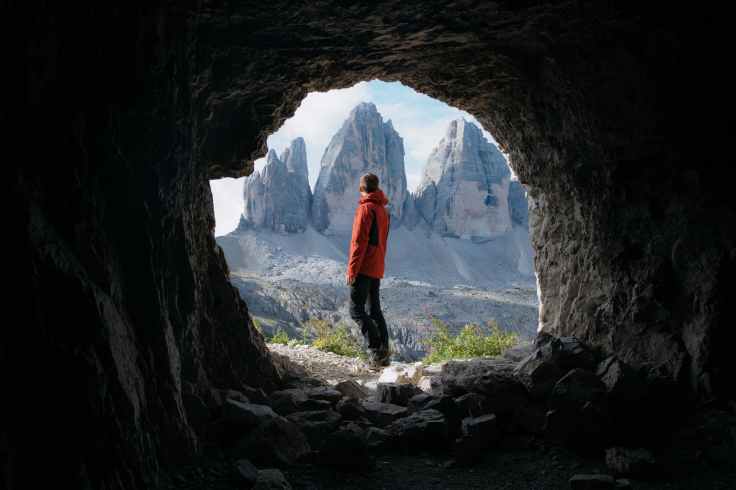
So, what DOES Jesus really mean? Is He lying about the power of faith? Is He setting us up to pray for disappointment? What can we learn from the mountain analogy? What can we learn from the fig tree?

I don’t have a complete or definitive answer. But I can share a couple of insights. As I said above, I don’t believe the lesson here is about the tree or the mountain. It’s about Faith, the power of words, and ultimately, about perspective.

Let’s start with the tree. Jesus is hungry. He goes to a tree, where he hopes to find a fig. But the tree offers nothing. Jesus could walk away, grumbling about the tree. “Stupid tree! I wanted a fig, but NOOOO!” What a childish outburst that would have been. And I have been guilty of this very kind of silly complaining and grumbling over a car that doesn’t start, or a weed that pops up in my garden, or a co-worker who said something that hurt my feelings. Notice what Jesus DID– He addressed the tree. He did not complain to the gardener or punch the tree trunk or rant in the street or spend the rest of the day nursing His disappointment. By the next day He had completely forgotten the incident– it was His disciples who were still interested in the tree. Jesus had moved on.

How often do I wallow in hurt, frustration, or guilt? How often do I replay conversations in my head, or waste time trying to assign blame for my circumstances? How often do I go behind someone’s back to complain, instead of asking for clarification or confronting a misunderstanding? How long do I chase down an apology or an explanation from someone else for my own hurt feelings and bruised ego? Jesus asks us to be proactive–to speak up in prayer, in conversation, and yes, sometimes even in confrontation.

A final thought about the withered fig tree. The same Jesus who used His words to heal lepers and forgive sins, used His words to wither the fig tree that had not served Him. He did not scorch the fig tree or take and ax to it and chop it down, but in judgment, He caused the tree to wither. Jesus had the power to judge the Pharisees, the demons who tormented people, the tax collectors with whom He dined, and the prostitutes He forgave. With a single breath, He could have destroyed the Roman oppressors, wiped out the corrupt priests, and cleaned up the masses of beggars and thieves of Jerusalem. But instead, He told stories. He fed the hungry. He gave sight to the blind. And He warned the hypocrites of the judgment to come if they did not repent. Words are so very powerful. What we say, (and what we listen to) we will come to believe. The Bible tells us that “Nothing is impossible with God.” (Luke 1:37; Matthew 19:26)

The disciples were focused on the fig tree when Jesus dropped a bombshell pronouncement. “Say to this mountain…” But it wasn’t about the mountain. It was about the “impossible” power of God. It was about looking beyond the mountain and addressing the real obstacle– lack of faith and perspective.

The Apostle Paul spoke of a “thorn in the flesh” (see 2 Corinthians 12:7-10). Three times he prayed that God would remove it, and God said, “No.” But God also gave Paul a different perspective– it wasn’t about the “thorn,” it was about pride. Paul’s continuing struggle with his “thorn” meant that he had to rely on God’s power to overcome his physical weakness. Paul’s “mountain” of pain could have stopped him from doing God’s work. But God moved the real “mountain”– Paul’s reliance on his own passion and drive– and threw it into the sea, so that Paul could move on in his real purpose.

In a very small way, I had a “mountain moving” lesson years ago at work. I clashed with my “new” boss. I found her verbally harsh toward my fellow co-workers, and I disagreed with her vision for the future of our workplace. I campaigned and complained, and I prayed that God would expose her corruption and remove her from our workplace. But it wasn’t about the “mountain” I saw in my boss. God moved me (and later her) out of that job and into new opportunities. And He showed me how my own attitude had contributed to the problem and not the solution. I had to track her down and apologize for MY actions and forgive her. And suddenly, the “mountain” I had made of the situation was gone! But I had to come to the point of believing that God would remove the actual “mountain” and not the one I had created.

In larger ways, I have seen cancer patients who have thrived in spite of their condition; I have seen others pronounced cancer-free. I have seen lost family members restored to Faith and relationships healed. I have seen God’s provision and protection in seemingly impossible situations. God CAN move mountains! And God WILL make a way, where there seems to be no way! But I have to ask, and believe, instead of complaining and isolating, or hiding in the shadow of my own “mountains.”

Will I believe that today, even when I can’t see how He will do it? Will I ASK Him to move my mountains– both large and small? Will I ask God to show me all that is possible through His power? In His way and in His time? Will I ask Him, not just for what I think I want or need, but for ANYTHING that HE wants for me? Because when I do, when I turn my focus from the mountain to the Mover of Mountains– Amazing things WILL happen!


Green Eggs and Prayer?

Have you ever read the Dr. Seuss classic, “Green Eggs and Ham”? In this early childhood reader, the narrator (nameless) is accosted by an enthusiastic character named Sam (Sam I Am), who wants him to try a dish called green eggs and ham. But the narrator refuses. Sam keeps offering, but the narrator continues to refuse, saying he does not like green eggs and ham, and will not try them under a variety of circumstances (in a box, with a fox, on a train, in the rain, etc..) offered by the optimistic Sam.

Finally, Sam’s persistence wears down the narrator’s resistance, and he agrees to try the dish. To his surprise, he LOVES them. In his newfound enthusiasm, he declares he WILL eat them in a box, with a fox, in a tree, in a boat, with a goat, on a train, in the rain, here or there…in fact, he WILL eat them anywhere! He ends by thanking Sam.

So what does a children’s book have to do with prayer?

Well, I believe that the pursuit of prayer as an integral part of living a Christ-like lifestyle is kind of like green eggs and ham. Most people who dismiss the power of prayer have never really pursued it. They have seen it, heard about it– maybe even gotten a whiff of it. They may have “sampled” prayer many years ago as a child or in a single moment of desperation. And the result was disappointment or confusion. Prayer didn’t solve all their problems in an instant. They didn’t get the miracle they hoped for. They didn’t get the bike for Christmas. Their neighbor’s leukemia wasn’t cured. Their situation at work got even worse. Their wife still left and filed for divorce. “Prayer” left a bad taste in their mouth. And they have heard others dismiss prayer and faith as obsolete, ignorant practices, designed for backward and unenlightened people. Like the slightly nauseating color of green eggs and ham, prayer has been deemed unappetizing and best avoided.

And now, when someone mentions a lifestyle of prayer– when someone talks about praying as a daily habit, or a natural part of their worship–the reaction is scorn and suspicion. Prayer doesn’t look powerful. It doesn’t look appetizing. How can something so simple and tame have any effect? Why is the world still suffering so much injustice and evil if there are people out there praying every day? And why do Christians (and others with a prayer tradition) cling to prayer as though it will solve life’s problems?

But prayer, like eggs, can have a bad reputation. For years, we were told that eggs were awful for you– high in protein, yes, but also high in cholesterol, and likely to contribute to diabetes and colon cancer. Recent studies contradict each other, but many now say that eggs are actually good for you. Similarly, during times of crises or disasters, prayer is often derided as inactive and ineffective, and we get mixed messages about people who offer to pray for victims and their families.

Recently, I was challenged about my pursuit of prayer. What good does my prayer do in the face of injustice and disease, death and suffering that people experience? Why do I pray to a God that allows bad things to happen? I have been challenged before, and my answer remains the same. I pray because I have known the peace that comes from trusting God’s wisdom, HIS timing, and His Love for each of us. I don’t have answers for all the “what-ifs” or the “whys.” But I continue to trust that God DOES! And daily prayer is not about “me,” or my questions or what I wish for. It’s about communing with the God who has been faithful all my life and continues to be faithful in every season. The God I love, and the God who knows the end from the beginning.

So what if more of us prayed daily– not just as a reaction to disasters– but pro-actively? What if we prayed, not in anger or bitterness, not transactionally, expecting a particular outcome, but with gratitude for who God is, what He has already done, and what He will choose to do in His loving sovereignty? What if we prayed with open minds and hearts, trusting that we are talking to a God who loves us and knows what is best, not just in the temporary, but in the eternal scope of our lives? We would still see evil in this fallen world, but what if our prayers DO make a difference– we just don’t see the whole scope of what God has provided, or the evil He has NOT allowed to touch us?

I speak as one who has pursued prayer for more than half a century. I’m not perfect. Sometimes, I get frustrated when my desires don’t align with God’s answers. But that’s not the fault of Prayer. Prayer DOES change things– maybe not instantly, and maybe not in the ways I imagine in the short term– but I have seen and experienced the power of prayer. I have felt it in my own life, and I have seen in in studying history and talking to people whose lives were radically transformed by their prayers and the prayers of others.

Philippians 4: 6 says: “Do not be anxious about anything, but in every situation, by prayer and petition, with thanksgiving, present your requests to God.” After this, Paul promises in verses 7 and 8 “And the peace of God, which surpasses all understanding, will guard your hearts and minds through Christ Jesus. Finally, brethren, whatever things are true, whatever things are noble, whatever things are just, whatever things are pure, whatever things are lovely, whatever things are of good report, if there is any virtue and if there is anything praiseworthy—meditate on these things.” (taken from the King James Bible online).

In every situation, we can pray. So, to paraphrase Sam I Am, I WILL pray here and there! I will pray most anywhere (except I won’t close my eyes if I am driving!) So to end:

“I’ll be praying in a boat,
I could be praying with a goat.
I may be praying in the rain.
Or in the dark. Or on a train.

And in a car (eyes open of course). And in a tree.
Because Prayer, it is so good, you see!


So I would still pray in a box.
And I would still pray with a fox.
I will pray inside my house.
And I will pray beside a mouse.

And I will write “Pursuing Prayer”
Because I serve a Lord who Cares!

What if we all had the same enthusiasm for prayer as Sam had about Green Eggs and Ham? What if we keep praying “without ceasing” (1 Thessalonians 5:17) and with confidence (1 John 5:14-15) each day?

“Try it! Try it!”

You’ll be so glad you did.

Atmospheric Disturbances

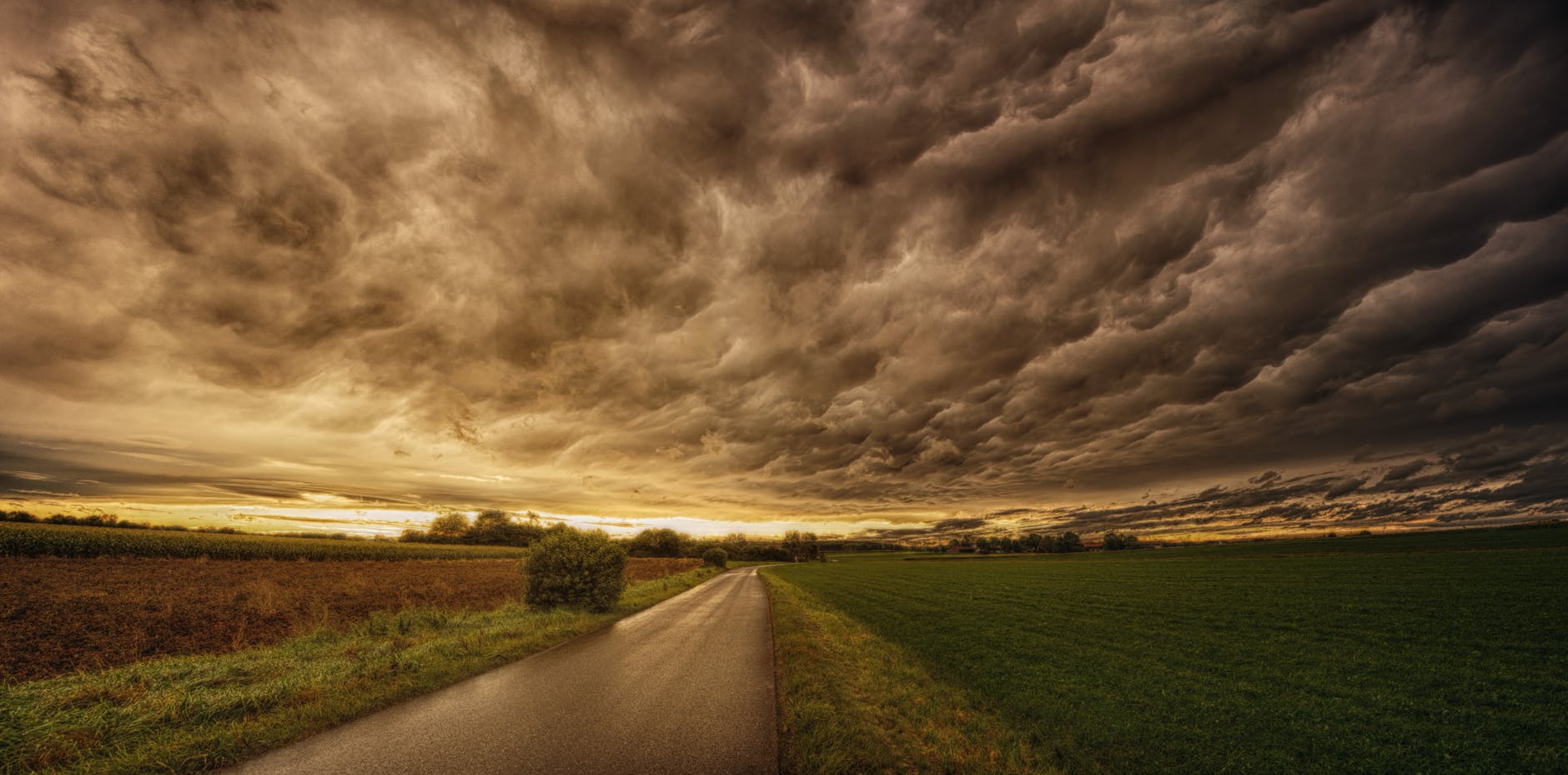
We had a storm blow through the area the other night. We were under a tornado warning, and a couple of tornadoes did touch down several miles northeast of here. Long before the tornado warning was issued, the weather forecast predicted strong storms with the possibility of hail and/or tornadoes. But even without them, it was easy to sense that “something was in the air.” There was a quality of heaviness in the very air outside. And the sky was an unnatural greenish-gray color, even where it wasn’t dark with storm clouds.

In life, we often get warning signs of impending “storms”–physical symptoms that tell us there may be a problem like infection or disease that needs to be diagnosed; a tense atmosphere at work that suggests big changes may be coming; withdrawal of a family member that alerts us they may be struggling with emotional or mental issues. These “atmospheric disturbances” may be subtle at first. We may choose to ignore them, or dismiss their importance, until we find ourselves in the middle of the storm!

God calls on us to trust Him in any weather or circumstance. We can pray about even the slightest change in our “atmosphere,” whether at home, work, or even internally. And part of God’s wisdom is to send us warnings so that we can not only pray, but take proactive measures. We can reach out to family members, make an appointment with our doctor, be cautious about spending in the weeks and months ahead, seek out help and counseling, etc.

But sensing “atmospheric disturbances” is not all about seeking a remedy or avoiding struggles. Even with advanced warnings, some people last night were unable to avoid damage to their properties or loss of electricity from the storms. Several people were trapped in a shipping warehouse that was hit by one of the tornadoes. Thankfully, no one lost their life; still, it took hours to rescue them all, and some of them went home to no power. But what if– just what if– someone looking up at the sky, or feeling the heaviness in the air, prayed in that moment? What if they prayed for safety– not just for themselves, but for others who would be in the path of the storm? What if someone in that shipping warehouse made plans weeks ago for tornado drills and emergency plans to protect the workers, and made the call for everyone to shelter together?

There are hundreds of stories of dramatic rescues and miraculously saved lives after almost any weather emergency. But how many untold stories are lost in the simple prayers and small corrections that take place when God’s people respond to “atmospheric disturbances” with prayer and wisdom?

And when God chooses to allow storms to come into our lives, how many stories could be told of the presence of God to calm, not the storm, but our own fear of it? God knows, as we cannot, how big the storm will be, how long it will last, and what “damages” we will face. And His Grace is sufficient to give us everything we need to face them all. That doesn’t mean we won’t suffer– damage, loss, grief, frustration– these are part of our life in a fallen world. God won’t always remove these things from our life. But he will NEVER abandon us to face them alone.

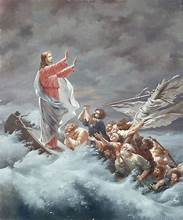
Jesus Christ faced storms in His life. One of them came on the Sea of Gallilee, as Jesus was sleeping in the boat. (See Mark 4: 35-41) A storm came up, and the disciples were terrified. They woke Jesus up, and Jesus calmly rebuked the wind and the waves, and the storm stopped. We often focus on the fact of Jesus being able to control the wind and the waves. But one of the amazing things about this story is that Jesus was IN THE BOAT! His own life was in danger from the storm. The disciples were not alone. Jesus did not let them put out to sea and face the waves, while He was safe on shore.

And so, too, Jesus is WITH US in our storms. We don’t have to wake Him up, and He may not choose to give us a miracle, but He’s right there! He can be trusted, no matter what our circumstances, no matter what dangers or damages we have to face. He knows how the storm ends; He knows how our story ends; He knows when the sun will come out again, just like it did earlier this week, announcing that all will be well.

And that calls for a prayer of Gratitude!

As In the Days of Noah

We’re getting some rain outside as I write this. Not pouring rain; nor torrential rain; just a steady drizzle. But it looks as though we will get rain for another two days at least. Without stop. Cloudy, wet, chilly, dreary weather.

The news has been dreary, too. War, political upheaval, economic disaster looming, and general unrest. And it isn’t just localized. There is trouble everywhere, and, seemingly, all the time. And yet…events march along as though things are normal– as though the future will be bright tomorrow. There are festivals being planned (some with rain dates, others may be cancelled or lightly attended if the rain continues or worsens); people seem to be in the same hurrying, scurrying rhythm as yesterday. Some complain, or seem a bit oppressed, but most don’t even comment on the catastrophic events unfolding around us. They buy and sell, eat and drink, and rush to and fro like always.

There seems to be a universal weariness– people are tired of bad news, anger, protests, and arguing, but no one seems to want to DO anything positive, unless it is to live in denial of what is actually happening. “Oh, they are just exaggerating.” “That might happen elsewhere, but it will never happen HERE!” “Things will work out– we just need to wait it out.”

It reminds me of the warning of Jesus in Matthew 24:

 For as in those days before the flood they were eating and drinking, marrying and giving in marriage, until the day when Noah entered the ark, 39 and they were unaware until the flood came and swept them all away, so will be the coming of the Son of Man.

Matthew 24:38-39 ESV

While I can listen to or watch bad news unfolding, it hasn’t impacted me directly. I don’t have to worry about bombs coming into my neighborhood (at least, I’m not expecting any today); I haven’t lost my home or a loved one in the past week. I watch the clouds and rain from the safety of a warm, dry apartment. It is easy to become apathetic. And, if I think about any of it, it is easy enough to say a quick prayer for “others” “over there.”

But I’m not building an ark. Jesus’s warning was not to “toss off a quick prayer” as we see signs of danger and await His return. Prayer is important, but it isn’t something to be done lightly. Living for Christ is more than wearing the name “Christ Follower” and a t-shirt or cross necklace. When was the last time I spent an hour in earnest prayer? When was the last time I fasted? When was the last time I felt compelled to act for the cause of Christ?

I’m not surprised that most people walk around angry, or apathetic about the state of the world. But as Christians, we should be working to make a visible difference. And that means our prayers must also be different than the comfortable “good wish” prayers that many of us (and I must include myself) often practice.

In the days of Noah, people were going about their daily lives without any clue of the horrors to come. And yet, there were signs, even then. There was evil everywhere– corruption, fighting, cheating, lies, danger, disease, famine, and oppression. But only Noah was building an Ark. He wasn’t caught up in watching CNN or trolling the internet, but he also wasn’t leading an “ordinary” life. His life stood out, because he listened to God. He was focused on what really mattered– saving those who would enter the Ark and survive the judgment to come. The Ark had room for more people– but they refused the invitation. Maybe they had a dentist appointment scheduled for that day; maybe they didn’t want to miss their “girls day out.” Perhaps they were planning a fishing trip or they were buying a house.

But he said to him, “A man once gave a great banquet and invited many. 17 And at the time for the banquet he sent his servant to say to those who had been invited, ‘Come, for everything is now ready.’ 18 But they all alike began to make excuses. The first said to him, ‘I have bought a field, and I must go out and see it. Please have me excused.’ 19 And another said, ‘I have bought five yoke of oxen, and I go to examine them. Please have me excused.’ 20 And another said, ‘I have married a wife, and therefore I cannot come.’ 21 So the servant came and reported these things to his master. Then the master of the house became angry and said to his servant, ‘Go out quickly to the streets and lanes of the city, and bring in the poor and crippled and blind and lame.’ 22 And the servant said, ‘Sir, what you commanded has been done, and still there is room.’ 23 And the master said to the servant, ‘Go out to the highways and hedges and compel people to come in, that my house may be filled. 24 For I tell you, none of those men who were invited shall taste my banquet.’”

Luke 14:16-35 ESV

Again, Jesus warns that we are to be prepared to drop the “business” of daily living; to be prepared for the Return of Christ. There is a cost involved in being a “Christian” or a “Christ Follower.” We are not to be like those who are walking around with our heads in the clouds, or worse, with our heads filled with apathy or gloom. We are to be salt and light in this dark world. We should be praying for boldness and wisdom to seek out opportunities to serve, to encourage, and to share the Gospel.

“Lord, take over my days and my prayers, that I would not settle for comfort, but seek you with a fervent heart, and seek not to just observe, but to serve!”

Blog at WordPress.com.

Up ↑