Be Not Afraid

Have you ever anticipated something so wonderful, that, when the time came, you were almost afraid of it? Afraid that the anticipation would exceed the wonder of the actual event? Afraid that the wonder would be eclipsed by some unforeseen tragedy? Afraid that your dreams were too big? That you could never deserve such happiness or blessing?

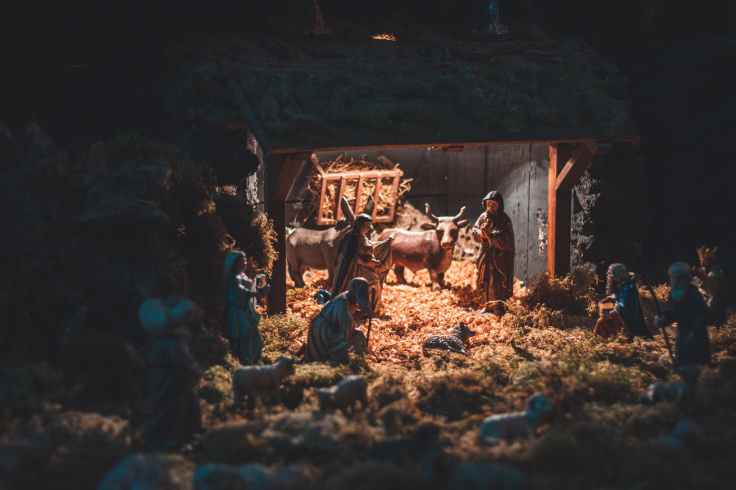
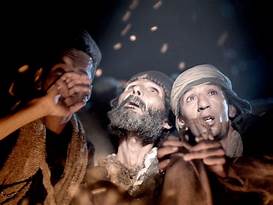
 That night there were shepherds staying in the fields nearby, guarding their flocks of sheep.  Suddenly, an angel of the Lord appeared among them, and the radiance of the Lord’s glory surrounded them. They were terrified– but the angel reassured them. “Don’t be afraid!” he said. “I bring you good news that will bring great joy to all people. The Savior—yes, the Messiah, the Lord—has been born today in Bethlehem, the city of David!  And you will recognize him by this sign: You will find a baby wrapped snugly in strips of cloth, lying in a manger.” Suddenly, the angel was joined by a vast host of others—the armies of heaven—praising God and saying
 “Glory to God in highest heaven,
    and peace on earth to those with whom God is pleased.”
When the angels had returned to heaven, the shepherds said to each other, “Let’s go to Bethlehem! Let’s see this thing that has happened, which the Lord has told us about.” 
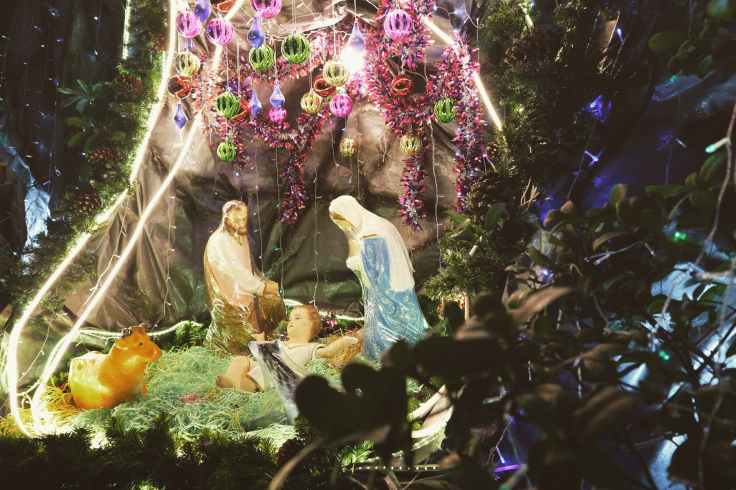
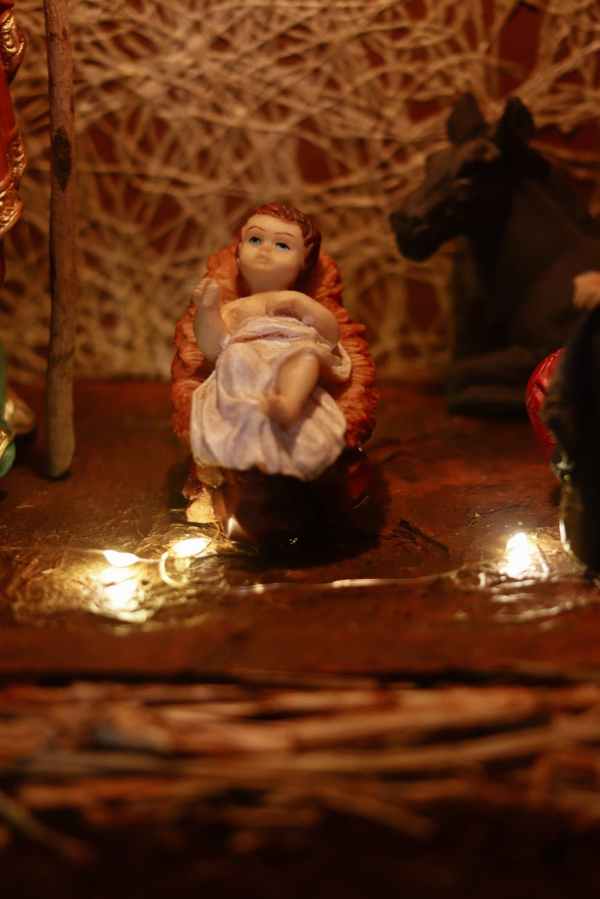
They hurried to the village and found Mary and Joseph. And there was the baby, lying in the manger. After seeing him, the shepherds told everyone what had happened and what the angel had said to them about this child. All who heard the shepherds’ story were astonished, but Mary kept all these things in her heart and thought about them often. The shepherds went back to their flocks, glorifying and praising God for all they had heard and seen. It was just as the angel had told them.” Luke 2:8-20 NLT (Emphasis added)
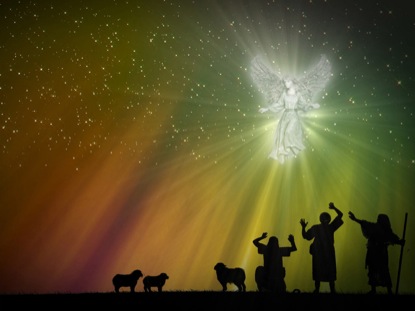
The shepherds on that first Christmas were terrified– their ordinary night had been shattered by the appearance of an angel of the LORD. And that was only the beginning! The angel announced the birth of Messiah– Christ, the LORD– in the nearby village of Bethlehem. And then an angelic host– a vast army– of angelic beings chose to worship in the skies that, just moments before, had been dark, still, and lonely.
“Fear not!” “Be not afraid!” Through the terror and overwhelming glorious radiance came a calm voice. “I bring good tidings of great joy!” “..shall be to ALL people…” “PEACE on earth!” “Christ is Born!”
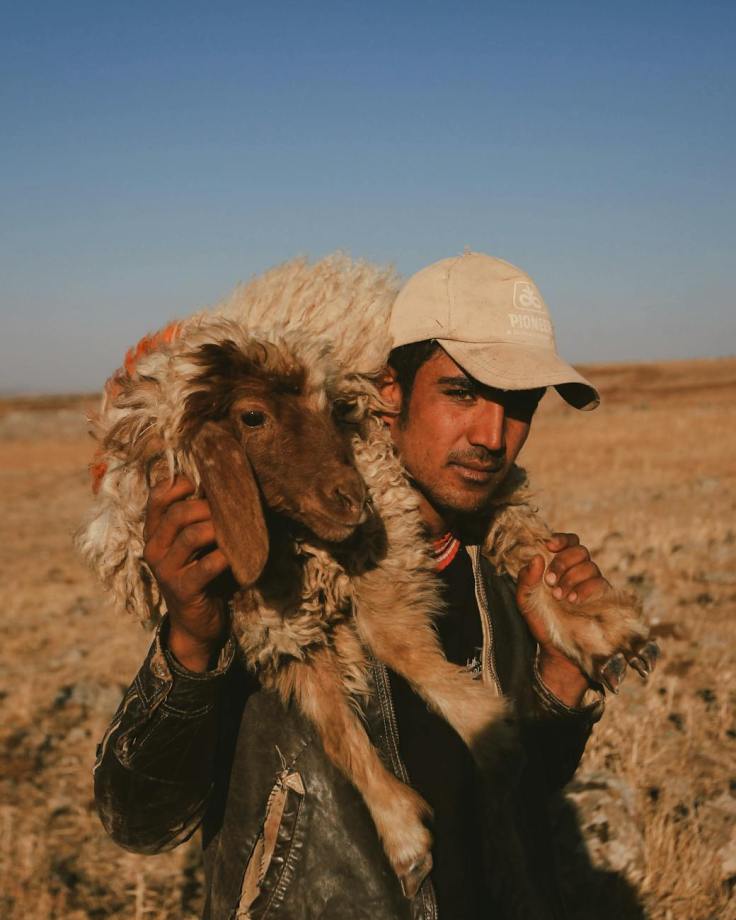
The fulfillment of centuries of longing was finally here. The central hope of the entire nation of Israel had arrived. And the angel left no doubt that the shepherds were welcome, even commanded, to GO and see this miracle with their own eyes. The Biblical account says that they did go– but it also says they stopped to discuss it first. They talked it over and decided to face the mixture of thrilling joy and weak-kneed trembling. Could it really be?! The Messiah! Here and now! But…a babe? Wrapped, not in robes of glory, but in swaddling cloths? And…lying in a manger? Surrounded by sheep and donkeys? What if this was a cosmic hoax? What if there was a mistake? Would they be disappointed? Ashamed? Turned away because of their lowly status?

“Be Not Afraid!” The shepherds talked it over. How could they NOT go and see? What if the news was true?! And in going, they became the first ordinary witnesses of the most extraordinary birth in history! They came. They saw. They believed! And they worshipped.

And then, they shared their experience with others. They went back. They probably shared the news first with the sheep, rehearsing how they would spread the fantastic tale to those who still lay sleeping. But they may also have shouted it in the streets, waking up all the neighbors with the joyous news. The Bible doesn’t give us details. But it does tell us that they went back with joy and gladness. And conviction–“It was just as the angel had told them.” Nowhere in the Bible story did they show any more fear. They had no doubt. The wonder of Christ’s birth was everything they had been told to expect, and more!

This Christmas, we look back at the shepherds, and we try to recapture the wonder of that Holy Night, and the visit of the angels, and the discovery of a tiny Savior in a manger. And we will have the opportunity to celebrate, just as the shepherds did.

What will be our response to His coming? Will we spend this season glorifying a praising God? Will we “astonish” our neighbors as we tell about the Savior’s birth, and His subsequent death and resurrection? Will we heed the angel’s calming tones to “Be Not Afraid” as we encounter the Messiah? As we go “back to (our) flocks” and fields and daily life?

I pray that we will “consider well” this Christmas how “our good God” gave us His “beloved Son”– born in a humble manger, willing to die a humiliating death He did not deserve so that we could be free from the curse of Sin and Death. And may we pray for the courage and conviction to live out and speak out the Joy and Glory of His coming!

O Come, O Come, Emmanuel!

It is Advent season. We celebrate in four weeks an event that was anticipated for four hundred years! For four centuries, the people of Israel waited for the coming Messiah without ever hearing a word from God. Oh, there were prophecies– some stretching back centuries– that promised he would arrive. But when?!

Imagine praying earnestly for an event that would not happen for another three or four hundred years? Imagine praying into silence for an entire lifetime for an event that even your great-grandchildren would never witness?

We live in a fast world. Fast food, high-speed internet, overnight delivery of packages, instant communication, bullet trains– we have lost the skill of waiting. Yet Advent celebrates the waiting, the anticipation of a birth so amazing and so consequential, that we look back over 2,000 years in wonder!

The birth of Emmanuel was worth the wait. “God With Us” came into the world “at just the right time.” (Galatians 4:4). He was not a moment too early or too late to fulfill all the prophecies and bring Salvation to mankind. Those who prayed faithfully over the centuries may not have lived to see the fulfillment, but they put their hope and trust in the prophets and in the God they served.

We are in another Advent season– we await the return of Christ! We have no way of knowing the exact hour or day (or year or even century) of His return. But with the same wonder and hope of those faithful men and women of old, we should pray for His coming again! We should share the glorious story of His first coming. We should celebrate and worship the Faithfulness of God. He keeps all His promises “at just the right time.”

And as we wait, we must not give up hope or lose our passion for the Mission that Christ left with us. “Go, and make disciples of all nations” (Matthew 28:19-20). As wonderful as Christ’s birth was, it pales in comparison to His triumphant return to judge and rule the earth. May we look back in wonder and forward in joy as we celebrate this season.

What Did Mary Know?

The song above asks, “Mary, did you know?” as it lists many things that Jesus did during his ministry on Earth. But just how much DID Mary know on that night in Bethlehem? From what we read in Luke 1, Mary knew only that this coming Child was sent by God to be the Messiah. But the angel didn’t spell out how that Messiah would be born or how Mary should be a mother to the King of Kings. The angel never promised Mary that Joseph would agree to marry her, or that her family would not disown her. The angel said nothing about a census; no warning that Mary would have to travel to Bethlehem, where there would be no room in any inn, and no safe, clean place to deliver God’s chosen one. Mary had no knowledge of the shepherds who would come from the cold and dirty fields to get a glimpse of her shivering infant. She had no idea that wise men from distant lands would present her with such impractical gifts as frankincense and myrrh, or that she would be forced to take her small son into Egyptian exile.

In fact, while the shepherds were visited by a heavenly host, glorifying and praising God; while the wise men were following an amazing star in the heavens, Mary was seemingly forgotten– giving birth in a cattle shed, tucked away in an unfamiliar, backwater town, without the comforts of her home and family (save Joseph, who was a first-time father himself!), without clean water or extra blankets, without the comforting voice of an angel reminding her that it would all turn out in the end.

I can only imagine how she might have felt. Was she frightened? Confused? She could have been angry or bitter, panicked or forlorn. She was not privy to the wonder of the angels or the star. She could have no idea of the miracles that her Son would do. And, while Simeon hinted at the piercing grief she would know at the crucifixion (see Luke 2:33-34), Mary could have no idea of the grueling death her Son would suffer.

Mary was so young. She knew so little. And yet, Luke tells us that she ” treasured up all these things and pondered them in her heart.” (Luke 2:19 NIV).

This Advent season, I want to take time to ponder; to meditate on the promises of God, on His timing, and His provision. Mary’s journey to Bethlehem was unplanned– by her. But God had planned it from the very beginning. He KNEW there would be no room in the inn. God KNEW all that would happen– the flight to Egypt, the years of Jesus’ ministry, the betrayal and suffering to come. And God KNEW Mary! He knew her questions, He knew her heart, He knew her fears, and her limitations.

It is comforting to know that God KNEW, and that He KNOWS all that is to come in my life. When it feels like I have been forgotten or relegated to a place where there is no room, no resources, no welcome– I can remember that God is there exactly as He was for Mary and Joseph on that night long ago. Just like Mary, I can treasure those incomprehensible moments when God sends a shepherd or a wise man into my path; someone whose presence, though unexpected or even inconvenient, reminds me that God’s plans are far bigger than what I can know or imagine.

One thing Mary DID know was that she could trust God absolutely. May we ponder this truth throughout the season and treasure His promises today.

How Long?

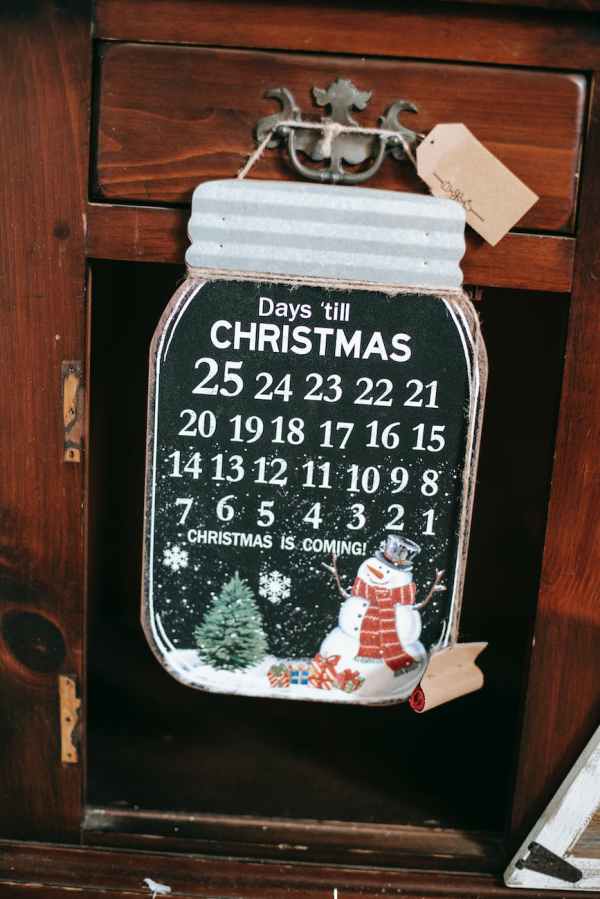
We are preparing for Advent season. We celebrate the coming of our Savior, and His humble birth in Bethlehem over 2000 years ago. We count down the days with advent calendars, candles, and other traditions. And it can be difficult to wait for Christmas Eve and Christmas Day to come.

But imagine those people who lived BEFORE the Advent…those who held the promise, but had not seen it fulfilled. Imagine waiting an entire lifetime without ever hearing the Good News– He is Here! The Messiah has come!

There are promises and hints and prophecies throughout the Bible in what we call the “Old Testament.” And the New Testament is filled with the story of Jesus’ life, death, resurrection, and rule, as well as the outcome of His mission to bring Salvation and Hope to a darkened world. But in between the two testaments there stretches a period of nearly 400 years when God was silent.

I get frustrated when I have to wait 45 minutes at the doctor’s office! Imagine listening to stories from grandparents and elders about promises made a thousand years before, knowing that there was no word, no glimmer of fulfillment for over a dozen generations or more!

And yet, we celebrate the glory of the fulfillment. And on the strength of that glory, and Jesus’ teachings, we are waiting for His triumphant return. A return that hasn’t come in nearly 2000 years.

The difference for us is that we live in the aftermath of the Advent. He HAS already come. He HAS Risen! He has assured us of His return– with His own mouth, in His own words. How long will we have to wait? Will He return within our lifetime? Christians have been asking this question for almost 100 generations now, but we ask with wonder and hope.

The mystery of Advent has become the mystery of the Revelation. We don’t just celebrate the promise given to Abraham or Moses– we celebrate the ongoing promise of Eternity– past and present and future.

I’m reminded of the classic tale by Charles DIckens– A Christmas Carol– where Ebenezer Scrooge is visited by three spirits. He is transported to his own past, sees the present through a different lens, and gets a terrifying glimpse into the future he can expect if he does not repent of his ways. So much of the tale is dark and foreboding, but the ending is rapturous– almost literally. Scrooge’s life has been a narrow life, filled with bitterness, greed, and fear. He spends much of his Christmas Eve adventure wondering about time– how long has Marley been dead? Why appear to Scrooge now? How long before the next spirit will appear? How long will Tiny Tim live? How long has he been haunted– has he missed Christmas Day? Does he still have time to change?

How Long? Ebenezer Scrooge never gets a clear answer about his own future– how long does he have to live? How long will Tiny Tim survive? At first, he is not even sure he HAS survived the night. But he DOES get a clear picture of the glory of hope; the value of time; the joy of promises made and kept; and the true riches of redemption.

We have just under four weeks before we celebrate Christmas Day. In this season of Advent, may we use our time to reflect and rejoice in the promise that was fulfilled so long ago, and in the promise that awaits us for all eternity!

These Three Remain.. Hope

I have to start this by saying I don’t always feel particularly hopeful as I look around and hear all that is happening. There are a lot of reasons to be discouraged, even depressed. Upheaval, suffering, injustice, disasters, anger, death, and evil surround us at nearly every turn. I can say that my Faith sustains me, and it does, but I still feel beaten down and exhausted by all the chaos and hurt and anger and misunderstanding.

Faith sustains us in times of trouble, but our hearts can still feel heavy. Faith tells us that God is in control, but we can feel powerless in the midst of suffering. What keeps us motivated to look for the best on even the worst of days? What allows us to have joy even as we grieve and strain and suffer? Faith is our anchor, but what renews our strength, and keeps us looking beyond the storm?

In 1 Corinthians 13, the Apostle Paul talks about things that are temporary– possessions, knowledge, gifts, prophecies– and three things that remain: Faith, Hope, and Love. Last time, I wrote about Faith. But Hope is a more difficult and more nebulous concept. The writer of Hebrews defines Faith for us– “the substance of things hoped for; the evidence of things not seen” (Hebrews 11:1). But there is no substance or evidence for Hope. Hope is not a physical anchor; it is not a realization. Neither is it a mere wish, or dream; at best, it is an expectation. Yet Paul says it “remains,” even when other things pass away.

How is this possible– that a Christian should Hope after all else has been lost, abandoned, or destroyed? Isn’t Faith more solid, more important, than Hope? Aren’t knowledge, obedience, and perseverance more important and more tangible? Isn’t hope wispy, fleeting, and conditional? Lately, it sure seems so. I say that I hope we all get through these tough times; that we will come through all this stronger, wiser, more compassionate, more just, more prepared, etc., but what am I really hanging on to? Where is my Hope?

My Hope DOES have substance and a sure foundation–in the life, death, and resurrection of Jesus Christ, and in the sure promises of my Heavenly Father! I may have wispy dreams and half-formed wishes of what I would like to see in my life or in the world around me tomorrow, or next year. I may have dreams and visions of what Peace and Justice and Health look like– and I may never see them materialize in my lifetime. I may have to adjust my vision within the temporary world of possessions, and gifts, prophecies and human systems of government and society. But I can remember the life of Christ; in spite of His circumstances, He remained true to His purpose. In His death, He remained compassionate, humble, and loving toward those who hated Him. In His resurrection, He brought eternal Hope to all who choose to trust Him. I can Hope because He fulfilled God’s promises. He WAS Hope. He gave Hope, and He demonstrated Hope. And He pointed to the Hope of His return and our eternal destiny!


I can be inspired by the dreams and hopes of other Christians throughout the years, even if their dreams have not been realized. I can be inspired by the prophecies of others, even if they don’t match my visions. And I CAN see beyond the darkness of the moment (or the year) to see that people (even I) can change; situations can change; circumstances can change; rhetoric and tone can change for the better. Painful valleys and unexpected upheaval may not be what I would want, but sometimes, it serves to clear out the “sinking sand” where dream houses would otherwise be built.

And Hope is necessary to Prayer– Faith tells us that God hears, even when we can’t see Him or hear His answer. Hope tells us that God cares. He is not aloof in hearing our prayers. He doesn’t answer us out of some worn sense of duty or obligation. He doesn’t just give us His law or even His forgiveness– He gives us restoration and Hope and abundant life! Hope for change in our own lives; hope for progress and healing in our world; hope for victory over sin and evil. Most of all, hope for eternity. God is just and merciful, but He is also gracious and loving beyond all measure. I can cry out when all other hope is gone– His Hope Remains! His Hope is a Solid Rock. His Hope comes with an eternal guarantee.

We the People

Yesterday and today mark two important milestones in North America. September 16 is Mexican Independence Day, and September 17 is Constitution Day in the United States. On these days, people in our two countries celebrate some of the great things that can be accomplished by “we the people.” The founders of our nations were not perfect, but they fought and worked and came together to make “a more perfect union,” and a brighter future for their citizens.

All around the world, governments are instituted to protect the rights and lives of people– to protect them from danger, to allow them to interact in peace and safety, and to provide for “the general welfare” of all. But governments– even the best–are run by fallible people.

Photo by Hugo Entrepreneur on Pexels.com

The Bible tells a long and complex story of the ancient nation of Israel. Tracing its origins to a single patriarch (Abraham), the family grew to be a powerful nation, ruled first by priests and judges, and then by a series of kings. The nation split into two distinct countries, before being scattered and sent into exile. The story of the nation is chronicled (literally) in the books of 1 and 2 Samuel, 1 and 2 Kings, and 1 and 2 Chronicles. In the books of the prophets, the same message comes from God again and again–Israel and Judah have both fallen into the same idolatry and corruption that doomed the nations they had conquered in former times. Instead of seeking justice for all the people, and providing order and protection, the leaders had become drunkards, liars, thieves, and murderers. They betrayed their allies, made foolish treaties, oppressed the poor and helpless, and celebrated their own cleverness. “We the People” had devolved into “us versus them.” Worship of God had been replaced by worship of a pantheon of foreign gods–worship that involved ritual prostitution and human sacrifice. Family members and fellow citizens were sold into slavery, robbed and beaten, used and abused, and slaughtered–without remorse or fear of retribution. God’s warnings were followed by His justice and punishment, and the demise of both nations, as well as punishment for their neighbors.

Photo by u0404u0432u0433u0435u043du0456u0439 u0421u0438u043cu043eu043du0435u043du043au043e on Pexels.com

Israel’s story, while very detailed, isn’t unique in history. Instead, it is a case study of what can happen when the people abandon unity and the rule of law for division and corruption. It is what happens when “who we are” becomes more important than “whose” we are; when “we” are more important than anyone else–even God. Israel and Judah continued to be religious right up to the point where they were dragged off to exile. They brought offerings and sacrifices, sang songs, prayed, and memorized scripture. Their leaders assured them that God would protect them and continue to let them prosper as their enemies marched up to the gates of Jerusalem. They had not abandoned the worship of God– they had just added idolatry to it. They worshipped their own prosperity, they worshipped gods and goddesses of the harvest, of war, of wealth, and wisdom. They still thought God was great– but not necessarily Sovereign.

Who or what are we worshipping today? What “new” and additional principles have we added to our own Constitution? To the laws of the land? To our way of being good citizens in our respective countries? To the eternal Word of God? When we hear the phrase, “We the People,” does it bring to mind people who look and live differently than us? Does it bring thoughts of justice and unity? Does it humble us?

Photo by Life Matters on Pexels.com

King David, the second, and one of the greatest of Israel’s kings wrote: “Know that the Lord, He is God; It is He who has made us, and not we ourselves; We are His people and the sheep of His pasture.” (Psalm 100:3 NKJV) “We the People,” by ourselves, will scatter and fall into destruction, like sheep without a shepherd.

Blog at WordPress.com.

Up ↑