One of my favorite old hymns is the ancient Irish tune, “Be Thou My Vision.” I have heard it jokingly referred to as “the optometrist’s hymn.” But there’s a lot more to unpack in the title than just a plug for good eye care.
God’s word is full of references to sight, seeing, blindness, light, lamps, darkness, night, day, visions and dreams, foresight and prophecy, images and reflections, and much more. God is both the source of our sight, and of our insight. God sheds light on our deepest secrets of the past, and provides a lamp allowing us to see the obstacles ahead more clearly. Jesus came to be the Light of the World, and bring sight to the blind, both physically blind and spiritually blind.
Many times, we pray for answers– we want a quick solution to our circumstances, or a definitive direction for our next step. But God sometimes wants to show us a bigger picture. Sometimes, he wants to show us more intricate details. Instead of asking for what we want God to give us, we need to ask for God to give us the vision HE has for our future. He may not reveal every detail– or he may only reveal the next detailed step. But God’s vision is clearer and bigger, and more glorious than we will ever know if we aren’t willing to look with His eyes to see.
We also need to ask God to BE our vision– that we would see him more clearly for Who He Is! Whatever is in our focus will appear bigger and clearer than things in the periphery. When we allow Him to be our vision, we start to see things from His perspective, which makes all the difference. What we see on our own is often an optical illusion– problems look bigger than they really are, hurts and grievances grow larger, and people become distorted by the lenses or mirrors we use to view them. And we lose sight of God’s glory, wisdom, majesty, power, and everlasting love. But God restores our focus and our perspective, so that we see problems in the light of His power to overcome; we see people who are made in His likeness and image– people who are loved by God, even if they are in rebellion against Him. We see the glory of God’s creation as it was meant to be, even as we see the wreckage of pollution, corruption, disease and disaster. We see God’s mercy as lives are transformed and families are mended and justice is finally achieved. And we see the rays of hope in God’s promises fulfilled and those yet to be fulfilled.
1. O little town of Bethlehem, how still we see thee lie; above thy deep and dreamless sleep the silent stars go by. Yet in thy dark streets shineth the everlasting light; the hopes and fears of all the years are met in thee tonight.
2. For Christ is born of Mary, and gathered all above, while mortals sleep, the angels keep their watch of wondering love. O morning stars together, proclaim the holy birth, and praises sing to God the king, and peace to all on earth!
3. How silently, how silently, the wondrous gift is given; so God imparts to human hearts the blessings of his heaven. No ear may hear his coming, but in this world of sin, where meek souls will receive him, still the dear Christ enters in.
4. O holy Child of Bethlehem, descend to us, we pray; cast out our sin, and enter in, be born in us today. We hear the Christmas angels the great glad tidings tell; o come to us, abide with us, our Lord Emmanuel!
Words by Phillips Brooks
Micah 5:2 English Standard Version (ESV) 2 But you, O Bethlehem Ephrathah, who are too little to be among the clans of Judah, from you shall come forth for me one who is to be ruler in Israel, whose coming forth is from of old, from ancient days.
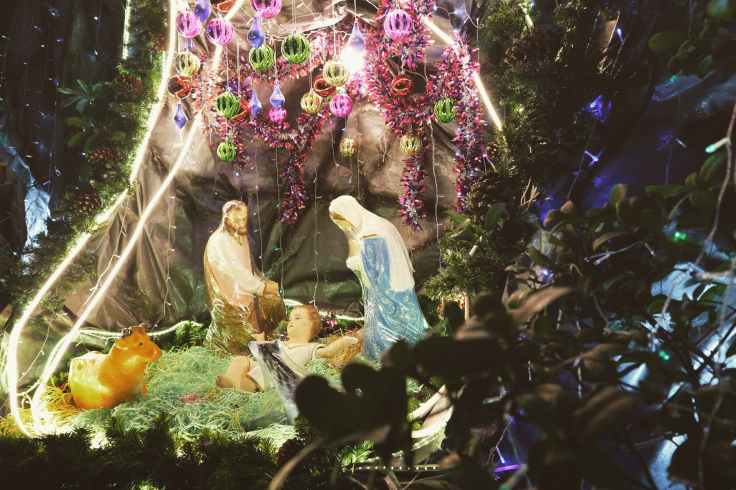
God’s ways are not our ways. I grew up in a tiny village in Michigan, and when we used to sing “O Little Town of Bethlehem,” I always imagined a similarly tiny town, draped in silence in the dead of night, sleeping right through the most glorious and stunning event in history. It wasn’t difficult to imagine the same thing happening in my sleepy village– Christ could have come to any of a dozen sway-backed sheds or garages around town without fanfare as hundreds of strangers crammed into local houses and public buildings, eager to be done with a bizarre census that led them back to where their ancestors once lived. There is nothing special about my hometown to anyone but those of us who grew up there.
Bethlehem was just such a small town. Prophecy that a king would arise from such a backwater village was mostly ignored. Four hundred years had passed since the last mention of Bethlehem by God or any of His prophets. No one expected a miracle there, just as no one would expect a miracle in our little town today.
We expect big things to happen in big cities– bustling, surging, modern, energy-filled cities. This is where grand events are held– political rallies, sold-out concerts, championship sporting events, groundbreaking new developments in business and medicine, coronations and ceremonies. But God often works in the quiet spaces and unexpected places of our world and in our lives. He comes softly and silently into the dark corners and forgotten nooks filling them with His glory.
And He gives us the privilege of sharing in this miracle– wherever we are, whoever we are, whatever our circumstances. Christ did not spend most of His life on earth in the halls of power or the centers of commerce. He didn’t “tour” the university circuit giving lectures, or fill great auditoriums while His image was splashed across a Jumbo-tron. He walked humbly from small village to small town, spreading truth and love and drawing people to Himself, that they might believe and find true life. He modeled how we can extend His grace– starting with those in our own small towns or neighborhoods–with simple acts and earnest prayers like the ones in this song: “Cast out our sin, and enter in, be born in us today.” “Oh, come to us, abide with us, our Lord Emmanuel.”
In Chapter 2 of the Book of Daniel, there is an interesting story. Most often, students of the Bible focus on the prophetic meaning of Nebuchadnezzar’s dream. But I want to look at the context, and see what this story tells us of Daniel, his friends, his boss, and his God. (see text here: https://www.biblegateway.com/passage/?search=Daniel+2&version=NIV )
First, let’s look at the extraordinary presumption of Nebuchadnezzar. (God will deal with him severely a few chapters later!) The ruler of the vast Babylonian empire, Nebuchadnezzar’s word is absolute. His whims and moods control the destinies of all his courtiers, as well as all the people under his domain. Princes, satraps, governors, advisers, military leaders, and common citizens all live in fear of his absolute power, even as they try to curry favor and rise among the ranks.
Nebuchadnezzar is not (at this point) crazy; he is not a foolish man. He has led campaigns to destroy several strong enemies, and has wisely appointed a number of officials to administer his sprawling empire. Daniel (and his friends, Shadrach, Meshach, and Abednego) are among several captured youth who are being assimilated into this administration. But this story shows the beginning of Nebuchadnezzar’s descent into madness and humiliation. He has had a dream (some translations suggest it was a recurring nightmare) that disturbs him greatly. It has him agitated. It causes him to act in an irrational manner. He calls in all the magicians, enchanters, astrologers and sorcerers of the kingdom. He is desperate for answers.
We don’t know how many various men (or even women) were called in, but they represent all the best minds of the entire Babylonian empire. And Nebuchadnezzar wants the impossible–not only are they to correctly interpret his strange dream; they are to do it without any clue about what happened in it! As they try to reason with their king, he accuses them of wanting to mislead him, and threatens them with death and the destruction of their homes and families! This is a very real threat– the king’s word is absolute, and his wrath inescapable. Nebuchadnezzar’s bizarre actions and irrational fear are signs of much worse to come. As powerful as he is, the king is plagued by insecurities throughout his reign. Pleasing, or even appeasing such a man must be like constantly walking a tightrope.
The story seems to suggest that Daniel and his friends were not included in the first summons before Nebuchadnezzar. Perhaps they were still too young to be included; perhaps they were still in training. But it is clear that they will be included in the execution orders if they cannot please this tyrant. This marks the second trial faced by Daniel in his captivity, but it is the first time he comes to the forefront of Nebuchadnezzar’s notice. While the king raves and threatens his other counselors, he listens to Daniel’s plea for more time. In the end, he is awed by Daniel’s interpretation, by Daniel’s courage– and by the God Daniel serves.
It is not only Daniel’s wisdom and courage that are highlighted in this story. Daniel has a confidence and peace that Nebuchadnezzar lacks. Daniel calmly asks for more time. He asks for help from his friends before he proceeds. And when he recognizes the importance (and the danger) of the dream, he doesn’t respond with panic or theatrics. He very calmy presents God’s answer to the king and gives God the credit for everything. It wasn’t just Daniel’s amazing gift of prophecy and interpretation that saved the lives of all the other wise men, magicians, and counselors. It was his absolute trust that God was in control of the situation– both the current situation with Nebuchadnezzar, and the ongoing situation of Daniel’s captivity.
No matter what irrational situation we may face today, no matter what impossible task we are given; no matter who threatens us or makes ridiculous demands– God is more powerful. He causes kingdoms to rise and fall. He knows the future, and nothing is outside his control. Even the direst circumstances and most impossible situations can lead to opportunities …opportunities that showcase God’s omnipotence and sovereignty.
When we hear about the Biblical story of Daniel, we usually hear only the small story of Daniel and the den of lions. Daniel was thrown into a den of lions for refusing to obey the king. God shut the mouths of the lions and Daniel was saved. It is an amazing, miraculous, even incredible story. But what makes Daniel’s story truly amazing is to see it in perspective. I’d like to spend a couple of days looking at the larger picture of Daniel’s life.
Daniel, like most prophets of the Old Testament, was an ordinary person– yet he was different, too. Daniel was from the line of kings and the royal household of Israel. He was strong and intelligent, among the elite young men of the land. According to the Bible, he was also gifted with the ability to interpret dreams and visions– a gift of extraordinary importance that set him apart from others.
But Daniel was also a slave– a captive who was ripped from his homeland and taken by force to serve in the court of the Babylonian king. He was a stranger in a strange land; he walked a very dangerous line of trying to keep the favor of the king while dealing with very powerful and resentful enemies among the king’s other courtiers. Daniel stood apart–there is little mention of a family in Daniel’s story– Daniel faced many of his trials alone (except for God). And, while Daniel survived many extraordinary trials, he never received the kind of promise or fulfillment that we see in lives like Abraham or David. Daniel spent most of his life as a captive. He never returned to his homeland. He never saw the fulfillment of his great vision– in fact, he asked for clarification, and was simply told to go his way–he would understand at the end of time.
But Daniel has a lot to teach us about prayer– its power, its peril, and its promise.
In the first chapter of the Book of Daniel, we are told a very little about Daniel’s background and how he ends up in the service of the king. https://biblia.com/bible/esv/Dan%201 One little detail that stands out is that Daniel is given a new name– not by God, but by the Babylonian official who is his new “boss”. Daniel is to be known as Belteshazzar– “Protect the life of the King”. Daniel is used by God to protect, and even warn, the foreign kings who have taken him captive. Daniel faithfully serves his oppressors– he does not seek to betray them or plot revenge against them. But the new name doesn’t stick. We still know Daniel by his original name–“God is my Judge.”
Daniel’s first trial comes when he and his friends are selected for potential service to Nebuchadnezzar. They are to be trained and fed at the king’s own palace. They are to be assimilated into Babylonian culture, history, laws, etc. But Daniel refuses to be “defiled” by the royal food and wine. Instead, he and his companions ask for a diet of plain vegetables and water. Much has been made of this– entire diets and healthy living books have been based on just this simple request. I think such plans miss the bigger picture. Daniel’s request wasn’t about veggies or “strength training.” It wasn’t about eating smarter or being stronger and healthier than the other captives. It was about obedience to God AND to the very authorities who were offering the food from the king’s table.
There was nothing nutritionally “wrong” with the king’s food or wine, nor any particular virtue in the vegetables Daniel requested. But there were at least three good, Biblical reasons why Daniel may have refused to eat the king’s food. First, the Babylonian customs called for sacrifice to their gods–even human sacrifice in some cases! But much of the meat, fruit, and grain offered at the king’s table may have come from the temples. Food that had been ritually “offered” to the gods would be fit for the table of the king. But Daniel would not want to eat the food offered to these other, false gods– it would suggest that Daniel agreed that these gods were worthy of the sacrifices that had been offered– including infants. Better to eat plain food of any type than food that had religious implications. Second, the food was likely to be non-Kosher. God’s people were to be distinct, including in their diet. There were several types of foods forbidden to the Jews that would likely be on the daily menu of the palace–not just the foods themselves, but the way they were prepared. It’s not that these foods were not edible or nutritious, but God wanted his people to demonstrate discipline and obedience. Daniel did not want to compromise or cause trouble on a daily basis rejecting first this dish, then questioning that one…easier by far to simply request what he knew was in line with God’s ways. Finally, Daniel was being offered rich and decadent food while many of his fellow Israelites were starving in their captivity. To stuff himself full of the best food in the land would not change their circumstances– but it would change Daniel’s heart. This was more important than any particular diet. Daniel did not claim that his requested diet of vegetables would make him stronger or wiser or healthier than the others– he trusted that God would sustain him to be at least as strong and healthy as anyone else. And God did more!
It is important, also, to note that Daniel did not defy the king or demand special treatment. He won the respect of the official in whose charge he was being kept. He even helped the official overcome his fear of the king. Why is this important? Daniel was in a difficult and dangerous position. He was a captive– a slave in a strange land– with a golden opportunity. He was chosen to be in the elite group of young people who could serve with power and influence in the land of their oppressors. Daniel, in fear or seeking his own advancement, could have trusted to his own wits and the favor of the Babylonians. He could have abandoned his commitment to serve God in favor of serving the immediate whims of those around him. He could have determined that in his new situation, he should adapt to the new rules, even those that contradicted God’s word. Or, he could have been defiant and arrogant–demanding that the Babylonians recognize all the customs of his native land, including his Kosher diet. He could have encouraged his friends to lead a rebellion; he could have gone on a hunger strike to protest the king’s food. But the king had never commanded that the young people eat his food– he had merely offered it as an incentive. Daniel used wisdom and tact. He won the trust of the official by suggesting a trial period of ten days to see if the “alternative” food plan would prove acceptable. He didn’t place his trust in his own actions– he placed his trust in the true Judge and offered faithful service– both to God and to Nebuchadnezzar.
No matter our circumstances today– whether we are in a palace or a prison; whether we are free or enslaved– God sees us. He will judge, not only the actions of our oppressors, but our response to oppression and hardship, and mistreatment (or our oppression and mistreatment of others). May we, like Daniel, turn to the true Judge, and walk worthy of His Name today.
“They sow the wind, and reap the whirlwind…” Hosea 8:7
Hosea was a prophet who foretold the destruction (and eventual restoration) of his people. God was pouring out his judgment against an unfaithful nation, and he used the tragic family life of Hosea as a living example of his dealings with Israel. Hosea married a prostitute; an unfaithful and unloving spouse who chased after men with ready money and cheap gifts. But when her activities resulted in slavery, shame, and despair, Hosea redeemed her and restored her as his wife. In the same way, God had made a promise to the people of Israel, but they had broken their covenant and followed their own rules, chasing after the surrounding cultures, with their foreign gods and their hedonistic rituals, including human sacrifice, temple prostitutes, and divination. There are many metaphors used throughout this book, but one that often stands out is the short phrase found in chapter eight. In it, God is talking about the unfaithful priests and leaders of Israel, who have not only betrayed God in their rebellion and idolatry, but have led others astray. God says of them that they have sown the wind, and are reaping/will reap the whirlwind.
How does this relate to us today in our pursuit of prayer?
I believe that many of us are sowing the wind– we do it in our careless words, gossip, rumor-mongering, complaining, babbling, prattling, and yes, in our half-hearted obedience, and our tepid prayers. We often come to God, not eager to commune with him, or to hear his voice, not in humble adoration and open confession, but to complain, wheedle, and boast. We pay lip service to his Holiness, while refusing to give up that bad habit that “isn’t really all that bad.” We thank him for his Grace, but harbor resentment against a neighbor or family member who slighted us. We ask for him to bring us success in our plans and ventures without really making sure if they line up with his will. We excuse our lack of attendance at church, and our failure to spend time in God’s word. We make rash promises to do “better” if God just gets us through this week. We ask for his blessing, and thank him for the riches he has bestowed on us, but we turn our noses at those in our backyard who are in need. We are bold about posting “Christian” sayings on Facebook, X, Pinterest, and Instagram–almost as bold as posting about our favorite new Brew Pub or Spa trip or “almost inappropriate” joke, or latest political rant. Except that our “Christian” posts are less entertaining and more critical of others. (They’re usually really pretty, though– pictures of flowers or mountain streams or desert sunsets–it’s really easy to “like” and “share” a sunset!.) We cheapen the Gospel, we cheapen the Christian walk, we cheapen prayer, when we pursue it as a hobby or a social habit. Bur prayer is not something we do only because (or only when) it makes us feel “good” or “better”– it is something we pursue because it brings us life and peace for eternity, and it brings glory and joy to the King of Kings.
“They sow the wind, and reap the whirlwind…” There is a price for this shallow, careless pursuit of something that looks and feels vaguely like Godliness. It is the whirlwind…being tossed about by “every wind of doctrine” as Paul warns against in Ephesians 4. It is being caught up in doubts and half-truths, compromises, hypocrisy, division, scandal, and shame. It is having to face the onslaught of detractors and persecution that come as a result of so many of us abusing and misrepresenting the very Gospel of the one whose name we carry. “Oh, what peace we often forfeit; Oh, what needless pain we bear; All because we do not carry everything to God in prayer.” The words of that old hymn are no less true today– when we trifle with prayer, carrying only our selfish needs, our petty complaints, and our flimsy agendas to God in prayer, we pay a huge price.
There is another metaphor, this one in the Gospel of John, that I think helps us combat this tendency to “sow the wind”– Jesus says of himself in John 15 that he is the vine, and we are the branches. If we are faithful, we remain in him– we draw our life and strength from him– and we are fruitful. Remaining in him, we are grounded– he provides the roots that keep us from blowing every which way. And he provides the nourishment, and strength to grow and produce more fruit.
I say “we” because I too am guilty of having sown the wind. The great news, in Hosea and in the Gospel of John, is that God is eager to restore us– to graft us in–to welcome us home after our storm-tossed wanderings. Let’s get serious about abiding in God, instead of scattering the latest “feel-good” religious spam. God, forgive me for the times I have cheapened your precious gift of prayer. Help me to abide in you, and refrain from careless words to you, about you, and about others.
Someone asked me yesterday if I was “ready for Christmas.” They wanted to know if I had prepared for the holiday– had I bought and wrapped presents for the family, sent out Christmas cards, decorated the house, baked cookies, etc.? I had to admit that I was not ready in that sense. I don’t generally do much in the way of decorating, and I’ve cut back on the cookie baking, too. I don’t have all the presents purchased or wrapped.
But I AM ready for Christmas– I’m ready to celebrate the coming of Jesus to Earth; His life, death, and resurrection; the new life and hope that resulted from God’s boundless love. I’m ready to sing carols and light candles and rejoice! I’m ready to be awestruck again by the ancient story of shepherds and angels and wise men from the East; of the little town of Bethlehem and the manger stall and a bright star; of a newborn child; the Lord of all Creation wrapped in rags; the Word of God willingly limited to unintelligible cooing and soft cries, to nakedness and infant human weakness.
Being “ready for Christmas” means different things to different people. To many, it means surviving the stress of shopping, going to rounds of holiday parties, and trying to remember that it is supposed to be a season of “peace on Earth.” For others, it means watching the celebration from the outside looking in; facing loneliness, grief, regret, and envying or resenting those who have found joy when all they see is darkness. For some of us, it means reflecting on the amazing transformation we experience because of the coming of this single baby. We remember that there was a time when there was no Christmas– only a dim hope that God would someday send a Savior. Once the prophets could only speak of what had been promised, but not yet seen– could only remind people to “get ready” for something they had never known.
The world was waiting for the Messiah’s coming, yet it was unprepared for His actual arrival.
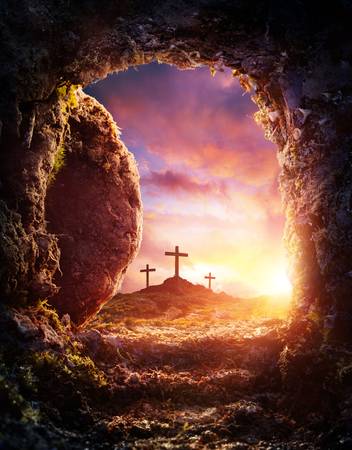
But the story of Jesus Christ didn’t end with Christmas. It didn’t even end at Easter, with the glorious resurrection. We await the triumphant return of the risen Christ. He is Coming! He will return in an instant…no long period of Advent; no countdown calendars or lists of things to get ready; no angels or stars to announce His arrival; no Christmas pageant or Easter sunrise service–just a trumpet blast and an explosion of Glory. He will not arrive as a helpless babe, or a suffering servant, but as a conquering King. There will be no carols about little towns and sleeping cattle; no time to “let every heart prepare Him room.”
Today, we prepare to celebrate Messiah’s coming. We spend time and money and energy getting “ready” to recreate the Advent of Jesus Christ. How much time have we spent getting ready for His return? I pray that this Christmas season will mean more than just a happy celebration of one event– even one as joyful as the Birth of Christ. Let us prepare our hearts to live out the joy of His Salvation, and prepare to receive our King in triumph.
I have to start this by saying I don’t always feel particularly hopeful as I look around and hear all that is happening. There are a lot of reasons to be discouraged, even depressed. Upheaval, suffering, injustice, disasters, anger, death, and evil surround us at nearly every turn. I can say that my Faith sustains me, and it does, but I still feel beaten down and exhausted by all the chaos and hurt and anger and misunderstanding.
Faith sustains us in times of trouble, but our hearts can still feel heavy. Faith tells us that God is in control, but we can feel powerless in the midst of suffering. What keeps us motivated to look for the best on even the worst of days? What allows us to have joy even as we grieve and strain and suffer? Faith is our anchor, but what renews our strength, and keeps us looking beyond the storm?
In 1 Corinthians 13, the Apostle Paul talks about things that are temporary– possessions, knowledge, gifts, prophecies– and three things that remain: Faith, Hope, and Love. Last time, I wrote about Faith. But Hope is a more difficult and more nebulous concept. The writer of Hebrews defines Faith for us– “the substance of things hoped for; the evidence of things not seen” (Hebrews 11:1). But there is no substance or evidence for Hope. Hope is not a physical anchor; it is not a realization. Neither is it a mere wish, or dream; at best, it is an expectation. Yet Paul says it “remains,” even when other things pass away.
How is this possible– that a Christian should Hope after all else has been lost, abandoned, or destroyed? Isn’t Faith more solid, more important, than Hope? Aren’t knowledge, obedience, and perseverance more important and more tangible? Isn’t hope wispy, fleeting, and conditional? Lately, it sure seems so. I say that I hope we all get through these tough times; that we will come through all this stronger, wiser, more compassionate, more just, more prepared, etc., but what am I really hanging on to? Where is my Hope?
My Hope DOES have substance and a sure foundation–in the life, death, and resurrection of Jesus Christ, and in the sure promises of my Heavenly Father! I may have wispy dreams and half-formed wishes of what I would like to see in my life or in the world around me tomorrow, or next year. I may have dreams and visions of what Peace and Justice and Health look like– and I may never see them materialize in my lifetime. I may have to adjust my vision within the temporary world of possessions, and gifts, prophecies and human systems of government and society. But I can remember the life of Christ; in spite of His circumstances, He remained true to His purpose. In His death, He remained compassionate, humble, and loving toward those who hated Him. In His resurrection, He brought eternal Hope to all who choose to trust Him. I can Hope because He fulfilled God’s promises. He WAS Hope. He gave Hope, and He demonstrated Hope. And He pointed to the Hope of His return and our eternal destiny!
I can be inspired by the dreams and hopes of other Christians throughout the years, even if their dreams have not been realized. I can be inspired by the prophecies of others, even if they don’t match my visions. And I CAN see beyond the darkness of the moment (or the year) to see that people (even I) can change; situations can change; circumstances can change; rhetoric and tone can change for the better. Painful valleys and unexpected upheaval may not be what I would want, but sometimes, it serves to clear out the “sinking sand” where dream houses would otherwise be built.
And Hope is necessary to Prayer– Faith tells us that God hears, even when we can’t see Him or hear His answer. Hope tells us that God cares. He is not aloof in hearing our prayers. He doesn’t answer us out of some worn sense of duty or obligation. He doesn’t just give us His law or even His forgiveness– He gives us restoration and Hope and abundant life! Hope for change in our own lives; hope for progress and healing in our world; hope for victory over sin and evil. Most of all, hope for eternity. God is just and merciful, but He is also gracious and loving beyond all measure. I can cry out when all other hope is gone– His Hope Remains! His Hope is a Solid Rock. His Hope comes with an eternal guarantee.
Of David. 1 The Lord is my light and my salvation— whom should I fear? The Lord is the stronghold of my life— whom should I dread? 2 When evildoers came against me to devour my flesh, my foes and my enemies stumbled and fell. 3 Though an army deploys against me, my heart will not be afraid; though a war breaks out against me, I will still be confident. 4 I have asked one thing from the Lord; it is what I desire: to dwell in the house of the Lord all the days of my life, gazing on the beauty of the Lord and seeking him in his temple. 5 For he will conceal me in his shelter in the day of adversity; he will hide me under the cover of his tent; he will set me high on a rock. 6 Then my head will be high above my enemies around me; I will offer sacrifices in his tent with shouts of joy. I will sing and make music to the Lord. 7 Lord, hear my voice when I call; be gracious to me and answer me. 8 My heart says this about you: “Seek his face.” Lord, I will seek your face. 9 Do not hide your face from me; do not turn your servant away in anger. You have been my helper; do not leave me or abandon me, God of my salvation. 10 Even if my father and mother abandon me, the Lord cares for me. 11 Because of my adversaries, show me your way, Lord, and lead me on a level path. 12 Do not give me over to the will of my foes, for false witnesses rise up against me, breathing violence. 13 I am certain that I will see the Lord’s goodness in the land of the living. 14 Wait for the Lord; be strong, and let your heart be courageous. Wait for the Lord.
There are a lot of scary things in our world– war, disaster, taxes, death, violence, injustice, disease, uncertainty, evil, darkness, even supernatural and spiritual darkness–enough to keep us frightened and sleepless every night! And we spend a lot of our time fearing the unknown–worrying about the future; worrying about things that have not happened, and may never happen! We worry about things that matter– the health and well-being of our loved ones, uncertainty about our job or home, crime and civil unrest in our nation or neighborhood, difficult decisions with serious consequences. We worry about things that are less urgent–someone laughing at us, hair loss, dropping a phone call, running out of gas, losing a game or an argument…
David had some real reasons to be fearful as he wrote Psalm 27–evildoers, enemies, war and armies, false witnesses, and violence. Yet, he found safety and strength in the Lord. We can take comfort in the message of this Psalm–God is faithful. He is strong. He is eternal and unchanging. He is a stronghold we can trust.
But before we get too comfortable, let’s take a closer look. David’s trust is not based on a superficial knowledge about God. David’s trust comes as a result of seeking God’s face and following in “your way” (v. 11). David’s life was proof of God’s strength and protection, because David’s life was filled with fearsome adversaries!
Many generations after David penned this Psalm, the prophet Amos wrote to the people of Israel– people who knew this comforting psalm, but had lost their fear–people who no longer sought the Lord’s protection or His ways.
Amos 5 Christian Standard Bible (CSB)
5 Listen to this message that I am singing for you, a lament, house of Israel: 2 She has fallen; Virgin Israel will never rise again. She lies abandoned on her land with no one to raise her up. 3 For the Lord God says: The city that marches out a thousand strong will have only a hundred left, and the one that marches out a hundred strong will have only ten left in the house of Israel.
4 For the Lord says to the house of Israel: Seek me and live! 5 Do not seek Bethel or go to Gilgal or journey to Beer-sheba, for Gilgal will certainly go into exile, and Bethel will come to nothing. 6 Seek the Lord and live, or he will spread like fire throughout the house of Joseph; it will consume everything with no one at Bethel to extinguish it. 7 Those who turn justice into wormwood also throw righteousness to the ground. 8 The one who made the Pleiades and Orion, who turns darkness into dawn and darkens day into night, who summons the water of the sea and pours it out over the surface of the earth— the Lord is his name. 9 He brings destruction on the strong, and it falls on the fortress. 10 They hate the one who convicts the guilty at the city gate, and they despise the one who speaks with integrity. 11 Therefore, because you trample on the poor and exact a grain tax from him, you will never live in the houses of cut stone you have built; you will never drink the wine from the lush vineyards you have planted. 12 For I know your crimes are many and your sins innumerable. They oppress the righteous, take a bribe, and deprive the poor of justice at the city gates. 13 Therefore, those who have insight will keep silent at such a time, for the days are evil. 14 Pursue good and not evil so that you may live, and the Lord, the God of Armies, will be with you as you have claimed. 15 Hate evil and love good; establish justice in the city gate. Perhaps the Lord, the God of Armies, will be gracious to the remnant of Joseph. 16 Therefore the Lord, the God of Armies, the Lord, says: There will be wailing in all the public squares; they will cry out in anguish in all the streets. The farmer will be called on to mourn, and professional mourners to wail. 17 There will be wailing in all the vineyards, for I will pass among you. The Lord has spoken.
18 Woe to you who long for the day of the Lord! What will the day of the Lord be for you? It will be darkness and not light. 19 It will be like a man who flees from a lion only to have a bear confront him. He goes home and rests his hand against the wall only to have a snake bite him. 20 Won’t the day of the Lord be darkness rather than light, even gloom without any brightness in it? 21 I hate, I despise, your feasts! I can’t stand the stench of your solemn assemblies. 22 Even if you offer me your burnt offerings and grain offerings, I will not accept them; I will have no regard for your fellowship offerings of fattened cattle. 23 Take away from me the noise of your songs! I will not listen to the music of your harps. 24 But let justice flow like water, and righteousness, like an unfailing stream. 25 “House of Israel, was it sacrifices and grain offerings that you presented to me during the forty years in the wilderness? 26 But you have taken up Sakkuth your king and Kaiwan your star god, images you have made for yourselves. 27 So I will send you into exile beyond Damascus.” The Lord, the God of Armies, is his name. He has spoken.
The people have an outward confidence– they believe themselves to be under God’s protection and blessing. They offer sacrifices and sing worship songs and revel in their success and peace. But God’s words are frightening and urgent. Those who arrogantly call for the “Day of the Lord,” expecting God to pass judgment on their enemies will find to their shock and horror, that God’s wrath falls on them as well. Their confidence has been misplaced, because it has rested on a false picture of God, and an exaggerated sense of their own righteousness. God warns them that judgment is coming– and even as He does, He issues an invitation– “Seek me and live!” (v. 4– see also v. 6 and v. 14). God has withheld judgment, He has given His people opportunity to follow His way. Instead, they have followed the ways of the very enemies they used to fear! Their feasts and festivals have become nothing but a mockery and an affront to God–the same people who claim to worship Him are perverting justice and oppressing the poor. They cheer for evil and refuse to listen to the truth.
God is a stronghold and a light to banish fear and darkness–but a stronghold or tower cannot protect you if you are wandering alone and unprotected or worse yet, if you are leaving the tower to embrace the enemy in the dark! God doesn’t just want to be a light at the end of the tunnel– He wants to be a light to show us the road right in front of us, and a light to banish the darkness where our enemy hides! When we have a proper “fear” of the Lord– when we recognize His wisdom, strength, and sovereignty– when we seek Him in humility and awe and need, and dwell with Him, we need not fear anyone or anything else. When we make empty boasts about God’s favor and protection while ignoring His ways, and we drown out His loving warning and His call to return to safety…we should be afraid– very afraid!
Father, may I find my confidence only in You. I want to dwell in Your house and seek Your face today and every day. Thank You for being eternally strong, righteous, faithful, and merciful! Thank you for giving us warnings and providing restoration, hope, and salvation. In Jesus’ Name, Amen.
As the Christmas season approaches, people are decorating their homes– wreaths, Christmas Trees, lights, gingerbread houses, manger scenes, elves and reindeer, candles and more. And along with the sights and sounds and tastes, the air is redolent with the scents of the season.
Scents evoke memories and emotions deeper than any of our other senses. We can close our eyes or ears to unwanted stimuli, but it’s difficult not to breathe in the spicy air filled with cinnamon or cloves, or ignore the scent of pine or scented candles filling the room.
There was no gingerbread, or evergreen tree, or clove orange in the stable where Jesus was born so long ago– no candles or air fresheners to cover the other scents of animals and afterbirth. But when the wise men arrived to worship the infant King (which may have been a couple of weeks or even months later), they brought gifts, and two of the three were spices– Frankincense and Myrrh. They were precious spices, with medicinal and healing properties, and were also used in embalming– symbolic of Jesus’s future life and death. Oddly enough, their fragrances are reminiscent of citrus and pine, two scents we commonly associate with the Christmas season. https://www.history.com/news/a-wise-mans-cure-frankincense-and-myrrh
God never wastes details. The Bible is full of them– lists of names, detailed instructions for the construction of the Tabernacle and Temple, references to various places, animals, trees, events– seemingly unimportant, sometimes even distracting–but all of them have a purpose. The gifts of the Wise Men (or Kings) were costly, prophetic, and worthy of a newborn king. But they were also physical gifts. The Bible never tells us how the gifts were eventually used– Did Joseph and Mary use the gold to help pay for their flight to Egypt? Did Mary save the frankincense and myrrh to use for Jesus’s burial? We don’t know. But the spices would have kept their scent for a long time, releasing their fragrance whenever the jars or containers were opened. And they reveal something about both the recipient and the givers.
God reveals Himself to us in many ways– and He appeals to all of our senses. Our worship of and fellowship with Him should do the same. We may not have access to frankincense or myrrh (though they have increased in popularity and are readily available from dealers in essential oils), but the Bible tells us that WE are a fragrance– our worship, our obedience, our sharing of the Gospel with others.
14 But thanks be to God, who in Christ always leads us in triumphal procession, and through us spreads the fragrance of the knowledge of him everywhere. 15 For we are the aroma of Christ to God among those who are being saved and among those who are perishing, 16 to one a fragrance from death to death, to the other a fragrance from life to life. Who is sufficient for these things?
Above all, our prayers are said to be incense– a pleasing aroma before the throne of heaven:
The Lamb Takes the Scroll (Revelation 5:1-10 CSB)
5 Then I saw in the right hand of the one seated on the throne a scroll with writing on both sides, sealed with seven seals. 2 I also saw a mighty angel proclaiming with a loud voice, “Who is worthy to open the scroll and break its seals?” 3 But no one in heaven or on earth or under the earth was able to open the scroll or even to look in it. 4 I wept and wept because no one was found worthy to open the scroll or even to look in it. 5 Then one of the elders said to me, “Do not weep. Look, the Lion from the tribe of Judah, the Root of David, has conquered so that he is able to open the scroll and its seven seals.”
6 Then I saw one like a slaughtered lamb standing in the midst of the throne and the four living creatures and among the elders. He had seven horns and seven eyes, which are the seven spirits of God sent into all the earth. 7 He went and took the scroll out of the right hand of the one seated on the throne.
The Lamb Is Worthy
8 When he took the scroll, the four living creatures and the twenty-four elders fell down before the Lamb. Each one had a harp and golden bowls filled with incense, which are the prayers of the saints. 9 And they sang a new song:
You are worthy to take the scroll and to open its seals, because you were slaughtered, and you purchased people for God by your blood from every tribe and language and people and nation. 10 You made them a kingdom and priests to our God, and they will reign on the earth.
This season, as we revel in the scents of the season and remember the gifts given to the infant Emmanuel, let us present Him with the gift of fervent prayer and enthusiastic praise. He is Worthy!
Christmas is a time of joy and light. But the time of Advent is often a time of somber reflection. We remember a time we have never known– a time before the coming of Christ the Messiah– a time before the mysteries of Heaven were revealed and before the victory of Salvation was accomplished. Advent reminds us of the spiritual darkness that existed before God, in human form, in humble obedience, and in sacrificial love, became the Light of the World, and the Hope of All Nations.
Before the bells rang, and the angels sang; before the kings brought gold and the shepherds ran to tell the news; before there were Christmas Carols, Christmas decorations, or Christmas pageants– there was solemn silence, fear, dread, and waiting. God had been silent. The prophets had been silent. The world had grown hard and cold.
Jesus stepped out of the unfathomable glory of the Highest Heaven– surrounded by armies of angels all worshiping Him and ready to do His bidding. In an instant, He became a helpless fetus inside a helpless young woman, a subject of the Roman Empire, and at the mercy of her culture. Her fiance could have repudiated her; her parents could have disowned her; her community could have had her stoned to death, along with her unborn child. No one, even those who were anticipating the arrival of a Christ, was expecting this tiny baby growing inside the womb to change the course of history.
He was born in obscurity, in ignominious squalor. He was the Lord of All Creation, wrapped in rags and laid in a feeding trough in an overcrowded city at tax time. There were no bells or carolers, no glittering trees or festivals of lights, no sounds of joy and celebration– not in that manger in Bethlehem. Instead, there were strangers pushing and shoving, shouting, and snoring in the inns and houses and streets, being watched by soldiers and pickpockets alike, as they made their way through narrow, unfamiliar streets and tried to lock out the worry and danger and dread. There may have been silence in the fields and valleys outside of town, but not near the stable where Jesus was born. No. The “silence” we sing about during Advent is the silence inside our own hearts– a call to “be still,” and know that this baby we celebrate is God Incarnate. He is the One to whom every knee will one day bow, and every tongue confess that He is LORD.
In the stillness and silence of Advent, in the darkness lit only by candles and faint hope, we being to understand the contrast. We re-imagine what came before the joy and hope and eternal clouds of witnesses shouting, “Holy, Holy, Holy!” We remember the days and years before the angels sang, and the star danced across the night sky– before the shocking crucifixion and the glorious resurrection of this still unborn Savior.
Let us spend these days of Advent preparing our hearts for the true wonder of Christmas. It doesn’t come in the wrapped packages under a festive tree, or in the feasting with friends or family. It doesn’t come with sirens and parades, or speakers at the mall blaring out favorite tunes. It doesn’t come in the majesty of a Cathedral ringing with the voices of a choir and organ. It comes when the silence and darkness of our sin and dread are pierced with the overwhelming glory of God With Us– Emmanuel is coming! But for now, for these moments, Let All Mortal Flesh Keep Silence.




































 Pursuing Prayer