The Twenty-third Psalm is one of the most quoted and well-known poems in the Bible. In its short six verses are contained some of the deepest truths and most beautiful images in scripture.
Today, I want to look at just the first five words of the psalm: The Lord is my shepherd. Familiarity with these words can rob them of their true power. Imagine if we used a modern-day analogy: The Prime Minister (or King or President) is my life coach, or home health care nurse, or bodyguard. Can you imagine!?
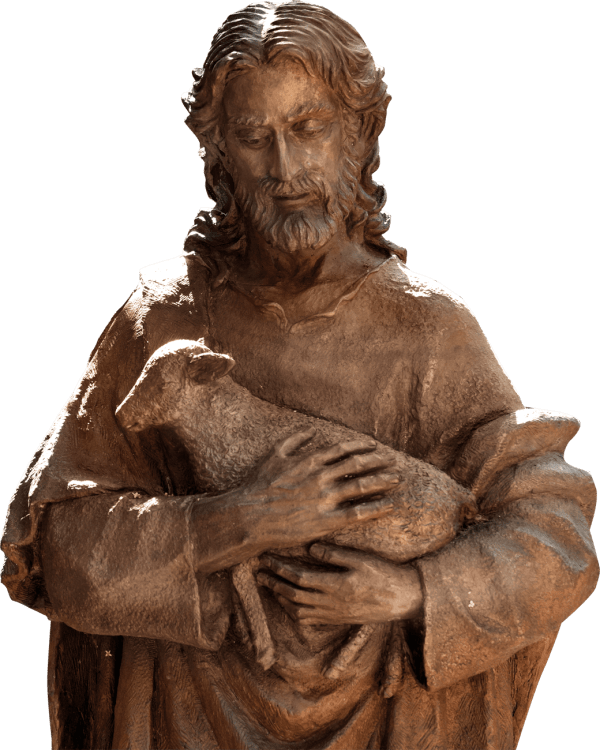
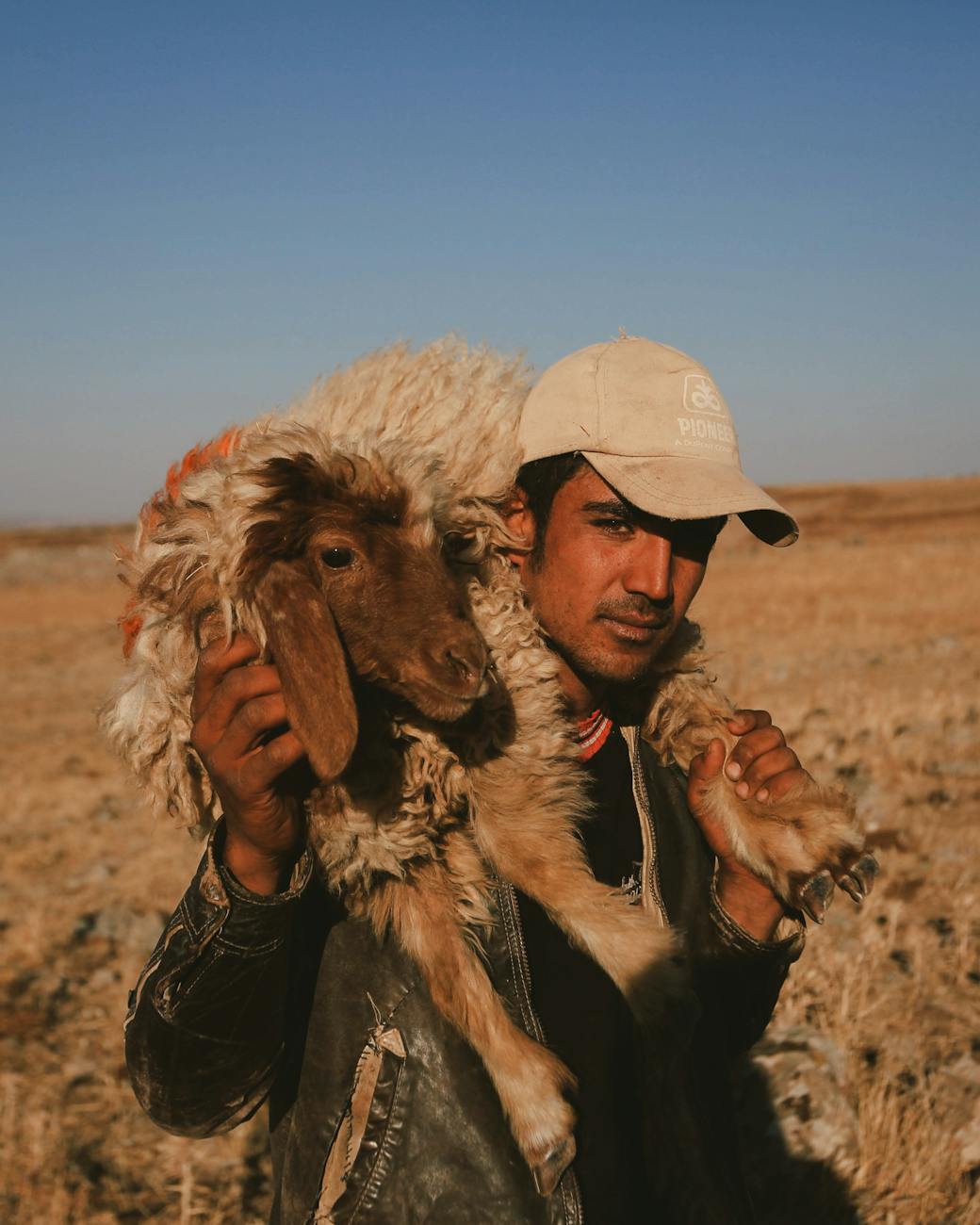
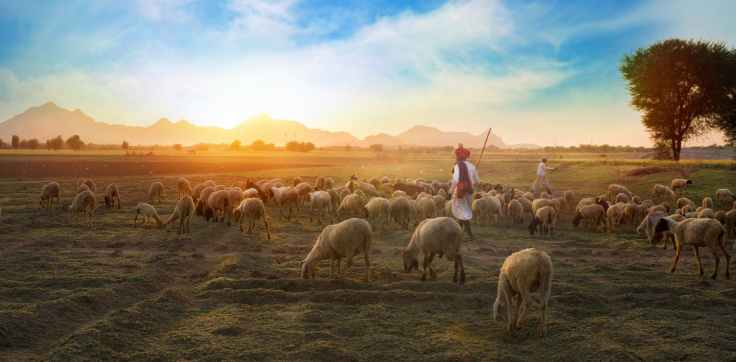
How often do we gloss over these words and fail to see the amazingly powerful message there. The LORD– Yahweh, the Almighty, Ruler of the Universe– is MY shepherd. He does all the kind of things a shepherd does for his sheep– feeds, leads, protects, and provides. He fights off predators, binds up wounds, and shears off the extra wool that can get us entangled in briers or slow down our progress. He stands with us in the heat and cold, and finds shelter for us from the wind and rain. He does all of this for me, when I can’t; because I can’t. He knows everything about me– my strengths and weaknesses and limitations. He knows everything about what I need– where the best grass and water are and how to get there; how much rest I need before the next stage of our journey; the likelihood that I will wander off and need to be called back to the flock. He knows what dangers lie ahead, and how to deal with them.
The Lord IS my shepherd– He is always on the job. He hasn’t left me alone in green pastures, or sent someone else to take me through the valleys. He didn’t start out as my shepherd and then decide to quit. He isn’t waiting for me to reach a certain stage or measurement before I qualify to be His sheep.
The Lord is my Shepherd– not my task-master, nor yet my servant. He is both my Lord and my caretaker– my master and my minister. When I pray today, it is not to someone remote and aloof or powerless and malleable– I am bleating in my sheepish voice all my praise, my love, my irrational worries, and my sincerest gratitude, to the eternal and all-powerful shepherd who calls me by name.
The story in the Bible about Hannah is about prayer; it is also about depression, anguish, misunderstanding, marriage, rivalry, infertility, trust, and obedience.
Yesterday, I talked a bit about the priest, Eli, and his wicked sons. It is that same Eli who becomes a surrogate parent for Hannah’s precious, promised son, Samuel.
Think about that. In all my years reading through this story, it never occurred to me that Hannah had already known about Eli’s sons and their wickedness. Hannah knew that Eli was not the best role model for her small son. She knew that she was sending her child into an environment that included corruption, injustice, and perversion. This child she had promised to “give back” to God would grow up in a family more dysfunctional and dangerous than if he had stayed with Hannah, Elkanah, and even Peninnah and his half-siblings.
The Bible does not give us all the details of either family, (https://www.biblegateway.com/passage/?search=1+Samuel+2%3A11-26&version=ESV ) but there is evidence that Elkanah was a good provider, an honest and worthy man, and a good father. Eli, on the other hand, was told of his sons’ wickedness, and, other than giving one mild rebuke, he turned a blind eye to their practices and grew fat and lazy in his service. There is no mention of a mother or motherly influence at all in Samuel’s new “foster” family. Why would Hannah surrender her maternal rights (and why would Elkanah agree to forfeit his paternal rights) to send Samuel into this hornet’s nest?
Perhaps the answer can be found just before the account of Eli’s wicked sons. At the end of Hannah’s Song (which we will examine in more detail later), we have a profound statement of faith:
1 Samuel 2:9-10 English Standard Version (ESV) 9 “He will guard the feet of his faithful ones, but the wicked shall be cut off in darkness, for not by might shall a man prevail. 10 The adversaries of the Lord shall be broken to pieces; against them he will thunder in heaven. The Lord will judge the ends of the earth; he will give strength to his king and exalt the horn of his anointed.”
Hannah was not giving Samuel to Eli to raise; she was giving Samuel to God to raise and guide and protect.
I am writing this today, not to encourage parents to absolve themselves of responsibility for training and caring for their own family, but to encourage those parents who may not be in a position to guide and protect their children. Some of us have children, grandchildren, siblings, or other young and vulnerable family members living away from our care or influence. Some are living in dysfunctional and even dangerous environments. God KNOWS. He SEES. He HEARS. We do not know, nor do we understand, why God allows innocent people to suffer. We do not know what fears or concerns Hannah and Elkanah may have had about Samuel’s upbringing. We do not know what Samuel endured under Eli’s care, or what he saw or heard in the presence of Eli’s sons. As a child, he may have been spared some of the worst of their behavior.
We do know two things, however. Hannah and Elkanah may or may not have had reason to trust Eli. He did allow them to visit each year, and he seems to have been fond of young Samuel; certainly the Bible stories I used to read in Sunday School made Eli seem like a kindly uncle. But the reality was that Samuel’s life was not in Eli’s hands–it was in God’s! Hannah and Elkanah trusted God to guide their son, even as they relished every moment they were able to spend with him. They certainly prayed for his safety and growth in wisdom as he served in the Tabernacle of the Almighty.
Secondly, we know that God can bring good out of even bad circumstances. Eli was weak and indulgent with his sons; he was warned and did nothing. He sat down on the job and faced judgment without repentance. When Samuel was grown, this pattern could have been repeated. Samuel’s own sons began taking bribes and perverting justice. Samuel was still serving faithfully, even as an old man, but his sons were not following his good example. However, when the people came to Samuel with reports of his sons’ activities and asked him to step aside and appoint a king, Samuel sought the Lord. God reassured him, and Samuel was faithful to appoint and advise Israel’s first king, Saul. God was faithful to guide Samuel’s footsteps, and to bring justice against the wicked sons of Eli.
Eli’s flawed examples of fatherhood and leadership still served as models for Samuel. Even as a child, he showed wisdom, respect, and love for his “foster father” and mentor. Hannah and Elkanah never wavered in their trust that God could and would guide their son and provide for him. Their faith wasn’t based on the knowledge that Samuel would one day become the chief priest and anoint both Saul and his successor, David. They only knew that God could be trusted.
That is not a promise that every child in a bad environment will be “safe” and rise above their circumstances to become famous or powerful. But it is reason to keep hope and faith when we feel powerless. None of Hannah and Elkanah’s (or Peninnah’s) other children are mentioned in the Biblical narrative. They may have been honest, upright citizens, successful in business or esteemed in their hometown of Ramah. Samuel’s story is not a parable–there is no promise about “giving a child back” to God and being able to expect success and fame and blessing. There is, however, a lesson here about recognizing that every child is a gift– not a reward, not a burden–our children belong to God. We should do our best to guide them, nurture them, protect them, and above all, to love them. But their destiny– including tragic circumstances and glorious opportunities–is not ours to control.
Next time, we explore another important relationship– that of Hannah and her Son.
We are commanded to pray for our enemies. This is not an easy command to understand, let alone follow. Should I pray for the destruction of my enemies? Or should I pray for their success? Surely, God doesn’t want me to pray that they will continue in evil or succeed in corruption and destruction. So where is the balance? What does God want from me?
I wish I had a simple answer, but I don’t. The Bible, however, gives us several examples and guidelines. There are things we should pray for, and things that we need to give over to God.
DO pray for the following:
Pray for the protection of your enemies– protection from their own folly, protection from the temptations and wiles of the enemy, etc.
Pray for them to choose repentance and accept God’s salvation through Jesus Christ.
Pray for their physical, emotional, and spiritual needs. Is your enemy hungry? Suffering from grief or loneliness? Do they have cancer? Are they blind to God’s Grace because they have followed false teachers or doctrines? Pray for their health in all areas and be willing to offer practical help when possible.
Pray for their families.
Forgive them–pray for the strength to forgive and to let go of any bitterness or resentment against them for past wrongs or current actions.
Pray that God will bring peaceful resolution–and be willing to do whatever you can within God’s will to help bring that about.
Pray that God will bring Justice–not personal revenge for you. Pray that God will, in His way and His timing, uphold what is righteous and wholly just.
DO NOT pray for:
Their destruction. If they are not following Christ, they are already on the road to destruction! Praying for their death, or physical harm is not Biblical. This does NOT mean that we cannot pray that their deception should be exposed, or their power over others for evil should not be stripped away. Remember, our “enemy” is not the person or persons involved, but the EVIL they represent. If you are tempted to pray for someone’s death or wishing them to get cancer or cheering on those who would hurt them, YOU are just as guilty of grieving the Holy Spirit as they are!
Their triumph. “Praying for your enemy” is not the same as cheering them on. Forgiving them is not the same as praying that they get a “free pass” on past behavior.
God to “make” them change. God desires that we choose to follow Him. Pray instead that God will bring opportunities for others to want to seek Him, and to choose repentance.
Them to apologize, grovel, or be humiliated so that you can feel better. God MAY cause any of those things to happen, but we should not demand our own importance over God’s Grace.
Along with these guidelines, we should remember that we must treat everyone with respect and love. But that doesn’t mean that we compromise on the truth. Many of “our” enemies are really in rebellion against God and His Word. We can continue to love and respect their humanity and their need for compassion without condoning their behavior or accepting as valid their false narratives.
David spares Saul’s life in the cave (1 Samuel 24)
King David often prayed about his enemies. And some of his prayers may seem like the ones on the DO NOT list above. David often prayed that his enemies would be vanquished; that their names would be blotted out, or that they would fall victim to their own traps. But David also refused to harm his arch-enemy King Saul. Though God had promised that the kingdom would be taken from Saul and given to him, David refused to kill one who had been anointed as king of Israel (see 1 Samuel chapters 24 and 26). David killed many men in battle, and he committed murder in ordering the death of Uriah, but he showed kindness to Saul’s family, rather than punishing them (2 Samuel 9). God punished David for murder, but He blessed David for showing compassion to his enemies.
Jesus prayed for His disciples– that they would grow in Love and Grace. He instructed them to pray for those who have hurt them (Matthew 5:43-48). He never prayed for the destruction of the Pharisees or the Roman oppressors who caused so much suffering in Judea. Instead, he healed the son of the Roman official (see John 4:46-54) who asked for help. Even when the mob came to arrest Jesus in the garden before His crucifixion, He healed the ear of the soldier, after Peter cut it off trying to defend Him. And on the Cross, Jesus prayed that the father would “forgive them, for they know not what they do” (Luke 23:34)
Stephen, as he was being stoned, prayed for the forgiveness of his killers. Saul, who became the Apostle Paul, would have heard this prayer as he stood guarding the coats of the assassins. Throughout the epistles, we are reminded to pray for our enemies, AND to do our best to live in peace with them. (Romans 12:18; 1 Timothy 2:1-3; see also 2 Peter 3:9)
It is very tempting to want God to step in and do what we want– bring instant justice and punishment to those who harm us. But that is NOT God’s will. It IS His will that we should trust HIM to bring about true justice and to bring others to repentance. Including our “enemies.”
Walls, fences, borders, barriers– there are many reasons to build them, and many ways to view them, but they have only two sides, and we can be only on one side or the other. I enjoy visiting castles and forts, monasteries, and mansions. Nearly all have impressive walls. From the outside, they look imposing, intimidating, and often unfriendly (especially those with armed guards and cannons!). But inside, the walls provide protection, insulation from any outside threats, and often peace.
Most walls provide protection– from nature, from floods or winds, from predators, and from enemies. But there are a few walls that are built, not to keep danger out, but to keep people trapped within. Such walls are used to isolate, punish, and imprison.
God is described in the Psalms (and elsewhere) as a fortress, a rock, a safe place, a hiding place, and a sure defense. But those attributes and qualities are for those who chose to come inside the fortress; to ask for protection and defense.
Sometimes, we approach God as an adversary, rather than a defender and protector. We find ourselves on the outside, facing dangers unprotected and alone. The very walls that can shield us and give us peace rise up as barriers, We feel locked out and vulnerable. The only difference between peace and peril is where we are in relation to the wall. We are no stronger, our enemy is no weaker on one side or the other– only the wall makes the difference. And the level of peace and confidence is related, not to our own ability, but to the stability and strength of the wall between us and disaster. The higher and stronger the wall, the safer we feel.
Other times, we approach God as a jail-keeper. We have lived inside the walls, and resent His protection. We have forgotten, or we deny, that there is danger outside the walls. Or we assume the walls are too close or too restrictive to offer us peace. But God hasn’t built a wall to keep us near Him or to control us– He IS the wall, the fortress, the bulwark. To approach Him is to be protected. To resent His protection is to resent His very presence.
Earthly walls will eventually crumble and return to dust. Even walls that have stood the test of centuries, like the Great Wall in China, or the Tower of London, or the Wailing Wall in Jerusalem– they are not perfect, nor will they last forever. But our Bulwark, our Sure Defense, will never fail. Not only will He never fail to stand, nor fail to protect us, He will never fail to let us in when we seek His salvation.
“Your right hand, O Lord, glorious in power, your right hand, O Lord, shatters the enemy.” – Exodus 15:6
“You give me your shield of victory, and your right hand sustains me; you stoop down to make me great.” – Psalm 18:35
“So do not fear, for I am with you; do not be dismayed, for I am your God. I will strengthen you and help you; I will uphold you with my righteous right hand.” – Isaiah 41:10
There are many verses in the Bible about the mighty right hand of God. God’s might and power, His authority and sovereignty are all represented by his “right hand.” It is His right hand that protects us, upholds us, and gives us victory over the Enemy. God’s right hand spread out the heavens, and rules over the stars.
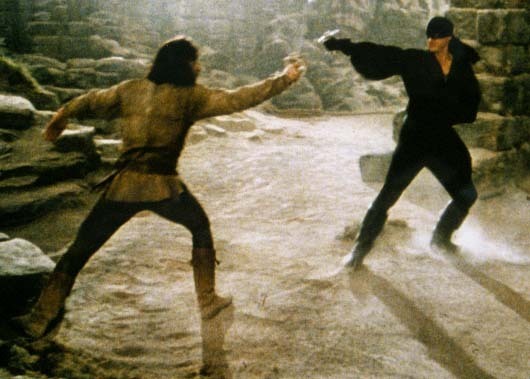
Today, I was thinking about one of my favorite movies– The Princess Bride. In one scene, two mighty swordsmen are fighting a duel. They are fighting with all their might, but they are evenly matched, and neither one is winning. Then, with a flourish, the challenger moves the sword from his left hand (which he had been using) and confesses that he is really right-handed. To his surprise, his opponent does the same! Each man has been fighting with his “lesser” hand, giving his opponent a (supposed) advantage. The fight continues with a similar ferocity. The two opponents later become allies in finding and saving the Princess.
So what if God fought for us with His left hand? What if (and I suppose He is) God is ambidextrous? God could defeat the enemy blindfolded and with one arm tied behind His back! Yet God assures us that His protection and provision are never second-best. If we suffer the attacks of the enemy, it is NEVER because God just didn’t fight hard enough, or that He didn’t have the means to win that battle. He doesn’t send in a junior varsity team of Angels to fight on our behalf. He doesn’t call a “time out” in the middle of fighting to catch His breath or re-evaluate His strategy.
God’s “Mighty Right Hand” isn’t just a metaphor for super-human physical power. He isn’t a muscle-bound hero in a comic book or legend. His mighty right hand is not an eternal fist. God is the One who holds the entire universe in His Hand. It is open. He doesn’t hold us in a choking grip; He holds us in the same gentle hands that hold a newborn chick or a delicate snowflake. God’s mighty right hand is also our safe haven. God’s hand guides and directs, as well.
God IS powerful and sovereign. He could choose to use His mighty right hand to squash us, or pound us into dust. He could hold us in a suffocating grip. But God’s mighty right hand is always directed by His LOVE. His Love cradles us, defends us, lifts us up, encourages us, works alongside us, and welcomes us into His arms!
Yahweh is my shepherd; I shall lack nothing. He makes me lie down in green pastures. He leads me beside still waters. He restores my soul. He guides me in the paths of righteousness for his name’s sake. Even though I walk through the valley of the shadow of death, I will fear no evil, for you are with me. Your rod and your staff, they comfort me. You prepare a table before me in the presence of my enemies. You anoint my head with oil. My cup runs over. Surely goodness and loving kindness shall follow me all the days of my life, and I will dwell in Yahweh’s house forever. Psalm 23 (World English Bible)
“I am the good shepherd; I know my sheep and my sheep know me— just as the Father knows me and I know the Father—and I lay down my life for the sheep. I have other sheep that are not of this sheep pen. I must bring them also. They too will listen to my voice, and there shall be one flock and one shepherd. The reason my Father loves me is that I lay down my life—only to take it up again. No one takes it from me, but I lay it down of my own accord. I have authority to lay it down and authority to take it up again. This command I received from my Father.” John 10:14-18 (NIV)
Yahweh is my shepherd…The LORD Almighty is my caretaker and protector. I don’t need to fear danger, lack of resources, darkness– even the shadow of Death!
God is Mighty and has all Authority. Yet He chooses to guide me, guard me, and provide for me. Not because of who I am– I am a wayward lamb– but because of His Loving Character. It’s literally who He IS and what He Does!
God is not distant. I may not see Him, but He surrounds me. I may not audibly hear His voice, but He speaks to me. I may not see a hand reaching down from Heaven, but He is at work all around me, and His Spirit lives inside of me! God is my Shepherd, not my “boss” or my jailor. He sees both dangers and delights which are along the path of my life, and He knows how to navigate the road ahead. And He is not a hired “master” or overseer. He is my Creator and Sustainer. He is the one who knows me, and when I follow Him, I know His voice. I know both the Authority of His voice, and the Love He has for me.
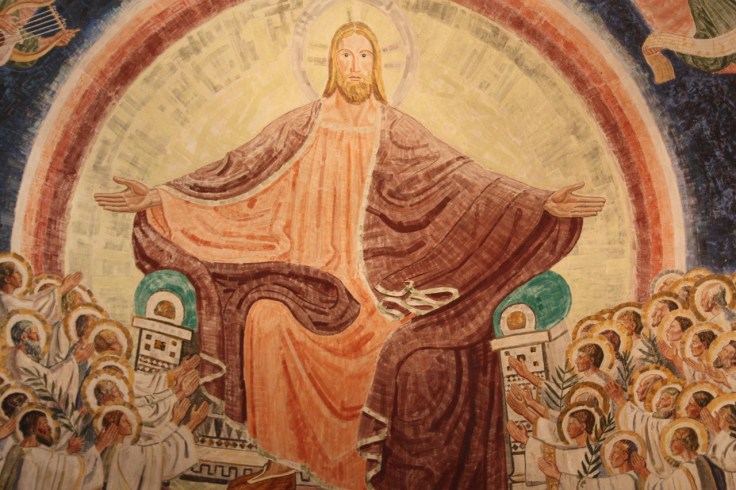
As we go through Holy Week, it is worth remembering that He is also the Shepherd who lays down His LIFE for His sheep. Willingly, lovingly sacrifices what we cannot, so that we may have the LIFE that He gives us. He is our guardian, our guide, our benefactor, and the Lover of our Souls.
When I pray to the Good Shepherd, I am praying to someone who knows all about me; my past and future, my strengths and weaknesses, every challenge I will face, and every blessing He is waiting for me to receive from Him. My prayers cannot surprise Him or baffle Him or stretch Him beyond His capacity to answer. And His answers will be wise and perfect in their scope, their timing, and their resources.
I’ve been looking at the Names of God lately. In my last post, I meditated on “Adonai”– The LORD. God has the ultimate authority over all things. He is the Master; the King; the Ruler; the One LORD of All.
Today, I want to explore a related Name– Almighty. It is often used in conjunction with LORD. God is the LORD ALMIGHTY. Whereas LORD refers to God’s ultimate authority, Almighty refers to His Absolute Ability. He is all-powerful, all-wise– able to do exceedingly, abundantly, above all that we could ever ask or imagine (see Ephesians 3:20). There is literally nothing that God cannot do. There are many things He WILL not do– He will never leave or forsake those who are His; He will never be untrue to His own Word or break His promises; He will never change His nature or be untrue to it– but He CAN do whatever He wants.
And this is where we sometimes fail to grasp the fullness of His name, Almighty. We know that He is Mighty; that He is mightier than we are, at least. But He is the source of Everything! He is mightier than Nature–He spoke all of it into being! He is mightier than Time– He is unbound by time or age or deterioration. He is mightier than Sin and Death– He proved that through the death and resurrection of Jesus Christ! He is mightier than the dark emptiness of space– He holds the entire Universe in His Hands!
And that brings me to the subconscious wonder of the name, Almighty. God is not JUST all-powerful and eternally capable. His Almighty nature is GOOD! All of His power is regulated and matched by Mercy and Grace! He has the authority (as LORD) and the power (as the Almighty) to be a terrible enemy. In fact, Job speaks of this repeatedly when he feels that God is punishing him unfairly (see Job 27). I can’t argue against God and win; I can’t grapple with God and defeat Him (Jacob tried that in Genesis 32). I am powerless against God– physically, mentally, spiritually–I cannot “win” against God by fighting, arguing, cajoling, bargaining, or using any weapon. There is no army, no spirit, no power that can budge God from His plans.
But God is NOT my enemy or my rival! Only Sin and my own rebellion and pride can make me an enemy of God. In fact, He wants a relationship with me; He wants me to live in peace and harmony with Him! He has moved Heaven and Earth to reconcile me to Himself through the death and resurrection of Jesus Christ! He is like a mama bear or a lioness with their cubs, jealously guarding me from Sin and Death. He is my Father, my protector, my provider, and my Shepherd– the ALMIGHTY! And yet He cares about the smallest details of my life– He numbers the hairs on my head and keeps track of any injustice that has ever been done to me (or by me!) to be settled and made perfect on the Day of Judgment.
What a humbling thought! What a joyous reality! The Almighty LOVES ME! He LOVES YOU! And His Love is all-powerful and eternal. The ALMIGHTY IS LOVE! How can I not praise Him! How can I not see Him in every moment!
There are many great examples of prayer throughout the Bible, but there are two that are often used out of context and applied wrongly. One is found in the book of the Judges; the other in the Chronicles.
Jephthah was a mighty warrior– the son of a mighty warrior and a prostitute. He had several half-brothers, but they wanted nothing to do with him. He was an outcast for much of his life, but when things got tough, the people of the region changed their tune and begged him to be their leader and help deliver them from the oppressive Ammonites. Before going into battle, Jephthah prayed, and made a tragic vow. In fact, his vow has become a model of what NOT to do in approaching God.
Judges 11:30-31New American Standard Bible (NASB)
30 Jephthah made a vow to the Lord and said, “If You will indeed give the sons of Ammon into my hand,31 then it shall be that whatever comes out of the doors of my house to meet me when I return in peace from the sons of Ammon, it shall be the Lord’s, and I will offer it up as a burnt offering.”
Upon returning from his success in battle, who should come out of the door of his house, but his only daughter, singing and dancing in celebration of her father’s victory! Having made such a rash vow, Jephthah now has to fulfill it, and sacrifices his only child on the altar.
Many people read this passage of scripture and are shocked– how could God be so cruel? Why didn’t he stop Jephthah from making such a rash vow? How could he hold Jephthah to such a vow? Doesn’t this prove that God is either clueless or deliberately cruel? Either God knew that the tragedy would happen, and failed to prevent it, or he had no idea of the outcome.
But I think this is a misreading of events and a misrepresentation of God. Just before Jephthah makes his vow, the text states that “the Spirit of the Lord came upon Jephthah. He crossed Gilead and Manasseh, passed through Mizpah of Gilead, and from there he advanced upon the Ammonites.” People make note of the first part of verse 29, that the Spirit of the Lord came upon Jephthah prior to his making the rash vow. But we should note that God’s Spirit did not require Jephthah to make ANY vow. Jephthah’s vow was rash and ill-considered– these are not attributes of God or of His Spirit. And God’s Spirit came upon Jephthah before he crossed his own native territory– territory he had fled early in life. In crossing back through lands that now welcomed him after making him feel unwanted and ashamed, Jephthah gets cocky. His vow is not about saving his nation from harm and oppression, or about bringing God glory. It is about himself. He mentions himself five times; his enemies, God, and his sacrifice, each twice; Israel never.
Jephthah had an incredible opportunity, not only to save his nation, but to redeem his reputation and become a leader of might and integrity. Instead, he is remembered for his rash vow. I believe that God could have stopped Jephthah from making such a vow; and God could have kept his daughter from coming out of the house that day of her father’s return. But I don’t believe it was cruelty that prevented him from acting. I believe God is both omnipotent and good. Jephthah learned the hard way that his rash self-promotion had disastrous consequences. His daughter, who was innocent, could have berated her father, or cursed God– instead, she honored them both in a way that reflected her culture and teaching. We are given a shocking reminder not to play games with our unknown future. God does not keep us from our own folly, nor from its consequences, when we fail to seek His wisdom above our own pride.
In contrast, we see another prayer in 1 Chronicles:
1 Chronicles 4:9-10New American Standard Bible (NASB)
9 Jabez was more honorable than his brothers, and his mother named him Jabez saying, “Because I bore him with pain.”10 Now Jabez called on the God of Israel, saying, “Oh that You would bless me indeed and enlarge my border, and that Your hand might be with me, and that You would keep me from harm that it may not pain me!” And God granted him what he requested.
Once again, this prayer is sometimes taken out of context and misused to suggest that God is like a genie in a bottle, and that a pain-free life and expanded riches are ours just for the asking. If we pray the prayer of Jabez, and we don’t see an immediate change in our circumstances, we sometimes question God’s goodness and His provision– doesn’t He care about our needs? Doesn’t he hear our prayer?
Jabez, unlike Jephthah above, is described as honorable. His prayer is more balanced and conscious of God’s sovereignty. Jabez mentions himself five times, just like Jephthah; but he mentions God three times in supplication– asking God to be with him, help him, and bless him, rather than vowing what he can do for God if God grants him victory. Notice also the context of the preceding verse. His prayer is partly asking God to remove the sting and curse of his name, which meant “pain.” He is not asking for enormous wealth or power, so much as asking for God’s presence and blessing. There is a subtle, but important difference here. Jephthah is playing at making a deal with God– If you grant me a victory, I will make it up to you by offering whatever comes out of my house. Jephthah is asking for God’s help, but he is also vowing to give God “whatever comes out of the doors of MY house” (emphasis added). If a rat had come scurrying out, would Jabez have offered that? If it was a chicken or a lizard, or a lame sheep? And “whatever” came out of Jephthah’s house already belonged to God, and came from the hand of God, didn’t it?
Jabez comes with nothing and asks God to be his portion and protection. He makes no bargain with God contingent on God’s answer. There is nothing in this prayer that assumes God’s riches will be his or that God owes him anything; only the faith that God is able to bless him, and that God, in his goodness can keep him from harm.
Jephthah, or Jabez? Two examples…two very different outcomes. May we have the wisdom not to confuse the two, or lose the lessons they teach.
Psalm 46 For the director of music. Of the Sons of Korah. According to alamoth. A song. 1 God is our refuge and strength, an ever-present help in trouble. 2 Therefore we will not fear, though the earth give way and the mountains fall into the heart of the sea, 3 though its waters roar and foam and the mountains quake with their surging. 4 There is a river whose streams make glad the city of God, the holy place where the Most High dwells. 5 God is within her, she will not fall; God will help her at break of day. 6 Nations are in uproar, kingdoms fall; he lifts his voice, the earth melts. 7 The Lord Almighty is with us; the God of Jacob is our fortress. 8 Come and see what the Lord has done, the desolations he has brought on the earth. 9 He makes wars cease to the ends of the earth. He breaks the bow and shatters the spear; he burns the shields with fire. 10 He says, “Be still, and know that I am God; I will be exalted among the nations, I will be exalted in the earth.” 11 The Lord Almighty is with us; the God of Jacob is our fortress.
When I am tempted to fret or worry, I like to read through Psalm 46. I love the way the psalmists use hyperbole to shrink fear and maximize faith– God is an “ever-present help”, we will not fear, “though the earth give way, and the mountains fall into the heart of the sea”, “He lifts his voice, the earth melts!” And I love that the phrase is repeated– “The Lord Almighty is with us; the God of Jacob is our fortress.”
There is so much to unpack in just 11 verses of psalm! But I want to stick to two that always stand out to me.
First, the phrase, “the God of Jacob.” God is the God of Abraham, Isaac, and Jacob. He is the God of Moses, the God of Israel, the God of David…His titles are many. But in this case, He is the God of Jacob. NOT the God of Israel– even though God changed His name. No, He is the God of Jacob– the “heel grabber,” the son who stole his brother’s blessing and tricked his brother out of his birthright– the same Jacob who fled his homeland and worked for twenty years for his duplicitous uncle Laban. This is not the God of the victorious, but the God of those who have had to learn the hard way. He is the God of the one who has acted unjustly, and the God of one who has been treated unjustly. He is the God of the one who wrestles and demands a blessing, the God of the second son, the disappointed husband, and the grieving father. THAT is the God who is with US when we are in trouble and feeling overwhelmed by our own past mistakes, or our own inadequacies, or our unfair circumstances.
Secondly, the phrase “be still and know that I am God.” This same God who wrestled with Jacob, who blessed him in dramatic fashion, was the God who was with him through all the long and lonely night watches as a shepherd. Jacob, with his two wives, their two servants, and all thirteen or more of his children (12 sons and at least one daughter, Dinah)–spent a lot of his time surrounded by noises, nagging, responsibilities, and discord. Yet he took time to ‘be still.” And, though it took many years, and often came “the hard way,” Jacob did learn to “know” his God. He learned to trust that God would protect him, guide him, and bless him– and the generations that would follow him!
I am so grateful for this Psalm to remind me of God’s everlasting presence, His power to save and protect, and His sufficiency for every circumstance in my life. I’m so glad that the “God of Jacob” is the same God who sees me, loves me, and rescues me. I’m humbled to know that I don’t have to be clever enough or brave enough, or “righteous” enough to earn God’s help. I’m glad that the Lord Almighty is always with me. (see Hebrews 13:5) However, I still struggle to “be still and know…” I want to know by doing; by studying and making things happen. But to know God– to really know Him– I have to be still, to wait in silence and anticipation, to trust in what I cannot see and cannot do in my own power. I have to know Him as the Almighty, Omnipotent, Sovereign God that He is, rather than a God of my own imagination or the God I hear about or read about from someone else.
What a mighty God! The God of Jacob is MY fortress! And in stillness, meditation, and trust, I can KNOW Him!
How often do I recite this favorite Psalm without really thinking about it? In the words of this Psalm, I am loved, cherished, sustained, and led by Him. But am I in reality? Do I submit to His leadership and guidance? When I pray, am I really coming to meet with my Shepherd, or am I trying to meet with God on some other level or in some other relationship?
I’ve been reading through the first few books of the Bible. I’m in Numbers right now, and Moses is leading the Israelites through the wilderness. The spies have just returned from Canaan, and the people have rebelled against God, weeping and accusing God of leading them to the Promised Land only to have them die in battle with the giants of the land.
I read through this and shake my head, but haven’t I done similar things in my walk with God? I want to avoid the wilderness. I want to walk in the green pastures, but I don’t want to travel through the valley of the shadow of death to get there! I look at obstacles and setbacks as though God were sitting far away, arms akimbo, laughing at my struggles; in reality, He is right beside me all the way, waiting to help me overcome each obstacle and gain victory together with Him. I’m looking at the giants, when He wants me to trust Him for the milk and honey He has promised. I still have to face the giants, and the battles ahead– but I don’t have to face them alone. I don’t have to face them in my own strength, my own limited wisdom, or my limited vision.
But here’s what I am learning as I read through this section of the Bible right now:
God IS with me. He doesn’t leave me or give me anything HE can’t handle. But I have to walk through the wilderness. I have to fight battles. I have to face giants. I have to learn to trust for my daily bread– whether it is manna or money to buy bread–daily. I have to listen to His voice; not impose my plans and ask for Him to bless them.
God doesn’t want me wrapped up or caged: He will not take away my freedom to follow (or NOT follow) Him. And when I wander, He may allow me to wander in circles for a while (hopefully not forty years!), but He will still be right there, ready to lead me when He sees that I am ready to move forward.
He will supply all that I really need– water from the rock, bread from Heaven– not because I have the money or resources, I think I’ve earned, but because He IS my provider. He can part the Red Sea; He can destroy Pharaoh’s armies. He can make the earth swallow up those who threaten me and defy Him. I am safe, even in the wilderness, when I stay close to the Shepherd!
He will counsel and correct me. He will offer forgiveness again and again. He will not leave me lost or unable to return to His side. He will be a “Presence” in my life, wherever I go– day or night.
He sees me and He hears me– which is both comforting and fear-inducing. But it is a healthy fear; an awesome and reverent fear; one that keeps me humble. After all, I am a sheep, NOT the Shepherd! I can call out to Him, and He knows where I am (because He is right there, too), and He knows what I need. God saw the Israelites worshipping the Golden Calf even as He was speaking to Moses up on the mountain. God heard Moses as he pleaded for mercy, even in His anger and wrath.
He calls me by name. The Bible, especially the Old Testament, is full of individual names. Not just the ones we study in Sunday School; not just the ones in the children’s stories; but names of the leaders of the various tribes of Israel, and names of the spies, names of craftsmen God had selected to build the Ark and all the items needed for the Tabernacle, and names of those who rebelled. I am not lost in the crowd; I am not forgotten among the many. God knows me intimately– just as He knows you!
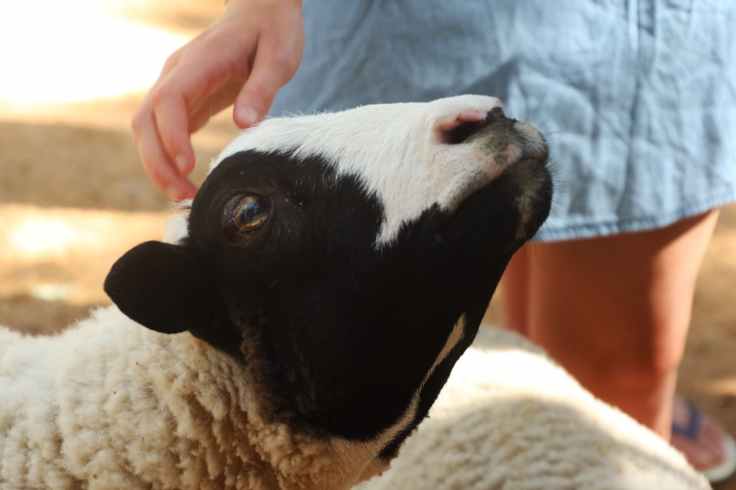
Even when my prayers seem like whining, bleating, plaintive “baa-ing”, I know my Shepherd hears. And He delights to hear from me. He delights in leading me through the wilderness and providing for my every need. And His promises sustain me when I don’t know what’s coming next, or I fear what I see on the horizon.
So I will pray today, and tomorrow, and every day, knowing that even my– especially my– “sheepish” prayers are not in vain.



























 Pursuing Prayer